
Hiring

What to Look For When Hiring Software Developers: Your Hiring Guide
TL;DR
- Define clear hiring requirements. Know your tech stack, system requirements, and business objectives before you begin.
- Focus on five key traits: technical expertise, problem-solving ability, scalable code quality, communication, and adaptability.
- Prioritize real-world, practical assessments, such as system design discussions, debugging sessions, and code reviews.
- Value hands-on experience over credentials. Review portfolio projects, Git history, and previous system ownership.
- Spot red flags early, including weak communication, poor code practices, and resistance to feedback or learning.
The difference between a great software developer and an average one can make or break your project timeline. Companies with strong engineering teams are more likely to achieve their business goals, while poor hiring decisions cost organizations an average of $240,000 per bad hire in the tech sector.
Understanding what to look for when hiring a software developer isn't just about technical skills anymore. The present hiring landscape demands a strategic approach that balances technical expertise, cultural alignment, and long-term growth potential.
This blog discusses the essential elements you need to evaluate, from core competencies to interview strategies, helping you build a development team that drives real business results.
Start with Clear Hiring Requirements
Success begins with knowing exactly what you need. Vague job descriptions attract the wrong candidates and waste everyone's time.
Define Your Technical DNA
Before you interview a single candidate, map your exact technical needs:
Core Stack Requirements:
- Primary languages (Python, JavaScript, Go, Rust)
- Frameworks and libraries (React, Vue, Django, FastAPI)
- Database technologies (PostgreSQL, MongoDB, Redis)
- Cloud infrastructure (AWS, GCP, Azure)
Architecture Expertise:
- Microservices vs. monolithic systems
- API design and integration patterns
- DevOps and CI/CD pipeline experience
- Scalability and performance optimization
Early-stage companies need versatile generalists while established enterprises require deep knowledge specialists. Know what you need before you start looking.
Align with Business Impact
The best developers don't just write code; they also solve business problems. Identify whether you need someone to:
- Build MVP products that attract investors
- Scale existing systems for 10x growth
- Modernize legacy infrastructure
- Lead technical architecture decisions
The 5 Critical Areas: What to Look for When Hiring a Software Developer
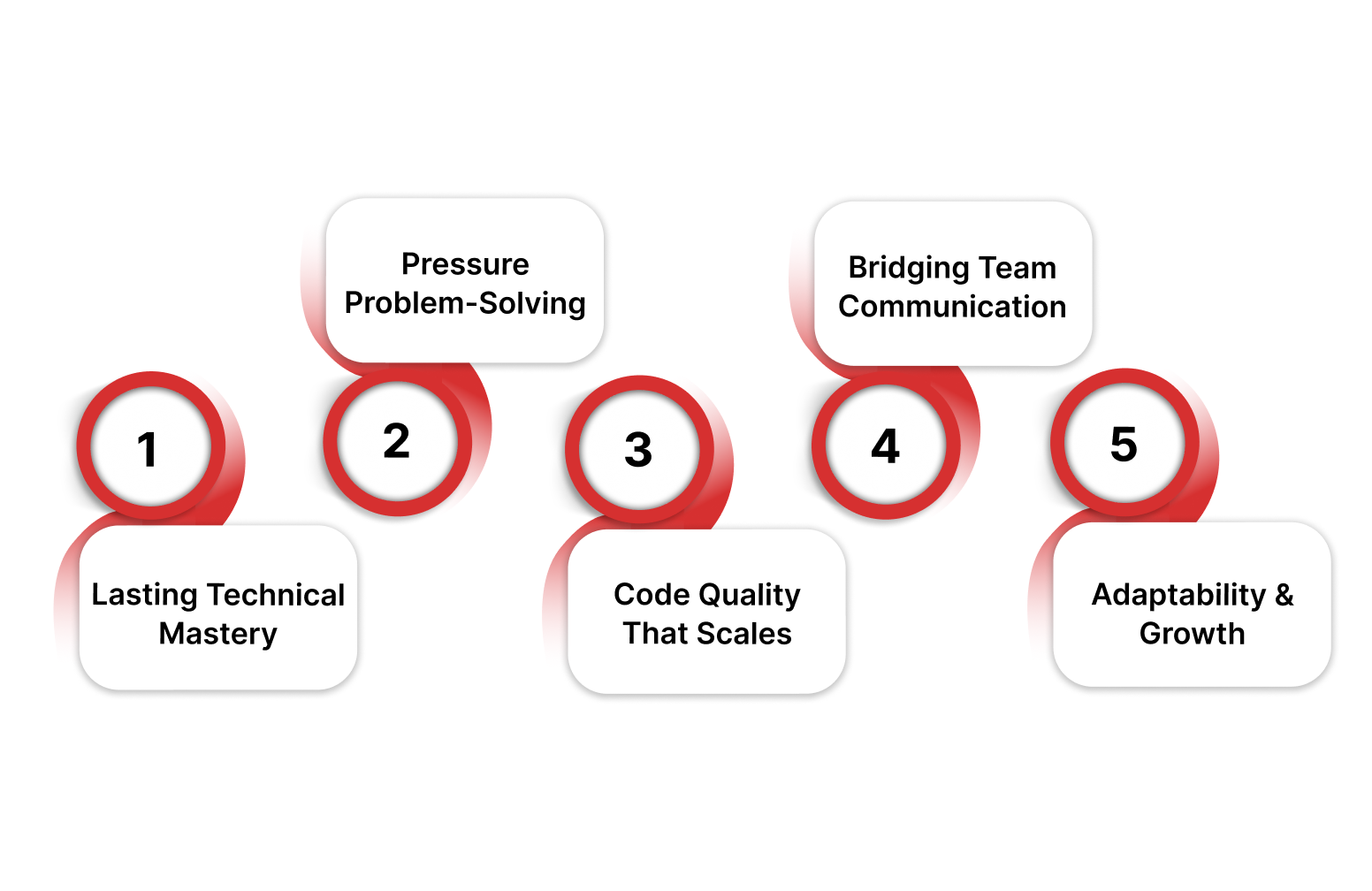
These five areas separate exceptional developers from average ones. Evaluate your candidates based on these, and you'll never make a bad hire again.
1. Technical Mastery That Goes a Long Way
Test candidates beyond surface knowledge. Anyone can list programming languages on their resume. Elite developers demonstrate their skills:
Proficiency in Core Programming Languages
Evaluate hands-on experience and language-specific best practices. Prioritize candidates with demonstrable knowledge in:
- Frontend: JavaScript, TypeScript, React, Angular, Vue.js
- Backend: Python, Java, Go, C#, Ruby, Rust
- Mobile: Kotlin, Swift, React Native
- Data & AI: Python (for data analysis, AI/ML), R, SQL
This range ensures your team can build full-stack, scalable applications while adapting to evolving project needs.
System Design and Architecture Fundamentals
Top developers think in terms of systems, not isolated features. Ensure they understand:
- Database design and optimization
- Caching strategies (Redis, Memcached)
- Load balancing, fault tolerance, and distributed systems patterns
- API design, versioning, and backward compatibility
Familiarity with Software Development Methodologies
Hands-on experience with Agile, Scrum, and Kanban methodologies is crucial. Developers should:
- Understand iterative development and continuous delivery principles
- Know how to work within sprints, manage backlogs, and participate in standups and retrospectives
This ensures seamless collaboration and predictable delivery timelines.
Problem-Solving and Analytical Abilities
Exceptional developers break down complex issues into manageable parts, applying logical, structured approaches like:
- Root cause analysis
- Decomposition techniques
- Trade-off analysis and impact assessments
Test this by presenting candidates with real production bugs or architecture challenges during interviews.
Proficiency with Version Control and Collaboration Tools
Experience with Git and platforms like GitHub or GitLab is non-negotiable. Developers should demonstrate:
- Clear branching strategies
- Clean commit hygiene
- Code review participation and collaborative debugging workflows
Knowledge of Modern Development Workflows
Expect them to be familiar with:
- Test-Driven Development (TDD) and Behavior-Driven Development (BDD)
- CI/CD pipelines
- Containerization tools (Docker, Kubernetes)
- Infrastructure as Code (Terraform, CloudFormation)
- Observability and monitoring tools (Prometheus, Grafana)
2. Problem-Solving Under Pressure
Present real scenarios from your codebase to the candidates. Exceptional developers will:
- Ask clarifying questions before coding
- Break complex problems into logical components
- Propose multiple solutions with trade-off analysis
- Debug systematically rather than randomly
Red Flag: Candidates who jump straight to coding without understanding requirements.
3. Code Quality That Scales
Review their GitHub repositories and portfolio projects. Here's what you should look for:
- Clean Code: Meaningful names, single responsibility functions, clear documentation
- Testing Coverage: Unit tests, integration tests, end-to-end testing
- Git Hygiene: Atomic commits, clear messages, proper branching strategies
- Performance Awareness: Optimized algorithms, efficient database queries
Struggling to find developers who check all these boxes? Tap into Consultadd's pre-vetted talent pool of 200+ verified developers skilled in AI/ML Full-Stack, Cloud, and DevOps. Start hiring smarter today! Schedule a free talent discovery call with our team.
4. Communication That Bridges Teams
Technical brilliance means nothing if software developers can't collaborate effectively. Strong candidates will:
- Explain complex concepts in simple terms
- Write clear technical documentation
- Participate constructively in code reviews
- Handle feedback without defensiveness
5. Growth Mindset and Adaptability
Technology evolves rapidly. You need a team that is ready to work in changing environments. The best developers:
- Learn new frameworks and languages quickly
- Contribute to open-source projects
- Stay current with industry trends
- Embrace changing requirements as opportunities
Your Interview Process: Beyond the Whiteboard
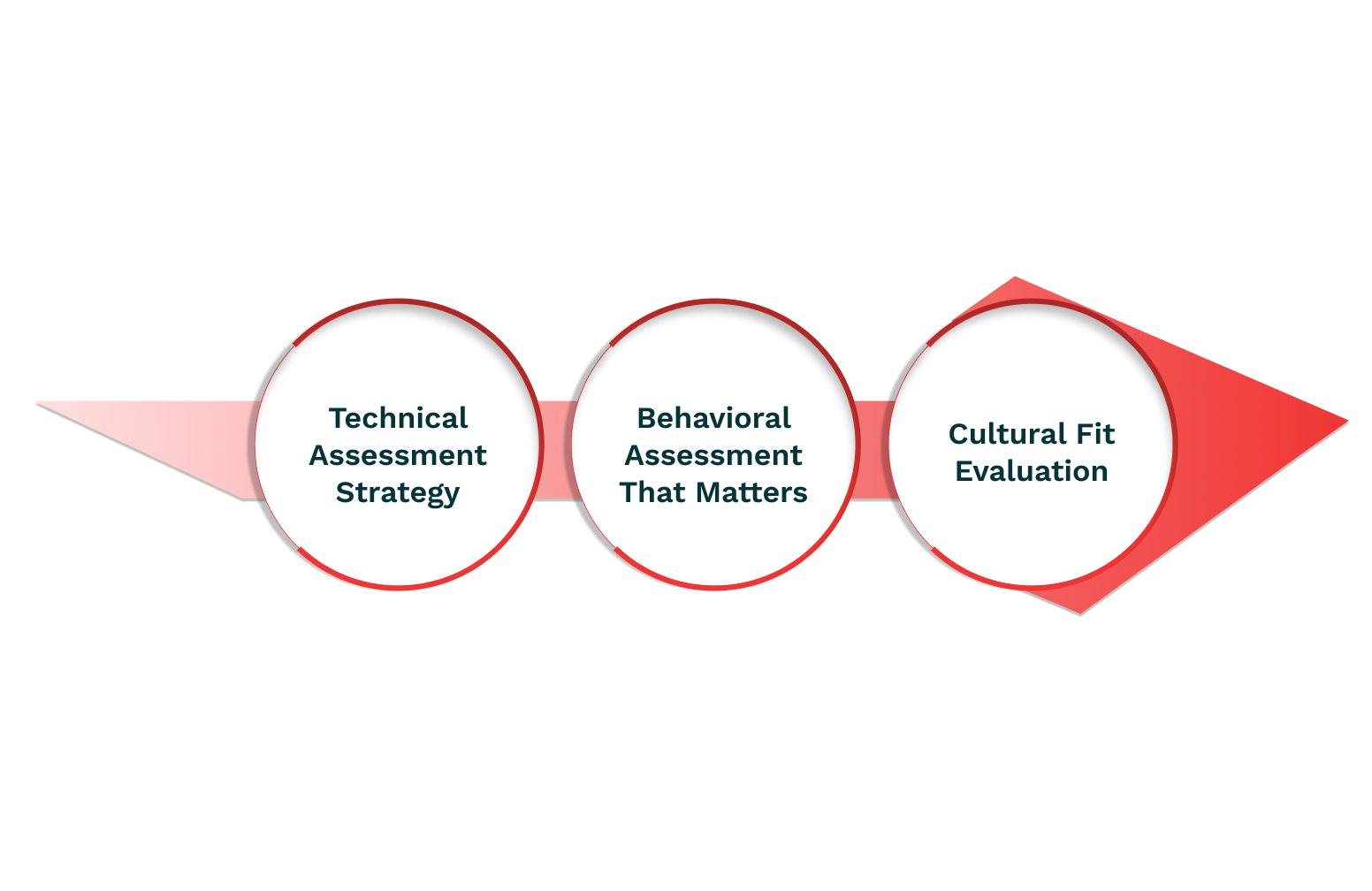
Traditional coding interviews fail to predict real-world performance. Here's how to assess candidates in terms of how they'll work.
Technical Assessment Strategy
Skip the puzzles, focus on reality. Instead of abstract algorithms, use scenarios from your actual codebase to test the candidates:
- Code review exercises with real pull requests
- Architecture discussions about scaling challenges
- Debugging sessions with production issues
- Pair programming on feature implementations
System design requirements for all levels. Even junior developers should understand basic system concepts:
- How does a web request travel through your stack?
- What happens when your database becomes a bottleneck?
- How would you handle a 5x traffic spike?
Behavioral Assessment That Matters
Use the STAR method to explore:
- Situation: "Tell me about a time you disagreed with a technical decision."
- Task: "What was your role in resolving it?"
- Action: "What specific steps did you take?"
- Result: "What was the outcome and what did you learn?"
Cultural Fit Evaluation
Understanding what to look for when hiring a software developer includes cultural alignment. Ask questions that clarify the following:
- Do they share your company's values?
- Are they excited about your problem domain?
- How do they handle stress and tight deadlines?
- Do they mentor others and share knowledge?
Fast-track your hiring process without cutting corners. Consultadd handles technical assessments, background checks, visa support, and payroll management so you get fully trained, ready-to-deploy developers faster. Explore our immediately available core talent pool now.
Developer Red Flags That May Cost You Later
These warning signs predict future problems. Recognizing them early saves months of frustration and expensive turnover.
Technical Red Flags:
- Can't explain their code from GitHub
- Defensiveness about code quality feedback
- Inability to discuss trade-offs in technical decisions
- Overengineering simple solutions
Cultural Red Flags:
- Blames others for project failures
- Shows no curiosity about your business
- Poor communication during technical discussions
- Unwillingness to learn new technologies
Choosing Your Hiring Strategy
Different situations require different approaches. Match your hiring model to your specific needs and timeline constraints.
Moreover, connecting with specialized recruitment partners can streamline this decision-making process, offering access to pre-vetted talent pools without the overhead of traditional recruitment cycles.
Avoid These Costly Hiring Mistakes
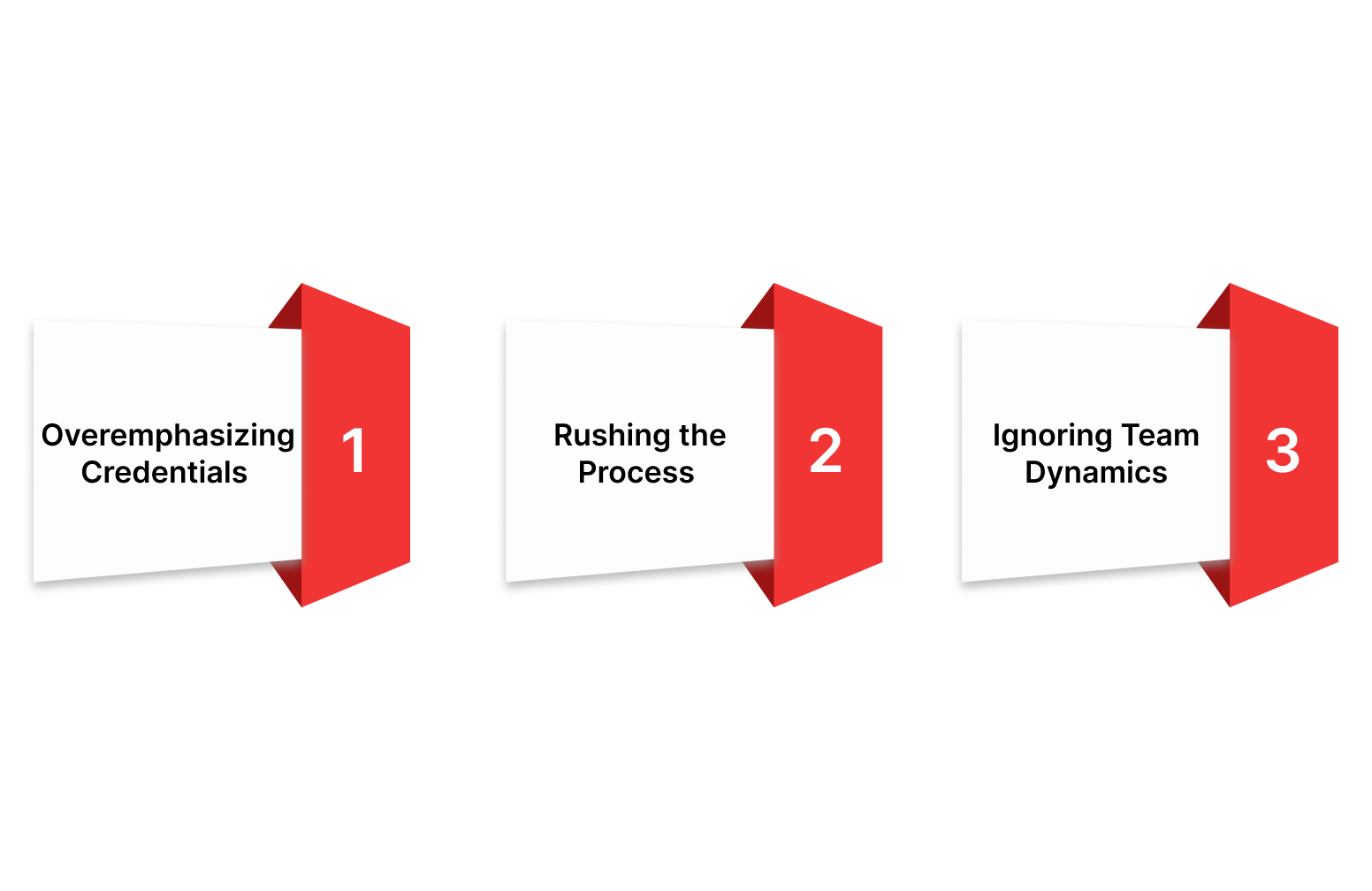
Even experienced hiring managers fall into these traps. Learn from others' expensive errors instead of making them yourself.
- Overemphasizing Credentials
A computer science degree doesn't guarantee coding ability. Focus on demonstrated skills through portfolio review and practical assessments.
- Rushing the Process
Taking shortcuts in evaluation leads to expensive turnover. Invest time upfront to avoid 6-month disasters.
- Ignoring Team Dynamics
Technical skills matter, but team chemistry determines long-term success. Involve your existing developers in the interview process.
Companies that excel at what to look for when hiring a software developer share standard practices:
- They assess practical skills over theoretical knowledge
- They evaluate cultural fit alongside technical ability
- They invest in thorough, multi-stage interview processes
- They prioritize problem-solving ability over resume keywords
The difference between good and great developers isn't just technical; it's their ability to understand business context, collaborate effectively, and adapt to changing requirements.
The best companies avoid mistakes and follow proven hiring practices that deliver long-term business value.
Conclusion
Knowing what to look for when hiring a software developer requires balancing technical expertise, problem-solving abilities, and cultural alignment. The most successful hires combine deep technical skills, strong communication abilities, and growth mindsets, contributing to long-term team success.
Your hiring process should be structured, comprehensive, and aligned with your business objectives. Take time to define precise requirements, use practical assessment methods, and avoid common pitfalls that lead to costly mis-hires.
Finding the right software developers requires expertise, time, and access to quality talent pools that many companies struggle to maintain internally. With 13 years of experience and over 5,000 successful engagements, Consultadd becomes your behind-the-scenes tech talent partner, specializing in Full-Stack Development, Cloud Technology, and DevOps hiring.
What makes Consultadd different:
- Pre-vetted talent pool - Access 200+ professionals with comprehensive verification, including technical assessments, background checks, and reference validation
- Ready-to-hire candidates - 60+ core talent pool of immediately available, highly skilled developers who've passed rigorous evaluation processes
- Complete hiring support - We handle interview coordination, visa compliance, payroll, benefits administration, and ongoing candidate monitoring.
- Extension of your team - Dedicated account management and customized solutions that adapt to your specific requirements and growth stage
Transform your developer hiring process and access top-tier technical talent without the traditional delays and complications. Contact Conusltadd today →
Frequently Asked Questions (FAQs)
Q1. What are the most in-demand programming languages for software developers in 2025?
In 2025, the most sought-after programming languages include Python, JavaScript, TypeScript, Go, Rust, and Java. For frontend development, React, Angular, and Vue.js lead the market, while Python dominates roles in AI, data science, and the backend. Kotlin and Swift remain top choices for mobile development.
Q2. How can I effectively assess a software developer's problem-solving skills during an interview?
Present candidates with real production issues or architecture challenges from your codebase. Ask them to explain their approach, reasoning, trade-offs, and debugging process before writing code.
Q3. Why is cultural fit important when hiring software developers?
Cultural fit ensures developers align with your company's values, communication style, and work culture. It directly impacts team collaboration, retention, and long-term project success.
Q4. What technical assessment methods work better than coding puzzles?
Replace abstract puzzles with code review exercises, system design discussions, real debugging sessions, and pair programming challenges using your actual tech stack.
Q5. Should I prioritize full-time developers, contractors, or staffing partners for my project?
It depends on your project timeline, technical complexity, and budget. Full-time hires suit core product development, contractors handle short-term specialist work, and staffing partners help you scale quickly with pre-vetted talent.
Q6. What are common red flags to watch for when hiring developers?
Be cautious of candidates who can't explain their past code, resist feedback, overengineer simple solutions, blame others for issues, or show no curiosity about your business.
.png)
IT Staffing Done Right: Best Practices
IT staffing today is more competitive than ever. Many candidates receive multiple offers within days, understand their value, and expect more than just a paycheck. Hiring someone who is merely “good enough” can lead to missed deadlines, budget overruns, and low team morale.
That’s why IT staffing requires careful planning and a thoughtful approach, not rushed decisions or one-size-fits-all solutions.
In this blog, we share the best practices for IT staffing in 2025, what actually works, what mistakes you may be making as hiring managers, and how to solve real-world challenges with smarter strategies. Keep reading!
What is IT Staffing?
IT staffing is the process of hiring skilled tech professionals, either temporarily or permanently, to support your company’s technology needs. It includes roles like developers, system admins, data analysts, cybersecurity experts, and IT support specialists.
If your team is overloaded or lacks key technical skills, IT staffing fills the gaps fast. It’s ideal for:
- Meeting tight project deadlines
- Filling skill-specific roles
- Avoiding long recruitment cycles
No long-term contracts. No unnecessary payroll costs. You only pay for what you need.
IT staffing also helps prevent burnout and delays, keeping your projects on track and your team focused.
Now, let’s look at the 11 best practices for IT staffing that make it truly effective.
11 Best Practices for Successful IT Staffing
Hiring in tech is no longer just about filling vacant positions in your team. It’s about building adaptable, skilled teams that support real business growth. If you’re scaling fast or modernizing systems, getting IT staffing right can make or break your progress. These are the best practices for IT staffing that will help you stay focused on results, not just resumes.
1. Understand Your Business Goals and Technical Needs
A common mistake in IT staffing is hiring without clearly defined goals. Even top candidates can underperform if their skills don’t match your needs.
Start by outlining your business objectives, like launching a digital product, migrating to the cloud, or improving cybersecurity. Then define the project scope:
- Timeline and key milestones
- Expected deliverables
- Tools and frameworks involved
- Cross-team collaboration needs
For instance, expanding a data team calls for candidates skilled in Snowflake or Python, not outdated platforms. Hiring for both technical fit and strategic goals helps lower long-term costs and strengthens team performance.
When working with experienced IT staffing partners like Consultadd, these discussions are baked into the process. We start with business priorities and build candidate pipelines accordingly.
2. Prioritize Skills Over Degrees
In today's rapidly evolving tech world, practical skills matter more than academic degrees. Traditional education often lags behind modern technologies like cloud-native systems or container orchestration.
Focus on what candidates can do, not just what they’ve studied. A self-taught engineer with DevOps experience may outperform a graduate with no deployment history. Roles in data science, cybersecurity, and machine learning now demand hands-on expertise.
Look for:
- Certifications (AWS, Azure, GCP)
- GitHub/GitLab contributions
- Project portfolios
- Technical assessment performance
This approach widens your talent pool, improves diversity, and boosts team efficiency from day one.
3. Work with Specialized IT Staffing Partners
Hiring in tech is not a cakewalk. The right talent is scarce, and top candidates rarely stay on the market for long. That’s why working with a dedicated IT staffing partner isn’t just helpful, it’s often essential.
With the right IT staffing partner, you gain instant access to:
- Pre-screened and vetted candidates
- Talent matched to your tech stack and project needs
- Candidates ready for interviews, not just resume reviews
One of the best practices for IT staffing today is simply this: Don’t do it alone when you don’t have to.
4. Embrace Remote and Hybrid Talent Models
Remote work didn’t just shift where people work; it changed how companies hire. Limiting searches to your local area narrows your talent pool and expertise.
With cloud tools and async workflows, distributed teams perform as well as on-site ones. A 2024 Gallup report shows that 52% of U.S. full-time employees now prefer a hybrid setup. Another 27% want fully remote roles. Ignoring this trend can lead to more rejections and slower hiring.
Remote models offer:
- Access to niche skills nationwide or globally
- Reduced overhead
- More diverse, inclusive teams
These models aren’t just flexible but strategic as well. And when done right, they reduce overhead without affecting productivity.
5. Build a Strong Employer Brand
IT professionals want more than a job; they want to join a culture. That’s why a strong employer brand is key. Candidates today look for growth, flexibility, real challenges, and transparency. Salary matters, but so do team dynamics and learning opportunities.
To stand out:
- Share updates on LinkedIn about culture and tech projects
- Respond to reviews on Glassdoor, good or bad
- Highlight upskilling and project ownership opportunities
- Make job descriptions more human and project-focused
6. Implement Agile Hiring Processes
Speed is everything in tech hiring. You may lose your best-fit candidate not because someone else pays more, but because they acted faster.
The best practices for IT staffing emphasize agility. Long, clunky processes increase dropout rates. Candidates expect quick feedback and clear timelines.
Agile hiring doesn’t mean you skip steps; it means you run them better. Here’s how:
- Use tech tools to streamline each stage. Applicant tracking systems (ATS) organize resumes and schedule interviews faster.
- Add structured video interviews for early-stage screening. They reduce delays and save time for both sides.
- Use automated coding assessments for developer roles. These filter strong candidates early and reduce reliance on manual screening.
Want to hire faster and onboard reliable tech talent at the earliest?
Do it the best way with Consultadd! Contact Us Now>>
7. Focus on Diversity and Inclusion
Diverse tech teams solve problems faster and create better user experiences. That’s why inclusion matters in IT staffing.
Diversity goes beyond gender or ethnicity; it includes education, age, geography, and experience. Inclusive teams challenge groupthink and drive innovation.
In a 2023 McKinsey study, diverse executive teams were 39% more likely to outperform their peers in profitability. That’s not just a stat, it’s proof that diversity directly impacts business outcomes.
Here’s how you can support it:
- Simplify job descriptions to welcome non-traditional candidates
- Use blind resume tools to reduce bias
- Source talent from multiple, diverse platforms
- Train interviewers to use structured, fair evaluations
Building inclusive hiring habits leads to stronger, more future-ready teams.
8. Invest in Upskilling and Training
One of the best practices for IT staffing is to treat talent as a long-term investment, not a short-term fix. IT talent is a long-term investment. Without growth, even top performers lose motivation or leave.
Upskilling reduces hiring pressure by allowing you to train the best candidates instead of waiting for a perfect fit.
What helps:
- Offer structured paths like certifications and project mentoring
- Promote cross-functional learning across roles
- Tie training to promotions or high-impact projects
This speeds up productivity and strengthens retention by showing employees that their growth matters.
9. Monitor Performance and Cultural Fit
Hiring the right talent is only the first step. The real success shows up once your new team member starts working. That’s why regular check-ins matter.
Start with a structured feedback loop in the first 30, 60, and 90 days. This helps you spot early signs of mismatch, whether it’s in technical performance or team alignment.
Here’s what you can track:
- Task completion timelines
- Code quality or QA metrics (for dev roles)
- Collaboration with cross-functional teams
- Feedback from team meetings or one-on-ones
One of the best practices for IT staffing is keeping an eye on both performance and cultural fit. If someone writes perfect code but disrupts teamwork, that’s a hiring issue, just delayed.
Build a feedback culture from day one. It saves you from long-term issues and helps new hires feel supported and accountable.
10. Stay Updated with Market Trends and Tech Shifts
Programming languages, cloud computing platforms, and AI tools keep changing. You need to hire for today and prepare for tomorrow.
For instance, Python, TypeScript, and Go are gaining traction in AI and cloud-native applications. Companies investing in multi-cloud strategies now look for DevOps engineers familiar with both AWS and GCP.
If your hiring strategy doesn’t evolve with these changes, you’ll always be behind. You’ll struggle to find skilled candidates or end up hiring for roles that are becoming irrelevant.
Here’s how to keep up:
- Subscribe to credible tech news sources.
- Follow developers and engineers on LinkedIn.
- Review job trends quarterly.
- Ask your internal teams what tools they want to explore next.
11. Use Data-Driven Decision Making in Hiring
Good hiring is measurable. When you use data to guide decisions, you improve your hiring process over time and reduce waste.
Start by tracking key metrics:
- Time-to-hire: How long does it take from posting to offer
- Cost-per-hire: Total recruitment spend per candidate
- Quality-of-hire: Performance and retention after onboarding
These numbers give you clarity. They show where delays happen, which channels bring the best candidates, and what quality looks like over time.
Data also helps you reduce turnover. For example, if certain roles see high exits in the first six months, dig into why.
Staffing partners like Consultadd use hiring intelligence tools to support clients with these insights. These systems track applicant behavior, skill benchmarks, and interview conversions, helping you hire smarter, not harder. Explore how>>
Benefits of Partnering With the Right IT Staffing Agency
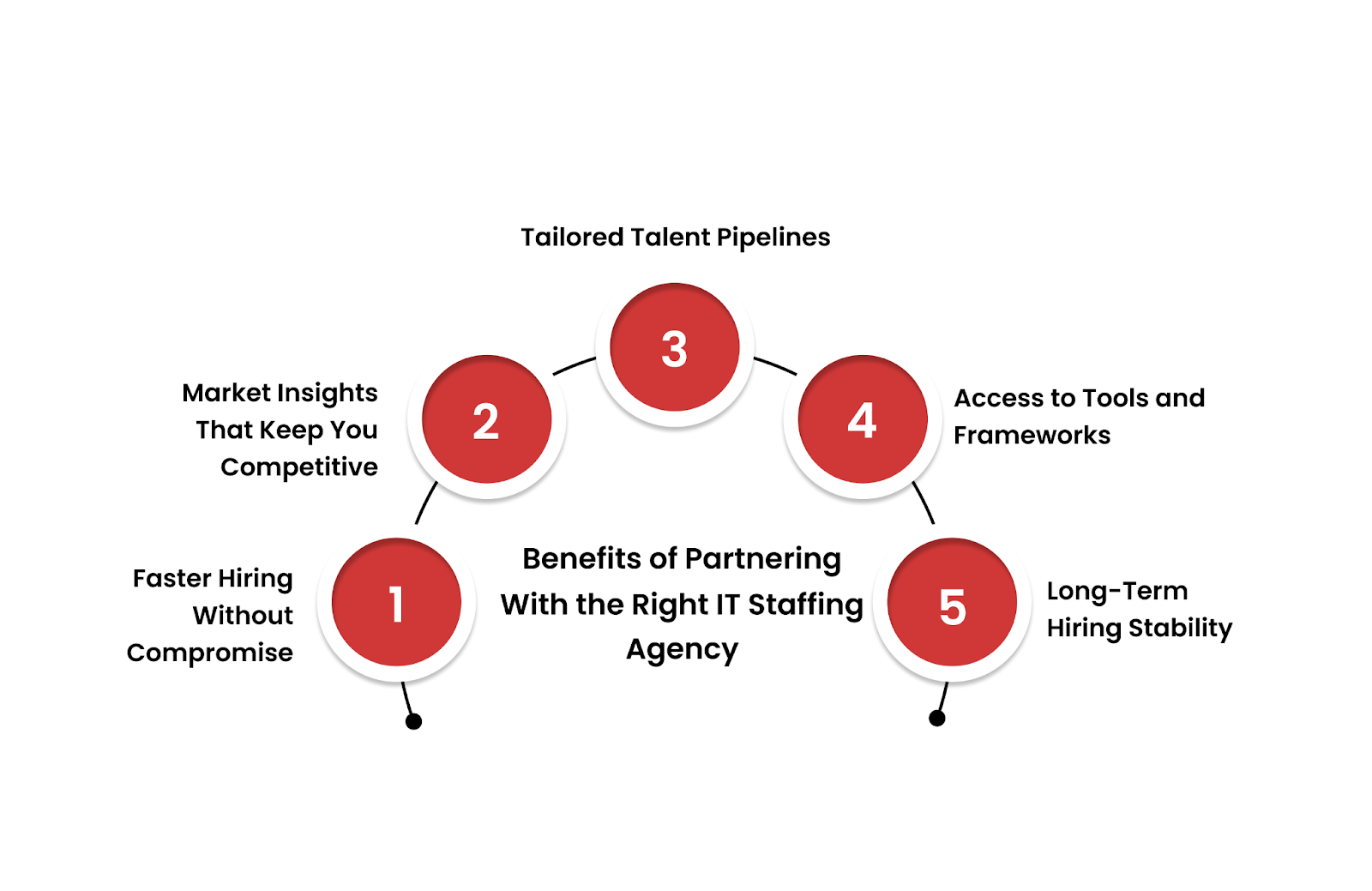
Working with a specialized IT staffing agency offers more than just help filling roles. It gives you access to targeted hiring strategies built around your needs. Here’s how it benefits:
- Faster Hiring Without Compromise
Top agencies reduce the time you spend screening resumes and scheduling interviews. They present qualified candidates who align with your technical and business goals.
- Market Insights That Keep You Competitive
Staffing experts understand current salary expectations, in-demand skills, and hiring trends. This helps you avoid overpaying or underpaying top talent.
- Tailored Talent Pipelines
One of the best things about IT staffing is getting access to customized candidate pools. A reliable agency maintains active pipelines tailored to your project scope and technical stack.
- Access to Tools and Frameworks
Agencies often use proven assessment methods, structured interviews, and technical evaluations. These support the best practices for IT staffing by improving hiring quality at every step.
- Long-Term Hiring Stability
Instead of reacting to talent shortages, you build a steady system for acquiring and retaining skilled professionals.
The best practices for IT staffing help you move beyond guesswork. They consistently hire in alignment with business goals, team dynamics, and future demands. Whether you're hiring one developer or scaling an entire team, success starts with clarity, not speed. We hope this blog helps you get it done the right way.
Working with an experienced partner like Consultadd ensures you hire smarter. From structured processes to real-time market insights, we help you avoid costly missteps and build teams that deliver from day one.
In a market where great tech talent is hard to find and harder to keep, your approach to staffing makes all the difference.
Looking to build a future-ready tech team? Contact Us>>
.jpg)
The Key Drivers of Tech Talent Shortage in IT and What You Should Do Now
You’ve got product deadlines looming. Clients want faster rollouts. Leadership is pushing for innovation. But there’s one thing holding everything back: people. Or rather, the lack of them.
If you’ve struggled to hire a qualified developer lately, you’re not alone. The tech talent shortage has moved from boardroom meetings to a real-world business blocker. And it’s not just about unfilled roles. It’s about the ripple effects, slower product cycles, rising costs, and missed opportunities.
The usual fixes like job ads, referral bonuses, and internal transfers aren’t effective anymore. The rules have changed, and so must your strategy.
In this blog, we’ll help you understand the real reasons behind the tech talent crunch, how it’s reshaping businesses like yours, and what you can do about it.
TL;DR
- Tech hiring isn’t just slow but also stuck. Demand for engineers, data scientists, and cloud architects is far outpacing supply, affecting delivery and innovation across industries.
- Education can’t keep up. Colleges aren’t producing job-ready candidates fast enough, and existing professionals struggle to upskill without structured support.
- Remote work widened the talent pool but also the competition. U.S. companies now compete globally, resulting in higher salaries and narrower hiring windows.
- Attrition and burnout are multiplying the problem. High turnover, long hiring cycles, and overloaded teams are becoming the new normal.
- Rethinking your hiring strategy is no longer optional. The shortage is structural, not short-term, and reactive hiring can’t keep up with what’s coming next.
Understanding the Tech Talent Shortage
Hiring qualified IT professionals, especially in niche roles, has become more complex than ever. And it’s not just you. The global tech talent shortage is real, accelerating, and structural.
There’s a widening gap between the number of open tech roles and the skilled professionals available to fill them. New roles continue to emerge, but the talent pipeline isn’t scaling quickly enough.
In-Demand Roles That Are Hardest to Fill:
- Software Engineers: Always top priority across industries
- Cloud Architects: Critical as companies shift to cloud-first operations
- Data Scientists: Key to predictive analytics and business intelligence
- Cybersecurity Experts: In high demand due to rising digital threats
This isn’t a temporary hiring dip. Digital transformation has turned every business into a tech-driven business. That shift has pushed demand beyond traditional supply models.
Why Is Hiring Harder?
- Colleges aren’t producing job-ready graduates fast enough
- Mid-career professionals struggle to keep up without structured support
- Even mid-sized firms face longer hiring cycles and rising salaries
- Internal teams are overstretched, delaying project timelines
It’s not about searching harder but knowing where to find talent and acting quickly.
Key Drivers of the Tech Talent Shortage
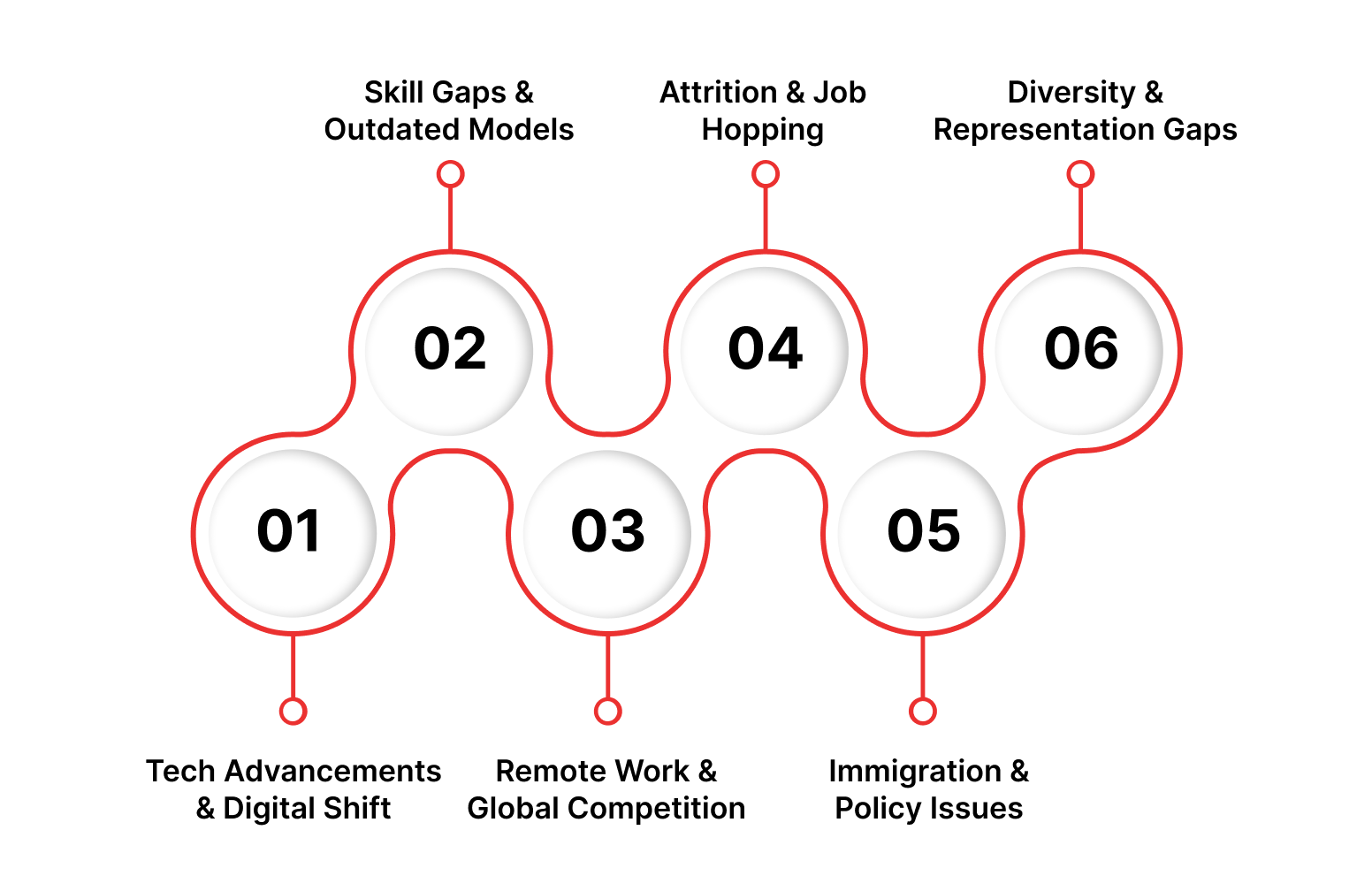
The tech talent shortage isn’t just a hiring problem; it’s a result of how fast the industry is evolving. These six key factors are driving the shortage and making it harder for companies like yours to build strong tech teams.
1. Rapid Technological Advancement and Digital Transformation
Tech is advancing faster than the workforce can keep up. Companies urgently need hands-on expertise in cloud, AI, and automation, but most IT teams aren't fully prepared.
What's causing the gap?
- Demand for platforms like AWS, Azure, and Kubernetes has surged.
- Many professionals have theoretical knowledge but lack real-world experience.
- Digital transformation has shifted from optional to essential, adding constant pressure to innovate.
Upskilling can't match the pace, and hiring gaps continue to widen.
2. Skill Gap and Outdated Education Models
Traditional education isn't aligned with industry needs. Many graduates hold degrees but lack practical, job-ready skills.
Key issues:
- Universities still focus on theory-heavy curricula.
- Hands-on experience with modern frameworks is often missing.
- Employers either spend more on onboarding or battle over limited skilled candidates.
This mismatch leads to slower project timelines and higher hiring costs.
3. Remote Work and Global Competition for Talent
Remote work expanded your talent pool, but also multiplied the competition.
How it impacts you:
- You're no longer just competing locally; global tech companies now target the same candidates.
- Offers from Europe, Singapore, and Australia are driving up U.S. wage expectations.
- Even mid-level roles now command premium salaries due to the global bidding war for talent.
Access to better candidates grew, but so did the fight for top talent.
4. High Attrition and Job Hopping Culture
Mid-level tech talent is constantly on the move. Today's professionals value more than just compensation.
What's the problem?
- Lack of flexibility, growth opportunities, or meaningful work can lead to quick exits.
- Burnout from tight deadlines and heavy workloads pushes talent out of the industry.
This leads to frequent rehiring, retraining, and stalled project progress.
5. Immigration and Policy Challenges
International hiring is no longer as easy as it used to be. Policy and process barriers have slowed global tech recruitment.
Challenges include:
- H-1B visa caps and lengthy processing delays in the U.S.
- Shifting geopolitical policies that disrupt offshore hiring models.
For many businesses, this has restricted access to much-needed global talent.
6. Underrepresentation and Lack of Diversity
There's a large pool of untapped talent being overlooked, especially women, minorities, and non-traditional candidates.
Root causes:
- Many underrepresented professionals don't feel supported in traditional tech cultures.
- Companies without inclusive hiring and retention practices miss out on diverse skills and perspectives.
Diversity is a long-term strategy for building resilient, high-performing teams; however, significant efforts are required to achieve it.
The Impact of Tech Talent Shortage on Businesses
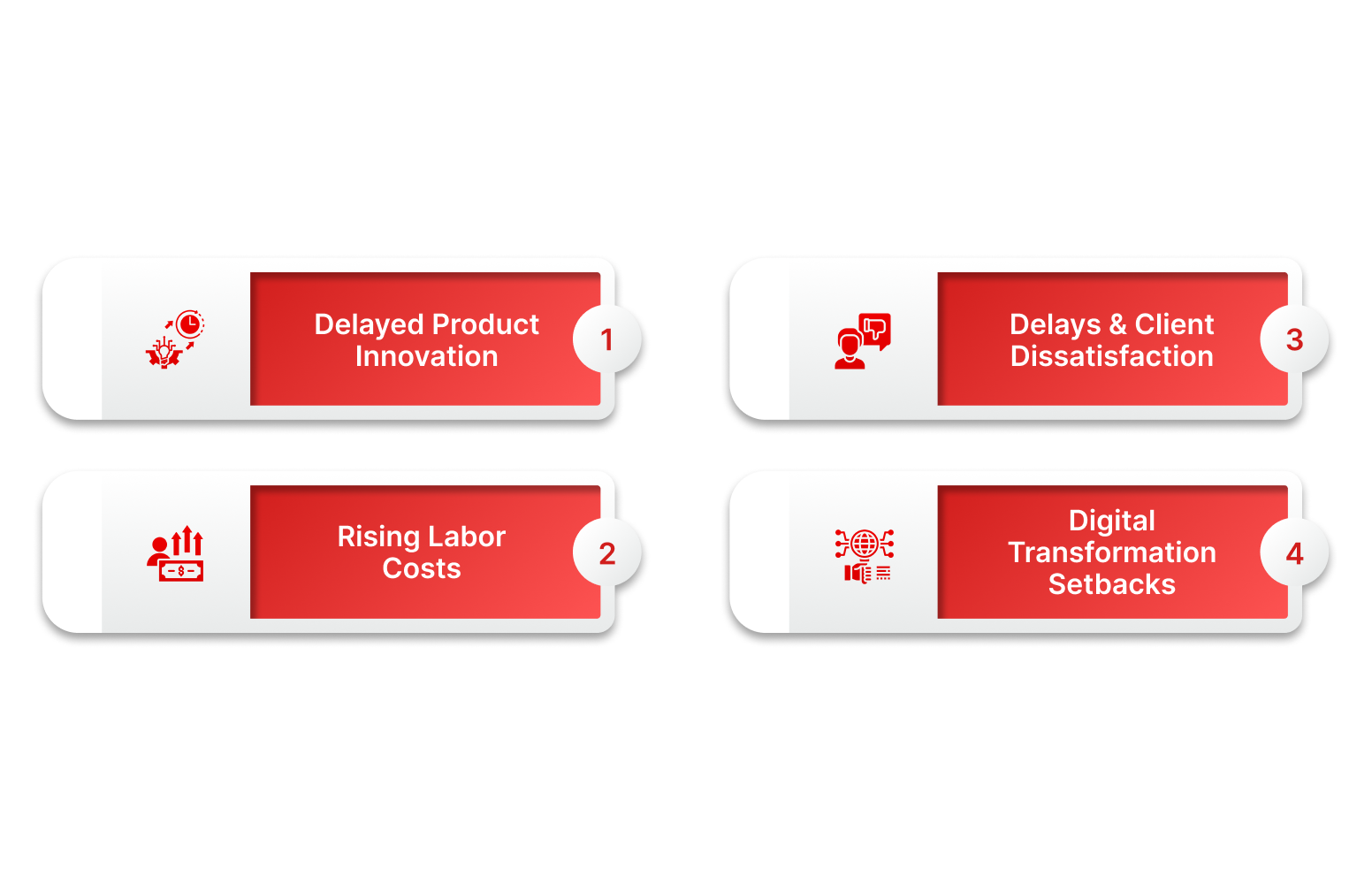
While you may not realize it instantly, your struggle to hire impacts your entire business. The tech talent shortage slows growth, strains budgets, and affects your client outcomes.
- Slowed Product Development and Innovation
When you're short on developers or cloud engineers, product rollouts stall. Internal teams stretch thin, deadlines slip, and features get pushed back. In fast-moving industries, slow development can result in missed market opportunities.
- Increased Labor Costs and Hiring Time
You're likely paying more for mid-level roles than you were just a few years ago. Hiring cycles have also grown longer. The time spent sourcing, interviewing, and onboarding tech professionals adds up, costing both money and momentum.
- Project Delays and Reduced Client Satisfaction
Missed milestones can damage client trust. If you rely on tech delivery for external clients, the talent gap hits your service quality. Project delays, lack of skilled resources, and last-minute team changes all hurt your ability to meet expectations.
- Competitive Disadvantage in Digital Transformation
Digital transformation isn’t optional; it’s expected. If you can’t find the right skills, you’re stuck in transition. Meanwhile, competitors with stronger tech teams gain faster insights, improve user experience, and grow market share.
The longer this shortage continues, the more it compounds. But there are ways to reduce the pressure and real solutions you can implement right now.
Strategies to Address the Tech Talent Shortage
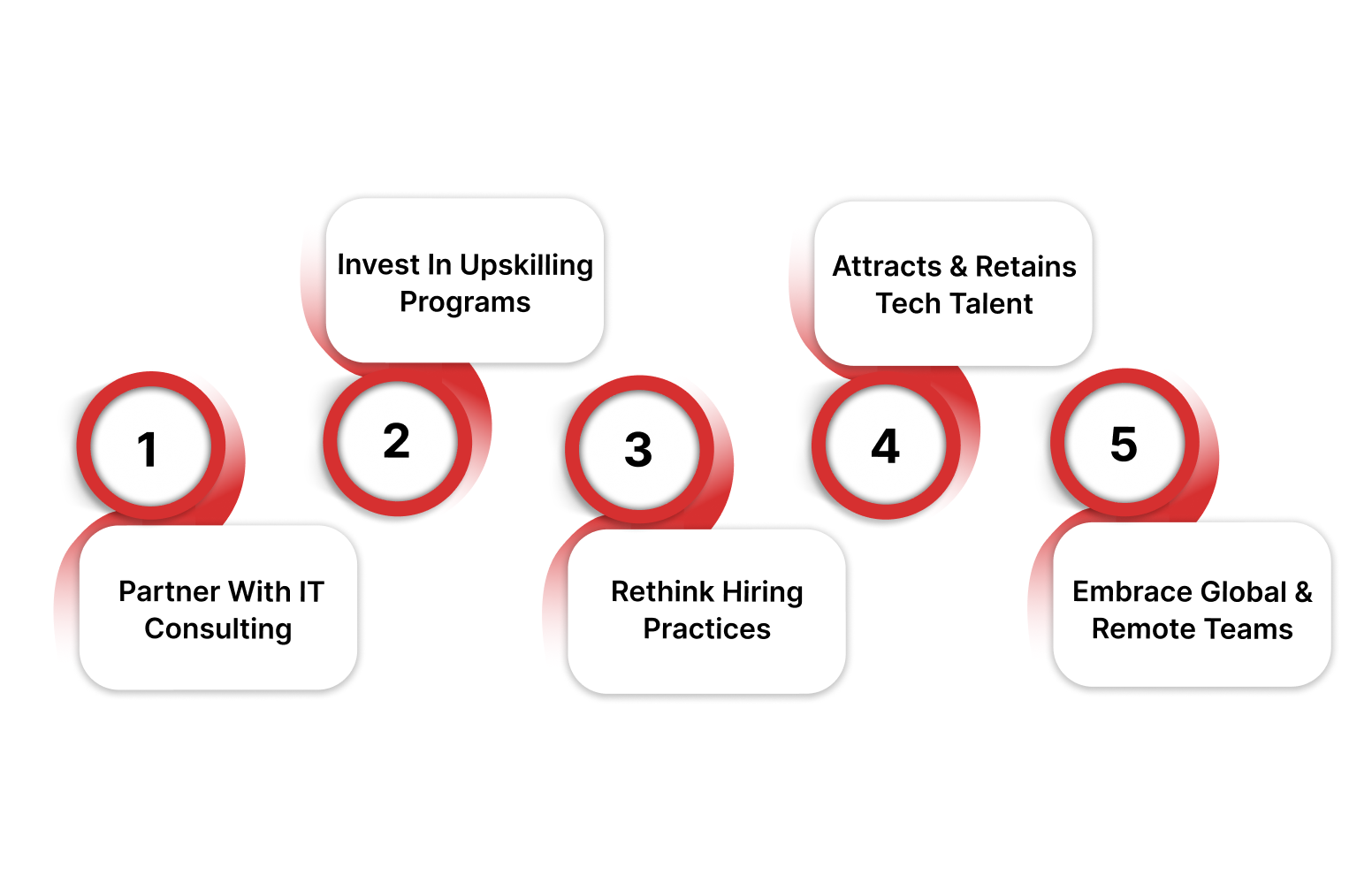
You can't afford to wait for the talent gap to fix itself. The tech talent shortage demands swift, smart, and sustainable action. Whether you're scaling your team or stabilizing existing projects, the right strategies can make all the difference.
1. Partner with IT Consulting and Staffing Firms Like Consultadd
Filling every tech role in-house isn't always practical, especially when demand spikes unexpectedly. Partnering with firms like Consultadd gives you immediate access to skilled, pre-vetted professionals.
Why it works:
- Tap into talent pools with engineers, analysts, and architects already screened and assessed.
- Reduce time-to-hire and avoid long recruitment cycles.
- Access experts in Python, Java, AWS, Azure, and more.
- Scale resources up or down based on your project cycles.
If you need more than staffing, Consultadd also offers full project outsourcing, delivering outcomes, not just headcount.
2. Invest in Upskilling and Reskilling Programs
Can't find the skills externally? Build them internally.
How to start:
- Create learning paths around your tech priorities (e.g., cloud, DevOps, data analytics).
- Use platforms like Coursera, Udemy, or in-house training modules.
- Encourage certifications like AWS Solutions Architect, CompTIA Security+, or Google Data Engineer.
Make upskilling part of your culture. The payoff is faster delivery and less reliance on contractors.
3. Rethink Hiring Practices
Degrees aren't the only indicator of skill. Many top developers are bootcamp-trained or self-taught.
Try this approach:
- Prioritize hands-on skills using coding tests, take-home projects, and live interviews.
- Expand your reach by recruiting from bootcamps, community colleges, or military transition programs.
- Look for mid-career switchers who bring maturity, work ethic, and diverse perspectives.
This shift helps you tap into hidden talent while reducing hiring bias.
4. Build a Culture That Attracts and Retains Tech Talent
Pay attracts, but culture retains. Today's tech professionals want more than just a salary.
What talent expects:
- Flexible work schedules and remote options.
- Continuous learning, supported by training budgets and clear growth paths.
- A burnout-free environment with work-life balance and mental health support.
Don’t forget:
Your company's reputation matters. Candidates check Glassdoor, Reddit, and LinkedIn. Ensure your culture presents well online and offline.
5. Embrace Global and Remote Teams
You're no longer limited to who lives nearby. Remote models unlock access to a worldwide talent pool.
How this helps:
- Fill gaps by hiring nearshore or offshore professionals.
- Scale faster without quality compromise.
- Extend productivity across time zones and run 24/7 operations.
Partners like Consultadd help you build and manage distributed tech teams, giving you flexibility, speed, and access to specialized skills.
How Consultadd Helps Bridge the Talent Gap
When you're facing a tech talent shortage, you don’t just need more resumes; you need the right talent, right when you need it. That’s where Consultadd becomes your strategic partner to help you solve long-term workforce problems. Here's how:
- On-Demand Tech Talent
Skip the lengthy hiring cycles. Access pre-vetted developers, data engineers, QA experts, DevOps pros, and more available for full-time or contract roles. Get the right fit, right now.
- Project-Based IT Consulting
Launching a new product or scaling fast? Our dedicated tech teams deliver end-to-end execution from planning and architecture to deployment and QA. You focus on the strategy we handle delivery.
- Custom Software Development
Need tailored tech? We design and build custom applications, enterprise platforms, and mobile solutions that align with your workflows and goals. Scalable, secure, and built to perform.
- Remote Workforce Solutions
Talent isn’t tied to location. We help you build and manage global teams across time zones, ensuring continuous development, lower attrition, and access to niche skills unavailable locally.
With a pre-vetted talent pool of 200+ consultants and 13+ years of expertise, Consultadd is trusted by Fortune 1000 staffing giants to help you scale confidently without the hiring delays.
Why You Need a Strategic Partner, Not Reactive Hiring
When you’re reacting to every open role, you fall behind. Projects slow down. Innovation stalls. Budgets stretch thin. That’s the cost of the tech talent shortage when you handle hiring alone.
A strategic partner like Consultadd gives you room to breathe. You don’t just fill jobs, you plan ahead. You reduce churn, improve team agility, and keep your pipeline strong, even when internal teams hit capacity.
Instead of spending months in recruitment cycles, you can redirect your focus to growth, delivery, and performance. You gain not just people, but a partner who works with your hiring goals over time.
Hire High-performing Talents Hassle-free With Us>>
FAQs
1. What is causing the current tech talent shortage?
It stems from rapid digital transformation AI, cloud, cybersecurity and a widening skills gap. Traditional education can’t keep pace, remote work increases global competition, and turnover is high, making the shortage structural and long-term.
2. Which tech roles are hardest to fill?
High-demand roles include:
- Software engineers
- Cloud architects
- Data scientists
- Cybersecurity experts
These positions require niche skills and are critical in nearly every industry today.
3. Is it enough to just post more job ads?
No. The market is saturated with open roles, and candidates are flooded with options. Filtering by skills, tapping alternative talent pools, investing in upskilling, and fostering a strong culture are more effective.
4. How can smaller firms compete with tech giants for talent?
They can do this by:
- Prioritizing skill-based hiring over degrees
- Partnering with staffing firms for immediate scale
- Offering flexible, mission-driven, culture-rich work environments
- Building global teams to broaden the talent pool
5. Why isn't upskilling a quick fix?
While essential, upskilling:
- Requires structured programs and senior support
- Takes time, during which projects may stall
- Must be combined with hiring, culture building, and hiring process improvements
6. What long-term strategies help close the talent gap?
Adopt a holistic approach:
- Continuous workforce planning using data-driven forecasting
- Hiring for potential, not just credentials
- Partnering with external experts or staffing firms
- Promoting diversity and inclusivity to expand talent options

Why You Shouldn’t Skip Reference Checks After an Interview
You’ve done the groundwork, sourced candidates, lined up interviews, and kept your client happy.
Now you’re in that nerve-racking space between the final round and the offer.
You need to be sure. So does your client. That’s where reference checks come in.
For hiring managers, these checks are more than formalities.
They’re make-or-break moments. A way to confirm that the person listed on paper is the same in the job.

Reference feedback offers more reliable insights into future job performance than college GPAs, majors, or even written tests.
It’s trusted more than personal recommendations and for good reason.
Think of it as your final layer of truth. No resumes. No rehearsed answers. Just real stories from real people who’ve worked with your candidate. They can clear the path or raise the correct red flags.
Done right, they give you clarity, confidence, and the edge you need to advise your client with conviction.
Let’s understand why reference checks after interviews give you a competitive advantage.
Understanding Reference Checks After Interviews
Reference checks happen after the interview to verify a candidate’s claims. They are conversations with people who’ve worked closely with the candidate.
The goal: uncover real insights about work habits, skills, and character beyond the resume.
Significance of Reference Checks Post-Interview
Reference checks reduce uncertainty in hiring decisions.
They help identify strengths and uncover risks before the final offer. This builds trust with clients by ensuring candidates match their needs and culture.
Advantages of Conducting Reference Checks Post-Interview

When the finish line is in sight, every decision feels like it has higher stakes.
That’s when reference checks become your smartest move, not just for assurance, but for insight.
Here’s how post-interview reference checks give you a real advantage:
1. Real-World, Unfiltered Feedback
No buzzwords. No pitch. Just honest insights from people who’ve actually worked with the candidate.
- You hear how the candidate handled pressure, deadlines, and team dynamics.
- You get stories, not summaries, that help you see the person behind the profile.
2. Final Comparisons Made Clear
Got two great candidates? References help tip the scale with details no resume will reveal.
- Understand how each candidate fits into real-world scenarios.
- Highlight traits that matter most to your client; initiative, accountability, and collaboration.
3. Catch What Interviews Might Miss
Interviews are controlled. References are candid.
They expose blind spots before they become deal-breakers.
- Uncover gaps in communication, ownership, or consistency.
- Address those gray areas with evidence, not assumptions.
4. Reduce Risk and Build Trust
Clients want speed, but not at the cost of quality.
References allow you to deliver both.
- Protect your reputation by presenting only fully vetted talent.
- Position yourself as the consultant who goes the extra mile with purpose.
When you conduct reference checks after the interview, you move with clarity, not guesswork.
At Consultadd, we know it’s not just about filling roles, it’s about finding the right fit. Our talent acquisition process ensures you get fully screened candidates with the right skills and cultural fit. Through thorough reference checks, we help you make confident, informed decisions that benefit both your clients and candidates.
Next, let’s look at the challenges and careful considerations that come with reference checks.
Challenges and Considerations in Reference Checks
Reference checks can sharpen your decision-making but they’re not without risk or responsibility.
One vague response or misinterpreted comment can sway your client’s confidence or delay a decision.
Here’s what you need to watch out for and how to manage it with clarity and control:
1. Negative or Biased Feedback
Not every reference will be glowing. Some might be unfair. Some, just misaligned.
- Past tensions or personal bias can color feedback in subtle ways.
- One bad review doesn’t cancel strong interviews and proven skills.
Pro Tip: Always weigh reference feedback as part of a larger picture, not in isolation.
2. Gaps Between Performance and Perception
Sometimes the reference paints a different picture than your client expects.
- A “quiet performer” may be brilliant but under-recognized.
- A “great communicator” may clash with certain leadership styles.
Pro Tip: Look for patterns across multiple references, not just a single comment.
3. Incomplete or Vague Answers
Some references aren’t prepared. Others may avoid details to protect themselves.
- “They were fine” tells you nothing.
- Lack of examples or context creates more questions than answers.
Pro Tip: Use focused, open-ended questions that prompt specifics, not safe generalities.
4. Legal and Ethical Boundaries
There’s a fine line between helpful insight and sensitive information.
- References may hesitate to share due to liability fears.
- Always keep the process respectful, relevant, and compliant.
Pro Tip: Stick to professional topics, avoid anything personal or protected by law.
Reference checks require balance: clear structure, thoughtful interpretation, and a strong sense of fairness.
Role and Influence of References in Hiring Decisions
Not every glowing review guarantees a placement, and not every vague answer signals rejection.
Reed Hastings, co-founder of Netflix, shared an important insight:
“You’ve got to recognize in references that people are inconsistent with their past. You have to work the network to get close, to find ways of connecting with people.”
This approach helped him build one of the most disruptive work cultures in the world, by looking beyond the surface and truly listening to what others had experienced firsthand.
References are reality. But Hastings took it further than just calling a few names on a resume.
Here’s how reference feedback fits into your decision-making process:
Use reference checks as a tool to guide decisions, not as a gatekeeper to block talent.
Understanding the nuances of culture is essential, as explored in our blog on How Cultural Fit Transforms Hiring Outcomes, a must-read to align talent with company values for lasting success.
Engaging and Communicating with References

You’ve got a promising candidate. Now comes the part that can make or break momentum, reference calls. Done well, they reinforce confidence. Done poorly, they leave you chasing clarity.
Let’s simplify the process with a thoughtful, respectful approach that delivers value fast.
1. Choose the Right Mode of Communication
Not all references are email people. Some prefer calls. Others lean toward video.
- Phone Calls: Quick, personal, and easier for candid responses. Ideal for real-time clarifications.
- Video Calls: Great when tone and facial cues add context. Use when stakes are high.
- Emails (last resort): Convenient, but may get delayed or lack depth. Use when timing is tight.
Pro Tip: Always ask for the reference's preferred communication method when scheduling.
2. Respect Their Time and Preferences
Remember, references aren’t obligated, they’re doing this as a courtesy.
- Ask for a 15-minute window. Stick to it.
- Confirm time zones before scheduling.
- Send a quick email with context; who you are, why you’re calling.
Respect builds rapport. Rapport leads to honest answers.
3. Get to the Point, But Make It Meaningful
Don’t bury them in questions. Stay focused on what actually moves the hiring needle.
Use this structure:
This simple format keeps things clear, structured, and respectful of everyone’s time.
When done right, reference calls aren’t just routine; they're a competitive edge.
Formulating Effective Questions for References
Reference calls aren’t the time to wing it. The right questions can surface gold or clear red flags.
Poorly framed questions waste time and return vague praise. Strong questions lead to clarity, confidence, and better hiring choices.
Here’s how to streamline your reference conversations.
1. Confirm Key Details
Quick checks to validate resume claims:
2. Surface Strengths and Growth Areas
Uncover high-impact traits and learning agility:
- What are their top 2–3 strengths?
- Did you see noticeable growth in their time with you?
Tip: Look for themes across references, consistency is a strong indicator of truth.
3. Assess Interpersonal & Soft Skills
Gauge how they operate under pressure and in a team setting:
4. The Rehire Test
The most telling question:
Would you hire them again?
Remember, if there’s hesitation, dig deeper. It’s often where the truth lives.
To help you navigate this crucial step, check out our blog on Smart Reference Questions to Make Better Hiring Decisions, which highlights targeted questions designed to uncover the most valuable insights about your candidate.
Handling Potential Red Flags from Reference Feedback

You’ve spotted a red flag during a reference call.
Now what? Panic? Reject the candidate outright?
Not so fast.
These moments aren’t deal-breakers, they’re decision-shapers. And with the right approach, they build stronger hires.
1. Start by Identifying the Nature of the Red Flag
Not all red flags carry equal weight. Categorize them first:
2. Ask: Is This Contextual or a Pattern?
Before jumping to conclusions, ask:
- Did this issue surface early or persist throughout?
- Was the environment high-pressure or poorly managed?
- Were there signs of personal growth or ownership?
Remember, context often reveals more than the feedback itself.
3. Reconnect with the Candidate (If Needed)
When the concern feels unclear or subjective, go back to the source, your candidate.
Ask them:
- “How would you describe that working relationship?”
- “What feedback did you receive at the time?”
- “What would you do differently now?”
Growth-oriented answers suggest coachability, not concern.
4. Cross-Reference, Don’t Overreact
You’re not relying on one reference. You’re triangulating truth from multiple data points:
- Interview performance
- Assessment results
- Reference feedback
- The role’s key success traits
Use the red flag as one lens, not the whole viewfinder.
Note: You’re not just screening out risk. You’re shaping better matches.
At Consultadd, we carefully interpret red flags to help you assess and manage potential risks. Our team works with you to turn challenges into opportunities, using our industry experience to find the best talent matches, not just screen out risks.
Conclusion: Embrace the Full Value of Reference Checks in Post-Interview Decisions
When placements go sideways, it’s rarely the resume or interview that misleads, it’s what you didn’t verify.
Reference checks hold the final piece of the puzzle. And skipping them? That’s a risk you can’t afford.
You know the pressure: Clients want reliability, speed, and talent that won’t flake six weeks in.
By digging into reference feedback, you don’t just place faster, you place smarter, with staying power.
At Consultadd, we turn those insights into action. We transform how staffing agencies hire by delivering:
- Safe, reliable hires: Vetted for compliance, skill, and fit ready to contribute from day one.
- Lower turnover risk: Our candidates are invested, not just available. Long-term success is the goal.
- Seamless compliance: Visa complexities? Paperwork? Regulatory hurdles? We've already handled it.
- Continuous support: Our job doesn’t end at placement. We support your success far beyond Day 1.
And we don’t just say it, we deliver:
- 1:1 account managers for every partner
- Top 100 candidates placed in the past 12 months
- Trusted by ~65 satisfied staffing firms in just the last year
- MSAs with industry giants like Robert Half and Teksystems
- 5K+ successful staffing engagements across 14+ years of business
- Talent sourced in under 24 hours
- Ready-to-deploy professionals with verified experience
- Strong university relationships for fresh, job-ready talent
Reference checks are your final filter, your tool to turn hesitation into confidence.
Let us help you use them to their fullest, so every hire is one you’ll stand behind.

Hiring for Diversity in Tech: 14 Proven Strategies
Let’s be honest, clients want diverse tech talent and you're still waiting for callbacks.
You’ve sifted through a dozen resumes, followed up twice, and the one promising candidate? Ghosted.
The pressure to deliver “diverse and qualified” isn’t just rising, it’s defining who staffing firms trust.
This isn’t just a staffing challenge. It’s a business-wide opportunity.
Because companies aren't just asking for diversity, they're demanding it. And they’re not wrong.
Research indicates 76% of job seekers and employees say workforce diversity matters when evaluating job offers. It’s not just about fairness, it’s about building teams that reflect the world they serve.
The reality? Tech still has a long way to go.
Underrepresented groups continue to be just that, underrepresented, despite all the panels, pledges, and promises.
But the right strategy can change that. Diversity hiring in tech isn’t impossible; it just requires a new approach.
Let’s understand why building more inclusive teams leads to stronger innovation, better business outcomes, and happier clients.
Importance and Benefits of Diversity in Tech
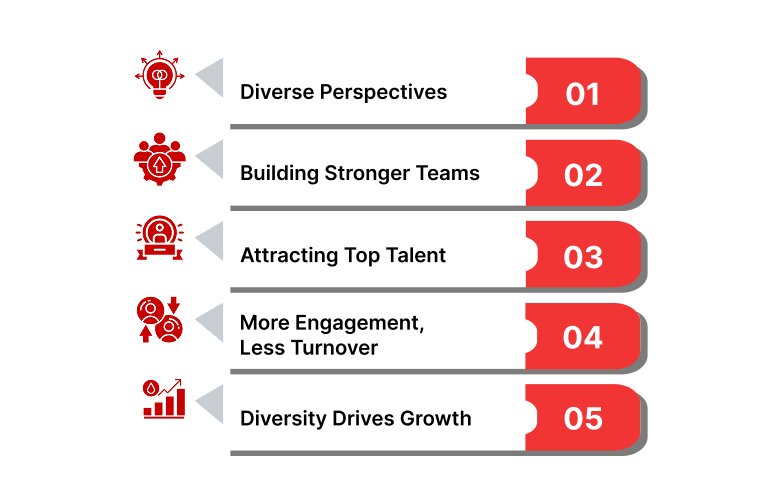
Diversity in tech isn’t just about doing the right thing, it’s about building teams that thrive.
In a world where innovation moves fast and client expectations shift even faster, diverse talent gives you the edge. Different backgrounds bring different ways of thinking and that’s where real breakthroughs begin.
1. Fresh Ideas Come From Varied Perspectives
When people think differently, solutions look different. Diverse teams ask better questions, challenge defaults, and come up with smarter answers.
That’s the kind of creativity that keeps your clients coming back.
2. Better Teams Build for More People
A team that reflects different life experiences naturally builds more inclusive products.
That means fewer blind spots, more empathy in the design, and better results for a broader audience.
3. A Brand That Attracts Top Talent
People want to work where they feel a sense of belonging. Companies that live and breathe inclusion attract the kind of talent that sticks around and tells their peers about it. That reputation is something job boards can’t buy.
4. More Engagement, Less Turnover
Inclusive teams don’t just work better, they work happier. When people feel respected, they show up with more energy, collaboration, and commitment.
That’s the kind of stability your clients count on.
5. Diversity Fuels Long-Term Growth
The most resilient teams aren’t built on sameness. They’re built on a mix of voices, strengths, and styles. When you build that kind of team, growth follows internally and for every client you serve.
So, how do you turn good intentions into great hires?
Let’s learn 14 practical strategies to make diversity hiring in tech real and repeatable.
Key Strategies to Enhance Diverse Hiring
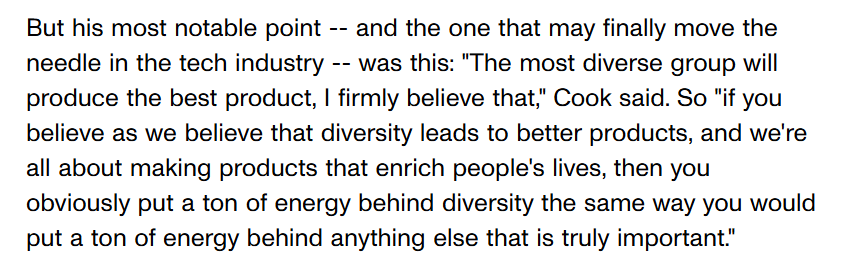
Tim Cook, CEO of Apple, has been outspoken about the critical role diversity plays in innovation. He believes that diversity is directly linked to creating products that enrich lives. He shared,
“If you believe as we believe that diversity leads to better products, and we're all about making products that enrich people's lives, then you obviously put a ton of energy behind diversity the same way you would put a ton of energy behind anything else that is truly important.”
His approach shows that diversity isn’t an afterthought; it’s central to business success. For hiring managers, this means treating diverse hiring as a core mission, not just a checkbox.
Therefore, here’s how to make diversity hiring in tech consistent, scalable, and part of your competitive edge.
1. Write Inclusive and Accessible Job Advertisements
Job ads are your first chance to welcome diverse talent. The right words make all the difference.
- Use Clear, Welcoming Language: Keep language simple and inviting.
- Focus on Essential Skills: List only the must-have qualifications.
- Highlight Flexibility and Accessibility: Mention remote work and accommodations clearly.
- Avoid Biased Language: Use gender-neutral and unbiased terms.
- Structure for Easy Reading: Use bullet points and short paragraphs.
- Make Application Process Clear: Explain each step in plain terms.
2. Reevaluate Job Requirements and Qualifications
Sticking to rigid job criteria often blocks talented candidates from diverse backgrounds. Reexamining what truly matters can open doors to fresh potential.
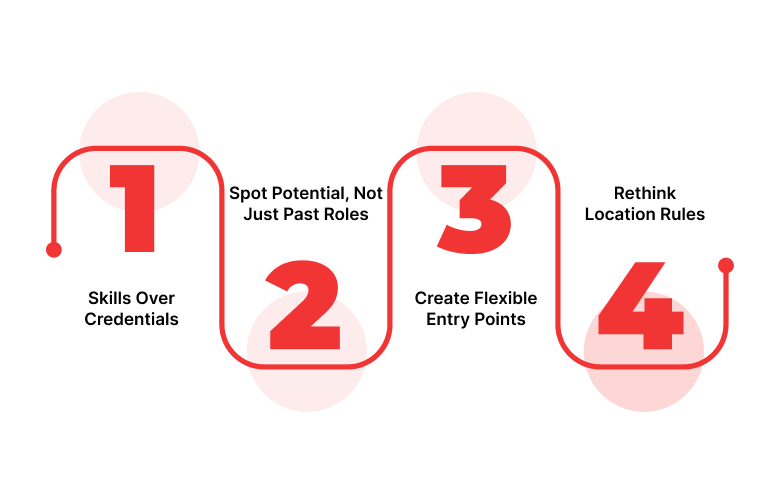
Skills Over Credentials
Shift focus to what candidates can do, transferable skills and real achievements often trump formal qualifications.
Spot Potential, Not Just Past Roles
Look for adaptability and eagerness to grow, not only direct experience.
Create Flexible Entry Points
Design roles with varying levels or pathways to include non-traditional backgrounds.
Rethink Location Rules
Remote work options can welcome candidates who can’t relocate, expanding your reach.
3. Set Clear Diversity and Inclusion Metrics
Clear, measurable goals give diversity efforts direction and power. Without them, progress can feel vague and slow. Use metrics as your compass to track success and refine your approach.
Set ambitious yet realistic targets and share these metrics openly with your clients and teams. This transparency fuels trust and continuous improvement.
Meeting diversity goals is only possible when hiring is both fast and accurate. That’s where support like Consultadd comes in. We offer pre-screened, ready-to-hire candidates screened for both skill and compliance, helping you reduce sourcing time and hire with confidence.
4. Use Diverse Interview Panels
Diversity in interview panels brings fresh viewpoints, cuts down bias, and shows candidates you’re serious about inclusion.
Why Diverse Panels Matter
Imagine uncovering insights you’d miss with a uniform panel. Different backgrounds bring different questions and perspectives. It leads to smarter, fairer hiring decisions.
Plus, candidates notice when they meet diverse voices. It builds trust and makes them feel genuinely welcome.
How to Build Your Panel
- Include people from varied backgrounds and roles.
- Rotate panel members regularly for fresh viewpoints.
- Train interviewers on inclusive and fair assessment.
5. Provide Diversity Training and Bias Awareness
Building a truly diverse team starts with awareness. Training helps your hiring teams spot hidden biases and build more inclusive hiring habits.
Why Bias Awareness Matters
Unconscious bias can silently block top diverse talent from getting a fair shot. Awareness training shines a light on these blind spots.
When hiring teams recognize their biases, decisions become clearer, fairer, and more aligned with company goals.
What Effective Training Looks Like
- Interactive sessions: Engage teams with real-life scenarios and role plays.
- Regular refreshers: Bias awareness isn’t a one-time task; it’s ongoing.
- Clear objectives: Focus on measurable goals like improved interview fairness.
6. Implement Blind Hiring and Structured Interviews
Bias in hiring can block top talent. Blind hiring and structured interviews create fairness and clarity.
7. Use AI and Technology to Reduce Bias
Harness AI to turn recruitment guesswork into precision. It creates a fairer, more level playing field.
How AI Minimizes Bias
- AI screens candidates based on skills only.
- Tools apply the same criteria to everyone.
- Data uncovers hidden bias trends.
8. Make the First Move to Offer Accommodations
Being proactive about accommodations isn’t just thoughtful, it’s powerful. It tells candidates they belong here.
Why This Matters
- Many candidates stay silent, fearing rejection or stigma.
- Candidates with disabilities often carry the emotional labor of self-advocating.
- When recruiters lead, it builds safety, trust, and loyalty from day one.
What Forward-Thinking Hiring Managers Do
- Include inclusion statements in every job posting.
Example: “Need accommodations? We’ve got you covered—just let us know.” - Train interviewers to ask sensitively and professionally.
Don’t wait for the candidate to speak up. - Standardize the ask in email templates and pre-screen calls.
Remove the guesswork for everyone. - Create accommodation playbooks for clients.
Help them respond quickly and appropriately to requests.
What It Says About Your Brand
- You don’t just meet compliance, you lead with care.
- You treat inclusion as a baseline, not a bonus.
- You reduce friction in the hiring process for everyone.
Partnering with Consultadd takes this even further, handling everything from visa documentation to relocation and benefits, ensuring candidates stay engaged and feel supported at every step.
Pro Tip: Always offer before they ask. Think of accommodations like coffee at a meeting, offered, not earned.
9. Engage Diverse Employees for Referrals
Referrals aren't just about filling roles, they’re about shaping who gets the opportunity to show up.
- Ask clearly: Don’t wait for referrals, invite them with purpose.
“We’re seeking more voices like yours. Who should we know?” - Show the impact: Let employees know how their referrals shape the company.
Track and share hiring outcomes. - Reward equitably: Make sure bonuses aren’t tied only to executive-level hires.
Every referral should feel valued. - Spotlight success: Share stories of diverse hires that came through referrals.
It builds a referral culture.
Not sure if a staffing partner can help to engage with underrepresented talent? Our blog: What to Expect When Working with a Staffing Agency: A Complete Overview dives into how the right agency adds real value, especially when inclusion is a hiring priority.
10. Promote the Organization’s Diversity Credentials
Candidates aren’t just looking for jobs, they’re looking for belonging. Show them they’ll find it here.
- Feature employee voices on your site and social platforms. Let diverse talent share their stories.
- Highlight DEI stats in job postings, e.g., “45% of our leadership identifies as BIPOC.”
- Showcase partnerships with minority-focused organizations and community groups.
- Mention inclusive benefits like mental health days, flexible hours, or neurodiverse hiring practices.
Where to Place These Proof Points
11. Launch Targeted Internship and Returnship Programs
Fresh starts are powerful. Whether it’s a student or someone re-entering the workforce, both crave opportunity.
Why These Programs Matter
- Internships open doors for early-career talent from underrepresented communities.
- Returnships reignite careers for parents, veterans, and professionals after a break.
- Candidates get a second chance, and you build a loyal, untapped talent pipeline.
- Staffing teams meet DEI goals, while reducing early attrition from mismatched hires.
For roles with flexible, project-based needs, Why C2C Contract Hiring Solutions Are Ideal for Modern Businesses explains how contract hiring supports returnships and internships effectively especially in tech environments.
12. Expand Sourcing to Diverse Talent Pools
The best talent isn’t always looking in the same places you are. To build truly diverse, high-performing teams, staffing agencies must go beyond the obvious. That’s where transformation starts.
How do you begin expanding your sourcing right now?
- When was the last time you reviewed your sourcing channels for diversity?
- Are your job descriptions inclusive and welcoming to all? Tools like Textio can help.
- Could you build partnerships with community groups or advocacy organizations?
- Are you sharing stories that show your success placing diverse candidates?
13. Engage with Professional Communities and Host Inclusive Events
Building genuine connections with professional communities isn’t just smart, it’s transformational. When hiring managers become active members, they open doors to rich, diverse talent pools and create lasting trust.
- Join diverse professional groups
Access untapped talent pools and expand your candidate reach. - Participate actively in online forums
Build trust and showcase your agency’s commitment to inclusivity. - Host events focused on inclusion
Create a welcoming space that attracts diverse candidates. - Partner with affinity groups
Strengthen relationships and enhance referral pipelines. - Offer mentorship sessions during events
Empower candidates and improve engagement. - Share success stories from diverse hires
Inspire confidence in your agency’s dedication to diversity.
By showing up, supporting, and celebrating diverse communities, you’re not just expanding your network—you’re creating an environment where everyone belongs.
Tracking and Measuring Diversity Efforts
Measuring diversity efforts turns good intentions into real, visible progress. It empowers you to prove impact and stay accountable.
Conclusion: Advancing Diversity in Tech Through Strategic and Inclusive Recruitment
Building diverse tech teams may feel overwhelming, but it’s your key to driving innovation and lasting impact. Staffing agencies that embrace inclusive recruitment don’t just fill roles—they become catalysts for real change.
Consultadd is your trusted partner in this transformation. With over 14 years in business and 5,000+ successful staffing engagements, we deliver top talent fast—often within 24 hours. Our strong ties with universities and partnerships with industry leaders like Robert Half and Teksystems ensure you get access to a wide and diverse candidate pool.
Here’s how Consultadd elevates your diversity hiring efforts:
- Safe, reliable hires: Every candidate is thoroughly vetted for experience and compliance, giving you confidence from day one.
- Lower turnover risks: Our candidates are committed to long-term success, reducing costly disruptions.
- Seamless compliance: We handle visa issues, documentation, and regulatory requirements so you don’t have to.
- Continuous support: Post-placement, we stay engaged to ensure your hires thrive and grow.
- Dedicated 1:1 account managers: Personalized attention ensures your unique needs are met with precision.
- Proven track record: ~65 satisfied staffing companies and 100+ top candidates provided in the past year alone.
By partnering with Consultadd, you gain the confidence, resources, and speed to lead in diversity-focused tech recruitment. Together, we simplify complexity and turn your diversity goals into reality.
Ready to transform your recruitment strategy and build truly inclusive tech teams? Connect with us today and get closer toward lasting success.
.jpeg)
W-2 vs 1099: A Quick Comparison for Better Decision-Making
You finally find the right candidate that’s skilled, available, and ready to move.
Then comes the question: “Will they be W-2 or 1099?”
For account managers, this isn’t just red tape. The classification affects payroll, compliance, taxes, and your relationship with the client.
Get it wrong, and you could face back-and-forth emails, legal risk, or worse, client distrust.
Get it right, and everything runs smoother: faster onboarding, fewer issues, and peace of mind for everyone involved.
In this article, we break down what W-2 and 1099 really mean and why understanding the difference matters more than ever.
TL;DR
- W-2 workers require tax withholdings, benefits, and labor law protections—ideal for long-term roles with client oversight.
- 1099 contractors offer flexibility and cost savings, but come with audit risk if used where the client controls work, tools, or schedule.
- States apply stricter rules, making misclassification a legal and financial minefield.
- Staffing teams must align classification with project needs, client expectations, and candidate preferences to avoid risk and ensure lasting placements.
Understanding W-2 and 1099 Employment
When speed matters and compliance is critical, knowing how to classify talent becomes non-negotiable.
A wrong call here isn’t just an admin error; it’s a financial and legal liability waiting to happen.
Let’s understand the two classifications that shape every staffing decision.
W-2 Employment: Structured, Secure, and Company-Led
W-2 workers are considered employees. They’re on payroll and tied to your client’s business structure.
Key traits of W-2 employment:
- Employer withholds and pays taxes
- Eligible for benefits like insurance and PTO
- Protected by labor laws and wage standards
These workers often follow a fixed schedule, use company tools, and report to company leadership.
1099 Employment: Flexible, Independent, and Project-Based
1099 workers are self-employed. They control how, when, and where the work gets done.
Key traits of 1099 employment:
- Responsible for their own taxes
- Not entitled to benefits or protections
- Use their own tools and systems
These workers take on short-term assignments and often juggle multiple clients.
The table below is a quick comparison of W2 vs 1099:
Remember, the clearer the classification, the smoother the placement and the lower the compliance risk.
At Consultadd, we specialize in C2C (Corp-to-Corp) placements, offering the flexibility of 1099 with the structure and compliance benefits clients often expect from W-2 setups. By delivering pre-vetted, ready-to-work professionals, we help staffing firms avoid hiring delays, reduce risk, and maintain high candidate quality without the usual administrative burden.
Employment Relationships
Every hire is more than a reW-2 Employment: Structured, Secure, and Company-Ledsume match; it’s a relationship with legal and financial consequences.
Therefore, correct classification protects your business and builds trust.
Here’s what defines the difference.
W-2: The Employer-Employee Relationship
A W-2 worker has a structured, ongoing relationship with the hiring company.
Key characteristics:
- The company directs when, where, and how work is done
- The relationship is typically long-term or indefinite
- Workers are entitled to benefits and protections under labor laws
This model offers more control but also comes with greater responsibility for compliance.
1099: The Independent Contractor Relationship
A 1099 contractor has a business-to-business relationship with the hiring organization.
Key characteristics:
- Contractors control their own hours, methods, and work processes
- The arrangement is often project-based or time-limited
- They don’t receive benefits, overtime, or workplace protections
This model offers flexibility, but it can expose businesses to legal risk if misused.
W2 vs 1099: How They Compare
Tax Implications
Taxes aren't just numbers on a spreadsheet; they can make or break your staffing margins.
One mistake can mean audits, delays, and broken trust.
Let’s look at how W-2 and 1099 impact tax responsibilities differently.
W-2: Employer-Supported Tax Handling
With W-2 employees, the employer shoulders most of the tax administration burden.
Employers are responsible for:
- Withholding income taxes
- Paying Social Security and Medicare contributions (50%)
- Handling unemployment and workers’ compensation taxes
Employees receive:
- A W-2 form at year-end
- Regular paychecks with taxes already deducted
This model is higher-effort, but it reduces audit risks and supports long-term compliance.
1099: Self-Managed Tax Responsibility
1099 contractors manage their own taxes. This lowers employer burden but increases classification risk.
Contractors must:
- File self-employment taxes
- Pay full Social Security and Medicare contributions
- Report earnings via Form 1099-NEC
Employers are only responsible for issuing a 1099 form if payments exceed $600.
Before diving into tax details, ensure the candidate is legally eligible to work. Read: What Is a Work Authorization? Explained.
Benefits and Compensation
A strong compensation package can turn hesitation into commitment and benefits, beyond pay, and shape how candidates view the role and employer.
Here’s how W-2 and 1099 differ when it comes to perks and pay.
W-2: Structured, Secure, and Sticky
W-2 roles offer more than a paycheck; they create a sense of belonging and safety.
Typical W-2 benefits include:
- Health, dental, and vision insurance
- Paid time off and sick leave
- Retirement plans (401(k), pensions)
- Bonuses and overtime pay
This model helps attract cautious candidates looking for stability and long-term growth.
It also boosts retention, reducing the constant cycle of sourcing and rehiring.
1099: Flexible Pay, Fewer Benefits
Contractors often earn higher hourly rates, but benefits are rarely included.
Most 1099 roles do not offer:
- Health insurance
- PTO or holidays
- Employer-sponsored retirement plans
Instead, 1099s get flexibility in how, when, and where they work.
But freedom often trades off consistency; better offers mean they move on.
Benefits Breakdown: At a Glance
Compliance Pitfalls: Penalties, Lawsuits, and State-Level Surprises
Misclassifying a worker isn’t just a paperwork error; it can unravel client trust, trigger legal action, and result in hefty financial penalties.
What’s at Stake?
A wrong W-2 vs. 1099 call could lead to:
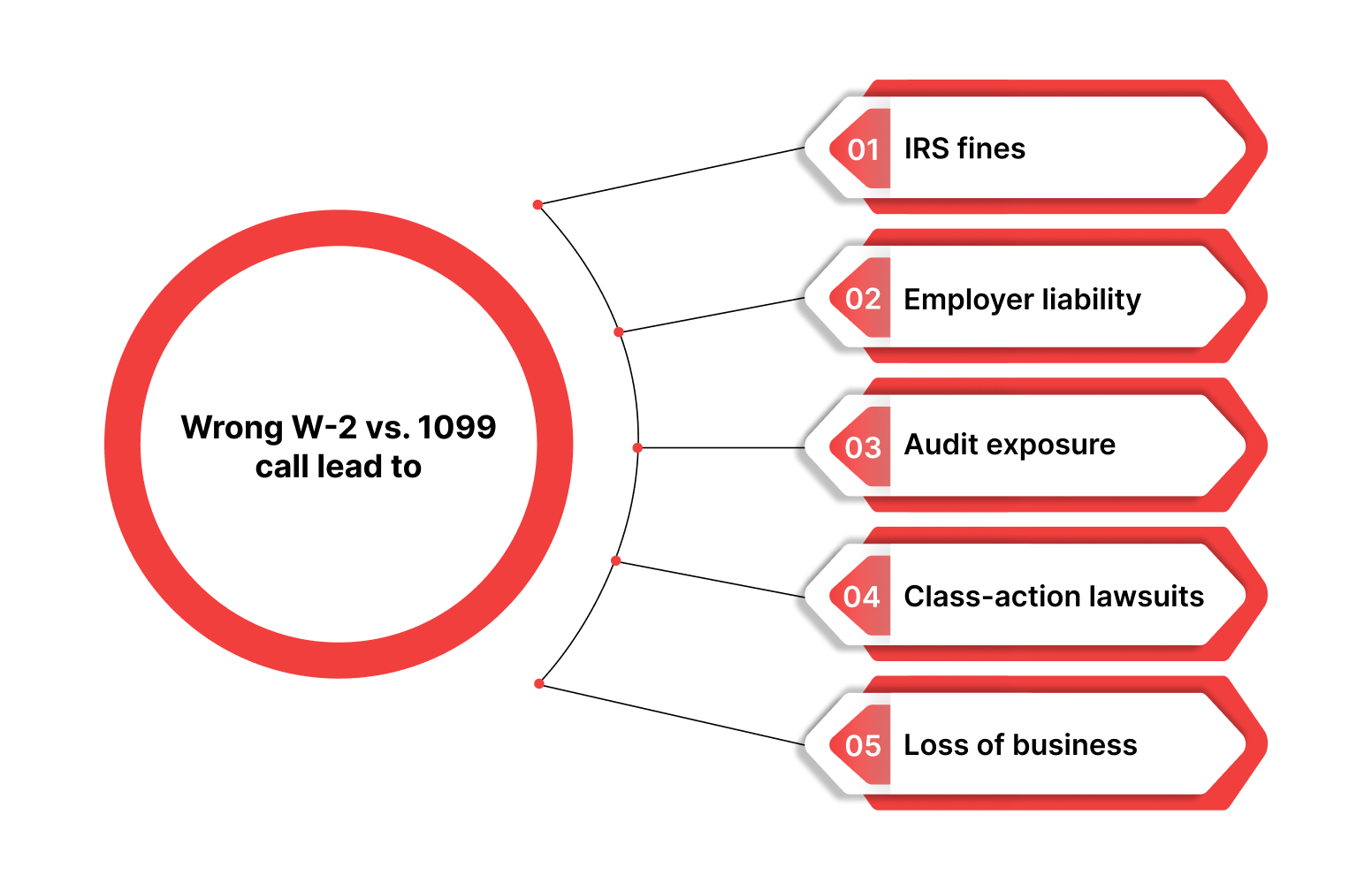
- IRS fines (e.g., $50 per unfiled W-2, plus interest and back taxes)
- Employer liability for unpaid Social Security and Medicare taxes
- Audit exposure that disrupts operations and damages credibility
- Class-action lawsuits (especially common in states like California and New York)
- Loss of business if clients view your agency as a compliance risk
Why State Rules Matter
Some states, like California (ABC test), apply stricter rules than federal guidelines. That means a contractor in one state might legally need to be a W-2 employee in another.
That’s why compliance shouldn’t be left to guesswork.
For a deeper look at proper worker classification, read: Classifying Employees the Right Way: A Compliance Guide.
Implications for Candidates and Clients
Hiring isn’t just a business transaction; it’s a ripple effect that shapes lives and impacts reputations.
Each classification choice (W-2 or 1099) comes with trade-offs, not just for workers, but for the companies hiring them.
For Candidates: Security vs. Independence
Job seekers today are more informed, cautious, and selective.
They’re asking: “Will this role support my long-term goals or just cover my bills?”
W-2 pros:
- Predictable income and benefits
- Protection through labor laws
- Eligibility for unemployment and workers’ compensation
W-2 cons:
- Less control over the schedule
- Taxes withheld from each paycheck
1099 pros:
- Greater freedom and earning potential
- Ability to juggle multiple clients
1099 cons:
- No employer-sponsored safety net
- Higher risk, especially during economic dips
Some candidates thrive with autonomy. Others need structure to perform at their best.
For Clients: Risk, Loyalty, and Legal Fallout
The decision isn’t just about payroll costs, it’s about stability, culture, and risk exposure.
W-2 workers offer:
- Stronger loyalty
- Easier integration into teams
- More control over hours, training, and tasks
But they also mean:
- More paperwork and upfront costs
- Compliance with federal and state employment laws
1099 contractors bring:
- Cost savings on benefits and taxes
- Short-term agility for project-based work
But also come with:
- Higher turnover risk
- Potential penalties for worker misclassification
Missteps here don’t just hurt your budget; they can derail your client relationships and credibility.
Partner with Consultadd to eliminate compliance guesswork.
We handle all documentation, including visas, payroll, 401(k), benefits, and insurance, while delivering candidates who meet strict state and federal requirements.
Factors to Consider When Choosing Between W-2 and 1099
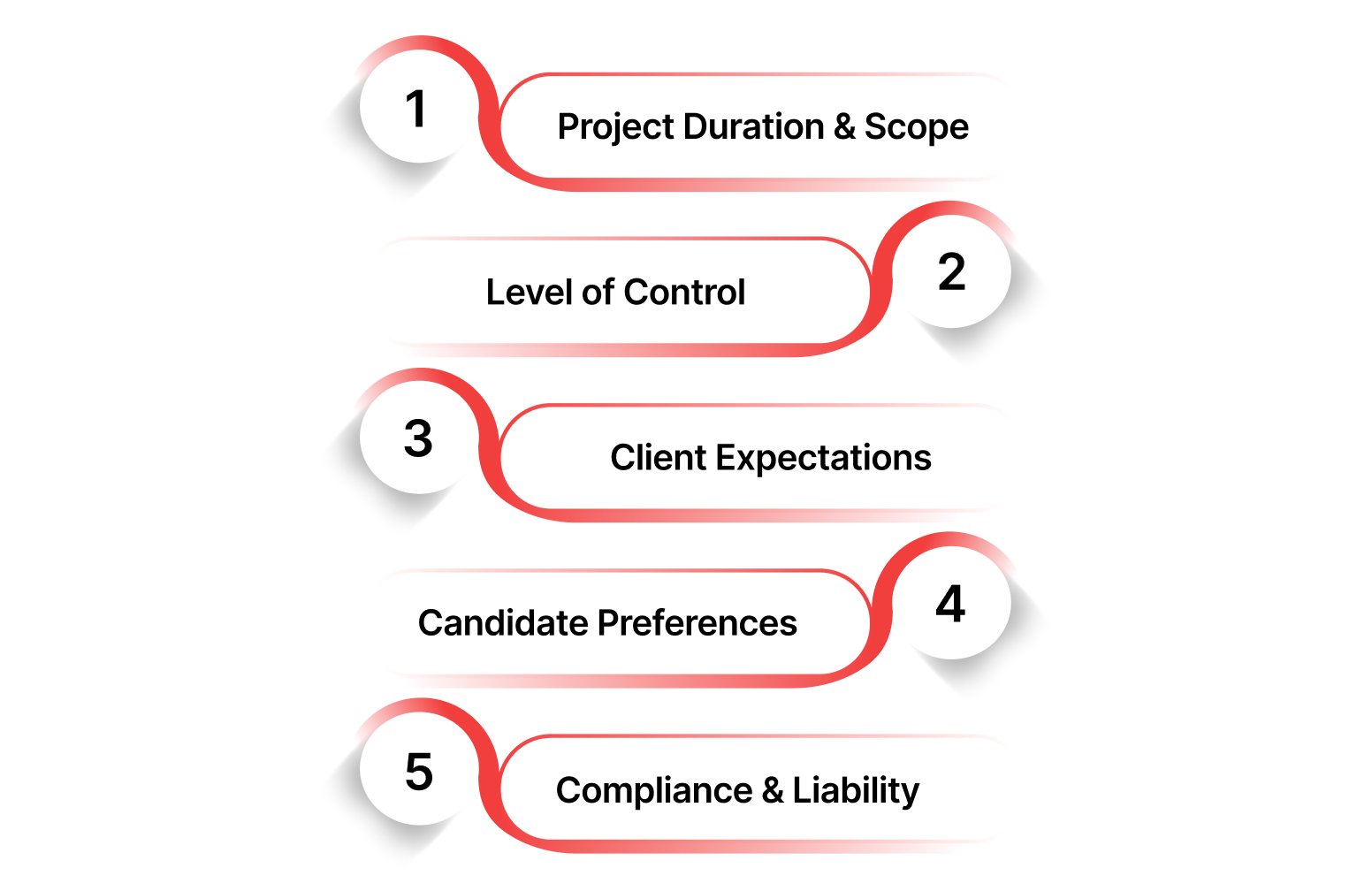
Every role is different. Every client has unique expectations.
Choosing between a W-2 or 1099 hire isn’t just administrative, it’s strategic.
1. Project Duration and Scope
- Short-term and project-based roles? 1099 contractors are preferred.
- Longer engagements with set hours? W-2 makes more sense.
Misaligned contracts frustrate clients and increase attrition.
2. Level of Control
- Need to manage hours, tools, or processes? That’s a W-2 requirement.
- Is the worker self-directed with niche expertise? Then 1099 may be suitable.
Control is a legal trigger. Missteps here could cost thousands in penalties.
3. Client Expectations
Clients want peace of mind, especially with high-visibility roles.
- Some demand a W-2 for tighter accountability.
- Others prefer 1099 to reduce overhead.
Understanding their risk appetite helps you recommend the right model.
4. Candidate Preferences
Skilled professionals know their worth and how they want to work.
- Some won’t touch 1099 roles due to a lack of benefits.
- Others chase 1099 flexibility and tax advantages.
Know what makes top talent say “yes” and stick around.
5. Compliance and Liability
Misclassifying workers is one of the fastest ways to lose trust.
- W-2 requires withholding, unemployment, and proper documentation.
- 1099 puts the burden on the worker, but the liability still loops back to you.
When in doubt, err on the side of caution and compliance.
The right choice isn’t always easy. But when it aligns with the job, the client, and the talent, it works.
Conclusion: W-2 vs 1099 Isn’t Just a Model, It’s a Business Decision
As a hiring manager, you don’t just place candidates; you protect client timelines, reduce risk, and shape long-term business outcomes.
Choosing between W-2 and 1099 goes beyond classification. It’s about control, compliance, and the quality you stand behind.
That’s where Consultadd steps in, not just to fill a role, but to future-proof your hiring strategy.
We ensure:
- Safe, reliable hires: Each candidate is thoroughly vetted for experience, compliance, and readiness from day one.
- Lower turnover risks: Our professionals stay committed, no disappearing acts, no last-minute drop-offs.
- Seamless compliance: Visa paperwork? Regulatory updates? We handle it all, so you don’t have to.
- Ongoing support: Post-placement, we’re still in the game, making sure hires grow with your clients.
Backed by:
- 14+ years in business
- 5,000+ successful staffing engagements
- ~65 happy staffing firms onboarded just last year
- MSAs with industry leaders like Teksystems and Robert Half
- Top 100 candidates sourced within the last year alone
- 1:1 account managers who understand your goals and urgency
- Ready-to-deploy talent, often sourced in under 24 hours
- And strong university partnerships to support fresh, emerging talent pipelines
W-2 or 1099, whatever the model, you deserve a partner who treats your urgency like their own.
Consultadd is that partner.
Let’s talk about how we can help you staff smarter, faster, and with confidence.
FAQs
1. What is the biggest tax difference between a W-2 and a 1099?
W-2 employees have taxes withheld and split with the employer, including Social Security and Medicare. 1099 contractors pay self-employment tax, covering the full 15.3% for Social Security and Medicare themselves.
2. What is the difference between a W-2 and a 1099 in California?
California uses the strict ABC test to classify workers. Most roles with client control over work must be W-2. Misclassifying a 1099 contractor under these conditions can result in penalties and back taxes.
3. Which is best, W-2 or 1099?
W-2 is best for long-term roles needing oversight, benefits, and compliance. 1099 suits short-term, independent projects. The right choice depends on work scope, control, and legal requirements, not preference alone.