

Introduction
You see a job listing you like, then spot the word "contract" next to it. Suddenly you're not sure what you'd be signing up for. Is it a real job? Do you get benefits? Who handles your taxes?
So what does contract work mean? In plain terms, contract work is a job you take for a set project or period rather than a permanent, open-ended role. You agree to deliver specific work, usually for a fixed time or a defined deliverable, and the arrangement ends when the contract does.
That's the short version. The longer version matters, because "contract work" covers a few different setups, and each one changes how you get paid, who handles your taxes, and what protections you have. This guide walks through the types, the money, and the trade-offs so you can decide with your eyes open.
TL;DR
- Contract work means taking a role for a defined project or time period instead of a permanent position.
- It comes in a few forms: W2 contract, 1099 independent contractor, corp-to-corp, and contract-to-hire.
- The core difference is control and taxes. Employees have taxes withheld; independent contractors handle their own.
- Contractors often earn a higher hourly rate but usually give up benefits like health insurance and paid time off.
- Classification is a legal matter, and the IRS looks at behavioral control, financial control, and the relationship.
What contract work actually means
Contract work is work you do under an agreement that spells out the scope, the pay, and the timeline. When the project wraps or the term ends, so does the arrangement, unless both sides choose to extend.
The defining feature is that it's temporary by design. A permanent employee is hired to do ongoing work with no end date in mind. A contractor is brought in for a reason and a window: a project to ship, a gap to cover, a skill the team doesn't have in-house.
Here's the part that confuses people. "Contract work" isn't a single tax or legal status. It's an umbrella. Under it sit several arrangements that look similar on the surface but work very differently once you read the fine print.
That difference usually comes down to one question: are you an employee of someone, or are you running your own show? The answer decides your taxes, your benefits, and your protections.
The main types of contract work
Most contract roles fall into one of four buckets. Knowing which one you're being offered tells you almost everything about how the job will actually work.
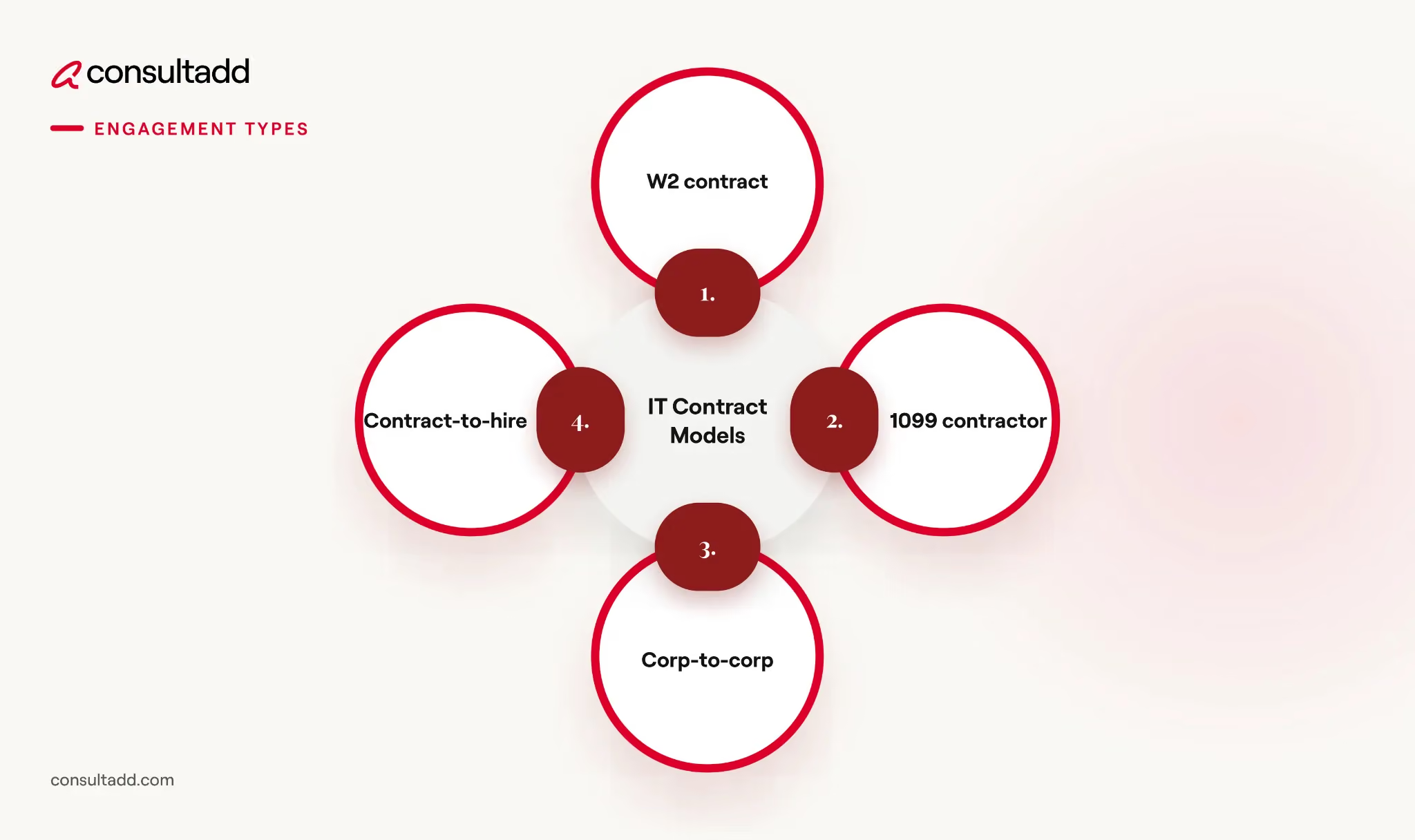
W2 contract
A W2 contract means you're an employee, often of a staffing agency, placed on a client's project for a set time. Taxes come out of your paycheck automatically, and the agency may offer some benefits. You get an employee's protections and a temporary role at the same time.
1099 independent contractor
Here you're self-employed. You contract your services to a client, use your own tools, set much of your own schedule, and handle your own taxes. The client reports what they paid you on a Form 1099-NEC. No withholding, no employer benefits.
Corp-to-corp
In a corp-to-corp setup, you work through your own registered business, usually an LLC or S-corp, and the client contracts with that business rather than with you as an individual. It's a business-to-business relationship. This is common in tech and IT staffing.
ConsultAdd breaks down how corp-to-corp arrangements work for staffing if you want the mechanics.
Contract-to-hire
This one is a trial run. You start on a contract, and if it goes well for both sides, the role converts to a permanent position. It lets an employer test fit before committing, and it lets you test the company too.
ConsultAdd's look at the contract-to-hire model covers how the "try before you buy" approach plays out.
Here's how the four compare at a glance.
How pay and taxes work in contract roles
This is where contract work surprises people, usually at tax time. The rules split along one line: are you an employee or are you self-employed?
If you're a W2 contractor, your employer withholds federal, state, and local income taxes, plus your half of Social Security and Medicare. The employer pays the other half. It works like any regular paycheck.
If you're a 1099 contractor or corp-to-corp, nobody withholds anything. You get the full amount, then you owe taxes on it later. That includes self-employment tax, which covers both halves of Social Security and Medicare at 15.3% total (12.4% for Social Security and 2.9% for Medicare). Most contractors pay estimated taxes quarterly to avoid a penalty.
This is why contractors often charge a higher rate. They're covering taxes and expenses an employer would otherwise handle. A $50 hourly contract rate is not the same as a $50 hourly wage once self-employment tax and lost benefits are factored in.
A quick note on the paperwork. Clients issue a 1099-NEC to report payments to independent contractors. Starting in the 2026 tax year, the reporting threshold rises from $600 to $2,000 under the One Big Beautiful Bill Act, so smaller payments may not generate a form. The obligation to report your income doesn't change, though.
If any of this feels murky, the IRS guidance on contractor versus employee status is worth a read before you sign anything.
Contract work vs full-time employment
The clearest way to understand contract work is to line it up against a permanent job. The gap comes down to control, security, and money.
Control is the big one. A full-time employer directs how, when, and where you work. A true contractor controls their own methods and often their own hours, delivering a result rather than following a manager's daily instructions. The IRS actually uses this control test to decide classification, weighing behavioral control, financial control, and the nature of the relationship.
Neither column is better in the abstract. They serve different needs at different points in a career.
Pros and cons of contract work
Contract work gets talked about as either a dream or a trap. The truth sits in the middle, and it depends on what you want right now.
On the upside, contract roles tend to pay a higher hourly rate. They offer flexibility over your schedule and the projects you take. They let you build a range of experience quickly, and they can get your foot in the door at companies that aren't hiring permanently. Independent contractors can also write off legitimate business expenses.
On the downside, the income is less predictable. You usually lose employer benefits, so health insurance and retirement fall to you. You carry the tax burden yourself, and a contract can end with little notice. There's also the paperwork of running your own affairs if you go the 1099 or corp-to-corp route.
One thing worth saying plainly: worker misclassification is a real risk on the employer side. Calling someone a contractor when the working relationship looks like employment can trigger back taxes and penalties. If you're unsure which side of the line a role sits on, ask before you start.
Who contract work suits best
Contract work fits some people and some moments better than others.
It tends to suit professionals with in-demand skills who value flexibility and can handle variable income. It works well for anyone testing a new field, building a portfolio, or bridging between permanent roles. In tech especially, contract and contract-to-hire roles are a common way to move between projects and companies.
It fits less well if you need steady, predictable income right now, or if you'd rather someone else handle taxes and benefits. There's no wrong answer here. It's about matching the arrangement to your situation.
If you're weighing contract options in tech, working with a staffing partner can take the guesswork out of finding roles that match your skills and preferred setup. That's a large part of what contract work looks like when it's done well: the right project, clear terms, and support through the paperwork.
Start Strong With Consultadd
With 15 years in business and 5,000+ successful staffing engagements, we don't just fill roles, we build reliability into your process. We've supported 65 staffing companies in the past year alone and maintain MSAs with industry leaders like Robert Half and TEKsystems.
Here's what working with Consultadd looks like:
- Talent sourced in under 24 hours
- Ready-to-deploy candidates, vetted for experience and compliance
- Lower turnover risk: we match long-term goals, not just short-term needs
- Seamless compliance: visa, documentation, onboarding? Handled.
- Dedicated 1:1 account managers for responsive, personalized support
- Top 100 candidate matches delivered in the past year
- Strong partnerships with universities to tap into fresh, committed talent
- Post-placement support so your investment grows beyond day one
For candidates, your next opportunity is more than just a job title, it's a chance to build skills, gain experience, and move your career forward. At Consultadd, we connect technology professionals with projects and employers that align with their goals, whether they're looking for contract, contract-to-hire, or long-term opportunities.
The tech job market moves fast, but the right guidance can make all the difference. Ready to take the next step in your career journey? Explore Opportunities >>
Key takeaways
- Contract work means taking a role for a set project or period rather than a permanent, open-ended position.
- It comes in four common forms: W2 contract, 1099 independent contractor, corp-to-corp, and contract-to-hire.
- The dividing line is employee versus self-employed, which decides who handles your taxes and whether you get benefits.
- Contractors often earn more per hour but carry the tax burden and usually forgo employer benefits.
- Classification is a legal matter the IRS takes seriously, so confirm which type of contract work you're signing up for.
FAQs
What does contract work mean in simple terms?
Contract work means you're hired for a specific project or set period instead of a permanent job. You agree to deliver defined work, and the arrangement ends when the contract does. It can be structured as employment or as self-employment, depending on the setup.
Is contract work the same as being self-employed?
Not always. A 1099 or corp-to-corp contractor is self-employed and handles their own taxes and benefits. A W2 contractor is an employee, usually of a staffing agency, with taxes withheld from their paycheck. The label "contract" covers both, so it's worth clarifying which one applies.
Do contract workers pay more in taxes?
Self-employed contractors pay the full 15.3% self-employment tax, since no employer covers half of Social Security and Medicare. W2 contractors split that tax with their employer, just like regular employees. This is one reason independent contractors usually charge higher rates.
Do contract jobs offer benefits?
It depends on the type. W2 contract roles through an agency may include some benefits, while 1099 and corp-to-corp contractors generally provide their own health insurance and retirement. Contract-to-hire roles typically add benefits once the position converts to permanent.
What is contract-to-hire?
Contract-to-hire is a role that starts as a contract and can convert to a permanent job if both sides agree. It lets employers evaluate fit before committing and gives workers a chance to test the company. It's common in tech and other project-heavy fields.
Can contract work lead to a permanent job?
Yes. Contract-to-hire roles are built for exactly that, and even standard contracts often turn into permanent offers when the work goes well. Contract roles are also a practical way to get in the door at companies that aren't actively hiring for full-time positions.
.png)


.webp)