
Contracts
.avif)
Worker Status in 2026: One Contractor, Five Different Tests
Introduction
A recruiter marks a consultant as "1099," the client signs off, and everyone moves on. Six months later the consultant has a company email, fixed hours and a manager who runs their performance review.
On paper, nothing changed. Legally, quite a lot may have.
Worker status is the legal answer to one question: is this person an employee, or in business for themselves? The part most people miss is that no single agency answers it.
The IRS, the Department of Labor, state agencies, the NLRB and, for visa holders, USCIS each apply their own test, and several of those tests changed in 2026. This guide explains each one and how they play out in IT staffing.
TL;DR
- Worker status is decided by the facts of the working relationship, not by the contract label or the tax form.
- The IRS, DOL, state agencies, NLRB and USCIS each use a different test, so one worker can land in different places under different laws.
- In 2026, the DOL proposed returning to a two-core-factor economic reality test, and the NLRB restored a narrower joint employer standard.
- In staffing, status can drift over a long engagement as the client takes on more control, even if no one changes the paperwork.
- Review status at onboarding, at extension and whenever the role changes, and keep day-to-day direction aligned with the classification.
What worker status means, and what it doesn't
In the U.S., worker status usually means one of two classifications: employee or independent contractor. Employees get minimum wage and overtime protection, tax withholding, unemployment insurance and workers' compensation.
Independent contractors handle their own taxes and don't get those protections.
W-2, 1099 and C2C are not statuses. They're payment and paperwork arrangements, and they're supposed to follow from the status rather than decide it.
If you need the practical differences between those three, our guide to W2 vs C2C vs 1099 contract types covers them.
A quick note for readers outside the U.S.: in the UK, "worker" is a separate legal category that sits between employee and self-employed. This guide covers U.S. rules only.
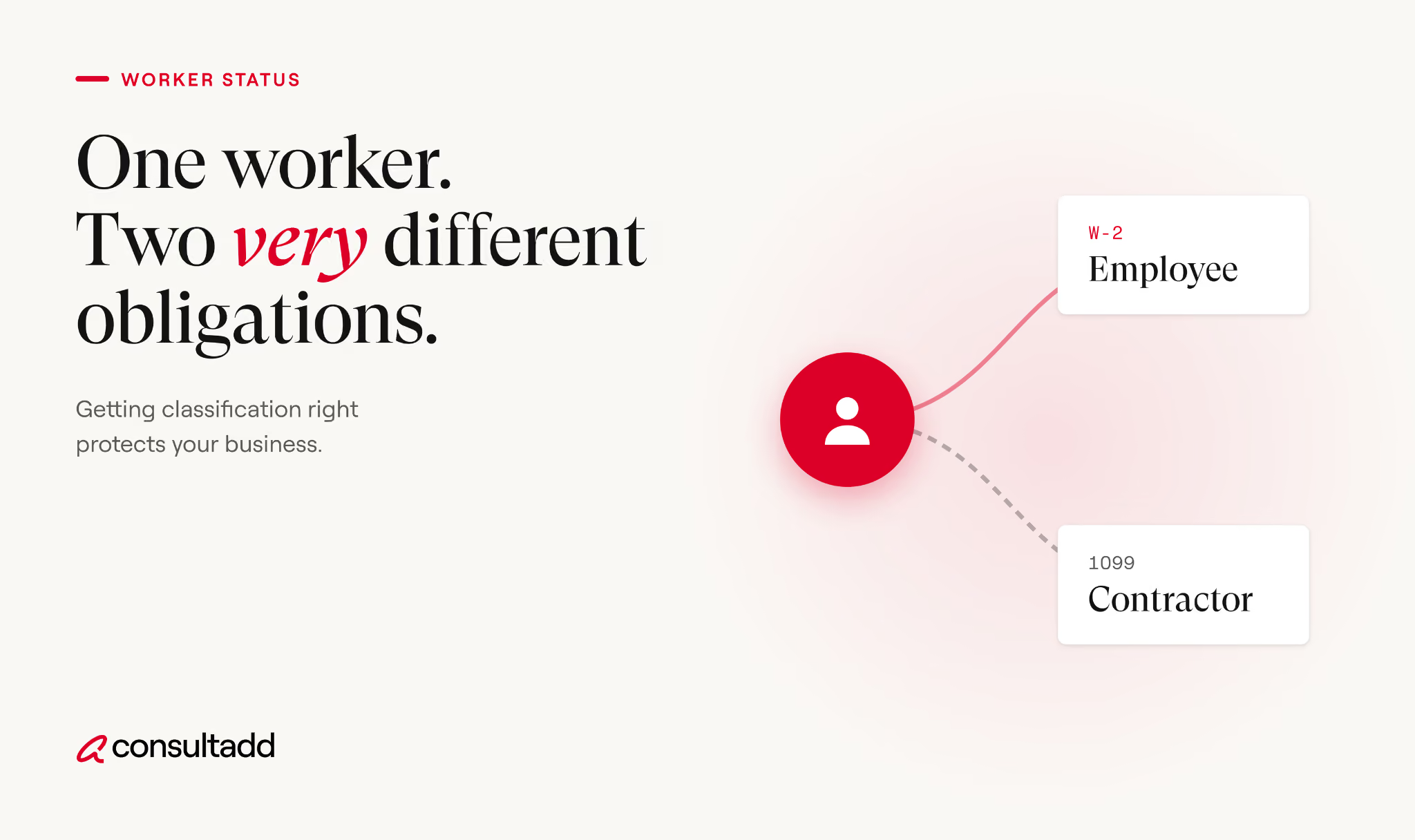
The five tests that decide worker status
Each agency is asking a slightly different question for a different law. That's why a worker can be treated as a contractor for one purpose and an employee for another.
1. The IRS common law test
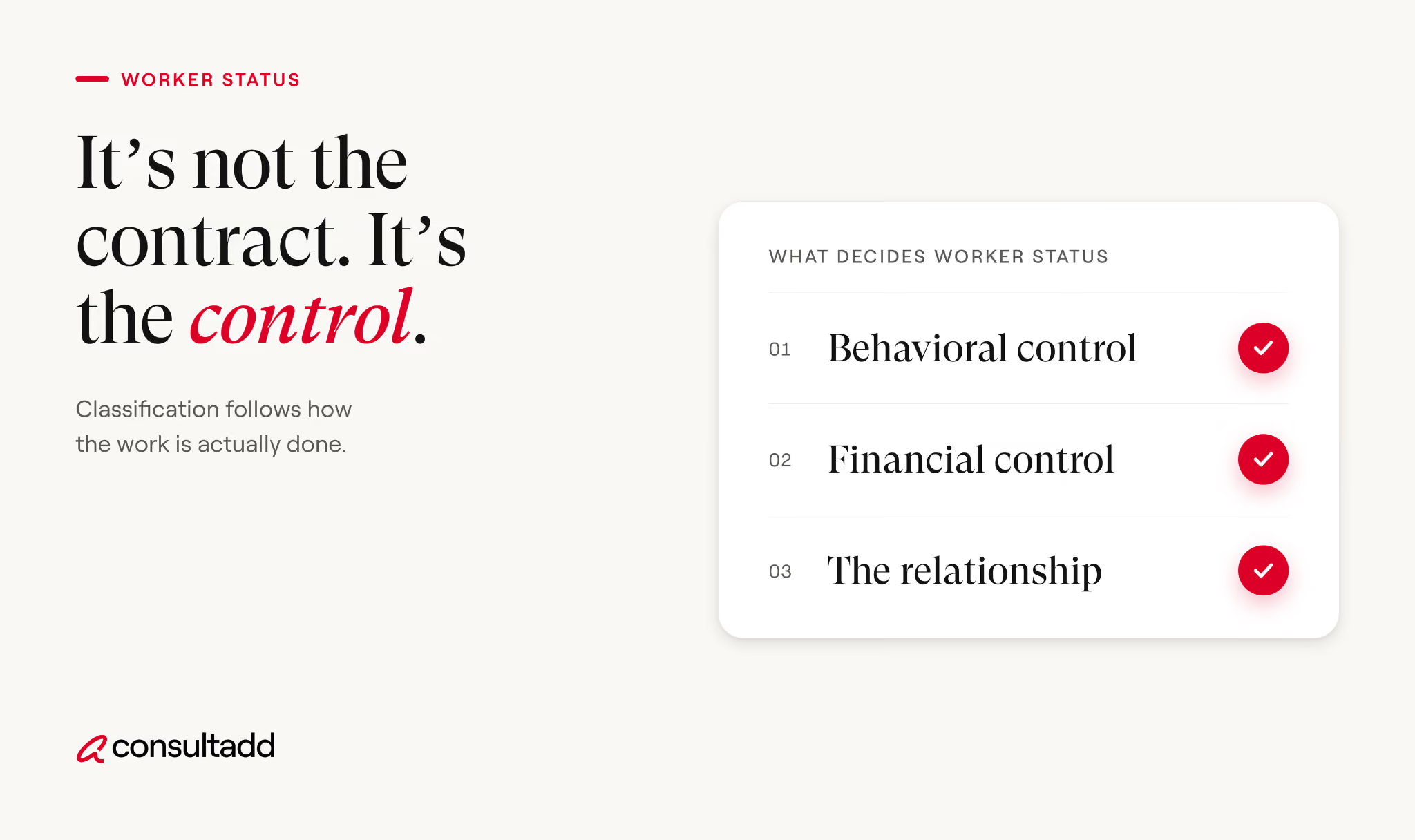
For federal taxes, the IRS groups the evidence into three categories: behavioral control, financial control and the relationship of the parties. Behavioral control asks whether the business directs what work is done and how.
Financial control asks whether it controls the business side of the job. The relationship category covers contracts, benefits and whether the work is expected to continue.
If the answer is still unclear, the business or the worker can file Form SS-8 and ask the IRS to decide. The IRS's own page on independent contractor or employee is the best starting point.
Our post on W2 vs W9 walks through the control questions in more detail.
2. The DOL economic reality test and the 2026 proposal
The DOL test has changed more than any other in recent years. On February 26, 2026, the department proposed rescinding the 2024 independent contractor rule and restoring a framework close to the 2021 rule.
It would focus on two core factors: how much control the business has, and whether the worker has a real opportunity for profit or loss. The proposal states that when both core factors point the same way, that classification is very likely correct.
The comment period closed April 28, 2026. In practice, the DOL told investigators in May 2025, through Field Assistance Bulletin 2025-1, to stop applying the 2024 standard and go back to the earlier test.
Check the DOL's misclassification rulemaking page for whether a final rule has been issued. The DOL's rule doesn't change the IRS test. A worker can pass one and fail the other.
3. State tests are often stricter
States run their own tests for unemployment insurance, wage claims and workers' compensation, and several are tougher than either federal test.
California is the best-known example. It uses an ABC test for many wage claims and the multi-factor Borello test in other situations.
If a consultant works remotely from a different state than the client, the worker's state usually matters for these purposes. A federal-only review misses this.
4. The NLRB joint employer standard
Joint employment matters most in staffing, where two companies touch the same worker. In February 2026, the NLRB withdrew its 2023 rule and confirmed the 2020 standard.
Under it, two companies are joint employers only if each has and actually uses substantial direct and immediate control over at least one essential term of employment, as Lathrop GPM summarizes.
That's narrower than the 2023 version, which could count indirect or unused control.
5. USCIS and visa holders
For H-1B workers, the sponsoring employer needs a real employer-employee relationship.
USCIS policy looks at whether the employer can hire, pay, fire, supervise or otherwise control the work. That's why a solo C2C or 1099 setup generally doesn't work for an H-1B consultant.
Our guide on W2 vs C2C for visa holders covers the details.
Worker status in a staffing arrangement: three parties, one worker
Staffing adds a layer most classification guides ignore. There are usually three parties: the client, the staffing firm and the consultant.
Sometimes there are more, with a prime vendor or implementation partner in the middle.
Here's how the common setups usually line up:
A W-2 arrangement through a staffing firm is the cleanest from a status point of view, because the firm is the employer of record and handles withholding, payroll and compliance.
The risk shifts to joint employment if the client starts controlling pay, schedules, hiring or firing. C2C only holds up when the consultant's entity operates like a real business.
Our corp-to-corp staffing guide explains what that takes.
A one-person LLC that works for one client, on that client's schedule, with that client's equipment, can still lose a status review.
Status drift: how a contractor becomes an employee without anyone deciding
This is the part of worker status that shows up most in staffing, and it's rarely deliberate.
An engagement starts cleanly. Over months, small changes stack up. The client adds the consultant to its org chart. A manager sets their hours.
They get a company laptop, a company email and an invitation to the annual review cycle. Nobody revisits the classification, because nobody thinks of these as classification decisions.
From the recruiting side, extensions are where drift tends to start. An extension feels like a formality, so it's the moment status gets checked least. It's also the best moment to check it.
What misclassification costs
When worker status turns out to be wrong, the costs come from several directions at once, because each agency has its own remedy.
- On the tax side, the business can owe the employment taxes it should have withheld and paid, plus penalties and interest.
- On the wage side, the DOL explains that misclassified employees may have been denied minimum wage and overtime they're owed.
States can add unemployment insurance contributions, workers' compensation exposure and their own penalties.
There are also costs that don't show up on a penalty notice. A misclassified consultant may have been eligible for benefits plans.
A visa holder's status may be at risk if the employer-employee relationship didn't really exist.
If a business finds it has been treating employees as contractors, the IRS offers a Voluntary Classification Settlement Program that lets eligible businesses reclassify going forward with reduced federal employment tax liability.
Talk to a tax adviser before using it.
This guide is general information, not legal or tax advice.
A worker status checklist for staffing firms and clients
No checklist can settle status on its own, because every test weighs the whole relationship. These questions catch most problems early.
Three habits keep status in line over time:
- Check status at three points. Do it at onboarding, at every extension, and whenever the role or reporting line changes.
- Keep direction where the classification says it is. If the staffing firm is the employer, pay, discipline and termination decisions should run through the firm, not the client manager.
- Write down the facts, not just the label. Record who sets hours, who supplies equipment and how long the work is expected to last. In a review, that record matters more than the contract heading.
When a role is ongoing and directed, W-2 is usually the simpler answer.
A contract-to-hire arrangement can also give both sides a clean path to permanent employment.
Final thoughts on worker status
Worker status isn't decided when someone picks W-2, 1099 or C2C. It's decided by how the work actually runs, and it can be decided differently by the IRS, the DOL, a state agency, the NLRB and USCIS.
With the DOL test in flux and joint employer rules reset in 2026, the safest approach hasn't changed. Match the paperwork to the facts, recheck it whenever the facts change, and treat every extension as a status review.
Start Strong With Consultadd
With 15 years in business and 5,000+ successful staffing engagements, we don’t just fill roles, we build reliability into your process. We’ve supported 65 staffing companies in the past year alone and maintain MSAs with industry leaders like Robert Half and TEKsystems.
Here’s what working with Consultadd looks like:
- Talent sourced in under 24 hours
- Ready-to-deploy candidates, vetted for experience and compliance
- Lower turnover risk: we match long-term goals, not just short-term needs
- Seamless compliance: visa, documentation, onboarding? Handled.
- Dedicated 1:1 account managers for responsive, personalized support
- Top 100 candidate matches delivered in the past year
- Strong partnerships with universities to tap into fresh, committed talent
- Post-placement support so your investment grows beyond day one
For candidates, your next opportunity is more than just a job title, it's a chance to build skills, gain experience, and move your career forward. At Consultadd, we connect technology professionals with projects and employers that align with their goals, whether they're looking for contract, contract-to-hire, or long-term opportunities.
The tech job market moves fast, but the right guidance can make all the difference. Ready to take the next step in your career journey? Explore Opportunities >>
Key takeaways
- Worker status depends on how the work actually happens, not on the W-2, 1099 or C2C label.
- The IRS, DOL, state agencies, NLRB and USCIS each apply their own test, so one worker can be classified differently under different laws.
- In 2026, the DOL proposed a return to a two-core-factor economic reality test, and the NLRB restored its narrower 2020 joint employer standard.
- In staffing, status often drifts during long engagements and extensions as the client takes on more control.
- Check status at onboarding, at every extension and at every role change, and keep day-to-day control aligned with the classification.
FAQs
What does worker status mean?
Worker status is the legal classification of a working relationship, usually as either an employee or an independent contractor in the U.S. It decides who handles taxes and whether protections like minimum wage, overtime and unemployment insurance apply. The classification depends on the facts of the relationship, not on what the contract calls it.
How is worker status determined?
Each agency uses its own test. The IRS looks at behavioral control, financial control and the type of relationship, while the DOL asks whether the worker is economically dependent on the business. States apply their own rules, and some use a stricter ABC test.
Can a worker be an employee for one agency and a contractor for another?
Yes. Because the IRS, DOL and state agencies apply different tests for different laws, the same person can be classified differently depending on the purpose. That's why a review against only one test can leave gaps.
What is the DOL independent contractor rule in 2026?
In February 2026, the DOL proposed rescinding its 2024 rule and returning to a framework close to the 2021 rule. That framework puts most weight on two core factors: control over the work and the worker's opportunity for profit or loss. Check the DOL's rulemaking page for whether the proposal has been finalized.
Is a C2C consultant an independent contractor?
Not automatically. In a C2C arrangement the client contracts with the consultant's business entity, and that only holds up if the entity operates like a real independent business. If the consultant works for one client on fixed hours under close direction, agencies may still treat them as an employee.
What happens if worker status is wrong?
The business may owe back employment taxes, penalties and interest, along with unpaid minimum wage or overtime and state unemployment contributions. Visa holders may face immigration problems if the required employer relationship didn't exist. The IRS Voluntary Classification Settlement Program may help eligible businesses correct the classification going forward.

Employment Status Question: Wording, Options And Tips
Introduction
"What is your current employment status?" looks like the easiest question on any form. It's also one of the most often written badly.
The employment status question asks whether someone is working, looking for work or doing something else, like studying or caring for family.
It shows up on surveys, job applications, staffing intake forms and loan paperwork. When the answer options overlap or leave people out, the data you collect is wrong from the start.
This guide gives you standard wording and answer options, the official definitions they're based on, common mistakes to avoid, and how candidates should answer the question on a job application.
TL;DR
- The standard wording is "Which of the following best describes your current employment status?" followed by a single-choice list of options.
- A complete list covers full-time, part-time, self-employed, unemployed and looking, unemployed and not looking, student, retired, homemaker or caregiver, unable to work, and prefer not to say.
- Many survey designers borrow the BLS definitions, where having a job takes priority over looking for one.
- The most common mistakes are overlapping options, no option for contract or self-employed work, and no "prefer not to say."
- On a job application, answer honestly and briefly. Some places, including New York City, restrict employers from rejecting applicants just for being unemployed.
What the employment status question asks
The question has one job: put each person into one clear group based on their current work situation. Everything else you ask, like job title, hours or income, makes more sense once you know that group.
Different forms use it for different reasons:
- Market and customer surveys use it to segment answers by life stage and spending power.
- Employee and workforce research uses it to route people to the right follow-up questions.
- Job applications use it to understand availability and notice periods.
- Staffing intake forms use it to know whether a candidate is on a project, between projects or free to start.
Because the purpose changes, the right answer options change too. A consumer survey needs "retired" and "student." A staffing form needs to know whether a contractor is on assignment or finishing one next month.
Standard wording and answer options for the employment status question
The most widely used wording is:
"Which of the following best describes your current employment status?"
"Best describes" matters. It tells people to pick one answer even when their situation is mixed, which keeps the data clean.
Here's a full set of options and who each one is for.
A short version for quick forms
If you only need a rough split, five options usually cover it:
- Employed (full-time or part-time)
- Self-employed or contract
- Unemployed and looking for work
- Not working and not looking (student, retired, caregiver or other)
- Prefer not to say
Use the short version when the answer only decides which questions come next. Use the full version when you plan to report results by group.
Follow-up questions worth adding
The status question can't tell you everything. A few follow-ups fill the gaps:
- "How many hours do you usually work per week?" Shows full-time versus part-time without guessing at definitions.
- "Would you like to work more hours than you do now?" Finds people who are employed but underemployed.
- "How are you paid for your main job?" with options like W-2 employee, 1099 contractor or corp-to-corp. This is useful for staffing and contractor research.
- "Are you currently looking for a new job?" Works for employed people too, not just the unemployed.
How the official definitions work
If you want your data to line up with national statistics, borrow the definitions the U.S. Bureau of Labor Statistics uses in the Current Population Survey.
BLS sorts everyone age 16 and older into three groups. People are employed, unemployed, or not in the labor force, and the labor force is the employed plus the unemployed.
The rule that settles most edge cases is precedence. In its CPS FAQ, BLS explains that working or having a job takes precedence over looking for work, and labor force activities take precedence over non-labor force activities.
So a student with a part-time job counts as employed. A person who's working but searching for a new role also counts as employed.
Writing that rule into your instructions ("If you have any paid work, choose an employed option") removes most of the confusion.
Common mistakes and how to fix them
Most problems with the employment status question come from options that overlap or leave people out.
One more thing to check: the reference period. "Current" is fine for most forms, but research that will be compared over time should name it, like "in the past 7 days."
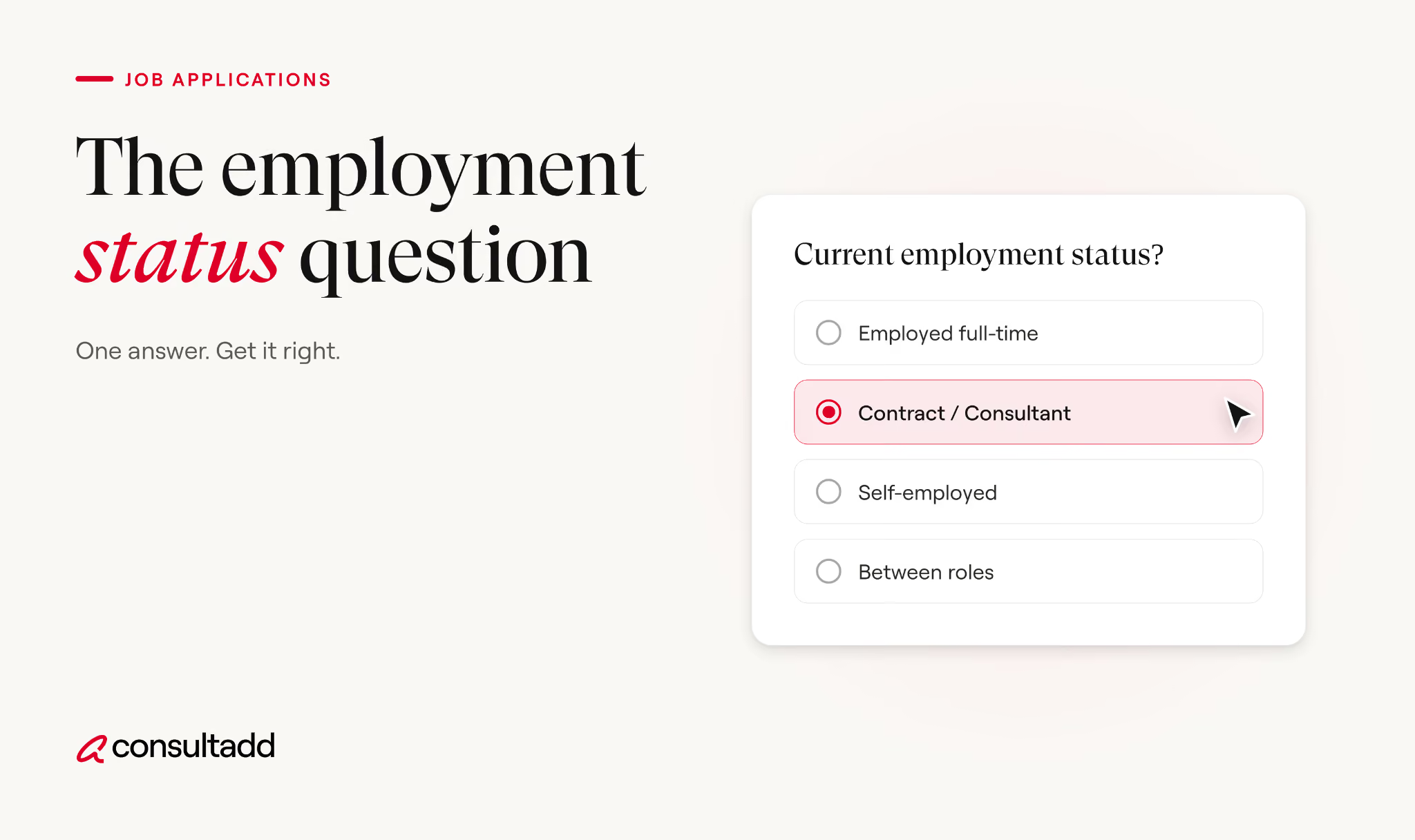
The employment status question on job applications
On a job application, the question usually reads "Are you currently employed?" or "What is your current employment status?"
Employers mainly want to know when you could start and whether you have a notice period.
What employers should keep in mind
Some places restrict how employers use this answer:
- New York City's Human Rights Law, for example, bars covered employers from basing hiring decisions on unemployment status without a substantially job-related reason. It also bars job ads that say applicants must be currently employed.
- New Jersey, Oregon and Washington, D.C. have their own rules on job ads and unemployment status.
That's why many employers ask about availability ("When could you start?") instead of status. It gets the same practical answer with less risk.
This is general information, not legal advice, so check the rules where you hire.
How candidates should answer
Answer honestly and keep it short. A status question isn't the place for a long explanation, but a brief note helps when your situation doesn't fit neatly.
In IT staffing, contractors run into this question constantly, and their situations are rarely simple.
The second row comes up often. A consultant on a staffing firm's bench is usually still on payroll, so "employed" is accurate.
Our explainer on what a bench candidate is in IT staffing covers how that arrangement works.
A gap between contracts isn't a red flag in tech hiring. Recruiters see it every week. What matters is being clear about your dates and availability.
If you're actively searching, our guide on how to find contract work can help shorten the gap.
Employment status vs worker classification
These two get mixed up, but they answer different questions.
- Employment status asks whether you're working, looking or out of the labor force.
- Worker classification asks how you're legally engaged when you do work: as an employee (W-2), an independent contractor (1099) or through your own company (C2C).
Two people can both be "employed" and have completely different tax and benefit situations. The IRS explains how independent contractor status differs from employee status.
The U.S. Department of Labor also explains why employee misclassification affects wage and overtime rights.
If your form needs both, ask them as two separate questions. For a full comparison of the three arrangements, see our guide to W-2 vs C2C vs 1099.
Writing a better employment status question
A good employment status question does three things:
It uses "best describes" wording, it gives options that don't overlap, and it includes everyone, from contractors to caregivers to people who'd rather not say.
- Start with the full option list above and cut it down to what your form actually needs.
- Add one line of instruction about which option wins when someone's situation is mixed.
- If you need hours, pay structure or job search status, ask those as separate follow-ups.
- Test it on five people before it goes live.
- If anyone hesitates over which option to pick, that's the option to rewrite.
Start Strong With Consultadd
With 15 years in business and 5,000+ successful staffing engagements, we don't just fill roles, we build reliability into your process. We've supported 65 staffing companies in the past year alone and maintain MSAs with industry leaders like Robert Half and TEKsystems.
Here's what working with Consultadd looks like:
- Talent sourced in under 24 hours
- Ready-to-deploy candidates, vetted for experience and compliance
- Lower turnover risk: we match long-term goals, not just short-term needs
- Seamless compliance: visa, documentation, onboarding? Handled.
- Dedicated 1:1 account managers for responsive, personalized support
- Top 100 candidate matches delivered in the past year
- Strong partnerships with universities to tap into fresh, committed talent
- Post-placement support so your investment grows beyond day one
For candidates, your next opportunity is more than just a job title, it's a chance to build skills, gain experience, and move your career forward. At Consultadd, we connect technology professionals with projects and employers that align with their goals, whether they're looking for contract, contract-to-hire, or long-term opportunities.
The tech job market moves fast, but the right guidance can make all the difference. Ready to take the next step in your career journey? Explore Opportunities >>
Key takeaways
- Ask "Which of the following best describes your current employment status?" as a single-choice question.
- Use options that don't overlap, and include self-employed or contract work, two types of unemployed, and "prefer not to say."
- Borrow the BLS precedence rule: any paid work counts as employed, even for students and active job seekers.
- Ask about hours, pay structure and job search status as separate follow-ups, not inside the status question.
- On job applications, candidates should answer honestly and add dates or availability in a short note when their situation is mixed.
FAQs
What is the employment status question?
It's a question that asks whether a person is currently working, looking for work or not in the labor force. It usually reads "Which of the following best describes your current employment status?" and appears on surveys, job applications and intake forms.
What are the standard options for employment status?
A full list includes employed full-time, employed part-time, self-employed or freelance, unemployed and looking, unemployed and not looking, student, retired, homemaker or caregiver, unable to work, and prefer not to say. Shorter forms often combine these into four or five groups.
What should I put for employment status if I'm a contractor?
If you're on an active contract or on a staffing firm's payroll between assignments, choose employed. If you contract through your own company, self-employed is usually the better fit. If your last contract has ended and you're not on anyone's payroll, choose unemployed and looking.
Is self-employed the same as employed?
For labor force statistics, yes. BLS counts self-employed people as employed. Many forms still list self-employed as its own option because it helps separate business owners and freelancers from people who work for an employer.
Can employers ask about employment status on a job application?
In most places, yes, but some jurisdictions limit how employers can use the answer. New York City, for example, restricts employers from rejecting applicants because they're unemployed and bans job ads that require current employment. Employers should check local rules and consider asking about availability instead.
What is the difference between unemployed and not in the labor force?
Unemployed people don't have a job but are available and actively looking for one. People not in the labor force don't have a job and aren't looking, such as many students, retirees and full-time caregivers. That's why surveys often split "unemployed" into "looking" and "not looking."

It Contract Jobs: Pay, Types And How To Pick The Right One
Introduction
A recruiter calls with a six-month cloud migration contract at $70 an hour. It sounds like more than your current salary. Whether it actually is depends on details most people don't check until after they sign.
IT contract jobs are fixed-term technology roles where you work on a client's project for a set period, usually through a staffing firm.
They're common in software development, cloud, data, QA and security. For a lot of tech professionals, they're the fastest way to get new skills and a new company name onto a resume.
This guide covers what IT contract jobs involve, which roles are most often contracted, how to compare an hourly rate to a salary, and the terms to check before you accept an offer.
Hiring contractors instead? Our buyer's guide to IT contract staffing services is written for employers.
TL;DR
- IT contract jobs are fixed-term tech roles, often 3 to 12 months, where you work on a client's project and are usually employed or paid through a staffing firm.
- Software development, cloud, DevOps, data, QA and security roles are the ones companies contract most, because project needs come and go faster than permanent hiring.
- An hourly rate isn't directly comparable to a salary. Account for unpaid holidays, gaps between contracts, benefits and your tax structure before you compare.
- Contract roles trade job security for higher hourly pay, faster skill growth and more control over what you work on next.
- Before you sign, check the duration, extension terms, notice period, payment schedule, overtime rules and any non-solicitation clause.
What IT contract jobs are
An IT contract job is a technology role with a defined end date. A company needs a specific skill for a project, such as migrating to AWS or building a data pipeline, and brings in a contractor instead of hiring permanently.
You do the same kind of work a full-time employee would. You join standups, write code, close tickets and report to the client's manager. What changes is the employment relationship and how long it's expected to last.
Contract work is a smaller part of the workforce than people assume. In July 2023, the U.S. Bureau of Labor Statistics counted 862,000 workers provided by contract firms on their main job, about 0.5% of total employment. Tech is one of the fields where these arrangements are most common.
Who you actually work for
Most IT contract jobs involve three or four parties:
- The end client, the company whose project you work on
- A prime vendor or implementation partner, sometimes, if the client uses one to manage suppliers
- The staffing firm, which places you and often employs you
- You, either as the staffing firm's W-2 employee or through your own company
The more layers there are, the more people take a share of the bill rate. Ask your recruiter how many companies sit between you and the end client. A shorter chain usually means a better rate and faster answers when something goes wrong.
Common IT contract roles and how long they last
Companies contract roles where the need is tied to a project or a skill gap they don't want to hire for permanently. Here's how that looks in practice for the roles we see most often.
These ranges are what we commonly see, not fixed rules. Many contracts extend once the client sees good work, and some end early when budgets change.
The demand behind these roles is steady. BLS projects about 280,000 openings a year in computer and IT occupations from 2025 to 2035, with a median annual wage of $109,470 in May 2025.
How pay works in IT contract jobs
Contract pay is quoted by the hour, and the structure behind that number changes what you take home.
The three common pay structures
A 1099 or C2C rate should be higher than a W-2 rate for the same role, because you're covering costs the employer would otherwise pay. The IRS explains how independent contractor status differs from employee status, including self-employment tax.
For a fuller breakdown, see our guide to W-2 vs C2C vs 1099 contract types.
Comparing an hourly rate to a salary
The quick math is rate × 2,080 hours, which is 40 hours a week for 52 weeks. It's a starting point, not the real answer.
Here's an example. Say you're offered $65 an hour on W-2.
- $65 × 2,080 hours = $135,200 gross for a full year
- Subtract 10 unpaid holidays and 10 days off: 160 hours, or $10,400
- Subtract a 4-week gap before your next contract: 160 hours, or $10,400
- Realistic gross: about $114,400, before benefits
For context, BLS lists a May 2025 median pay of $134,040 for software developers, QA analysts and testers. A full-time salary often comes with health insurance, paid time off and retirement matching on top of that number.
Benefits are the gap people underestimate. BLS found that workers in contingent jobs were much less likely to have employer-provided health insurance than workers in traditional jobs.
If your contract has no health plan, price that in before you compare offers.
Pros and cons of contract IT work
Contract work suits some careers and some stages of life better than others. Here's the trade-off in plain terms.
One thing recruiters notice: contractors who move every six months without a pattern can look unsettled on paper.
Contractors who can explain each move ("brought in for the Azure migration, extended twice, project shipped") look like specialists. The work is the same. The story is what's different.
If you'd like a path to permanent work, look for roles that start as contracts and can convert.
Our guide to how contract-to-hire works covers what to expect at the conversion point.
What to check before you sign a contract offer
Most problems with IT contract jobs come from terms nobody read closely. Go through these before you accept.
Ask for the answers in writing. A good staffing firm will put them in your offer letter or contract without any trouble.
Worker classification matters too. The U.S. Department of Labor explains how employee misclassification affects wage and overtime rights.
If you're asked to work 1099 on a role that looks like a regular job with set hours and a manager directing you, ask why. If you're on a work visa, confirm that the job title, duties and worksite match your filings.
Our guide to H-1B sponsorship for tech professionals explains why that consistency matters.
How to keep contract work steady
The biggest financial risk in contract work isn't a low rate. It's the gap between contracts.
A few habits make those gaps shorter:
- Start looking 6 to 8 weeks before your end date. Ask your manager about an extension early, and tell your recruiter your availability at the same time.
- Stay in touch with two or three recruiters who know your stack. They'll call you first when a matching role opens.
- Update your resume after every contract, while you still remember the details and numbers.
- Use any downtime on one specific skill gap, like a cloud certification or a portfolio project, rather than general browsing.
For job-search channels and how to vet a role before you spend time on it, our strategy guide on how to find contract work goes deeper.
If you're employed by a staffing firm between assignments, our explainer on what a bench candidate is covers how that period usually works.
Are IT contract jobs right for you?
IT contract jobs tend to work well if you want higher hourly pay, steady skill growth and variety, and you can handle some income gaps. They work less well if you need predictable income every month or want a long climb inside one company.
Before you say yes to an offer, do three things: Convert the rate to a realistic annual figure, read the contract terms in the table above, and ask the recruiter how many companies sit between you and the end client.
If the numbers and the terms still look good after that, the role is probably worth taking. If they don't, a better contract is usually a few calls away.
Start Strong With Consultadd
With 15 years in business and 5,000+ successful staffing engagements, we don't just fill roles, we build reliability into your process. We've supported 65 staffing companies in the past year alone and maintain MSAs with industry leaders like Robert Half and TEKsystems.
Here's what working with Consultadd looks like:
- Talent sourced in under 24 hours
- Ready-to-deploy candidates, vetted for experience and compliance
- Lower turnover risk: we match long-term goals, not just short-term needs
- Seamless compliance: visa, documentation, onboarding? Handled.
- Dedicated 1:1 account managers for responsive, personalized support
- Top 100 candidate matches delivered in the past year
- Strong partnerships with universities to tap into fresh, committed talent
- Post-placement support so your investment grows beyond day one
For candidates, your next opportunity is more than just a job title, it's a chance to build skills, gain experience, and move your career forward. At Consultadd, we connect technology professionals with projects and employers that align with their goals, whether they're looking for contract, contract-to-hire, or long-term opportunities.
The tech job market moves fast, but the right guidance can make all the difference. Ready to take the next step in your career journey? Explore Opportunities >>
Key takeaways
- IT contract jobs are fixed-term tech roles, usually placed through a staffing firm, in areas like development, cloud, data, QA and security.
- Compare offers on realistic annual pay after holidays, time off and gaps, not on rate × 2,080 hours.
- W-2, 1099 and C2C change who pays your taxes and benefits, so the same hourly rate can mean very different take-home pay.
- Check duration, extensions, notice period, overtime, payment terms and non-solicitation clauses before you sign.
- Start your next search 6 to 8 weeks before a contract ends to keep gaps short.
FAQs
What is an IT contract job?
An IT contract job is a technology role with a set end date, where you work on a client's project for a fixed period. You're usually employed or paid through a staffing firm rather than the client directly. Common examples include software development, cloud migration and data engineering contracts.
How much do IT contractors make per hour?
It depends on the role, seniority, location and pay structure. Specialist roles like cloud security and data engineering usually pay more than general support roles. Compare any rate against a realistic annual figure that accounts for unpaid time off and gaps between contracts.
Do IT contract jobs come with benefits?
Some do. W-2 contracts through a staffing firm may offer health insurance or other benefits, though often fewer than a full-time role. On 1099 or C2C contracts, you typically arrange and pay for your own benefits.
How long do IT contracts usually last?
Many IT contracts run 3 to 12 months, and longer projects can go past a year. Extensions are common when a project grows or the client is happy with your work. Shorter contracts are more common for support, rollouts and testing work.
Can an IT contract job become full-time?
Yes, if the role is set up as contract-to-hire or the client decides to make an offer. Conversion often comes with a fee paid by the client, and some contracts limit direct hiring for a period. Ask about conversion before you accept so you know whether it's realistic.
Is contract work bad for your resume?
Not usually, especially in tech, where contract roles are common. What matters is being able to explain each role, what you built and why it ended. A series of short contracts with no clear thread is harder to explain than a few longer ones with extensions.

Contract To Hire For Employers: Run A Trial That Converts
Introduction
Most companies choose contract to hire for the right reason: they want to see someone's work before offering a permanent role. Then the trial runs out, the conversion decision arrives late, the salary conversation goes badly, and the person they wanted takes another offer.
A contract to hire engagement only works if you run it like a hiring process, not a waiting period. That means agreeing on conversion terms before day one, checking progress at set points, and making the offer before the contract ends.
This guide is for hiring managers and HR teams. It covers the setup, the evaluation, the conversion offer, the compliance steps, and the mistakes that cost employers good hires.
If you're new to the model, start with how contract to hire works and come back here when you're ready to run one.
TL;DR
- Get permanent headcount approved before the contract starts, or a good trial can end with no job to offer.
- Agree on contract length, conversion fee, salary range and success criteria with the agency upfront.
- Run checkpoints at 30, 60 and 90 days so the conversion decision isn't a last-minute guess.
- Make the offer two to four weeks before the contract ends, and turn the hourly rate into a salary the candidate will see as a fair move.
- Conversion creates a new employment relationship, so plan Form I-9, payroll and any visa steps ahead of the start date.
When contract to hire makes sense for your role
Contract to hire works best when a role is permanent but some things are hard to judge in an interview. For example, how someone handles your codebase, works with your team or makes decisions under pressure.
It's a good fit when:
- The permanent budget is likely but not yet approved for this quarter
- Technical interviews haven't been good predictors for this role in the past
- The team is new or changing, and you want to test how someone fits
- You need someone working in weeks, not after a three-month permanent search
It's a weaker fit for senior leadership roles, and for candidates who already have permanent offers elsewhere, because many of them won't accept a trial.
For a full look at the trade-offs, see contract-to-hire benefits, pros and cons. If you're sure about the role and the person, direct hire may be faster.
Set up the contract to hire terms before day one
Most failed conversions trace back to something nobody agreed on at the start. Settle these with your staffing partner and your internal approvers before the worker begins.
Get headcount approved first
The most common reason a successful trial doesn't convert is that the permanent position was never funded. Ask finance or HR to approve the headcount before the contract starts, even if the start date for the permanent role is months away. If approval isn't possible, tell the agency and the candidate honestly.
Agree conversion terms with the agency
Write the success criteria in plain terms. For example, "owns the payment service deployments without help by week eight" or "closes 90% of assigned tickets within the sprint." Vague goals like "good cultural fit" make the decision harder later.
How to evaluate the worker during the trial
Don't wait until the last two weeks to decide. Set three checkpoints and treat them as short, structured reviews.
Two things make these reviews useful:
- First, write down what you see, including specific tasks, not just impressions.
- Second, share honest feedback with the worker at each checkpoint.
A contractor who hears nothing for three months assumes the answer is no and starts looking elsewhere.
The agency's account manager can help here too. They often hear concerns from the worker that won't come up in a review with their manager.
Making the conversion offer
Turn the hourly rate into a fair salary
Candidates think about their hourly pay, not your bill rate. The bill rate you pay the agency includes its costs and margin, so base the salary conversation on what the worker actually takes home.
A simple way to frame it:
- Multiply the worker's hourly pay rate by 2,080, the hours in a standard full-time year. A worker earning $60 an hour on W-2 would see about $124,800 on that basis.
- Your salary offer may come in lower, because the permanent role adds benefits, paid time off and job security.
- Explain that trade clearly and put a dollar value on the benefits where you can.
- A salary that looks like a pay cut, with no explanation, is a common reason good contractors turn down conversion.
Time the offer early
Make the offer two to four weeks before the contract ends. That gives time for negotiation, internal paperwork and any compliance steps.
It also shows the worker you've made a real decision instead of letting the deadline decide for you.
If you need more time, extend once with a clear reason and a new decision date. Repeated extensions without a conversion discussion usually lead the worker to take another job.
Compliance steps at conversion
Conversion moves the worker from the agency's payroll to yours. Treat it as a new hire, because legally it usually is.
- Form I-9. As the new employer, you need to complete Form I-9 to verify identity and work authorization. USCIS's Form I-9 guidance covers the timing and acceptable documents.
- Visa holders. If the worker is on an H-1B through the agency, a change of employer generally means your company files its own petition before the worker moves over. Start early and involve immigration counsel.
Our overview of H-1B rule changes explains the current landscape.
- Worker classification. During the contract, the worker is typically a W-2 employee of the agency. After conversion, they're your employee. The IRS's Worker Classification 101 explains why the employee versus contractor line matters for taxes.
If the worker came through a corp-to-corp arrangement instead, check our C2C contract-to-hire guide before converting.
- Payroll and benefits. Set a clear last day on the agency payroll and first day on yours, so there's no gap in pay or health coverage.
Why contract to hire conversions fail
Most of these are process problems, not people problems. That's good news, because process is something you control.
If you decide not to convert
Sometimes the answer is no, and that's what a trial is for. Handle it well, because the worker, the agency and your team will all remember how it went.
Give the decision as early as possible and explain the reason in terms of the success criteria. Work with the agency on the notice period so the worker has time to find the next assignment.
Make sure knowledge transfer happens before the last week, and confirm that system access is removed on the final day.
If the issue was fit for this role rather than ability, say so. The agency may be able to place the same person with another client, and you may want them back for a different role later.
Getting more from contract to hire
Contract to hire is at its best when it's treated as a structured hiring decision with a longer interview built in. Fund the role, write down what success looks like, check in at set points, and make the offer before the clock runs out.
Employers who do those four things tend to convert the people they want. Employers who treat the trial as a wait-and-see period often lose them to someone who moved faster.
Before your next contract to hire req, run through the terms table above with your staffing partner and fill in every row.
Start Strong With Consultadd
With 15 years in business and 5,000+ successful staffing engagements, we don't just fill roles, we build reliability into your process. We've supported 65 staffing companies in the past year alone and maintain MSAs with industry leaders like Robert Half and TEKsystems.
Here's what working with Consultadd looks like:
- Talent sourced in under 24 hours
- Ready-to-deploy candidates, vetted for experience and compliance
- Lower turnover risk: we match long-term goals, not just short-term needs
- Seamless compliance: visa, documentation, onboarding? Handled.
- Dedicated 1:1 account managers for responsive, personalized support
- Top 100 candidate matches delivered in the past year
- Strong partnerships with universities to tap into fresh, committed talent
- Post-placement support so your investment grows beyond day one
For candidates, your next opportunity is more than just a job title, it's a chance to build skills, gain experience, and move your career forward. At Consultadd, we connect technology professionals with projects and employers that align with their goals, whether they're looking for contract, contract-to-hire, or long-term opportunities.
The tech job market moves fast, but the right guidance can make all the difference. Ready to take the next step in your career journey? Explore Opportunities >>
Key takeaways
- Approve permanent headcount before the contract starts, so a successful trial has a job to convert into.
- Agree contract length, conversion fee, early conversion terms, salary range and success criteria upfront.
- Use 30, 60 and 90 day checkpoints with written notes and honest feedback to the worker.
- Base the salary conversation on the worker's hourly pay rate, explain the value of benefits, and make the offer two to four weeks early.
- Treat conversion as a new hire for Form I-9, payroll and any visa steps.
FAQs
How long should a contract to hire period be?
Most tech roles run three to six months before conversion. That's long enough to see real work across a few projects without losing the candidate to permanent offers elsewhere. Pick a length that fits how quickly the role can show results.
How much does it cost to convert a contract worker to full time?
It depends on the agency agreement. Some charge a flat conversion fee, while others reduce or waive it once the worker has billed a set number of hours. Check the fee schedule and any early-conversion terms before the contract starts.
Can a contract to hire employee negotiate salary at conversion?
Yes, and many do. Candidates usually compare the offer to their hourly pay multiplied across a full year. Sharing the salary range at the start and explaining the value of benefits makes the negotiation smoother.
Do you need a new Form I-9 when converting a contractor?
Generally yes. The worker is moving from the agency's payroll to yours, so your company becomes the employer and needs to complete its own Form I-9. Plan it for the first days of permanent employment.
Can you convert a contract to hire worker early?
Often, yes, but early conversion may carry a higher fee depending on the agency agreement. If someone is clearly a fit before the term ends, ask the agency about early conversion costs and compare them with the risk of losing the person.
What happens if you don't convert a contract to hire worker?
The assignment ends under the notice terms in the agency agreement, and the worker stays employed by the agency, which can place them elsewhere. Give the decision early, explain it against the agreed criteria, and plan knowledge transfer before the last week.

What To Do After EAD Arrives: Your First 30 Days Checklist
Introduction
The envelope from USCIS finally shows up. You've been refreshing your case status for weeks, and now the card is in your hand.
Knowing what to do after EAD arrives matters more than most people expect. A few small tasks in the first two weeks decide whether you start work on time or lose a month to paperwork.
You need to check the card for errors, sort out your Social Security number, complete Form I-9 with your employer, meet any reporting deadlines, and put your renewal date on the calendar.
This guide walks through each step in order, with notes on how the rules differ for OPT, STEM OPT, H-4, and adjustment-of-status EADs.
This is general information, not legal advice. For questions about your specific case, talk to your DSO or an immigration attorney.
TL;DR
- Check every field on your EAD the day it arrives, and make copies before you mail it anywhere for correction.
- If you requested a Social Security number on your Form I-765, watch for it in the mail. If you didn't, apply with the Social Security Administration.
- You can start working only when the card is in hand and the "Valid From" date has passed.
- OPT and STEM OPT students must report employer details in the SEVP Portal within 10 days and track their unemployment days.
- Automatic EAD extensions ended for most renewals filed on or after October 30, 2025, so file your renewal as early as the rules allow.
Check your EAD card the day it arrives
Most people glance at the photo and put the card away. Read every line instead. An error you catch in week one is an inconvenience. The same error found during your employer's I-9 review can push back your start date.
What to check on the card
A note on OPT dates. If USCIS took longer than expected, it may shift your dates later so you still get the full period. That's usually an adjustment, not an error, and your DSO can confirm which it is.
If something on the card is wrong
The fix depends on who caused the error. According to the USCIS Employment Authorization Document page, USCIS corrects its own mistakes at no cost. For a clear typo, you submit a service request online and mail the card back by USPS. USCIS says processing takes about 30 days from the date it receives the card.
If the error came from your own application, you'll need to file a new Form I-765 with the fee.
Before you mail anything, make copies of the front and back. If your employer hasn't reviewed the original for your I-9 yet, ask your DSO or attorney whether to do that first.
Some university offices, including MIT's International Students Office, advise students to finish the I-9, SSN application, and driver's license renewal before sending the card away.
Get your Social Security number sorted
Form I-765 lets you request a Social Security number at the same time as your EAD. Under the Enumeration Beyond Entry process, USCIS shares your information with the Social Security Administration, so you don't have to visit an SSA office.
If you checked that box, the Social Security card arrives separately from the EAD, usually a few weeks later. If it hasn't shown up after a month, or you didn't request one, apply in person with your EAD, passport, and I-94.
You can usually start work before the Social Security card arrives. Your employer can complete Form I-9 without it and add the number to payroll later. Tell HR early so it doesn't hold up your first paycheck.
Know when you can actually start working
Two conditions have to be true. The physical card must be in your possession, and the "Valid From" date must have arrived. An approval notice alone isn't enough.
What you're allowed to do after that depends on your category.
For a broader primer on how these categories fit together, see our guide to what work authorization is and how it works in hiring.
Complete Form I-9 with your employer
Your EAD (Form I-766) is a List A document. It proves both your identity and your work authorization on its own, so you don't need a second document for Form I-9.
The timing is fixed. USCIS rules on Form I-9 require you to complete Section 1 by your first day of work. Your employer must complete Section 2 within three business days of your start date. Bring the original card, not a photo.
If you're joining a staffing firm on a contract role, the firm that employs you completes the I-9, not the client where you'll do the work. That surprises some first-time contractors.
Our explanation of W-2, C2C, and 1099 contract types shows who your legal employer is under each arrangement.
One of the delays we see most often when onboarding EAD candidates is a name mismatch across documents. The EAD shows one spelling, the passport another, and the offer letter a third. Fix it before your start date, not after.
OPT and STEM OPT: report your job and track unemployment
If you're on OPT, your F-1 status now depends on employment. After approval, you'll get an email invitation to create your SEVP Portal account. Set it up right away, because it's where you report your employer.
The rules to keep in mind:
- Report new employment, and any change to your employer, job title, or address, within 10 days.
- You can have no more than 90 days of unemployment on post-completion OPT. STEM OPT adds 60 more, for 150 in total.
- If employment isn't reported, those days may count as unemployment even if you're working.
- STEM OPT requires an E-Verify employer and a signed Form I-983 before you start.
Temple University's international student office notes that unpaid or volunteer work in your field can count toward the 20-hour weekly requirement, as long as it doesn't violate labor laws. That can help if your job search runs close to the limit.
Planning ahead for H-1B? Our comparison of H-1B and OPT, including cap-gap, explains how the transition works.
Plan your EAD renewal now, not later
This rule changed recently, and many older guides haven't caught up.
The Department of Homeland Security ended automatic EAD extensions for most categories when the renewal is filed on or after October 30, 2025.
Before that, many renewal applicants could keep working for up to 540 days while their case was pending. For most new filings, that safety net is gone.
The receipt notice changed as well. USCIS I-9 Central says a receipt notice for a renewal filed on or after that date is not proof of work authorization, even with an expired EAD. If the new card hasn't arrived by the time the old one expires, you have to stop working.
What that means in practice:
- Write your card's expiry date somewhere you'll see it.
- Set a reminder for 180 days before expiry, the earliest point USCIS recommends filing.
- Tell your recruiter or employer your expiry date on day one, so they can plan for any gap.
For contract workers, a gap in authorization usually means the assignment ends. Recruiters can often line up a new role, but they need to know the timeline months ahead, not two weeks before.
STEM OPT follows its own rules. A timely filed STEM OPT extension can still let you keep working while it's pending, so check with your DSO before relying on any extension.
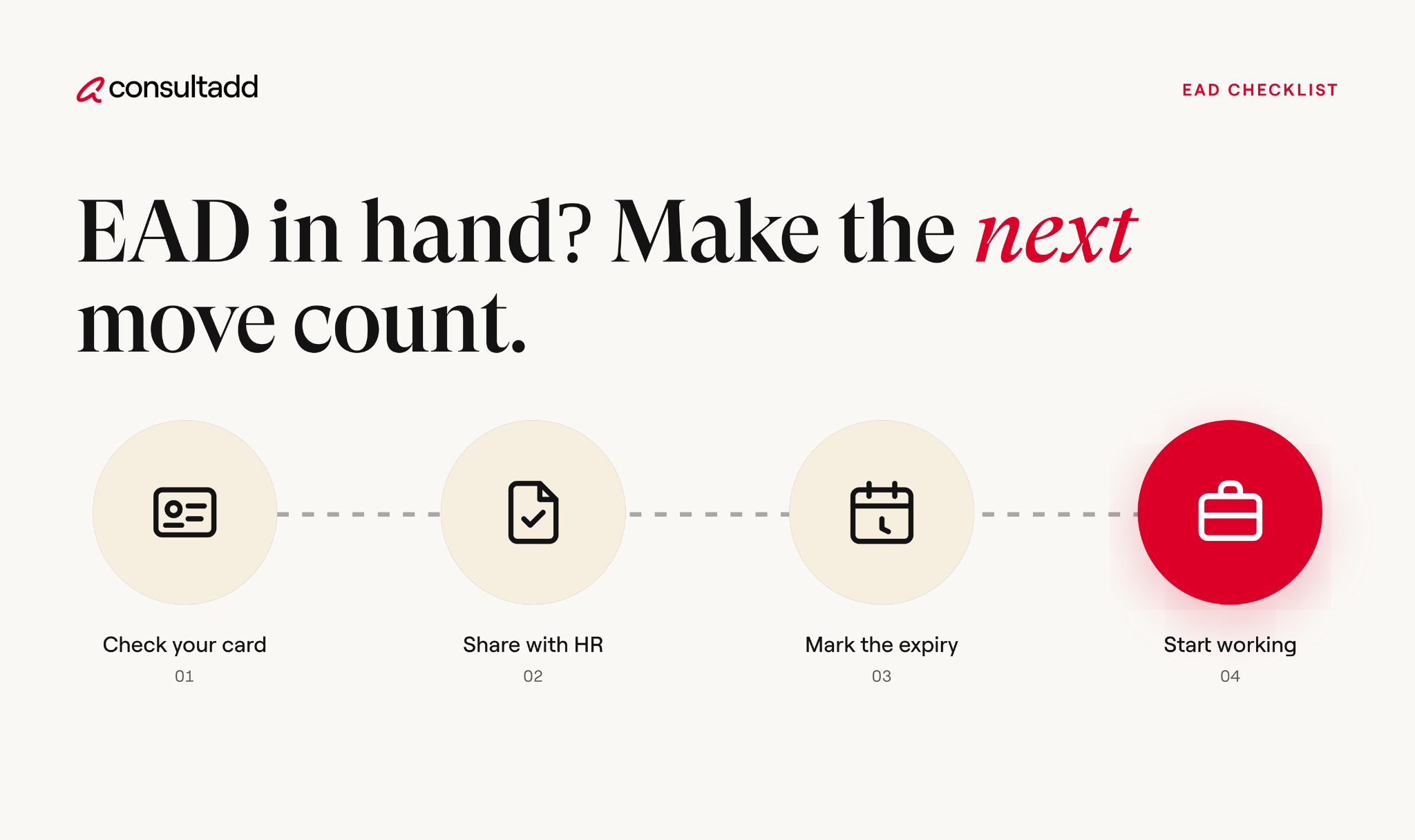
What to do after EAD arrives: a 30-day plan
Before you travel abroad, check the rules for your category. OPT students generally need proof of a job or job offer to re-enter, among other documents, so talk to your DSO before booking anything.
If you're looking for your first contract role, our guide to contract-to-hire and C2C opportunities explains how those roles work and what recruiters look for.
Final thoughts on what to do after EAD arrives
The card itself is the easy part. What to do after EAD arrives comes down to three dates:
- the day the card becomes valid
- the deadline for your reporting or I-9 paperwork
- the day the card expires
Get those three dates right and you'll avoid most of the problems people run into on an EAD. Write the expiry date down today, and give it to anyone who'll be employing you.
Start Strong With Consultadd
With 15 years in business and 5,000+ successful staffing engagements, we don't just fill roles, we build reliability into your process. We've supported 65 staffing companies in the past year alone and maintain MSAs with industry leaders like Robert Half and TEKsystems.
Here's what working with Consultadd looks like:
- Talent sourced in under 24 hours
- Ready-to-deploy candidates, vetted for experience and compliance
- Lower turnover risk: we match long-term goals, not just short-term needs
- Seamless compliance: visa, documentation, onboarding? Handled.
- Dedicated 1:1 account managers for responsive, personalized support
- Top 100 candidate matches delivered in the past year
- Strong partnerships with universities to tap into fresh, committed talent
- Post-placement support so your investment grows beyond day one
For candidates, your next opportunity is more than just a job title, it's a chance to build skills, gain experience, and move your career forward. At Consultadd, we connect technology professionals with projects and employers that align with their goals, whether they're looking for contract, contract-to-hire, or long-term opportunities.
The tech job market moves fast, but the right guidance can make all the difference. Ready to take the next step in your career journey? Explore Opportunities >>
Key takeaways
- Check every field on your EAD the day it arrives. USCIS fixes its own errors at no cost, but you pay to fix yours.
- You can work only when the card is physically in hand and the "Valid From" date has arrived.
- Your EAD is a List A document for Form I-9. Section 1 is due by your first day, and your employer has three business days for Section 2.
- OPT students must report employment within 10 days and stay under the 90-day unemployment limit, or 150 days with STEM OPT.
- Most renewals filed on or after October 30, 2025 get no automatic extension, so file up to 180 days before expiry.
FAQs
Can I start working as soon as my EAD arrives?
Only if the "Valid From" date on the card has already passed. The card must also be physically in your possession, because an approval notice alone doesn't authorize work. If the start date is in the future, wait until that date.
What should I do if my EAD card has a mistake on it?
If USCIS caused the error, you can request a free correction through an online service request and mail the card back by USPS. If the mistake came from your own application, you'll need to file a new Form I-765 with the fee. Either way, copy both sides of the card before you mail it.
How long after my EAD arrives will I get my Social Security card?
If you requested an SSN on Form I-765, the card is mailed separately and usually arrives a few weeks after the EAD. If it hasn't come after about a month, contact the Social Security Administration. You can usually start working before it arrives.
Do I need to report my job after my OPT EAD arrives?
Yes. Students on post-completion OPT must report employer information in the SEVP Portal within 10 days of starting a job or changing employers. Unreported employment may count against your 90-day unemployment limit.
Is my I-797C receipt notice proof that I can keep working?
For most EAD renewals filed on or after October 30, 2025, no. USCIS says those receipt notices aren't evidence of work authorization, even alongside an expired card. Earlier filings and some categories, such as STEM OPT, follow different rules.
When should I renew my EAD?
USCIS recommends filing up to 180 days before your current card expires. Automatic extensions have ended for most categories, so filing late raises the risk of a gap in which you can't work. Share your expiry date with your employer or recruiter so they can plan around it.

OPT Job Range: What Jobs You Can Take And What They Pay
Introduction
A lot of F-1 graduates think OPT means one full-time salaried job or nothing. The actual OPT job range is much wider.
You can combine part-time roles, work through an agency, take contract assignments, volunteer, or even run your own business, as long as the work is related to your degree.
This guide covers every type of employment OPT allows, how STEM OPT narrows those options, the rules on hours and unemployment days, and what OPT jobs typically pay.
If you need the basics first, including eligibility and the 12-month and 36-month limits, start with our guide to what OPT and CPT are.
TL;DR
- Standard OPT allows paid, part-time, multiple-employer, agency, self-employed, and unpaid work, as long as it relates to your major.
- STEM OPT is stricter: the job must be paid, at least 20 hours a week, and with an E-Verify employer.
- Standard post-completion OPT allows 90 unemployment days, and STEM OPT raises the combined limit to 150.
- You're responsible for being able to explain how each job relates to your degree.
- Pay depends on your field, location, and role. Being on OPT doesn't set your salary.
What the OPT job range covers
"OPT job range" usually means one of two things:
- Job types: which kinds of employment keep you in status.
- Pay: what those jobs typically pay.
Both depend on the same rule. OPT work has to give you practical training related to what you studied. Under that rule, the student is ultimately responsible for explaining how a job relates to their major.
That flexibility helps you. Your job title doesn't have to match your degree name. What matters is that the work you do day to day connects clearly to your field.
Types of OPT employment allowed
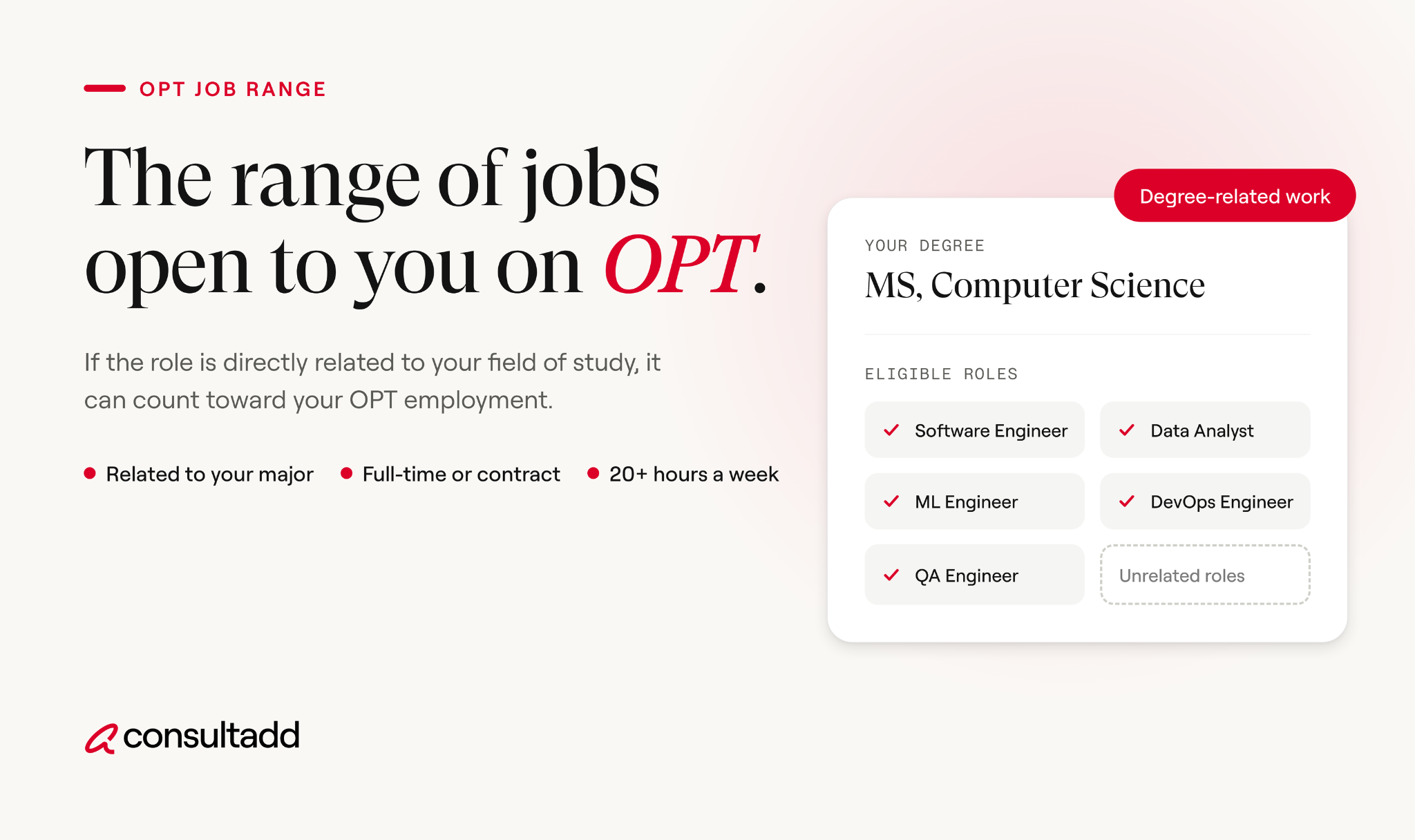
Universities describe the allowed types consistently. They include paid employment, working for multiple employers, short-term gigs with multiple employers, being a self-employed business owner, working through an agency, and unpaid work such as volunteering or an unpaid internship.
The table shows how each type works under standard OPT and under the STEM extension.
Unpaid work must be related to your degree and at least 20 hours a week.
Part-time work: On standard OPT, a job of 20 or more hours a week in your field counts as employment, and you can combine several part-time jobs to reach that total.
STEM OPT requirements: To qualify for the extension, you must work in a job directly related to your STEM degree, for an employer enrolled in E-Verify and in good standing. The job must also be paid.
Standard OPT permits properly documented self-employment. STEM OPT does not work that way, because its E-Verify and training plan requirements rule out working through your own single-member company for most students.
The official STEM OPT Hub from the Student and Exchange Visitor Program covers the training plan (Form I-983) and employer duties.
If a recruiter asks whether you're open to C2C, our explainer on C2C vs W-2 vs 1099 explains what that means for students on OPT.
Hours and OPT unemployment days
Two rules apply to every job type in the OPT range: a minimum number of hours and a cap on unemployment days.
Minimum hours: To avoid accruing unemployment days on post-completion OPT, you must work at least 20 hours a week in a job related to your major.
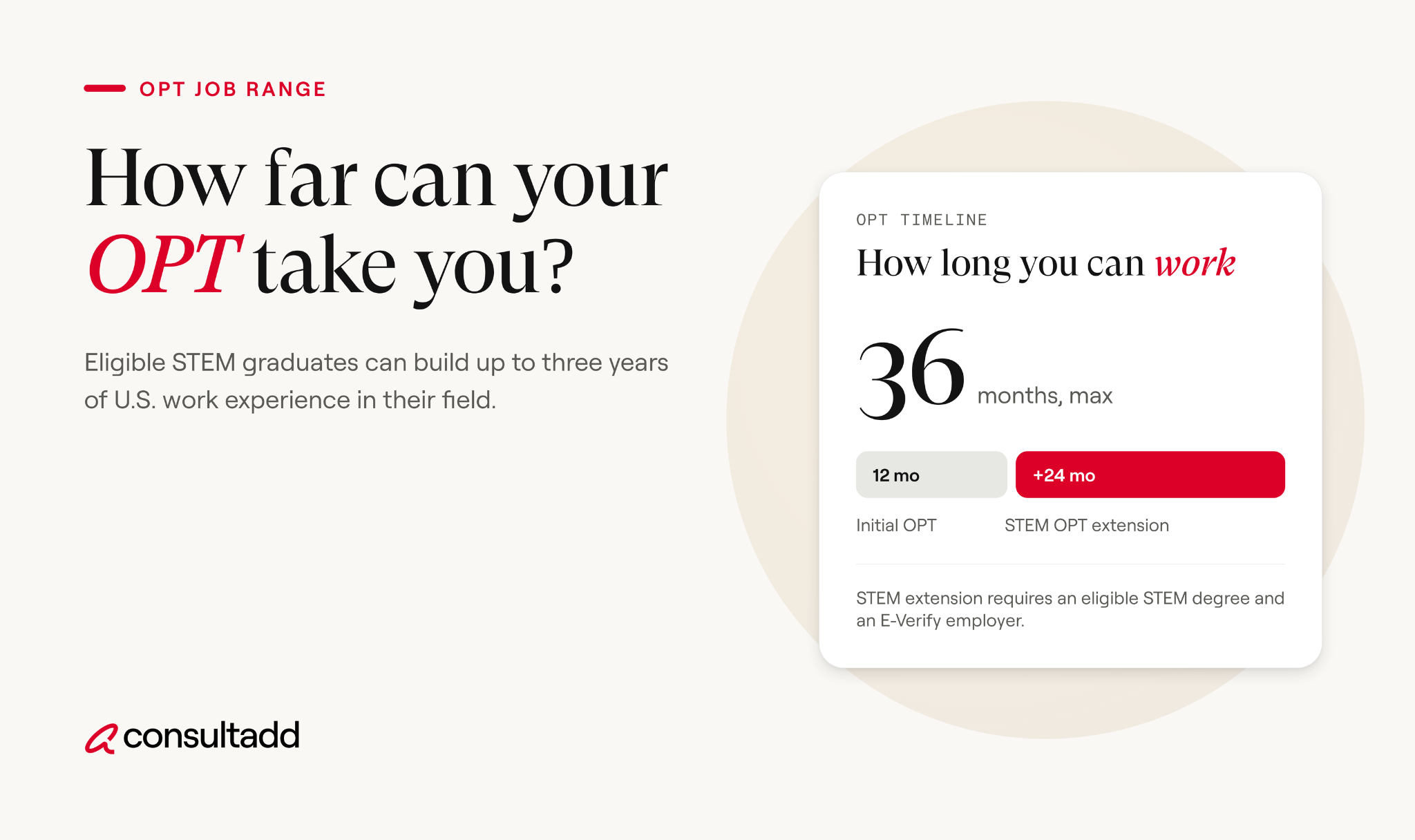
Unemployment limits: On standard OPT, you can have up to 90 days of unemployment in total. Once you move to the STEM extension, the limit becomes 150 days across the full period, combining the original 12 months and the 24-month extension.
Reporting: Once your OPT start date begins, report your employment in the SEVP Portal within 10 days. If you don't report it, those days count as unemployment.
The days you don't expect can use up your limit too. Days between a job offer and your start date count, as do gaps between jobs.
For example, if your EAD becomes valid on August 1 and your job starts August 20, you've already used 19 unemployment days.
Rules on how long F-1 students can stay are also changing. Starting September 15, 2026, open-ended "duration of status" admissions are being replaced with a fixed end date capped at four years.
Our guide to the F-1 duration of status change explains how this affects OPT and STEM OPT timelines.
How to show a job is directly related to your degree
The "directly related" requirement is where most OPT problems start. Your DSO won't approve each job in advance, so keep records you can show later.
Harvard's International Office recommends documenting each role with:
- Employment letters that show your job title, duties, work location, pay rate, and hours per week.
- Proof that the job duties relate to your degree program.
Some habits that help:
- Write a two-line connection between each job and two or three specific courses or skills from your degree. Keep it with your records.
- Ask for a detailed offer letter. A letter that just says "Associate" doesn't help. "Associate, building Python data pipelines for claims analytics" does.
- Be careful with roles outside your field. A computer science graduate working as a restaurant manager is out of range, no matter how many hours they work.
These records also matter later. They help with future H-1B or green card applications, when your employment history may be reviewed closely.
Our guide to H-1B sponsorship for tech professionals explains why.
OPT pay range: what OPT jobs pay
Being on OPT doesn't set your salary. Your field, location, and role do. For that reason, published "OPT salary" figures vary widely, and none of them is a benchmark. Here are two examples.
Low end: ZipRecruiter lists the average salary for the job title "OPT Student" at about $34,464 a year. Most salaries fall between roughly $30,500 and $38,500.
This data is based on postings that use "OPT Student" as the title, which are mostly entry-level and part-time roles.
Typical range: OPTnation, a job board for OPT candidates, estimates that OPT jobs usually start at $40,000 to $70,000 a year, and STEM roles often run $60,000 to $90,000.
Four factors move your pay within that range:
Pay on STEM OPT: STEM OPT also has a wage rule. Your employer must pay you at the same level as similarly situated U.S. workers, and it confirms this on your Form I-983. An unpaid or unusually low-paid STEM role is a compliance problem, not just a weak offer.
Where to find jobs across the OPT range
International graduates usually find OPT roles through three main channels:
- University career services and job platforms: Tools like Handshake often let you filter for employers open to OPT and CPT candidates.
- Direct applications to employers: This works best at companies that have hired international graduates before.
- Tech staffing and consulting firms: Many place OPT graduates in contract or full-time roles and handle the E-Verify and training plan paperwork STEM OPT requires.
When a job application asks about work authorization and future sponsorship, answer truthfully.
Our guide on whether you're legally authorized to work in the U.S. explains how to word those answers.
One warning: never pay an employer to give you a job or to "report" employment you aren't actually doing. Fake employment arrangements can end your status and create problems for any future visa application.
Final thoughts on the OPT job range
The OPT job range is wider than most graduates realize, especially during the first 12 months. On standard OPT, part-time, agency, contract, and even unpaid work can all keep you in status while you look for a long-term role.
STEM OPT narrows those options to paid work with E-Verify employers, so plan ahead before you reach the extension. Keep track of your unemployment days, document how each job relates to your degree, and base salary decisions on your field and location rather than on your visa type.
Start Strong With Consultadd
With 15 years in business and 5,000+ successful staffing engagements, we don't just fill roles, we build reliability into your process. We've supported 65 staffing companies in the past year alone and maintain MSAs with industry leaders like Robert Half and TEKsystems.
Here's what working with Consultadd looks like:
- Talent sourced in under 24 hours
- Ready-to-deploy candidates, vetted for experience and compliance
- Lower turnover risk: we match long-term goals, not just short-term needs
- Seamless compliance: visa, documentation, onboarding? Handled.
- Dedicated 1:1 account managers for responsive, personalized support
- Top 100 candidate matches delivered in the past year
- Strong partnerships with universities to tap into fresh, committed talent
- Post-placement support so your investment grows beyond day one
For candidates, your next opportunity is more than just a job title, it's a chance to build skills, gain experience, and move your career forward. At Consultadd, we connect technology professionals with projects and employers that align with their goals, whether they're looking for contract, contract-to-hire, or long-term opportunities.
The tech job market moves fast, but the right guidance can make all the difference. Ready to take the next step in your career journey? Explore Opportunities >>
Key takeaways
- Standard OPT allows paid, part-time, multiple-employer, agency, self-employed, and unpaid work related to your major.
- STEM OPT requires paid work of at least 20 hours a week with an E-Verify employer, which rules out unpaid work and single-owner businesses.
- You get 90 unemployment days on standard OPT and 150 in total with the STEM extension. Unreported days count against you.
- Document every job's title, duties, hours, and pay, along with how it relates to your degree.
- Your field and location drive OPT pay, and STEM OPT employers must pay a comparable wage.
FAQs
What jobs can I do on OPT?
Any job that gives you practical training related to your degree. That includes full-time, part-time, contract, agency, gig, self-employed, and unpaid roles on standard OPT. STEM OPT limits this to paid roles with E-Verify employers.
Can I work part-time on OPT?
Yes. On post-completion OPT, a job of at least 20 hours a week in your field counts as employment. You can combine several part-time jobs to reach 20 hours, as long as each one relates to your degree.
Can I do unpaid work or volunteer on OPT?
On standard OPT, yes, as long as the work relates to your field and is at least 20 hours a week. Unpaid work doesn't qualify during the STEM OPT extension, which requires paid employment.
How many unemployment days are allowed on OPT?
You can have up to 90 days of unemployment during standard post-completion OPT. With the STEM extension, the combined limit is 150 days. Days between jobs, and between an offer and your start date, count toward the total.
Can I work for a staffing company on OPT?
Yes. Working through an agency is allowed on standard OPT. On STEM OPT, the employer must be enrolled in E-Verify, sign your Form I-983 training plan, and remain responsible for your training. Confirm the arrangement with your DSO before you start.
What is the average salary for OPT jobs?
There isn't one meaningful average, because pay depends on your field, role, and location. Published estimates run from the mid-$30,000s for entry-level roles to $60,000 to $90,000 or more for STEM positions. STEM OPT employers must pay you at the same level as similarly situated U.S. workers.