
.webp)

Introduction
Most job interviews feel one-directional. The interviewer asks questions. You answer. Then it ends. But that's a missed opportunity. The best candidates flip the dynamic. They ask thoughtful questions that demonstrate intelligence, reveal what they actually care about, and extract critical information to make an informed decision.
Asking good questions at an interview isn't just polite. It signals competence. It shows you're seriously considering the role, not just desperate for any job. It lets you assess whether the company, team, and role actually fit your career goals. Most importantly, it shifts the conversation from "hire me" to "let's see if we're a good fit."
According to the Society for Human Resource Management (SHRM), 60% of candidates don't ask meaningful questions during interviews. They either ask nothing or ask generic questions like "What's the vacation policy?" Those candidates miss the chance to gather critical information and demonstrate their strategic thinking. The candidates who ask thoughtful questions stand out.
This guide covers what makes a good interview question, when to ask questions, what to avoid, and specific examples you can adapt for any interview.
TL;DR
- Asking good questions at interview demonstrates intelligence, seriousness, and strategic thinking
- The best questions gather information about role, team, company culture, and growth potential
- Ask questions throughout the interview, not just at the end when prompted
- Avoid transactional questions early (vacation, salary, benefits) unless they're genuine dealbreakers
- Ask follow-up questions that dig deeper into interviewer responses
Why asking good questions at interview matters
Most candidates approach interviews defensively. They worry about saying the wrong thing. They focus on answering questions perfectly. They forget that interviews are two-way conversations. You're evaluating them as much as they're evaluating you.
This mindset shift is critical. You're considering a big life decision: spending 40+ hours weekly with this team, potentially relocating, learning new systems, and betting years of your career on this role. This decision should matter more to you than the company's decision to hire you. Yet many candidates treat it casually.
Asking good questions signals that you're taking this seriously. It shows you're thinking strategically about your career. It demonstrates that you're evaluating fit, not just seeking employment. This actually makes interviewers respect you more. They want to hire someone who cares about the decision, not someone who'll accept any offer and quit in 3 months when they realize they made a mistake.
There's also a practical benefit:
- Asking good questions helps you make an informed decision.
- If you don't ask about team dynamics, you might join a toxic team.
- If you don't ask about growth potential, you might stagnate in a dead-end role.
- If you don't ask about decision-making processes, you might work for a chaotic company.
- The information you gather through questions directly impacts your career satisfaction.
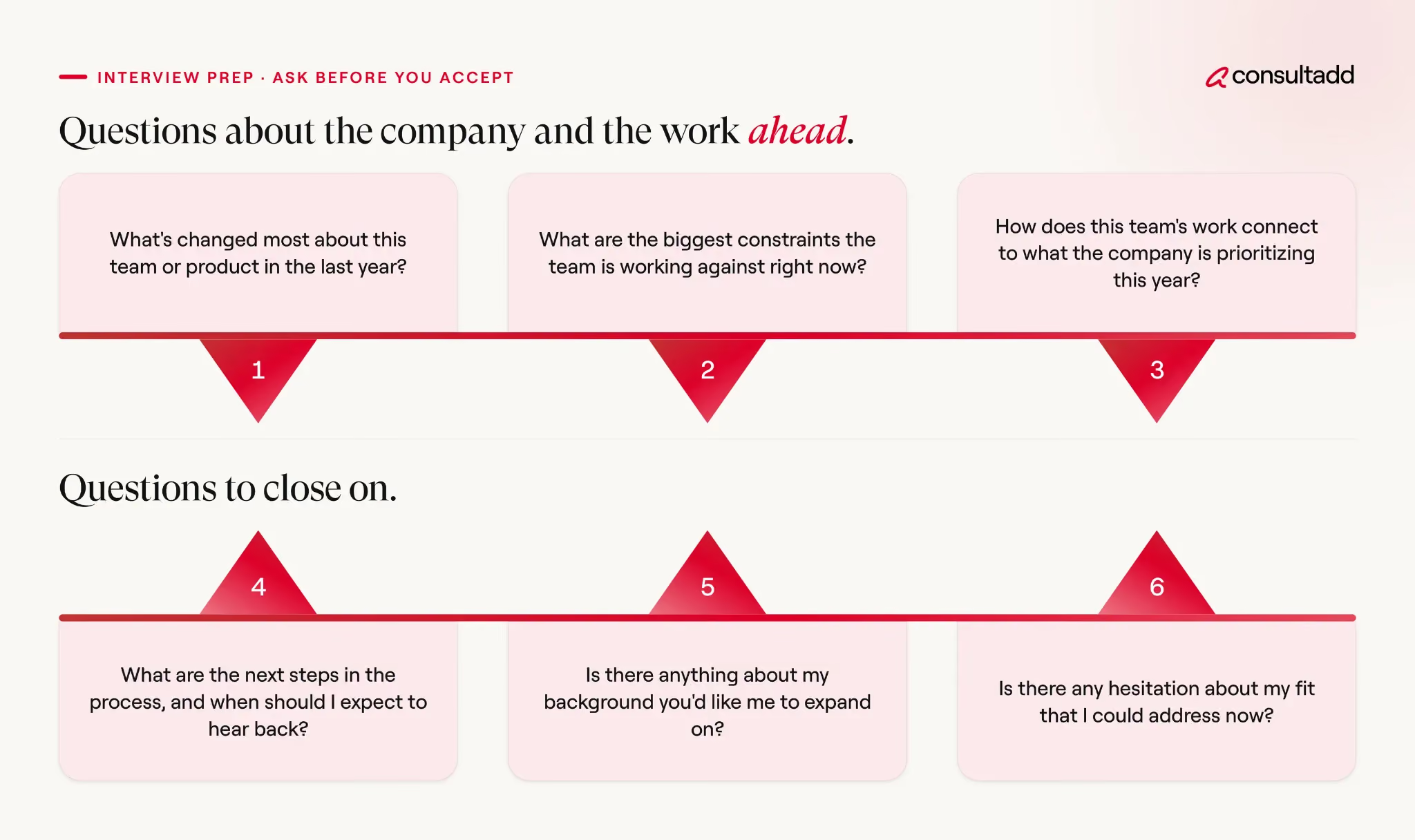
What makes a good interview question
Not all questions are equal. Some questions are insightful and strategic. Others are lazy or self-centered. Understanding what separates good questions from bad ones helps you ask the right things.
Good interview questions are strategic.
Good questions demonstrate that you're thinking about long-term fit and impact. They show you understand the role beyond the job description. They reveal what you value and care about. Examples: "What does success look like in this role after 90 days?" or "How do you measure impact?" or "What's the biggest challenge your team is facing?"
These questions show you're thinking beyond immediate employment. You're evaluating whether this role aligns with your values, skills, and goals.
Bad interview questions are transactional.
Transactional questions focus on what the company provides rather than what you'll contribute. They signal that you're primarily motivated by benefits, not meaningful work. Examples: "How much vacation do I get?" or "When do I get my first raise?" or "What's the 401k match?"
These questions aren't inherently wrong, but asking them early signals the wrong priorities. You'll have plenty of time to discuss benefits during offer negotiation. Asking about vacation in your first interview sends a message: you're counting days off before you've even started.
Good interview questions show you've done research.
Candidates who ask informed questions demonstrate that they care enough to prepare. They've read the company website. They understand the industry. They know something about the company's recent news or direction.
Example: "I noticed you recently launched product X. How is that impacting your engineering roadmap?" or "Your company operates in a competitive market. What's your competitive advantage?"
These questions show engagement and preparation. They make you memorable because most candidates don't ask anything this thoughtful.
Bad interview questions show you haven't prepared.
Generic questions that could apply to any company signal that you haven't done homework. Examples: "What does your company do?" or "How many people work here?" or "What's the company culture like?" These questions could have been answered by spending 5 minutes on the company website.
Good interview questions dig deeper.
After an interviewer answers your first question, follow up. Ask "why?" or "can you give me an example?" These follow-up questions show you're genuinely curious and thinking critically. They also give you richer information than surface-level answers.
Bad interview questions end conversations.
Asking a question and accepting a one-sentence answer signals disinterest. Good conversations involve dialogue, not interrogation.
When to ask questions: Timing and strategy
Timing matters when asking interview questions. Different questions fit different moments in the interview.
During the interview (not just at the end):
Many candidates wait until the end when the interviewer says "do you have any questions?" That's the absolute worst time because:
- You're both tired
- The interviewer is mentally wrapping up
- You don't have time for meaningful conversation
- It signals you weren't engaged throughout
Instead, ask questions naturally throughout the interview. When the interviewer describes the role, ask clarifying questions. When they mention the team, ask about team dynamics. When they discuss company direction, ask for strategic follow-ups.
Example: Interviewer says "You'd be working on our cloud migration project." You ask: "How long has the migration been planned?" or "What's the biggest challenge you're facing with the migration?" These questions flow naturally and show engagement.
Early in the interview (but not immediately):
In the first 5-10 minutes, ask lighter questions about the role or interviewer's background. These build rapport without being presumptuous. Example: "How long have you been with the company?" or "What drew you to this team?" These questions show interest in the person, not just the job.
In the middle (dig deeper):
Once you've established rapport, ask more substantial questions about role expectations, team dynamics, and company culture. Example: "What does success look like in this role?" or "How would you describe your management style?" These require more thoughtful answers and signal you're evaluating fit seriously.
At the end (final strategic questions):
When the interviewer asks if you have questions, save your most important ones for this moment. Use this time to ask about next steps, timeline, or anything critical you haven't covered. Example: "What's your timeline for hiring?" or "What would you like to know from me to move forward?"
Questions to ask about the role
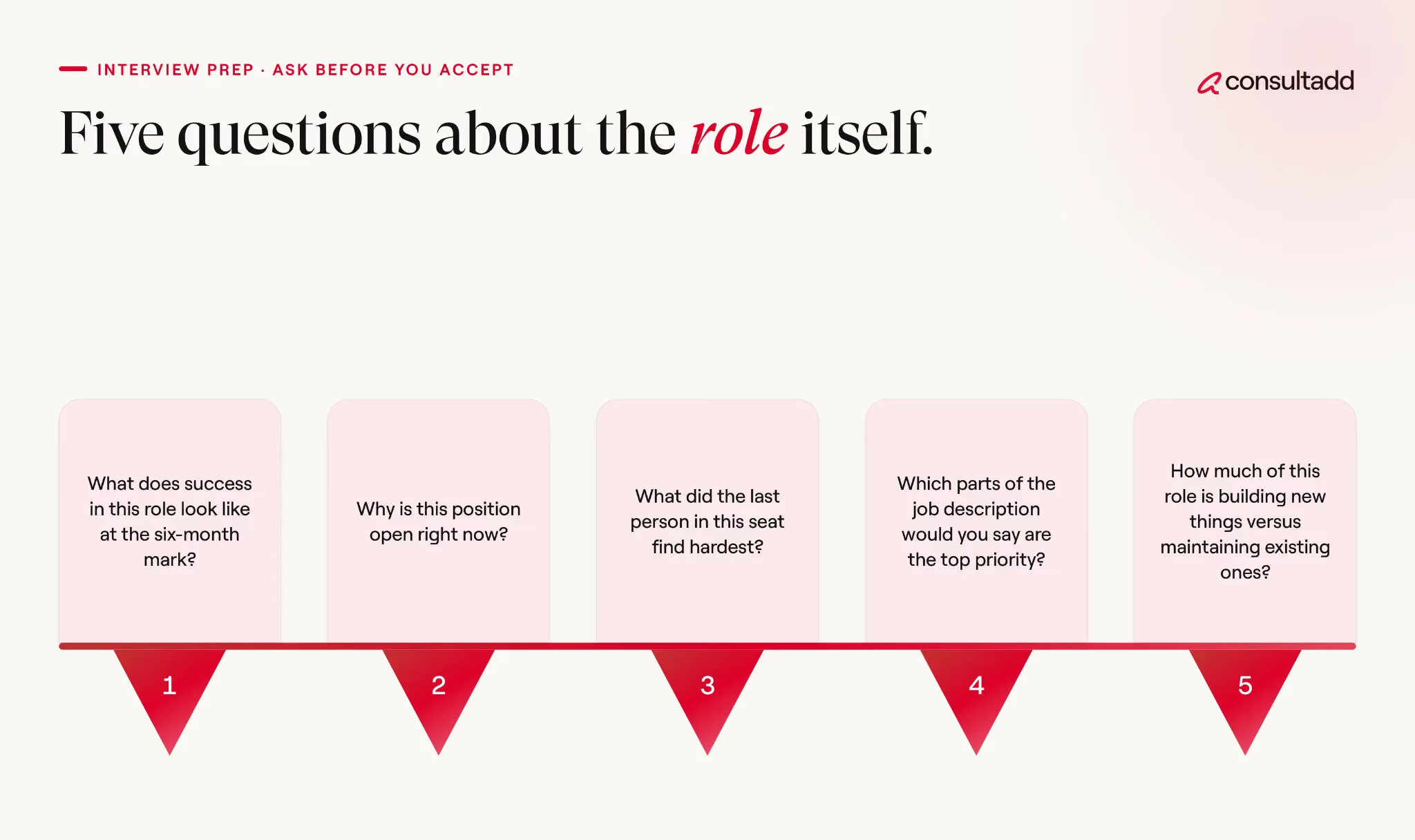
These questions help you understand what you'd actually be doing day-to-day.
"What does success look like in this role after 90 days, six months, and one year?"
This question reveals what the company actually prioritizes in the role. Most job descriptions are generic. This question forces them to be specific about metrics, deliverables, and expectations. The answer tells you what you'll actually be measured on.
"What would a typical day or week look like in this role?"
Job descriptions describe responsibilities abstractly. This question gets concrete details. "You'd spend 40% of your time on feature development, 30% on code review, 20% on documentation, and 10% on meetings." Now you know what you're actually signing up for.
"What's the biggest challenge I'd face in this role?"
This is a harder question for interviewers because it requires honesty. But their answer is revealing. They might say "onboarding to our codebase takes 6 weeks" or "the legacy system requires constant maintenance" or "product requirements change frequently." This is critical information that helps you decide if you can handle the actual role.
"Who would I report to, and what's their management style?"
Your direct manager is one of the most important factors in job satisfaction. This question helps you understand how they operate. Do they micromanage or delegate heavily? Are they hands-on or hands-off? Do they invest in their team's growth? Their answer (and how they answer it) tells you a lot.
"How does this role interact with other teams?"
Some roles are siloed. Others require constant cross-team collaboration. Understanding how your role fits into the broader organization tells you about work environment and collaboration style. If you love collaboration, siloed roles are wrong. If you prefer focused work, highly collaborative roles might frustrate you.
"What tools and technologies would I be using?"
This is practical but strategic. If the role requires technologies you don't know, ask about training and support. If you specifically wanted to work with certain tools, confirm they use them. Example: "I'm interested in working with Kubernetes. Does this role involve Kubernetes work?"
Questions to ask about the team
Team dynamics significantly impact job satisfaction. These questions help you assess whether the team is right for you.
"How would you describe your team culture?"
This is open-ended and reveals what the interviewer thinks is important. A product-focused interviewer might describe culture around shipping features. A quality-focused interviewer might emphasize testing rigor. Their answer tells you the team's values.
"What's the size of the team, and what's the composition?"
Team size affects dynamics significantly. A team of 3 is very different from a team of 15. A team with 50% junior engineers behaves differently than a team with all senior engineers. This question gives you concrete information about who you'd actually work with.
"How does the team handle disagreement or conflict?"
This is a revealing question. Do they have healthy debate? Do they sweep disagreement under the rug? Do they escalate everything to management? The way a team handles conflict affects work environment significantly. Their answer shows team maturity.
"What's the team's biggest weakness or area for improvement?"
This requires honesty and self-awareness from the interviewer. A good team acknowledges weaknesses. An answer like "we need to improve our documentation" or "we're working on better communication across time zones" shows self-awareness. An answer like "we're perfect" or "we have no weaknesses" is a red flag.
"How long have team members been here on average?"
High turnover is a warning sign. If the average tenure is 1-2 years, people are leaving relatively quickly. If it's 5+ years, people stay. This tells you something about whether the team is actually a good place to work.
"What happened to the last person in this role?"
This is a tactical question. Did they get promoted? Did they leave the company? Did they move to a different role? Their answer reveals whether this role is a stepping stone (good) or a dead end (bad). If they say "they left for a competitor," that's concerning. If they say "they got promoted to team lead," that's promising.
Questions to ask about the company
These questions help you understand company direction, culture, and whether it's a place where you want to invest years.
"Where does the company see itself in 3-5 years?"
This reveals company vision and ambition. Are they aiming to be an industry leader? Going public? Building sustainable profitability? Targeting acquisition? Their answer tells you whether company direction aligns with your goals.
"What's the company's biggest competitive advantage?"
This forces them to articulate what makes the company different. A strong answer shows strategic clarity. A weak answer ("we have great people" or "our culture is good") suggests unclear positioning. This question also reveals whether they actually think strategically about business.
"How has the company navigated [recent industry trend]?"
Research a recent industry development (AI adoption, market shift, regulatory change) and ask how they're handling it. This shows you're paying attention to their industry. Their answer reveals whether they're adapting or resisting change.
"What does success look like for the company this year?"
This is forward-looking and strategic. A clear answer shows alignment around priorities. A vague answer suggests unclear leadership or strategic confusion. You want to work somewhere with clear goals.
"How does the company invest in employee development?"
This reveals whether they're building careers or just hiring labor. Do they offer training? Mentorship? Internal mobility? Career development? Their answer shows whether they're investing in people or just extracting value.
"What's the most important thing you wish candidates understood about working here?"
This is a great concluding question. It gives them a chance to communicate something they think matters. Their answer often reveals the real culture. If they say "we work hard but it's incredibly fulfilling," that's telling. If they say "benefits are competitive," that's different.
Questions to ask about company culture and fit
Culture is subjective, but these questions help you assess whether you'd fit.
"How would you describe the company culture?"
Listen for specific examples, not generic descriptions. A good answer includes concrete behaviors or stories. A bad answer is buzzwords: "we're innovative," "we're customer-focused," "we're collaborative."
"How much autonomy do individual contributors have?"
Some people thrive with high autonomy. Others prefer more structure and guidance. Understanding autonomy level helps you know if you'll thrive. If you prefer independence and they have high control, it's a bad fit.
"How are decisions typically made here? Is it top-down or collaborative?"
This reveals decision-making culture. Do executives decide and cascade down? Do teams have input? Do decisions happen through consensus? Your preferred decision-making style should align with theirs.
"How flexible is remote work or work-from-home?"
Even if you don't care about WFH now, circumstances change. Understanding their actual flexibility (not just stated policy) helps you know if you'll have options in the future.
"What's the work-life balance like here?"
Listen carefully to their answer. If they emphasize that people "work hard" but don't mention balance, that's telling. If they emphasize boundaries and time off, that's different. Pay attention to hesitation or vague answers, those often indicate burnout culture.
Questions to ask about growth and development
Career growth is important to most people. These questions assess whether the role offers development.
"How would you describe the career path for someone in this role?"
Is there a clear path upward? Lateral moves? Can people grow without leaving the company? A good answer shows there's growth. A vague answer suggests limited opportunities.
"How often do you see people from this role get promoted?"
This reveals whether the role is a stepping stone or a trap. If people regularly get promoted from this role, it's good. If people stay in the same role for years, that's limiting.
"What does professional development look like? Are there training opportunities, conferences, or mentorship?"
This shows whether they invest in people. Companies serious about development offer learning opportunities. Companies treating engineers like interchangeable resources don't invest.
"Who would be my mentor or coach if I took this role?"
Good companies assign mentors or have structured onboarding. This question reveals whether they have systems supporting new hires. A positive answer (specific mentor, structured program) is encouraging. A vague answer is concerning.
"What skills would I develop in this role?"
This is both a learning question and a negotiation signal. You're asking what you'd gain. Their answer tells you whether the role offers growth or stagnation.
Questions to avoid at interview
Not all questions help your candidacy. Some questions damage your chances.
"What does your company do?"
You should know this before the interview. Asking shows you didn't prepare.
"When will I get a raise or promotion?"
Asking this early signals you're counting raises before you've started. Save this for offer negotiation.
"How much vacation do I get?" or "What's the 401k match?"
Again, these are valid questions but not for early interviews. These are benefits questions for HR, not cultural questions for hiring managers.
"Did the last person in this role quit or get fired?"
This is too direct and comes across as aggressive or suspicious. A softer version: "What happened to the last person in this role?" is better.
"How much will the job stress me out?"
Obviously no interviewer will say "extremely stressful." This question is pointless.
"Is your company stable or are you going to lay people off?"
This signals you're worried about job security from the start. Asking it early damages candidacy. You can research stability through company news and financials.
"How much will I actually work?" or "Can I do this job part-time?"
Unless you have specific circumstances, asking about reduced commitment signals you're not fully committed.
"Will I need to work with [a specific person/team you heard is difficult]?"
This signals you've been researching negative aspects or have preconceived judgments.
Examples of good interview questions by role
Here are specific questions tailored to common roles:
For engineering roles:
- "What's your current tech stack and why did you choose it?"
- "How do you approach technical debt and refactoring?"
- "What's your testing culture like? How much of the codebase is covered?"
- "How often does the team ship to production?"
- "What's the biggest technical challenge your team is facing right now?"
- "How does the team stay current with technology trends?"
For product management roles:
- "How do you prioritize features against technical debt?"
- "What's your product discovery process?"
- "How do you measure success for product initiatives?"
- "How much time do you spend talking to users?"
- "What's the relationship like between product and engineering?"
For sales roles:
- "What's your sales methodology or framework?"
- "How much support does the sales team get from marketing and enablement?"
- "What's the average sales cycle?"
- "What's your customer retention rate?"
- "How is quota structured? Individual or team-based?"
For marketing roles:
- "How do you measure marketing impact on revenue?"
- "What's your content strategy?"
- "How do you handle attribution across channels?"
- "What's the relationship between demand gen and sales?"
- "How much budget flexibility do you have for experiments?"
For leadership roles:
- "What's the culture like at the senior leadership level?"
- "How much autonomy do you have in this role?"
- "What are the biggest organizational challenges?"
- "How does the CEO view this function's role?"
- "What's your leadership philosophy?"
Preparing for good interview questions
Asking good questions requires preparation.
Research the company thoroughly.
Spend time on their website. Read recent news. Understand their products, market position, and direction. Follow their social media. This research enables you to ask informed questions. It also prevents you from asking questions that are answered on their website.
Research the team and role.
Look up the team on LinkedIn. Understand their background and experience. Read any company blog posts about engineering or product philosophy. This helps you ask specific questions that show you care about the actual team.
Prepare 5-7 questions you want to ask.
Don't wing it. Prepare questions in advance. Write them down if it helps. But prepare thoughtfully so you know what you want to learn.
Ask questions naturally, not from a list.
While you should prepare, don't just read from a written list. That's awkward. Instead, integrate questions naturally into conversation. When the interviewer mentions the team, that's a natural moment to ask about team dynamics.
Listen carefully and follow up.
The best conversations aren't about your prepared questions. They're about genuine dialogue. Listen carefully to answers. When they say something interesting, follow up. Ask "why?" or "can you give me an example?" This shows genuine curiosity.
Pay attention to non-verbal communication.
How do they answer questions? With enthusiasm or reluctance? With specificity or vagueness? Their communication style reveals how they actually think about the company and role.
Using interview questions to evaluate fit
The goal of asking good questions isn't just to impress. It's to gather information so you can make a good decision.
After your interview, evaluate what you learned:
- Do the role and responsibilities align with what you want to do?
- Does the team seem like people you'd want to work with?
- Is the manager someone you'd respect and trust?
- Does the company's direction match your goals?
- Is the culture something you'd thrive in?
- Does the role offer growth and development?
- Did the interviewer seem engaged and thoughtful when answering your questions?
If you answer yes to most of these, the role is probably worth pursuing. If you answer no to several, reconsider whether you actually want this job or whether you're just desperate for employment.
The best candidates treat interviews as two-way conversations where both parties are evaluating fit. You're not just trying to get hired. You're trying to get hired somewhere you'll actually thrive.
Consultadd's support for interview preparation
Consultadd doesn't just match candidates with jobs. They prepare candidates to interview successfully and ask good questions.
Consultadd provides interview coaching that covers:
- Understanding what interviewers are actually looking for
- Preparing strong stories and examples
- Asking questions that demonstrate strategic thinking
- Reading dynamics and adapting your approach
- Evaluating company fit based on what you learn in interviews
Their full cycle recruiting approach includes candidate support beyond job matching. They understand that great placements require candidates who interview well and ask thoughtful questions. Candidates who work with Consultadd are better prepared, more confident, and more likely to land offers at companies where they'll actually succeed.
Consultadd's dedication extends to post-placement support. They don't just care if you get hired. They care if you thrive in the role. This means helping you ask the right questions during interviews to assess genuine fit. With 15 years in business and 5,000+ successful placements, Consultadd understands what questions matter most and how to prepare candidates to ask them effectively.
When you work with Consultadd, you're not just getting job matches. You're getting interview preparation, coaching, and support that ensures you ask good questions and make informed decisions about your career.
Start Strong With Consultadd
With 15 years in business and 5,000+ successful staffing engagements, we don't just fill roles, we build reliability into your process. We've supported 65 staffing companies in the past year alone and maintain MSAs with industry leaders like Robert Half and TEKsystems.
Here's what working with Consultadd looks like:
- Talent sourced in under 24 hours
- Ready-to-deploy candidates, vetted for experience and compliance
- Lower turnover risk: we match long-term goals, not just short-term needs
- Seamless compliance: visa, documentation, onboarding? Handled.
- Dedicated 1:1 account managers for responsive, personalized support
- Top 100 candidate matches delivered in the past year
- Strong partnerships with universities to tap into fresh, committed talent
- Post-placement support so your investment grows beyond day one
For candidates, your next opportunity is more than just a job title, it's a chance to build skills, gain experience, and move your career forward. At Consultadd, we connect technology professionals with projects and employers that align with their goals, whether they're looking for contract, contract-to-hire, or long-term opportunities.
The tech job market moves fast, but the right guidance can make all the difference. Ready to take the next step in your career journey? Explore Opportunities >>
Key takeaways
- Good interview questions demonstrate strategic thinking, genuine interest, and career intentionality
- The best questions assess role expectations, team dynamics, growth potential, and cultural fit
- Ask questions throughout the interview, not just at the end when prompted
- Avoid transactional questions early; save benefits discussions for offer negotiation
- Research the company beforehand so your questions show preparation and genuine interest
FAQs
When should I ask questions during an interview?
Ask questions naturally throughout the interview, not just at the end. When the interviewer describes the role, ask clarifying questions. When they mention the team, ask about team dynamics. This shows engagement and creates natural dialogue. Save your most important questions for when they ask if you have questions, but don't save all questions for that moment. A natural back-and-forth conversation is better than waiting until the end to interrogate them.
What if the interviewer doesn't ask if I have questions?
If they don't explicitly ask, take the initiative. As the conversation is wrapping up, say something like "I have a few questions if you have time" or "I'd love to ask you about..." Most interviewers appreciate candidates who take initiative and ask thoughtful questions. If time is limited, ask 1-2 most important questions rather than dumping a list on them.
Should I ask questions if I'm interviewing with someone junior who might not know the answers?
Yes, but adjust your questions. Junior team members can answer questions about day-to-day work and team dynamics. They might not answer strategic questions about company direction. Ask what they can speak to: "What's a typical day like?" "How's the team to work with?" "What's the onboarding process?" Senior interviewers answer strategic questions; junior team members answer practical ones.
Is it bad to ask questions that reveal I haven't done research?
Yes. Don't ask "What does your company do?" or "Where are you located?" if that information is on your website. It signals you didn't prepare. If you forgot something despite preparing, better to say "I want to make sure I understand correctly" than to ask a question that shows you didn't research.
What if my question puts the interviewer on the spot?
Good questions sometimes require thoughtful answers. That's okay. If they can't answer a question about their team or role, that's informative. It might suggest they haven't thought about it deeply or that there's dysfunction. Questions that reveal discomfort or require reflection are actually valuable because they show what the interviewer finds difficult.
Should I ask salary or benefits questions at interview?
Not in first-round interviews. Asking about vacation or salary early signals wrong priorities. Wait until you have an offer or until the hiring manager brings up compensation. Then you can discuss benefits and salary confidently. In first interviews, focus on role, team, and company fit.




.png)