


Introduction
Typing "IT consultancy near me" into Google usually means one of two things: something just broke, or someone above you asked why the company still doesn't have a real technology plan. Either way, the search results won't tell you much about who actually picks up the phone when a server goes down on a Friday at 6 PM.
The truth is, choosing the right IT consultancy isn't just about finding the closest provider. It's about understanding why so many businesses are searching for local IT support in 2026, what "local" actually means beyond a faster response time, and whether a nearby consultancy delivers more value than a national MSP or an in-house IT team.
This guide breaks down the real costs, benefits, and trade-offs of each option. You'll also learn the green flags and red flags to look for before signing a contract, along with the exact questions to ask during your first conversation with any IT consulting firm so you can make a confident decision.
TL;DR
- A local IT consultancy is usually cheaper than a full-time in-house hire. A 25-person company can often get a full outsourced IT team for $24,000–$48,000 a year, compared to $120,000–$240,000 for one senior in-house IT manager once salary, benefits, and overhead are factored in.
- The US IT consulting industry is worth an estimated $821.2 billion in 2026 and includes roughly 502,000 businesses, so you have real options if you know what to filter for.
- "Local" matters most for response time, familiarity with regional compliance rules, and having someone who will actually answer the phone, not for price alone.
- The two biggest red flags are a vendor who won't commit to a response-time SLA and one who can't name a client in your industry.
- Ask about time-to-hire, industry experience, and what happens after the contract is signed before you commit to anyone.
Why "IT consultancy near me" searches are climbing in 2026
This isn't a random spike. Three things are pushing companies to search for a local IT consulting firm instead of trying to solve everything in-house.
The market itself has grown large enough to actually have local options in most cities.
The US IT consulting industry is now valued at $821.2 billion, spread across about 502,000 businesses, and it has grown at a 2.9% CAGR since 2021.
A decade ago, "local IT help" often meant one overworked generalist. Today it can mean a firm with dedicated cloud, security, and staffing specialists.
Hiring your own IT staff has gotten harder and slower.
65% of tech hiring managers say finding skilled talent is more difficult than it was a year ago, even as 78% of them plan to grow permanent headcount in the second half of 2026.
Zoom out further and it gets worse: a 2026 ManpowerGroup survey of more than 39,000 employers across 41 countries found that 72% are struggling to fill open roles at all. We've written before about what's actually driving the tech talent shortage if you want the longer version.
The cost of getting it wrong keeps climbing.
IDC estimates the ongoing IT skills shortage will cost organizations worldwide $5.5 trillion by 2026 through delayed projects, missed deadlines, and lost business.
A technical role also takes about 66 days to fill on average, roughly 50% longer than a non-technical one. Waiting that long for one hire, while your systems sit unmanaged, isn't really an option for most businesses.
In-House Hire vs. Local IT Consultancy: What it actually costs
Only 29% of businesses with fewer than 50 employees currently outsource their IT, compared to 66% of larger companies. That gap is closing, and honestly, it should. Smaller companies often have the most to gain from outsourcing, since they're the ones least able to absorb the cost of a bad in-house hire.
What "local" actually buys you
Plenty of national managed service providers can technically serve your zip code. So what does a truly local IT consulting firm add that a remote one doesn't?
The biggest difference isn't that local consultants know more technology. It's that they understand your business environment and can step in when technology problems become real business problems.
Imagine your office loses internet because a network switch fails, or your server refuses to boot on a Monday morning. A remote provider can troubleshoot what they can see, but eventually someone needs to be there in person.
A local IT consulting firm can often have a technician on-site the same day, reducing downtime and getting your team back to work much faster.
Beyond emergency support, local experience also matters when it comes to compliance and business operations. Consultants who regularly work with companies in your region are already familiar with state regulations, industry requirements, and the technology challenges businesses like yours commonly face.
Instead of spending time learning your environment from scratch, they can recommend solutions that have already proven successful for similar organizations.
Then there's the human side of IT support, which many businesses don't think about until something goes wrong. Working with a local firm often means having a dedicated point of contact who already understands your systems, previous issues, and future plans. You spend less time explaining your setup every time you call and more time actually solving the problem.
As that relationship grows, your IT partner becomes less of a help desk and more of an extension of your team.
For many businesses, that's the real advantage of going local. It's not just about being nearby it's about getting faster support, advice that's grounded in your business reality, and a partner who knows your technology as well as you know your customers
Local IT Consultancy vs. National MSP vs In-House Team
Here's how the three most common options compare across the factors that actually matter when you're choosing.
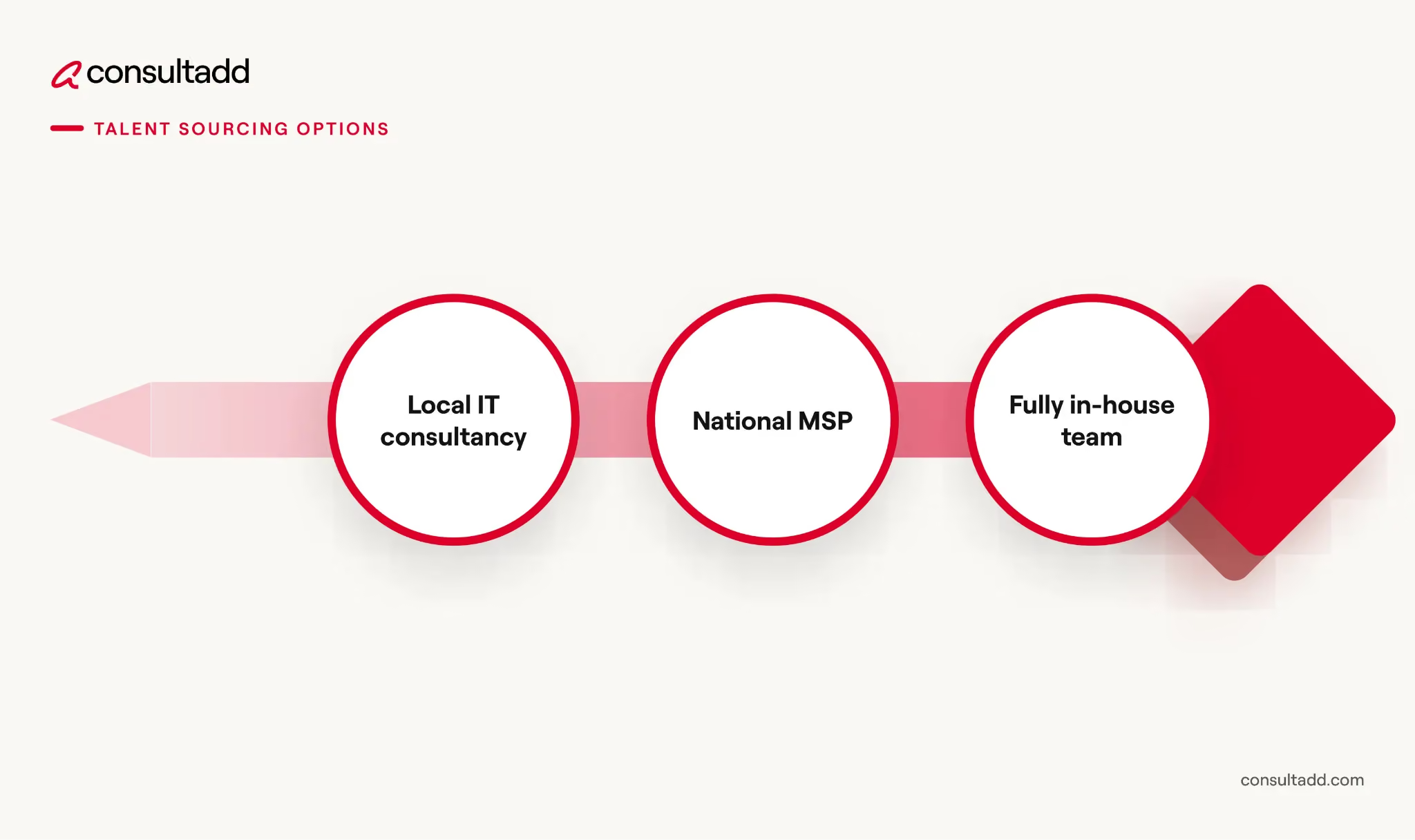
None of these is automatically "correct." A fast-growing company that needs to scale across states might genuinely be better served by a national MSP.
A company that just needs someone reliable and closely tied to their day-to-day operations is usually better off with a local IT consulting firm.
Green flags and Red Flags when you're vetting options
Choosing an IT Staffing Agency: What Actually Matters?
Finding an IT staffing agency is easy.
Finding one that consistently delivers qualified talent, understands your business, and becomes a long term hiring partner is much harder. Almost every staffing firm promises access to top talent, faster hiring, lower recruitment costs, and industry expertise.
The comparison below highlights some of the most common green flags and red flags to look for when evaluating IT staffing agencies. While no single factor should determine your decision, these indicators can help you separate experienced recruitment partners from firms that rely more on persuasive sales conversations than proven hiring expertise.
If a firm hesitates on the SLA question, that's worth paying attention to. It's usually not an oversight.
Questions worth asking before you sign anything
Before signing a contract, take the time to evaluate how a consulting firm actually operates, not just what it promises. The conversations you have before the agreement is signed often reveal more about a provider than the proposal itself.
Here are some questions worth asking:
- How quickly do you respond to critical IT issues, and are those response times guaranteed in a service-level agreement (SLA)?
- Have you worked with businesses in our industry or of a similar size, and can you provide client references?
- What does your onboarding process look like, and how long does it typically take before you're fully operational?
- How do you handle changes in scope if our technology needs grow or our business expands?
- Who will be our primary point of contact, and how is communication handled during ongoing projects?
- What cybersecurity measures and compliance standards do you follow to protect client data?
- How do you document our systems, and will we retain access to that documentation throughout the engagement?
- What reporting, performance metrics, and review meetings can we expect?
- What services are included in the quoted price, and what would incur additional charges?
- If we decide to end the partnership, what does the transition process look like, and how will knowledge and access be handed over?
If you're specifically hiring for a technical role rather than a full consulting engagement, it's worth reading what to actually look for in a candidate before you post the job.
Start Strong With Consultadd
With 15 years in business and 5,000+ successful staffing engagements, we don't just fill roles, we build reliability into your process. We've supported 65 staffing companies in the past year alone and maintain MSAs with industry leaders like Robert Half and TEKsystems.
Here's what working with Consultadd looks like:
- Talent sourced in under 24 hours
- Ready-to-deploy candidates, vetted for experience and compliance
- Lower turnover risk: we match long-term goals, not just short-term needs
- Seamless compliance: visa, documentation, onboarding? Handled.
- Dedicated 1:1 account managers for responsive, personalized support
- Top 100 candidate matches delivered in the past year
- Strong partnerships with universities to tap into fresh, committed talent
- Post-placement support so your investment grows beyond day one
For candidates, your next opportunity is more than just a job title, it's a chance to build skills, gain experience, and move your career forward. At Consultadd, we connect technology professionals with projects and employers that align with their goals, whether they're looking for contract, contract-to-hire, or long-term opportunities.
The tech job market moves fast, but the right guidance can make all the difference. Ready to take the next step in your career journey? Explore Opportunities >>
Key takeaways
- A local IT consultancy typically costs a fraction of a full-time in-house hire while covering more ground, from security to cloud to networking.
- The US IT consulting market has grown to $821.2 billion and 502,000 businesses in 2026, giving you more real local options than a few years ago.
- Local providers win on response time and regulatory familiarity, while national MSPs can win on scale, so the right choice depends on your size and growth plans.
- The clearest red flag in any vendor conversation is reluctance to commit to a response-time SLA in writing.
- Ask about onboarding, references in your industry, and exit flexibility before you sign, not after.
FAQs
How do I find a reliable IT consultancy near me?
Start with referrals from other local businesses in your industry, then check for a written SLA, relevant case studies, and clear pricing before comparing quotes.
Is a local IT consulting firm more expensive than a national provider?
Not usually. Pricing depends more on scope and contract length than on geography. Local firms are often more flexible with smaller engagements.
What's the difference between IT consulting and managed IT services?
IT consulting is typically project-based and strategic, like planning a cloud migration. Managed IT services are ongoing and operational, covering day-to-day monitoring and support.
How much does it cost to hire an IT consultant for a small business?
Costs vary widely, but a small company can often get a full outsourced IT team for $24,000–$48,000 a year, compared to $120,000 or more for a single in-house hire
When should a small business consider outsourcing IT instead of hiring in-house?
As soon as IT needs outpace what one generalist can reasonably cover, or when hiring cycles (currently averaging 66 days for technical roles) are slowing down other projects.



.webp)

.png)