


Introduction
If you've spent the last three months trying to fill a single DevOps role, you already know why IT staff augmentation is getting so much attention right now. It's a hiring model where you bring in outside developers, testers, or engineers who work inside your existing team instead of handing a project to an outside vendor. You keep control of the work. You just stop waiting months for the right resume to show up.
The timing makes sense. The average time to fill a specialized technical role now sits at 88 days, and ManpowerGroup's latest global survey found 72% of employers are struggling to find people with the skills they need, as demand for AI-related capabilities has outpaced traditional engineering skills. For a team running quarterly release cycles, that gap isn't a minor inconvenience. It's a real threat to your roadmap.
This guide walks through what IT staff augmentation actually looks like day to day, when it makes sense, when it doesn't, and how to pick a partner who won't leave you stuck three weeks into a project.
TL;DR
- IT staff augmentation lets you add developers, QA engineers, or specialists to your existing team without going through a full-time hiring process.
- It differs from outsourcing because you keep direct oversight of the work, the tools, and the roadmap.
- It fits best for short-term skill gaps, sudden workload spikes, or niche expertise you don't need permanently.
- The global market for these services is projected to reach $857.2 billion by 2032, growing at a 13.2% annual rate.
- Picking the right partner matters more than picking the cheapest one. Vetting, compliance, and account management make or break the engagement.
What Is IT Staff Augmentation?
IT staff augmentation is a staffing model where a company adds external technology professionals to its internal team on a temporary or contract basis. The augmented staff report into your existing managers, use your existing tools, and follow your existing processes. Nothing about how the work gets done really changes. You just have more hands doing it.
This is different from hiring a full project team from an outside firm and handing them a spec to execute on their own. With staff augmentation, your team stays in the driver's seat. The outside talent is filling a gap, not replacing your management structure.
Companies typically reach for this model when they need:
- A specific skill set they don't have in-house, like a Salesforce architect or a Kubernetes specialist
- Extra hands during a busy release cycle
- Someone to cover a leave of absence or an open req that's taking too long to fill
- Faster ramp-up on a new product without committing to permanent headcount
The market data backs up how common this has become. Around 74% of enterprises now use staff augmentation services to deal with talent shortages, and 68% say it's helped them run IT operations more efficiently. That's not a niche tactic anymore. It's a standard part of how technology teams staff their work.
How IT Staff Augmentation Works
The process is more straightforward than most first-time buyers expect. It generally breaks down into four steps.
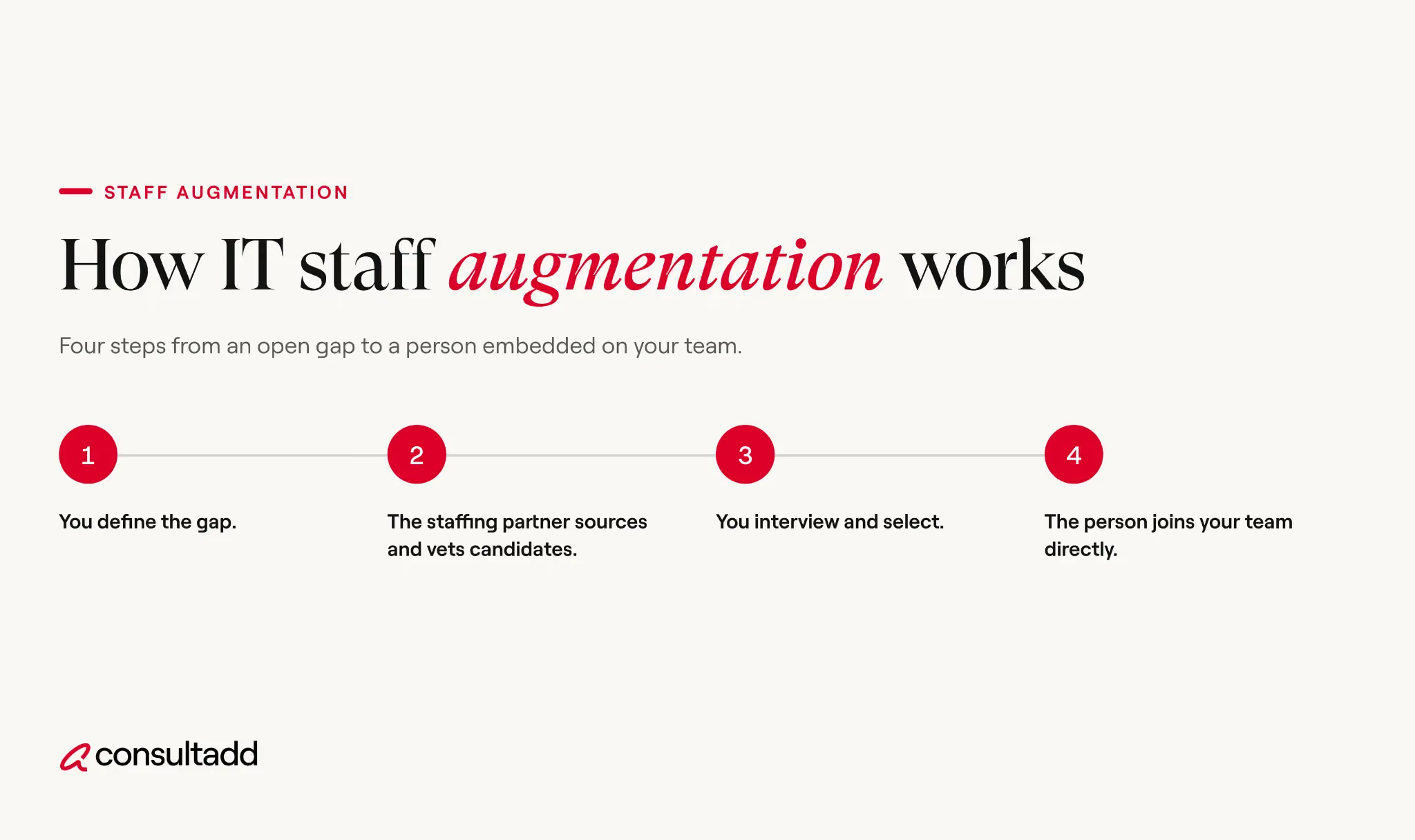
1. You define the gap.
This means naming the exact skill, the expected duration, and whether the person needs to work in your time zone or can be fully remote.
2. The staffing partner sources and vets candidates.
A good partner already has a bench of pre-screened professionals, so you're reviewing shortlists in days, not weeks.
3. You interview and select.
You still run the interview. You're the one deciding who joins your team, not the staffing firm.
4. The person joins your team directly.
They use your Slack, your Jira board, your sprint cadence. Your manager assigns their work.
Contracts can run anywhere from a few weeks to over a year, and many arrangements include a contract-to-hire option if the fit turns out to be a good one long-term.
IT Staff Augmentation vs. Traditional Outsourcing
People mix these two up constantly, and the confusion causes real problems when it's time to sign a contract. The difference comes down to who controls the day-to-day work.
Neither approach is universally better. If you want to hand off an entire project and never think about it again, outsourcing might fit. If you want to keep ownership of the roadmap while filling a gap, staff augmentation is the better call.
When to Use IT Staff Augmentation
Not every hiring gap calls for this model. It works best in a specific set of situations, and it's worth being honest about where it doesn't.
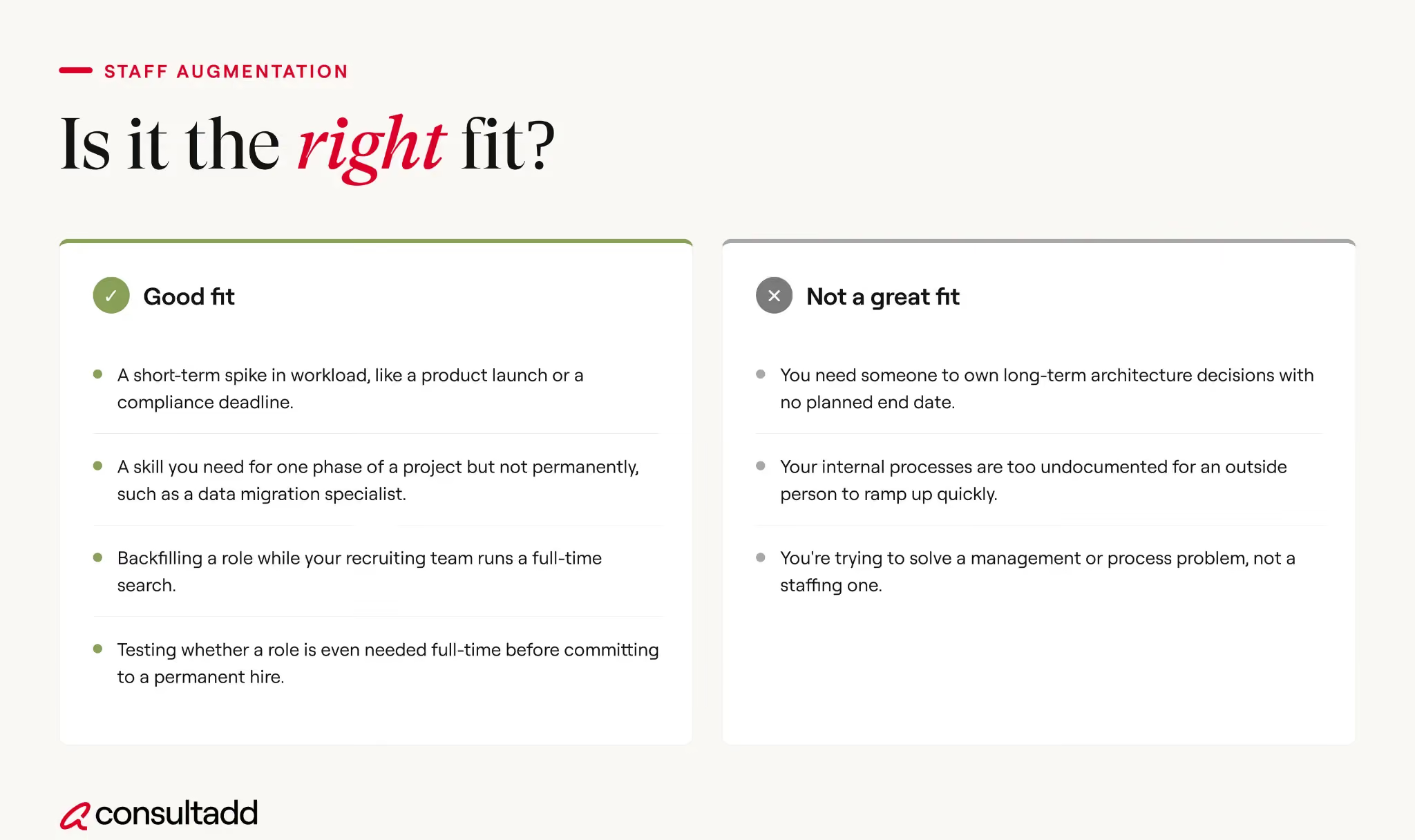
Good fit:
- A short-term spike in workload, like a product launch or a compliance deadline
- A skill you need for one phase of a project but not permanently, such as a data migration specialist
- Backfilling a role while your recruiting team runs a full-time search
- Testing whether a role is even needed full-time before committing to a permanent hire
Not a great fit:
- You need someone to own long-term architecture decisions with no planned end date
- Your internal processes are too undocumented for an outside person to ramp up quickly
- You're trying to solve a management or process problem, not a staffing one
Augmentation works when you know exactly what you need and for how long. It gets messy fast when the scope is still a question mark.
Benefits of IT Staff Augmentation
The appeal isn't just speed, though speed is a big part of it. A few other things stand out once teams actually try this model.
1. You cut the cost of a bad long-term hire.
Recruiting, onboarding, and benefits for a permanent employee add up fast, and if the role turns out to be temporary, you've overpaid for it.
2. You get access to niche skills without a search that drags on.
The tech job market has split into generalist roles that are easy to fill and specialist roles, especially in AI, cloud, and cybersecurity, that are brutally hard to find. Augmentation gives you a shortcut to the second group.
3. You can scale down without layoffs.
When the project wraps, the contract ends. There's no restructuring conversation to have.
4. Your core team stays lean.
You're not carrying permanent overhead for a need that might only last two quarters.
Challenges to Watch For
None of this is risk-free, and a good staffing partner will tell you that upfront rather than pretend it's all upside.
Onboarding still takes real effort. Even a strong contractor needs a few days to learn your codebase, your tools, and your team's habits. Budget time for that.
Compliance gets complicated with visa status, contractor classification, and documentation. The U.S. Bureau of Labor Statistics notes technology occupations continue to see much faster than average employment growth, which means competition for compliant, work-authorized talent isn't easing up anytime soon.
Knowledge can walk out the door when a contract ends if you don't document decisions as you go. Build handoff notes into the engagement from day one, not as an afterthought in the final week.
How to Choose an IT Staff Augmentation Partner
The partner matters more than the pricing sheet. A cheap vendor with a thin bench will cost you more in delays than you'll ever save on the invoice.
Start Strong With Consultadd
With 15 years in business and 5,000+ successful staffing engagements, we don't just fill roles, we build reliability into your process. We've supported 65 staffing companies in the past year alone and maintain MSAs with industry leaders like Robert Half and TEKsystems.
Here's what working with Consultadd looks like:
- Talent sourced in under 24 hours
- Ready-to-deploy candidates, vetted for experience and compliance
- Lower turnover risk: we match long-term goals, not just short-term needs
- Seamless compliance: visa, documentation, onboarding? Handled.
- Dedicated 1:1 account managers for responsive, personalized support
- Top 100 candidate matches delivered in the past year
- Strong partnerships with universities to tap into fresh, committed talent
- Post-placement support so your investment grows beyond day one
For candidates, your next opportunity is more than just a job title, it's a chance to build skills, gain experience, and move your career forward. At Consultadd, we connect technology professionals with projects and employers that align with their goals, whether they're looking for contract, contract-to-hire, or long-term opportunities.
The tech job market moves fast, but the right guidance can make all the difference. Ready to take the next step in your career journey? Explore Opportunities >>
Key Takeaways
- IT staff augmentation adds external talent to your existing team while you keep control of the work.
- It's a faster route to niche skills than a traditional full-time search, especially in AI, cloud, and security roles.
- It works best for defined, time-bound needs, not open-ended ownership roles.
- The global market for these services is expected to grow at roughly 13% a year through the early 2030s.
- The partner you choose matters as much as the model itself. Vetting, compliance, and communication separate a good engagement from a frustrating one.
FAQs
What is the difference between IT staff augmentation and a managed service?
Staff augmentation places individuals under your direct management. A managed service hands over an entire function or outcome to the vendor, who manages the team and the delivery. You lose day-to-day control but also the day-to-day management burden.
How quickly can I bring on augmented IT staff?
Most established staffing partners can present a shortlist within days once you've defined the role, and placements often start within one to two weeks. This is one of the biggest reasons companies choose this model during time-sensitive projects.
Is IT staff augmentation more expensive than hiring full-time?
It depends on duration. For short-term or uncertain-length needs, augmentation usually costs less overall once you factor in recruiting fees, benefits, and severance risk tied to a permanent hire that doesn't work out.
Can augmented staff convert to full-time employees?
Yes, in most contract-to-hire arrangements. If the working relationship goes well, many companies extend a permanent offer after an initial contract period, which lets both sides evaluate fit before committing long-term.
What roles are most commonly filled through staff augmentation?
Software developers, QA engineers, DevOps specialists, cybersecurity analysts, and data engineers are the most requested. Demand for AI and cloud-related skills has grown the fastest in the last two years.
How do staffing partners handle compliance and visa status?
A qualified partner manages work authorization verification, tax classification, and onboarding documentation directly, so your internal HR team isn't left untangling paperwork for contract workers.


.webp)

.png)
