.avif)

Introduction
The terms "IT staffing" and "IT consulting" get thrown around interchangeably, but they're fundamentally different services. One fills your open roles with qualified tech talent. The other advises you on strategy and digital transformation. Understanding the distinction matters because hiring the wrong type of partner wastes money and creates friction.
Here's the reality: most companies need both at different times, but many don't realize it. You might hire an IT staffing company to backfill a critical engineering role while simultaneously engaging a consulting firm to redesign your tech infrastructure. Or you might bring in consultants first to assess your systems, then work with a staffing partner to hire the people needed to execute their recommendations.
The confusion is understandable. Many firms market themselves as doing both. But scratch the surface and their core competency shows. According to the U.S. Bureau of Labor Statistics, the demand for tech staffing and consulting services has grown steadily, but they serve different business needs. Knowing which service solves your problem is the first step toward building a functional tech team.
TL;DR
- IT staffing companies recruit and place talented developers and engineers into your open positions
- IT consulting firms provide strategic advice, assessments, and recommendations for technology decisions
- Staffing is tactical and immediate; consulting is strategic and forward-looking
- Many companies need both services but at different stages of growth
- Consultadd specializes in IT staffing with expertise in building reliable, long-term tech teams
Understanding IT staffing companies
IT staffing companies are talent acquisition specialists. They find qualified software engineers, database administrators, cloud architects, and other tech professionals, then place them into your open roles. That's their primary business.
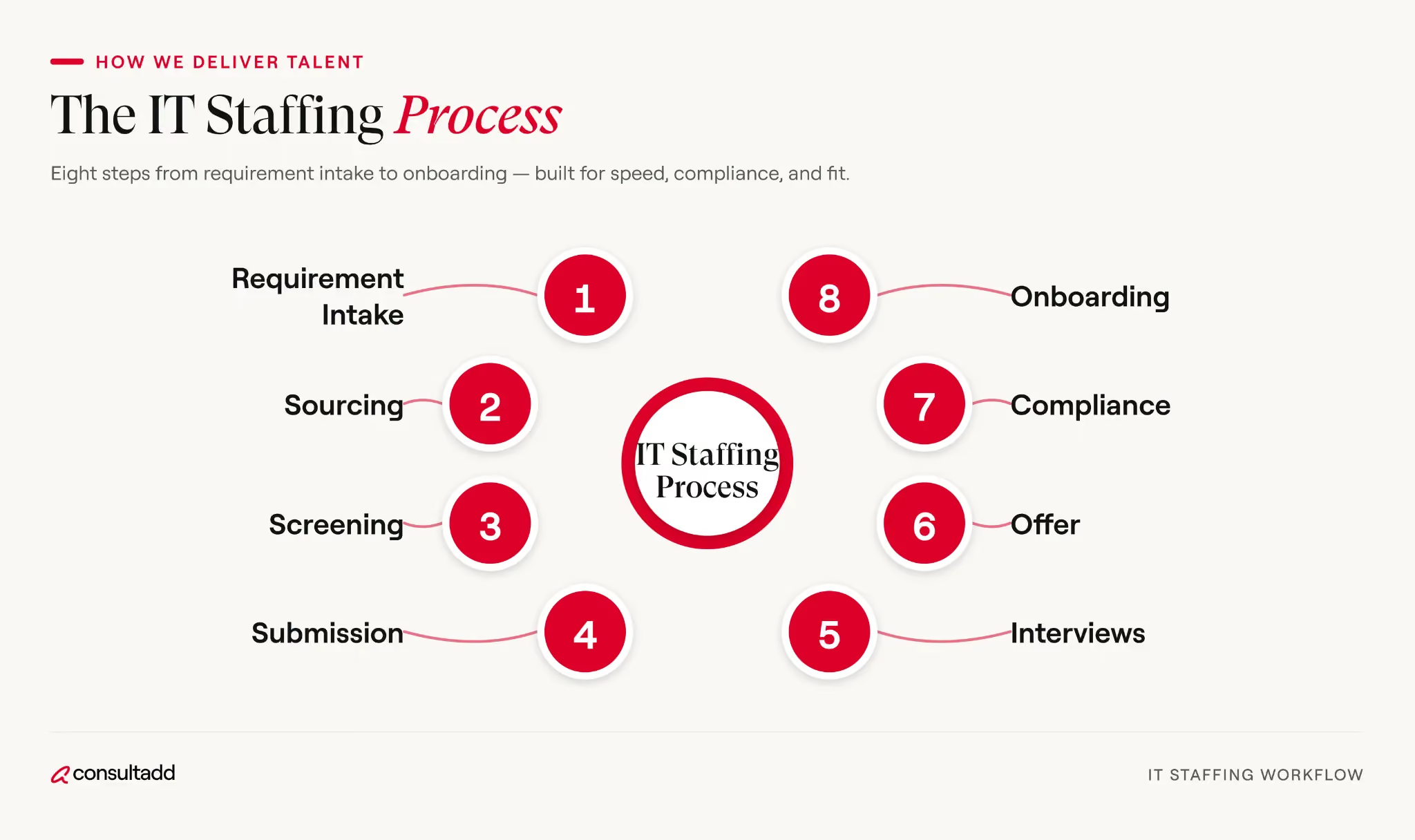
Here's how it works:
- You have a job opening. You contact a staffing firm.
- They search their candidate networks, post the role through their channels, and screen applicants.
- When they find qualified candidates, they present them to you.
- You interview and make the hiring decision. The staffing firm handles logistics, background checks, offer negotiation, and sometimes onboarding coordination.
The staffing company makes money from a placement fee, typically 15-30% of the new employee's first-year salary. So if you hire a developer earning $100,000, the staffing firm makes $15,000-$30,000. This fee structure keeps them aligned with your success. If you're unhappy with the hire, they often have a replacement guarantee.
What staffing companies do well: finding candidates quickly, negotiating compensation, managing offer processes, and handling recruitment logistics. They're transaction-focused. They're solving your immediate hiring problem.
What they don't do: they don't advise you on whether you need that role at all, whether your tech stack is appropriate for your goals, or how that new hire should integrate into your existing team structure. That's not their job. They're hiring specialists, not strategy consultants.
Understanding IT consulting companies
IT consulting firms approach problems differently. They're strategy advisors. They come in, assess your technology environment, business goals, and operational challenges, then recommend solutions. Those solutions might involve hiring new people, but might also involve restructuring teams, replacing systems, or changing processes.
Consulting engagements typically work like this:
- You identify a problem. Cloud migration? Legacy system modernization? Cost reduction in your tech operations? You hire a consulting firm.
- They spend weeks or months analyzing your current state, interviewing stakeholders, understanding your business goals, and designing a future-state architecture or strategy.
- Then they present recommendations.
A good consulting engagement produces a roadmap. It answers questions like: Should we move to cloud? Which cloud? How do we retire legacy systems? What organizational changes do we need? The consulting firm might stay involved through the implementation phase, ensuring the recommendations actually work in practice.
Consulting firms make money through project fees or hourly billing. A typical IT strategy engagement might cost $50,000-$500,000 depending on scope. They're not primarily focused on filling open roles; they're focused on solving complex business problems through technology strategy.
What consulting firms do well: strategic assessment, roadmap development, gap analysis, and implementation guidance. They're advisory-focused. They're solving your strategic problems.
What they don't do: they don't typically recruit your team. Some consultants include staffing recommendations in their reports, but actually finding and hiring those people isn't their core function. If they do recruit, it's usually as a sub-service through partner relationships.
The key differences between staffing and consulting
Understanding these differences helps you choose the right partner for your problem.
The table makes it clear: these are different services. A staffing company can't advise you on whether cloud migration makes sense for your business. A consulting firm can advise you, but they're not going to spend time recruiting the cloud engineers needed to make it happen (though they might help you find a staffing partner who can).
Why companies use IT staffing firms
Companies use staffing firms when they have urgent hiring needs and limited internal resources. Let's walk through common scenarios:
Rapid growth requiring fast scaling. You won a big contract or closed a funding round. You need to hire 10 engineers in the next 60 days. Your internal HR team doesn't have the bandwidth or candidate networks. A staffing firm can move quickly because they've already built relationships with candidates, pre-screened talent pools, and have established recruiting processes. They can compress hiring timelines from months to weeks.
Specialized skill gaps. You need a Kubernetes specialist or a cloud architect with AWS expertise. These are niche skills. Your HR team doesn't have a candidate pipeline for these roles. A staffing firm specializing in tech recruitment does. They can find someone because they've worked with similar candidates before or have networks in specialized tech communities.
Unexpected departures. Your lead backend engineer gives notice. You need a replacement quickly or the project stalls. Staffing firms can fill gaps faster than traditional recruiting because they work with candidates constantly and already understand what your role demands.
Contract-to-hire evaluation. You're not sure if you need a permanent person or want to test fit before committing. A staffing firm can place someone on a contract basis, then convert them to permanent if things work out. This de-risks hiring for both parties.
Seasonal or project-based needs. You have a six-month project requiring additional developers. You don't need permanent hires. Staffing firms supply contractors for defined periods without long-term employment obligations.
The common thread: staffing firms solve immediate, tactical hiring problems. They're fast, efficient, and specialized in finding talent. They're not trying to redesign your engineering organization or advise on your tech strategy. That's not their role.
Why companies use IT consulting firms
Companies engage consulting firms when they face strategic technology challenges that require expertise and impartial assessment. These situations typically involve bigger questions:
Digital transformation initiatives. Your competitors are outpacing you with newer technology. You're running legacy systems. You need a strategy for modernization. Consulting firms help you assess your current state, identify gaps, and design a future-state architecture. They provide the roadmap that tells you what technologies to adopt and how.
Cost reduction in tech operations. Your IT spending is bloated. You don't know where the waste is or how to optimize. Consultants analyze your spend, recommend consolidations, suggest process improvements, and identify redundant systems. A good engagement often pays for itself through identified cost savings.
Organizational design and team restructuring. Your engineering organization is inefficient. Teams are siloed. Communication is broken. A consultant can assess how teams should be structured for better collaboration and recommend role changes or hiring needs that fix structural problems.
Technology selection and roadmap development. You're selecting a new cloud platform, rebuilding your data architecture, or adopting a new development framework. The decision is complex. Consultants help you evaluate options, understand tradeoffs, and make a choice aligned with your business goals.
Risk management and compliance. You're facing security or compliance challenges. You need expert guidance on meeting regulatory requirements or reducing security risk. Consultants assess gaps and recommend changes to your architecture, processes, and team structure.
Merger, acquisition, or integration. Two companies merged. Your tech stacks don't align. Your systems don't communicate. Consultants help you design an integration strategy, identify redundancies, and build a unified technology platform.
The common thread: consulting addresses strategic questions. These are expensive, high-stakes decisions. Companies bring in consultants because the cost of getting it wrong is high. Consultants provide expertise, impartiality, and accountability.
When you need IT staffing and consulting together
The most effective tech organizations use both services but at different times. Here's a realistic scenario:
Your company is growing. The CTO identifies that your legacy monolithic application is becoming a bottleneck.
You need to migrate to microservices and cloud infrastructure. That's a 12-18 month initiative.
Phase 1: Consulting (months 1-2). You engage a consulting firm to assess your current architecture, design a microservices strategy, evaluate cloud providers, and create a detailed implementation roadmap. The consulting engagement costs $75,000 and produces a 20-page roadmap with specific recommendations.
Phase 2: Staffing (months 2-18). Based on the roadmap, you identify that you need 4 cloud architects, 6 microservices engineers, and 2 DevOps specialists. Your internal recruiting team can find people, but you want specialized recruitment help. You engage Consultadd, an IT staffing firm. They source qualified candidates, handle screening, coordinate interviews, and place the people you hire. The staffing fees are 20% of first-year salary for each placement.
Phase 3: Execution (months 3-18). The consultants stay involved part-time, providing guidance as your new team executes the roadmap. The staffing firm handles onboarding and ensures the new hires are successful. Your engineering team builds the new infrastructure.
This approach works because each partner solves a different problem. The consultants answered the strategic question ("How do we modernize?").
The staffing firm solved the tactical problem ("Who do we hire to execute?"). You got strategic advice and tactical execution from the right partners.
The Consultadd difference in IT staffing
Most IT staffing companies operate transactionally. They fill roles. They move on to the next placement. Consultadd operates differently.
With 15 years in business and 5,000+ successful staffing engagements, Consultadd specializes in building reliable, long-term tech teams. Unlike staffing firms that treat placements as transactions, Consultadd focuses on cultural fit, long-term performance, and retention.
They've supported 65 staffing companies in the past year alone and maintain strategic partnerships with industry leaders like Robert Half and TEKsystems.
When to hire IT staffing versus consulting
Ask yourself these questions to determine what you need:
Do I have a specific role I need to fill?
IT staffing is the answer. You need a person. A staffing firm finds that person.
Am I uncertain about what I need?
Consult first. Get strategic clarity. Then staff. A consultant can tell you what roles and skills you're missing. A staffing firm places them.
Do I need this solved in weeks?
IT staffing. Staffing firms move fast. Consulting takes months.
Am I making a big technology bet?
Consulting first. Technology decisions are expensive. Get expert advice before committing millions to a new platform or architecture.
Am I scaling quickly?
Both. Engage a consultant to plan your tech infrastructure for your projected size. Engage a staffing firm to hire the people to build it.
Am I optimizing operations?
Consulting. Operational improvement requires expert assessment and redesign. Staffing alone won't fix broken processes.
The pattern is clear: staffing solves hiring problems. Consulting solves strategy problems. Most growing companies need both.
Start Strong With Consultadd
With 15 years in business and 5,000+ successful staffing engagements, we don't just fill roles, we build reliability into your process. We've supported 65 staffing companies in the past year alone and maintain MSAs with industry leaders like Robert Half and TEKsystems.
Here's what working with Consultadd looks like:
- Talent sourced in under 24 hours
- Ready-to-deploy candidates, vetted for experience and compliance
- Lower turnover risk: we match long-term goals, not just short-term needs
- Seamless compliance: visa, documentation, onboarding? Handled.
- Dedicated 1:1 account managers for responsive, personalized support
- Top 100 candidate matches delivered in the past year
- Strong partnerships with universities to tap into fresh, committed talent
- Post-placement support so your investment grows beyond day one
For candidates, your next opportunity is more than just a job title, it's a chance to build skills, gain experience, and move your career forward. At Consultadd, we connect technology professionals with projects and employers that align with their goals, whether they're looking for contract, contract-to-hire, or long-term opportunities.
The tech job market moves fast, but the right guidance can make all the difference. Ready to take the next step in your career journey? Explore Opportunities >>
Key takeaways
- IT staffing companies recruit and place tech talent; consulting firms provide strategy and roadmap guidance
- Staffing is tactical and immediate; consulting is strategic and long-term
- You often need both services at different phases of growth
- Staffing solves the question "Who do we hire?"; consulting solves "What do we need?"
- Consultadd specializes in IT staffing with a partnership approach that prioritizes long-term fit and retention
FAQs
What's the main difference between IT staffing and IT consulting?
IT staffing fills your open positions with qualified tech talent. IT consulting advises you on technology strategy and how to approach complex tech challenges. Staffing is "who do we hire?" Consulting is "what should we do?" Many companies need both, but at different times. Use consulting to design the strategy, then use staffing to hire the people to execute it.
How long does it take for an IT staffing company to fill a role?
It depends on the role and market conditions. General staffing firms typically take 3-8 weeks. Specialized firms like Consultadd often move faster, sometimes within days because they maintain active candidate networks and specialize in tech talent. Urgent, high-priority roles might fill in 1-2 weeks. Less common skill sets might take longer.
Should I engage a consultant before hiring with a staffing firm?
Not always, but often it's smart. If you're making a major technology investment or restructuring your engineering organization, consulting first gives you clarity on what you need. If you simply need to fill an open role, you can skip consulting and go straight to staffing. Use consulting when the stakes are high and you're uncertain about the solution.
What's Consultadd's replacement guarantee?
If a candidate placed by Consultadd doesn't work out within the first 90 days, Consultadd typically replaces them at no additional fee. The exact terms depend on your agreement, but Consultadd is committed to successful placements, not just transactions. This guarantee reflects their confidence in their vetting process and their partnership approach.
Can consulting firms also do staffing?
Some consulting firms have staffing divisions or partner with staffing firms. However, it's not their core competency. Consulting firms excel at strategy; staffing firms excel at recruitment. When a consulting firm needs to staff recommended roles, they often partner with specialists like Consultadd rather than doing it themselves. This approach often produces better results because each partner focuses on what they do best.
How do I know if Consultadd is the right staffing partner for my company?
Ask yourself: Do I need speed? Do I value quality and long-term fit? Do I want post-placement support? Do I prefer a partnership approach over transactional interactions? Does my team value compliance and risk management? If you answered yes to these, Consultadd is likely a good fit. Also ask for references from similar companies they've served and conversion rates from their contract-to-hire placements.



.png)