

Introduction
IT staffing looks completely different today than it did five years ago. The skills companies need, where candidates work, what they expect from employers, and how fast hiring moves have all shifted dramatically.
Understanding IT staffing trends is crucial if you're hiring engineers, managing a staffing firm, or building an IT department. The talent landscape changes faster in technology than almost any other industry. Skills that were in high demand become commoditized. Remote work options that seemed experimental are now table stakes. Compensation expectations have reset upward and aren't coming back down.
This guide covers the major IT staffing trends shaping the market right now, why they're happening, and what you need to do about them.
TL;DR
- Cloud skills (AWS, Azure, Kubernetes) remain the most in-demand IT staffing trend, with demand continuing to grow as companies migrate infrastructure.
- Remote and hybrid work has become permanent in IT staffing, expanding the candidate pool globally but intensifying competition for talent.
- AI and machine learning skills have jumped from "nice-to-have" to essential, driving salaries up and supply shortages.
- IT salary growth has outpaced inflation, with cloud and AI specialists commanding 20-30% premiums over generalist engineers.
- Mid-level talent shortage is the biggest challenge right now—companies want to hire, but the pipeline between junior and senior engineers is thin.
The persistent IT talent shortage
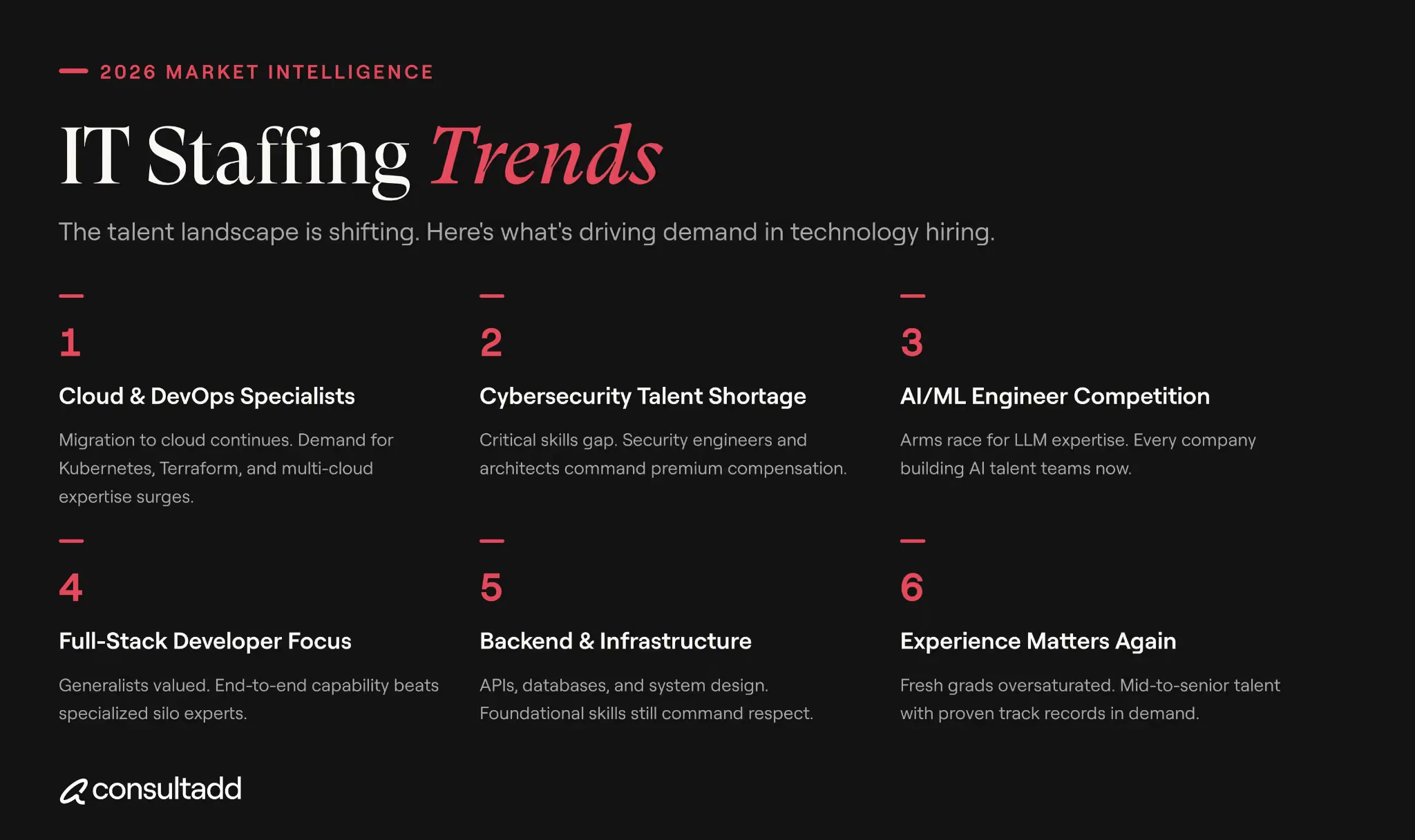
The IT talent shortage isn't new, but it's getting worse, not better.
The issue is basic supply and demand. For every qualified IT professional, multiple companies are bidding. Universities graduate more computer science students than they used to, but not enough to match industry demand.
Bootcamps help, but they can't fill the gap completely. Immigration restrictions in some countries make it harder to fill roles internationally. Remote work opens opportunity for candidates but also increases competition between companies.
According to the U.S. Department of Labor, computer and IT occupations are projected to grow 15% from 2023 to 2033, significantly faster than average. This growth is driven by cloud adoption and digital transformation initiatives across industries. That growth creates constant demand pressure on IT staffing.
The result: IT professionals have leverage. Good engineers can negotiate higher salaries, better benefits, and more flexibility. Companies that can't offer competitive packages struggle to hire or retain talent.
If you're building or scaling your staffing operation, our resource on what fill rate means will help you measure whether your hiring is meeting targets.
Cloud skills dominate the demand landscape
Cloud migration is no longer a future trend. It's happening now, and it's reshaping what IT staffing priorities look like.
Companies are moving workloads from data centers to the cloud. They're building new applications natively on cloud platforms. They're managing multi-cloud strategies. This shift requires engineers who understand cloud architecture, not just infrastructure generalists.
AWS dominates the cloud market, so AWS skills command the highest premiums. Azure is growing as enterprises standardize on Microsoft products. Google Cloud, while smaller, is growing among companies with data-intensive applications. Kubernetes and container orchestration skills are critical because most cloud deployments run containerized applications.
Companies trying to fill cloud roles report that for every qualified candidate, they have three or four open positions. This is the tightest market in IT staffing right now.
AI and machine learning skills are the new premium
AI and machine learning skills have exploded in value over the past 18-24 months.
Two years ago, ML engineers were specialized roles for companies building recommendation engines or data platforms. Now, every company wants AI capabilities. Startups are pivoting to add AI features. Enterprise companies are building internal AI tools. The demand for people who understand machine learning, prompt engineering, LLMs, and vector databases has exploded.
Compensation reflects this. ML engineers earn 20-40% more than equivalent software engineers. Entry-level ML engineers are scarce because educational programs haven't caught up to demand. People trained five years ago in traditional software engineering can switch into ML, but that requires learning and retraining.
This is creating a two-tier IT staffing market: Companies hiring for core infrastructure, backend systems, and application development find talent more easily. Companies trying to hire ML engineers, AI architects, and LLM specialists face intense competition and high prices.
Remote and hybrid work is permanent
The pandemic accelerated remote work adoption. Now it's permanent in IT staffing, and it's reshaping where companies hire and how much they pay.
Remote work opened the entire world as a candidate pool. You don't need to hire locally anymore. You can find engineers anywhere. This sounds great for companies, but the downside is that every other company is doing the same thing. Your competition for talent just increased tenfold.
Hybrid work has become standard. Most IT companies now offer some combination of remote and office days. "Fully remote" positions exist but often pay less than hybrid roles because candidates value flexibility. Full office-only positions struggle to fill because candidates have moved on.
Location arbitrage used to matter. A company in San Francisco could pay San Francisco salaries and hire anyone globally. Now, salaries are normalizing globally. You can't pay India salaries for India-based engineers if US companies are also recruiting them remotely. Engineers negotiate based on their market value, not their location.
The result: Remote and hybrid flexibility is now table stakes. If you don't offer it, you're competing at a disadvantage.
The mid-level talent shortage is the real crisis
Senior engineers are hard to find, but there's an even bigger problem: there aren't enough mid-level engineers.
Companies want to hire junior developers, train them for a few years, and watch them grow into experienced engineers. But something broke in that pipeline. Some juniors are switching careers. Some are being laid off during downturns. Companies are hiring fewer juniors because they want to minimize training overhead.
The result is a talent shortage in the middle. You have lots of junior engineers competing for junior roles and experienced engineers commanding high prices. The people with 3-5 years of experience? Not enough of them.
This affects IT staffing because it means companies can't build their bench. They're forced to hire expensive senior engineers for mid-level work or try to hire juniors and hope they work out. Internal promotion becomes more valuable because growing your own mid-level talent is increasingly necessary.
For candidates, this is actually opportunity. If you're a mid-level engineer, demand for your skills is high. Companies will invest in your growth because they need it.
if you're struggling with recruitment speed, understanding staffing best practices gives you concrete strategies to improve.
Soft skills are becoming harder to find
Technical skills get all the attention, but IT staffing teams are increasingly struggling to find people who can communicate.
Engineers who can explain technical decisions to non-technical stakeholders are rare. Engineers who document their work so others can understand it are rare. Engineers who mentorship junior developers are rare. Engineers who can work with cross-functional teams without creating friction are rare.
These soft skills matter because IT operations are increasingly business-critical. An engineer who codes well but can't explain why a decision matters to the business is less valuable than an engineer who codes adequately and explains decisions clearly.
Companies now explicitly screen for communication skills during interviews. Some are even willing to hire someone slightly less experienced but more communicative over someone more technically brilliant but harder to work with.
Diversity hiring remains important but faces challenges
Diversity in IT has improved but progress is slow. Many companies set diversity hiring goals, but IT staffing remains male-dominated and lacking in underrepresented groups.
The challenge isn't that diverse candidates don't exist. It's that: (1) They're in higher demand from multiple employers competing for the same talent, (2) Non-traditional educational paths aren't always recognized equally, and (3) Retention of diverse engineers remains a problem.
Companies serious about diversity in IT staffing focus on building stronger relationships with bootcamps and educational programs serving underrepresented groups. They invest in mentorship and sponsorship programs. They measure not just hiring diversity but retention diversity.
Compensation growth is outpacing inflation
IT salaries have grown faster than inflation, particularly for specialized skills.
The gaps have widened. Generalist roles saw moderate salary growth. Specialized roles (cloud, ML, security) saw significant growth. Geographic differences still exist, but they've compressed. Remote work flattened the pay disparities between Silicon Valley and other tech hubs.
For companies, this means IT staffing costs have increased significantly. For candidates, it means compensation has actually improved despite the 2022-2023 layoffs and downturn.
Security skills are becoming critical infrastructure
Cybersecurity was always important, but it's becoming a core part of IT staffing strategy, not a specialty anymore.
Companies used to hire a separate security team. Now, they're embedding security expertise across teams. They're building security requirements into development processes. They're treating compliance and data protection as everyone's responsibility.
This creates new hiring needs: developers who understand secure coding, IT operations people who understand threat models, architects who design for security. Security clearances and certifications are increasingly valuable. Companies hiring for security-adjacent roles see faster placement when candidates have security background.
The downside is that security specialists command high prices. There aren't enough certified security professionals to meet demand.
Staffing contract vs. direct hire dynamics
The contract-to-hire model has become dominant in IT staffing for good reason.
Contract positions offer flexibility for both companies and candidates. Companies can evaluate someone before offering permanent employment. Candidates can test-drive a company or role before committing. Both parties reduce risk.
This shift creates opportunities for staffing companies. Traditional direct-hire recruitment is slower and more uncertain. Contract-to-hire lets companies fill needs faster while still evaluating fit.
From a candidate perspective, more IT professionals are open to contract work because remote work has made contract arrangements easier. Companies tolerate more contract workers because IT operations are increasingly distributed.
Understanding these trends is valuable. But taking action to improve your hiring is what matters.
Learn more about recruiting strategies in our guide to DevOps engineer hiring, which covers similar talent challenges in infrastructure roles.
Start Strong With Consultadd
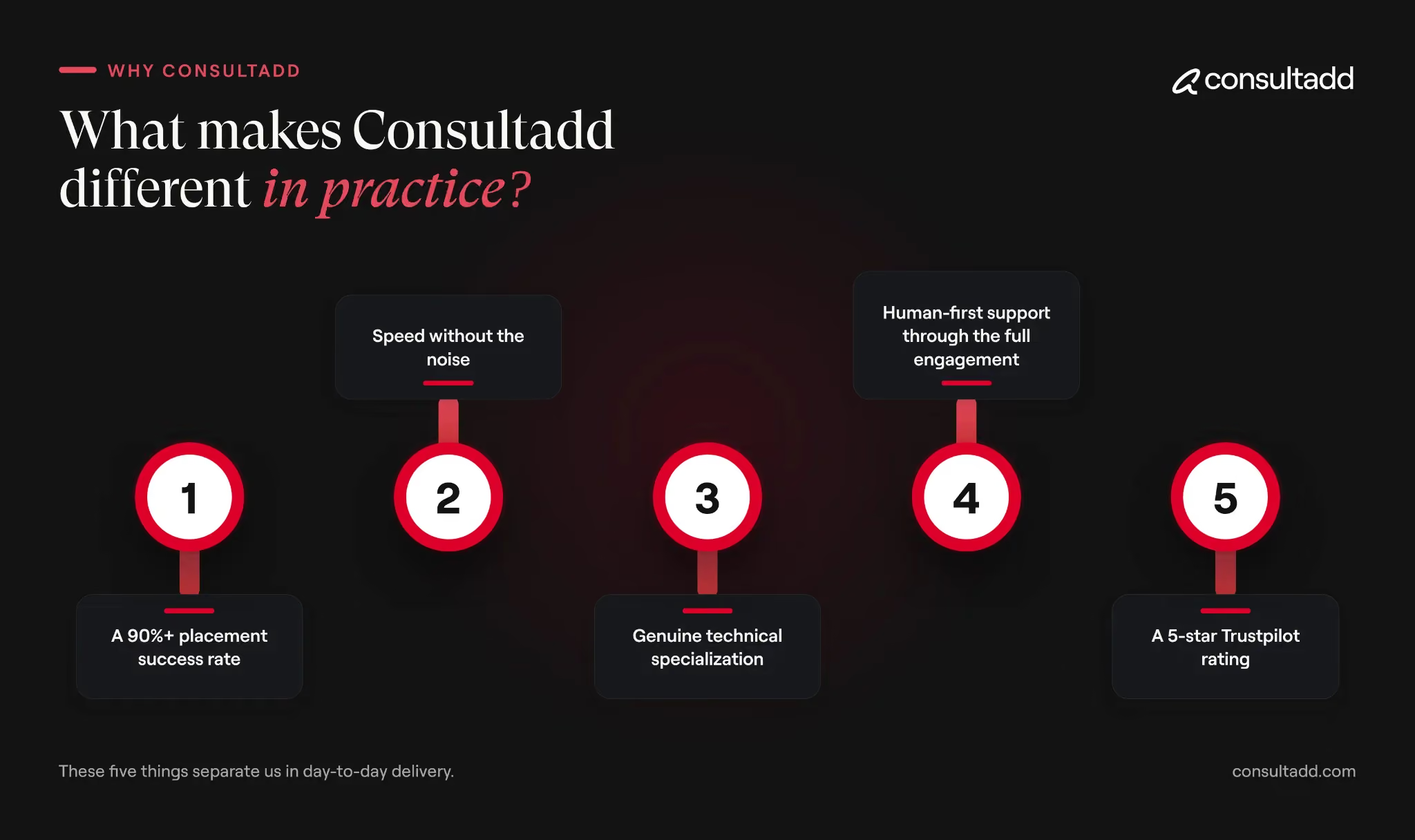
With 15 years in business and 5,000+ successful staffing engagements, we don't just fill roles, we build reliability into your process. We've supported 65 staffing companies in the past year alone and maintain MSAs with industry leaders like Robert Half and TEKsystems.
Here's what working with Consultadd looks like:
- Talent sourced in under 24 hours
- Ready-to-deploy candidates, vetted for experience and compliance
- Lower turnover risk: we match long-term goals, not just short-term needs
- Seamless compliance: visa, documentation, onboarding? Handled.
- Dedicated 1:1 account managers for responsive, personalized support
- Top 100 candidate matches delivered in the past year
- Strong partnerships with universities to tap into fresh, committed talent
- Post-placement support so your investment grows beyond day one
For candidates, your next opportunity is more than just a job title, it's a chance to build skills, gain experience, and move your career forward. At Consultadd, we connect technology professionals with projects and employers that align with their goals, whether they're looking for contract, contract-to-hire, or long-term opportunities.
The tech job market moves fast, but the right guidance can make all the difference. Ready to take the next step in your career journey? Explore Opportunities >>
Key takeaways
- Cloud skills (AWS, Azure, Kubernetes) remain the most competitive and highest-paid segment of IT staffing as companies accelerate cloud migration.
- Remote and hybrid work is now standard practice, expanding the candidate pool globally but increasing competition for every hire.
- AI and machine learning skills have created a two-tier market where ML engineers earn 20-40% more than traditional software engineers.
- The mid-level talent shortage is now the biggest bottleneck in IT staffing pipelines because fewer engineers are progressing from junior to mid-level roles.
- IT compensation continues to grow 15-30% faster than inflation, particularly for specialized skills in cloud, security, and machine learning.
FAQs
What IT skills will be most in-demand in 2025?
Cloud architecture (AWS, Azure, Kubernetes), machine learning and AI, cybersecurity, and DevOps practices will remain the top tier. Python and Go are increasingly preferred languages for cloud and ML work. Data engineering skills are also growing as companies modernize data infrastructure. Any specialist area beats generalist skills in terms of compensation and job security.
Is the IT talent shortage getting better or worse?
It's getting worse in most specialty areas. While overall IT employment growth is strong, demand for cloud and AI skills is outpacing supply faster than new talent can be trained. Traditional software development roles have more supply now than a few years ago due to bootcamp graduation increases. But mid-level talent and specialized skills remain in short supply.
How much of a salary premium should I expect for cloud certifications?
AWS and Azure certifications typically add 10-15% to base salary for engineers with relevant experience. However, having real-world cloud project experience matters more than certifications. An engineer with 2 years of production Kubernetes experience will earn more than someone with only Kubernetes certifications and no hands-on experience.
Should we still offer office work, or is remote acceptable for IT hiring?
Remote or hybrid is now table stakes. Full office-only positions struggle to attract candidates compared to hybrid or remote options. Some companies use office presence as a differentiator for culture and collaboration, but they typically offer flexibility (3 days in office, 2 remote, or similar) rather than full-time office requirements. Geographic flexibility is a significant advantage when competing for talent.
Are bootcamp graduates as valuable as college-educated engineers in IT staffing?
Bootcamp graduates are increasingly valuable, particularly for entry-level hiring. They're practical, motivated, and often cheaper to hire initially. However, some gaps remain compared to computer science degree holders in algorithm knowledge and theoretical foundations. Many companies now evaluate bootcamp graduates on skills and projects rather than credentials. Diversity of educational background is becoming a strength rather than a weakness.
What's the best way to retain mid-level IT talent?
Mid-level engineers want clear growth paths into senior or specialized roles, not sideways moves. They want to work on interesting problems, not just firefighting. They want mentorship from experienced engineers. They want remote or hybrid flexibility. And they want compensation growth that reflects their increasing value. Companies that build these things into their culture retain mid-level talent. Companies that treat mid-level as a waystation to senior suffer high turnover.



.png)