
.avif)

Introduction
Offshore IT staffing solutions connect your company with tech professionals based in another country who work as an extension of your team, usually at a lower cost than hiring locally. That's the short version. The longer version, the one that actually matters once you're signing a contract, has a lot more nuance to it.
Most companies come to this topic because they're stuck. A senior developer role has been open for three months. The local candidate pool for a niche skill set is thin. Budget got cut, but the roadmap didn't. Offshore staffing gets pitched as the fix for all three problems at once, and sometimes it is. Sometimes it also creates a new set of headaches nobody warned you about.
This article walks through how the model actually works, what it costs, where companies get burned, and how to set an engagement up so it doesn't become one more thing you have to manage on top of everything else.
TL;DR
- Offshore IT staffing solutions place vetted tech professionals from another country onto your team, managed under your processes rather than handed off as a project.
- Cost savings are real, but they come from lower salary bases in the hiring country, not from cutting corners on skill or oversight.
- The model works best for roles with clear scope: development, QA, DevOps, data engineering. It works worse for roles that need constant real-time collaboration with stakeholders.
- Time zone overlap, communication habits, and data security terms matter more to long-term success than the hourly rate.
- The partner you choose, not the country you choose, is usually the bigger factor in whether the engagement succeeds.
What offshore IT staffing solutions actually mean
The term gets used loosely, so it helps to separate it from things it gets confused with.
Offshore staffing is not the same as offshore outsourcing.
- Outsourcing hands an entire project or function to a vendor who owns the outcome.
- Offshore staffing places individual professionals, or a small team, directly into your existing workflows. They join your standups, use your project management tools, and report to your leads. The staffing company handles recruiting, payroll, compliance, and HR administration in the worker's home country. You handle the day-to-day direction of the work.
It's also worth separating offshore from nearshore.
- Nearshore means hiring from a neighboring or nearby region, often with closer time zone alignment.
- Offshore usually means a bigger time difference, which is a tradeoff we'll get into later.
Why the model has picked up again
Two things are pushing companies back toward offshore staffing right now.
First, the talent gap hasn't closed.
- A recent SHRM Talent Trends report found that 80% of HR professionals report the greatest difficulty finding candidates with systems and resource management skills, including judgment, decision-making, and complex problem-solving.
- That gap shows up hardest in technical roles where the required skill set is narrow and the local pipeline is shallow.
Second, IT budgets are growing again, but they're growing toward infrastructure and AI, not toward headcount.
- Gartner's 2026 forecast puts IT services spending, covering application implementation, managed services, and infrastructure delivery, at more than $1.87 trillion for the year, with data center systems spending seeing the sharpest growth.
- When the money is going toward systems and platforms, staffing budgets get squeezed, and companies look for ways to add technical capacity without a proportional jump in cost.
Offshore staffing sits right in that gap. It adds headcount without the full weight of a local salary, benefits package, and office footprint.
Offshore vs onshore vs nearshore: how they actually compare
There's no universally "best" option here. It depends on the role, the budget, and how much real-time collaboration the work demands.
None of these rule out a blended approach. A lot of teams run onshore leads paired with offshore developers, which keeps client communication local while shifting execution work to a lower-cost base.
If you're weighing whether to bring any of this in-house versus going through an agency at all, it's worth reading our breakdown on the pros and cons of working with staffing agencies before you pick a model.
What an engagement actually looks like week to week
The pitch decks make offshore staffing sound like flipping a switch. Reality has a few distinct phases.
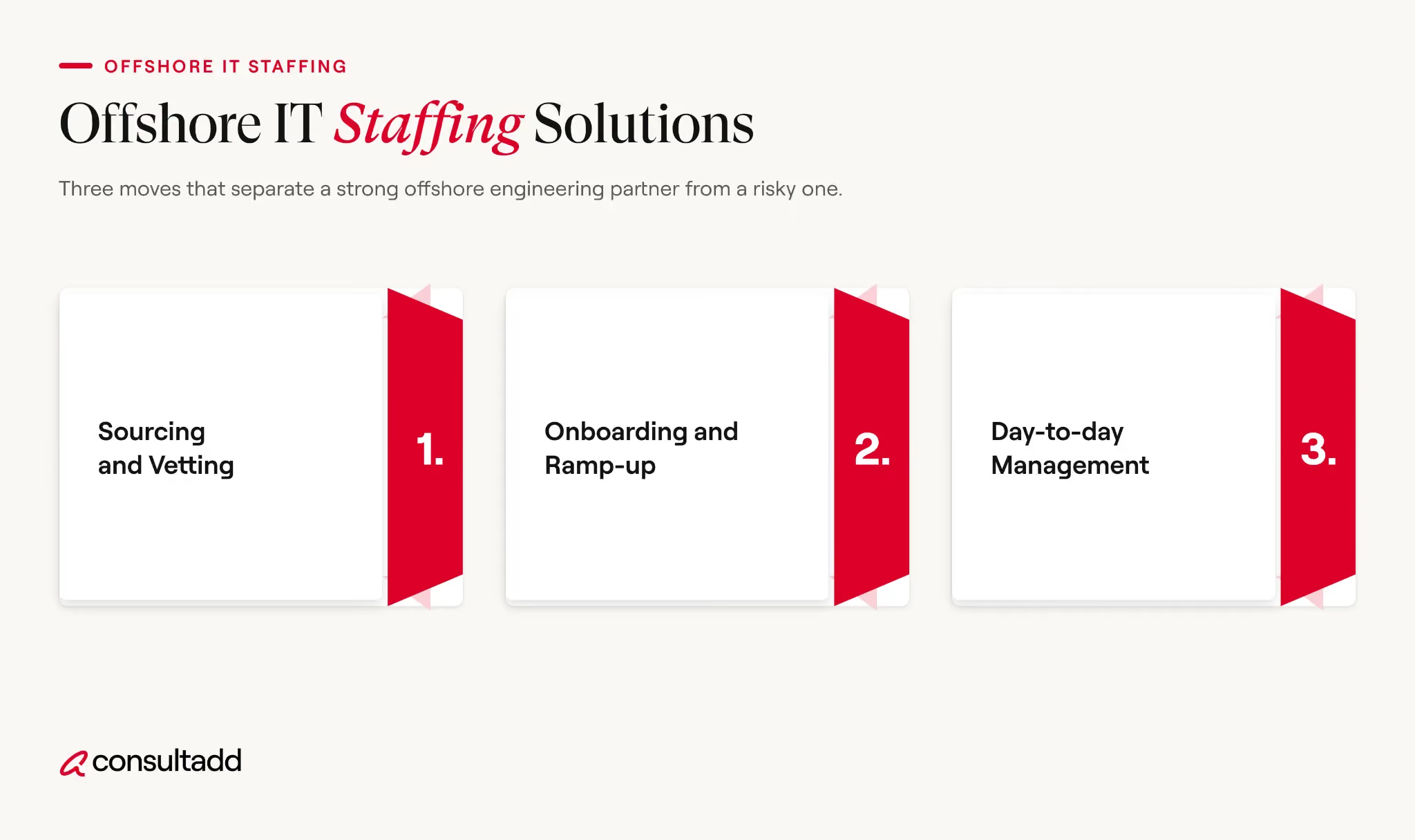
1. Sourcing and vetting
A reliable offshore staffing partner sources candidates against your job description, screens for technical skill and English proficiency, and runs them through client-specific interviews before you ever see a resume. If a partner is sending you unscreened profiles just to hit a submission quota, that's a sign to look elsewhere.
2. Onboarding and ramp-up
Even a strong candidate needs time to learn your codebase, your tools, and your team's shorthand. The budget two to four weeks before an offshore hire is contributing at full speed, similar to what you'd expect from a remote domestic hire.
3. Day-to-day management
This is where most of the friction actually lives. Offshore staff should be attending your standups, using your ticketing system, and getting the same feedback loops as anyone else on the team. Engagements fail more often from a communication gap than a skill gap.
Costs, contracts, and what actually drives the price
Offshore rates vary by country, skill level, and specialization, and any staffing partner quoting a flat number without asking about your role is guessing. What does move the needle:
- Seniority. A senior backend engineer with cloud certifications costs more than a junior QA tester, regardless of location.
- Specialization. Skills like AWS architecture or security engineering command a premium even offshore, since IT sector employers worldwide continue to report difficulty finding tech talent, and that scarcity isn't limited to the US market.
- Engagement structure. How you structure the contract, whether it's a direct placement, a contract role, or a corp-to-corp arrangement, changes the cost, the compliance burden, and who carries the risk.
- Contract-to-hire options. Some offshore arrangements convert to a different structure over time.
If you're considering that path, it's worth understanding how contract-to-hire staffing compares to a straight permanent hire before you commit to a conversion clause.
The real risks, and how to handle them
Offshore staffing isn't risk-free, and pretending otherwise sets teams up for a bad first engagement.
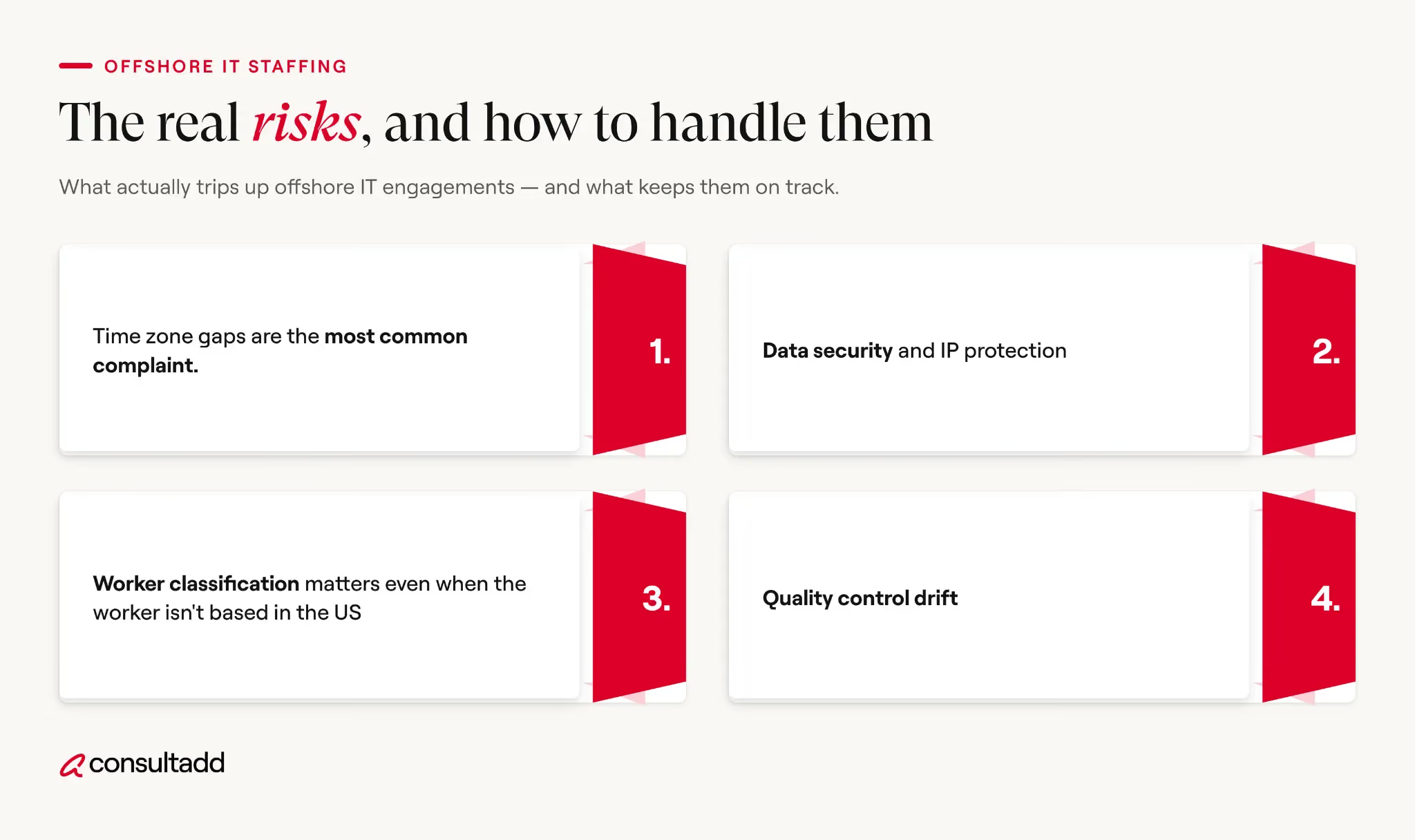
1. Time zone gaps are the most common complaint.
A 10-12 hour difference means less real-time back-and-forth, which works fine for well-scoped development work and poorly for roles that need constant stakeholder input. Build in overlap hours as a contract requirement, not an afterthought.
2. Data security and IP protection need to be spelled out before day one, not negotiated after an incident.
Contracts should cover data handling, access controls, and IP ownership explicitly, and this is one area where it's worth having legal review terms rather than relying on a template.
3. Worker classification matters even when the worker isn't based in the US, particularly for any hybrid arrangement involving US-based contractors alongside offshore staff.
The Department of Labor treats misclassification of employees as independent contractors as a serious compliance issue tied to minimum wage and overtime protections under the Fair Labor Standards Act, so any blended onshore/offshore setup should have its US-side classification checked by someone who knows the current rule.
4. Quality control drift happens when nobody owns the offshore relationship day to day.
Assign an internal point of contact, not just a vendor account manager, who tracks output the same way they'd track any other team member's.
How to choose an offshore IT staffing partner
Not every offshore staffing company runs the same playbook. A few questions separate the ones worth trusting from the ones just filling seats:
- Do they screen for English proficiency and technical skill, or just technical skill?
- Can they show references from companies in your industry, not just general testimonials?
- What's their process when a placed candidate doesn't work out? A real partner has a replacement policy, not just an apology.
- How do they handle compliance and documentation on their end, so it isn't landing on your desk?
- Is there a single account manager you can actually reach, or does every issue go through a ticket queue?
If a partner can't answer these clearly in the first conversation, that's useful information on its own.
For a broader look at what a good recruitment partnership should deliver, see our piece on how recruitment partners add value to your hiring process.
Start Strong With Consultadd
With 15 years in business and 5,000+ successful staffing engagements, we don't just fill roles, we build reliability into your process. We've supported 65 staffing companies in the past year alone and maintain MSAs with industry leaders like Robert Half and TEKsystems.
Here's what working with Consultadd looks like:
- Talent sourced in under 24 hours
- Ready-to-deploy candidates, vetted for experience and compliance
- Lower turnover risk: we match long-term goals, not just short-term needs
- Seamless compliance: visa, documentation, onboarding? Handled.
- Dedicated 1:1 account managers for responsive, personalized support
- Top 100 candidate matches delivered in the past year
- Strong partnerships with universities to tap into fresh, committed talent
- Post-placement support so your investment grows beyond day one
For candidates, your next opportunity is more than just a job title, it's a chance to build skills, gain experience, and move your career forward. At Consultadd, we connect technology professionals with projects and employers that align with their goals, whether they're looking for contract, contract-to-hire, or long-term opportunities.
The tech job market moves fast, but the right guidance can make all the difference. Ready to take the next step in your career journey? Explore Opportunities >>
Key takeaways
- Offshore IT staffing solutions work best for roles with clear scope and deliverables, not roles needing constant real-time input.
- Cost savings come from the hiring country's salary base, not from lower quality, when the partner is doing its job right.
- Time zone overlap and communication cadence matter more to long-term success than the headline hourly rate.
- Worker classification and IP protection need to be locked down in the contract, not handled reactively.
- The staffing partner's screening and account management process matters more than the country you're hiring from.
FAQs
Is offshore IT staffing the same as outsourcing?
No. Outsourcing hands a project to a vendor who owns the outcome. Offshore staffing places individuals into your team who follow your processes and report to your leads.
How much can offshore IT staffing actually save?
It varies by role, seniority, and country, since specialized skills command a premium regardless of location. There's no single fixed percentage that applies across every role or region.
What roles work best for offshore staffing?
Development, QA, DevOps, and data engineering roles with clear specs tend to work well. Roles needing heavy real-time client interaction are harder to run offshore successfully.
How long does it take to onboard an offshore hire?
Sourcing and screening can move quickly with an established partner, but expect two to four weeks before a new hire is contributing at full speed, similar to any remote hire.
What's the biggest risk with offshore IT staffing?
Communication gaps caused by time zone differences and unclear management ownership, more often than skill gaps.
Do I need a different contract structure for offshore workers?
Yes, offshore engagements are typically structured differently from W2 or C2C domestic arrangements, and the right structure depends on the role and how long-term the placement is meant to be.


.webp)

.png)
