


Introduction
You read a resume. It looks great. The interview goes well. Then you make the offer, and three months later you realize the person can't actually do half of what the resume claimed. That gap, between what a candidate says and what's true, is exactly what vetting closes.
So what does vetting a candidate mean? It's the process of checking a candidate's background, skills, and claims before you hire them, so you know they can do the job and are who they say they are. It pulls resume checks, skills tests, references, and background checks into one decision instead of a gut call.
Vetting isn't the same as a quick resume scan. It's the difference between hoping someone works out and having real reasons to believe they will. This guide breaks down what vetting covers, the steps involved, and how to do it well without dragging out your hiring process.
TL;DR
- Vetting a candidate means verifying their skills, background, and claims before an offer, not just reading a resume.
- It's broader than a background check. A background check is one piece of vetting, alongside skills tests, references, and identity checks.
- The core steps are resume screening, phone screen, skills assessment, structured interview, reference checks, and background checks.
- Around 70% of U.S. workers admit to lying on a resume, so verifying claims matters more than trusting them.
- The final call stays with a human. Automation gathers and structures the evidence, but a person makes the decision.
What vetting a candidate actually means
Vetting is verification. When you vet someone, you're confirming that the person in front of you matches the person on paper, and that they meet your bar for both skill and trust.
The word comes from the idea of examining something carefully before you accept it. In hiring, that means looking past the polished resume and the confident interview to the facts underneath.
A good way to think about it: a resume is a claim, not proof. Vetting is how you turn claims into evidence. Did they hold that title? Can they write the code? Will a former manager vouch for how they actually worked?
None of this means treating candidates as suspects. Most people are honest. But a structured process protects you from the small percentage who aren't, and it protects candidates too, because everyone gets judged by the same standard instead of a hiring manager's mood that day.
Vetting vs screening vs background check
People use these three words as if they mean the same thing. They don't, and the difference matters when you're building a process.
Screening is the early filter. It's the first pass on applications, where you narrow a big pile down to people worth talking to.
A background check is the records pulled on a finalist. It covers criminal history, employment dates, education, and similar facts.
Vetting is the whole thing. It's the full evaluation that includes screening and the background check, plus skills tests, references, and identity verification.
The takeaway is simple. Every background check is part of vetting, but not all vetting is a background check.
Why vetting candidates matters
The honest reason is money and risk. A bad hire is expensive, and vetting is cheap next to one.
There's a trust side too. Resumes are not proof, and about 70% of U.S. workers admit they have lied on one at some point. Verifying claims rather than trusting them is the whole point.
Then there's scale. U.S. employers made 5.2 million hires in a single month in mid-2026, per the Bureau of Labor Statistics. Ad hoc, do-it-by-feel checks don't hold up at that volume. A consistent process does.
One warning worth stating plainly. Over-vetting is a real failure mode. Pile ten checks onto a junior role and strong candidates will drop out before you finish. Match the depth of vetting to the stakes of the role.
The candidate vetting process, step by step
Vetting works best as a sequence, with the cheapest, fastest checks first and the deeper ones reserved for people who make it through. Here's a practical order.
- Resume and application screening. Match experience and qualifications against the role. Software can help surface the right resumes and support a blind review that reduces bias.
- Phone screen. A short call, usually around 30 minutes, to confirm basics, gauge interest, and check that the candidate meets the minimum requirements.
- Skills assessment. A test or practical exercise that measures the actual abilities the job needs. This is where inflated resumes get exposed.
- Structured interview. The same core questions for every candidate, scored consistently, so you compare people fairly instead of on rapport.
- Reference checks. Conversations with former managers or colleagues to confirm how the person actually worked, not just that they were employed.
- Background check. The records pull on your finalist, run with the candidate's consent.
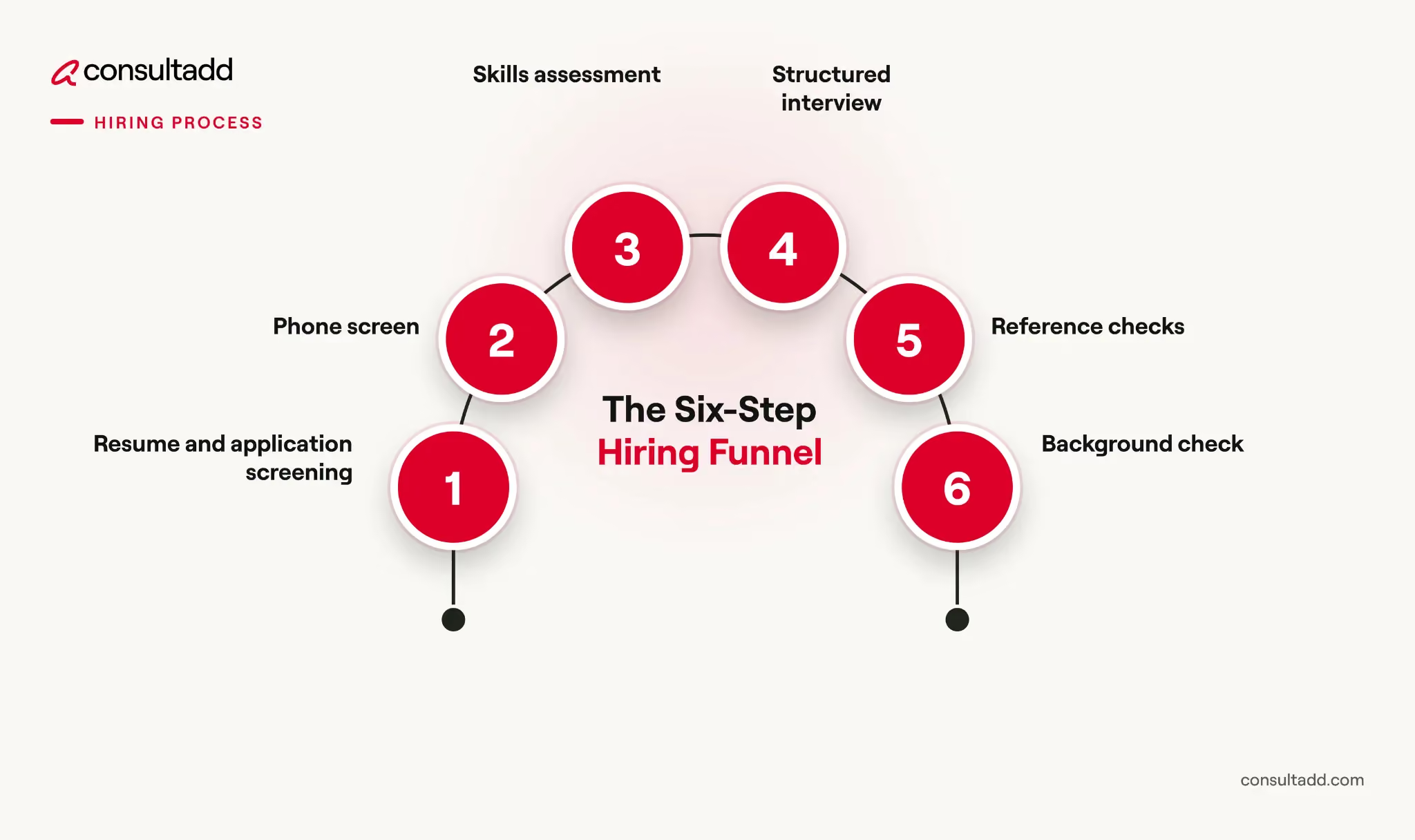
Run what you can in parallel to keep things fast, but keep the order of depth. There's no reason to run a background check on someone who failed the skills test.
ConsultAdd covers the digital side of this in more detail in its guide on the online job candidate vetting process and tips, which is worth a read if your hiring runs remote.
Common vetting checks and what they catch
Not every check does the same job. Some confirm identity, some measure ability, and some surface risk. Here's how the main ones line up.
The mix you choose depends on the role. A safety-sensitive or finance position earns deeper checks. A high-volume entry-level role needs a lighter, faster touch so you don't lose good people to a slow process.
Staying fair and compliant while you vet
Vetting isn't a free-for-all. In the U.S., background checks fall under the Fair Credit Reporting Act, and hiring decisions are governed by EEOC anti-discrimination rules. That means you need candidate consent for background checks and a consistent, job-related process.
A few habits keep you on the right side of the line. Apply the same steps to every candidate for a given role. Base decisions on job-related factors, not hunches. Collect only the information you actually need, and store it securely.
Social media checks are a gray area. You can look, but review only public information, tell candidates you're doing it, and stay within the law so you don't invite bias or a privacy complaint. When in doubt, involve someone who knows your local employment rules.
The goal isn't just to avoid lawsuits. A fair process produces better hires, because you're judging people on what the job requires instead of on noise.
How staffing partners handle vetting
If your team is small or your hiring volume spikes, vetting well for every role gets hard fast. This is where a staffing partner earns its keep.
A specialized agency runs the sourcing, screening, and verification, then hands you a short list of people who already cleared the checks. Instead of sifting through hundreds of resumes for a full-stack developer, you might see five candidates who match your exact requirements.
Good partners also treat vetting as more than a checkbox. They screen for skills, availability, and long-term fit, which cuts down on the early dropouts that quietly wreck a hiring plan.
If you're weighing a trial period before committing, ConsultAdd's breakdown of the contract-to-hire model explains how a "try before you buy" approach reduces the risk of a bad permanent hire.
The thread running through all of it: vetting is how you turn a hopeful hire into a confident one.
Start Strong With Consultadd
With 15 years in business and 5,000+ successful staffing engagements, we don't just fill roles, we build reliability into your process. We've supported 65 staffing companies in the past year alone and maintain MSAs with industry leaders like Robert Half and TEKsystems.
Here's what working with Consultadd looks like:
- Talent sourced in under 24 hours
- Ready-to-deploy candidates, vetted for experience and compliance
- Lower turnover risk: we match long-term goals, not just short-term needs
- Seamless compliance: visa, documentation, onboarding? Handled.
- Dedicated 1:1 account managers for responsive, personalized support
- Top 100 candidate matches delivered in the past year
- Strong partnerships with universities to tap into fresh, committed talent
- Post-placement support so your investment grows beyond day one
For candidates, your next opportunity is more than just a job title, it's a chance to build skills, gain experience, and move your career forward. At Consultadd, we connect technology professionals with projects and employers that align with their goals, whether they're looking for contract, contract-to-hire, or long-term opportunities.
The tech job market moves fast, but the right guidance can make all the difference. Ready to take the next step in your career journey? Explore Opportunities >>
Key takeaways
- Vetting a candidate means verifying their skills, background, and claims before you hire, so the decision rests on evidence instead of a good first impression.
- Vetting is the whole evaluation. Screening is the early filter, and a background check is one late-stage piece of it.
- A structured, consistent process cuts the cost and risk of a bad hire, which can run one to two times the salary.
- Match the depth of vetting to the role, since over-vetting a junior position drives strong candidates away.
- Keep the process fair and compliant with FCRA and EEOC rules, and keep the final hiring decision with a human.
FAQs
What does it mean to vet a candidate?
Vetting a candidate means checking their background, skills, and claims before you make an offer. It confirms they can do the job and are who they say they are. The process usually combines resume screening, skills tests, references, and a background check into one decision.
Is vetting the same as a background check?
No. A background check is one part of vetting, focused on records like criminal history and employment verification. Vetting is the full evaluation, which also includes skills assessments, reference checks, and identity verification. Every background check is vetting, but not all vetting is a background check.
How long does it take to vet a candidate?
It depends on the role and how many checks you run. A light process for an entry-level job can wrap up in days, while a high-trust role with deep background checks may take a few weeks. Running checks in parallel speeds things up without cutting corners.
What are the main steps in candidate vetting?
A typical process moves from resume screening to a phone screen, then a skills assessment, a structured interview, reference checks, and finally a background check. The cheap, fast checks come first, and the deeper ones are saved for finalists. This keeps the process efficient and fair.
Can you check a candidate's social media when vetting?
Yes, but carefully. Review only public information, let candidates know you're doing it, and follow laws like the FCRA to avoid bias and privacy problems. Social media should support a decision, not drive it, and it should never replace job-related checks.
Why is vetting candidates important?
Vetting reduces the risk and cost of a bad hire, which can run one to two times the person's salary once you add rehiring and lost productivity. It also protects your reputation and helps you meet compliance requirements for regulated roles. Done consistently, it leads to better hires and lower turnover.



.png)
.png)
