
Hiring & Recruitment

How Long Does the Hiring Process Take? A Stage-by-Stage Look
Introduction
You had a good final interview on Tuesday. It's now the following Monday, and your inbox is quiet. Is that normal, or did you miss something?
So how long does the hiring process take? For many professional roles, employers take a little over a month from opening a job to getting an offer accepted. SHRM's 2026 benchmarking puts the median at 39 days for non-executive roles.
Your own experience as a candidate is usually shorter than that on the interview side, then longer once you add background checks, notice periods and a start date.
This guide walks through each stage from the candidate's side, how timelines change by job type, what happens between the offer and your first day, and when it makes sense to follow up.
TL;DR
- Employers report a median of 39 days to fill non-executive roles and 45 days for executive roles, based on SHRM's 2026 data.
- Interviews and decisions take most of the time. The gap after a final interview is often the longest wait.
- Contract roles through a staffing agency can move from first call to start date in one to two weeks. Large-company full-time roles often take far longer.
- Plan for another two to four weeks between accepting an offer and starting, once checks and notice periods are included.
- Silence usually means internal delays, not rejection. Follow up once after the timeline you were given has passed.
How long does the hiring process take on average?
The best-known benchmark comes from SHRM. Its 2026 recruiting data reports a median time to fill of 39 calendar days for non-executive roles and 45 days for executive roles.
That number is measured from the employer's side. The clock starts when the job is approved or posted and stops when someone accepts the offer. If you applied two weeks after the posting went live, your part of the process is shorter.
There's a second clock most candidates forget about: offer acceptance to the first day. Background checks, references, paperwork and your notice period all live there.
So a realistic picture for a typical professional role looks something like this:
- Application to offer: often three to six weeks
- Offer to start date: often two to four weeks
- Total, application to first day: frequently six to ten weeks
These are rough ranges from what we see in tech hiring, not guarantees. Niche roles, senior roles and roles that need visa sponsorship can run much longer.
If you're curious how employers measure all this, our explainer on time to hire vs time to fill breaks down the difference.
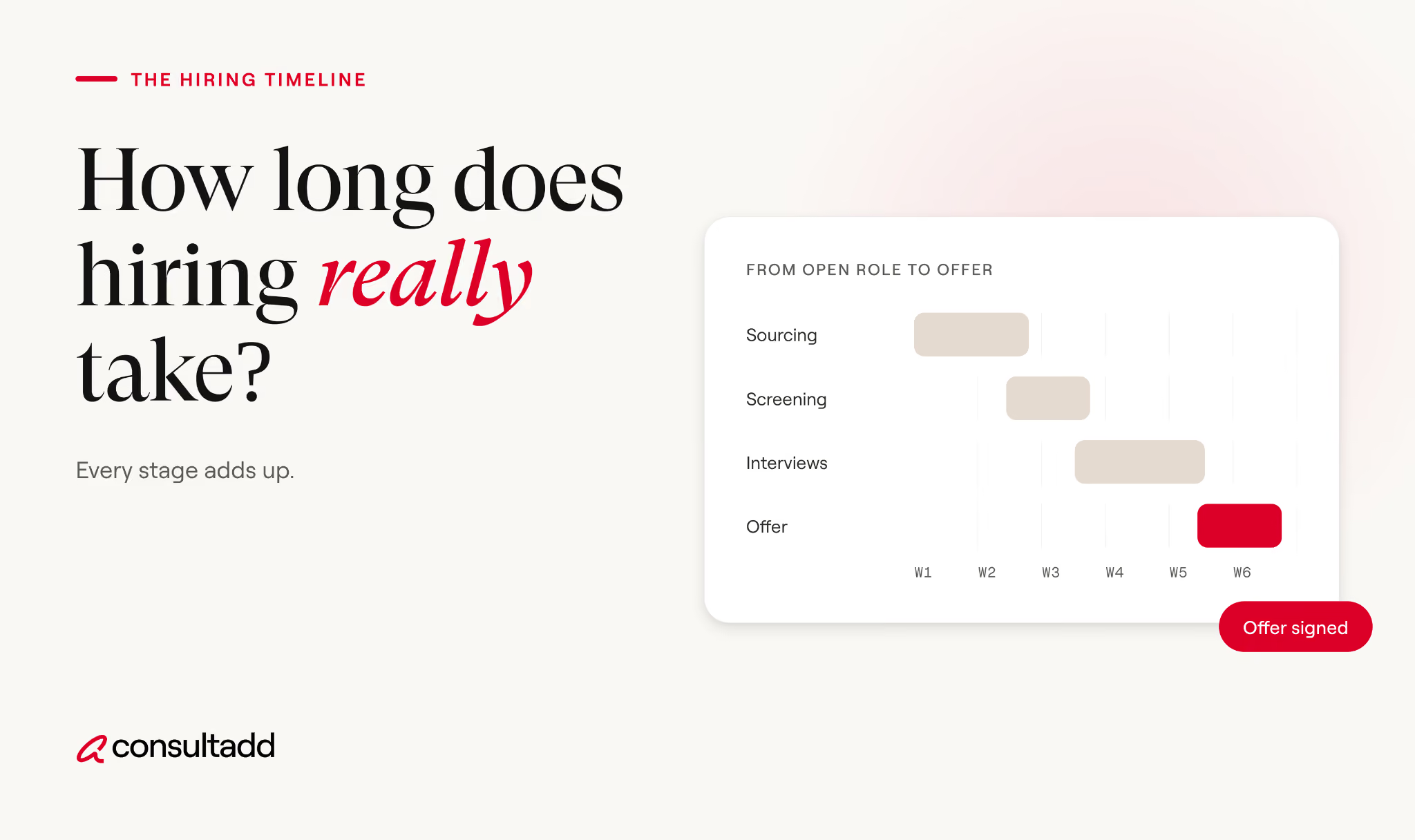
The hiring process timeline, stage by stage
Each stage has its own rhythm. Knowing roughly where you are helps you judge whether a quiet week is normal.
Why the decision stage feels longest
The wait after a final interview is usually the hardest part. You've done everything you can, and nothing seems to be happening.
From the hiring side, a lot is going on. Interviewers are submitting feedback, the team may be finishing interviews with other finalists, and the offer needs sign-off on salary. Any one of those can add several days.
How many interview rounds is normal?
For most tech roles, three to five conversations in total is common, counting the recruiter screen. Each extra round usually adds a few days for scheduling and feedback.
If a company keeps adding rounds without explaining why, it's fair to ask the recruiter what's left.
Hiring timelines by job type
The type of role you're applying for affects the timeline more than almost anything else.
Contract and contract-to-hire roles
Contract roles move fastest because the client usually has a project waiting. A recruiter who already knows your skills can submit you within a day, and many clients interview and decide within a week.
If a contract role may turn permanent, our guide to how contract-to-hire works explains what to expect at conversion.
For pay structure questions, see W-2 vs C2C vs 1099 contract types.
Roles that need visa sponsorship
Sponsorship can add weeks or months, depending on the visa category and where you are in the process. Ask early whether the employer sponsors and what the expected timeline is.
Our guide to H-1B sponsorship for tech professionals covers the steps.
From offer to first day
Accepting the offer doesn't mean you start Monday. A few steps sit between the signature and your first day.
Background checks
When an employer uses a screening company, federal law requires them to tell you and get your written permission first.
The FTC's guide to background checks for employers explains those rules. Delays usually come from education checks, international employment history or a small mismatch in dates.
References
Most reference calls happen near the final stage.
Our guide to what a reference check is and how it works covers how to prepare the people you list.
Employment eligibility paperwork
U.S. employers must complete Form I-9 to verify identity and work authorization for every new hire. Having your documents ready avoids a last-minute delay.
For the full picture of checks between offer and start, see our pre-employment screening guide.
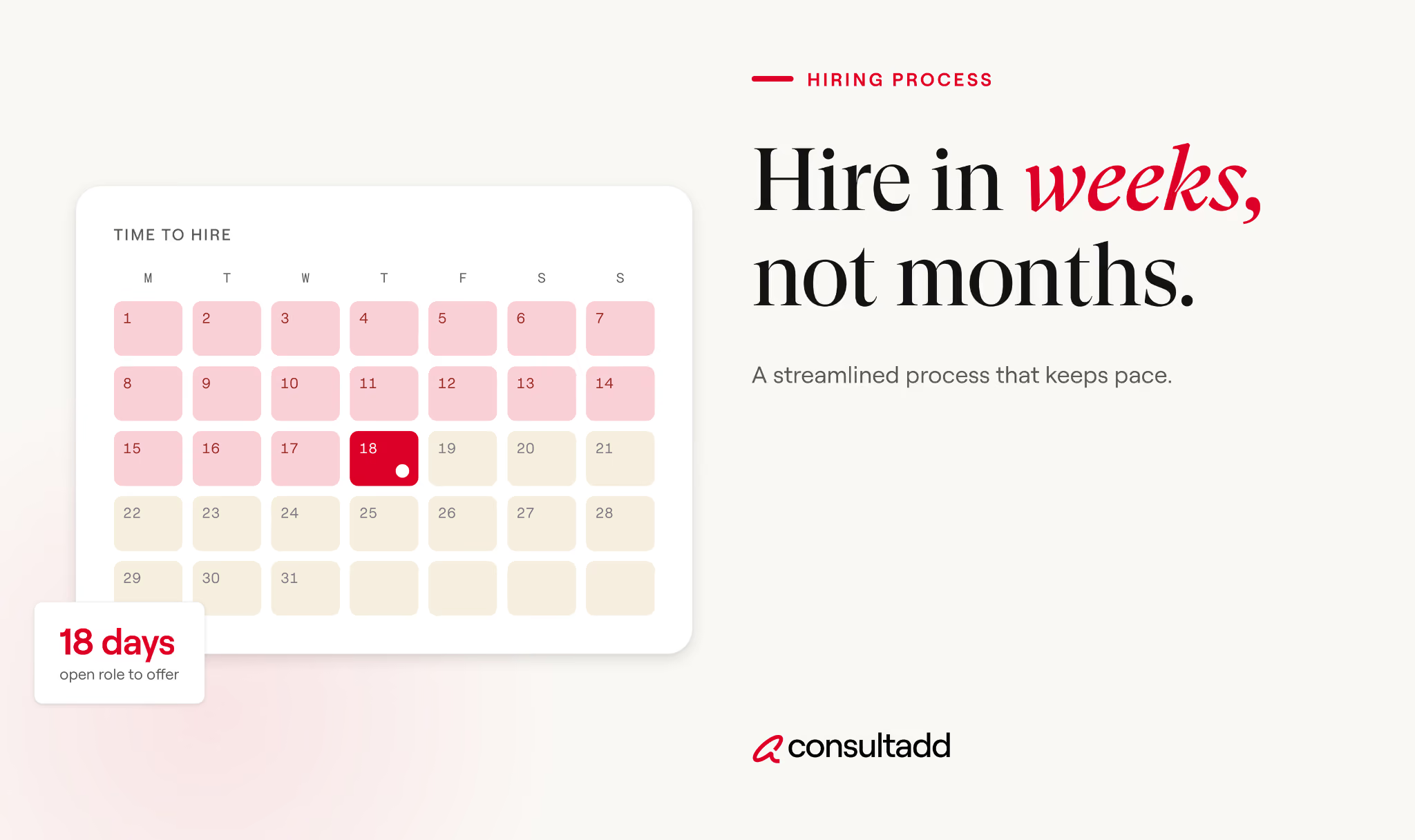
What slows the hiring process down
Some delays you can influence. Most you can't. Knowing the difference saves a lot of worry.
Delays on the employer's side:
- The hiring manager is traveling, on leave or busy with a release
- The company is still interviewing other finalists
- Salary approval or headcount sign-off is stuck with finance
- A team reorganization or budget review puts the role on hold
- Interview panels are hard to schedule across time zones
Delays you can reduce:
- Slow replies to scheduling emails
- Incomplete background check forms
- References who can't be reached
- Pay expectations that change late in the process
- Missing work authorization documents
The market also plays a part. The U.S. Bureau of Labor Statistics tracks job openings and hires each month.
When openings run well ahead of hires, employers compete harder for candidates and tend to move faster on strong ones. When the market cools, processes stretch out.
How to read silence and when to follow up
Silence is the most stressful part of a job search. In our experience, it usually means something internal is slow, not that you've been rejected.
Keep follow-ups short. Two or three sentences that restate your interest and ask about timing are enough. Send one, then wait. Repeated messages rarely speed anything up.
Working through a staffing agency? Your recruiter can often get a real answer from the client faster than you can. Ask them directly what they've heard.
How to keep your search moving
The simplest advice is also the most useful: don't pause your search for one process.
- Run processes in parallel. Keep applying and interviewing until you've signed an offer and cleared checks.
- Ask about the timeline at every stage. "What are the next steps, and when should I expect to hear back?" is a normal question.
- Share deadlines honestly. If another offer has a deadline, tell the other companies. Many will speed up for a candidate they want.
- Have documents ready. Updated references, ID and work authorization documents save days at the end.
- Consider contract work.
Our guide to staffing agencies for remote jobs explains how agency placements work and how fast they can move.
One caution. A real hiring process is rarely instant. An offer that arrives within hours by text, with no video interview, is a common sign of a scam.
The FTC's guidance on job scams lists other warning signs, including requests for money or bank details before you've been hired.
What to expect from your own hiring process
How long does the hiring process take for you? It depends mostly on the type of role. A contract position through an agency can start within two weeks.
A full-time role at a large company can take two months or more from application to first day, once checks and notice periods are counted.
Ask about the timeline early, keep other options open until the paperwork is done, and follow up once when a deadline passes. That keeps you in control of the parts you can control.
If you're on the hiring side and want the employer view, our guide to average time to hire benchmarks covers where companies lose time and how they fix it.
Start Strong With Consultadd
With 15 years in business and 5,000+ successful staffing engagements, we don't just fill roles, we build reliability into your process. We've supported 65 staffing companies in the past year alone and maintain MSAs with industry leaders like Robert Half and TEKsystems.
Here's what working with Consultadd looks like:
- Talent sourced in under 24 hours
- Ready-to-deploy candidates, vetted for experience and compliance
- Lower turnover risk: we match long-term goals, not just short-term needs
- Seamless compliance: visa, documentation, onboarding? Handled.
- Dedicated 1:1 account managers for responsive, personalized support
- Top 100 candidate matches delivered in the past year
- Strong partnerships with universities to tap into fresh, committed talent
- Post-placement support so your investment grows beyond day one
For candidates, your next opportunity is more than just a job title, it's a chance to build skills, gain experience, and move your career forward. At Consultadd, we connect technology professionals with projects and employers that align with their goals, whether they're looking for contract, contract-to-hire, or long-term opportunities.
The tech job market moves fast, but the right guidance can make all the difference. Ready to take the next step in your career journey? Explore Opportunities >>
Key takeaways
- SHRM's 2026 data puts the median time to fill at 39 days for non-executive roles and 45 days for executive roles.
- The decision stage after a final interview is often the longest wait, usually because of internal feedback and approvals.
- Contract roles through staffing agencies move fastest, while large-company, senior and public sector roles take longest.
- Plan for two to four extra weeks between accepting an offer and starting work.
- Follow up once after the timeline you were given has passed, and keep other processes going until you've cleared all checks.
FAQs
How long does it take to hear back after an interview?
Many employers respond within one to two weeks after an interview, though final-round decisions can take longer. The best guide is the timeline the recruiter gave you. If that date passes, wait two or three business days and send one short follow-up.
Is no response after an interview a bad sign?
Not usually. Silence most often means the team is still interviewing, waiting on feedback or getting approvals. If you hear nothing after a follow-up and another week passes, keep your focus on other opportunities.
How long does a background check take?
Many background checks finish within a few business days. Education verification, international work history or mismatched dates can add a week or more. Filling in the forms quickly and accurately is the easiest way to avoid delays.
How long is it between the final interview and a job offer?
For many roles, offers come within one to two weeks of the final interview. Larger companies and senior roles can take longer because salary and headcount approvals involve more people. Contract roles through agencies often move within a few days.
How long after accepting an offer do you start a new job?
Two to four weeks is common. That covers background and reference checks, paperwork, equipment and a standard two-week notice period at your current job. Contract roles sometimes start within a week if checks are already complete.
Why is the hiring process taking so long?
Common reasons include hiring managers with full calendars, other finalists still interviewing, budget or salary approvals and hard-to-schedule panels. Market conditions matter too, since companies move slower when they have more applicants. Asking the recruiter directly about the remaining steps usually gets you a clearer answer.

Candidate Sourcing Strategies That Fill Tech Roles Faster
Introduction
A new req lands at 10 a.m. Senior data engineer, Snowflake and Airflow, hybrid in Dallas, client wants profiles by tomorrow. Most recruiters open LinkedIn, type the job title and start scrolling.
That works sometimes. On a hard tech role, it usually means you're looking at the same 200 profiles every other vendor on the req is looking at.
Good candidate sourcing strategies change where you look first and in what order. This guide covers nine tactics that work on tech requisitions, sample Boolean and X-ray strings you can adapt, and a 48-hour sequence for running them on a live req.
It's written for agency recruiters, in-house tech recruiters and sourcers who already know the basics and want a sharper routine.
TL;DR
- Search your own ATS before anything else. Past finalists and consultants finishing contracts are the fastest candidates you'll find.
- Write a one-page sourcing brief with adjacent titles and target companies before you build a single search string.
- Boolean and X-ray searches work best when built around skills and synonyms, not just job titles.
- Technical footprints like GitHub profiles and conference talks reach engineers who rarely update LinkedIn.
- Run the strategies in a set order during the first 48 hours, then track which channel produced the candidates who actually got interviews.
What candidate sourcing strategies need to do for tech roles
Sourcing is the part of recruiting that happens before anyone applies. You identify people who fit the role, find a way to reach them and start a conversation. Screening, submittals and offers come later.
For tech roles, the job is harder than it looks. The U.S. Bureau of Labor Statistics reported 7.3 million job openings against 5.1 million hires in July 2026.
When openings run ahead of hires, the strongest engineers rarely need to apply anywhere. Someone has to go find them. This post stays tactical.
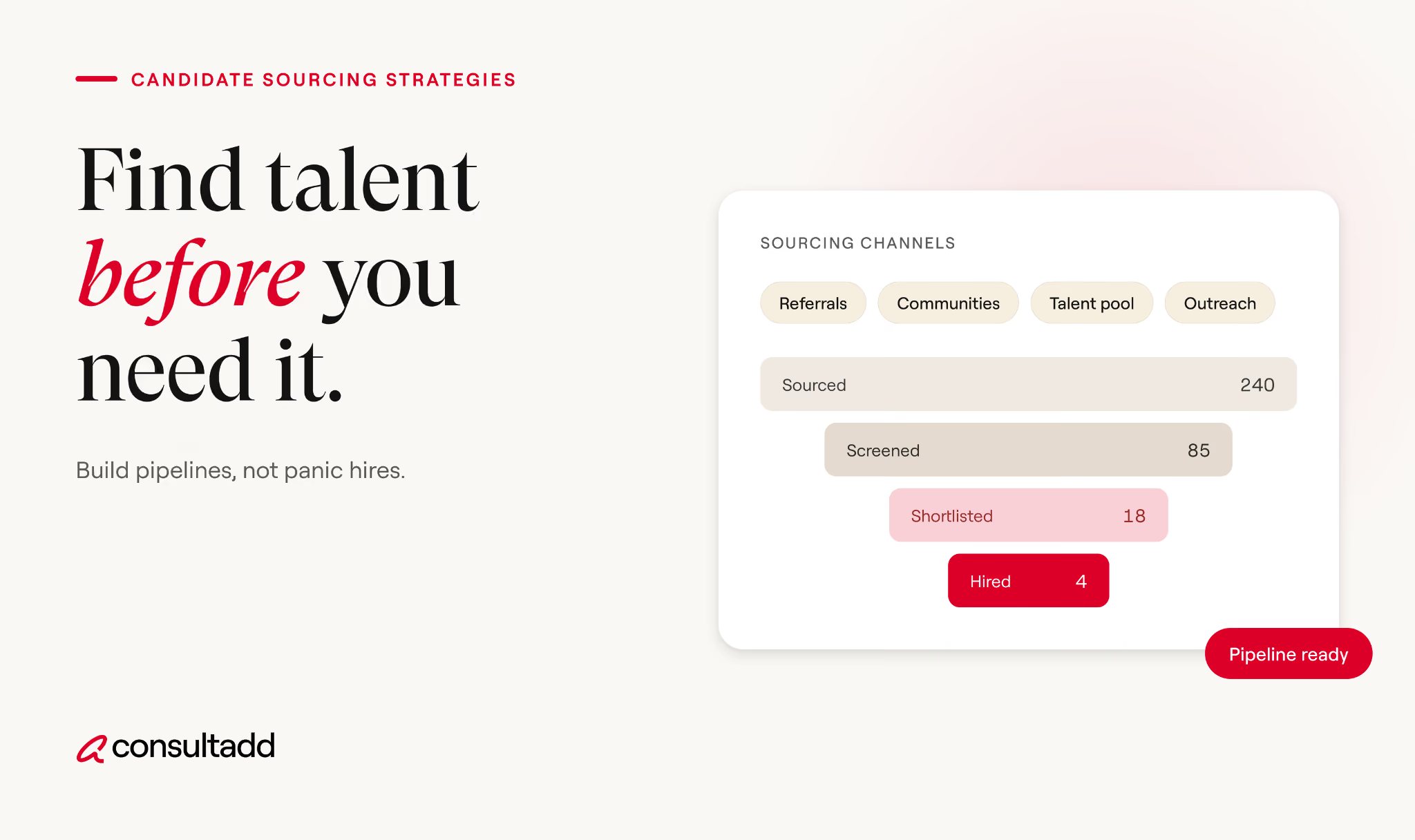
If you're deciding on an overall approach, such as inbound versus outbound or direct hire versus contract, see our guide to types of recruitment strategies.
If you're choosing software, our guide to picking a candidate sourcing solution covers the tools.
Write a sourcing brief before you search
Most wasted sourcing time comes from searching on the job description as written. Job descriptions list everything the client could want. A sourcing brief lists what you'll actually search on.
Spend 15 minutes with the hiring manager or account manager and fill this in:
If the requirements look inflated, push back now.
Our guide on recruiting for hard-to-fill roles covers how to have that conversation.
Nine candidate sourcing strategies for tech recruiters
These aren't ranked by importance. They're roughly in the order most recruiters should try them, from fastest and cheapest to slowest.
1. Rediscover candidates already in your ATS
Your applicant tracking system is full of people who were nearly hired. Past finalists, candidates who declined an offer for timing reasons, people who were submitted to a client that went quiet.
Search the ATS with the same Boolean string you'd use externally, then filter by last contact date.
Someone who was a strong finalist eight months ago is often a better bet than a cold profile, because you already know their skills, rate and communication style.
2. Work the contract end-date calendar
This one is specific to staffing. Every consultant you've placed has an end date. Some will extend, some won't.
Keep a simple list of consultants rolling off in the next 30 to 60 days, sorted by skill. When a new req opens, check it first.
These people are pre-screened, already working, and often happy to move straight into a new project with someone they trust.
3. Build Boolean strings around skills, not titles
Boolean search works on LinkedIn Recruiter, most job board resume databases and many ATS platforms. The common mistake is searching on the job title alone.
Titles vary wildly. Skills are more consistent.
Save strings that work in a shared document organized by role. A string that took 20 minutes to tune is worth reusing next quarter.
4. Use X-ray search to reach profiles your tools miss
X-ray search uses a general search engine to look inside a single website. Google supports operators like site:, quotation marks for exact phrases and OR for alternatives, as explained in its guide to refining web searches.
A few patterns that work for tech sourcing:
- site:linkedin.com/in ("data engineer" OR "analytics engineer") (snowflake OR databricks) "Dallas"
- site:github.com "kubernetes operator" "Austin"
- site:speakerdeck.com OR site:slideshare.net "terraform" "lessons learned"
X-ray results often surface profiles with limited visibility inside paid tools. They also cost nothing to run.
5. Search technical footprints
Many strong engineers barely touch LinkedIn. Their work shows up elsewhere.
GitHub's user search supports qualifiers such as location:, language: and followers:, so a search like language:go location:austin followers:>20 returns active Go developers in Austin.
Look at what they've built recently, not just star counts.
Other places worth checking include conference and meetup speaker lists, maintainer pages for open-source projects your client uses, and technical blogs.
When you contact someone found this way, mention the specific project. It's the main reason they'll reply.
6. Search adjacent titles and backgrounds
The person doing the work you need often has a different title. A strong data engineer might be listed as "senior BI developer." A cloud engineer might sit under "systems administrator" at a smaller company.
Use the adjacent titles from your brief in every search. This single change often doubles the usable pool on niche reqs.
For a deeper look at widening reach through new channels, see our diversity sourcing playbook.
7. Ask placed consultants for referrals
Employee referral programs get most of the attention. In staffing, your placed consultants are an equally strong source. They work alongside other engineers every day and know who's good.
Ask at natural moments, like a 30-day check-in or a contract extension.
Keep it specific: "Do you know a strong Airflow engineer who might be open to a six-month contract?" gets better answers than "Know anyone looking?"
Don't let referrals become your only channel. The EEOC's guidance on prohibited employment practices warns that relying on word-of-mouth recruiting within a workforce mostly of one national origin can create legal risk. Mix referrals with other strategies on this list.
8. Tap vendor networks and hotlists
U.S. IT staffing runs on vendor relationships. Partner firms share hotlists of consultants who are available now, with skills, location and work authorization listed.
For urgent contract roles, a hotlist can produce a submittable candidate faster than any search. Get written right to represent before submitting anyone, and check that the profile matches a real conversation, not just a resume.
Our guide to bench sales explains how hotlists and RTRs work.
9. Map target companies
Talent mapping means building a list of companies that employ the kind of engineer you need, then identifying people there by team and seniority. It's slower than the other strategies but builds a pipeline you can reuse.
Watch for events that make people open to moving: a project ending, an office closing, a product line being shut down. Larger layoffs often appear in public notices. The U.S. Department of Labor explains how WARN Act notices work, and many states publish them online.
Approach these candidates with care. Lead with the role and why it fits their experience, not with their company's news.
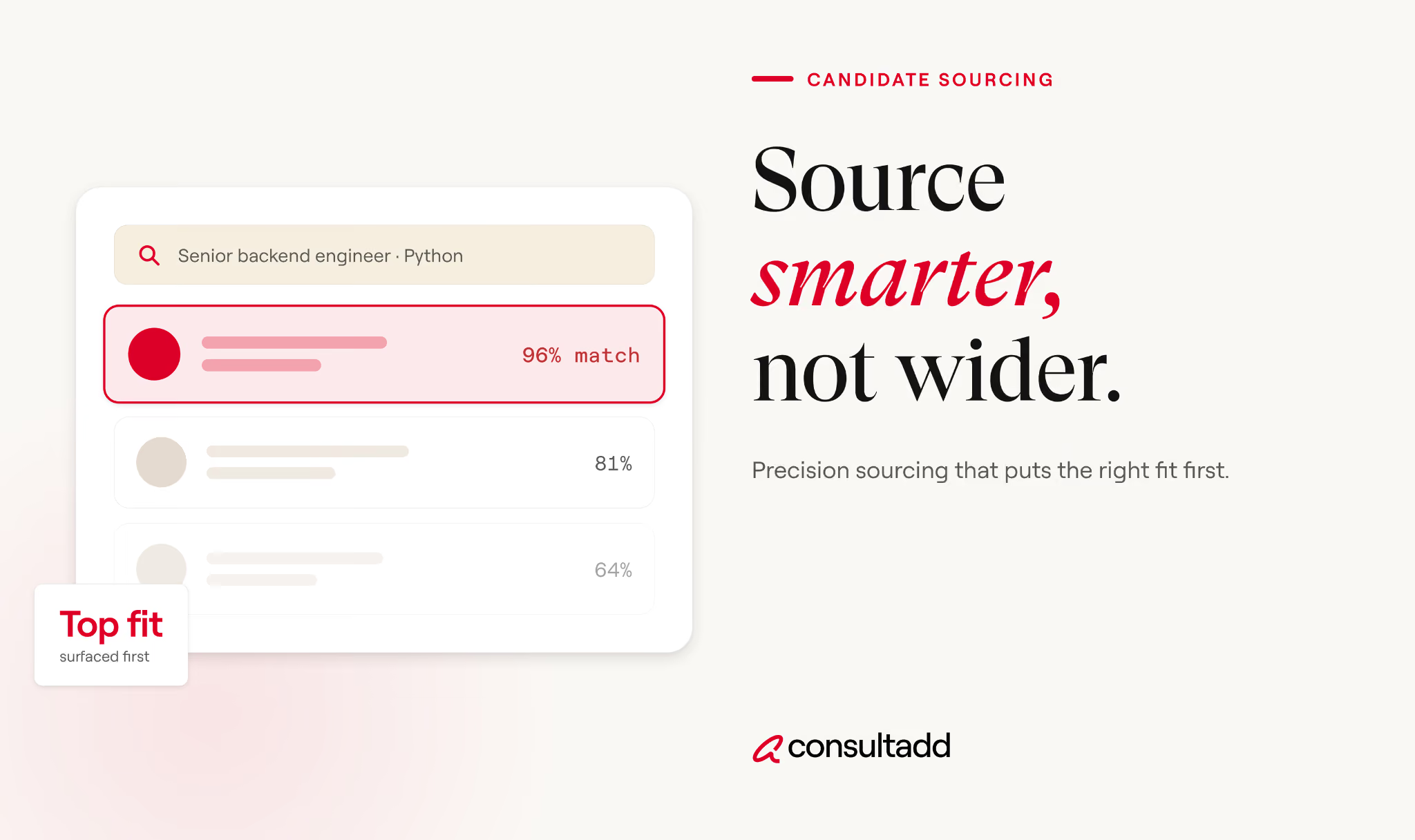
The first 48 hours on a new req
Knowing the strategies matters less than running them in the right order. Here's a sequence that works for most contract and direct-hire tech reqs.
The point of the review isn't to stop. It's to shift effort toward whichever channel is producing replies on this specific req.
Matching the strategy to the req type
Not every req needs all nine strategies. The type of role decides where to lead.
For the last row, a partner with an existing bench of screened candidates can save days. Our post on pre-vetted candidates explains what that should include.
Outreach that gets replies
Sourcing only works if people answer. Tech candidates get a lot of recruiter messages, and most of them look the same.
A message that gets read usually has these parts:
- One specific detail from their background, such as a project, repo or talk
- The core stack and what they'd actually build
- Duration, rate range and pay structure for contract roles (W-2, 1099 or C2C)
- Remote, hybrid or on-site terms, stated plainly
- A clear, small next step, like a 15-minute call
Keep the first message short. Follow up once or twice with something new, like the client's industry or the team size. After that, move on and note the outcome in your ATS so the next recruiter doesn't repeat the same message.
Measure which sourcing strategies actually work
Profile counts don't tell you much. What you want to know is which strategy produced candidates who got interviews.
Tag every candidate in your ATS with the strategy that found them. After a month, compare:
- Response rate by strategy. Which channels get replies?
- Source to submittal. Which channels produce people who pass your screen?
- Submittal to interview. Which channels produce people clients want to talk to?
- Time to first qualified candidate. Which channels move fastest on urgent reqs?
You'll usually find that ATS rediscovery and referrals convert better than cold searches, while Boolean and X-ray searches produce more volume. Both matter.
Our guide to testing a talent sourcing solution has formulas if you want to put numbers on it.
Once candidates are in the pipeline, the next step is screening. See how to vet potential candidates before you submit them.
Building your candidate sourcing strategies around the req
The best candidate sourcing strategies aren't a longer list of channels.
They're a routine: brief first, warm candidates second, targeted searches third, slower pipeline work last, and a quick review at the 48-hour mark.
Try it on your next tech req. Write the brief, save the Boolean string that works, and tag every candidate by source.
After five or six reqs, you'll know which strategies earn their time on your desk and which ones don't.
Start Strong With Consultadd
With 15 years in business and 5,000+ successful staffing engagements, we don't just fill roles, we build reliability into your process. We've supported 65 staffing companies in the past year alone and maintain MSAs with industry leaders like Robert Half and TEKsystems.
Here's what working with Consultadd looks like:
- Talent sourced in under 24 hours
- Ready-to-deploy candidates, vetted for experience and compliance
- Lower turnover risk: we match long-term goals, not just short-term needs
- Seamless compliance: visa, documentation, onboarding? Handled.
- Dedicated 1:1 account managers for responsive, personalized support
- Top 100 candidate matches delivered in the past year
- Strong partnerships with universities to tap into fresh, committed talent
- Post-placement support so your investment grows beyond day one
For candidates, your next opportunity is more than just a job title, it's a chance to build skills, gain experience, and move your career forward. At Consultadd, we connect technology professionals with projects and employers that align with their goals, whether they're looking for contract, contract-to-hire, or long-term opportunities.
The tech job market moves fast, but the right guidance can make all the difference. Ready to take the next step in your career journey? Explore Opportunities >>
Key takeaways
- Start every req with a one-page sourcing brief that lists must-have skills, adjacent titles and target companies.
- Search your ATS and contract end-date list before going external. Warm candidates move fastest.
- Build Boolean and X-ray strings around skills and synonyms, and save the ones that work.
- Use technical footprints, placed-consultant referrals and talent mapping to reach engineers who never apply.
- Tag candidates by source and compare strategies on submittal-to-interview rates, not profile counts.
FAQs
What are candidate sourcing strategies?
Candidate sourcing strategies are the methods recruiters use to find and contact qualified people before they apply for a role. Common examples include ATS rediscovery, Boolean and X-ray search, referrals, talent mapping and searching technical communities. Most recruiters combine several on each requisition.
What is the difference between sourcing and recruiting?
Sourcing covers finding potential candidates and starting the first conversation. Recruiting is the wider process that also includes screening, interviews, submittals and offers. On larger teams, a sourcer often hands interested candidates to a recruiter for the rest of the process.
How do you source passive candidates for tech roles?
Look where engineers show their work, such as GitHub, conference talks, open-source projects and technical blogs. Then contact them with a message that mentions something specific they've built. Passive candidates rarely respond to generic messages but often reply when the role clearly matches their experience.
What is X-ray search in recruiting?
X-ray search uses a general search engine like Google to look inside a single website, using operators such as site: and quotation marks. Recruiters use it to find LinkedIn profiles, GitHub accounts or speaker pages that their paid tools may not surface. It's free and works well alongside Boolean search.
How long should you spend sourcing a tech requisition?
For an urgent contract role, most of the first useful candidates should come within 48 hours, especially from your ATS and vendor networks. Niche senior roles can take one to three weeks of steady sourcing. Review progress at the 48-hour mark and shift effort toward the channels producing replies.
What are the best sourcing channels for IT roles?
There isn't a single best channel. Your own ATS and referrals usually convert well, Boolean and X-ray searches produce volume, and vendor hotlists help on urgent contract roles. Track results by source for a month to see which channels work for the roles you fill most.

Talent Sourcing Solution: How to Test One Before You Buy
Introduction
Every talent sourcing solution looks good in a demo. The search returns hundreds of matching profiles, the outreach sequences run themselves, and the dashboard shows a full pipeline.
Then you sign an annual contract, and three months later your recruiters are still filling hard roles the old way.
The problem usually isn't the tool. It's that nobody tested it against real requisitions before buying.
This guide walks through how to evaluate a talent sourcing solution properly: diagnosing what you actually need, building a scorecard, running a 30-day pilot, and measuring results with numbers that hold up.
It's written for staffing firm leaders and in-house talent acquisition teams.
TL;DR
- Identify where your pipeline breaks before you look at any product.
- Build a weighted scorecard before the first demo, so the demo doesn't set your criteria for you.
- Run a 30-day pilot on real requisitions, side by side with your current process.
- Judge results on cost per qualified candidate and submittal-to-interview ratio, not profile counts.
- If the solution uses AI to screen or rank candidates, check local rules on bias audits and candidate notice.
Start with the problem, not the product
Talent sourcing breaks down in different places for different teams. Some don't find enough names. Some find names but get no replies.
Others get replies from people who don't pass the first screen. Each problem needs a different fix.
Pull the last quarter of data for your hardest roles and find where candidates drop off.
If you need an overview of the main solution types first, our Hiring & Recruitment section covers AI sourcing software, ATS features, outsourced sourcing, RPO, and talent supply partners.

One honest note from the staffing side: a lot of "sourcing problems" turn out to be intake problems. If job requirements are inflated or unclear, no tool will fix the pipeline.
Our guide on recruiting for hard-to-fill roles covers how to tighten requirements first.
Build a scorecard before the first demo
Demos are designed to impress. If you walk in without written criteria, the vendor's strongest features quietly become your priorities. A simple weighted scorecard prevents that.
Adjust these weights to your situation. A staffing firm filling contract roles in days will weight speed heavily.
An enterprise team filling a few senior roles a quarter might weight quality and integration higher.
Score each finalist on the same criteria after the pilot, not after the demo.
Questions to ask in every demo
These questions separate solutions that work on your roles from ones that work in a sales environment.
- Can you run a search for one of our real open roles, live? Prepared demo searches always look good.
- Where does your candidate and contact data come from, and how often is it refreshed? Stale contact data is one of the biggest hidden costs.
- How does it integrate with our ATS? Ask to see the actual sync, including duplicate handling.
- What does a recruiter's day look like using this? If it adds steps, adoption will suffer.
- What's the full price, including seats, credits, and integrations? Get it in writing.
- Can we run a paid or free pilot before signing an annual contract? A vendor that refuses a pilot is telling you something.
- If AI ranks or screens candidates, has the tool had an independent bias audit? More on why below.
Watch for red flags: reluctance to search live, vague answers on data sources, "unlimited" claims with fine print, and pricing that only makes sense on a multi-year commitment.
How to run a 30-day sourcing pilot
A sourcing pilot is the only reliable way to know whether a talent sourcing solution works for your roles. Thirty days is usually enough to see results on active requisitions without dragging the decision out.
- Pick three to five real requisitions. Mix one or two hard-to-fill roles with one or two typical ones. Easy roles alone will flatter any tool.
- Define "qualified" before you start. Write down what passing the first screen means for each role, so nobody moves the goalposts later.
- Record your baseline. Note your current time to first qualified candidate, response rates, and submittal-to-interview ratio for similar roles.
- Run it side by side. Keep your existing process going on the same roles, so you're comparing like with like.
- Assign one owner. One recruiter or sourcing lead tracks results and gives weekly feedback to the vendor.
- Review weekly. Check candidate quality, response rates, and recruiter time spent. Give the vendor a chance to adjust searches after week one.
- Score against your scorecard at day 30. Decide based on the numbers, not on how the tool feels.
For staffing firms, add one more test: track how clients respond to submittals sourced through the new solution. A tool that produces candidates your recruiters like but clients reject isn't solving the problem.
The numbers that decide it
Profile counts and "matches found" look impressive but don't tell you much. These sourcing KPIs do.
Here's an illustrative example of why cost per qualified candidate matters:
Say Tool A costs $2,000 for the pilot and surfaces 400 profiles, but only 10 pass your first screen. That's $200 per qualified candidate. Tool B costs $3,000 and surfaces 150 profiles, with 25 passing. That's $120 per qualified candidate. Tool B looks smaller on the dashboard and is the better buy.
The duplicate rate is worth checking closely. Many teams discover that a large share of "new" candidates are already sitting in their ATS. Sometimes the cheaper fix is better rediscovery of your existing database.
Compliance checks for AI-driven tools
Many sourcing tools now use AI to match, rank, or screen candidates. That's useful, but it brings legal obligations in some places. This is general information, not legal advice, so check with counsel for your jurisdictions.
New York City:
- Local Law 144 has been enforced since July 2023.
- Employers and employment agencies using automated employment decision tools must have an annual independent bias audit, publish the results, and give candidates at least 10 business days' notice before the tool is used.
- Whether a sourcing tool counts depends on how much it drives the hiring decision, so ask vendors directly.
- The NYC Department of Consumer and Worker Protection publishes the rules and FAQs.
Illinois:
- HB 3773, effective January 1, 2026, amended the Illinois Human Rights Act to cover AI used in employment decisions.
- It requires notice to candidates and bars using zip codes as a proxy for protected characteristics.
Data privacy:
- Ask how the vendor collects contact information, how candidates can opt out, and how data is stored.
- Outreach to candidates in other countries can trigger additional privacy rules.
Our post on how AI and social media are changing recruitment covers the broader bias and privacy risks in automated sourcing.
Rolling out after the pilot
If the pilot works, don't jump straight to a full rollout across every team. A staged approach keeps adoption high and protects your budget.
- Negotiate based on pilot data. You now know your expected volume. Push for seat counts and terms that match, and ask for a shorter initial term if possible.
- Set up the ATS integration properly. Duplicate handling and status syncing should work before more recruiters start using it.
- Train recruiters on real searches. Pair new users with whoever ran the pilot.
- Keep the pilot KPIs running. Review cost per qualified candidate and submittal-to-interview ratio at 60 and 90 days.
- Keep your fallback. For hard or urgent roles, an outsourced sourcing partner or pre-vetted talent supply can still fill gaps faster than any tool.
For a broader view of building sourcing into your recruiting process, see our guide on the smart way to approach sourcing and procurement.
For speeding up the rest of the hiring cycle, our post on efficient tech hiring strategies picks up where sourcing ends.
Choosing a talent sourcing solution you'll actually use
The right talent sourcing solution is the one that produces qualified candidates for your roles at a cost you can defend. Demos can't tell you that. A short, honest pilot with clear criteria and the right numbers can.
Before you book your next vendor demo, pick the three requisitions you'd use for a pilot and write down what "qualified" means for each. That one step will make every conversation that follows more useful.
Start Strong With Consultadd
With 15 years in business and 5,000+ successful staffing engagements, we don't just fill roles, we build reliability into your process. We've supported 65 staffing companies in the past year alone and maintain MSAs with industry leaders like Robert Half and TEKsystems.
Here's what working with Consultadd looks like:
- Talent sourced in under 24 hours
- Ready-to-deploy candidates, vetted for experience and compliance
- Lower turnover risk: we match long-term goals, not just short-term needs
- Seamless compliance: visa, documentation, onboarding? Handled.
- Dedicated 1:1 account managers for responsive, personalized support
- Top 100 candidate matches delivered in the past year
- Strong partnerships with universities to tap into fresh, committed talent
- Post-placement support so your investment grows beyond day one
For candidates, your next opportunity is more than just a job title, it's a chance to build skills, gain experience, and move your career forward. At Consultadd, we connect technology professionals with projects and employers that align with their goals, whether they're looking for contract, contract-to-hire, or long-term opportunities.
The tech job market moves fast, but the right guidance can make all the difference. Ready to take the next step in your career journey? Explore Opportunities >>
Key takeaways
- Diagnose where your pipeline breaks before evaluating any talent sourcing solution.
- Write a weighted scorecard before demos so vendors don't set your priorities.
- Run a 30-day pilot on real requisitions, side by side with your current process.
- Cost per qualified candidate and submittal-to-interview ratio matter more than profile counts.
- Check bias audit and notice requirements for AI-driven tools, especially in NYC and Illinois.
FAQs
What is a talent sourcing solution?
A talent sourcing solution is any tool, service, or partner that helps you find and engage candidates for open roles. It can be AI sourcing software, sourcing features inside an ATS or CRM, an outsourced sourcing team, RPO, or a talent supply partner. The right one depends on where your hiring pipeline breaks down.
How much does a talent sourcing solution cost?
Pricing varies widely by type. Software is usually priced per seat or per month, outsourced sourcing may be priced per requisition or per hour, and staffing or talent supply partners typically charge per placement or through bill rates. Compare options using cost per qualified candidate rather than headline price.
How long should a sourcing pilot last?
Thirty days is usually enough to see meaningful results on active requisitions. Shorter pilots rarely give the tool time to adjust, and longer ones delay the decision. Use real roles and define what "qualified" means before you start.
What's the most important metric when evaluating sourcing tools?
Cost per qualified candidate is the most useful single number, because it combines price and quality. Pair it with submittal-to-interview ratio to confirm that candidates hold up with hiring managers or clients, not just your own first screen.
Do AI sourcing tools create legal risk?
They can, depending on how they're used and where. NYC requires bias audits and candidate notice for automated employment decision tools, and Illinois requires notice when AI is used in employment decisions. Ask vendors about audits and data sources, and check with counsel for your jurisdictions.
Should staffing firms build sourcing in-house or outsource it?
Many do both. In-house sourcing with good tools works well for steady, predictable roles. Outsourced sourcing or a pre-vetted talent partner often fills niche or urgent roles faster, especially when recruiter capacity is stretched.
.avif)
Diversity Sourcing Strategy: A Recruiter's Playbook
Introduction
If every search you run pulls from the same job boards, the same referral network, and the same five target companies, you'll keep seeing the same kind of candidate.
A diversity sourcing strategy fixes that at the top of the funnel. It's a plan for reaching qualified people your usual channels miss, so more of them get a fair look before anyone is screened.
This playbook covers how to audit your current sourcing, which channels are worth adding, how to write outreach people answer, what to measure, and where the legal lines sit in 2026. It's written for in-house recruiters, staffing teams, and hiring managers who run their own searches.
TL;DR
- A diversity sourcing strategy works on who you reach, not on who you select. Keep those two stages separate.
- Start with a sourcing audit. Your source-of-hire data usually shows the problem faster than any survey.
- Inflated job requirements shrink your pool before sourcing even starts.
- Track sourcing metrics by channel so you can drop what doesn't produce qualified candidates.
- Federal rules changed in 2025 and 2026, so review your process with counsel rather than relying on older playbooks.
What a diversity sourcing strategy covers, and what it doesn't
Sourcing is outreach. You decide where to look, who to contact, and how to describe the role. Selection is evaluation. You decide who moves forward and who gets the offer.
Diversity sourcing lives entirely in the first stage. The goal is a wider, more varied pool of qualified candidates.
Every candidate in that pool then goes through the same screening, the same interview questions, and the same scoring. That separation is what keeps the work both effective and defensible.
Our post on what the term "diversity hire" means and what the law allows explains the legal distinction in more depth.

Start with a sourcing audit
Before adding anything new, look at what you already do. Most teams find that two or three channels produce the majority of their hires, and those channels tend to reproduce the existing team.
Pull source-of-hire data for the last six to twelve months. For each channel, look at how many candidates it produced, how many passed the first screen, and how many got hired.
Questions worth asking during the audit
- What share of hires came from employee referrals?
- Which channels produce candidates who pass technical screens at a reasonable rate?
- Where does the pipeline narrow the most: application, screen, interview, or offer?
- Are you searching only for exact job titles, or also for adjacent roles?
- How many "required" qualifications on your top job descriptions are actually required?
Referrals deserve a specific look. They're often your best-performing channel for quality, but people tend to refer to people like themselves.
You don't need to drop referrals. You just shouldn't rely on them alone.
Fix the inputs before adding channels
New channels won't help much if the job description screens people out first.
In staffing, this is one of the most common problems we see: a client asks for a wider pool, but the posting lists a degree requirement, ten years of experience, and six "must-have" tools for a mid-level role.
A few changes make a noticeable difference:
- Cut requirements to what the job needs on day one. Move the rest to "nice to have."
- Drop degree requirements where skills can be tested. Skills-based sourcing opens the door to bootcamp graduates, self-taught engineers, and career changers.
- Remove coded or exclusionary phrasing. "Rockstar," "ninja," and "work hard, play hard" don't tell anyone what the job is.
- State pay ranges. Several states require it, and it saves time for everyone.
- Describe flexibility honestly. Remote, hybrid, and schedule options widen your reach to caregivers and people outside major metros.
Our guide on how to recruit for hard-to-fill roles covers requirement inflation in more detail.
Inclusive sourcing channels worth adding
Inclusive sourcing means going where qualified people already gather, including places your team hasn't looked before.
The key is to treat these as additional channels, open to everyone, and to hold every candidate to the same standard once they're in your pipeline:
1. Professional associations and communities
Engineering and technical associations run job boards, conferences, and local chapters. Groups like the Society of Women Engineers, the National Society of Black Engineers, the Society of Hispanic Professional Engineers, and Out in Tech are well known in tech hiring.
Most are open to anyone in the profession, and sponsoring an event or posting a role is usually straightforward.
2. Schools and training programs
Many teams recruit from the same handful of universities every year. Broadening that list to include HBCUs, Hispanic-Serving Institutions, regional state schools, community colleges, and coding bootcamps reaches a much wider set of early-career candidates.
Career services offices at these schools are often easier to build relationships with than the big names.
3. Veterans and people with disabilities
Veterans often bring hands-on technical experience in networking, systems administration, and security. Military transition programs, veteran job boards, and installation career centers are direct channels.
For people with disabilities, state vocational rehabilitation agencies and disability-focused job networks are useful starting points. If you're a federal contractor, outreach to both groups also ties into your obligations under Section 503 and VEVRAA, covered in the legal section below.
4. Adjacent roles and nontraditional backgrounds
Searching only for an exact title is one of the biggest limits on diverse candidate sourcing. A strong QA automation engineer might currently be titled "software developer in test."
A data engineer might be a senior analyst who writes most of the team's pipelines. Returnship programs and searches that include career gaps also reach people, often caregivers, who standard filters screen out.
If you use AI tools or social platforms to find candidates, check what they filter on.
Our post on how AI and social media are changing recruitment covers the bias risks in automated sourcing.
Candidate outreach that people actually answer
Good candidate outreach is specific. It shows you looked at the person's work and explains why this role fits them.
Keep the message focused on skills, projects, and the role itself. Don't reference someone's race, gender, or other protected traits as a reason you contacted them.
Beyond the legal risk, most candidates find it off-putting. They want to be contacted because of what they've built.
A few practical habits:
- Mention one specific project, repo, talk, or role from their background.
- Include the pay range and work arrangement in the first message.
- Say plainly what the next step is and how long it takes.
- Follow up once, maybe twice. After that, move on.
Response rates by channel are worth tracking here too. If outreach to one community barely gets replies, the problem may be the message, not the audience.
Sourcing metrics to track
You can't tell whether a diversity sourcing strategy is working without numbers. The trick is measuring channel performance without letting demographic data leak into individual hiring decisions.
Demographic data should come from voluntary self-identification, be reported only in aggregate, and stay out of view of anyone evaluating candidates. Review it at the channel level after searches close, not during them.
For a broader look at measuring pipeline health, see our guide to building a tech talent pipeline strategically.
Legal guardrails for 2026
The federal picture changed a lot in the last two years, and older sourcing playbooks may not reflect it. This section is general information, not legal advice. Review your process with employment counsel.
EEOC guidance:
- In March 2025, the EEOC and the Department of Justice released technical assistance documents on DEI-related discrimination at work.
- The EEOC's position is that DEI practices can be unlawful under Title VII when an employment action is motivated, in whole or in part, by race, sex, or another protected characteristic.
- In plain terms, widening outreach is a different thing from factoring a protected trait into a decision.
- The EEOC's announcement links to both documents.
Federal contractors:
- Executive Order 14173, issued on January 21, 2025, revoked Executive Order 11246, which had governed race- and sex-based affirmative action for federal contractors.
- Section 503 of the Rehabilitation Act (disability) and VEVRAA (protected veterans) are separate laws and still apply.
- The Department of Labor's OFCCP page tells contractors to keep complying with both.
Final rules published in August 2026 rescinded the EO 11246 regulations and removed the 7 percent Section 503 disability utilization goal. Section 503's core nondiscrimination, accommodation, outreach, and recordkeeping duties still apply, along with VEVRAA's protected veteran requirements. So for contractors, documented veteran and disability outreach is still part of the job.
State and local laws vary too. Some states have their own pay transparency, ban-the-box, and anti-discrimination rules that affect how you post and source.
A 90-day rollout plan
Trying to change everything at once usually means nothing sticks. This sequence works for most teams.
- Weeks 1 to 2: Audit. Pull source-of-hire and pass-through data. Identify your two or three most-used channels and where the pipeline narrows.
- Weeks 3 to 4: Fix job descriptions. Rewrite postings for your highest-volume roles. Cut inflated requirements and add pay ranges.
- Weeks 5 to 6: Pick two new channels. Choose based on the roles you hire for most. Don't add six at once.
- Weeks 7 to 8: Update outreach templates. Make them specific, skills-focused, and short. Train recruiters on adjacent-title searches.
- Weeks 9 to 10: Standardize screening. Confirm every candidate gets the same questions and scoring rubric, whatever channel they came from.
- Weeks 11 to 13: Review. Compare channel performance against your baseline. Keep what works, drop what doesn't, and plan the next quarter.
Our earlier guide on hiring for diversity in tech covers the interview and evaluation side if you're ready to look past sourcing.
Making your diversity sourcing strategy stick
A diversity sourcing strategy doesn't need a big program or a new budget line to start.
It needs an honest look at where your candidates come from, job descriptions that don't screen people out for no reason, a couple of new channels, and the discipline to evaluate everyone the same way once they're in.
Pick one high-volume role this month. Audit where its last ten hires came from, rewrite the posting, and add one new channel. You'll learn more from that than from any framework.
Start Strong With Consultadd
With 15 years in business and 5,000+ successful staffing engagements, we don't just fill roles, we build reliability into your process. We've supported 65 staffing companies in the past year alone and maintain MSAs with industry leaders like Robert Half and TEKsystems.
Here's what working with Consultadd looks like:
- Talent sourced in under 24 hours
- Ready-to-deploy candidates, vetted for experience and compliance
- Lower turnover risk: we match long-term goals, not just short-term needs
- Seamless compliance: visa, documentation, onboarding? Handled.
- Dedicated 1:1 account managers for responsive, personalized support
- Top 100 candidate matches delivered in the past year
- Strong partnerships with universities to tap into fresh, committed talent
- Post-placement support so your investment grows beyond day one
For candidates, your next opportunity is more than just a job title, it's a chance to build skills, gain experience, and move your career forward. At Consultadd, we connect technology professionals with projects and employers that align with their goals, whether they're looking for contract, contract-to-hire, or long-term opportunities.
The tech job market moves fast, but the right guidance can make all the difference. Ready to take the next step in your career journey? Explore Opportunities >>
Key takeaways
- Diversity sourcing widens who you reach. Selection stays the same for every candidate.
- A sourcing audit of your source-of-hire data shows where your pipeline narrows.
- Rewriting inflated job requirements often widens the pool more than any new channel.
- Track sourcing metrics by channel and keep demographic data aggregate and separate from decisions.
- Federal rules shifted in 2025 and 2026, and Section 503 and VEVRAA still apply to federal contractors.
FAQs
What is diversity sourcing?
Diversity sourcing is the practice of reaching qualified candidates through a wider range of channels than your usual job boards and referral networks. It focuses on outreach and the top of the funnel. Every candidate sourced this way still goes through the same screening and selection process as everyone else.
Is diversity sourcing legal?
Broadening where you post jobs and who you contact is generally treated differently from using a protected trait in a hiring decision. Problems arise when race, sex, or another protected characteristic factors into who gets screened, interviewed, or hired. Because federal guidance changed in 2025, it's worth reviewing your process with employment counsel.
What are examples of diversity sourcing channels?
Common channels include professional associations, HBCUs and Hispanic-Serving Institutions, community colleges, coding bootcamps, veteran transition programs, and disability-focused job networks. Searching for adjacent job titles and including candidates with career gaps also widens the pool. The best mix depends on the roles you hire for most.
How do you measure a diversity sourcing strategy?
Track source of hire, pass-through rates, outreach response rates, and time to fill for each channel. Review aggregate, voluntarily reported demographic data after searches close to see whether your pool is widening. Keep that data away from anyone evaluating individual candidates.
What's the difference between diversity sourcing and diversity hiring?
Diversity sourcing covers only the outreach stage: where you look and who you contact. Diversity hiring is a broader term that people use for the whole process, including screening, interviews, and offers. A sourcing strategy can widen your pool without changing how candidates are evaluated.
How can a staffing partner help with diversity sourcing?
A staffing partner brings established relationships with schools, communities, and candidate networks your team may not have. That can shorten the time it takes for a new channel to produce qualified candidates. A good partner should also follow the same consistent, skills-based screening you use internally.
.avif)
What Is a Reference Check? How It Works and the Rules
Introduction
You've made it through the interviews and the hiring manager says, "We'd just like to speak with a couple of your references." For a candidate, that's usually good news. For the employer, it's the last real chance to hear from someone who has actually worked with the person.
So, what is a reference check? It's a conversation between a prospective employer and someone who has worked with a candidate, usually a former manager, to learn how that person performed on the job.
It sounds informal, but there are clear rules about who can make the call, what can be asked and what a former employer can say.
This guide explains how reference checks work, the main types, the rules on both sides and how to spot a fake reference. If you're a candidate, the last section covers how to prepare your references.
TL;DR
- A reference check is a conversation with someone who worked with the candidate, used to confirm how they actually performed, not just where they worked.
- It's different from employment verification, which confirms dates and titles, and a background check, which searches records.
- When an outside screening company calls references and reports on character or performance, the FTC has said that's likely an investigative consumer report, which brings extra FCRA disclosure duties.
- Former employers can't give a false negative reference to punish someone for an EEO complaint, which is one reason many companies only confirm dates and titles.
- Fake references are a real risk, especially in remote hiring, so verify that each reference is who they say they are before you rely on what they tell you.
What is a reference check?
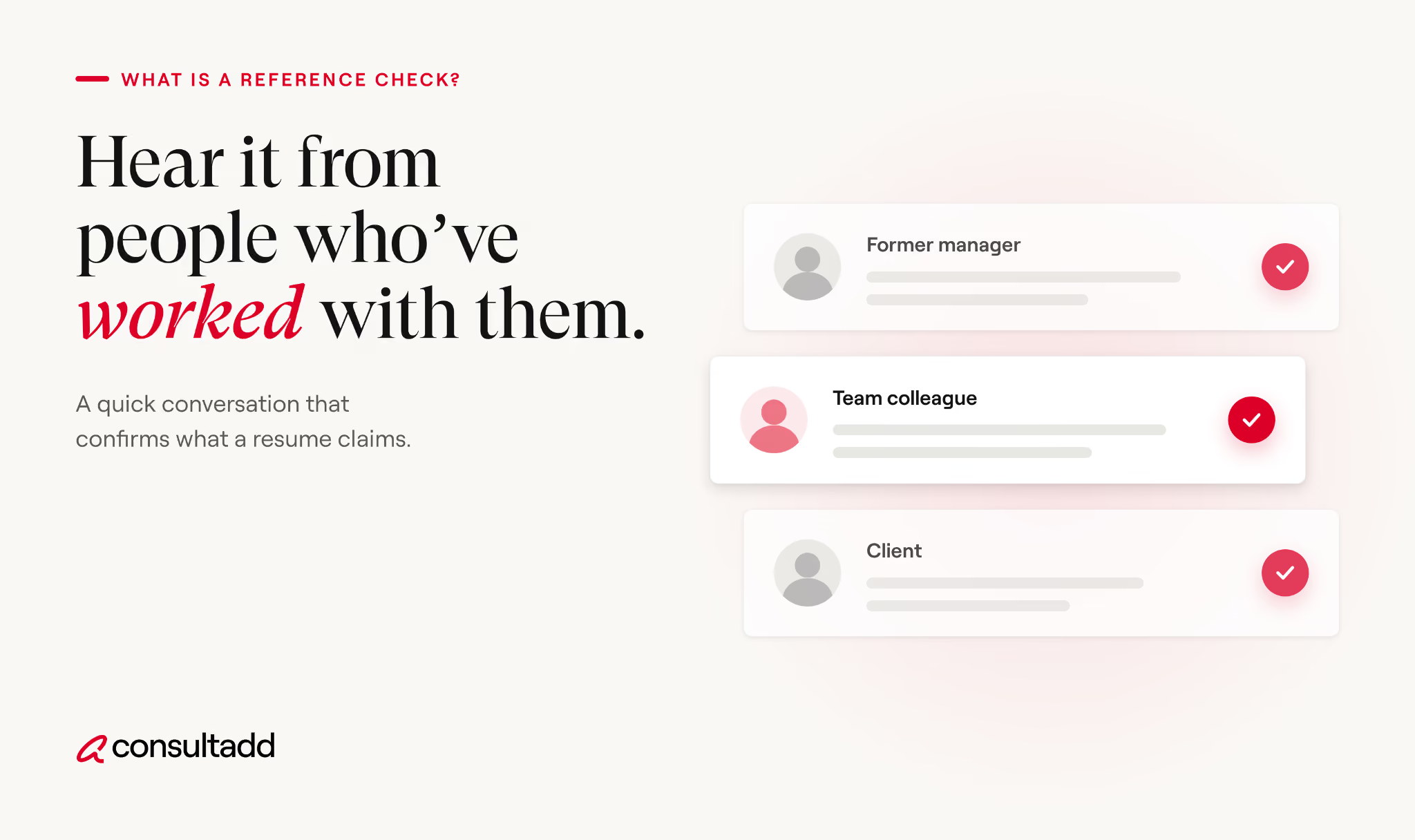
A reference check is a structured conversation, usually by phone or video, with someone who has seen a candidate's work firsthand.
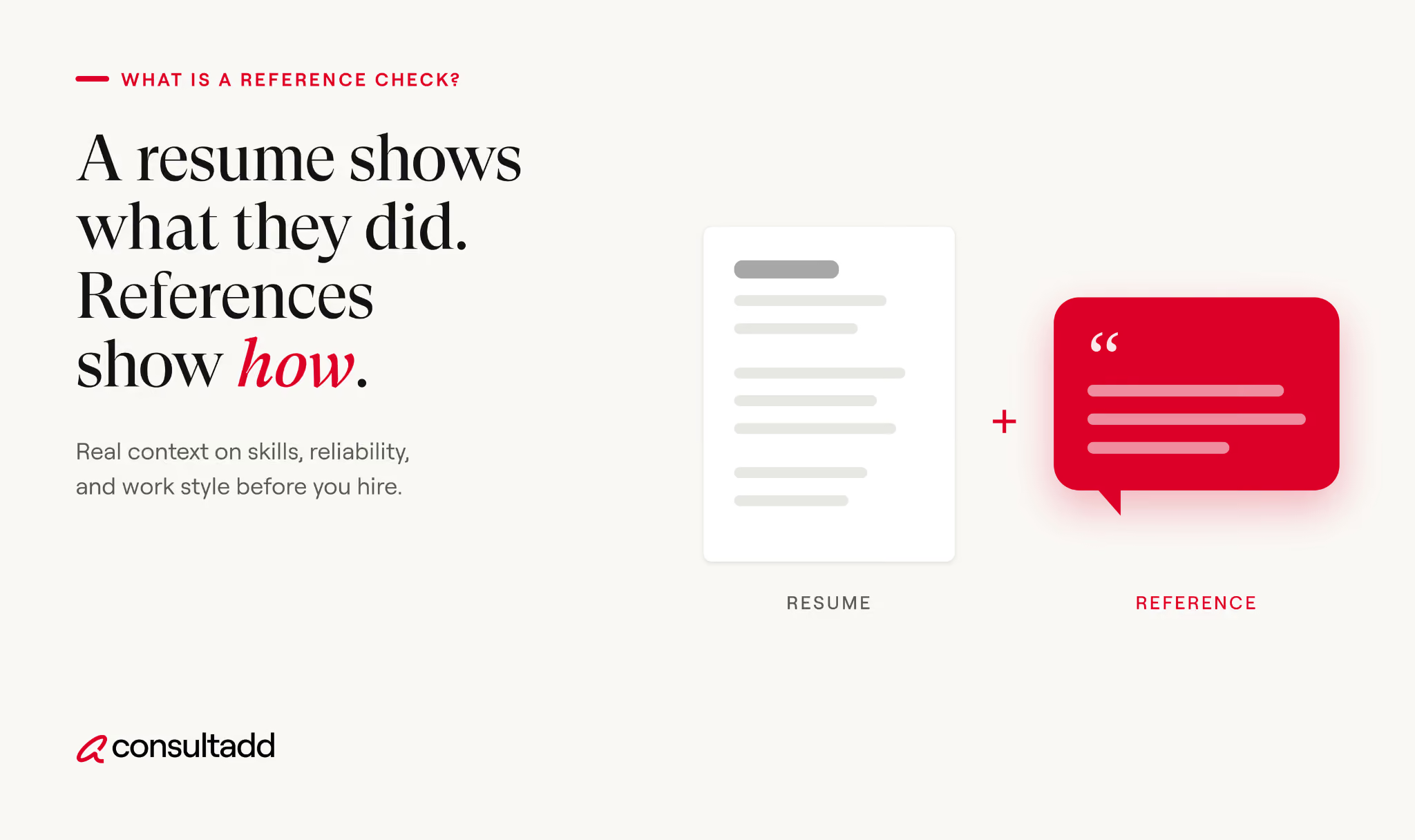
The goal is to confirm what came up in interviews and fill in what interviews can't show: how the person handles pressure, takes feedback, works with a team and follows through.
People often mix it up with two other checks. They answer different questions.
A background check can confirm that someone was a senior engineer for three years. Only a reference check can tell you whether they were the person the team relied on during outages.
Our guide to candidate vetting shows where each check sits in the hiring sequence.
How a reference check works, step by step
The process is similar at most companies, though the order and timing vary.
- The candidate gives consent and a list. Usually two or three references, ideally including at least one direct manager. Many employers ask for this near the final interview round.
- The employer reaches out. A recruiter or hiring manager emails each reference to set up a 15 to 20 minute call.
- The conversation happens. The caller confirms the reference's relationship to the candidate, then asks about specific projects, strengths, areas for growth and whether they'd work with the person again.
- Notes get written up the same day. Good teams use the same questions for every reference so answers can be compared fairly.
- The hiring team compares answers. They look for patterns across references and for anything that conflicts with what the candidate said in interviews.
- The decision is made. References rarely make a hire on their own, but they often confirm a decision or raise a question worth asking the candidate directly.
Timing matters. Reference checks are most useful before a final offer, or attached to a conditional offer, so the hiring team can still act on what they learn.
If you need a question list for step 3, our reference check questions guide has one.
Types of reference checks
Not every reference check looks the same. Here are the common forms and their trade-offs.
Backdoor references deserve a note of caution. Calling a candidate's current employer without permission can cost them their job.
Most careful employers either skip off-list calls or tell candidates up front that they may contact people beyond the list.
The rules that govern reference checks
Reference checks look like ordinary conversations, but federal and state law applies to both the employer asking and the employer answering. This section is general information, not legal advice.
1. When a third party makes the calls, the FCRA applies
If an employer runs its own reference calls, the Fair Credit Reporting Act generally isn't involved. That changes when the employer hires a screening company to do it.
The Federal Trade Commission has drawn a line between simply verifying facts the candidate provided and gathering information on character or personal traits through interviews.
In an FTC advisory opinion, staff noted that because reference checks almost always involve questions about character and personal characteristics, reports based on those interviews are likely to be investigative consumer reports.
That brings extra steps. Employers must make the standard FCRA disclosure and get written authorization before ordering any consumer report.
For an investigative consumer report, Section 606 adds another requirement: the employer must tell the candidate within three days of requesting the report, as the FTC explained in a separate advisory opinion.
The candidate also has the right to ask about the nature and scope of the investigation.
In practice, if your screening vendor offers reference checks, confirm that your disclosure forms cover investigative consumer reports before you add it to the package.
2. What former employers will and won't say
Many companies have a neutral reference policy. Their HR team confirms dates and job title, and sometimes pay with the employee's consent, but won't comment on performance. Managers are often told to send all reference calls to HR.
One reason is legal risk. The EEOC has said retaliation protections apply to former employees too, and gives the example that a supervisor can't give a false negative job reference to punish someone for an EEO complaint. Refusing a reference for the same reason can also count.
For hiring teams, a neutral response isn't a red flag. It's usually just company policy. Ask the candidate for another reference who can speak to their work, such as a former manager who has since moved to a different company.
3. Ask fair and consistent questions
The same anti-discrimination rules that apply in interviews apply to reference calls. Don't ask a reference about a candidate's age, health, family plans, religion or other protected characteristics, and don't let the conversation drift there.
Some states and cities also limit questions about salary history. If yours does, don't route that question through a reference. Using the same core questions for every candidate is the simplest way to keep checks fair and comparable.
Reference fraud and how to spot it
Fake references are more common than most hiring teams assume. A "former manager" turns out to be the candidate's friend, or a paid service provides a convincing voice on the phone. Remote hiring makes it easier, because nobody meets in person.
From the IT staffing side, the pattern shows up most in contract roles with short engagements, where references are hard to trace back to a real company. These checks catch most of it:
None of these proves fraud on its own. But if two or three show up together, verify independently before relying on anything the reference said.
The same caution applies to identity in remote interviews, which our guide to vetting developers for staff augmentation covers.
Reference checks in IT staffing
Staffing adds a layer. When a consultant is placed through an agency, there are often two reference checks: one by the staffing firm before submitting the profile, and sometimes another by the client before confirming the placement.
A few things are different in this setting:
- Contractors have many short engagements. The best reference is often the client-side manager from the most recent project, not the staffing firm that employed them.
- The staffing firm's check protects the client relationship. A recruiter who submits a consultant with an unverified reference risks the firm's standing with that client.
- References confirm skills that are hard to test. A reference can tell you whether the consultant actually led the migration on their resume or supported someone who did.
Reference checks are one part of a wider screening process.
Our pre-employment screening guide covers background checks, verification timelines and how to run checks in parallel.
How candidates should prepare their references
If you're job hunting, a little preparation makes your references far more useful.
Pick people who saw your work up close. A direct manager from your last role or most recent project is best. A peer who worked alongside you daily is a good second. Avoid friends and family unless the employer specifically asks for personal references.
Ask permission first, every time. A reference who's caught off guard gives a weaker answer. Ask whether they're comfortable and how they'd like to be contacted.
Brief them on the role. Send the job description and two or three projects you'd like them to remember. "Could you mention the reporting rebuild we did in 2025?" helps them give specific examples instead of general praise.
Keep contact details current. Use their current title and company, and a work email where possible. Out-of-date details slow the process and can look suspicious.
Plan for neutral-policy employers. If your last employer only confirms dates, say so up front and offer a former manager who has moved on, or a client who can speak to your work.
Thank them afterward. Let them know how it turned out. You'll probably ask them again.
Final thoughts on what a reference check is
A reference check is a short conversation with outsized value. It's the one step in hiring where someone other than the candidate describes how the person actually works.
For employers, getting it right means asking consistent questions, verifying that each reference is real, and checking the FCRA requirements before outsourcing the calls.
For candidates, it means choosing people who saw your work and giving them what they need to describe it well.
Start Strong With Consultadd
With 15 years in business and 5,000+ successful staffing engagements, we don’t just fill roles, we build reliability into your process. We’ve supported 65 staffing companies in the past year alone and maintain MSAs with industry leaders like Robert Half and TEKsystems.
Here’s what working with Consultadd looks like:
- Talent sourced in under 24 hours
- Ready-to-deploy candidates, vetted for experience and compliance
- Lower turnover risk: we match long-term goals, not just short-term needs
- Seamless compliance: visa, documentation, onboarding? Handled.
- Dedicated 1:1 account managers for responsive, personalized support
- Top 100 candidate matches delivered in the past year
- Strong partnerships with universities to tap into fresh, committed talent
- Post-placement support so your investment grows beyond day one
For candidates, your next opportunity is more than just a job title, it's a chance to build skills, gain experience, and move your career forward. At Consultadd, we connect technology professionals with projects and employers that align with their goals, whether they're looking for contract, contract-to-hire, or long-term opportunities.
The tech job market moves fast, but the right guidance can make all the difference. Ready to take the next step in your career journey? Explore Opportunities >>
Key takeaways
- A reference check is a conversation with someone who worked with the candidate, used to understand how they actually performed.
- It's separate from employment verification, which confirms facts, and background checks, which search records.
- Reference checks run by an outside screening company are likely investigative consumer reports under the FCRA, which require extra disclosures.
- Former employers can't give false negative references in retaliation for EEO complaints, which is why many only confirm dates and titles.
- Verify that every reference is real, and if you're a candidate, brief your references on the role and the projects you want them to mention.
FAQs
What is a reference check?
A reference check is when a prospective employer contacts people who have worked with a candidate, usually former managers, to learn about their job performance and working style. It typically happens near the end of the hiring process, before or alongside a job offer. The aim is to confirm what the employer learned in interviews.
What is the difference between a reference check and a background check?
A background check searches records such as criminal history, education and licenses. A reference check is a conversation with people who worked with the candidate and gives opinions and examples about how they performed. Many employers use both.
How long does a reference check take?
Each call usually takes 15 to 20 minutes. The whole process often takes a few business days, mostly because of scheduling. Delays usually happen when references are hard to reach or their contact details are out of date.
Can an employer check references without your permission?
Employers often ask for consent and a list of references, but some also contact people who aren't on the list. If a third-party screening company conducts the reference interviews, FCRA disclosure and authorization rules generally apply. State laws can add further requirements.
What can a former employer legally say in a reference?
Rules vary by state, but truthful information about job performance is generally allowed. A former employer can't give a false negative reference to retaliate against someone for a discrimination complaint. Because of that risk, many companies only confirm dates of employment and job title.
Do employers always check references?
Not always, but most do for professional and technical roles, especially for senior hires and contract placements. Some only check references for finalists. If an employer asks for references, assume they'll be contacted and prepare them in advance.

How To Vet Potential Candidates Before You Submit Them
Introduction
Every recruiter has had this happen. The resume matched the job description line for line, the candidate sounded sharp on the phone, and the client's first technical interview fell apart in ten minutes.
The fix is learning to vet potential candidates earlier, on the first call and before the submittal, not after the client has spent an hour on them.
This guide is a working checklist for that stage: what to confirm in a 15-minute screen, how to test resume claims, what to ask about availability and work authorization, and when a red flag should stop a submittal.
If you want the broader picture first, start with what vetting a candidate means and how it differs from screening.
TL;DR
- Vet potential candidates before the first submittal, because every weak candidate a client interviews costs you credibility on the next req.
- A 15-minute screening call should confirm skills, project depth, availability, rate and work authorization.
- Test resume claims by asking candidates to walk through one real project in detail, including their own part in it.
- Score every candidate the same way, so your submittal decisions don't depend on how the call felt.
- Pause the submittal when answers conflict with the resume, dates don't line up, or the candidate won't commit to a start date.
Why recruiters vet potential candidates before the first submittal
Clients judge a vendor on its first few submittals. Send two strong candidates and your next profiles get opened quickly. Send two who can't explain their own resumes and your submittals start sitting in the queue.
Early vetting also protects your time. A candidate who drops out at the offer stage, or turns out to need sponsorship the client can't offer, has already cost you sourcing hours, prep calls and interview coordination.
Most of those problems can be caught in the first conversation if you ask the right questions.
What to cover in the first screening call
The first call isn't an interview. It's a check on whether this person is worth a client's time. Keep it to 15 or 20 minutes and cover the same ground with everyone.
The core checks
Write the answers down while you talk. You'll need them for the scorecard and for the client write-up.
Questions to keep out of the call
Vetting should stick to what the job requires. The U.S. Equal Employment Opportunity Commission's guidance on prohibited employment policies and practices advises limiting pre-employment questions to information needed to judge whether someone is qualified.
In practice, don't ask about age, religion, marital status, family plans, national origin or disability.
Ask whether the candidate is authorized to work and needs sponsorship, not where they're from or what their citizenship is.
How to test resume claims without a full technical interview
You don't need to be an engineer to spot a padded resume. You need a few questions that are hard to answer with rehearsed lines.
The one-project walkthrough
Pick the most relevant project on the resume and ask the candidate to walk you through it. Listen for these details:
- What the system or product did, in plain terms
- How big the team was and who they reported to
- Which parts they built or owned themselves
- One problem that went wrong and how they fixed it
- The tools and versions they used, and why those were chosen
Candidates who did the work can usually answer all five without hesitating. Candidates who borrowed the project from a colleague's resume tend to stay general and repeat the job description back to you.
Check dates and titles against each other
Look for overlapping contracts, very short stints on long projects, or a title that jumps two levels between roles. None of these is a problem on its own. Ask about them directly and see whether the explanation makes sense.
If something still feels off, such as a voice that doesn't match an earlier call or a LinkedIn profile created last month, our guide to identifying and preventing fake candidates covers ID and video verification in more depth.
Availability, intent and rate alignment
Skills get most of the attention during vetting, but availability and intent cause more failed placements. A strong candidate who takes a counteroffer is still a failed submittal.
Ask these before you submit:
- Why are you looking? "My contract ends in three weeks" is a clear reason. "Just seeing what's out there" usually means a low chance of closing.
- What would make you stay where you are? This tells you how likely a counteroffer is to work.
- Have you been submitted to this client by anyone else? Get written right-to-represent before you send the profile, so you avoid duplicate-submission disputes.
- Is the rate you gave firm? Confirm it again right before the submittal, not only at the offer stage.

Work authorization and checks at the shortlist stage
Confirm work authorization early, but handle the documents at the right point in the process.
At the screening stage, ask whether the candidate is authorized to work in the U.S. and whether they'll need sponsorship.
Before start, the employer of record completes Form I-9 to verify identity and work authorization, as explained in USCIS's Form I-9 guidance.
If your desk places a mix of visa holders and citizens, our breakdown of work authorization requirements explains what each category involves.
Background checks run through a screening company come with their own rules. The FTC's guide to background checks for employers explains the disclosure and written-permission requirements.
Reference calls fit here too, and they work best with specific questions, not "would you rehire them?" Our guide on reference check questions has examples.
A simple scorecard for potential candidates
A scorecard stops you from submitting someone just because the call went well. Score each area from 1 to 3 right after the call, while your notes are fresh.
A workable rule: submit candidates who score 14 or higher out of 18 with no 1s in must-have skills or work authorization. Adjust the threshold for your clients, but use the same one for every candidate on the same req.
Red flags that should pause a submittal
One red flag doesn't always mean rejection. It means you ask one more question before the profile goes to the client.
When to stop vetting and submit
Vetting has a cost too. Every extra round slows your submittal, and on a competitive req the first strong profile often gets the interview.
Stop when you have confirmed the must-have skills through a real project, the start date and rate fit the client's range, work authorization matches the requirement, and you have written right-to-represent.
That's enough to vet potential candidates well at the submittal stage. The client's own interviews and the final background checks cover the rest.
If you'd rather receive candidates who already pass these checks, here's what pre-vetted candidates should mean and how to tell whether a vendor's vetting is real.
Start Strong With Consultadd
With 15 years in business and 5,000+ successful staffing engagements, we don't just fill roles, we build reliability into your process. We've supported 65 staffing companies in the past year alone and maintain MSAs with industry leaders like Robert Half and TEKsystems.
Here's what working with Consultadd looks like:
- Talent sourced in under 24 hours
- Ready-to-deploy candidates, vetted for experience and compliance
- Lower turnover risk: we match long-term goals, not just short-term needs
- Seamless compliance: visa, documentation, onboarding? Handled.
- Dedicated 1:1 account managers for responsive, personalized support
- Top 100 candidate matches delivered in the past year
- Strong partnerships with universities to tap into fresh, committed talent
- Post-placement support so your investment grows beyond day one
For candidates, your next opportunity is more than just a job title, it's a chance to build skills, gain experience, and move your career forward. At Consultadd, we connect technology professionals with projects and employers that align with their goals, whether they're looking for contract, contract-to-hire, or long-term opportunities.
The tech job market moves fast, but the right guidance can make all the difference. Ready to take the next step in your career journey? Explore Opportunities >>
Key takeaways
- Vetting potential candidates before submittal protects your standing with the client on every future req.
- A short, consistent screening call covering skills, project depth, availability, rate and work authorization catches most problems early.
- A one-project walkthrough is the fastest way to test resume claims without a full technical interview.
- Score every candidate on the same criteria and set a clear submittal threshold.
- Treat red flags as a reason for one more question, and get written right-to-represent before any profile goes out.
FAQs
How do you vet a potential candidate quickly?
Run a 15 to 20 minute screening call with the same questions for every candidate. Confirm must-have skills through one real project, then check start date, rate, other processes and work authorization. Score the call right away so you can compare candidates fairly.
What questions should you ask when screening a candidate?
Ask which required skills they've used recently and on what project, what their own part was, when they could start, what rate they're targeting, and whether they're authorized to work and need sponsorship. Keep every question tied to the job's requirements.
What questions are illegal to ask during candidate screening?
Avoid questions about age, religion, marital status, pregnancy or family plans, national origin and disability. The EEOC advises keeping pre-employment questions to what's needed to judge whether someone is qualified. State and local laws may add limits, such as salary history bans, so check the rules where you hire.
How can recruiters tell if a resume is exaggerated?
Ask the candidate to walk through one project in detail, including team size, their own tasks and a problem they solved. People who did the work give specific answers without much hesitation. Vague "we did" answers and dates that don't add up are signs to dig deeper.
Should recruiters check references before submitting a candidate?
For most contract roles, references come after the client shows interest, but it helps to confirm the candidate can provide them early. For senior roles or new clients, a quick reference call before submittal can be worth the time. Use specific questions about past projects, not generic ones.
How long should candidate vetting take before a submittal?
For most contract tech roles, the recruiter's part can be done within a day: one screening call, a short follow-up if needed, and right-to-represent in writing. Background checks and I-9 verification come later, closer to the offer and start date.