
Hiring & Recruitment

What Is Workforce Management? Meaning, Process, and Tools
Introduction
A contact center opens on Monday with eight agents when it needs fourteen. Calls back up, customers hang up, and by Thursday the same center is overstaffed and paying for idle time.
That gap between the people you have and the work in front of you is what workforce management exists to close.
So, what is workforce management? It's the set of processes and tools a business uses to put the right number of people, with the right skills, on the right work at the right time. In practice, that means forecasting demand, building schedules, tracking time, handling absences, and staying compliant with labor rules.
This guide covers how the process works, its core components, real examples, and what to look for in software.
TL;DR
- Workforce management (WFM) matches staffing levels and skills to actual demand, day by day and week by week.
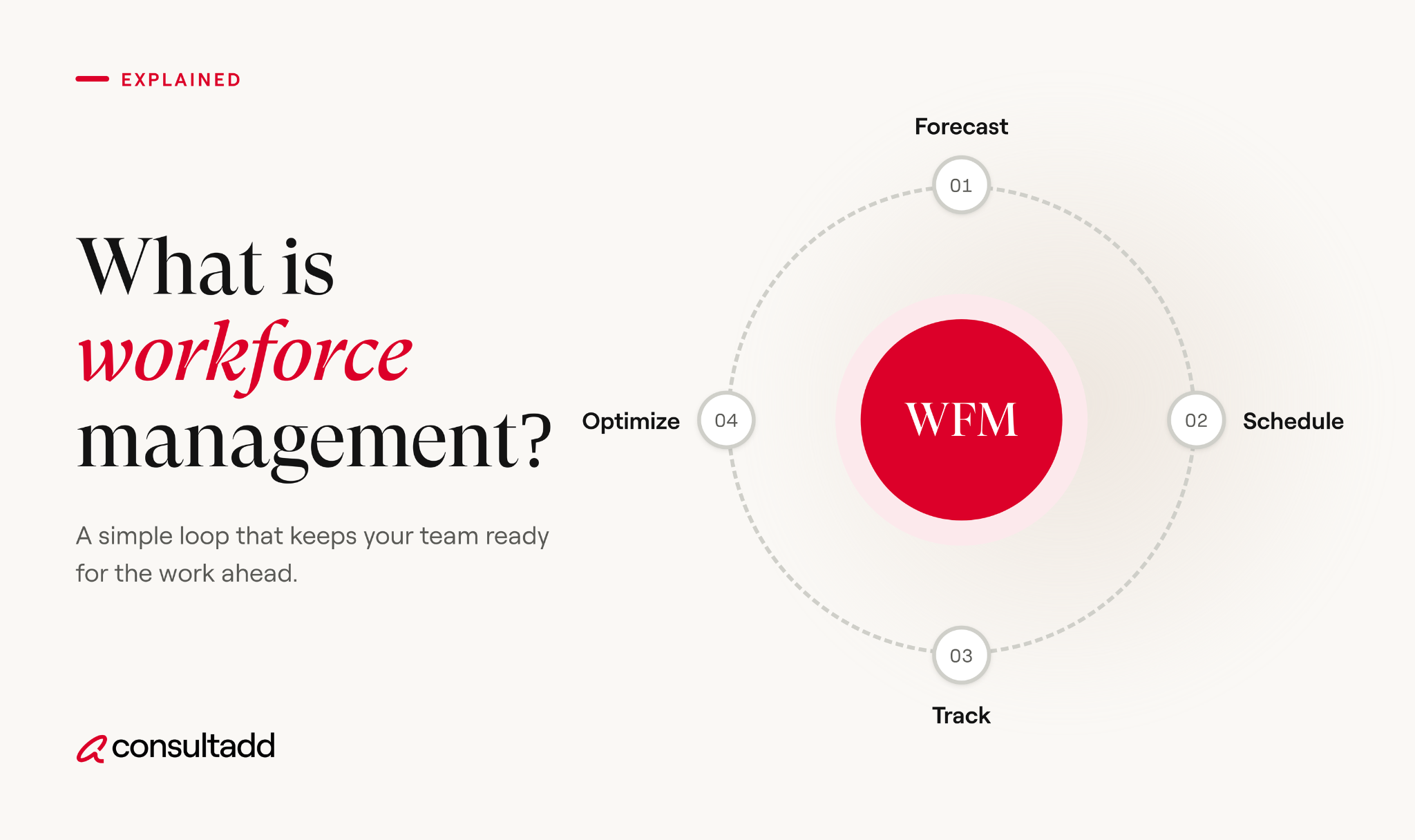
- The process runs in a loop: forecast demand, schedule people, track time, manage absences, then measure and adjust.
- Core components include forecasting, scheduling, time and attendance, leave management, and compliance.
- WFM is operational and short-term, which separates it from long-range workforce planning and talent management.
- Good WFM software helps, but it only works when the data going in is accurate and managers act on it.
What is workforce management?
Here's a simple workforce management definition: WFM is how an organization makes sure it has enough of the right people working when the work needs doing, at a cost it can afford.
The term came from shift-heavy industries. It started in contact centers and other service businesses with large numbers of hourly workers, where a few too many or too few people on a shift has an immediate cost.
Today it applies to any organization that schedules people against changing demand, including hospitals, retailers, logistics firms, and IT services teams.
Gartner tracks WFM as its own software market, with separate categories for areas like contact center workforce management solutions and retail workforce management applications. That split tells you something useful.
WFM looks different depending on the work, but the basic job stays the same.
How the workforce management process works
The workforce management process is a cycle, not a one-time project. Each round feeds data into the next.
1. Forecast demand
Start by estimating how much work is coming. A contact center looks at call volume by hour. A retailer looks at foot traffic and sales. An IT services team looks at project pipelines and ticket volume.
Historical data is the usual starting point, adjusted for seasonality, promotions, product launches, and known events.
2. Build schedules
Turn the forecast into shifts or assignments. A good schedule covers demand, respects skills and certifications, follows labor rules, and accounts for employee availability and preferences.
This is where most of the tradeoffs happen. Covering every peak perfectly usually means paying for slack somewhere else.
3. Track time and attendance
Record when people actually work. This feeds payroll, shows where schedules and reality drifted apart, and creates the records labor law requires.
4. Manage leave and absences
Handle time-off requests, sick days, and no-shows. The goal is to approve leave with a clear view of how it affects coverage, instead of discovering the gap on the day.
5. Measure and adjust
Compare forecast to actual demand, and schedule to actual attendance. Then feed what you learned into the next forecast. Teams that skip this step tend to repeat the same staffing mistakes every quarter.
Core components of workforce management
Gartner breaks WFM software into five core functions: labor scheduling, time and work data collection, leave management, task and activity management, and time and attendance.
Most organizations add forecasting and compliance on top. Here's how the components of workforce management fit together.
Workforce management vs workforce planning vs talent management
These three terms get mixed up a lot, and they answer different questions.
Workforce management works inside the boundaries of the other two sets.
If you want the long-range view, our guide on what strategic workforce planning is and how to build a plan covers it in depth.
For hiring, development, and retention, see our strategic talent management framework.
Benefits of workforce management
The benefits of workforce management show up in a few concrete places.
Labor costs become more predictable. Overtime, idle time, and last-minute contractor spend all drop when schedules match demand more closely.
Service gets more consistent. Customers wait less when staffing tracks peak hours instead of a flat average.
Compliance risk goes down. Accurate time records and automated rule checks make it harder to miss overtime, breaks, or required records.
Employees often have a better week, too. Fair schedules posted in advance, easier shift swaps, and fewer surprise double shifts reduce burnout. That said, WFM done badly, with rigid schedules and no input from staff, can push turnover the other way.
Workforce management examples by industry
Workforce management examples look different by industry, but they all deal with the same tension between demand and cost.
Contact centers forecast call and chat volume in 15 or 30-minute intervals and schedule agents to match. They track schedule adherence closely, because one late lunch break can stretch wait times.
Retail schedules store associates around foot traffic, deliveries, and promotions. Many retailers also plan tasks like restocking for quieter hours.
Healthcare has to meet minimum staffing ratios and match credentials to every shift. A schedule that looks fine on headcount can still fail if the right certifications aren't on the floor.
IT services and consulting apply WFM to projects rather than shifts. The question is whether you have enough engineers with the right skills when a project kicks off, and what happens to them when it ends.
This is where contract and contract-to-hire talent often fill the gap between steady demand and spikes.
Common workforce management challenges
Bad data is the most common problem. A forecast built on incomplete history or messy time records produces confident-looking schedules that are wrong.
Compliance is the next one. In the U.S., the Fair Labor Standards Act requires covered employers to keep records for each non-exempt worker, including hours worked each day and total hours each workweek.
The U.S. Department of Labor's Fact Sheet #21 lists what those records must include. State and local rules, like predictive scheduling laws, add more layers.
Other common challenges include:
- Managing a mixed workforce of full-time employees, contractors, and remote staff in one view
- Skills gaps that make headcount look fine while key roles stay uncovered
- Managers overriding schedules informally, so the system no longer reflects reality
- Tools that don't integrate with payroll or HR systems
Skills gaps deserve a closer look, since they hide inside healthy-looking numbers.
Our post on understanding the skill gap and how to address it goes deeper on this.
How to choose workforce management software
Workforce management software ranges from simple scheduling apps to full suites built into HR platforms. The right choice depends on your workforce size, shift complexity, and compliance needs. Use this checklist when comparing options.
Run a pilot with one team before rolling out company-wide. Problems with data quality and manager habits show up fast in a small pilot and are much harder to fix at scale.
Where staffing partners fit into workforce management
Even a strong WFM program runs into moments where the forecast says you need people you don't have. A new client project lands, a key team member resigns, or demand spikes faster than internal hiring can move.
That's the gap staffing partners fill. In our work with IT and staffing clients, the requests that land on our desk usually follow a WFM signal: a forecast showing a skills shortfall six weeks out, or a project start date that internal recruiting can't meet.
Teams that track that data well tend to call earlier, which gives everyone more time to find the right fit.
Contract-to-hire is a common middle ground here. It lets you cover immediate demand and evaluate someone before committing long term.
Our breakdown of contract-to-hire pros and cons explains when it works and when it doesn't.
Conclusion
What is workforce management, in one line? It's the ongoing work of matching people to demand, and then checking whether you got it right.
Start small if you're building it from scratch. Clean up your time and attendance data, compare last quarter's schedules to actual demand, and fix the biggest mismatch first. Software helps you scale, but the habit of measuring and adjusting is what makes WFM work.
Start Strong With Consultadd
With 15 years in business and 5,000+ successful staffing engagements, we don't just fill roles, we build reliability into your process. We've supported 65 staffing companies in the past year alone and maintain MSAs with industry leaders like Robert Half and TEKsystems.
Here's what working with Consultadd looks like:
- Talent sourced in under 24 hours
- Ready-to-deploy candidates, vetted for experience and compliance
- Lower turnover risk: we match long-term goals, not just short-term needs
- Seamless compliance: visa, documentation, onboarding? Handled.
- Dedicated 1:1 account managers for responsive, personalized support
- Top 100 candidate matches delivered in the past year
- Strong partnerships with universities to tap into fresh, committed talent
- Post-placement support so your investment grows beyond day one
For candidates, your next opportunity is more than just a job title, it's a chance to build skills, gain experience, and move your career forward. At Consultadd, we connect technology professionals with projects and employers that align with their goals, whether they're looking for contract, contract-to-hire, or long-term opportunities.
The tech job market moves fast, but the right guidance can make all the difference. Ready to take the next step in your career journey? Explore Opportunities >>
Key takeaways
- Workforce management keeps staffing levels and skills matched to real demand.
- The process is a loop of forecasting, scheduling, time tracking, leave management, and adjustment.
- WFM is short-term and operational, unlike strategic workforce planning or talent management.
- Accurate time data and labor law compliance sit at the center of any WFM program.
- Staffing partners and contract-to-hire models help when demand outpaces internal hiring.
FAQs
1. What does a workforce management team do?
A WFM team forecasts workload, builds schedules, monitors adherence during the day, and reports on staffing performance. In larger organizations, the team often splits into forecasters, schedulers, and real-time analysts. They work closely with operations managers and payroll.
2. Is workforce management part of HR?
It overlaps with HR but usually sits in operations. HR owns hiring, policies, and employee relations, while WFM focuses on daily staffing and scheduling. The two share data, especially for time tracking, leave, and payroll.
3. What is WFM in a call center?
In a call center, WFM means forecasting contact volume in short intervals and scheduling agents to meet service-level targets. Teams also track schedule adherence in real time and shift breaks or tasks when volume changes unexpectedly.
4. What skills does a workforce manager need?
Strong analytical skills come first, since forecasting relies on data and basic statistics. A workforce manager also needs to understand labor rules, use WFM software well, and communicate schedule changes clearly to managers and staff.
5. Does workforce management apply to contract and remote workers?
Yes. Many organizations now track contractors, remote employees, and on-site staff in the same system. The tracking rules and legal obligations can differ by worker type, so check classification and recordkeeping requirements for each group.
6. Can small businesses benefit from workforce management?
They can, often with simple tools. A small business with hourly staff gains a lot from basic scheduling software and accurate time tracking. Full enterprise WFM suites usually only make sense once shift complexity or headcount grows.
.png)
How Staffing Agencies Handle Vetting and Onboarding
Introduction
A placement can go wrong in two places.
The candidate turns out not to have the skills they claimed, or the right person shows up on day one with no laptop, no system access, and an unfinished I-9. The first is a vetting problem. The second is an onboarding problem. Both land on the hiring manager.
This guide explains how staffing agencies handle candidate vetting and the onboarding process, from the first recruiter call to the 90-day check-in. It's written for hiring teams working with a staffing partner and for candidates who want to know what to expect.
It covers who does what at each stage, the legal steps agencies follow, and where the process tends to break.
TL;DR
- Vetting and onboarding are one workflow: what the agency verifies before submission decides how smoothly day one goes.
- Good agencies vet in a set order, starting with a clear requirement, then screening, skills validation, references, and work authorization.
- Background checks run by third parties come with legal steps, including written consent and notices before any adverse decision.
- On contract placements, the agency is usually the employer of record, so it handles the I-9, tax forms, payroll setup, and agreements.
- Onboarding doesn't end on day one. Structured check-ins through the first 90 days catch problems while they're still fixable.
How staffing agencies handle candidate vetting and onboarding
Most people picture vetting as something that happens before the interview and onboarding as something that happens after the offer.
In practice, a good agency treats them as one continuous process. Work authorization confirmed during vetting means no surprises during the I-9. A start date confirmed during screening means the client can order equipment on time.
Here's how responsibilities usually split on a contract placement:
For the full recruiting flow before this point, our IT staffing process guide covers intake through placement in eight steps.
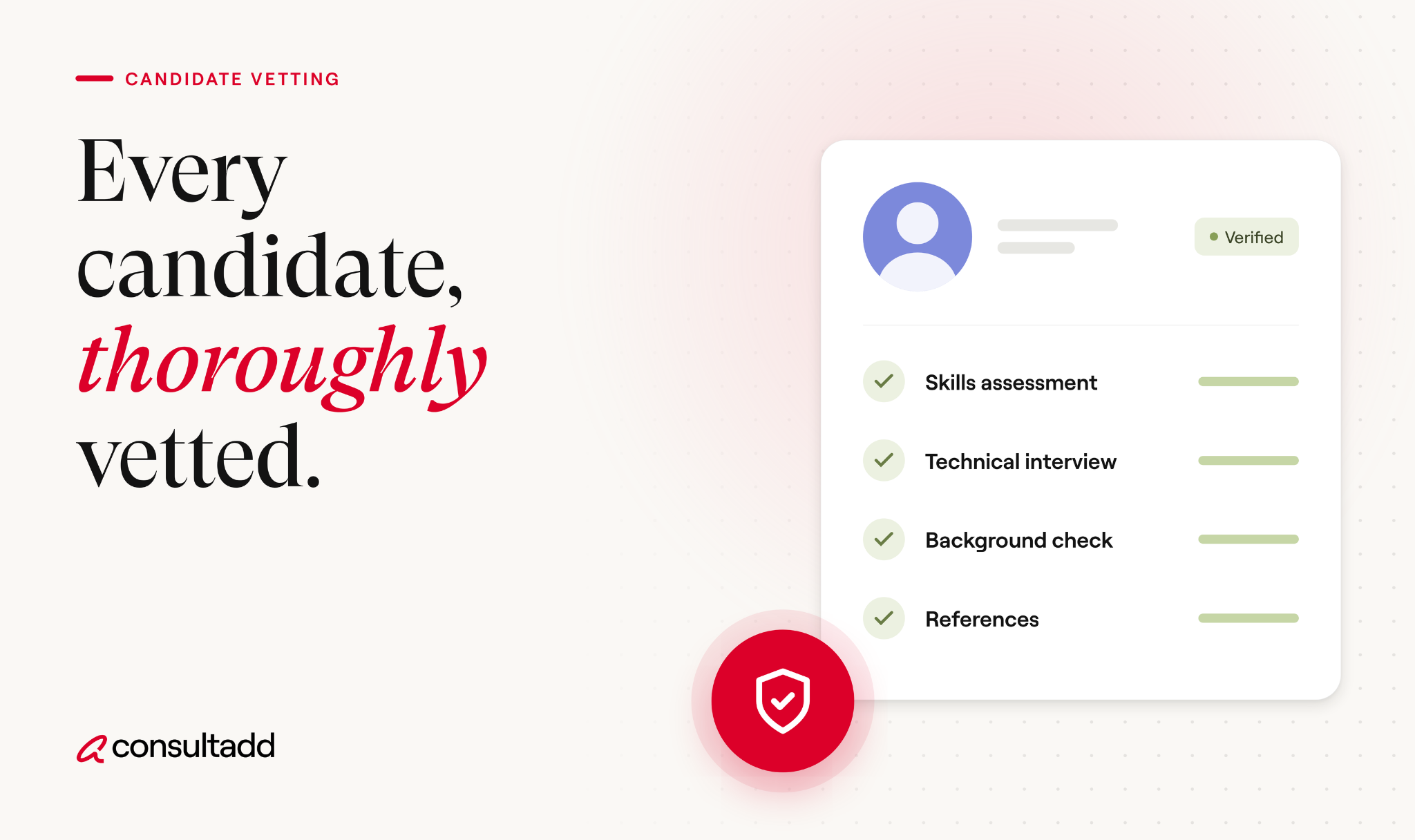
The candidate vetting process, stage by stage
We've covered vetting in depth in our guide to the vetting of candidates, so this section stays focused on the order an agency runs things and why that order matters for onboarding.
Why work authorization comes early
An agency that checks work authorization only at the offer stage is setting up a failed start. If a candidate's employment authorization document expires two months into a six-month assignment, everyone should know that before the interview, not after.
Our guide on whether you're legally authorized to work in the US explains the categories agencies check.
What "pre-vetted" should mean
Some agencies say their candidates are pre-vetted when they've only read the resume. Ask which of the checks above happened before submission.
Our explainer on pre-vetted candidates lists the questions that separate real vetting from a label.
Background checks and the legal steps agencies follow
Background checks are where staffing agencies take on real legal responsibility. When a third-party screening company runs the check, the Fair Credit Reporting Act applies.
The FTC's guidance on using consumer reports for employment explains the requirements.
If the decision stands, notify the candidate and include required information about the screening company and their rights
The depth of the check should match the role. A developer working on internal tools needs a different screen than someone with access to payment systems or patient data.
Clients often set the standard, and the agency applies it consistently to every candidate in that role. State and local laws, including fair chance hiring rules in some cities and states, can add timing limits on when criminal history can be considered.
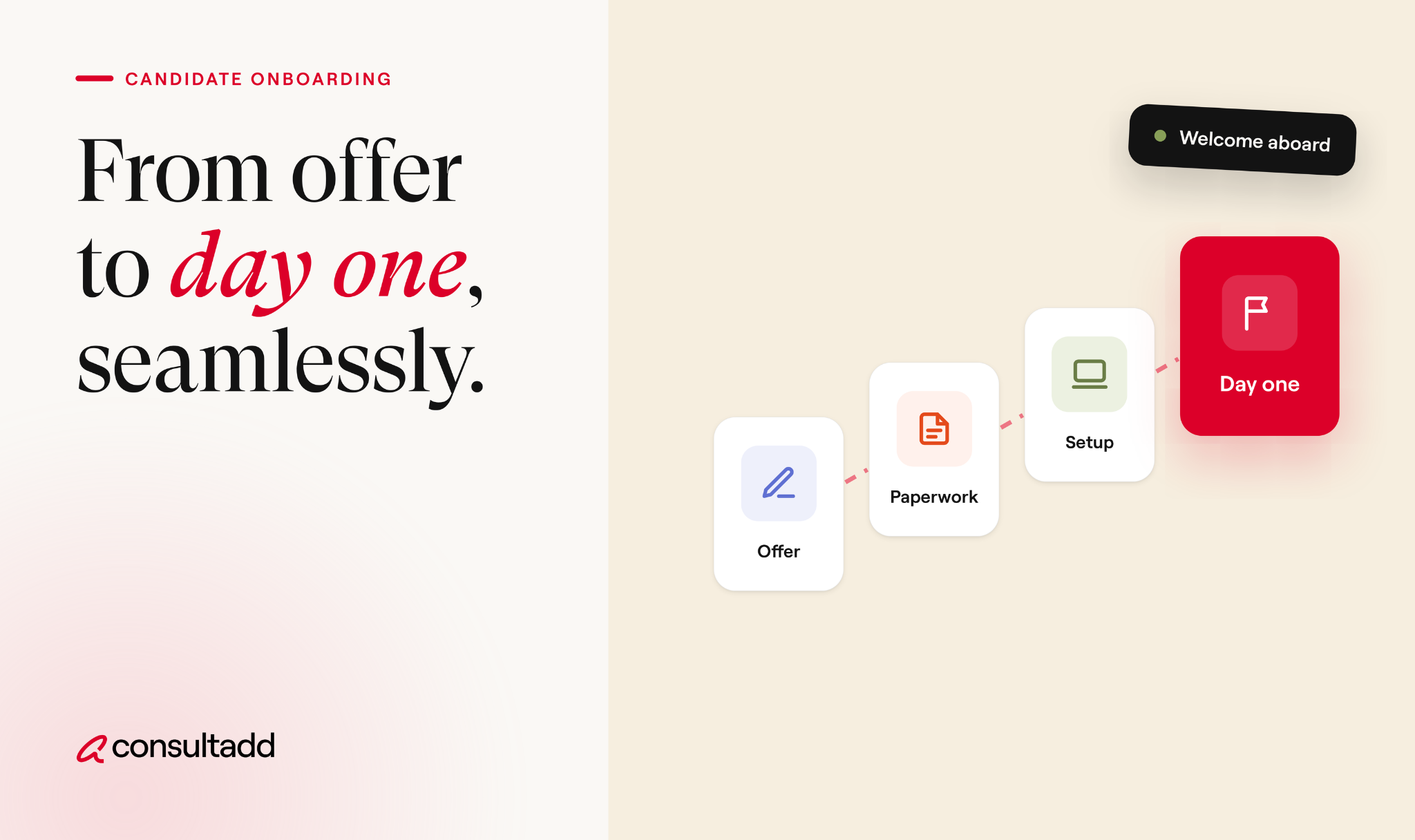
Employer of record onboarding: from offer to day one
On contract and contract-to-hire placements, the staffing agency is usually the legal employer. That means the agency, not the client, owns the core employment paperwork.
USCIS requires employers to complete Form I-9 for every person they hire in the United States, and the deadlines are short.
For remote workers, agencies enrolled in E-Verify and in good standing can use the DHS alternative procedure to review documents remotely.
Others need someone to examine documents in person, which takes planning for a remote start.
What the client needs ready before day one
The agency can finish every form and still lose the first week if the client side isn't ready. Before the start date, the client should have:
- System accounts created and tested, including email, code repositories, and ticketing tools
- Hardware shipped or set up, with security software installed
- A named manager and a buddy for day-to-day questions
- The first week's work defined, even if it's small
- Building access or VPN credentials, depending on the setup
For software teams, our software development team augmentation guide includes a week-by-week integration plan for new developers.
The first 90 days after placement
The agency's role doesn't end when the contractor logs in. The first few weeks are when small problems either get fixed or turn into early exits.
Most agencies also offer a replacement guarantee if a placement doesn't work out early on. Terms vary, so get the window and conditions in writing before the first placement.
Where vetting and onboarding break down
Most failed placements trace back to a handful of gaps. Recruiters see the same ones repeatedly.
A real pattern from contract IT staffing:
- A selected candidate on an EAD had a card expiring three weeks after the planned start.
- Because the agency caught it during screening, the client pushed the start date and the renewal was filed early.
- Caught at the I-9 stage instead, the same issue would have meant a pulled offer and a restarted search.
Questions to ask about a staffing agency's onboarding process
Before signing with a staffing partner, ask these. The answers show whether vetting and onboarding are real processes or just promises.
- Which checks happen before a candidate is submitted, and which happen after selection?
- How do you confirm work authorization, and when?
- Who orders background checks, and how do you handle adverse action notices?
- Who completes the I-9, and how do you handle remote employees?
- What do you need from us before the start date?
- How often do you check in during the first 90 days, and with whom?
- What's your replacement guarantee, and what are its conditions?
If an agency answers question one with "we review every resume," keep looking.
Judging a partner's vetting and onboarding
You don't see most of a staffing agency's work. What you see are the results: candidates who can do the job, start dates that hold, and contractors who stay.
That's the most reliable way to judge how staffing agencies handle candidate vetting and the onboarding process.
Track three things over your first few placements: how many submitted candidates passed your technical interview, how many started on the agreed date, and how many were still in place at 90 days. If those numbers are strong, the process behind them is working.
If they aren't, the questions above will show you where it's breaking.
For more on a single recruiter owning the whole journey, see our guide to full cycle recruiting.
Start Strong With Consultadd
With 15 years in business and 5,000+ successful staffing engagements, we don't just fill roles, we build reliability into your process. We've supported 65 staffing companies in the past year alone and maintain MSAs with industry leaders like Robert Half and TEKsystems.
Here's what working with Consultadd looks like:
- Talent sourced in under 24 hours
- Ready-to-deploy candidates, vetted for experience and compliance
- Lower turnover risk: we match long-term goals, not just short-term needs
- Seamless compliance: visa, documentation, onboarding? Handled.
- Dedicated 1:1 account managers for responsive, personalized support
- Top 100 candidate matches delivered in the past year
- Strong partnerships with universities to tap into fresh, committed talent
- Post-placement support so your investment grows beyond day one
For candidates, your next opportunity is more than just a job title, it's a chance to build skills, gain experience, and move your career forward. At Consultadd, we connect technology professionals with projects and employers that align with their goals, whether they're looking for contract, contract-to-hire, or long-term opportunities.
The tech job market moves fast, but the right guidance can make all the difference. Ready to take the next step in your career journey? Explore Opportunities >>
Key takeaways
- Staffing agencies treat vetting and onboarding as one process, because checks done early prevent day-one problems.
- Work authorization and skills should be confirmed before a candidate is submitted, not at the offer stage.
- Background checks through a third party require written consent and proper notices before any adverse decision.
- On contract placements, the agency is usually the employer of record and handles the I-9, tax forms, payroll, and agreements.
- Structured check-ins through the first 90 days, plus a written replacement guarantee, protect both the client and the worker.
FAQs
How do staffing agencies vet candidates?
Most agencies run a recruiter screen, a skills assessment, a work authorization review, and reference checks before submitting a candidate. A background check usually follows once the client selects someone. The depth of each step depends on the role and the client's requirements.
Do staffing agencies do background checks?
Yes, most do, especially for contract roles where the agency is the employer. When a third-party screening company runs the check, the agency must get written consent and follow FCRA notice rules before making any adverse decision. Clients usually set the level of screening required for the role.
Who completes Form I-9 for a staffing agency worker?
On contract placements, the staffing agency is usually the employer, so it completes the I-9. The worker finishes Section 1 by their first day, and the agency completes Section 2 within three business days of the start date. On direct-hire placements, the client completes it.
How long does staffing agency onboarding take?
The paperwork itself can often be finished in a few days if documents are ready. Background checks and client-specific requirements like security training can add time. Starting consent and document collection on the day a candidate is selected keeps the start date on track.
What happens if a placed candidate doesn't work out?
Many agencies offer a replacement guarantee within a set period after the start date. The agency finds a replacement candidate, usually at no extra fee. Terms vary, so confirm the window and conditions in your agreement.
What documents do I need to start a job through a staffing agency?
You'll typically need identity and work authorization documents for the I-9, tax withholding forms, and direct deposit details. Many agencies also ask you to sign a confidentiality agreement and consent to a background check. Some clients require extra items, such as a drug screen or security training.
.png)
Recruitment Process Outsourcing Companies: How to Choose
Introduction
Most companies start looking at recruitment process outsourcing companies after the same quarter. Hiring targets doubled, the talent acquisition team didn't, and the agency invoices started to look like a second payroll.
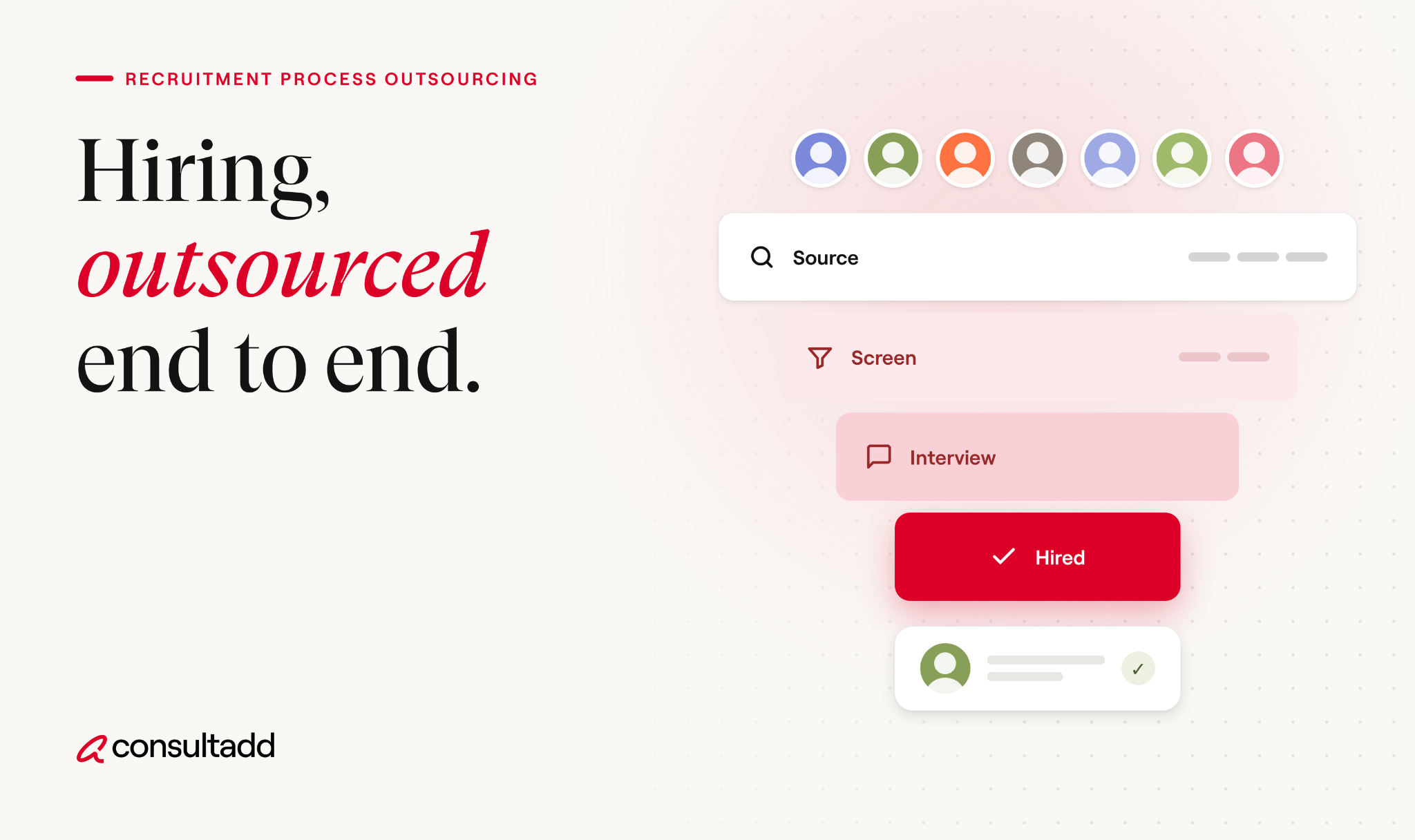
Recruitment process outsourcing companies take over part or all of your hiring function. That can mean sourcing, screening, interview scheduling, offers, and onboarding, usually under your employer brand.
The hard part isn't understanding what RPO is. It's picking the right provider, because they differ a lot in size, specialty, pricing, and how much of your process they want to own.
This guide walks through the types of RPO companies, how they charge, and what to ask before you sign.
TL;DR
- Recruitment process outsourcing companies run part or all of your recruiting, while a staffing agency fills individual roles one at a time.
- RPO providers fall into a few types: large global firms, staffing companies with RPO practices, and specialist or mid-market providers.
- Engagements come in three main shapes: end-to-end, project-based, and on-demand or modular.
- Pricing usually combines a management fee with a per-hire fee, so compare proposals on total cost at your expected volume.
- Put measurable service levels, data ownership, and exit terms in the contract before the program starts.
What recruitment process outsourcing companies do
An RPO provider acts as your recruiting team, or as an extension of it. Its recruiters usually represent your company to candidates, work inside your applicant tracking system, and report on the same hiring metrics your internal team would.
If you want the case for outsourcing in the first place, our breakdown of the benefits of outsourcing recruitment and selection covers cost-per-hire and time-to-fill in detail.
Here, the focus is on choosing a provider:
RPO vs staffing agency
The two get confused because both find candidates. The difference is what you're buying.
Types of RPO companies
"RPO company" covers very different businesses. Knowing which type you're talking to helps you judge whether its proposal fits your size and roles.
Large global RPO providers
Everest Group publishes an annual RPO PEAK Matrix assessment that rates providers as Leaders, Major Contenders, or Aspirants.
For its 2026 assessment, Everest Group analyzed more than 50 RPO providers. Several of the best-known names were named Leaders in 2026:
- Cielo. Based in Milwaukee, it was named a Global Leader for the 14th consecutive year, according to its announcement.
- Korn Ferry. Named a Global Leader, with recognition in the US, UK, and India assessments. Its RPO sits alongside its broader talent consulting business.
- AMS. London-based, named a Global Leader in 2026, its highest evaluation to date per the company.
- KellyOCG. The outsourcing arm of Kelly, named a Global and US Leader. The company reports RPO clients in more than 70 countries.
- PeopleScout. TrueBlue's talent solutions brand, named a Global Leader, with strength in manufacturing, retail, healthcare, and the public sector.
- Randstad Sourceright. Named a Leader in Everest Group's US, UK, and India assessments.
These rankings are a useful shortlist for large programs. They tell you less about fit for a 200-person company hiring 40 engineers a year.
Staffing firms with RPO practices
Many staffing companies offer RPO alongside contract and direct-hire staffing. The upside is one partner for both permanent hiring and contingent labor.
The risk is a "program" that's really the agency's normal desk billed differently. Ask who the dedicated recruiters are and whether they work only on your account.
Specialist and mid-market providers
Smaller RPO firms often focus on one industry or role family, such as technology, healthcare, or sales.
They tend to accept lower volumes and give you more senior attention. Check their references in your exact role family, not just their client logos.
RPO engagement models
Beyond the type of company, you'll choose how much of your process to hand over.
A pattern recruiters see often: a company signs end-to-end RPO when it really had a sourcing problem. Its internal recruiters were good at closing candidates but had no time to find them.
A modular engagement covering sourcing alone would have cost less and kept the closing in-house.
Our guide to choosing a candidate sourcing solution helps you check which problem you actually have.
How RPO providers price their services
RPO pricing is rarely published, and proposals are hard to compare because providers mix structures. Most use some combination of these.
To compare proposals fairly, model each one at three volumes: your expected hiring, 30 percent below it, and 30 percent above it.
A proposal that looks cheapest at your plan can be the most expensive if hiring slows mid-year. Also ask what's excluded. Job board spend, assessment tools, and background checks are often billed separately.
How to evaluate RPO providers
Send every shortlisted provider the same questions so you can compare answers side by side.
- Who will work on our account, and what share of their time is dedicated to us?
- What's your experience with our role types and hiring volume, and can we speak to a client of similar size?
- Will you use our applicant tracking system, or yours?
- Who owns candidate data and the talent pipeline if the contract ends?
- How do you source candidates beyond job board applicants?
- What service levels will you commit to, and what happens if you miss them?
- How do you handle hiring managers who are slow to give feedback?
- What does the implementation plan look like week by week?
- What are the exit terms and notice period?
Question seven matters more than it looks. Slow hiring manager feedback is one of the most common reasons RPO programs miss time-to-fill targets, and a good provider will have a clear answer for it.
Metrics to put in the contract
Agree on a short list of measurable service levels instead of a long list nobody tracks:
- Time from intake to first qualified slate
- Time to fill, by role family
- Offer acceptance rate
- Hiring manager satisfaction, surveyed after each hire
- Retention or performance of hires at 90 days, as a quality check
- Candidate experience feedback
Compliance and data ownership
Even with an outside recruiting team, your company is the employer making hiring decisions. Federal rules still apply.
For example, the EEOC requires private employers to keep personnel and employment records, including applications, for one year from the record or the personnel action, whichever is later.
Make sure the contract states who stores candidate records, how long they're kept, and how they're returned to you at the end of the engagement.
What the first 90 days with an RPO partner look like
Implementation is where many programs stumble. Expect results to take a few weeks to show, and plan for it.
If a provider promises full results in the first two weeks, ask how. It usually means they're counting on roles that were already close to filled.
When RPO companies aren't the right fit
RPO works best when hiring is steady enough to justify a dedicated team. It's usually the wrong tool when:
- You have a few open roles at a time. A staffing agency or direct-hire search will cost less.
- You need contract workers rather than permanent hires.
Contract staffing is the closer match, as our overview of IT staffing models explains.
- Your hiring process itself is broken, such as unclear role definitions or slow approvals. Outsourcing a broken process just runs it faster.
For technical hiring at lower volume, a specialist staffing partner is often the better choice.
Our list of top IT staffing companies in the USA compares several by specialty and scale.
Choosing among recruitment process outsourcing companies
Start with your hiring plan for the next 12 months: how many hires, which role families, and where the current process breaks down. That tells you whether you need end-to-end RPO, a project, or one module.
Then shortlist recruitment process outsourcing companies of the right type and size, send them the same questions, and model their pricing at three volumes.
Pick the one whose answers are specific about people, data, and service levels, and whose references look like your company rather than a much larger one.
Start Strong With Consultadd
With 15 years in business and 5,000+ successful staffing engagements, we don't just fill roles, we build reliability into your process. We've supported 65 staffing companies in the past year alone and maintain MSAs with industry leaders like Robert Half and TEKsystems.
Here's what working with Consultadd looks like:
- Talent sourced in under 24 hours
- Ready-to-deploy candidates, vetted for experience and compliance
- Lower turnover risk: we match long-term goals, not just short-term needs
- Seamless compliance: visa, documentation, onboarding? Handled.
- Dedicated 1:1 account managers for responsive, personalized support
- Top 100 candidate matches delivered in the past year
- Strong partnerships with universities to tap into fresh, committed talent
- Post-placement support so your investment grows beyond day one
For candidates, your next opportunity is more than just a job title, it's a chance to build skills, gain experience, and move your career forward. At Consultadd, we connect technology professionals with projects and employers that align with their goals, whether they're looking for contract, contract-to-hire, or long-term opportunities.
The tech job market moves fast, but the right guidance can make all the difference. Ready to take the next step in your career journey? Explore Opportunities >>
Key takeaways
- Recruitment process outsourcing companies run your recruiting process, while staffing agencies fill individual roles.
- Match the provider type to your size: global firms for large multi-country programs, specialists for niche or mid-size hiring.
- Choose the engagement model by the problem you have, since many companies need modular RPO rather than end-to-end.
- Compare pricing at several hiring volumes, and ask what costs sit outside the proposal.
- Write service levels, data ownership, and exit terms into the contract, and expect results to build over the first 90 days.
FAQs
What do recruitment process outsourcing companies do?
They take over part or all of a company's recruiting, including sourcing, screening, interview scheduling, offers, and sometimes onboarding. Their recruiters usually represent the client's brand to candidates. The client still makes the final hiring decisions.
Who are the largest RPO companies?
In Everest Group's 2026 RPO assessment, providers named as Leaders included Cielo, Korn Ferry, AMS, KellyOCG, PeopleScout, and Randstad Sourceright. Rankings change each year, so check the latest assessment. The largest provider isn't always the best fit for a smaller program.
How much does RPO cost?
RPO pricing usually combines a monthly management fee with a per-hire fee, though some providers bill per embedded recruiter. Costs depend on hiring volume, role complexity, and scope. Ask providers to price your plan at several volumes so you can compare total cost.
What is the difference between RPO and a staffing agency?
An RPO company runs your recruiting process as an ongoing partner, usually under your brand. A staffing agency fills individual roles and is paid per placement or through a margin on contract workers. RPO suits steady, higher-volume hiring, while agencies suit a few roles at a time.
How long does it take to implement RPO?
Most programs need a few weeks for discovery, system access, and recruiter onboarding before sourcing is at full speed. A first formal review against service levels typically happens around the three-month mark. Timelines run longer for multi-country programs.
Is RPO worth it for small companies?
It can be, if hiring volume is steady enough to keep a recruiter busy. Smaller companies often get better value from on-demand recruiters or modular RPO than from a full end-to-end contract. For a few roles a year, a staffing agency usually costs less.
.webp)
How do temporary staffing agencies vet candidates?
Introduction
You applied to a temp agency, had a quick call with a recruiter, and now you're waiting. Then come the forms, the reference requests, maybe a skills test or a drug screen. It can feel like a lot for a job that might last three months.
So how do temporary staffing agencies vet candidates? Most follow the same seven steps: application review, a recruiter screen, a skills check, references, a background check, any client-required testing, and work authorization.
This guide walks through each one from the candidate's side, including what you can do to get through faster.
If you're an employer trying to understand vetting, our guide on what vetting a candidate means is written for you.
TL;DR
- Temp agencies vet you twice: once to join their candidate pool, and again for each client assignment.
- The usual steps are application review, a recruiter screen, a skills check, references, a background check, client-specific testing and work authorization.
- An agency must get your written permission before running a background check through a screening company.
- Most delays come from slow references, missing documents or unanswered calls, not from the checks themselves.
- Having your documents, references and availability ready before the first call can cut days off the process.
Why temp agencies vet before the client sees you
When an agency sends you to a client, its name goes on your work. If you don't show up, can't do the job, or turn out to lack work authorization, the client blames the agency.
Some clients stop using that agency entirely.
That's why the vetting can feel heavier than the job itself. The agency is protecting a relationship it hopes will last years, not just your one assignment.
Two layers: the agency pool and the assignment
Most temp agencies vet in two layers. The first gets you into their pool of available candidates. The second happens when a specific client role comes up and has its own requirements, like a particular certification, a drug screen, or a security check.
The pool idea even shows up in federal rules. USCIS lets staffing agencies use either your first assignment date or the date you entered their assignment pool as your first day of employment for Form I-9 purposes.
How do temporary staffing agencies vet candidates, step by step
The order varies a little between agencies, but these seven steps cover nearly every temp agency screening process.
1. Application and resume review
A recruiter checks whether your experience roughly matches the roles the agency fills. They look for dates, job titles, and gaps that need explaining. A gap isn't a problem on its own. An unexplained one just leads to more questions.
2. Recruiter screening call
This is usually a 15 to 30 minute phone or video call. Expect questions about your recent work, your pay expectations, your availability, and how far you're willing to commute. Recruiters also note how quickly you respond and whether you show up on time. For temp work, reliability is half the job.
3. Skills assessment
General temp roles often use short online tests: typing speed, Excel, data entry, or basic math. Skilled trades and warehouse roles may include equipment checks or certification reviews. Tech roles get coding tests or technical interviews, covered further down.
4. Reference checks
A staffing agency reference check usually means calls or emails to two or three past supervisors. The recruiter asks about attendance, quality of work, and whether the person would rehire you. Supervisors are worth more here than coworkers or friends.
5. Background check
Most agencies run a staffing agency background check through a third-party screening company. Common checks include criminal records, identity verification and employment history. Some roles add education or driving record checks.
6. Client-specific testing
This is where a temp agency drug test usually comes in. Many agencies only test when a client requires it, so you might be tested for one assignment and not the next. Healthcare, transportation and some government-related roles may also require extra screening.
7. Work authorization and onboarding
Before you start, the agency completes Form I-9 to verify your identity and right to work. You fill in Section 1, and the employer must complete Section 2 within three business days of your first day of paid work. For a job lasting under three days, it has to be done on day one. Some agencies also run E-Verify.
How vetting differs for IT contract roles
Temp agencies that place tech contractors follow the same basic steps, but the weight shifts. Skills validation gets much deeper, and work authorization can get more complex.
Contract tech roles often involve visa considerations, client-side technical interviews, and a written "right to represent" before your resume goes anywhere.
Our guide to getting placed through staffing agencies for remote jobs explains that permission step and why you should give it to only one agency per role.
Recruiters in IT staffing often catch skill mismatches early by asking about a recent project in detail. "Walk me through how you deployed that last release" tells them more than a skills list.
If your resume mentions a tool, be ready to talk about a time you actually used it.
How long the temp agency screening process takes
There's no fixed answer to how long a temp agency takes to hire.
For general temp roles with an urgent client need, a fully prepared candidate can sometimes go from first call to first shift within a few days. For tech contract roles with several client interviews, it can take a few weeks.
The checks that take the longest are usually out of the agency's hands. Background checks depend on how quickly court records come back, which varies by county.
Reference checks depend on how fast your former supervisors reply.
The part you control is your own response time. A candidate who signs forms the same day and has references lined up is often placed ahead of a stronger candidate who takes a week to reply.
Your rights during a staffing agency background check
Background checks run through a screening company are covered by the Fair Credit Reporting Act. According to the FTC, employers must get your written permission before running a background check through a background reporting company.
If something in the report might cost you the job, you have the right to see it first. The employer must give you a copy of the report and a summary of your rights before making a final decision.
If the report contains mistakes, you can dispute them with the screening company and ask it to send a corrected copy.
A tip from the recruiting side: if you know something will show up, such as an old conviction or a short job you left off your resume, tell your recruiter early.
A recruiter who hears it from you can often explain it to the client. One who finds it in a report has fewer options.
Why candidates stall in vetting, and how to fix it
Most candidates who drop out of vetting aren't rejected. They just stall. These are the most common reasons, along with fixes.
What happens after your first assignment
Vetting doesn't fully end when you start. After an assignment, most agencies ask the client how you did. That feedback goes in your file and shapes what you're offered next.
Strong feedback often means you skip parts of the process later. You may be offered roles before they're posted, or placed with the same client again.
Weak feedback, especially about attendance, can make it harder to get the next assignment.
This is also why showing up on day one matters so much in temp work. Your track record with the agency becomes part of your vetting.
Employers and recruiters who want to see this process from the other side can read our guide to pre-vetted candidates and how staffing partners screen them, or our breakdown of the full vetting of candidates process.
Getting through vetting faster
Once you know how temporary staffing agencies vet candidates, most of the waiting becomes predictable. The checks themselves are standard. What changes the timeline is how ready you are when they start.
Before your first call, have these ready:
- A resume with accurate month and year dates
- Two or three supervisor references who know to expect a call
- Original, unexpired ID and work authorization documents
- A clear start date and the days or shifts you can work
- A short, honest explanation for any gap or anything a background check might show
If you're still deciding whether temp work fits your goals, our overview of working with staffing companies covers the trade-offs.
Start Strong With Consultadd
With 15 years in business and 5,000+ successful staffing engagements, we don't just fill roles, we build reliability into your process. We've supported 65 staffing companies in the past year alone and maintain MSAs with industry leaders like Robert Half and TEKsystems.
Here's what working with Consultadd looks like:
- Talent sourced in under 24 hours
- Ready-to-deploy candidates, vetted for experience and compliance
- Lower turnover risk: we match long-term goals, not just short-term needs
- Seamless compliance: visa, documentation, onboarding? Handled.
- Dedicated 1:1 account managers for responsive, personalized support
- Top 100 candidate matches delivered in the past year
- Strong partnerships with universities to tap into fresh, committed talent
- Post-placement support so your investment grows beyond day one
For candidates, your next opportunity is more than just a job title, it's a chance to build skills, gain experience, and move your career forward. At Consultadd, we connect technology professionals with projects and employers that align with their goals, whether they're looking for contract, contract-to-hire, or long-term opportunities.
The tech job market moves fast, but the right guidance can make all the difference. Ready to take the next step in your career journey? Explore Opportunities >>
Key takeaways
- Temp agencies vet in two layers: once for their candidate pool and again for each client assignment's requirements.
- The standard steps are application review, a screening call, a skills check, references, a background check, client-specific testing and Form I-9.
- You must give written consent before a third-party background check, and you can dispute errors in the report.
- IT contract roles add deeper technical screening, client interviews and often a written right to represent.
- Fast replies, ready documents and prepared references shorten the process more than anything else.
FAQs
How long does it take a temp agency to vet you?
It depends on the role and how quickly you respond. General temp roles can move within a few days when the client needs someone fast and your paperwork is ready. Tech contract roles with client interviews usually take longer, often a few weeks.
Do temp agencies do background checks?
Most do, especially for roles involving customer data, money, or access to secure sites. The agency needs your written consent before running one through a screening company. If you're unsure what a role requires, ask your recruiter before you sign anything.
Do temp agencies drug test?
Many only test when a specific client requires it. That means you may be tested for one assignment and not another. Your recruiter should tell you before you're submitted if a role includes a drug screen.
Why would a temp agency not move forward with you?
The most common reasons are skills that don't match available roles, references that don't respond, or background details that conflict with your resume. Slow replies also cost candidates placements, since agencies often fill roles within days. If you're not sure why you stalled, ask your recruiter directly.
Who do temp agencies contact for references?
Most prefer former direct supervisors, since they can speak to attendance and work quality. Coworkers and personal references carry less weight. Let your references know an agency may call so they answer quickly.
Can you sign up with more than one temp agency?
Yes, and many candidates do. The issue is being submitted to the same job by two agencies, which can get you dropped. Keep a simple list of which agency sent you where.

Hire Dedicated Full Stack Developers: A Practical Guide
Introduction
"We need a full stack developer" is one of the most common requests we get. It's also one of the most misunderstood.
Sometimes it means a backend engineer who can fix a React component. Sometimes it means one person who can build an entire product alone. Those are very different hires, and the wrong match costs months.
If you're planning to hire dedicated full stack developers, this guide covers what "dedicated" actually means, when a full stack developer is the right choice, how to screen across every layer of the stack, and which engagement model fits your situation.
TL;DR
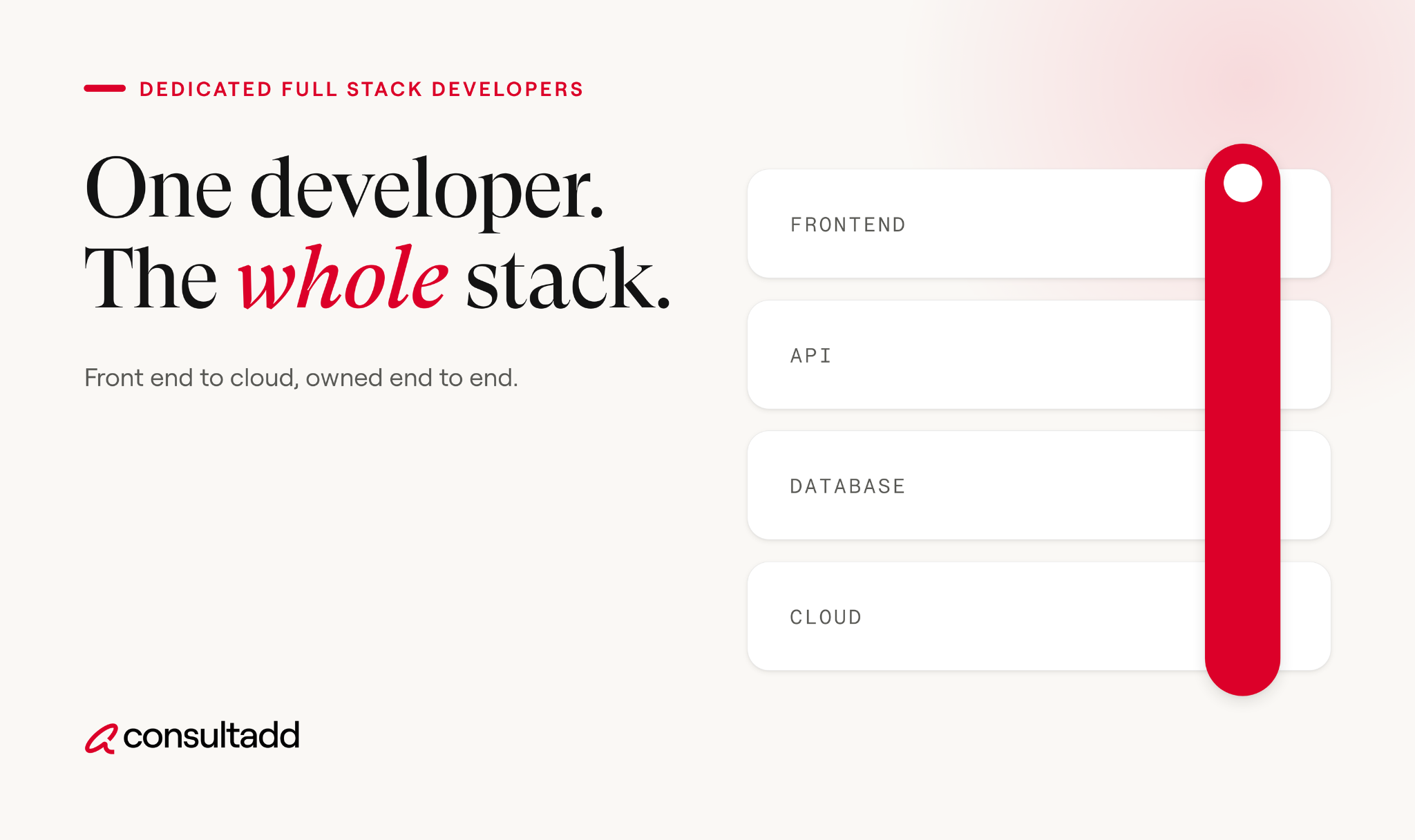
- A dedicated full stack developer works only on your product, usually full-time hours, and builds features across the frontend, backend, and database.
- Full stack hires fit small teams, MVPs, and feature work that cuts across layers. Large systems with deep performance or security needs usually need specialists too.
- Name the exact stack and the split of work (for example, 60% backend, 40% frontend) before you start screening.
- Test candidates with a small feature that touches every layer, then go deep on the layer they'll own most.
- You can get a dedicated developer through a direct hire, staff augmentation, or a dedicated team. Each trades off speed, control, and long-term cost differently.
What "dedicated" means for full stack developers
A dedicated full stack developer works on your product and nothing else. They join your standups, take tickets from your backlog, and stay long enough to understand your codebase, usually months or years rather than weeks.
That's different from a freelancer splitting time across clients, or an agency developer who moves between projects.
Full stack developers are also the most common type of developer out there. In the 2025 Stack Overflow Developer Survey, full-stack developer was the most popular role, chosen by 27 percent of 43,560 respondents.
You can see the role breakdown in the Stack Overflow 2025 Developer Survey.
A large pool sounds like good news, but it cuts both ways. Plenty of people call themselves full stack, and their actual depth varies a lot.
Three ways to get a dedicated full stack developer
With staff augmentation, the developer works under your managers like any other team member.
Public procurement guidance from the Virginia Information Technologies Agency describes this as the customer's own manager supervising the contract resources and paying for hours worked.
Read the VITA guide on staff augmentation vs. statement of work for the full comparison.
When to hire dedicated full stack developers (and when not to)
Full stack developers are strongest where one person benefits from seeing the whole feature, from database table to button.
Where full stack hires fit well
Small teams and early products get the most from them. One developer can ship a complete feature without waiting on a handoff between frontend and backend.
They also fit internal tools, admin dashboards, and product teams organized around features rather than layers.
Where specialists may serve you better
If your product has heavy performance demands, complex data pipelines, or a large design system, a generalist may hit their limit.
The same applies to security-sensitive backend work and high-traffic infrastructure.
Many mature teams mix both: specialists own the hard layers, and full stack developers build features across them.
For a role-by-role look at what augments well at each product stage, see our guide to software development staff augmentation roles and timing.
Pick the stack before you pick the developer
"Full stack" means nothing without the stack. A Node.js and React developer and a Java Spring and Angular developer aren't interchangeable, even if both resumes say full stack.
Common full stack combinations
State the split of work
Almost nobody is equally strong across every layer. Most full stack developers lean one way.
The single line that improves our submissions most is a split like "about 70% backend in Spring Boot, 30% React."
It tells us whether to look for a backend engineer with solid frontend skills, or the reverse.
Be specific about cloud and DevOps
Decide how much infrastructure work the role includes. Some teams expect a full stack developer to write Terraform and manage CI/CD.
Others have a platform team for that. Put it in the request either way.
Keep the must-have list short
Requests that list twelve technologies as required take much longer to fill, and they rarely reflect the actual work.
Pick the three or four that matter daily, and list the rest as nice to have.
How to screen full stack developers across every layer
Screening a full stack developer is harder than screening a specialist, because you're checking breadth and depth at the same time.
Our guide on how to vet developers for staff augmentation covers the general process.
Here's what changes for full stack roles -
Start with the resume
Look for shipped features that crossed layers, not just a list of frameworks.
"Built the billing page, API, and Postgres schema for subscription upgrades" tells you far more than "React, Node, MongoDB, AWS."
Check that the recent work matches your stack. Five years of Angular from 2019 is different from current React work.
Use a vertical slice exercise
Give candidates a small feature that touches every layer: a form, an API endpoint, and a database change. Keep it to two or three hours, or do it live and talk through it.
You'll see how they model data, handle errors, and connect the frontend to the backend. That's the core full stack skill, and a trivia quiz won't show it.
Then go deep on their main layer
Once you've checked breadth, spend real time on the layer they'll own most. For backend-heavy roles, that means database design, query performance, and API design.
For frontend-heavy roles, it means state management, accessibility, and rendering performance.
Check judgment with AI tools
Most developers now use AI coding assistants. In the Stack Overflow 2025 Developer Survey, 84 percent of respondents said they use or plan to use AI tools in development.
That makes review skills more important. Ask candidates to review a short AI-generated snippet with a subtle bug.
Full stack developers touch a lot of code, so the ability to catch what a tool got wrong matters.
What to test, layer by layer

Engagement models and what drives cost
The right model depends on how long you need the developer, how much you want to manage, and how sure you are about the role.
If the role might become permanent, contract-to-hire lets you work with the developer before committing.
If you're weighing a vendor-run team against developers you manage yourself, our comparison of managed services vs. staff augmentation covers the trade-offs.
Hiring freelancers directly can look cheaper, but you take on employment questions a staffing partner would otherwise handle.
What drives the rate
Full stack rates vary widely, so we won't quote a single number. These are the factors that move it most:
- Seniority and the depth of their strongest layer
- The stack itself (enterprise Java and .NET often price differently from MERN)
- Location and required overlap hours with your team
- Engagement length, since longer contracts often attract stronger candidates
- Whether the developer is W-2, 1099, or C2C
Our breakdown of IT staff augmentation costs and contract terms explains bill rates, markups, and replacement terms in more detail.
Why demand stays high
The broader market isn't loosening much. The BLS projects 15 percent employment growth for software developers, QA analysts, and testers from 2024 to 2034, with roughly 129,200 openings a year.
The BLS software developers outlook has the full figures. That competition is why many teams use contract developers to cover gaps while they recruit.
Getting a dedicated developer productive fast
Hiring is half the work. A dedicated developer who spends two weeks waiting for access is two weeks of paid time with nothing shipped.
Have accounts, repository access, and a local environment guide ready before day one. Follow NIST's principle of least privilege: give access to what the work needs, then expand.
Pick a small starter ticket that touches more than one layer. A first merged pull request in week one proves the environment, access, and review process all work.
Assign a named reviewer on your team. Full stack developers produce changes across many files, and someone needs to own reviews in each area.
Our engineering staff augmentation playbook covers onboarding, metrics, and roll-off in more depth.
If your developer works remotely, plan overlap hours based on how defined the work is. Our guide to remote IT staffing services covers time zones and compliance.
Bottom line
When you hire dedicated full stack developers, the title on the resume matters far less than three decisions you make first: the exact stack, the split of work across layers, and the engagement model.
Get those right, and screening becomes straightforward. Test breadth with a small feature that crosses every layer, test depth on the layer they'll own, and check how they review code they didn't write.
Then have access and a starter ticket ready on day one, so the developer you chose can start shipping in their first week.
Start Strong With Consultadd
With 15 years in business and 5,000+ successful staffing engagements, we don't just fill roles, we build reliability into your process. We've supported 65 staffing companies in the past year alone and maintain MSAs with industry leaders like Robert Half and TEKsystems.
Here's what working with Consultadd looks like:
- Talent sourced in under 24 hours
- Ready-to-deploy candidates, vetted for experience and compliance
- Lower turnover risk: we match long-term goals, not just short-term needs
- Seamless compliance: visa, documentation, onboarding? Handled.
- Dedicated 1:1 account managers for responsive, personalized support
- Top 100 candidate matches delivered in the past year
- Strong partnerships with universities to tap into fresh, committed talent
- Post-placement support so your investment grows beyond day one
For candidates, your next opportunity is more than just a job title, it's a chance to build skills, gain experience, and move your career forward. At Consultadd, we connect technology professionals with projects and employers that align with their goals, whether they're looking for contract, contract-to-hire, or long-term opportunities.
The tech job market moves fast, but the right guidance can make all the difference. Ready to take the next step in your career journey? Explore Opportunities >>
Key takeaways
- A dedicated full stack developer works only on your product and builds features across frontend, backend, and database layers.
- Full stack hires suit MVPs, internal tools, and feature teams, while complex, high-scale, or security-critical systems usually need specialists as well.
- Define the stack, the split of work between layers, and a short must-have list before screening anyone.
- Screen with a vertical slice exercise for breadth, a deep dive on their main layer, and a code review task for AI-era judgment.
- Choose between direct hire, staff augmentation, contract-to-hire, or a dedicated team based on timeline, control, and how certain the role is.
FAQs
What is a dedicated full stack developer?
A dedicated full stack developer works exclusively on your product, usually full-time, and handles both frontend and backend work. They can be your own employee, a contractor through a staffing partner, or part of a vendor's dedicated team. "Dedicated" means they aren't splitting time across other clients.
How much does it cost to hire a dedicated full stack developer?
It depends on seniority, the stack, location, engagement length, and whether the developer is W-2, 1099, or C2C. Enterprise stacks like Java and .NET often price differently from MERN or Python. Compare total cost, including recruiting time and benefits, rather than hourly rates alone.
Is it better to hire a full stack developer or separate frontend and backend developers?
For small teams, MVPs, and feature work that crosses layers, a full stack developer usually moves faster. For complex UIs, high-scale backends, or security-critical systems, specialists go deeper. Many teams use both, with specialists owning hard layers and full stack developers building features across them.
How do you test a full stack developer's skills?
Give them a small feature that touches every layer, such as a form, an API endpoint, and a database change. Then spend time on the layer they'll own most, and ask them to review a short code snippet with a hidden bug. This checks breadth, depth, and judgment.
How long does it take to hire a dedicated full stack developer?
Through a staffing partner, submissions can arrive within days for common stacks, and the full process often takes a few weeks including interviews. Direct hiring usually takes longer. A clear stack, a stated split of work, and a short must-have list speed things up.
Can I hire a full stack developer on contract and convert them later?
Usually, yes. A contract-to-hire arrangement lets you work with the developer first and offer a permanent role later, often subject to a conversion fee in the staffing agreement. Check the conversion terms before the engagement starts.
.webp)
How To Source Candidates: A 7 Step Recruiter Guide
Introduction
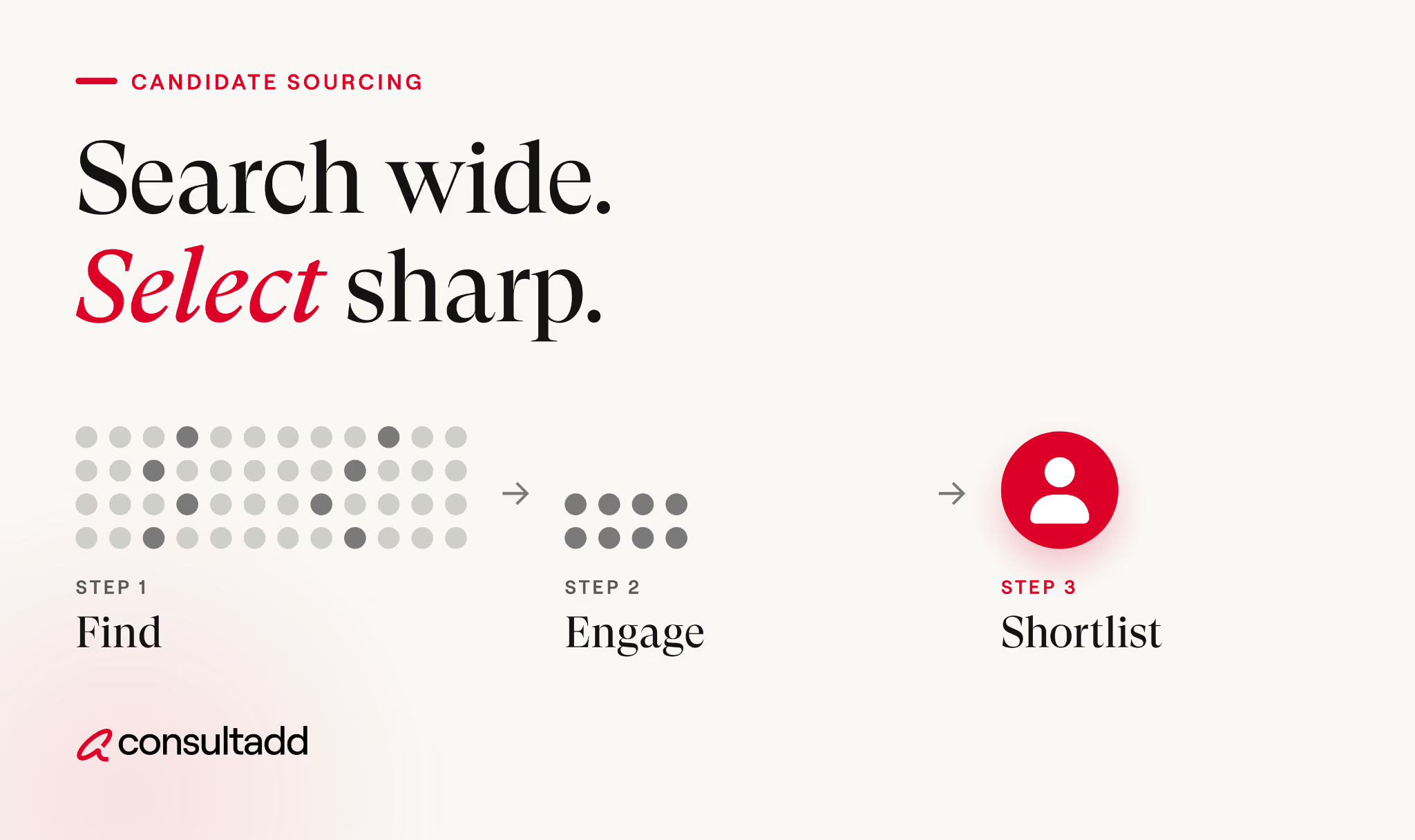
How to source candidates comes down to a repeatable process: agree on the role with the hiring manager, figure out where those people already show up online and in your own database, search with precise filters, check profiles against the must-haves, then reach out with a short, specific message and follow up.
Sourcing means finding people before they apply, which matters most for roles where the best candidates aren't looking.
This guide walks through each step, with search strings, an outreach template, a follow-up schedule, and the metrics that show whether your sourcing is working.
TL;DR
- Sourcing is finding and contacting qualified people who haven't applied yet, while recruiting covers the full hiring process.
- Start every search with an intake meeting that separates true must-haves from nice-to-haves.
- Check your ATS and referrals before searching LinkedIn or GitHub, since past candidates already know your company.
- Boolean and X-ray searches narrow thousands of profiles to a shortlist you can actually review.
- Short, personalized outreach with two or three follow-ups gets more replies than one long message.
What does it mean to source candidates?
Sourcing is the part of hiring where you go looking for people instead of waiting for applications.
A sourcer identifies potential candidates, gathers enough information to judge fit, and starts a conversation. Everything after that first reply, such as screening calls, interviews, and offers, belongs to the broader recruiting process.
The difference matters because the skills are different. Good sourcing is mostly research and writing. Good recruiting is mostly relationship management and closing.
How to source candidates in 7 steps
Step 1: Run a proper intake meeting
Most bad searches start with a vague job description. Before you search, spend 20 minutes with the hiring manager and get answers to a few questions:
- What will this person own in the first six months?
- Which two or three skills are non-negotiable, and which can be learned on the job?
- Which companies or teams have people doing this work today?
- What would make the manager reject a strong-looking resume?
- What's the real budget, location, and work authorization requirement?
That last question saves the most time. A recruiter who finds out about a "no sponsorship" requirement after sending 40 messages has wasted a week.
Step 2: Build a target candidate profile
Turn the intake notes into a search plan. List the job titles people use for this work, including adjacent ones. A data engineer might also call themselves an analytics engineer, ETL developer, or big data developer.
Then list target companies, core skills, and anything that rules a profile out. For example, a search for a senior data engineer might target people with Spark, Airflow, and AWS experience at mid-size SaaS or fintech companies, with four or more years in data roles, and exclude profiles that only show BI dashboard work.
Step 3: Start with candidates you already have
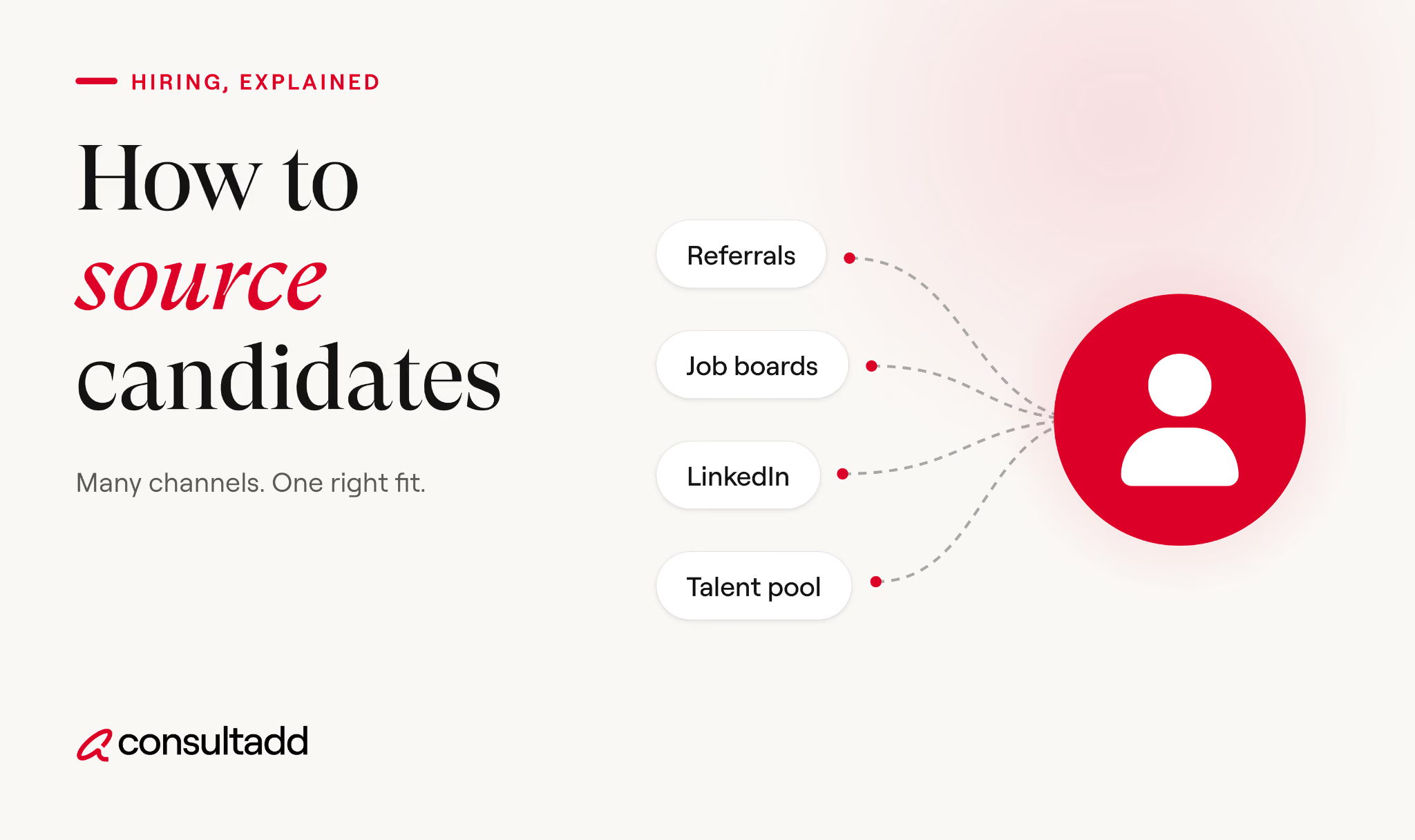
Your applicant tracking system is the cheapest source you own. Search it for past finalists, silver medalists from similar roles, and people who applied a year or two ago and have since gained experience. They already know your company, and many will reply faster than a cold prospect.
Ask your team for referrals too, but be specific. "Know any good engineers?" gets nothing. "Who's the best Airflow person you've worked with?" gets names.
Step 4: Search external sources
Once internal sources are covered, go outside. The right channel depends on the role.
- LinkedIn works for most professional roles. Filter by current title, skills, location, and past companies, and save searches so new matches show up automatically.
- GitHub is useful for engineers whose work is public. GitHub's own guide to searching for users explains how to filter by location, language, and number of repositories.
- X-ray search uses Google to search inside a single site. It helps when you don't have a paid recruiter seat, and Google's help page on refining searches covers the operators you'll need.
- Niche communities, such as Slack groups, meetups, and conference speaker lists, help with specialized roles where profiles are thin.
For a channel-by-channel comparison, our hiring and recruiting strategies playbook covers when each one pays off.
If you hire mostly engineers, our candidate sourcing strategies for tech roles go deeper on technical channels.
Step 5: Screen profiles before you reach out
Don't message everyone your search returns. Check each profile against the must-haves from step one. Look for evidence, not keywords: a project that used the tool, a promotion, a public repo, a talk.
Keep a short note on why each person made the cut. You'll use it to personalize your outreach, and it helps the hiring manager trust your shortlist.
Step 6: Write outreach that gets replies
Most sourcing messages fail because they're long, generic, and all about the company. A message that works usually has four parts: why you're contacting this person, what the role involves, one detail that makes it worth their time, and an easy next step.
Here's an example:
"Hi Priya, I saw your talk on moving batch jobs to Airflow at a data meetup last spring. I'm hiring a senior data engineer for a fintech team doing a similar migration, fully remote, with a real say in the architecture. Would you be open to a 15-minute call next week?"
That's about 55 words. It names something specific, states the role in one line, and asks for a small commitment.
Silence after one message is normal. A simple follow-up schedule helps:
Stop after three or four touches. Pushing past that hurts your reputation and your company's.
Step 7: Track results and adjust
Log every sourced candidate in your ATS with the source, date contacted, and outcome. After a week or two, the numbers will show you what to change, whether that's your search, your message, or the role itself.
Boolean search strings for sourcing candidates
Boolean search uses operators to combine or exclude terms. It works on LinkedIn, most job boards, many ATS platforms, and Google.
Here's a full string for the senior data engineer example:
("data engineer" OR "analytics engineer" OR "ETL developer") AND (Spark OR Databricks) AND Airflow AND AWS NOT (intern OR student)
And an X-ray version for Google:
site:linkedin.com/in ("data engineer" OR "analytics engineer") Airflow Spark "New Jersey"
Start broad, look at the first 20 results, and tighten the string based on what's wrong with them. Too many junior profiles? Exclude titles. Too few results? Remove the least important skill.
Sourcing metrics to track
You don't need a dashboard to start. A spreadsheet with these four numbers per role tells you most of what you need.
A low response rate usually points to the message or the channel. A high response rate with a low interested rate usually points to the role: pay, location, or scope.
A low interview rate means it's time for another talk with the hiring manager, not more sourcing.
If the problem is speed rather than quality, our stage-by-stage look at how long the hiring process takes shows where delays tend to build up.
Sourcing mistakes that cost you candidates
Searching only by exact job title. Titles vary widely between companies, so you'll miss good people. Search by skills and adjacent titles too.
Skipping the ATS. Recruiters often go straight to LinkedIn and ignore hundreds of pre-qualified people already in their own system.
Sending the same message to everyone. Candidates can spot a mass message in the first line.
Narrowing the pool unfairly. Filters based on age, graduation year, or similar proxies can screen out qualified people and create legal risk. The EEOC's guidance on prohibited employment practices applies to recruiting, not just final hiring decisions.
Sourcing harder when the role is the problem. If response rates stay low across channels, the salary, location, or requirements may need to change.
Our guide on how to recruit for hard-to-fill roles covers how to make that case to a hiring manager.
Putting it together: how to source candidates consistently
Knowing how to source candidates well is mostly discipline: a clear intake, a written search plan, internal sources first, careful screening, short outreach, and honest tracking.
Recruiters who stick with that process for a few weeks usually see response rates and shortlist quality improve without buying new tools.
For specialized roles, our guide on filling niche job roles covers where to look when standard channels run dry.
If you're weighing outside help, see how to test a talent sourcing solution before you buy.
Start Strong With Consultadd
With 15 years in business and 5,000+ successful staffing engagements, we don't just fill roles, we build reliability into your process. We've supported 65 staffing companies in the past year alone and maintain MSAs with industry leaders like Robert Half and TEKsystems.
Here's what working with Consultadd looks like:
- Talent sourced in under 24 hours
- Ready-to-deploy candidates, vetted for experience and compliance
- Lower turnover risk: we match long-term goals, not just short-term needs
- Seamless compliance: visa, documentation, onboarding? Handled.
- Dedicated 1:1 account managers for responsive, personalized support
- Top 100 candidate matches delivered in the past year
- Strong partnerships with universities to tap into fresh, committed talent
- Post-placement support so your investment grows beyond day one
For candidates, your next opportunity is more than just a job title, it's a chance to build skills, gain experience, and move your career forward. At Consultadd, we connect technology professionals with projects and employers that align with their goals, whether they're looking for contract, contract-to-hire, or long-term opportunities.
The tech job market moves fast, but the right guidance can make all the difference. Ready to take the next step in your career journey? Explore Opportunities >>
Key takeaways
- Sourcing is proactive: you find and contact qualified people before they apply.
- An intake meeting with clear must-haves, budget, and work authorization rules prevents wasted searches.
- Your ATS and employee referrals are the fastest, cheapest places to start.
- Boolean and X-ray strings turn broad searches into shortlists, and they improve each time you refine them.
- Track response, interested, submittal, and interview rates to see whether the search, the message, or the role needs fixing.
FAQs
What is the difference between sourcing and recruiting?
Sourcing is finding qualified people and starting a conversation with them. Recruiting covers everything after that, including screening, interviews, offers, and closing. In smaller teams, one person often does both.
How do recruiters source passive candidates?
They search LinkedIn, GitHub, and niche communities for people whose experience matches the role, then send short, personalized messages. Passive candidates respond to specifics, such as the problem they'd work on or the team, more than to company boilerplate.
What is X-ray search in recruiting?
X-ray search uses Google operators like site: to search inside a single website, such as LinkedIn profiles or GitHub pages. It's useful when you don't have a paid recruiting tool or want results a platform's own search doesn't show.
Can you source candidates without LinkedIn Recruiter?
Yes. A free LinkedIn account, Google X-ray searches, GitHub, your ATS, referrals, and professional communities can cover most roles. Paid tools mainly save time on filtering and messaging.
How many candidates should you source for one role?
It depends on your own conversion rates. Track how many people you contact per reply, per submittal, and per interview, then work backward from the number of interviews the hiring manager wants. Those ratios vary a lot by role and market.
What should a sourcing outreach message include?
Say why you're contacting this specific person, what the role involves in one or two lines, one detail that makes it appealing, and a small next step like a 15-minute call. Keep it under about 100 words.