
.avif)

Introduction
Staff augmentation. Managed services. Direct hire. RPO. Contract-to-hire. If you've shopped for IT talent lately, you've heard these terms used almost interchangeably, often by people trying to sell you one of them. They are not the same thing, and the differences decide who manages the work, who owns the result, and where the risk sits.
That's the thing to understand first about IT staffing services: it's not one service. It's a category. IT staffing services are the range of ways a specialized agency helps a company find, hire, and deploy technology talent, from placing a single permanent engineer to running an entire outsourced function.
This guide maps the whole category. It covers what IT staffing actually includes, the main delivery models and how they differ, and a simple way to pick the model that fits your situation instead of the one a vendor happens to sell.
TL;DR
- IT staffing services are the range of ways an agency helps companies find, hire, and deploy technology talent, not a single offering.
- The main models are direct hire, contract, contract-to-hire, staff augmentation, managed services, and RPO.
- The key difference between models is control and ownership: with augmentation you manage the people and own the outcome; with managed services the provider does.
- The right model depends on how long you need the talent, how scarce the skills are, your hiring urgency, and how much control you want.
- Most companies now blend several models, using a permanent core team plus flexible talent for projects and specialized needs.
What is IT staffing services?
IT staffing services are the professional services a staffing agency provides to help a company meet its technology talent needs. That can mean sourcing and screening candidates, placing them, employing them, or in some cases managing an entire team or function on the client's behalf.
The scope has grown well beyond filling vacancies. Modern IT staffing covers capability planning, pipeline design, deployment timing, and aligning talent to program outcomes. Increasingly, companies treat staffing as a delivery mechanism rather than a simple HR activity.
The demand behind it is easy to explain. Technology touches every industry now, and the computer and IT occupations tracked by the Bureau of Labor Statistics continue to grow faster than the available talent pool.
When qualified engineers, cloud architects, and data scientists are hard to find and slow to hire, specialized staffing partners become the practical way to close the gap.
So the honest one-line answer is that: IT staffing services are how companies get the right technology people in place, through whichever model fits the need.
What IT staffing services actually cover
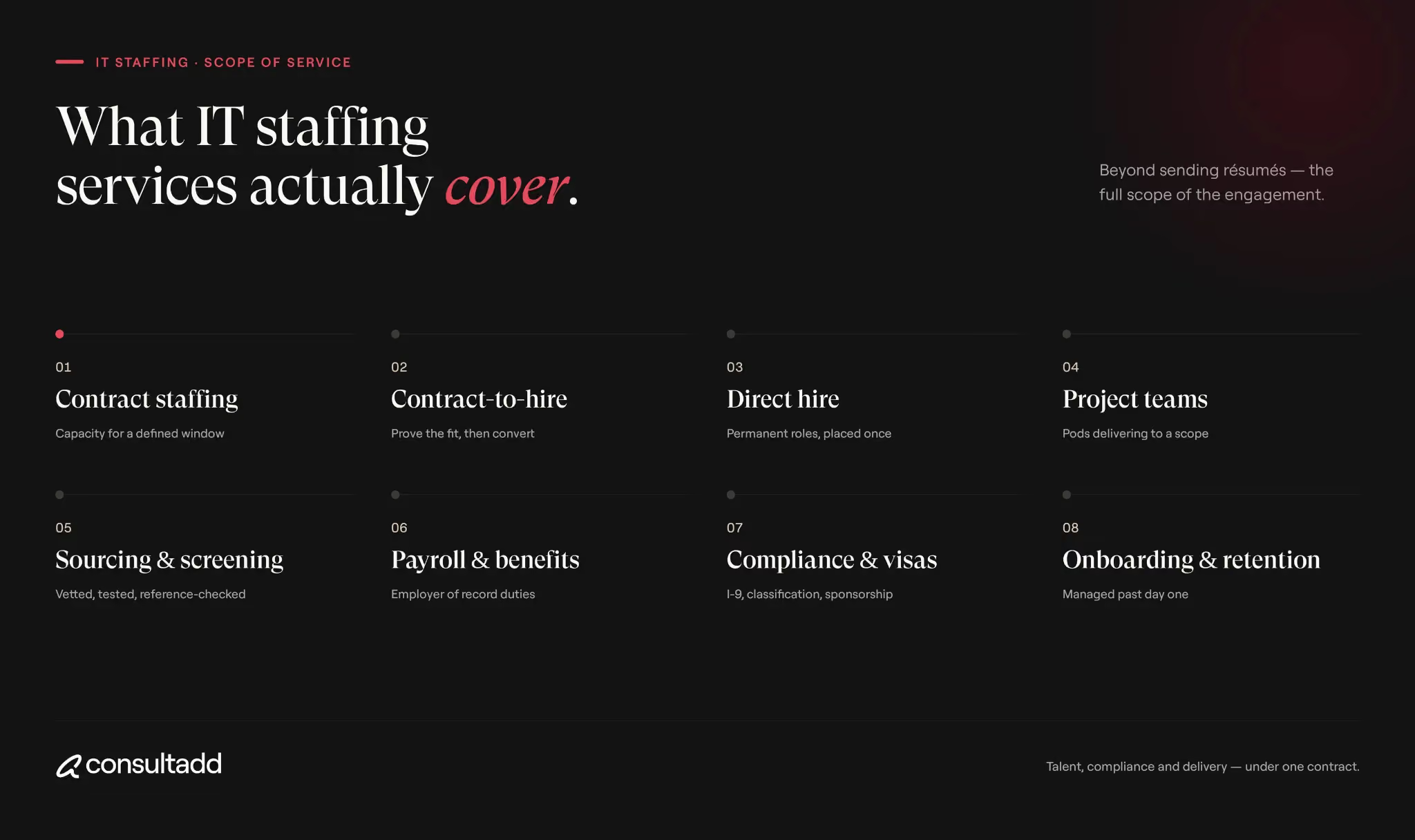
Before the models, it helps to know the ground they cover. IT staffing spans the full range of technology roles and the full lifecycle of getting someone productive.
On roles, staffing agencies place software developers, cloud engineers, cybersecurity specialists, data scientists, DevOps engineers, data analysts, and the AI and machine learning specialists in heavy demand right now.
Some focus on specific platforms, placing proven experts in ecosystems like AWS, ServiceNow, or Atlassian rather than generalists.
On the lifecycle, a good partner handles sourcing, technical screening, and placement, and depending on the model may also carry payroll, compliance, and ongoing management.
That vetting piece matters more than people assume, because a computer science degree doesn't guarantee ability.
Consultadd's guide to the candidate vetting process shows how rigorous screening keeps quality high.
The main types of IT staffing models
This is where the category splits, and where the terms stop being interchangeable. Here are the main IT staffing models and what separates them.
A few of these deserve a closer look.
Direct hire is the classic model:
- The agency finds and screens candidates, and you hire the winner as your own full-time employee, usually paying a placement fee of 15% to 25% of first-year salary.
- It suits the core roles you want to own long term.
Consultadd's technical recruitment guide covers how to get these hires right.
Contract and contract-to-hire:
- They cover temporary and trial-to-permanent needs, where the agency employs the worker and you get the output.
- The trial approach improves selection accuracy, since you evaluate someone on real work before committing.
Consultadd's breakdown of the contract-to-hire model goes deeper on when that pays off.
RPO:
- Recruitment process outsourcing, hands part or all of your recruiting to a specialist partner.
- It's built for structured scale hiring across multiple functions at once, which is where high-volume hiring strategies come into play.
That leaves two models that get confused constantly, which is worth its own section.
Staff augmentation vs managed services
These two get sold interchangeably, but they sit at opposite ends of the control spectrum. Getting the distinction right saves a lot of pain.
With staff augmentation, you add external professionals to your existing team. They become an extension of your internal staff, following your workflows and processes, and you supervise their day-to-day work.
The key phrase: you manage the people and you own the outcome. It's ideal when a specific skill gap threatens a deadline, or when you want to boost delivery velocity without restructuring.
With managed services, you hand a whole function or project to a provider who takes responsibility for delivering it.
The provider manages the people, owns the outcome, and is held to service level agreements and performance metrics. You trade direct control for risk mitigation.
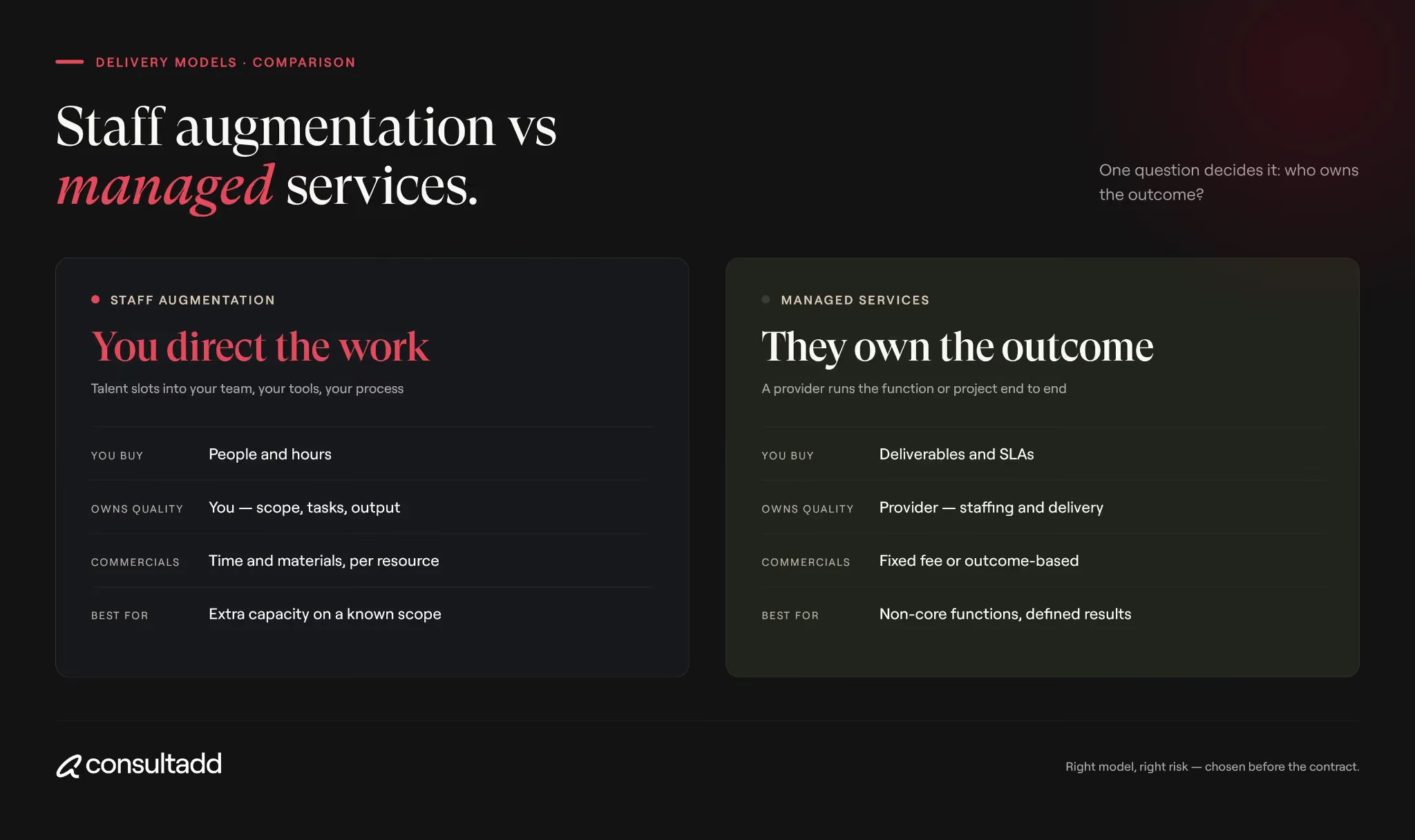
Neither is better in the abstract. Augmentation fits when maintaining control and internal culture matters, like during a cloud migration or a critical sprint. Managed services fit when you'd rather offload an area entirely and pay for a result.
How to choose the right IT staffing model
With the models clear, the choice comes down to your situation. A few questions point you to the right fit: How long do you need the talent? How scarce are the skills? How urgent is the hire? And how much control do you want to keep?
In practice, most companies don't pick just one. The strongest 2026 approach is a hybrid: a stable core of permanent employees, supplemented by augmentation for projects, contract talent for short-term needs, and managed services where it makes sense to offload. Staffing becomes a portfolio, not a single choice.
Onshore, nearshore, offshore: a sourcing choice
One common source of confusion is worth clearing up. Onshore, nearshore, and offshore are not separate staffing models. They're sourcing strategies that sit inside the models above.
- You can hire a direct-hire engineer onshore, augment your team with nearshore developers, or run a managed service offshore.
- Nearshore tends to work best when daily collaboration and overlapping time zones matter.
- Offshore can widen the talent pool and reduce cost when the work is more independent.
The point is to choose the model first, based on control and ownership, then decide where the talent should sit. Leading with geography alone tends to produce mismatches.
How an IT staffing partner helps
Whichever model you land on, a good IT staffing partner earns its place by compressing the slowest, riskiest parts of getting talent in place.
A specialized partner works from a pre-vetted talent pool, so sourcing and technical screening that would take your team weeks gets handled quickly. You review a short list of qualified people instead of sifting hundreds of resumes.
The partner also absorbs the parts that trip companies up: technical vetting, payroll and compliance where the model calls for it, and knowing which delivery model actually fits your workload.
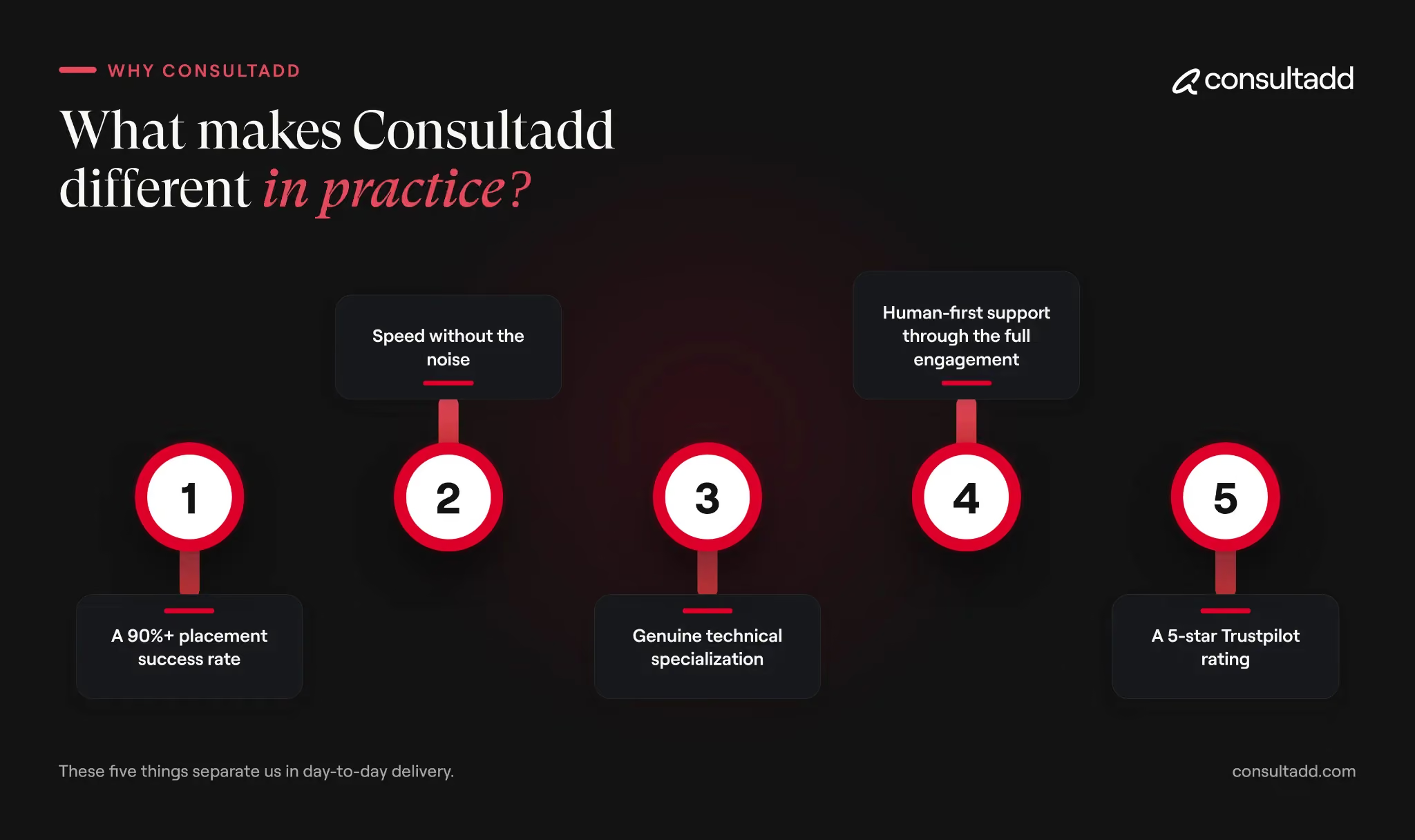
The best partners tie staffing to your workload and outcomes rather than treating it as headcount replacement. They ask what you're trying to deliver, then recommend the model, not the other way around.
That's the real answer to what IT staffing services are. Not a single product to buy, but a set of models to match to your need, with a partner who helps you choose well and move fast.
Start Strong With Consultadd
With 15 years in business and 5,000+ successful staffing engagements, we don't just fill roles, we build reliability into your process. We've supported 65 staffing companies in the past year alone and maintain MSAs with industry leaders like Robert Half and TEKsystems.
Here's what working with Consultadd looks like:
- Talent sourced in under 24 hours
- Ready-to-deploy candidates, vetted for experience and compliance
- Lower turnover risk: we match long-term goals, not just short-term needs
- Seamless compliance: visa, documentation, onboarding? Handled.
- Dedicated 1:1 account managers for responsive, personalized support
- Top 100 candidate matches delivered in the past year
- Strong partnerships with universities to tap into fresh, committed talent
- Post-placement support so your investment grows beyond day one
For candidates, your next opportunity is more than just a job title, it's a chance to build skills, gain experience, and move your career forward. At Consultadd, we connect technology professionals with projects and employers that align with their goals, whether they're looking for contract, contract-to-hire, or long-term opportunities.
The tech job market moves fast, but the right guidance can make all the difference. Ready to take the next step in your career journey? Explore Opportunities >>
Key takeaways
- IT staffing services are a category, not a single offering, spanning several ways to find, hire, and deploy tech talent.
- The main models are direct hire, contract, contract-to-hire, staff augmentation, managed services, and RPO.
- The defining difference is control: with staff augmentation you manage the people and own the outcome, while managed services shift both to the provider.
- The right model depends on duration, skill scarcity, urgency, and how much control you want to keep.
- Most companies blend models into a hybrid workforce, and geography is a sourcing choice made after the model, not instead of it.
FAQs
What is IT staffing services in simple terms?
IT staffing services are the ways a specialized agency helps a company find, hire, and deploy technology talent. That ranges from placing a single permanent engineer to supplying contract teams or managing a whole function. It's a category of services, not one product, so the right fit depends on your specific need.
What is the difference between IT staffing and IT outsourcing?
With most IT staffing, you direct the talent and own the outcome, whether they're permanent hires or augmented team members. With outsourcing, often delivered as managed services, the provider takes over a function, manages the people, and owns the result under agreed service levels. Staffing keeps control with you, while outsourcing shifts it to the provider.
What are the main types of IT staffing?
The common models are direct hire (permanent placement), contract, contract-to-hire, staff augmentation, managed services, and recruitment process outsourcing. Each suits a different combination of timeline, control, and ownership. Many organizations use several at once across their engineering, cloud, data, and security teams.
What is the difference between staff augmentation and managed services?
Staff augmentation adds external experts to your team, and you manage them and own the outcome. Managed services hand a whole function or project to a provider who manages the people and owns the result against service level agreements. Augmentation keeps control with you, while managed services trade control for offloaded responsibility.
What roles do IT staffing services cover?
They cover the full range of technology roles, including software developers, cloud engineers, cybersecurity specialists, data scientists, DevOps engineers, data analysts, and AI and machine learning experts. Some agencies specialize further, placing proven experts in specific platforms and ecosystems rather than generalists.
How do I choose the right IT staffing model?
Start with four questions: how long you need the talent, how scarce the skills are, how urgent the hire is, and how much control you want. Long-term core roles suit direct hire, projects suit contract or augmentation, and offloading a whole function suits managed services. A good staffing partner can recommend the fit based on your goals.




.webp)
