

Introduction
You can tell within the first two weeks if a new hire is going to work out. The trouble is, by then you've already spent weeks sourcing them, days interviewing them, and a good chunk of your recruiting budget getting them through the door.
The vetting of candidates is what happens before that two-week mark, the part of hiring that decides whether you're building a team or setting up your next resignation letter.
Most hiring mistakes trace back to the same root cause: something got skipped. A reference call that never happened. A credential nobody confirmed. A visa status nobody double-checked until payroll flagged it.
This guide walks through what candidate vetting actually involves, where companies cut corners without meaning to, and how to build a process that holds up under pressure.
TL;DR
- Candidate vetting covers identity checks, background screening, reference calls, work authorization, and skills validation, not just a resume scan.
- The U.S. Department of Labor estimates a bad hire can cost around 30% of that employee's first-year earnings, and that's before you count team disruption.
- Reference checks catch things interviews miss, but only when someone asks specific, structured questions instead of "would you rehire them?"
- Work authorization is a legal requirement, not a nice-to-have. Every U.S. employer must complete Form I-9 for new hires, and many also use E-Verify.
- Staffing partners that already vet candidates before submission cut weeks off your hiring timeline and reduce your exposure to compliance gaps.
What candidate vetting actually covers
Vetting a candidate means confirming that what's on the resume, and what came up in the interview, holds up once you look closer. It's not one check. It's a sequence of them, and each one answers a different question.
Identity verification confirms the person is who they say they are. Background screening looks at criminal history, employment history, and sometimes credit, depending on the role. Reference checks bring in a third party's perspective on how the candidate actually performs day to day. Work authorization checks confirm the candidate can legally work for you. Skills validation confirms they can do the job they're being hired for.
Skip any one of these, and you're hiring on trust alone. Sometimes that works out. Often it doesn't, and you don't find out until the cost of fixing it is much higher than the cost of checking it upfront.
Why skipping steps costs more than it saves
Vetting takes time, and time feels expensive when a hiring manager needs a seat filled yesterday. But rushing the process tends to cost more than it saves, just later and less visibly.
The U.S. Department of Labor has long estimated that a bad hire costs roughly 30% of that person's first-year salary once you factor in recruiting, training, and lost productivity.
The financial hit is one thing. The harder cost to measure is what a bad hire does to the people around them, extra work absorbed, deadlines slipping, good employees quietly job-hunting because they're tired of covering gaps.
The core steps in a candidate vetting process
A solid vetting process doesn't need to be complicated. It needs to be consistent, and it needs to happen in a logical order.
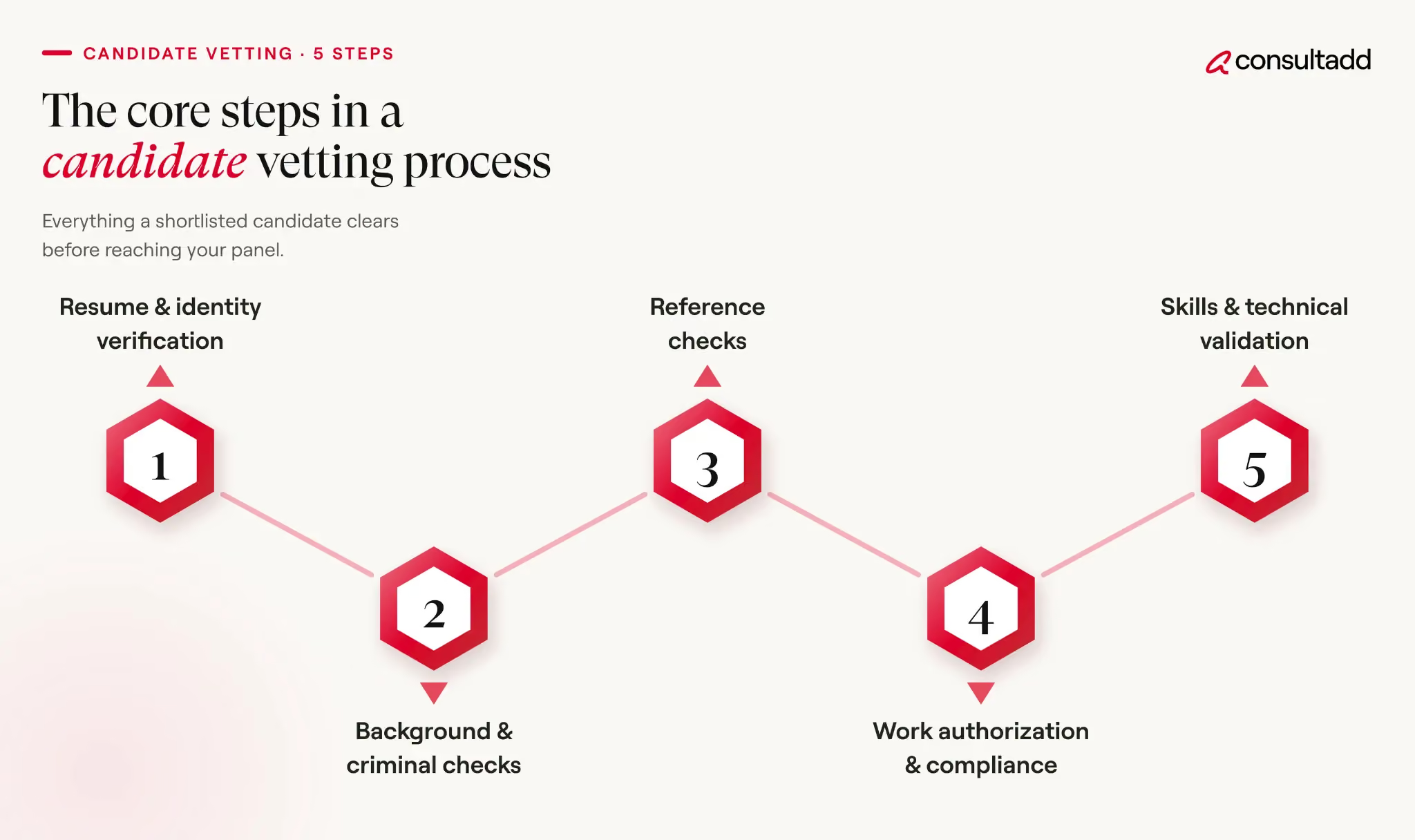
1. Resume and identity verification
- Start with the basics.
- Confirm the candidate's identity, confirm the dates and titles on their resume match what previous employers report, and flag any gaps that don't add up.
- This step alone catches a surprising number of discrepancies before you invest more time in the process.
2. Background and criminal checks
- Most U.S. employers run some form of background check. SHRM's research on employer screening practices found that 92% of organizations conduct background checks, with the majority happening at the pre-employment stage rather than after someone's already on payroll.
- What gets checked depends on the role. A finance position might warrant a credit check.
- A role working with vulnerable populations might require a more thorough criminal history review.
3. Reference checks
- This is the step people rush through, and it's often the most revealing one. A generic "would you hire them again?" gets you a generic answer.
- Structured questions about specific projects, how the candidate handled conflict, and what a manager would coach them on tend to surface real patterns.
- Reference checks also work best when they happen before an offer, not after. For more on the timing and why some companies push this step too late in the process.
We've written a full breakdown on structuring reference check questions that actually reveal something useful, including a template for comparing answers across multiple references.
4. Work authorization and compliance
- Every U.S. employer is legally required to complete Form I-9 for each new hire, confirming both identity and the right to work in the United States, according to USCIS.
- Many employers also enroll in E-Verify, a program run by the Department of Homeland Security that cross-checks I-9 information against Social Security Administration and DHS records to confirm employment eligibility, as explained on the DHS E-Verify page.
- Getting this wrong isn't just a compliance headache. It can mean fines, and in worse cases, having to remove someone from a role after they've already started.
If your team handles a mix of citizens, visa holders, and contractors, our guide on work authorization requirements for new hires breaks down the different categories and what documentation each one needs.
5. Skills and technical validation
- For technical roles especially, a resume and a good interview aren't proof of ability.
- Coding assessments, portfolio reviews, or a structured technical interview round confirm the candidate can actually do the work, not just talk about it convincingly.
Common mistakes companies make
A few patterns show up again and again when vetting processes fail.
Rushing reference checks to the point where they become a formality instead of a real conversation. Skipping work authorization checks for contractors or short-term hires, assuming the risk is lower because the engagement is temporary. Treating background checks as a box to check rather than tailoring them to the actual risk level of the role. And relying on a single interviewer's gut feeling instead of cross-checking that impression against references and screening results.
How a staffing partner changes the equation
Running a thorough vetting process for every hire takes time your internal team may not have, especially if you're filling several roles at once. This is where a staffing partner earns its keep.
Instead of vetting a candidate after you've already found them, a good partner has already done that work before the candidate lands on your desk.
That means the resumes you see have already been checked for experience, references have already been pulled, and compliance documentation is already handled. You still make the final call, but you're making it with a much shorter list of unknowns.
Our earlier piece on why hiring processes take longer than they should covers how compliance checks and multiple interview rounds add weeks to a timeline when they're not pre-handled.
Start Strong With Consultadd
With 15 years in business and 5,000+ successful staffing engagements, we don't just fill roles, we build reliability into your process. We've supported 65 staffing companies in the past year alone and maintain MSAs with industry leaders like Robert Half and TEKsystems.
Here's what working with Consultadd looks like:
- Talent sourced in under 24 hours
- Ready-to-deploy candidates, vetted for experience and compliance
- Lower turnover risk: we match long-term goals, not just short-term needs
- Seamless compliance: visa, documentation, onboarding? Handled.
- Dedicated 1:1 account managers for responsive, personalized support
- Top 100 candidate matches delivered in the past year
- Strong partnerships with universities to tap into fresh, committed talent
- Post-placement support so your investment grows beyond day one
For candidates, your next opportunity is more than just a job title, it's a chance to build skills, gain experience, and move your career forward. At Consultadd, we connect technology professionals with projects and employers that align with their goals, whether they're looking for contract, contract-to-hire, or long-term opportunities.
The tech job market moves fast, but the right guidance can make all the difference. Ready to take the next step in your career journey? Explore Opportunities >>
Key Takeaways
- The vetting of candidates is a sequence of checks, identity, background, references, work authorization, and skills, not a single resume review.
- A bad hire costs roughly 30% of first-year salary by DOL estimates, and that figure doesn't count the disruption to your existing team.
- Reference checks work best when they're structured and happen before an offer, not squeezed in as an afterthought.
- Work authorization compliance, including Form I-9 and E-Verify where applicable, is a legal requirement for every U.S. employer, not an optional step.
- Partnering with a staffing firm that pre-vets candidates shortens your timeline and reduces the number of unknowns you're hiring against.
FAQs
What does "vetting a candidate" actually mean?
It means confirming that a candidate's claims, identity, work history, credentials, and legal right to work all hold up before you extend an offer. It typically involves background checks, reference calls, and in technical roles, some form of skills validation.
How long does a proper candidate vetting process take?
It depends on the role and how many checks are needed, but most background and reference checks can be completed within three to five business days when they're built into the hiring timeline instead of added at the last minute.
Do I need to run a background check for every hire?
Not necessarily to the same depth. Higher-risk roles, those handling money, vulnerable populations, or sensitive data, usually warrant more thorough screening than a standard office role. A role-based policy helps you apply the right level of scrutiny consistently.
What's the difference between a reference check and a background check?
A background check verifies factual records: criminal history, employment dates, sometimes credit. A reference check gathers a subjective but informed perspective from someone who worked with the candidate directly, covering things like work style and reliability that records can't show.
Is E-Verify required for all employers?
No. E-Verify is voluntary for most private employers, though some states mandate it and federal contractors are often required to use it. Every employer, regardless of E-Verify enrollment, must still complete Form I-9 for new hires.
Can a staffing agency handle candidate vetting for us?
Yes. Staffing partners that pre-screen candidates for experience, references, and compliance before submitting them can significantly cut down the vetting work your internal team needs to do, while still leaving the final hiring decision with you.



.webp)