

Introduction
You had a good final interview on Tuesday. It's now the following Monday, and your inbox is quiet. Is that normal, or did you miss something?
So how long does the hiring process take? For many professional roles, employers take a little over a month from opening a job to getting an offer accepted. SHRM's 2026 benchmarking puts the median at 39 days for non-executive roles.
Your own experience as a candidate is usually shorter than that on the interview side, then longer once you add background checks, notice periods and a start date.
This guide walks through each stage from the candidate's side, how timelines change by job type, what happens between the offer and your first day, and when it makes sense to follow up.
TL;DR
- Employers report a median of 39 days to fill non-executive roles and 45 days for executive roles, based on SHRM's 2026 data.
- Interviews and decisions take most of the time. The gap after a final interview is often the longest wait.
- Contract roles through a staffing agency can move from first call to start date in one to two weeks. Large-company full-time roles often take far longer.
- Plan for another two to four weeks between accepting an offer and starting, once checks and notice periods are included.
- Silence usually means internal delays, not rejection. Follow up once after the timeline you were given has passed.
How long does the hiring process take on average?
The best-known benchmark comes from SHRM. Its 2026 recruiting data reports a median time to fill of 39 calendar days for non-executive roles and 45 days for executive roles.
That number is measured from the employer's side. The clock starts when the job is approved or posted and stops when someone accepts the offer. If you applied two weeks after the posting went live, your part of the process is shorter.
There's a second clock most candidates forget about: offer acceptance to the first day. Background checks, references, paperwork and your notice period all live there.
So a realistic picture for a typical professional role looks something like this:
- Application to offer: often three to six weeks
- Offer to start date: often two to four weeks
- Total, application to first day: frequently six to ten weeks
These are rough ranges from what we see in tech hiring, not guarantees. Niche roles, senior roles and roles that need visa sponsorship can run much longer.
If you're curious how employers measure all this, our explainer on time to hire vs time to fill breaks down the difference.
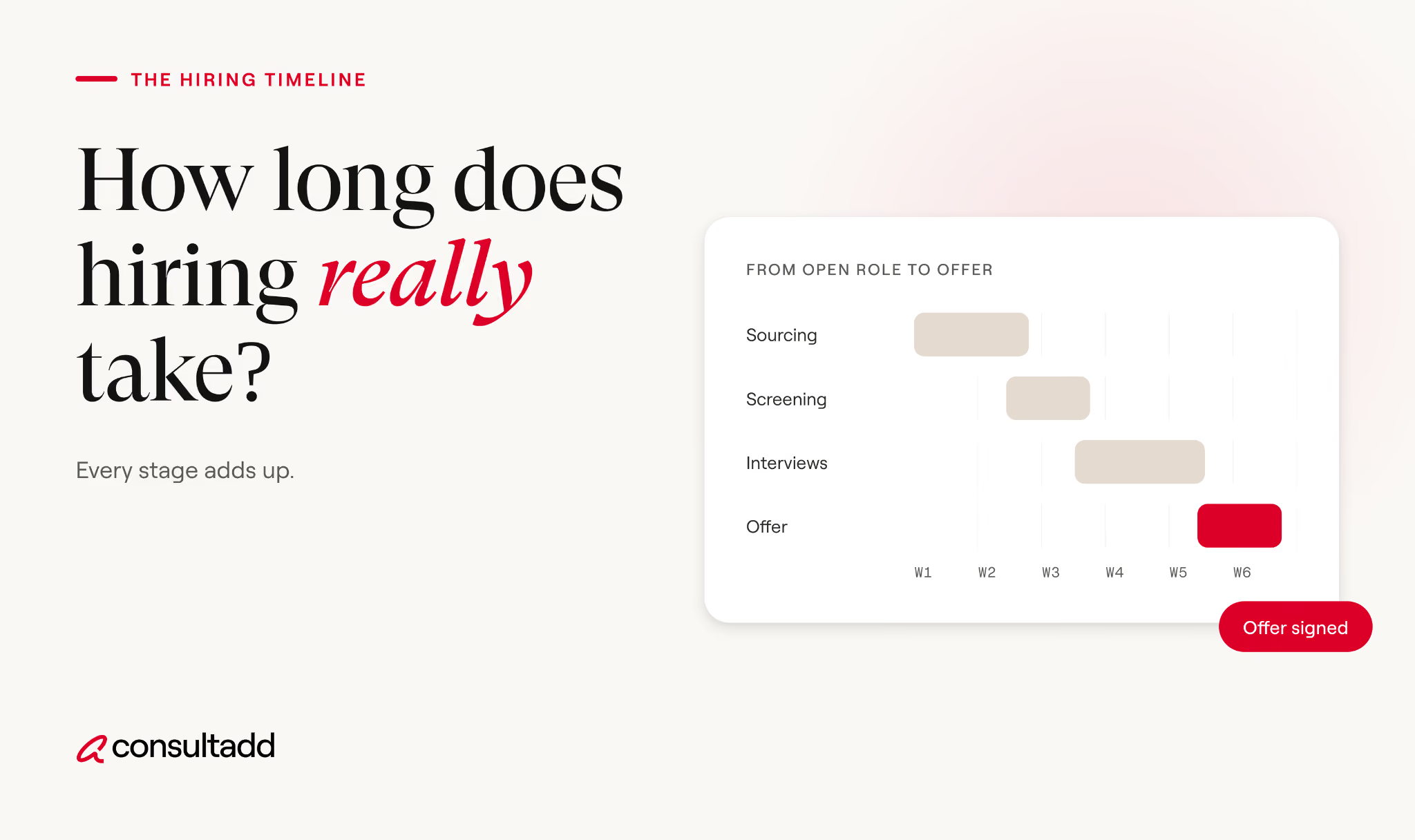
The hiring process timeline, stage by stage
Each stage has its own rhythm. Knowing roughly where you are helps you judge whether a quiet week is normal.
Why the decision stage feels longest
The wait after a final interview is usually the hardest part. You've done everything you can, and nothing seems to be happening.
From the hiring side, a lot is going on. Interviewers are submitting feedback, the team may be finishing interviews with other finalists, and the offer needs sign-off on salary. Any one of those can add several days.
How many interview rounds is normal?
For most tech roles, three to five conversations in total is common, counting the recruiter screen. Each extra round usually adds a few days for scheduling and feedback.
If a company keeps adding rounds without explaining why, it's fair to ask the recruiter what's left.
Hiring timelines by job type
The type of role you're applying for affects the timeline more than almost anything else.
Contract and contract-to-hire roles
Contract roles move fastest because the client usually has a project waiting. A recruiter who already knows your skills can submit you within a day, and many clients interview and decide within a week.
If a contract role may turn permanent, our guide to how contract-to-hire works explains what to expect at conversion.
For pay structure questions, see W-2 vs C2C vs 1099 contract types.
Roles that need visa sponsorship
Sponsorship can add weeks or months, depending on the visa category and where you are in the process. Ask early whether the employer sponsors and what the expected timeline is.
Our guide to H-1B sponsorship for tech professionals covers the steps.
From offer to first day
Accepting the offer doesn't mean you start Monday. A few steps sit between the signature and your first day.
Background checks
When an employer uses a screening company, federal law requires them to tell you and get your written permission first.
The FTC's guide to background checks for employers explains those rules. Delays usually come from education checks, international employment history or a small mismatch in dates.
References
Most reference calls happen near the final stage.
Our guide to what a reference check is and how it works covers how to prepare the people you list.
Employment eligibility paperwork
U.S. employers must complete Form I-9 to verify identity and work authorization for every new hire. Having your documents ready avoids a last-minute delay.
For the full picture of checks between offer and start, see our pre-employment screening guide.
What slows the hiring process down
Some delays you can influence. Most you can't. Knowing the difference saves a lot of worry.
Delays on the employer's side:
- The hiring manager is traveling, on leave or busy with a release
- The company is still interviewing other finalists
- Salary approval or headcount sign-off is stuck with finance
- A team reorganization or budget review puts the role on hold
- Interview panels are hard to schedule across time zones
Delays you can reduce:
- Slow replies to scheduling emails
- Incomplete background check forms
- References who can't be reached
- Pay expectations that change late in the process
- Missing work authorization documents
The market also plays a part. The U.S. Bureau of Labor Statistics tracks job openings and hires each month.
When openings run well ahead of hires, employers compete harder for candidates and tend to move faster on strong ones. When the market cools, processes stretch out.
How to read silence and when to follow up
Silence is the most stressful part of a job search. In our experience, it usually means something internal is slow, not that you've been rejected.
Keep follow-ups short. Two or three sentences that restate your interest and ask about timing are enough. Send one, then wait. Repeated messages rarely speed anything up.
Working through a staffing agency? Your recruiter can often get a real answer from the client faster than you can. Ask them directly what they've heard.
How to keep your search moving
The simplest advice is also the most useful: don't pause your search for one process.
- Run processes in parallel. Keep applying and interviewing until you've signed an offer and cleared checks.
- Ask about the timeline at every stage. "What are the next steps, and when should I expect to hear back?" is a normal question.
- Share deadlines honestly. If another offer has a deadline, tell the other companies. Many will speed up for a candidate they want.
- Have documents ready. Updated references, ID and work authorization documents save days at the end.
- Consider contract work.
Our guide to staffing agencies for remote jobs explains how agency placements work and how fast they can move.
One caution. A real hiring process is rarely instant. An offer that arrives within hours by text, with no video interview, is a common sign of a scam.
The FTC's guidance on job scams lists other warning signs, including requests for money or bank details before you've been hired.
What to expect from your own hiring process
How long does the hiring process take for you? It depends mostly on the type of role. A contract position through an agency can start within two weeks.
A full-time role at a large company can take two months or more from application to first day, once checks and notice periods are counted.
Ask about the timeline early, keep other options open until the paperwork is done, and follow up once when a deadline passes. That keeps you in control of the parts you can control.
If you're on the hiring side and want the employer view, our guide to average time to hire benchmarks covers where companies lose time and how they fix it.
Start Strong With Consultadd
With 15 years in business and 5,000+ successful staffing engagements, we don't just fill roles, we build reliability into your process. We've supported 65 staffing companies in the past year alone and maintain MSAs with industry leaders like Robert Half and TEKsystems.
Here's what working with Consultadd looks like:
- Talent sourced in under 24 hours
- Ready-to-deploy candidates, vetted for experience and compliance
- Lower turnover risk: we match long-term goals, not just short-term needs
- Seamless compliance: visa, documentation, onboarding? Handled.
- Dedicated 1:1 account managers for responsive, personalized support
- Top 100 candidate matches delivered in the past year
- Strong partnerships with universities to tap into fresh, committed talent
- Post-placement support so your investment grows beyond day one
For candidates, your next opportunity is more than just a job title, it's a chance to build skills, gain experience, and move your career forward. At Consultadd, we connect technology professionals with projects and employers that align with their goals, whether they're looking for contract, contract-to-hire, or long-term opportunities.
The tech job market moves fast, but the right guidance can make all the difference. Ready to take the next step in your career journey? Explore Opportunities >>
Key takeaways
- SHRM's 2026 data puts the median time to fill at 39 days for non-executive roles and 45 days for executive roles.
- The decision stage after a final interview is often the longest wait, usually because of internal feedback and approvals.
- Contract roles through staffing agencies move fastest, while large-company, senior and public sector roles take longest.
- Plan for two to four extra weeks between accepting an offer and starting work.
- Follow up once after the timeline you were given has passed, and keep other processes going until you've cleared all checks.
FAQs
How long does it take to hear back after an interview?
Many employers respond within one to two weeks after an interview, though final-round decisions can take longer. The best guide is the timeline the recruiter gave you. If that date passes, wait two or three business days and send one short follow-up.
Is no response after an interview a bad sign?
Not usually. Silence most often means the team is still interviewing, waiting on feedback or getting approvals. If you hear nothing after a follow-up and another week passes, keep your focus on other opportunities.
How long does a background check take?
Many background checks finish within a few business days. Education verification, international work history or mismatched dates can add a week or more. Filling in the forms quickly and accurately is the easiest way to avoid delays.
How long is it between the final interview and a job offer?
For many roles, offers come within one to two weeks of the final interview. Larger companies and senior roles can take longer because salary and headcount approvals involve more people. Contract roles through agencies often move within a few days.
How long after accepting an offer do you start a new job?
Two to four weeks is common. That covers background and reference checks, paperwork, equipment and a standard two-week notice period at your current job. Contract roles sometimes start within a week if checks are already complete.
Why is the hiring process taking so long?
Common reasons include hiring managers with full calendars, other finalists still interviewing, budget or salary approvals and hard-to-schedule panels. Market conditions matter too, since companies move slower when they have more applicants. Asking the recruiter directly about the remaining steps usually gets you a clearer answer.
.webp)


.webp)