


Introduction
You get an offer, and the recruiter mentions the role is "W2" or asks if you can go "C2C" or "1099."
Same job, three different labels, and each one changes your taxes, your benefits, and who's legally on the hook if something goes wrong.
This guide lays out w2 vs c2c vs 1099 side by side so you can walk into that conversation knowing exactly what you're agreeing to.
TL;DR
- W2 means an employer withholds your taxes and often provides benefits; C2C and 1099 don't.
- C2C requires a registered business entity on your end. 1099 doesn't.
- Take-home pay looks different across all three, even at the same bill rate, once taxes and benefits are factored in.
- Only W2 employment gives you guaranteed unemployment insurance and overtime protection under federal law.
- Consultadd places contractors under all three models and can walk you through which one actually makes sense for your situation.
W2, C2C, and 1099 in One Sentence Each
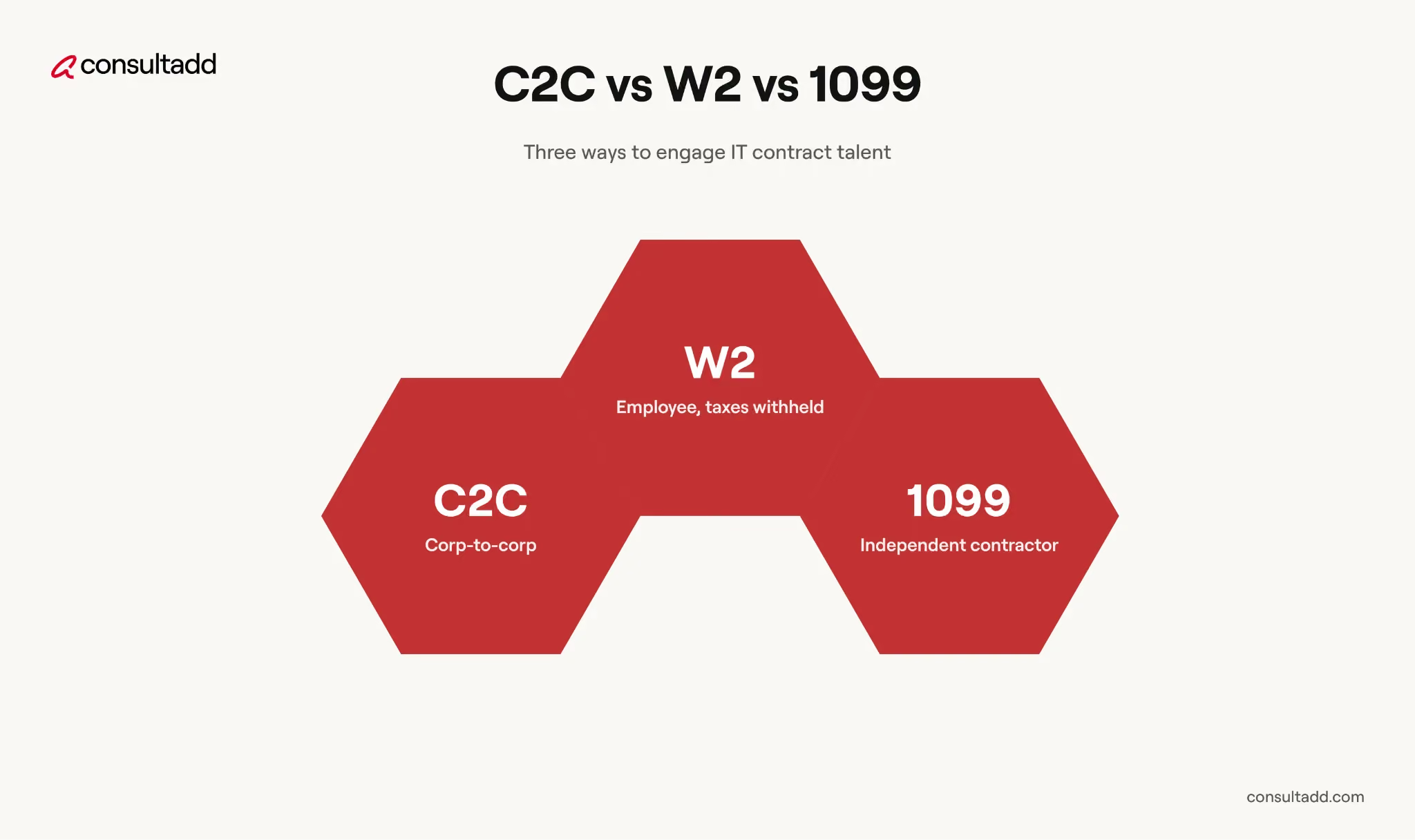
W2 means you're a direct employee, usually of a staffing agency, and taxes come out of your paycheck automatically.
1099 means you're self-employed as an individual. The client reports what they paid you, but nothing gets withheld.
Corp to corp (C2C) means you've set up a registered business, an LLC or S-corp, and the client contracts with that business instead of with you personally.
For a deeper look at how the W2 and C2C sides specifically compare, our guide on W2 vs C2C key differences goes further into visa sponsorship and turnover considerations.
Same Rate, Three Different Paychecks
Here's where the differences actually hit home. Say a role pays an $80 an hour bill rate.
Under W2, the agency withholds income tax, Social Security, and Medicare, and you might get benefits like health insurance or PTO baked in, which lowers the effective rate you'd need to match your take-home goals.
Under 1099, nothing gets withheld up front, but you owe self-employment tax (both halves of Social Security and Medicare) plus income tax, and you're responsible for quarterly estimated payments.
Under C2C, your business invoices the full rate, then your business pays its own taxes and, if you've elected S-corp status, potentially some of that income as a lower-taxed distribution instead of wages.
The math benefits people who understand entity structuring. It works against people who don't.
Our breakdown of what contract work actually means walks through the 1099 side of this math in more detail, including quarterly payment deadlines.
Benefits and Protections Across All Three
W2 employment is the only one of the three that guarantees certain federal protections automatically. The Department of Labor's Fact Sheet 13 on the FLSA employment relationship explains that when a genuine employment relationship exists, the worker is entitled to minimum wage and overtime pay under federal law.
Independent contractors, whether 1099 or C2C, don't get that same guarantee, because the law treats them as running their own business rather than depending on an employer.
Unemployment insurance follows the same split. W2 employees are typically covered because their employer pays into the state unemployment fund. 1099 and C2C workers generally aren't, unless their state has separately opted to extend coverage.
Visa and Work Authorization: Where the Three Diverge
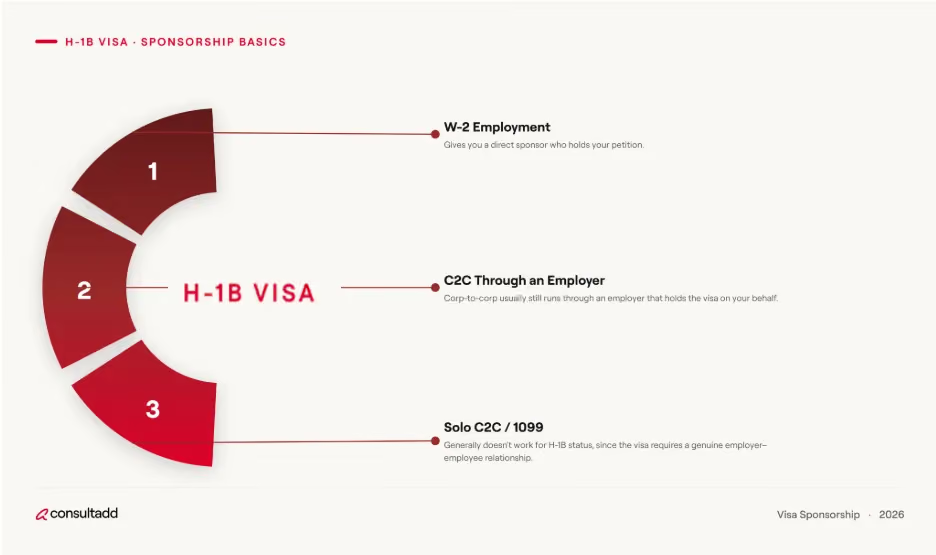
For contractors on a visa, especially H-1B, these categories aren't interchangeable.
- A W2 arrangement gives you a direct sponsor who holds your petition.
- C2C usually still runs through an employer, like a consulting firm, that holds the visa on your behalf.
- A pure solo C2C or 1099 setup generally doesn't work for H-1B status at all, since the visa requires a genuine employer-employee relationship.
USCIS pays particularly close attention to placements at a third-party worksite, and its guidance on H-1B third-party placements requires documentation proving that the relationship holds up for the full length of the petition.
Which One Should You Choose?
W2 tends to fit best if:
- You're newer to contracting and want predictable withholding and possible benefits
- You're on a visa that requires a direct sponsor
- You'd rather not manage quarterly taxes or entity paperwork
1099 tends to fit best if:
- You're doing solo freelance work without wanting to form a business entity
- The engagement is short or part-time
- You're comfortable handling your own taxes and estimated payments
C2C tends to fit best if:
- You already run a registered business and want the tax structuring options it allows
- You're taking on longer or higher-rate contracts where the entity setup pays for itself
- You have (or plan to get) liability insurance in place
If you're still unsure which category applies to your situation, that's usually a conversation worth having with a staffing partner before signing anything, not after.
Start Strong With Consultadd
With 15 years in business and 5,000+ successful staffing engagements, we don't just fill roles, we build reliability into your process. We've supported 65 staffing companies in the past year alone and maintain MSAs with industry leaders like Robert Half and TEKsystems.
Here's what working with Consultadd looks like:
- Talent sourced in under 24 hours
- Ready-to-deploy candidates, vetted for experience and compliance
- Lower turnover risk: we match long-term goals, not just short-term needs
- Seamless compliance: visa, documentation, onboarding? Handled.
- Dedicated 1:1 account managers for responsive, personalized support
- Top 100 candidate matches delivered in the past year
- Strong partnerships with universities to tap into fresh, committed talent
- Post-placement support so your investment grows beyond day one
For candidates, your next opportunity is more than just a job title, it's a chance to build skills, gain experience, and move your career forward. At Consultadd, we connect technology professionals with projects and employers that align with their goals, whether they're looking for contract, contract-to-hire, or long-term opportunities.
The tech job market moves fast, but the right guidance can make all the difference. Ready to take the next step in your career journey? Explore Opportunities >>
Key Takeaways
- W2 gives you withheld taxes and often benefits, but less flexibility and lower headline pay rates.
- 1099 keeps things simple with no entity required, but you carry the full tax burden yourself.
- C2C offers tax structuring advantages for contractors who already run a business, but it demands more setup.
- Only W2 employment guarantees federal minimum wage, overtime, and unemployment insurance protections.
- Visa status often decides this choice for you before pay or tax preferences even enter the picture.
FAQs
Is 1099 the same as corp to corp?
No. A 1099 contractor works as an individual with no business entity involved. A C2C contractor works through a registered LLC or S-corp, and that entity, not the person, is the contracting party.
Which pays more, W2 or C2C?
Neither is automatically higher. C2C bill rates are often quoted higher because the contractor's business now covers taxes and benefits the W2 employer would otherwise handle. Take-home pay depends on how well the rate accounts for those costs.
Can I switch from W2 to C2C mid-contract?
It's possible, but it usually requires setting up a business entity first and renegotiating the contract terms with the agency or client. It isn't a simple mid-stream label change.
Do 1099 or C2C contractors get benefits?
Generally, no. Neither classification includes employer-provided health insurance, PTO, or retirement contributions unless the contractor's own business chooses to provide them.
Is C2C legal on an H-1B visa?
It can be, but typically only when a consulting firm or agency holds the visa sponsorship, not as a fully independent solo arrangement. Documentation requirements are strict for third-party placements.
How do I know which classification a job actually needs?
Check the job posting or ask the recruiter directly, since staffing agencies usually specify W2, C2C, or 1099 requirements upfront. If you're unsure which fits your visa status or business setup, a staffing partner can help you sort it out before you sign anything.
.webp)



.webp)
