
.webp)

Introduction
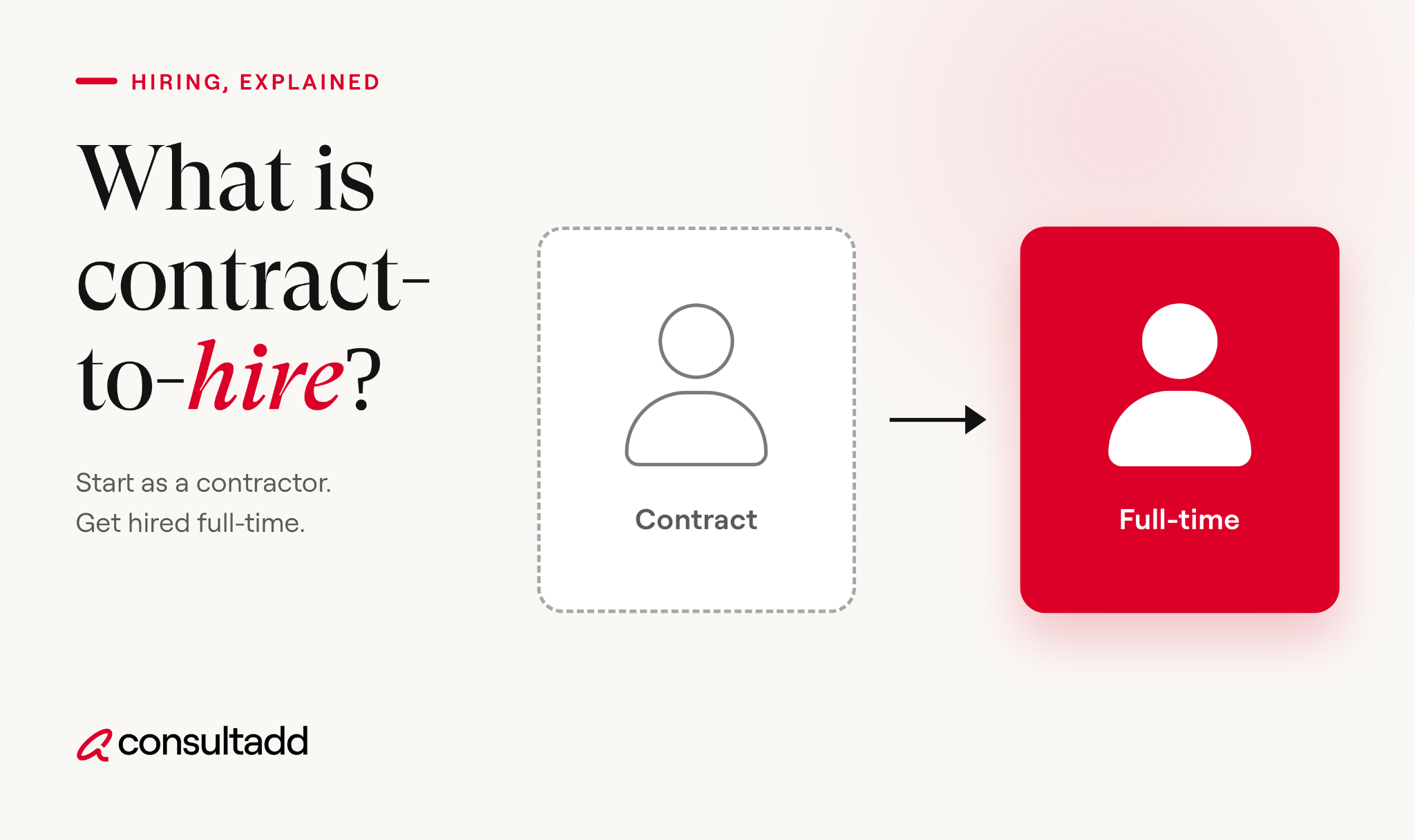
What is contract to hire? It's a hiring model where a person starts on a fixed-term contract, usually through a staffing agency that acts as the legal employer, and the client company has the option to hire them as a permanent employee when the contract ends.
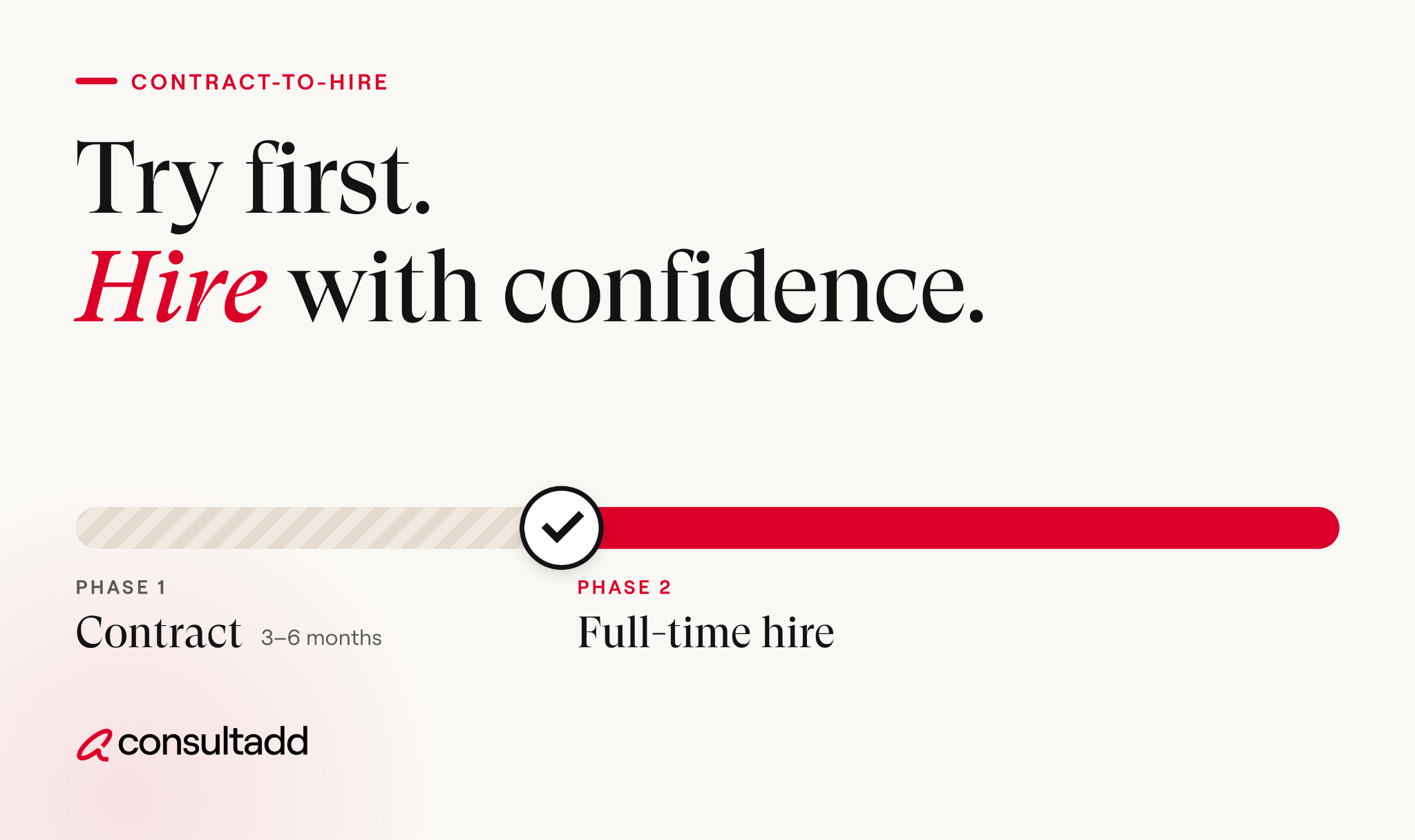
Most contracts run three to six months. If the fit is right, the worker converts to the client's payroll. If not, the assignment simply ends.
For hiring managers, it means you get to see real work before making a salary commitment.
This guide covers the employer side: how the process runs, what it costs, how conversion fees work, and when the model is the wrong choice.
TL;DR
- Contract to hire means a worker starts on a fixed-term contract with the option to convert to a permanent employee at the end.
- A staffing agency is usually the employer of record during the contract, handling payroll, taxes, and I-9 verification.
- You pay a bill rate that includes the worker's pay plus the agency's markup, and possibly a conversion fee if you hire before an agreed date.
- The model works best for roles where skills are hard to judge in interviews and poorly for senior candidates who already have permanent offers.
- Write the conversion criteria, timeline, and fees into the agreement before the worker starts, not at the end.
What is contract to hire?
Contract to hire, also called temp to perm, is an arrangement with three parties: the client company where the work happens, the staffing agency that employs the worker during the contract, and the worker.
During the contract period, the worker does the same job a permanent employee would. They join stand-ups, take tickets, and report to your manager. The difference is on paper. Their paycheck, tax withholding, and any benefits come from the agency, not from you.
At the end of the term, you make one of three calls: convert the worker to a permanent employee, extend the contract, or end the assignment.
Who does what in a contract to hire arrangement
A quick example
Say a healthcare software company needs a DevOps engineer to finish a cloud migration. The hiring manager isn't sure the role will justify permanent headcount after the project, and interviews haven't shown how candidates handle production incidents.
A contract to hire setup lets them bring an engineer on for four months through an agency. By month three, the manager has watched the engineer run on-call rotations and ship infrastructure changes. That's a far better basis for a permanent offer than three rounds of interviews.
If you're looking at this from the candidate side, our guide to contract to hire meaning for job seekers covers pay, benefits, and what to ask before accepting an offer.
How the contract to hire process works for employers
The process isn't complicated, but most problems come from skipping the early steps. Here's how a well-run engagement usually goes.
- Define the role and the conversion criteria. Before anyone is sourced, decide what "good" looks like at month three. Name specific outcomes, such as owning a service end to end or closing tickets without help.
- Agree on terms with the staffing partner. Settle the bill rate, contract length, conversion fee schedule, and the earliest date you can convert without a fee.
- Source, screen, and interview. Interview candidates as you would for a permanent role, and tell them up front that the role is contract to hire.
- Onboard through the agency. The agency completes the I-9 and payroll setup. You handle system access, equipment, and team introductions.
- Run a midpoint review. Give the worker direct feedback against the criteria from step one. Surprises at the end hurt both sides.
- Make the conversion decision. Decide two to four weeks before the contract ends so there's time for an offer and negotiation.
- Convert or close out. Issue your offer letter, enroll the worker in your benefits, and confirm the end date with the agency.
A typical employer timeline
Timelines vary by role. Our stage-by-stage look at how long the hiring process takes shows where delays usually build up.
What contract to hire costs
During the contract, you don't pay the worker directly. You pay the agency an hourly bill rate.
That rate covers the worker's pay plus the agency's markup, which funds employer payroll taxes, workers' compensation, any benefits, recruiting costs, and the agency's margin.
How a bill rate is built
The numbers below are an illustration, not market rates. Actual markups vary by agency, role, location, and volume.
When you compare this to a salaried hire, compare it against the full cost of a permanent employee: salary, your payroll taxes, benefits, recruiting fees, and onboarding time.
Comparing a bill rate to base salary alone makes contract to hire look more expensive than it is.
Conversion fees and buyout clauses
Most agreements include a conversion fee, sometimes called a buyout, if you hire the worker before a set number of hours or weeks. The agency recovers its recruiting cost through the markup over time, and an early conversion cuts that short.
Common structures include a sliding fee that drops the longer the worker stays on contract, and a no-fee conversion after a minimum period.
Get the schedule in writing before the worker starts. Fee disputes at conversion time are avoidable, and they sour the relationship with both the agency and the person you want to hire.
Contract to hire vs direct hire vs contract staffing
Each model fits a different hiring problem. This comparison is from the employer's point of view.
For a closer look at the trade-offs, our breakdown of contract to hire benefits, pros, and cons walks through each one.
When contract to hire makes sense, and when it doesn't
Good fits
Contract to hire works well when a skill is hard to test in an interview.
Think of a data engineer working inside a messy legacy pipeline, or a Salesforce developer who has to learn your custom objects. A few weeks of real work shows more than any take-home test.
It also helps when headcount approval is uncertain. Some managers use the contract period to prove a role's value before asking for a permanent slot.
Poor fits
Senior candidates with several permanent offers rarely accept contract to hire roles. If you're hiring a principal engineer in a tight market, the model can shrink your candidate pool.
It's also a poor fit when you already know the role is permanent and trust your interview process. The contract period then mostly adds cost and delay.
Watch visa status too. If a candidate works through an agency on an H-1B, converting them means your company has to file its own petition.
Plan that legal work before the contract starts, not in the final week.
Compliance points employers should get right
Contract to hire is a W2 arrangement through the agency, and the label matters less than how the relationship works in practice.
The U.S. Department of Labor's guidance on employment relationships under the FLSA explains that classification depends on the economic reality of the relationship, not on what the contract calls the worker.
If someone describes a 1099 or corp-to-corp setup as contract to hire, look closely before you sign.
A few other points to settle with your staffing partner:
- Co-employment. You direct the daily work, so you share some responsibility for a safe, non-discriminatory workplace. Keep pay, benefits, and HR decisions such as discipline with the agency.
- Benefits during the contract. Agency benefits are often thinner than permanent packages. Bureau of Labor Statistics data from July 2023 shows 16.6 percent of temporary help agency workers had employer-provided health insurance, compared with 54.4 percent of workers in traditional arrangements.
- Non-solicitation terms. Your agreement likely bars you from hiring the worker outside its conversion terms for a set period. Read this clause before any informal talk about a permanent role.
- Equal treatment. Contract workers should get the same training, tools, and respect as permanent staff. It's also the only way to get an accurate read on their performance.
Classification also shapes taxes and benefits on the worker's end.
Our comparison of W2, C2C, and 1099 contract types explains who the legal employer is under each one.
How to make the conversion decision
Base the decision on the criteria you wrote down at the start, using evidence from the whole contract period rather than impressions from the last two weeks.
The last row gets overlooked. In the BLS July 2023 survey on contingent work, 44.8 percent of contingent workers said they would have preferred a permanent job. Many contract workers will welcome an offer, but not all. Ask directly, well before the end date.
Expect a salary conversation, too. A contract hourly rate and a permanent salary aren't directly comparable, because the salary comes with your benefits. Show the worker the full package, not just the base number.
Is contract to hire right for your next hire?
Contract to hire gives you months of real performance data before a permanent commitment. In exchange, you pay an hourly markup and may lose some senior candidates who want a permanent offer on day one.
It works when you set conversion criteria and fees up front, review performance at the midpoint, and decide early enough to make a proper offer.
If you're comparing staffing partners to run the process, our guide to the best IT staffing firms covers what to check, from screening depth to placement speed.
Start Strong With Consultadd
With 15 years in business and 5,000+ successful staffing engagements, we don't just fill roles, we build reliability into your process. We've supported 65 staffing companies in the past year alone and maintain MSAs with industry leaders like Robert Half and TEKsystems.
Here's what working with Consultadd looks like:
- Talent sourced in under 24 hours
- Ready-to-deploy candidates, vetted for experience and compliance
- Lower turnover risk: we match long-term goals, not just short-term needs
- Seamless compliance: visa, documentation, onboarding? Handled.
- Dedicated 1:1 account managers for responsive, personalized support
- Top 100 candidate matches delivered in the past year
- Strong partnerships with universities to tap into fresh, committed talent
- Post-placement support so your investment grows beyond day one
For candidates, your next opportunity is more than just a job title, it's a chance to build skills, gain experience, and move your career forward. At Consultadd, we connect technology professionals with projects and employers that align with their goals, whether they're looking for contract, contract-to-hire, or long-term opportunities.
The tech job market moves fast, but the right guidance can make all the difference. Ready to take the next step in your career journey? Explore Opportunities >>
Key takeaways
- Contract to hire lets you evaluate a worker on real work for a fixed term before deciding on a permanent offer.
- The staffing agency is the employer of record during the contract, so you pay a bill rate rather than a salary.
- Conversion fees and no-fee dates belong in the agreement before day one, not in a negotiation at the end.
- The model suits hard-to-assess skills and uncertain headcount, and it struggles with senior candidates holding permanent offers.
- Good conversion decisions rest on written criteria, a midpoint review, and a direct conversation about the worker's interest.
FAQs
What happens at the end of a contract to hire period?
The client company either makes a permanent offer, extends the contract, or ends the assignment. If the worker accepts an offer, they move from the agency's payroll to the client's payroll and benefits. Any conversion fee is settled between the client and the agency.
Do contract to hire employees get benefits?
During the contract, any benefits come from the staffing agency, and they're often more limited than a permanent package. Once the worker converts, they become eligible for the client company's benefits under its normal rules.
Can you negotiate salary when converting from contract to hire?
Yes, and most conversions involve some negotiation. The worker should compare the full permanent package, including benefits and paid time off, against their contract hourly rate. Employers should expect this conversation and prepare a total compensation figure.
Can a contract to hire worker quit before the contract ends?
Usually, yes. The worker is an employee of the staffing agency, and most of those arrangements are at-will. They should still give notice, since leaving early can affect their relationship with the agency and the client.
What is a conversion fee in contract to hire?
A conversion fee is a charge the client pays the staffing agency for hiring the worker before a minimum period set in the agreement. It compensates the agency for recruiting costs it hasn't yet recovered through the hourly markup. Many agreements reduce the fee over time or waive it after a set number of hours.
Is contract to hire the same as temp to perm?
The two terms describe the same model: a temporary assignment with a planned path to permanent employment. "Contract to hire" is more common in IT and professional roles, while "temp to perm" shows up more in administrative and light industrial staffing.



.webp)

.avif)