

Introduction
Here's the contract to hire meaning in plain terms: you take a job that starts as a temporary W2 position through a staffing agency, work it for a set stretch, usually three to twelve months, and then either convert to a permanent employee of the client company or the assignment simply ends.
It works as a trial run for both sides. The employer gets to watch you perform before committing to a full-time salary.
You get to see the team, the workload, and the day-to-day culture before you sign anything long-term.
Below, we will walk through how the process plays out, what it means for pay and benefits, and when it beats a straight full-time offer.
TL;DR
- The contract to hire is a W2 arrangement, not 1099 or corp-to-corp. A staffing agency runs your payroll during the trial period.
- The trial period usually runs three to twelve months. At the end, the client decides whether to extend a permanent offer.
- Pay often runs higher than a comparable permanent role, but benefits and job security typically only kick in after conversion.
- Employers use this model to lower hiring risk and confirm skills and fit before committing to a full-time salary and benefits package.
- Staffing partners like Consultadd handle sourcing, compliance, and conversion paperwork, so neither side gets stuck untangling red tape later.
What contract to hire actually means
A contract to hire role, sometimes called temp to hire or temp to perm, starts you off as an employee of a staffing agency rather than the company where you'll actually work. The agency puts you on its payroll, withholds your taxes, and often provides at least some baseline benefits.
You show up at the client's office (or log into their systems remotely) and do the job like any other team member. The only thing missing is a permanent offer letter from that client, at least for now.
If the assignment goes well, the client extends a direct offer near the end of the contract term. Your pay, benefits, and title usually get renegotiated at that point, sometimes to your advantage since the hiring manager already knows exactly what you bring to the table.
If it doesn't go well, or if the project wraps up, the contract simply ends and you move on to the next opportunity. Nobody has to go through a messy termination process, because there was never a permanent commitment to begin with.
How it differs from temp work and direct hire
Straight temporary work has no conversion path built in. You're brought on for a defined project or busy season, and when it's done, it's done.
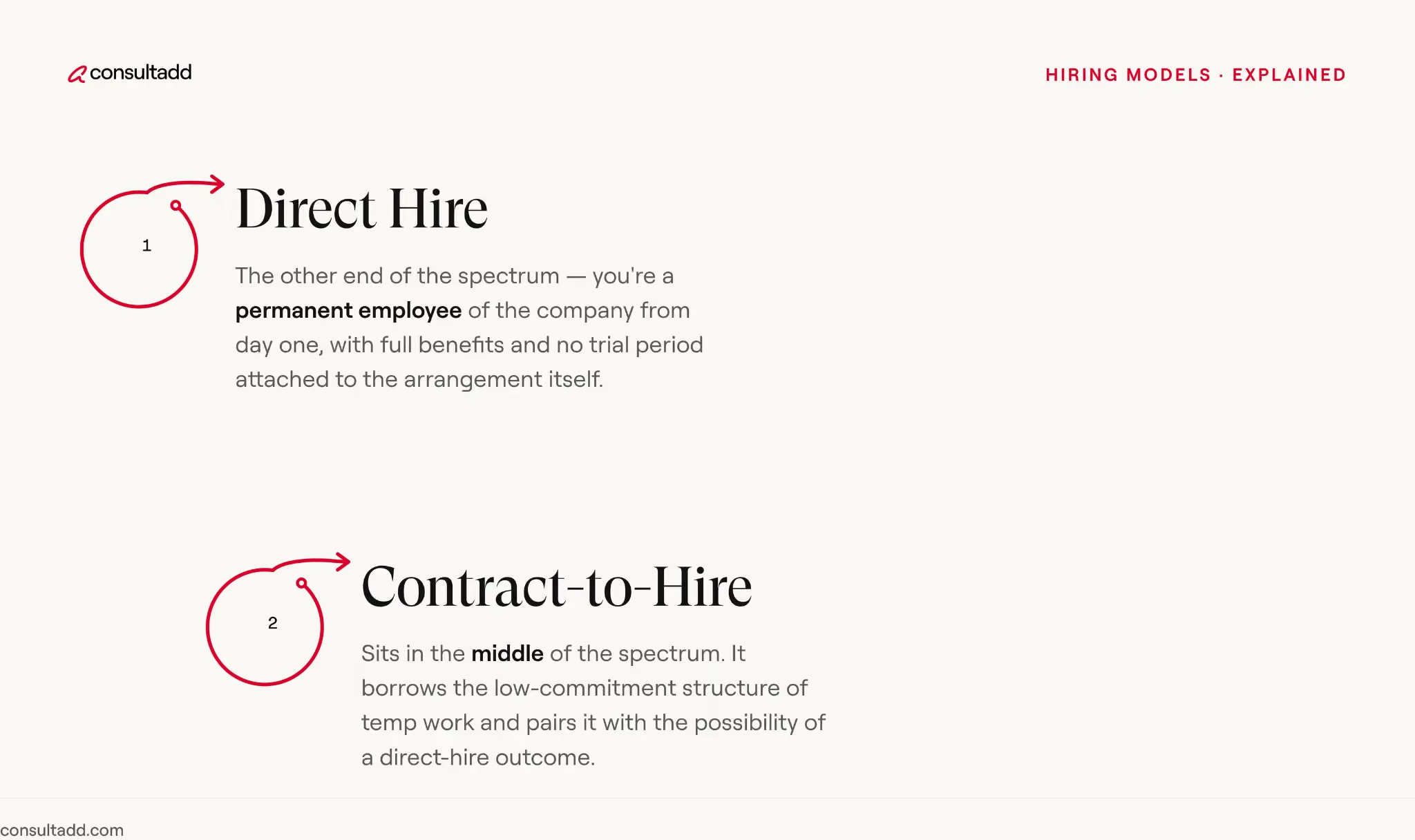
Direct hire sits at the other end of the spectrum: you're a permanent employee of the company from day one, with full benefits and no trial period attached to the arrangement itself (though most jobs still carry an informal probation period).
Contract to hire sits in the middle. It borrows the low-commitment structure of temp work and pairs it with the possibility of a direct-hire outcome.
That's exactly why staffing agencies built the model in the first place: it gives employers a way to de-risk a hiring decision without asking candidates to accept a purely temporary gig.
How the contract to hire process actually works
The mechanics are fairly consistent across the IT staffing industry, even though contract lengths and conversion terms vary by employer.
Typical contract length
Most contract-to-hire assignments in tech run somewhere between three and six months, though specialized roles, like cloud migration work or a niche AI project, sometimes stretch to a year before conversion talks even start.
- Shorter contracts tend to show up when a company needs to fill a role fast and figure out the long-term fit as they go.
- Longer ones are more common when the project itself has a defined end date and permanent headcount depends on whether the work continues past it.
Contract to hire vs full time: what actually changes
This is where most of the confusion around contract to hire meaning actually comes from. On paper, the day-to-day work looks identical to a full-time job.
The differences show up in your paycheck, your benefits, and how quickly you can start.
We've broken down this comparison in more detail, including how it plays out specifically for software engineers, in our guide to contract to hire vs full time for developers.
The short version: contract to hire wins when you want to test a role or a team before committing. Full time wins when you already know you want stability and are willing to trade some flexibility for it.
Contract to hire vs 1099 and corp-to-corp
People often lump contract to hire in with 1099 work or corp-to-corp (C2C) arrangements, but they're built differently, especially when it comes to taxes and who's on the hook for compliance.
If you want the full breakdown of how C2C actually works and who it makes sense for, we cover it in what is C2C employment, explained simply.
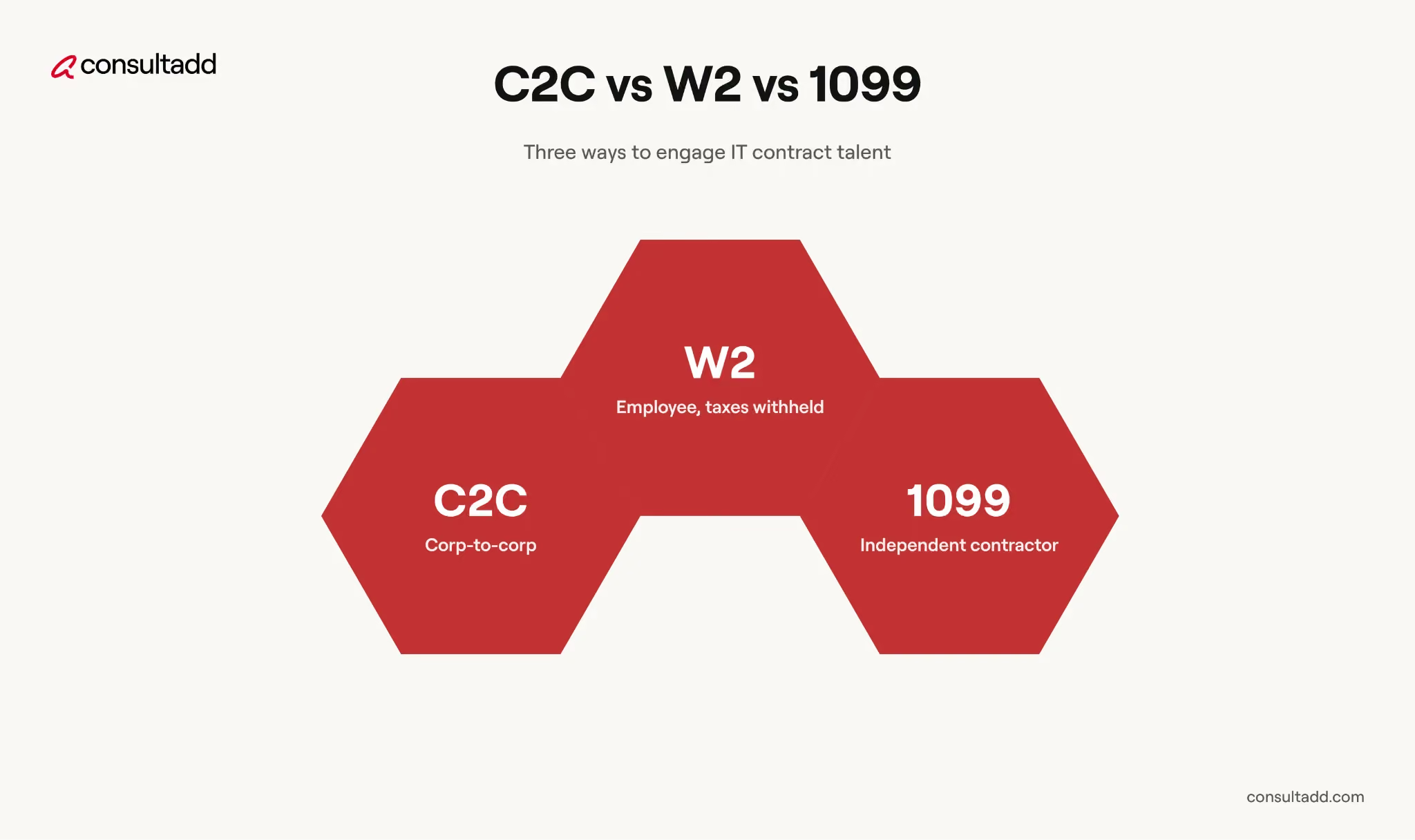
One thing worth knowing: contract to hire is always a W2 relationship.
If a recruiter offers you a "contract to hire" role and then hands you a 1099, that's not actually a contract to hire. It's worth asking directly before you sign anything.
The U.S. Department of Labor's guidance on worker classification under the Fair Labor Standards Act explains why this distinction carries real legal weight, since misclassifying a W2 employee as an independent contractor can strip away minimum wage and overtime protections.
Why employers use contract to hire
Every hiring decision is a bet, and a bad one is expensive.
Contract to hire gives employers a way to hedge that bet. Instead of committing to a full salary and benefits package based on a handful of interviews, they get months of actual, on-the-job evidence before making it permanent.
There's also a practical staffing angle. According to the Bureau of Labor Statistics, contingent and alternative work arrangements have grown steadily, with contingent workers making up 4.3 percent of the U.S. workforce up from 3.8 percent in 2017.
That growth tracks with how many companies now build contract to hire directly into their hiring strategy rather than treating it as a stopgap.
For a deeper look at whether the model fits a given hiring situation, our guide on choosing contract to hire walks through the benefits and the tradeoffs employers should weigh before going this route
What it means for job seekers
If you're the one being offered a contract-to-hire role, a few things are worth knowing going in.
First, the higher hourly rate you're often quoted exists because you're not getting the same benefits package a permanent hire would. Read the offer carefully and ask what happens to your pay and benefits at conversion, not just during the contract.
Second, conversion isn't guaranteed. A client's budget can shift halfway through your contract for reasons that have nothing to do with your performance. That's a real risk, and it's fair to factor it into your decision.
Third, and we'd flag this one especially for anyone new to the staffing world: legitimate agencies never charge job seekers a placement fee. If a recruiter asks you for money to "process" your application, that's a red flag worth walking away from.
Finding the right staffing partner for contract to hire
Not every staffing firm runs contract-to-hire programs the same way.
Placement speed, screening rigor, and how a firm handles compliance during the trial period all vary quite a bit between providers.
We put together a buyer's guide covering what to look for in an IT staffing firm, including benchmarks for how fast a good firm should be able to deliver qualified candidates for contract versus direct-hire roles.
The Society for Human Resource Management also maintains a useful reference on structuring contract and temporary staffing policies if you're building out an internal process rather than working with an outside partner.
Start Strong With Consultadd
With 15 years in business and 5,000+ successful staffing engagements, we don't just fill roles, we build reliability into your process. We've supported 65 staffing companies in the past year alone and maintain MSAs with industry leaders like Robert Half and TEKsystems.
Here's what working with Consultadd looks like:
- Talent sourced in under 24 hours
- Ready-to-deploy candidates, vetted for experience and compliance
- Lower turnover risk: we match long-term goals, not just short-term needs
- Seamless compliance: visa, documentation, onboarding? Handled.
- Dedicated 1:1 account managers for responsive, personalized support
- Top 100 candidate matches delivered in the past year
- Strong partnerships with universities to tap into fresh, committed talent
- Post-placement support so your investment grows beyond day one
For candidates, your next opportunity is more than just a job title, it's a chance to build skills, gain experience, and move your career forward. At Consultadd, we connect technology professionals with projects and employers that align with their goals, whether they're looking for contract, contract-to-hire, or long-term opportunities.
The tech job market moves fast, but the right guidance can make all the difference. Ready to take the next step in your career journey? Explore Opportunities >>
Key takeaways
- Contract to hire is a W2 arrangement run through a staffing agency, not a 1099 or corp-to-corp setup.
- The trial period typically lasts three to twelve months before a permanent offer decision gets made.
- Pay tends to run higher during the contract phase, but benefits and job security usually arrive only after conversion.
- Employers use this model to reduce hiring risk, and job seekers use it to test a role before committing long-term.
- Working with an experienced staffing partner smooths out compliance, onboarding speed, and the conversion process itself.
FAQs
What does contract to hire mean in a job offer?
It means you'll start as a W2 employee of a staffing agency, working at the client's site or remotely, with the possibility of a permanent offer once the contract period ends. It's not a guarantee of permanent employment, just an option built into the arrangement.
Is contract to hire a W2 or 1099 position?
It's always W2. The staffing agency withholds your taxes and handles payroll during the contract period, which is what separates it from 1099 or corp-to-corp arrangements.
How long does a typical contract to hire period last?
Most run between three and six months, though some specialized technical roles extend to a year depending on the project timeline and how quickly the client wants to make a permanent decision.
Can an employer end a contract to hire arrangement early?
Yes. Since you're technically employed by the staffing agency, not the client, the client can end the assignment before the contract term is up, often due to budget changes or shifting project scope rather than performance issues.
Is contract to hire better than a full-time job?
It depends on what you're optimizing for. Contract to hire often pays more hourly and gets you working faster, while full time offers benefits and job security from day one. Neither option is universally better.
Do staffing agencies charge job seekers for contract to hire placements?
No. Reputable agencies get paid by the client company, not the candidate. If anyone asks you for money to secure a contract-to-hire placement, treat it as a warning sign and look elsewhere.


.webp)