.webp)

Introduction
How to source candidates comes down to a repeatable process: agree on the role with the hiring manager, figure out where those people already show up online and in your own database, search with precise filters, check profiles against the must-haves, then reach out with a short, specific message and follow up.
Sourcing means finding people before they apply, which matters most for roles where the best candidates aren't looking.
This guide walks through each step, with search strings, an outreach template, a follow-up schedule, and the metrics that show whether your sourcing is working.
TL;DR
- Sourcing is finding and contacting qualified people who haven't applied yet, while recruiting covers the full hiring process.
- Start every search with an intake meeting that separates true must-haves from nice-to-haves.
- Check your ATS and referrals before searching LinkedIn or GitHub, since past candidates already know your company.
- Boolean and X-ray searches narrow thousands of profiles to a shortlist you can actually review.
- Short, personalized outreach with two or three follow-ups gets more replies than one long message.
What does it mean to source candidates?
Sourcing is the part of hiring where you go looking for people instead of waiting for applications.
A sourcer identifies potential candidates, gathers enough information to judge fit, and starts a conversation. Everything after that first reply, such as screening calls, interviews, and offers, belongs to the broader recruiting process.
The difference matters because the skills are different. Good sourcing is mostly research and writing. Good recruiting is mostly relationship management and closing.
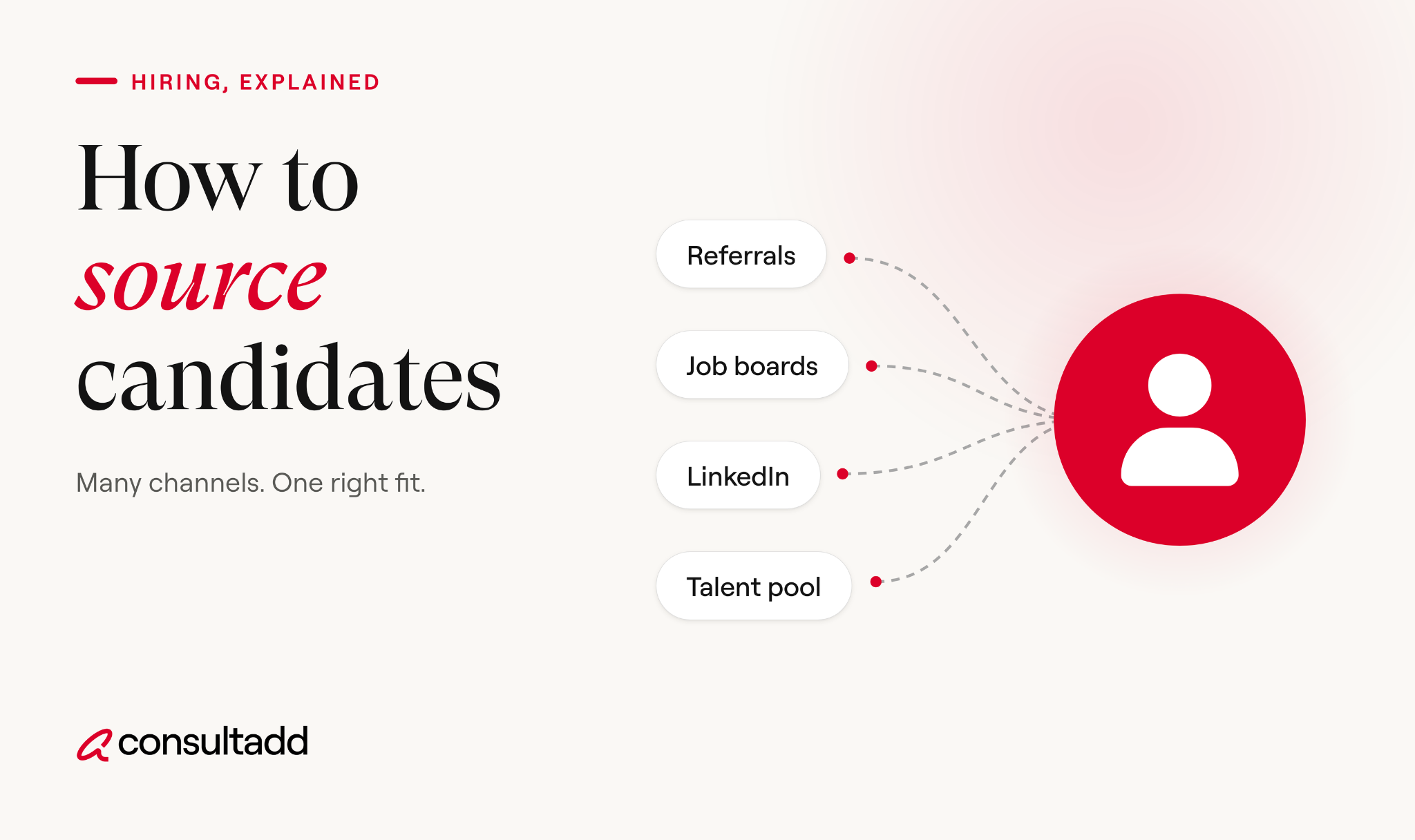
How to source candidates in 7 steps
Step 1: Run a proper intake meeting
Most bad searches start with a vague job description. Before you search, spend 20 minutes with the hiring manager and get answers to a few questions:
- What will this person own in the first six months?
- Which two or three skills are non-negotiable, and which can be learned on the job?
- Which companies or teams have people doing this work today?
- What would make the manager reject a strong-looking resume?
- What's the real budget, location, and work authorization requirement?
That last question saves the most time. A recruiter who finds out about a "no sponsorship" requirement after sending 40 messages has wasted a week.
Step 2: Build a target candidate profile
Turn the intake notes into a search plan. List the job titles people use for this work, including adjacent ones. A data engineer might also call themselves an analytics engineer, ETL developer, or big data developer.
Then list target companies, core skills, and anything that rules a profile out. For example, a search for a senior data engineer might target people with Spark, Airflow, and AWS experience at mid-size SaaS or fintech companies, with four or more years in data roles, and exclude profiles that only show BI dashboard work.
Step 3: Start with candidates you already have
Your applicant tracking system is the cheapest source you own. Search it for past finalists, silver medalists from similar roles, and people who applied a year or two ago and have since gained experience. They already know your company, and many will reply faster than a cold prospect.
Ask your team for referrals too, but be specific. "Know any good engineers?" gets nothing. "Who's the best Airflow person you've worked with?" gets names.
Step 4: Search external sources
Once internal sources are covered, go outside. The right channel depends on the role.
- LinkedIn works for most professional roles. Filter by current title, skills, location, and past companies, and save searches so new matches show up automatically.
- GitHub is useful for engineers whose work is public. GitHub's own guide to searching for users explains how to filter by location, language, and number of repositories.
- X-ray search uses Google to search inside a single site. It helps when you don't have a paid recruiter seat, and Google's help page on refining searches covers the operators you'll need.
- Niche communities, such as Slack groups, meetups, and conference speaker lists, help with specialized roles where profiles are thin.
For a channel-by-channel comparison, our hiring and recruiting strategies playbook covers when each one pays off.
If you hire mostly engineers, our candidate sourcing strategies for tech roles go deeper on technical channels.
Step 5: Screen profiles before you reach out
Don't message everyone your search returns. Check each profile against the must-haves from step one. Look for evidence, not keywords: a project that used the tool, a promotion, a public repo, a talk.
Keep a short note on why each person made the cut. You'll use it to personalize your outreach, and it helps the hiring manager trust your shortlist.
Step 6: Write outreach that gets replies
Most sourcing messages fail because they're long, generic, and all about the company. A message that works usually has four parts: why you're contacting this person, what the role involves, one detail that makes it worth their time, and an easy next step.
Here's an example:
"Hi Priya, I saw your talk on moving batch jobs to Airflow at a data meetup last spring. I'm hiring a senior data engineer for a fintech team doing a similar migration, fully remote, with a real say in the architecture. Would you be open to a 15-minute call next week?"
That's about 55 words. It names something specific, states the role in one line, and asks for a small commitment.
Silence after one message is normal. A simple follow-up schedule helps:
Stop after three or four touches. Pushing past that hurts your reputation and your company's.
Step 7: Track results and adjust
Log every sourced candidate in your ATS with the source, date contacted, and outcome. After a week or two, the numbers will show you what to change, whether that's your search, your message, or the role itself.

Boolean search strings for sourcing candidates
Boolean search uses operators to combine or exclude terms. It works on LinkedIn, most job boards, many ATS platforms, and Google.
Here's a full string for the senior data engineer example:
("data engineer" OR "analytics engineer" OR "ETL developer") AND (Spark OR Databricks) AND Airflow AND AWS NOT (intern OR student)
And an X-ray version for Google:
site:linkedin.com/in ("data engineer" OR "analytics engineer") Airflow Spark "New Jersey"
Start broad, look at the first 20 results, and tighten the string based on what's wrong with them. Too many junior profiles? Exclude titles. Too few results? Remove the least important skill.
Sourcing metrics to track
You don't need a dashboard to start. A spreadsheet with these four numbers per role tells you most of what you need.
A low response rate usually points to the message or the channel. A high response rate with a low interested rate usually points to the role: pay, location, or scope.
A low interview rate means it's time for another talk with the hiring manager, not more sourcing.
If the problem is speed rather than quality, our stage-by-stage look at how long the hiring process takes shows where delays tend to build up.
Sourcing mistakes that cost you candidates
Searching only by exact job title. Titles vary widely between companies, so you'll miss good people. Search by skills and adjacent titles too.
Skipping the ATS. Recruiters often go straight to LinkedIn and ignore hundreds of pre-qualified people already in their own system.
Sending the same message to everyone. Candidates can spot a mass message in the first line.
Narrowing the pool unfairly. Filters based on age, graduation year, or similar proxies can screen out qualified people and create legal risk. The EEOC's guidance on prohibited employment practices applies to recruiting, not just final hiring decisions.
Sourcing harder when the role is the problem. If response rates stay low across channels, the salary, location, or requirements may need to change.
Our guide on how to recruit for hard-to-fill roles covers how to make that case to a hiring manager.
Putting it together: how to source candidates consistently
Knowing how to source candidates well is mostly discipline: a clear intake, a written search plan, internal sources first, careful screening, short outreach, and honest tracking.
Recruiters who stick with that process for a few weeks usually see response rates and shortlist quality improve without buying new tools.
For specialized roles, our guide on filling niche job roles covers where to look when standard channels run dry.
If you're weighing outside help, see how to test a talent sourcing solution before you buy.
Start Strong With Consultadd
With 15 years in business and 5,000+ successful staffing engagements, we don't just fill roles, we build reliability into your process. We've supported 65 staffing companies in the past year alone and maintain MSAs with industry leaders like Robert Half and TEKsystems.
Here's what working with Consultadd looks like:
- Talent sourced in under 24 hours
- Ready-to-deploy candidates, vetted for experience and compliance
- Lower turnover risk: we match long-term goals, not just short-term needs
- Seamless compliance: visa, documentation, onboarding? Handled.
- Dedicated 1:1 account managers for responsive, personalized support
- Top 100 candidate matches delivered in the past year
- Strong partnerships with universities to tap into fresh, committed talent
- Post-placement support so your investment grows beyond day one
For candidates, your next opportunity is more than just a job title, it's a chance to build skills, gain experience, and move your career forward. At Consultadd, we connect technology professionals with projects and employers that align with their goals, whether they're looking for contract, contract-to-hire, or long-term opportunities.
The tech job market moves fast, but the right guidance can make all the difference. Ready to take the next step in your career journey? Explore Opportunities >>
Key takeaways
- Sourcing is proactive: you find and contact qualified people before they apply.
- An intake meeting with clear must-haves, budget, and work authorization rules prevents wasted searches.
- Your ATS and employee referrals are the fastest, cheapest places to start.
- Boolean and X-ray strings turn broad searches into shortlists, and they improve each time you refine them.
- Track response, interested, submittal, and interview rates to see whether the search, the message, or the role needs fixing.
FAQs
What is the difference between sourcing and recruiting?
Sourcing is finding qualified people and starting a conversation with them. Recruiting covers everything after that, including screening, interviews, offers, and closing. In smaller teams, one person often does both.
How do recruiters source passive candidates?
They search LinkedIn, GitHub, and niche communities for people whose experience matches the role, then send short, personalized messages. Passive candidates respond to specifics, such as the problem they'd work on or the team, more than to company boilerplate.
What is X-ray search in recruiting?
X-ray search uses Google operators like site: to search inside a single website, such as LinkedIn profiles or GitHub pages. It's useful when you don't have a paid recruiting tool or want results a platform's own search doesn't show.
Can you source candidates without LinkedIn Recruiter?
Yes. A free LinkedIn account, Google X-ray searches, GitHub, your ATS, referrals, and professional communities can cover most roles. Paid tools mainly save time on filtering and messaging.
How many candidates should you source for one role?
It depends on your own conversion rates. Track how many people you contact per reply, per submittal, and per interview, then work backward from the number of interviews the hiring manager wants. Those ratios vary a lot by role and market.
What should a sourcing outreach message include?
Say why you're contacting this specific person, what the role involves in one or two lines, one detail that makes it appealing, and a small next step like a 15-minute call. Keep it under about 100 words.