Introduction
The best cloud engineer for your open role probably isn't scrolling job boards tonight. She's employed, reasonably happy, and hasn't updated her resume in two years. If your only plan is to post the job and wait, you'll never meet her.
Passive sourcing is the practice of finding and contacting people who fit a role but aren't actively applying for jobs. For tech roles, it's often the difference between a shortlist of whoever applied and a shortlist of people who can actually do the work.
This guide covers where passive tech candidates spend their time, how to write outreach they'll answer, how to follow up without being a pest, and which numbers tell you it's working.
TL;DR
- Passive sourcing means reaching out to qualified people who aren't job hunting, instead of waiting for applications.
- The best places to start are your own ATS, LinkedIn X-ray searches, GitHub, technical communities, and employee referrals.
- Outreach works when it's short, specific to the person's work, and clear about the role, pay range, and next step.
- Plan for two or three follow-ups over a few weeks, then stop and note the contact for later.
- Track reply rate and the share of sourced candidates who reach interviews, not just how many messages you sent.
What passive sourcing means and how it differs from active recruiting
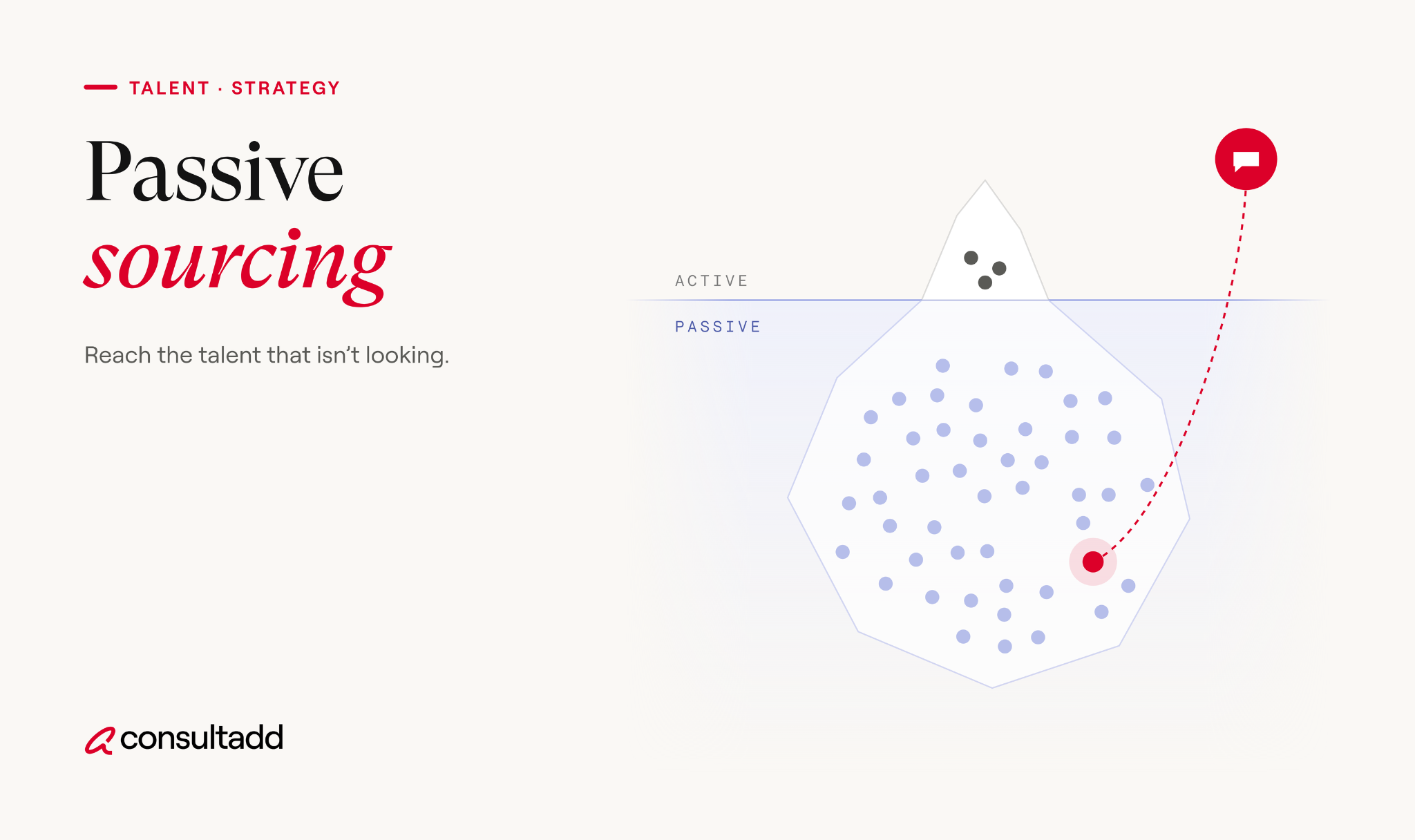
Active recruiting works with people who've raised their hand. They applied, uploaded a resume, or answered a job ad. Passive sourcing flips that. You go find people based on their skills and experience, then give them a reason to talk.
That changes almost everything about the conversation. An active candidate wants to know if they'll get the job. A passive candidate wants to know why they should care.
Neither approach replaces the other. Most good recruiting desks run both and lean harder on passive sourcing for specialized roles.
Why passive sourcing matters for tech hiring
Specialized tech roles rarely fill from applications alone. The people with five years of production Kubernetes experience or deep security operations work tend to be employed, and their employers work hard to keep them.
The broader market keeps that pressure on. The Bureau of Labor Statistics reported 7.5 million job openings in the U.S. in September 2026.
In fast-growing fields, the gap is wider: the BLS projects information security analyst jobs to grow 29% from 2024 to 2034, well above the average for all occupations.
Here's what that looks like on a recruiting desk. A posting for a senior site reliability engineer pulls in plenty of applicants, but most are mid-level system admins hoping to step up. The handful of people who've actually run on-call for large production systems didn't apply. You have to go get them.
Where to find passive tech candidates
Start close to home and work outward. The cheapest candidates to reach are the ones you already know.
Your own ATS and past candidates
Your applicant tracking system is full of people who were strong but didn't get an offer. Recruiters call them silver medalists. They already know your company, and some of them have gained the exact experience you were missing a year ago.
Search your ATS by skill and by past job title, then filter by last contact date. Someone you spoke with 12 to 18 months ago is often worth a fresh note.
LinkedIn and X-ray search
LinkedIn is still the main source for most tech recruiters, but its built-in search has limits. X-ray search uses Google to search LinkedIn profiles directly with Boolean operators.
A simple example for a site reliability engineer in Austin:
site:linkedin.com/in ("site reliability engineer" OR SRE) Kubernetes Terraform "Austin" -recruiter -jobs
Adjust titles, tools, and locations, and you'll surface profiles that LinkedIn's own search may bury. Keep a short list of strings that work for each role you hire often.
GitHub, Stack Overflow, and technical communities
For engineers, public work is often better evidence than a profile. GitHub shows what someone builds and how they write code.
Stack Overflow answers show depth in a specific technology. Open source maintainers, Discord and Slack community members, and people who write technical blogs are all worth a look.
Be respectful here. These spaces exist for technical work, not recruiting. Read someone's work first, and if you reach out, reach out somewhere appropriate, like a listed email address, not a pull request comment.
Employee referrals
Your own engineers know other engineers. A vague "know anyone good?" gets nothing. A specific ask works better: "We need a backend engineer who has built payment systems in Go. Who's the best person you've worked with on that?"
Meetups, conferences, and speaker lists
People who give talks at regional meetups or tech conferences have already shown they can explain their work. Speaker lists and recorded talks are public and easy to search by topic.
For a wider look at sourcing channels and tools, Consultadd's guide on candidate sourcing solutions compares the main options.
How to write outreach passive candidates actually answer
Most recruiter messages get ignored for the same reasons. They're long, generic, and focused on the company instead of the person.
What a good first message includes
Keep it under 100 words if you can. A passive candidate will give you a few seconds at most. In that time, your message should cover:
- Why you're contacting this person specifically, based on their actual work
- What the role is, in one line
- One or two things that might matter to them, such as the tech stack, remote setup, or the problem the team is solving
- The pay range, if you're allowed to share it
- A small next step, like a 15-minute call
The pay figures above are just an example. Use the real range for your role.
Follow-up timing
Most replies don't come from the first message. People are busy, and a polite follow-up often gets the response the first note didn't. Just don't overdo it.
A "not right now" is still useful. Note why, and you'll have a warmer conversation when you reach out about the next role.
Passive sourcing mistakes that burn bridges
Tech communities are small. A sloppy outreach habit gets noticed and shared. These are the mistakes we see most often:
- Sending the same template to hundreds of people with only the first name changed
- Pitching roles that clearly don't match the person's level or skills
- Hiding the pay range until the third call
- Messaging people on platforms meant for technical work, like GitHub issues
- Following up five or six times after no response
- Ghosting candidates once they've agreed to talk
If you send outreach in automated sequences, check the email rules too. The FTC's CAN-SPAM compliance guide explains that the law isn't limited to bulk email.
Any message that promotes your agency's services needs accurate sender details and a working way to opt out, and opt-out requests must be honored within 10 business days.
How to measure passive sourcing
Message volume tells you how busy you were, not whether it worked. Track these instead:
- Reply rate: the share of people who answer your outreach. A low rate usually points to weak targeting or generic messages.
- Positive reply rate: replies that lead to a call, not just "no thanks."
- Sourced-to-interview rate: how many sourced candidates make it to a hiring manager interview.
- Hires by source: which channels actually produce hires, so you can spend your time there.
- Time to first qualified candidate: how long it takes from opening the search to having someone worth submitting.
Review these monthly. If X-ray search is producing replies but none of those people pass the technical screen, your search strings need work.
Consultadd's guide to technical recruitment covers what good screening looks like after the first call.
Making passive sourcing part of your weekly routine
Passive sourcing works best as a habit, not an emergency move when a req has been open for six weeks. Block time each week to search, message, and follow up, even when you don't have an urgent role. The people you contact now become the warm conversations you need later.
It also helps to know when to hand off part of the work.
For hard-to-fill roles on a tight timeline, a partner with a pre-vetted candidate pool can cover the gap while your own passive sourcing builds up.
For more on engaging people who aren't looking, see Consultadd's take on recruiting top tech talent.
Start Strong With Consultadd
With 15 years in business and 5,000+ successful staffing engagements, we don't just fill roles, we build reliability into your process. We've supported 65 staffing companies in the past year alone and maintain MSAs with industry leaders like Robert Half and TEKsystems.
Here's what working with Consultadd looks like:
- Talent sourced in under 24 hours
- Ready-to-deploy candidates, vetted for experience and compliance
- Lower turnover risk: we match long-term goals, not just short-term needs
- Seamless compliance: visa, documentation, onboarding? Handled.
- Dedicated 1:1 account managers for responsive, personalized support
- Top 100 candidate matches delivered in the past year
- Strong partnerships with universities to tap into fresh, committed talent
- Post-placement support so your investment grows beyond day one
For candidates, your next opportunity is more than just a job title, it's a chance to build skills, gain experience, and move your career forward. At Consultadd, we connect technology professionals with projects and employers that align with their goals, whether they're looking for contract, contract-to-hire, or long-term opportunities.
The tech job market moves fast, but the right guidance can make all the difference. Ready to take the next step in your career journey? Explore Opportunities >>
Key takeaways
- Passive sourcing reaches qualified people who aren't applying, which matters most for specialized and senior tech roles.
- Start with the people you already know in your ATS, then expand to X-ray search, GitHub, communities, and referrals.
- Short, specific outreach that names the role, the pay range, and a small next step gets far more replies than generic praise.
- Two or three spaced follow-ups are enough. After that, log the contact and check back later.
- Measure replies, interviews, and hires by source so you know which channels deserve your time.
FAQs
What is passive sourcing in recruitment?
Passive sourcing is finding and contacting people who match a role but aren't actively looking for a job. Instead of waiting for applications, recruiters search databases, professional networks, and communities, then reach out directly. It's most useful for specialized roles where strong candidates are already employed.
What is the difference between active and passive candidates?
Active candidates are job hunting and apply to openings on their own. Passive candidates are usually employed and not applying, though many will consider the right offer. Passive candidates need a clear reason to move, while active candidates mainly need a fast, clear process.
Where can I find passive candidates for tech roles?
Good starting points include your own ATS, LinkedIn and Google X-ray searches, GitHub, Stack Overflow, and technical communities. Employee referrals and conference speaker lists also work well for senior roles. The right mix depends on the role and how specialized it is.
How do you approach a passive candidate?
Keep the first message short and specific to their work. Explain the role in a line, share what might interest them and the pay range if possible, and ask for a small next step like a 15-minute call. Generic templates are easy to spot and usually get ignored.
How many times should you follow up with a passive candidate?
Two or three follow-ups spread over about two weeks is a reasonable limit. Each one should add something new instead of repeating the first message. If there's still no reply, stop and note the contact for a future role.
Is passive sourcing worth the extra effort?
For hard-to-fill tech roles, it usually is, because the strongest candidates often aren't applying anywhere. It takes more research per candidate than screening applicants, but the matches tend to be closer. For high-volume, entry-level roles, job posts may be enough on their own.