

Introduction
Ask ten recruiters where their best tech hires came from and you'll get ten different answers. One swears by referrals. Another lives on LinkedIn. A third gets most of her placements from people she spoke to two years ago.
They're all describing candidate sourcing channels, the places and methods you use to find people for open roles. The right channel depends on the role, the deadline, and how many people with those skills are looking for work right now.
This guide breaks down the main sourcing channels for tech hiring, which ones fit which roles, and how to track what's actually producing hires.
TL;DR
- Candidate sourcing channels fall into two groups: inbound channels where candidates come to you, and outbound channels where you go find them.
- Job boards bring volume, referrals bring fit, and your own database is usually the fastest and cheapest place to start.
- Specialized tech roles need outbound channels like X-ray search, technical communities, and talent partners, because strong candidates rarely apply.
- Most hiring teams get better results from three or four channels they work well than from ten they work badly.
- Track source of hire, interview rate, and time to first qualified candidate for every channel, then shift effort toward what works.
What candidate sourcing channels are
A sourcing channel is any route a candidate takes into your hiring process. A job post on Indeed is a channel. So is a referral from your lead engineer, a message you sent through LinkedIn, or a shortlist from a staffing partner.
It helps to split channels into two groups:
- Inbound channels bring candidates to you. Job boards, your careers page, and social media posts all wait for people to apply.
- Outbound channels mean you go to the candidate. Search, direct outreach, referrals, and community sourcing all start with you.
Inbound gives you volume with little effort per candidate, but you only reach people who are looking. Outbound reaches the people who aren't, which matters a lot in tech.
The Bureau of Labor Statistics counted 7.5 million U.S. job openings in September 2026, so the strongest engineers usually have options before they ever see your post.
This guide is about channels, meaning where candidates come from. If you're comparing the tools and vendors that help you work those channels, Consultadd's guide to candidate sourcing solutions covers that side.
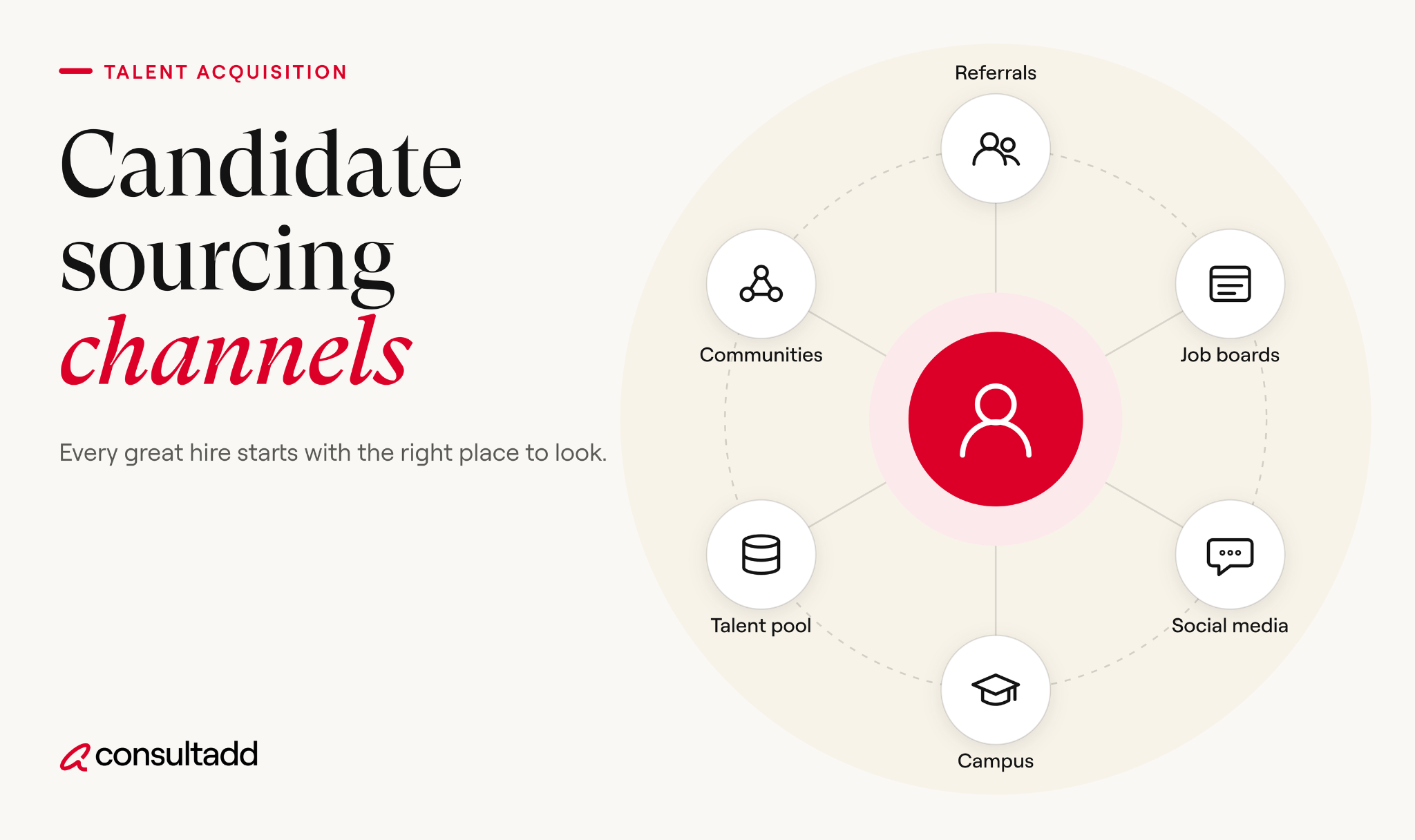
The main candidate sourcing channels compared
Every channel trades off speed, cost, and fit. Here's how the common ones behave in tech hiring.
Job boards and niche boards
General boards like Indeed and LinkedIn Jobs bring the most applicants. Tech-focused boards like Dice or Built In bring fewer but more relevant ones.
Either way, expect to screen out a large share of people who don't meet the core requirements.
Job boards work well for roles with a large talent pool, such as junior developers, QA testers, or help desk staff.
Your careers page
People who apply through your careers page already know who you are. Volume depends almost entirely on your brand. A well-known product company gets steady traffic; a 40-person services firm gets very little.
Your own ATS and past candidates
This is the most overlooked channel. Your applicant tracking system holds people who interviewed well but didn't get an offer, plus applicants for roles you closed. They're pre-screened, they know your company, and reaching them costs nothing but time.
Employee referrals
Referrals tend to produce candidates who fit the team and stay longer, because your employees know both sides. The catch is that people refer people like themselves.
The EEOC warns that relying on word-of-mouth recruiting can violate the law if it means new hires come almost entirely from one group. Use referrals as one channel among several, not the only one.
LinkedIn search and X-ray search
Direct search is the core outbound channel for most tech recruiters. LinkedIn Recruiter works, and X-ray search through Google with Boolean strings often surfaces profiles the built-in search misses. It's slower per hire, but it reaches people who would never apply.
Technical communities and events
GitHub, Stack Overflow, open source projects, Discord and Slack groups, meetups, and conference speaker lists all show people's actual work.
They take the most effort, but they're where you'll find senior engineers and specialists. Read someone's work before you reach out.
University and bootcamp partnerships
Campus programs, career fairs, and bootcamp partnerships build an early-career pipeline. They're slow to set up and seasonal, but they pay off for teams that hire juniors every year.
Staffing agencies and talent partners
A partner with a pre-vetted bench can send qualified candidates in days instead of weeks. You pay for that through a placement fee or a bill rate, so this channel fits urgent, specialized, or contract roles best.
Consultadd's explainer on pre-vetted candidates covers when that trade-off makes sense.
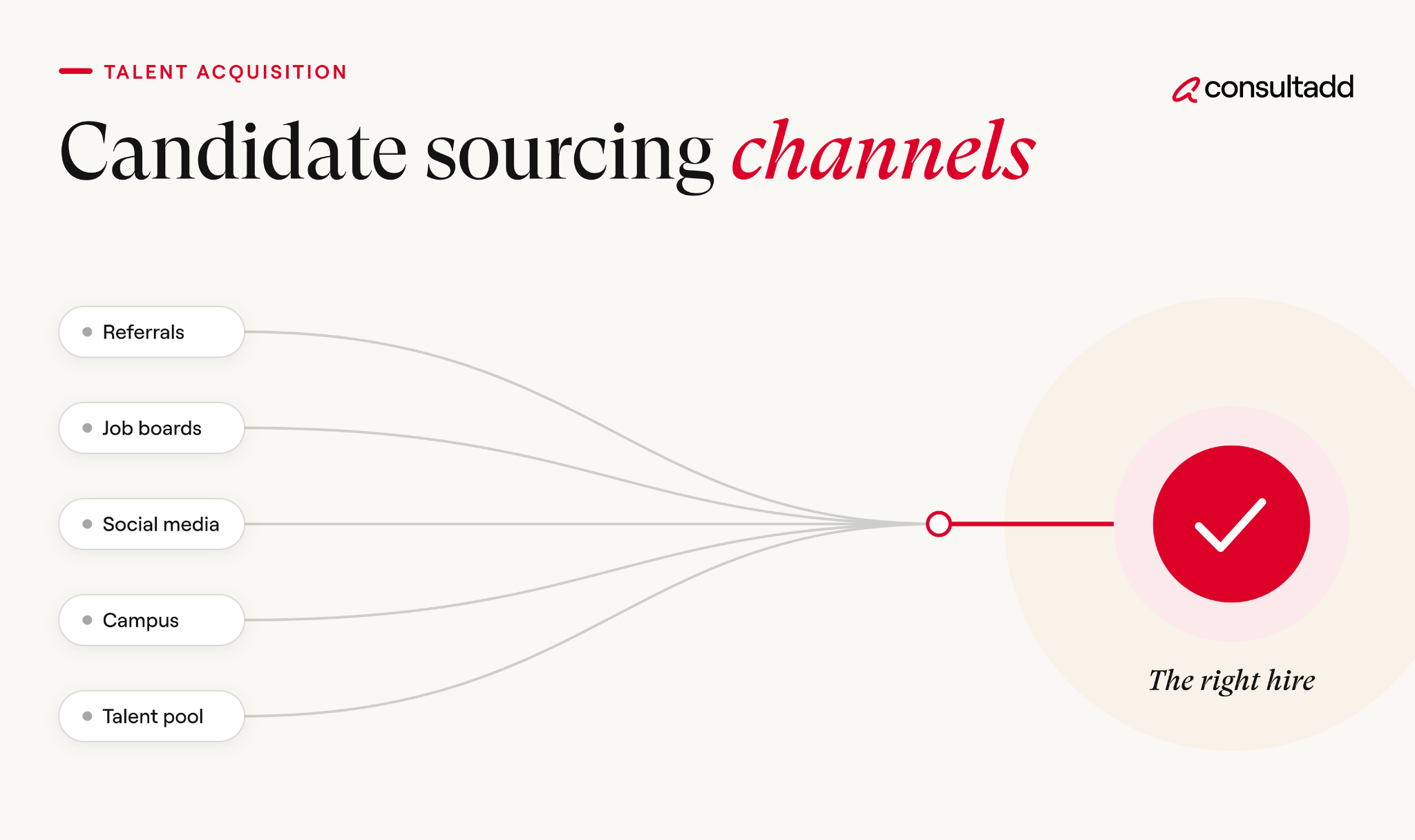
Which sourcing channels work for which tech roles
The right channel depends mostly on how many qualified people are actively looking for that role. The smaller that group, the more you need outbound channels.
Take two roles opening the same week. A help desk technician post on a general job board will likely fill from applicants. A senior cloud security engineer probably won't.
Demand for security skills keeps climbing, and the BLS projects information security analyst jobs to grow 29% from 2024 to 2034. People with that experience rarely need to apply anywhere.
Use this as a starting point, not a rule. If your company has a strong engineering brand, inbound may work for senior roles too. If you're hiring in a small local market, even junior roles may need outbound effort.
How to build a channel mix and track source of hire
Three or four channels worked well will beat ten worked badly. Pick a mix for each role family, run it for a quarter, and let the numbers decide what stays.
Pick your mix
- Start with your ATS. Before you post anything, search your own database for people who already fit.
- Add one inbound channel. Post on the board where your target candidates actually look, not every board you can afford.
- Add one or two outbound channels. Choose based on the role table above: referrals and X-ray search for most experienced roles, communities for specialists.
- Decide your backup. Set a date, say three weeks in, when you'll bring in a talent partner if the pipeline is still thin.
Track every candidate's source
None of this works unless every candidate in your ATS has a source tag. Make it a required field. "LinkedIn" isn't specific enough either; split it into job post, InMail, and X-ray search so you can see which one actually produced the hire.
Review these every month and adjust each quarter.
For more on tightening the steps after sourcing, see Consultadd's guide to technical recruitment and its breakdown of efficient tech hiring strategies.
Common sourcing channel mistakes
Most channel problems aren't about the channel. They're about how it's used. These come up again and again on recruiting desks:
- Posting the same job description on every board and calling it a sourcing strategy
- Skipping your own ATS and paying to find people you already have
- Leaning on referrals so heavily that every new hire looks like the current team
- Judging channels by applicant volume instead of hires and retention
- Bringing in a staffing partner only after a role has been open for two months
- Leaving source fields blank, so nobody knows what actually worked
The fix for most of these is the same: decide your mix up front, tag every candidate, and look at the numbers before you spend more.
Choosing candidate sourcing channels for your next role
The best candidate sourcing channels for your team are the ones your data says produce hires who stay. Start with your own database, add one inbound and one or two outbound channels that fit the role, and set a clear point where you'll call in help.
For specialized tech roles, plan for outbound from day one.
If you want ideas for reaching people who aren't applying, Consultadd's take on recruiting top tech talent covers outreach and engagement.
And if you're also trying to widen who your channels reach, its guide to diversity hiring strategies in tech is a useful companion.
Start Strong With Consultadd
With 15 years in business and 5,000+ successful staffing engagements, we don't just fill roles, we build reliability into your process. We've supported 65 staffing companies in the past year alone and maintain MSAs with industry leaders like Robert Half and TEKsystems.
Here's what working with Consultadd looks like:
- Talent sourced in under 24 hours
- Ready-to-deploy candidates, vetted for experience and compliance
- Lower turnover risk: we match long-term goals, not just short-term needs
- Seamless compliance: visa, documentation, onboarding? Handled.
- Dedicated 1:1 account managers for responsive, personalized support
- Top 100 candidate matches delivered in the past year
- Strong partnerships with universities to tap into fresh, committed talent
- Post-placement support so your investment grows beyond day one
For candidates, your next opportunity is more than just a job title, it's a chance to build skills, gain experience, and move your career forward. At Consultadd, we connect technology professionals with projects and employers that align with their goals, whether they're looking for contract, contract-to-hire, or long-term opportunities.
The tech job market moves fast, but the right guidance can make all the difference. Ready to take the next step in your career journey? Explore Opportunities >>
Key takeaways
- Candidate sourcing channels split into inbound channels that wait for applicants and outbound channels that go find people.
- Your own ATS is often the fastest and cheapest channel, and the one most teams skip.
- The smaller the pool of active candidates for a role, the more you need referrals, direct search, communities, or a talent partner.
- Referrals produce strong fits, but relying on them alone can narrow who you hire.
- Tag the source of every candidate and judge channels by hires, interview rates, and retention, not applicant volume.
FAQs
What are candidate sourcing channels?
Candidate sourcing channels are the routes candidates take into your hiring process, such as job boards, referrals, direct search, and staffing partners. Some are inbound, where candidates apply to you. Others are outbound, where you find and contact them.
What is the best sourcing channel for tech roles?
There isn't one best channel. Job boards work for roles with many active job seekers, while senior and specialized roles usually need referrals, direct search, or a talent partner. Your own source-of-hire data is the best guide for your team.
What is the difference between inbound and outbound sourcing?
Inbound sourcing waits for candidates to come to you through job posts, your careers page, or social media. Outbound sourcing means you search for people and reach out first. Outbound takes more effort per candidate but reaches people who aren't applying.
How do you measure the effectiveness of a sourcing channel?
Tag every candidate with their source, then track hires, interview rate, time to first qualified candidate, cost per hire, and early retention for each channel. A channel with lots of applicants but few hires is usually costing you more than it looks.
How many sourcing channels should a recruiter use?
Most recruiters do best with three or four channels per role family. That usually means your ATS, one inbound channel, and one or two outbound channels. Adding more channels spreads your time thin without improving results.
When should you use a staffing agency as a sourcing channel?
A staffing agency or talent partner makes sense when a role is urgent, highly specialized, or short-term. It also helps when your own channels haven't produced qualified candidates after a few weeks. You pay a fee or bill rate, but you save recruiter time and shorten the search.