

Introduction
If you're wondering how to recruit for hard-to-fill roles, you're probably staring at a job req that's been open for two months with barely any qualified applicants in the pipeline. You're not doing anything wrong. The market itself has shifted.
Nearly seven in ten HR professionals now say they struggle to recruit for these exact positions, and the usual playbook of posting a job and waiting isn't cutting it anymore.
The good news is that hard-to-fill roles aren't unfillable. They just need a different approach than the roles that draw 200 applicants in a week.
This guide covers what actually moves the needle: fixing the job post, sourcing instead of waiting, widening who counts as qualified, and knowing when contract talent solves the problem faster than another round of interviews.
TL;DR
- Hard-to-fill roles need active sourcing, not another job board posting.
- Most job descriptions overstate requirements and scare off qualified candidates before they apply.
- Passive candidates, the people not actively job hunting, are often your best bet for niche skills.
- Speeding up your interview process matters as much as finding candidates in the first place.
- Contract or contract-to-hire talent can fill the gap while your search for a permanent hire keeps running.
Why Hard-to-Fill Roles Stall
Before fixing anything, it helps to know why these roles get stuck in the first place. It's rarely one single cause.
Robert Half's 2026 data found 47% of employers report difficulty finding skilled professionals, and the shortage is heaviest in specialized technical and cybersecurity roles. The ISC2 Cybersecurity Workforce Study puts a number on just one corner of that gap: 4.8 million unfilled cybersecurity positions worldwide, with the workforce needing to grow by 87% to catch up with demand.
A few patterns show up again and again in stalled searches:
- The job description asks for a unicorn: five years of experience in a tool that's been around for three
- The role only gets posted on job boards, so it only reaches people already looking
- The interview process takes six weeks, and the best candidates get poached before you make an offer
- Compensation wasn't benchmarked against what specialists in that skill actually earn right now
None of these are hard to fix once you see them clearly. The fix just takes more effort than clicking "post" and waiting.
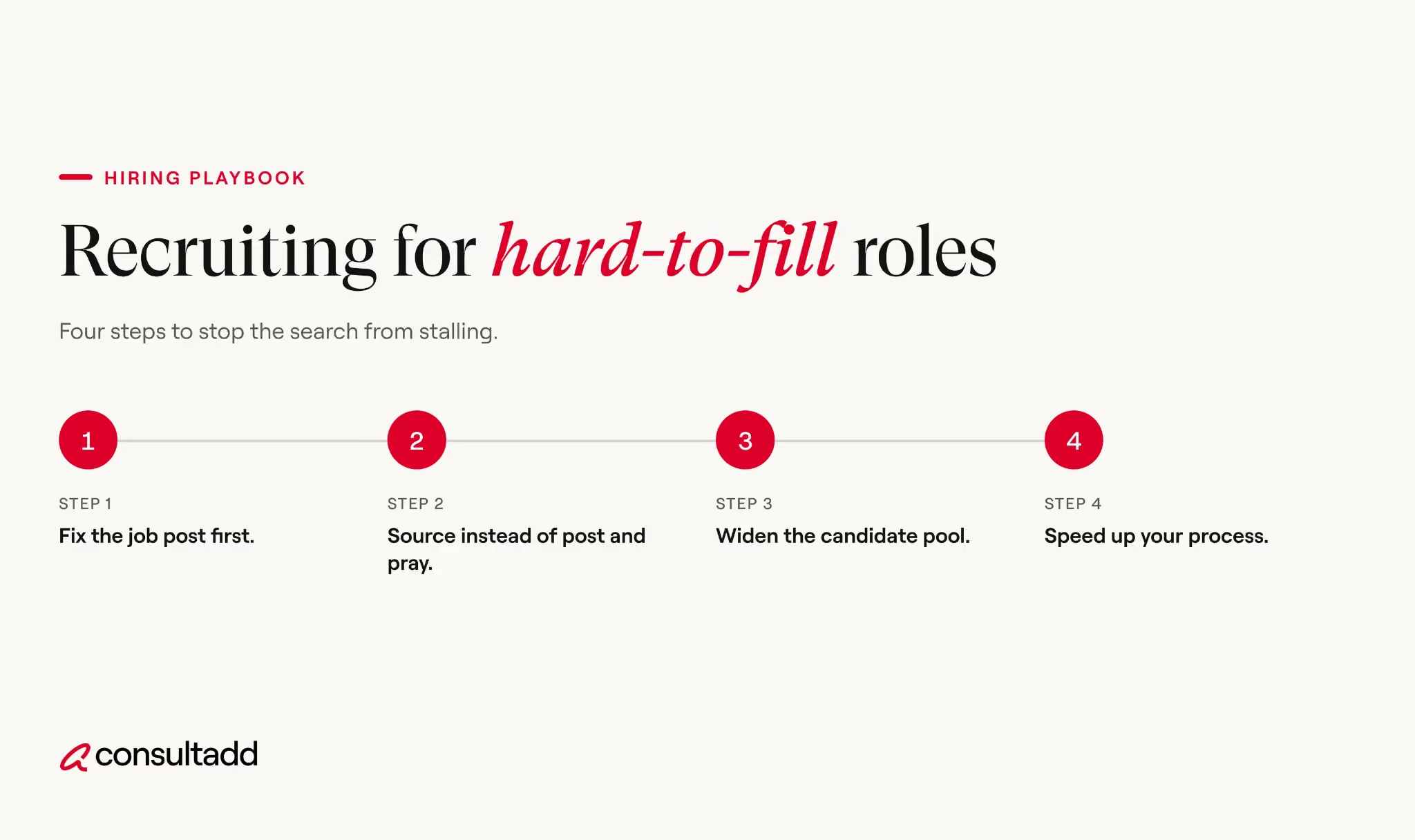
Step 1: Fix the Job Post First
Most hard-to-fill roles start with a job description that's working against you. Hiring managers tend to write a wish list instead of a requirements list, and candidates who'd otherwise apply talk themselves out of it.
Go through the posting and separate "must have" from "nice to have." A candidate who meets 70% of the real requirements is usually worth an interview, especially for roles where the skill itself is scarce.
Cut the requirement count down to what the person actually needs on day one, not what would be nice to have eventually.
Pay transparency helps too. Jobs that list a salary range draw more qualified applicants than ones that don't, since serious candidates skip listings where compensation is a mystery.
Step 2: Source Instead of Post and Pray
Here's the part most teams skip: the best candidates for hard-to-fill roles usually aren't applying to anything. They're employed, not actively looking, and only open to a conversation if someone reaches out directly.
Sourced candidates convert into hires at a far higher rate than inbound applicants for specialized roles, which is exactly why niche recruiting firms build their entire model around outreach instead of postings. A few sourcing channels worth building into your process:
- LinkedIn outreach targeted at people in adjacent roles, not just the exact title you're hiring for
- Referrals from your current team, since referred candidates tend to be a stronger fit and move faster through the process
- Alumni networks from companies known for training people in the skill you need
- Niche community forums and Slack groups specific to the discipline, from data engineering to instrumentation
Building this kind of pipeline takes real time.
If your internal team is stretched thin, this is often where working with a specialized IT staffing partner makes sense, since sourcing for scarce skills is most of what that kind of partner does all day.
Step 3: Widen the Candidate Pool
A big reason roles sit open is that the search stays too narrow. Widening the pool doesn't mean lowering the bar. It means looking in more places for people who can do the job.
Internal mobility is worth a hard look too. A growing share of organizations now train existing employees for hard-to-fill roles instead of only recruiting externally, since someone who already understands your systems and culture can often ramp up on a new skill faster than an outside hire can ramp up on your company.
Step 4: Speed Up Your Process
Finding the right candidate doesn't matter if your process loses them before an offer goes out. Slow hiring is one of the most fixable problems on this list, and it costs teams candidates they'd otherwise land.
A few changes that consistently shorten time-to-fill:
- Combine interview rounds instead of scheduling five separate one-hour calls across three weeks
- Give hiring managers a same-week deadline for feedback after each interview
- Tell candidates where they stand after every stage, even if the answer is "still deciding"
- Set a target number of days for each stage and track when a req blows past it
Teams with structured, faster processes report noticeably lower first-year turnover alongside quicker fills, which suggests speed and quality aren't actually in tension the way people assume.
When to Bring in Contract Talent
Sometimes the honest answer is that a permanent search will keep running for months while the work still needs to get done today. This is where contract or contract-to-hire talent earns its place in the plan.
Bringing in a contractor for the scarce skill lets your team keep shipping while the permanent search continues in the background. It also gives you a real trial period.
If the contractor is a strong fit, converting them to a full-time offer is often smoother than starting a brand-new search from zero.
Robert Half's research found 45% of employers plan to increase contract hiring specifically to close gaps faster, which tells you this isn't a fallback option anymore. It's a standard part of how hard-to-fill roles get covered.
If you're weighing this route, our guide on are staffing agencies worth it walks through how to decide between a contract hire, a full outsourced team, or continuing the permanent search alone.
Start Strong With Consultadd
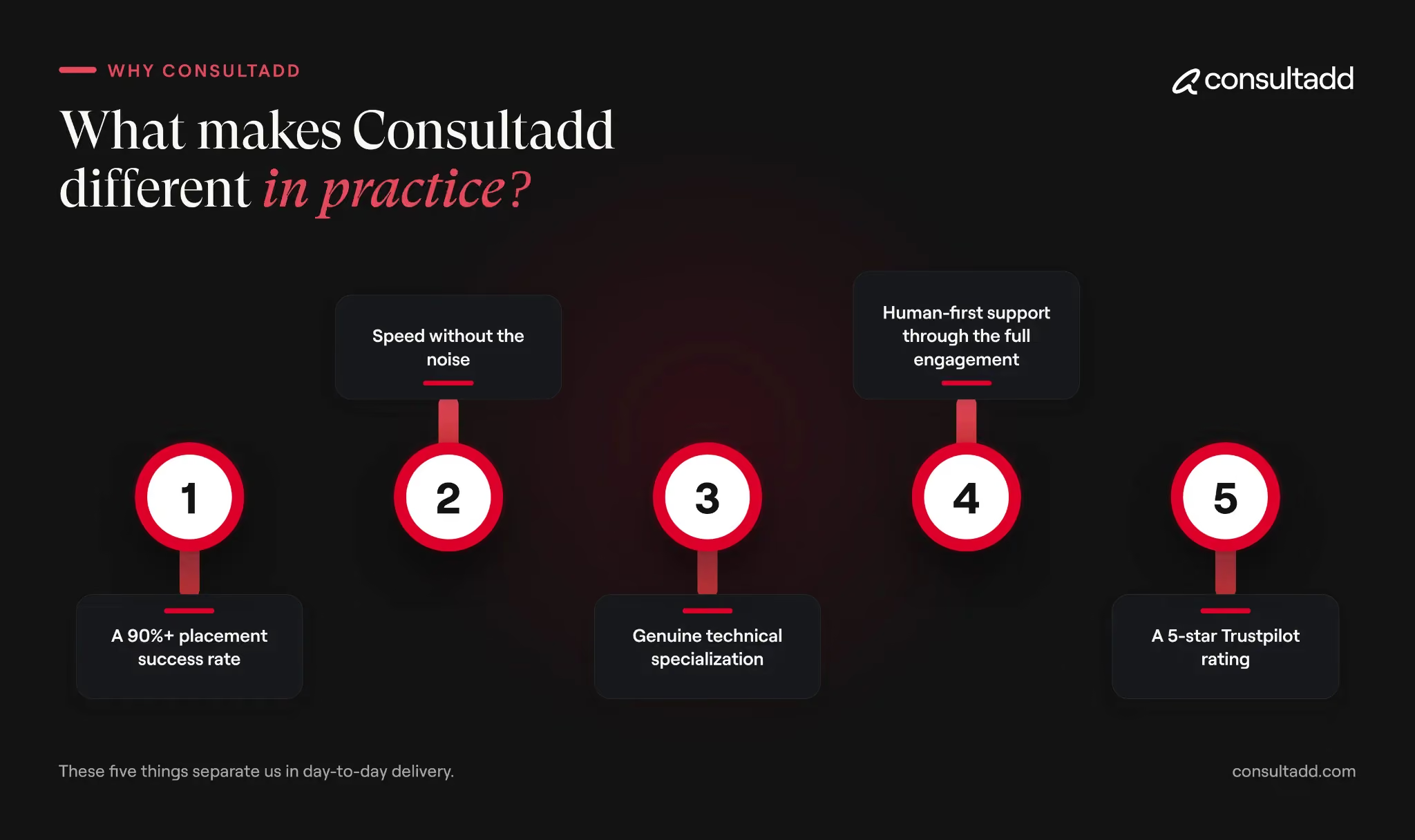
With 15 years in business and 5,000+ successful staffing engagements, we don't just fill roles, we build reliability into your process. We've supported 65 staffing companies in the past year alone and maintain MSAs with industry leaders like Robert Half and TEKsystems.
Here's what working with Consultadd looks like:
- Talent sourced in under 24 hours
- Ready-to-deploy candidates, vetted for experience and compliance
- Lower turnover risk: we match long-term goals, not just short-term needs
- Seamless compliance: visa, documentation, onboarding? Handled.
- Dedicated 1:1 account managers for responsive, personalized support
- Top 100 candidate matches delivered in the past year
- Strong partnerships with universities to tap into fresh, committed talent
- Post-placement support so your investment grows beyond day one
For candidates, your next opportunity is more than just a job title, it's a chance to build skills, gain experience, and move your career forward. At Consultadd, we connect technology professionals with projects and employers that align with their goals, whether they're looking for contract, contract-to-hire, or long-term opportunities.
The tech job market moves fast, but the right guidance can make all the difference. Ready to take the next step in your career journey? Explore Opportunities >>
Key Takeaways
- Hard-to-fill roles usually stall because of an inflated job description, a narrow candidate pool, or a slow process, not a total absence of qualified people.
- Active sourcing beats posting and waiting, especially for specialized or passive candidates.
- Widening where and how you look for candidates opens up talent you'd otherwise miss.
- A faster interview process keeps strong candidates from disappearing to a competing offer.
- Contract or contract-to-hire talent can cover the gap while your permanent search keeps running.
FAQs
What makes a role "hard to fill"?
A role is generally considered hard to fill when it stays open well beyond your typical time-to-fill, usually because it needs a scarce skill, a specific certification, or experience that few candidates in the market actually have.
How long should a hard-to-fill role stay open before changing strategy?
If a role has been open twice as long as your average time-to-fill with few qualified applicants, that's a signal to shift from posting to active sourcing rather than waiting longer for the same approach to work.
Should I lower the requirements to fill the role faster?
Not exactly. The better move is separating true requirements from nice-to-haves, so you're not screening out candidates who could do the job well but don't match every line on a wish-list description.
Is contract hiring a good fit for hard-to-fill technical roles?
Yes, especially when the skill is scarce and the work can't wait for a permanent search to finish. Many contract placements convert to full-time offers once both sides confirm the fit.
How much does a slow interview process actually cost recruiting?
Strong candidates for scarce skills often have competing offers, so every extra week in your process raises the odds they accept somewhere else before you extend an offer.
What's the difference between sourcing and posting a job?
Posting waits for candidates to find and apply to your listing. Sourcing means your team or recruiting partner reaches out directly to qualified people, including those not actively job hunting, which matters most for specialized roles.
.webp)