

Introduction
Here's the paradox defining recruitment right now: applications per job opening have roughly doubled since 2022, and employers still can't fill their roles.
More resumes, worse outcomes. Which is exactly why hiring and recruiting strategies matter more than hiring and recruiting effort. Teams drowning in applicants don't need to work harder; they need a system that attracts the right people, filters accurately, and closes fast.
The pressure is structural, not seasonal. Recruiters today handle 93% more applications and 40% more open roles than in 2021, with teams 14% smaller. Meanwhile 75% of recruiters tell LinkedIn they struggle to find candidates with the right skills. Volume went up, signal went down, and headcount went sideways.
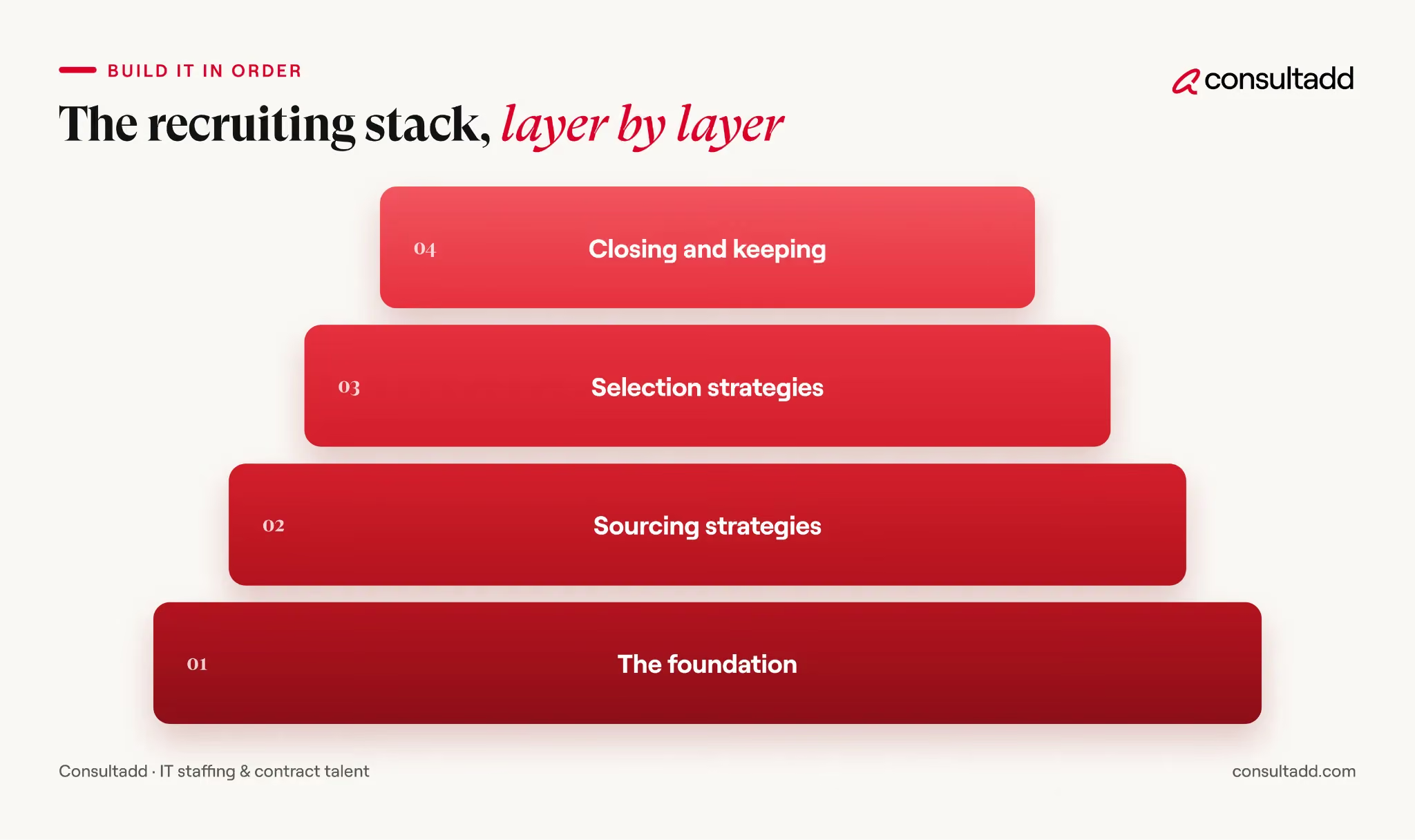
This playbook lays out a complete strategy across four layers: the foundation, sourcing, selection, and closing, plus the metrics that tell you whether any of it is working.
TL;DR
- A hiring strategy is a connected system across four layers: workforce planning and employer brand, sourcing channels, structured selection, and offer-to-onboarding, measured end to end.
- Skills-based hiring is now the default: roughly 70% of employers prioritize demonstrated skills over degrees, and doing so can expand talent pools dramatically.
- The highest-ROI sourcing channels are usually the least glamorous: internal mobility, employee referrals, and warm pipelines for repeat roles.
- Structured interviews with scorecards beat improvised conversations on both speed and accuracy, and they're the guardrail that makes AI screening safe to use.
- Track quality of hire and 90-day retention alongside speed metrics; a fast process that produces mis-hires is just failing quickly.
Strategy vs a pile of tactics
Most companies don't have a hiring strategy. They have a job board subscription, an ATS nobody configured properly, and a set of interview habits inherited from whoever hired the current managers. Tactics without architecture.
A real strategy answers four questions in order: What talent will the business need, and when? Where will we find it? How will we decide accurately?
And how do we close candidates and keep them past year one? Each layer feeds the next; a brilliant interview process can't rescue an empty pipeline, and a full pipeline is wasted on coin-flip interviews.
One framing note before the layers. This guide is the architecture; if you want a ground-level look at specific tactics companies are running right now, our companion piece on the hiring strategies companies are actually using pairs well with it.
Layer 1: The Foundation
Workforce planning before requisitions:
Reactive hiring, opening a req the day someone resigns, guarantees you're always paying rush prices in time and salary.
Quarterly planning with department heads (growth roles, likely attrition, skills the roadmap will demand) converts emergencies into scheduled work. Even a rough forecast beats none: if engineering will need four hires by Q3, sourcing starts now, not in Q3.
Job design and honest requirements:
Every requirement on a job post is a filter, and most posts are over-filtered. Separating true must-haves from nice-to-haves, and cutting degree requirements where skills can be tested instead, widens the pool without lowering the bar.
This is the entry point to skills-based hiring, now practiced in some form by roughly 70% of employers, up from 65% in 2024.
Employer brand as pipeline infrastructure:
Candidates research you before applying: reviews, salaries, your careers page, how your engineers talk online. Brand work isn't vanity; it's conversion rate.
The practical version is unglamorous: honest job descriptions, posted salary ranges where feasible, visible employee stories, and responding to reviews like a company that listens.
Layer 2: Sourcing Strategies
No single channel wins. The strategy is a portfolio, weighted by role type and urgency:
Three of these deserve emphasis in 2026.
Internal mobility is the most underpriced channel:
Leading organizations now target filling around 30% of mid-to-senior roles internally, and companies with mature skills data manage even more.
Internal fills cost less, ramp faster, and signal to everyone else that careers grow here, which quietly improves retention across the board.
Pipelines beat searches.
If you hire the same role more than twice a year, a warm pipeline (past silver-medal candidates, engaged passive prospects, alumni) changes the economics entirely.
Starting a search from zero every time is the single most expensive habit in recruiting.
Contract and contract-to-hire deserve a seat in the strategy, not the emergency drawer:
Flexible capacity decouples "work is getting done" from "permanent hire decided," which is precisely what volatile 2026 headcount planning needs.
Layer 3: Selection Strategies
Sourcing gets people to the door. Selection decides whether the next two years go well, and it's where most processes quietly leak accuracy.
Structured interviews are the highest-leverage fix:
Same questions per role, criteria-based scorecards, independent scoring before group debriefs.
Decades of selection research back this, and SHRM's guidance links structured screening to better 90-day performance and lower early attrition. It's also faster: rubrics kill the endless "let's add one more round to be sure" cycle.
Test skills, don't infer them:
Work samples, job simulations, and role-relevant assessments predict performance better than resume pedigree.
The skills-based approach can expand US talent pools by an order of magnitude for many roles, and it's fairer at the same time, a rare free lunch.
Use AI as a screen, never a judge:
With around 87% of companies now using AI somewhere in recruitment, the question isn't whether but how.
The pattern that works: AI for scheduling, sourcing suggestions, first-pass matching, and note-taking; humans for every consequential judgment. Two cautions earn their place here.
Candidates use AI too (79% of job seekers, by recent counts), so resume polish signals less than it used to, another argument for testing skills directly. And unaudited screening models carry real bias and compliance risk, so keep humans reviewing rejections and vendors answerable for their models.
Candidate experience is a selection strategy:
Slow feedback and ghosting don't just annoy people; they select for candidates with no other options.
Set SLAs (feedback within 24 hours, decisions within days of the final round) and tell candidates the timeline upfront.
The teams that fixed this are the same ones that fixed the broader dysfunctions we cataloged in what's broken in IT recruitment.
Layer 4: Closing And Keeping
Offers fall apart in the last mile more than anywhere else, usually for preventable reasons.
Close with speed and transparency:
Top candidates hold multiple offers and short windows. Pre-approve compensation bands so offers go out in days, not weeks of committee review.
Lead with the full picture: salary, equity, benefits, growth path. Exploding offers and lowball-then-negotiate games win short-term and poison your brand long-term, in an era where every candidate can read about it afterward.
Onboarding is part of recruiting:
The hire isn't successful when the offer is signed; it's successful when the person is productive and still there at month twelve. Structured onboarding, a real 30-60-90 plan, an assigned buddy, and early wins measurably lift 90-day retention.
Given that replacing a professional employee costs somewhere between half and twice their annual salary once productivity loss is counted, onboarding is the cheapest retention program you'll ever run.
Retention data feeds the top of the funnel:
Exit and stay interviews tell you which sources, managers, and role designs produce people who thrive versus churn.
That loop, hire, measure, adjust sourcing and selection, is what makes the whole thing a strategy rather than a conveyor belt.
Measuring what matters
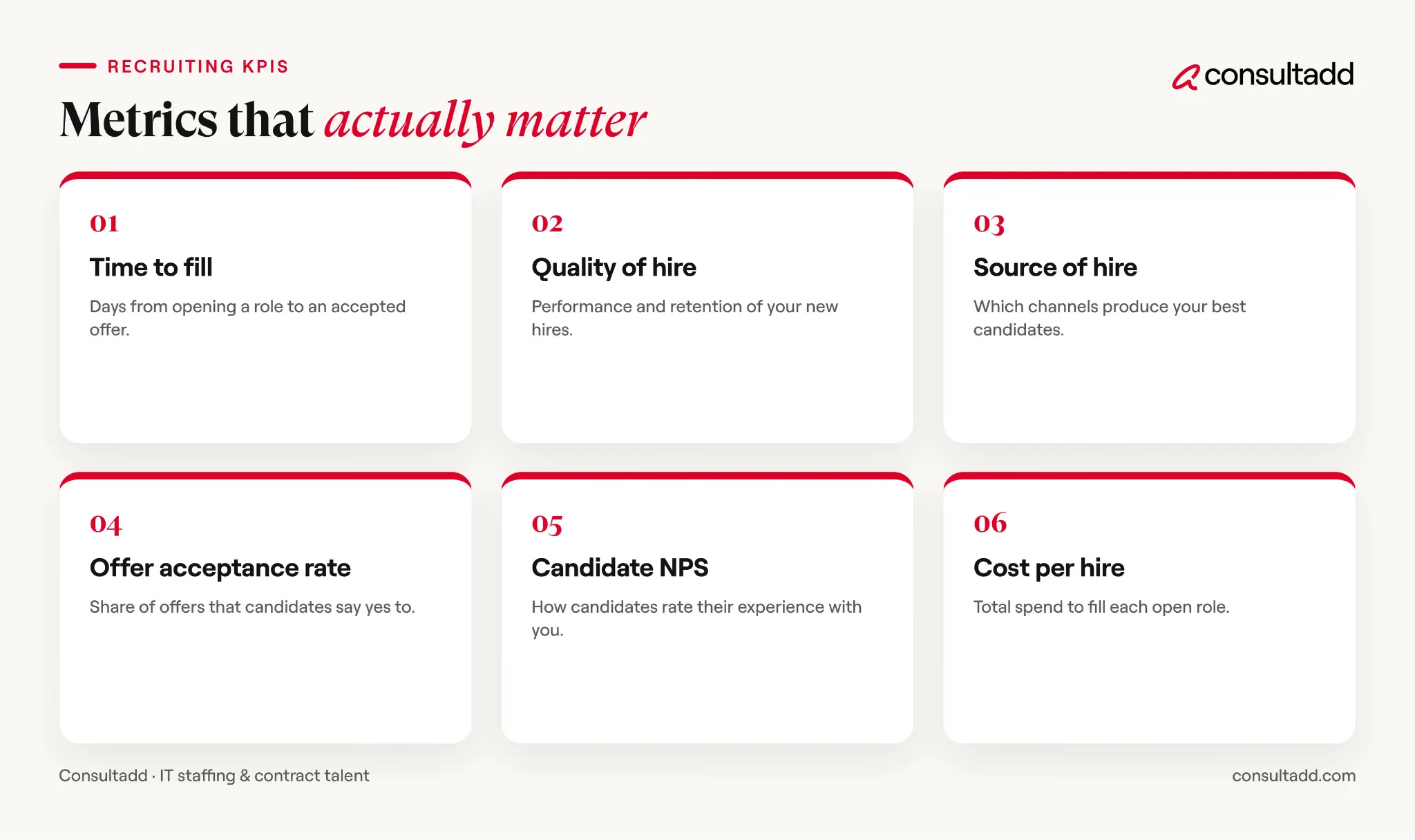
You can't steer what you don't measure, and you'll mis-steer if you measure only speed:
The meta-lesson across all four layers: nothing here is exotic. Skills over pedigree, warm pipelines over cold searches, structure over improvisation, speed with respect, and measurement that includes quality. The companies winning talent in 2026 aren't running secret plays. They're running boring ones, consistently.
Start Strong With Consultadd
With 15 years in business and 5,000+ successful staffing engagements, we don't just fill roles, we build reliability into your process. We've supported 65 staffing companies in the past year alone and maintain MSAs with industry leaders like Robert Half and TEKsystems.
Here's what working with Consultadd looks like:
- Talent sourced in under 24 hours
- Ready-to-deploy candidates, vetted for experience and compliance
- Lower turnover risk: we match long-term goals, not just short-term needs
- Seamless compliance: visa, documentation, onboarding? Handled.
- Dedicated 1:1 account managers for responsive, personalized support
- Top 100 candidate matches delivered in the past year
- Strong partnerships with universities to tap into fresh, committed talent
- Post-placement support so your investment grows beyond day one
For candidates, your next opportunity is more than just a job title, it's a chance to build skills, gain experience, and move your career forward. At Consultadd, we connect technology professionals with projects and employers that align with their goals, whether they're looking for contract, contract-to-hire, or long-term opportunities.
The tech job market moves fast, but the right guidance can make all the difference. Ready to take the next step in your career journey? Explore Opportunities >>
Key takeaways
- Effective hiring and recruiting strategies form a system across four layers: foundation (planning, job design, brand), sourcing, selection, and closing/onboarding, with metrics tying them together.
- Skills-based hiring is the 2026 default: ~70% of employers now prioritize demonstrated ability over degrees, expanding pools and improving fairness simultaneously.
- Weight your sourcing portfolio toward internal mobility, referrals, and warm pipelines; they consistently beat job-board volume on quality per dollar.
- Structured interviews with scorecards, direct skills testing, and AI-with-human-oversight are the selection combination that raises both speed and accuracy.
- Measure quality of hire and 90-day retention alongside time to fill and cost per hire, then reallocate budget toward the channels producing people who stay.
FAQs
What are the most effective hiring and recruiting strategies in 2026?
The consistent winners: skills-based hiring with direct assessments, internal mobility programs, employee referral systems, warm talent pipelines for repeat roles, structured interviews with scorecards, and AI-assisted screening kept under human oversight. The effectiveness comes from running them as a connected system rather than isolated tactics.
What is the difference between hiring and recruiting?
Recruiting is the attraction side: sourcing, engaging, and building a pipeline of candidates. Hiring is the decision side: assessing, selecting, and making the offer. A complete strategy covers both, plus onboarding, because a great pipeline feeding a broken selection process (or vice versa) still produces bad outcomes.
What is skills-based hiring and why does it matter?
It means evaluating candidates on demonstrated abilities, through work samples, assessments, and structured competency interviews, instead of degrees or brand-name employers. Around 70% of employers now practice it because it expands the talent pool substantially, reduces mis-hires, and improves diversity without lowering standards.
How is AI changing recruiting strategy?
AI now handles scheduling, sourcing suggestions, first-pass screening, and candidate communication at most companies, cutting administrative load significantly. The strategic rule that separates good implementations: AI accelerates, humans decide. Unaudited screening models carry bias and compliance risk, and with most candidates using AI to polish applications, direct skills testing matters more than ever.
Which recruiting channel gives the best return?
For most organizations, employee referrals and internal mobility deliver the highest quality per dollar, followed by warm pipelines for frequently hired roles. Job boards produce volume but heavy screening costs. The honest answer requires your own source-of-hire data: track which channels produce people who perform and stay, then shift budget accordingly.
How do you measure whether a hiring strategy is working?
Pair speed metrics (time to fill, offer acceptance rate) with quality metrics (quality of hire, 90-day and first-year retention) and efficiency metrics (cost per hire, source of hire). Segment by role family and review quarterly. Improvement in speed at the expense of quality means the strategy is failing faster, not working better.



.webp)