

Introduction
Let's be honest: IT recruitment in 2026 is not a simple task. You post a job, get flooded with applications, many of them AI-generated and somehow still struggle to find someone who can actually do the work.
The best candidates are off the market in days. Hiring processes stretch for weeks. And by the time an offer goes out, the candidate has already accepted something else.
This is not a rare frustration. It is the industry norm right now. Seventy-six percent of employers faced talent shortages in 2025, with IT roles at the top of that list.
At the same time, technology hiring teams only met about 50% of their hiring goals in 2025, a number that has been stuck flat for two consecutive years despite widespread investment in AI tools and recruitment software. The problem is not a lack of effort. It is a structural one.
This blog breaks down what is actually happening in IT recruitment right now, what the data says about where hiring teams are losing ground, and what strategies are making a measurable difference.
TL;DR:
- IT recruitment in 2026 is more competitive than ever, with talent shortages, longer hiring cycles, and increasing competition for specialized tech skills.
- Skills-based hiring has become the most effective recruitment strategy, enabling companies to identify capable candidates beyond traditional resumes and degrees.
- Building proactive talent pipelines and streamlining interviews helps organizations reduce time-to-hire and secure top candidates before competitors do.
- Strong employer branding and a positive candidate experience significantly improve application quality, offer acceptance rates, and overall hiring success.
- Partnering with specialized IT staffing firms provides faster access to pre-vetted tech talent and helps fill difficult roles in AI, cybersecurity, cloud, and data science.
The State of IT Recruitment: What the Numbers Tell Us
Before jumping into solutions, it helps to understand the scale of the problem.
The demand for tech talent is not slowing. U.S. employers posted nearly 1.1 million technology and IT jobs in 2025. AI, ML, and data science roles grew 163% year over year. Cybersecurity postings jumped 124%.
And yet, 71% of technology leaders say skills shortages have caused project delays with nearly half reporting that projects have been cancelled entirely because they could not staff the right people.
The tech sector's unemployment rate remains near historic lows, which means hiring is not slow because demand has dropped.
It is slow because the talent pool is genuinely thin for specialized roles, candidates hold multiple offers simultaneously, and hiring processes have not adapted quickly enough to keep pace with how fast the market moves.
Why Traditional IT Recruitment Is Falling Short
A few specific patterns keep coming up when you look at why hiring teams struggle:
Outdated screening processes. Relying on resumes and degree requirements alone filters out a huge portion of qualified talent. Nearly half of all technology job postings no longer require a four-year degree, and 47% of recent technology hires came from non-traditional paths. If your screening still defaults to credentials over capability, you are cutting yourself off from a large share of the talent pool.
Slow hiring cycles. The average time-to-hire in tech has been creeping upward, not down. Interview scheduling delays, unclear ownership between hiring managers and recruiters, and slow feedback loops all compound the problem. A clear majority of technology leaders report longer hiring timelines over the past year, with only a small fraction managing to move faster.
Skills misalignment. Resumes, especially in an era of AI-generated applications, are a poor signal of actual ability. Hiring teams report that candidate skills increasingly fail to match what resumes suggest, forcing additional evaluation steps that slow things down further.
Reactive hiring. Most organizations only start recruiting when a role opens. By that point, the talent pipeline is cold, the timeline is tight, and the team is already under pressure. That is a losing position to hire from.

What Is Actually Working in IT Recruitment Right Now
The good news is that some teams are pulling ahead, and the approaches they are using are not complicated
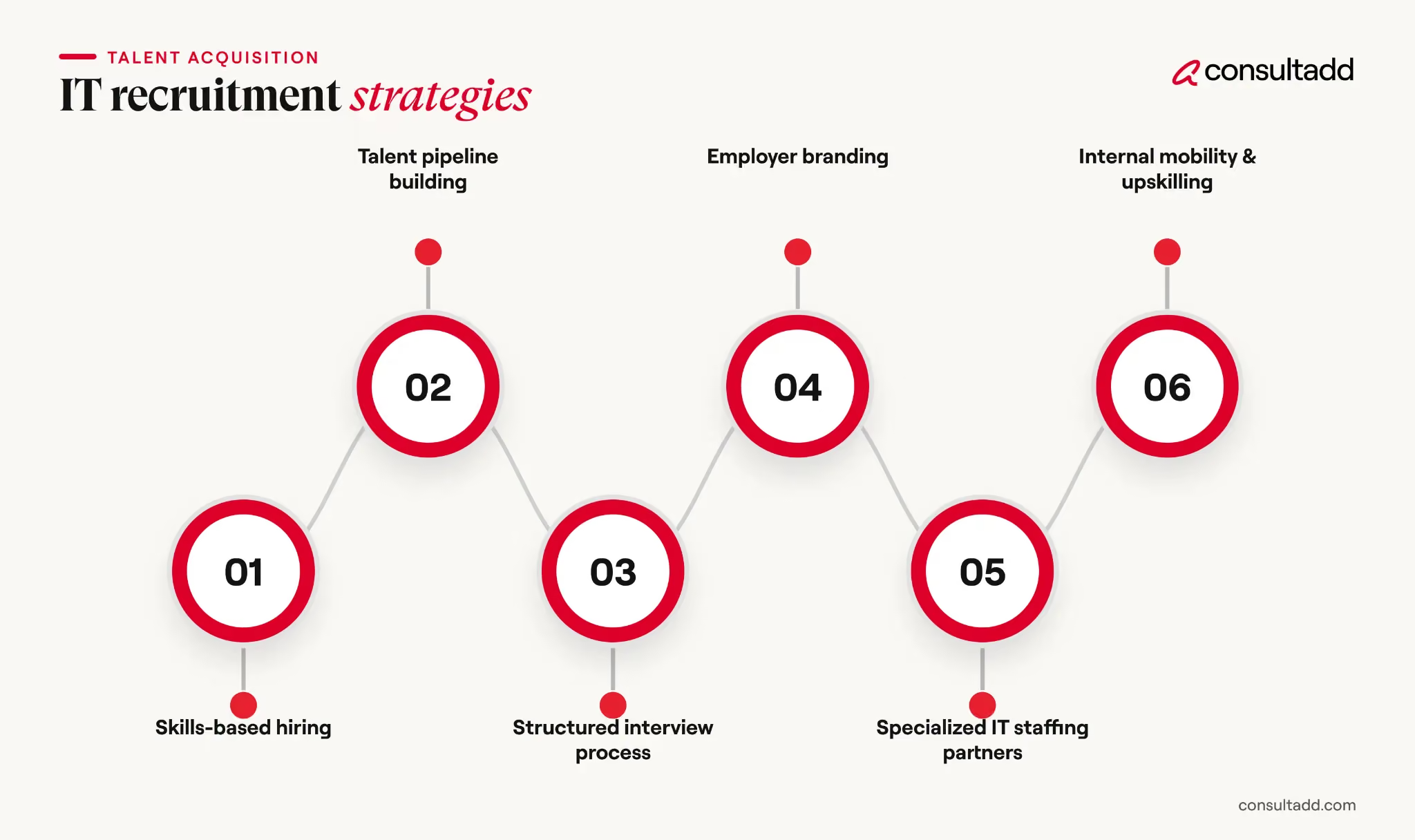
1. Skills-Based Hiring
This is the single biggest shift happening in IT recruitment right now. Instead of filtering by degree or job title history, leading companies are evaluating what candidates can actually do.
More than 80% of leaders using skills-based hiring say it is helping their organizations drive better outcomes. Candidates respond well to it too. 78% of job seekers report a positive experience when employers focus on skills rather than credentials.
Practically, this means using technical assessments, portfolio reviews, GitHub activity, pair-programming tasks, and scenario-based interviews in place of (or alongside) traditional screening.
A LinkedIn study projected that by 2025, nearly half of all recruitment decisions would shift toward skills over credentials. That projection has held up.
2. Proactive Talent Pipeline Building
The organizations that consistently hire well in 2026 are not waiting for roles to open before they engage talent. They are building relationships with candidates months in advance, mapping likely future skill needs, and maintaining warm pipelines of vetted professionals.
This shift from reactive to proactive recruiting can cut time-to-fill in half. When a role opens, the shortlist is already partially built. That advantage is hard to overstate in a market where top candidates disappear in days.
3. Streamlined Interview Processes
Companies that have reduced candidate drop-off rates share a common pattern: their interview process is shorter, more structured, and clearer in expectations. One-day interview sprints, pre-scheduled panel interviews, and defined decision timelines all help.
Some companies have adopted what amounts to a repeatable "rinse and repeat" interview structure; defining the role, selling the company, evaluating technical ability, checking values alignment that is applied consistently from junior to executive levels.
4. Employer Brand Investment
Candidates in 2026 research companies before they apply. They look at culture, leadership, growth opportunities, work flexibility, and whether the company's stated values match what employees actually say.
A weak employer brand, or no brand at all, is a real drag on applications from strong candidates.
Sharing specific, honest content about what it is like to work at your company (not just polished press releases) makes a measurable difference in both application volume and quality.
5. Partnering with Specialized Recruitment Firms
Seventy percent of technology leaders say the AI hiring landscape alone has made them more likely to work with a staffing or consulting firm, primarily to find candidates with specialized skills and manage the increased noise from AI-generated applications.
And 93% of tech and IT leaders say staffing firms have been effective at helping with AI-related hiring challenges.
This makes sense. Specialized IT recruitment partners maintain pre-vetted talent pipelines, understand niche skill requirements, and can dramatically reduce time-to-hire for roles that would otherwise sit open for months.
Traditional IT Recruitment vs Modern IT Recruitment
The Skills That Are Hardest to Hire For Right Now
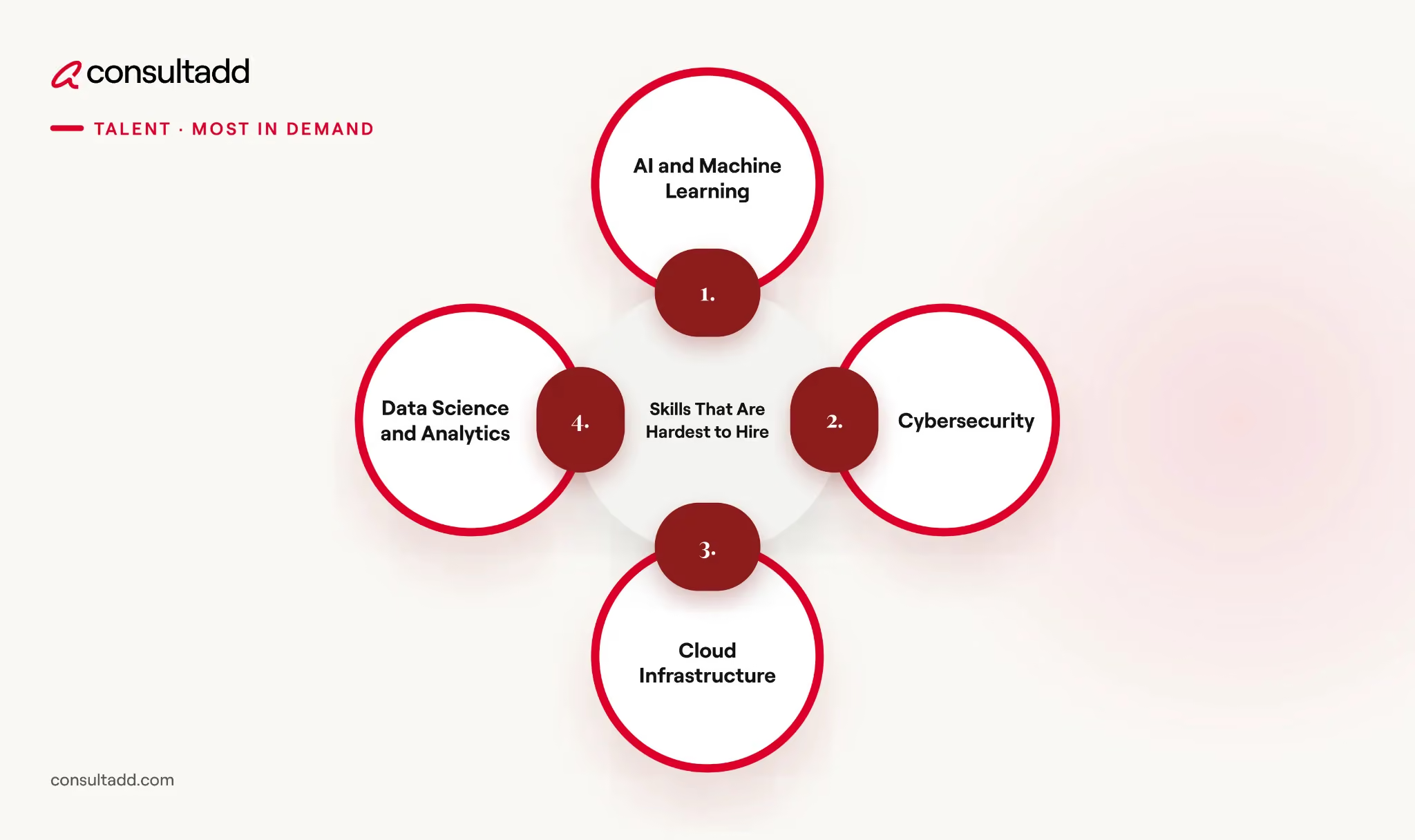
Knowing where the talent crunch is sharpest helps prioritize hiring strategy. Based on current job posting data and hiring trends, these are the roles where competition is most intense:
AI and Machine Learning: AI/ML roles grew 163% in job postings from 2024 to 2025. The demand for candidates who can build, fine-tune, and deploy AI systems far exceeds the current supply. McKinsey reports that nearly 46% of technology leaders say missing AI skills are blocking their highest-priority initiatives.
Cybersecurity: There are an estimated 4.7 million unfilled cybersecurity roles globally, with more than 457,000 open in the US alone. Cybersecurity engineers saw a 124% jump in job postings year over year. This shortage is not going away.
Cloud Infrastructure: As companies continue migrating workloads and building cloud-native applications, demand for cloud architects, engineers, and DevOps specialists remains consistently high.
Data Science and Analytics: Organizations are generating more data than ever and struggling to find people who can turn that data into decisions. Data roles remain among the most difficult to fill across industries.
Struggling to find developers who check all these boxes? Tap into Consultadd's pre-vetted talent pool of 200+ verified developers skilled in AI/ML Full-Stack, Cloud, and DevOps. Start hiring smarter today! Schedule a free talent discovery call with our team.
Common Mistakes That Slow Down IT Recruitment
A few patterns consistently show up on the wrong side of hiring outcomes:
Writing job descriptions that scare people off. Padding requirements with every conceivable desired attribute discourages otherwise qualified candidates from applying. The research is clear: list the skills that are genuinely mandatory, and separate them from nice-to-haves.
Homogeneous interview panels. Panels that always include the same people tend to hire people who "feel familiar." Rotating panelists from different functions and training interviewers to evaluate skills and thinking patterns, not likability, produces better hiring outcomes and stronger teams.
Ignoring candidate experience. Nearly half of job seekers decline offers because of a negative hiring experience. A slow, opaque, or disorganized process is not just annoying, it costs you candidates. The hiring process is a first impression of what it is like to work somewhere.
Hiring in isolation. IT recruitment that operates separately from workforce planning, business goals, and skills gap analysis tends to produce reactive, misaligned hires. The organizations getting this right treat talent acquisition as a strategic function, not an administrative one.
IT Recruitment Strategies and Their Business Impact
What Candidates Are Looking For in 2026
IT recruitment is a two-way street. Understanding what motivates tech professionals right now matters just as much as knowing how to screen them.
The research is consistent on this: tech talent is looking for more than salary. Flexible and remote work arrangements are now standard expectations, not perks. A significant majority of tech job seekers prefer fully remote or hybrid roles. Compensation that keeps pace with inflation matters, but so do benefits, equity participation, wellness programs, and increasingly clear career development paths.
Companies that can show candidates a realistic 2-5 year growth roadmap during the hiring process have a meaningful edge. The half-life of technical skills in some fields is under three years, so professionals are actively evaluating whether a company will invest in keeping their skills current.
Internal Mobility: The Hire You Already Have
One underused lever in IT recruitment is internal mobility. Forward-thinking organizations are increasingly finding that the best next hire might already be on the payroll.
Structured upskilling programs, clear technical career paths, and deliberate internal job posting practices can surface talent that hiring teams would otherwise spend months looking for externally. In 2023, 48% of tech organizations said they were prioritizing upskilling and cross-skilling over new hires. The numbers have continued to move in that direction.
This is not just a cost play. Internal mobility improves retention, signals to employees that growth is real, and gives the organization more control over building the specialized skill sets it needs rather than trying to buy them in a competitive market.
Start Strong With Consultadd
With 15 years in business and 5,000+ successful staffing engagements, we don’t just fill roles, we build reliability into your process. We’ve supported 65 staffing companies in the past year alone and maintain MSAs with industry leaders like Robert Half and TEKsystems.
Here’s what working with Consultadd looks like:
- Talent sourced in under 24 hours
- Ready-to-deploy candidates, vetted for experience and compliance
- Lower turnover risk: we match long-term goals, not just short-term needs
- Seamless compliance: visa, documentation, onboarding? Handled.
- Dedicated 1:1 account managers for responsive, personalized support
- Top 100 candidate matches delivered in the past year
- Strong partnerships with universities to tap into fresh, committed talent
- Post-placement support so your investment grows beyond day one
For candidates, your next opportunity is more than just a job title, it's a chance to build skills, gain experience, and move your career forward. At Consultadd, we connect technology professionals with projects and employers that align with their goals, whether they're looking for contract, contract-to-hire, or long-term opportunities.
The tech job market moves fast, but the right guidance can make all the difference. Ready to take the next step in your career journey? Explore Opportunities >>
Key Takeaways
- IT recruitment is operating in one of the tightest talent markets in recent history, with shortages hitting AI, cybersecurity, and cloud roles hardest.
- Skills-based hiring is the most impactful shift companies can make right now, replacing degree-filtered screening with real capability assessment.
- Proactive pipeline building consistently cuts time-to-fill and improves candidate quality compared to reactive, post-vacancy recruiting.
- Internal mobility and upskilling are underused options that can reduce external hiring pressure while strengthening retention.
- Specialized IT recruitment partners reduce time-to-hire significantly and provide access to pre-vetted talent pools that general job boards cannot match.
FAQs
What is IT recruitment and how is it different from general recruitment?
IT recruitment focuses specifically on sourcing, screening, and hiring technology professionals like software engineers, cybersecurity specialists, data scientists, cloud architects, and related roles.
Why is IT recruitment so difficult in 2026?
Demand for specialized tech talent has outpaced supply for several years. Near-zero unemployment in key IT disciplines, intense competition from companies of all sizes, faster candidate decision timelines, and the explosion of AI-generated applications have all made IT recruitment more challenging.
What is skills-based hiring and why does it matter for IT recruitment?
Skills-based hiring evaluates candidates based on demonstrated capability rather than credentials like degrees or specific job titles. For IT recruitment, this means using technical assessments, coding challenges, portfolio reviews, and scenario-based interviews.
Should we build an internal IT recruitment team or work with a staffing partner?
Both approaches have a place. Internal teams are valuable for ongoing, high-volume hiring and cultural continuity. Specialized IT staffing partners add value for hard-to-fill roles, niche skill sets, and faster time-to-hire through pre-built talent networks. Most companies doing this well use a hybrid approach.
What are the most in-demand IT roles right now?
As of mid-2026, the highest-demand roles include AI and ML engineers, cybersecurity professionals (especially engineers and analysts), cloud architects, DevOps specialists, and data scientists. These are also the hardest roles to fill.
.webp)