
.avif)

Introduction
You've made it through the interviews and the hiring manager says, "We'd just like to speak with a couple of your references." For a candidate, that's usually good news. For the employer, it's the last real chance to hear from someone who has actually worked with the person.
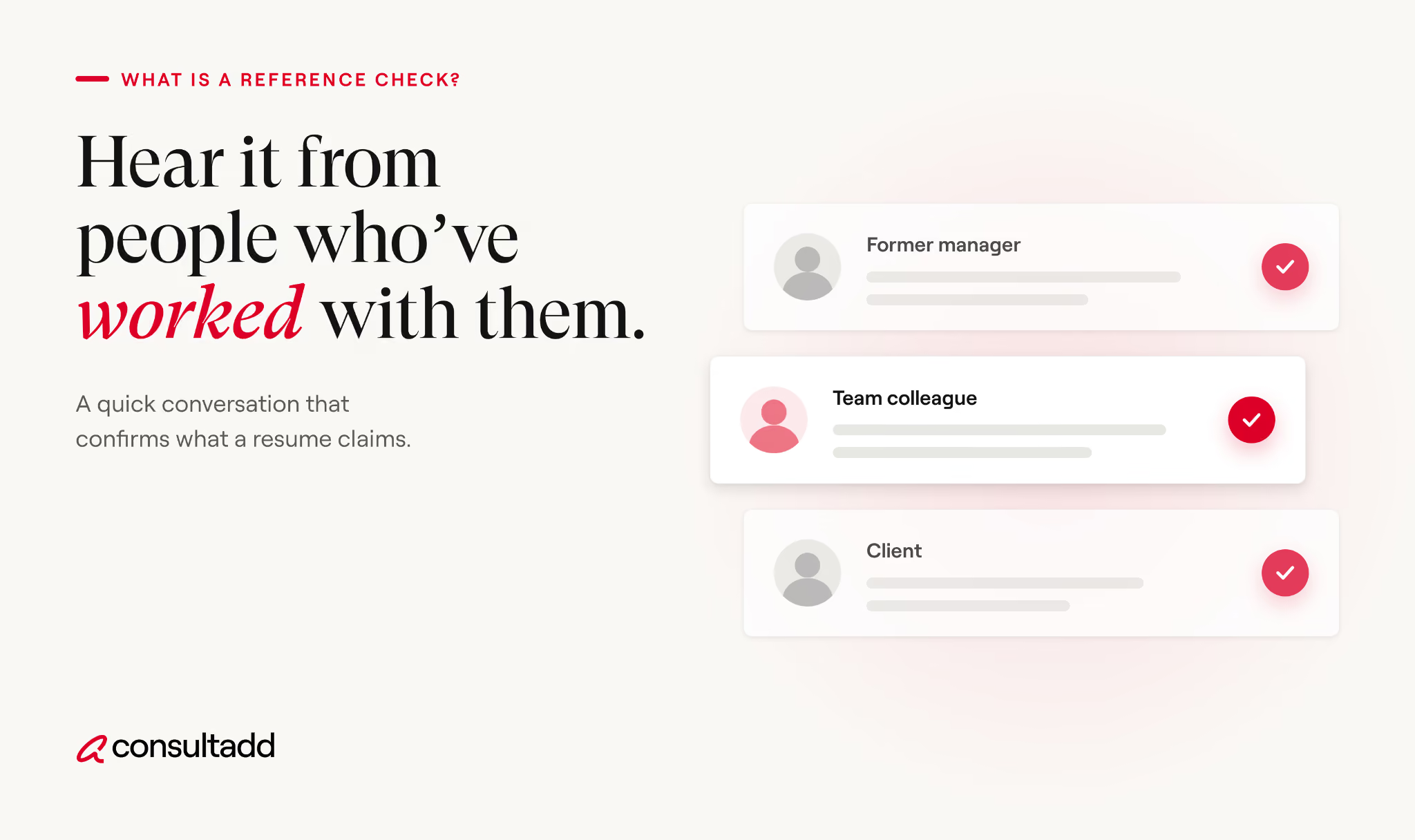
So, what is a reference check? It's a conversation between a prospective employer and someone who has worked with a candidate, usually a former manager, to learn how that person performed on the job.
It sounds informal, but there are clear rules about who can make the call, what can be asked and what a former employer can say.
This guide explains how reference checks work, the main types, the rules on both sides and how to spot a fake reference. If you're a candidate, the last section covers how to prepare your references.
TL;DR
- A reference check is a conversation with someone who worked with the candidate, used to confirm how they actually performed, not just where they worked.
- It's different from employment verification, which confirms dates and titles, and a background check, which searches records.
- When an outside screening company calls references and reports on character or performance, the FTC has said that's likely an investigative consumer report, which brings extra FCRA disclosure duties.
- Former employers can't give a false negative reference to punish someone for an EEO complaint, which is one reason many companies only confirm dates and titles.
- Fake references are a real risk, especially in remote hiring, so verify that each reference is who they say they are before you rely on what they tell you.
What is a reference check?
A reference check is a structured conversation, usually by phone or video, with someone who has seen a candidate's work firsthand.
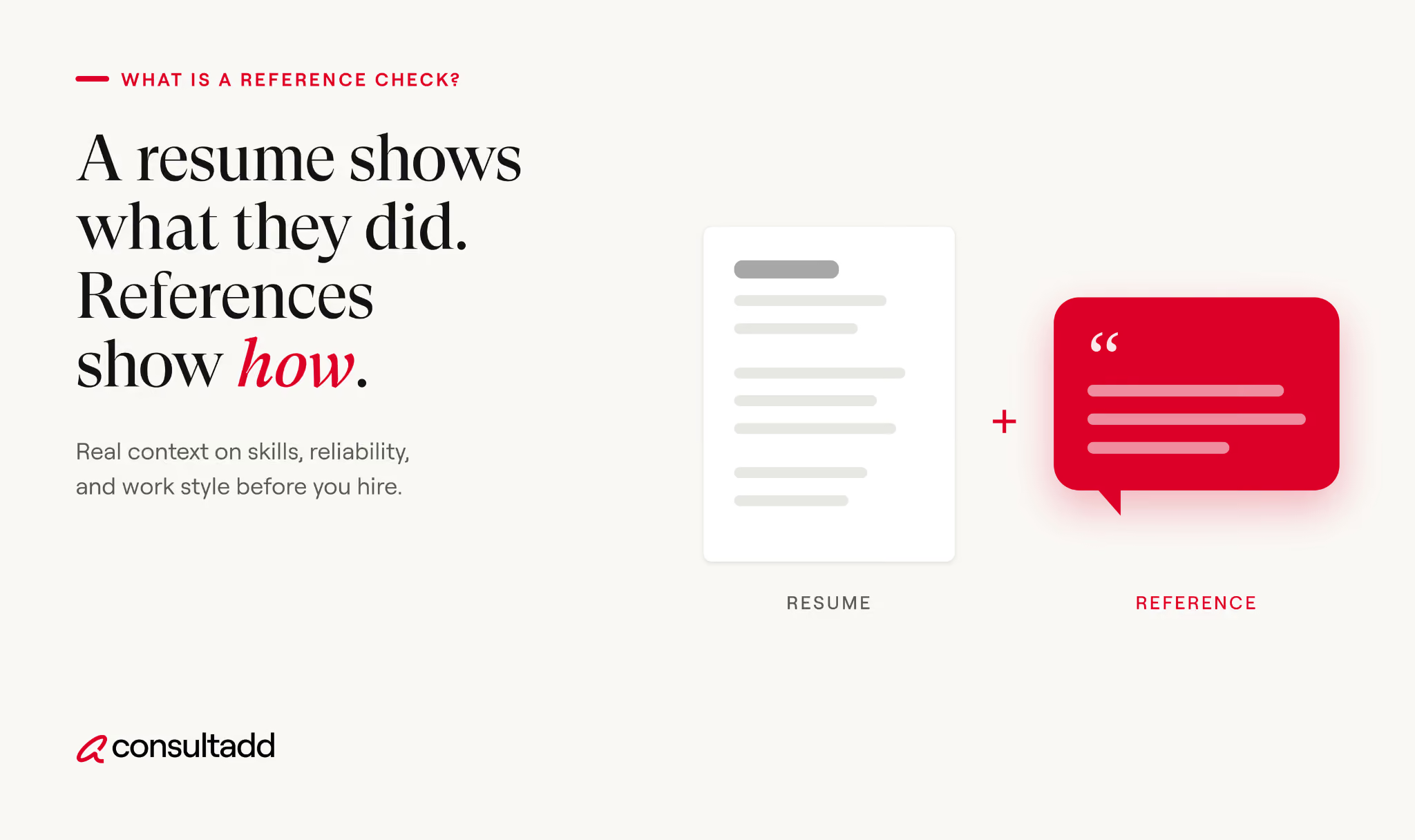
The goal is to confirm what came up in interviews and fill in what interviews can't show: how the person handles pressure, takes feedback, works with a team and follows through.
People often mix it up with two other checks. They answer different questions.
A background check can confirm that someone was a senior engineer for three years. Only a reference check can tell you whether they were the person the team relied on during outages.
Our guide to candidate vetting shows where each check sits in the hiring sequence.
How a reference check works, step by step
The process is similar at most companies, though the order and timing vary.
- The candidate gives consent and a list. Usually two or three references, ideally including at least one direct manager. Many employers ask for this near the final interview round.
- The employer reaches out. A recruiter or hiring manager emails each reference to set up a 15 to 20 minute call.
- The conversation happens. The caller confirms the reference's relationship to the candidate, then asks about specific projects, strengths, areas for growth and whether they'd work with the person again.
- Notes get written up the same day. Good teams use the same questions for every reference so answers can be compared fairly.
- The hiring team compares answers. They look for patterns across references and for anything that conflicts with what the candidate said in interviews.
- The decision is made. References rarely make a hire on their own, but they often confirm a decision or raise a question worth asking the candidate directly.
Timing matters. Reference checks are most useful before a final offer, or attached to a conditional offer, so the hiring team can still act on what they learn.
If you need a question list for step 3, our reference check questions guide has one.
Types of reference checks
Not every reference check looks the same. Here are the common forms and their trade-offs.
Backdoor references deserve a note of caution. Calling a candidate's current employer without permission can cost them their job.
Most careful employers either skip off-list calls or tell candidates up front that they may contact people beyond the list.
The rules that govern reference checks
Reference checks look like ordinary conversations, but federal and state law applies to both the employer asking and the employer answering. This section is general information, not legal advice.
1. When a third party makes the calls, the FCRA applies
If an employer runs its own reference calls, the Fair Credit Reporting Act generally isn't involved. That changes when the employer hires a screening company to do it.
The Federal Trade Commission has drawn a line between simply verifying facts the candidate provided and gathering information on character or personal traits through interviews.
In an FTC advisory opinion, staff noted that because reference checks almost always involve questions about character and personal characteristics, reports based on those interviews are likely to be investigative consumer reports.
That brings extra steps. Employers must make the standard FCRA disclosure and get written authorization before ordering any consumer report.
For an investigative consumer report, Section 606 adds another requirement: the employer must tell the candidate within three days of requesting the report, as the FTC explained in a separate advisory opinion.
The candidate also has the right to ask about the nature and scope of the investigation.
In practice, if your screening vendor offers reference checks, confirm that your disclosure forms cover investigative consumer reports before you add it to the package.
2. What former employers will and won't say
Many companies have a neutral reference policy. Their HR team confirms dates and job title, and sometimes pay with the employee's consent, but won't comment on performance. Managers are often told to send all reference calls to HR.
One reason is legal risk. The EEOC has said retaliation protections apply to former employees too, and gives the example that a supervisor can't give a false negative job reference to punish someone for an EEO complaint. Refusing a reference for the same reason can also count.
For hiring teams, a neutral response isn't a red flag. It's usually just company policy. Ask the candidate for another reference who can speak to their work, such as a former manager who has since moved to a different company.
3. Ask fair and consistent questions
The same anti-discrimination rules that apply in interviews apply to reference calls. Don't ask a reference about a candidate's age, health, family plans, religion or other protected characteristics, and don't let the conversation drift there.
Some states and cities also limit questions about salary history. If yours does, don't route that question through a reference. Using the same core questions for every candidate is the simplest way to keep checks fair and comparable.
Reference fraud and how to spot it
Fake references are more common than most hiring teams assume. A "former manager" turns out to be the candidate's friend, or a paid service provides a convincing voice on the phone. Remote hiring makes it easier, because nobody meets in person.
From the IT staffing side, the pattern shows up most in contract roles with short engagements, where references are hard to trace back to a real company. These checks catch most of it:
None of these proves fraud on its own. But if two or three show up together, verify independently before relying on anything the reference said.
The same caution applies to identity in remote interviews, which our guide to vetting developers for staff augmentation covers.
Reference checks in IT staffing
Staffing adds a layer. When a consultant is placed through an agency, there are often two reference checks: one by the staffing firm before submitting the profile, and sometimes another by the client before confirming the placement.
A few things are different in this setting:
- Contractors have many short engagements. The best reference is often the client-side manager from the most recent project, not the staffing firm that employed them.
- The staffing firm's check protects the client relationship. A recruiter who submits a consultant with an unverified reference risks the firm's standing with that client.
- References confirm skills that are hard to test. A reference can tell you whether the consultant actually led the migration on their resume or supported someone who did.
Reference checks are one part of a wider screening process.
Our pre-employment screening guide covers background checks, verification timelines and how to run checks in parallel.
How candidates should prepare their references
If you're job hunting, a little preparation makes your references far more useful.
Pick people who saw your work up close. A direct manager from your last role or most recent project is best. A peer who worked alongside you daily is a good second. Avoid friends and family unless the employer specifically asks for personal references.
Ask permission first, every time. A reference who's caught off guard gives a weaker answer. Ask whether they're comfortable and how they'd like to be contacted.
Brief them on the role. Send the job description and two or three projects you'd like them to remember. "Could you mention the reporting rebuild we did in 2025?" helps them give specific examples instead of general praise.
Keep contact details current. Use their current title and company, and a work email where possible. Out-of-date details slow the process and can look suspicious.
Plan for neutral-policy employers. If your last employer only confirms dates, say so up front and offer a former manager who has moved on, or a client who can speak to your work.
Thank them afterward. Let them know how it turned out. You'll probably ask them again.
Final thoughts on what a reference check is
A reference check is a short conversation with outsized value. It's the one step in hiring where someone other than the candidate describes how the person actually works.
For employers, getting it right means asking consistent questions, verifying that each reference is real, and checking the FCRA requirements before outsourcing the calls.
For candidates, it means choosing people who saw your work and giving them what they need to describe it well.
Start Strong With Consultadd
With 15 years in business and 5,000+ successful staffing engagements, we don’t just fill roles, we build reliability into your process. We’ve supported 65 staffing companies in the past year alone and maintain MSAs with industry leaders like Robert Half and TEKsystems.
Here’s what working with Consultadd looks like:
- Talent sourced in under 24 hours
- Ready-to-deploy candidates, vetted for experience and compliance
- Lower turnover risk: we match long-term goals, not just short-term needs
- Seamless compliance: visa, documentation, onboarding? Handled.
- Dedicated 1:1 account managers for responsive, personalized support
- Top 100 candidate matches delivered in the past year
- Strong partnerships with universities to tap into fresh, committed talent
- Post-placement support so your investment grows beyond day one
For candidates, your next opportunity is more than just a job title, it's a chance to build skills, gain experience, and move your career forward. At Consultadd, we connect technology professionals with projects and employers that align with their goals, whether they're looking for contract, contract-to-hire, or long-term opportunities.
The tech job market moves fast, but the right guidance can make all the difference. Ready to take the next step in your career journey? Explore Opportunities >>
Key takeaways
- A reference check is a conversation with someone who worked with the candidate, used to understand how they actually performed.
- It's separate from employment verification, which confirms facts, and background checks, which search records.
- Reference checks run by an outside screening company are likely investigative consumer reports under the FCRA, which require extra disclosures.
- Former employers can't give false negative references in retaliation for EEO complaints, which is why many only confirm dates and titles.
- Verify that every reference is real, and if you're a candidate, brief your references on the role and the projects you want them to mention.
FAQs
What is a reference check?
A reference check is when a prospective employer contacts people who have worked with a candidate, usually former managers, to learn about their job performance and working style. It typically happens near the end of the hiring process, before or alongside a job offer. The aim is to confirm what the employer learned in interviews.
What is the difference between a reference check and a background check?
A background check searches records such as criminal history, education and licenses. A reference check is a conversation with people who worked with the candidate and gives opinions and examples about how they performed. Many employers use both.
How long does a reference check take?
Each call usually takes 15 to 20 minutes. The whole process often takes a few business days, mostly because of scheduling. Delays usually happen when references are hard to reach or their contact details are out of date.
Can an employer check references without your permission?
Employers often ask for consent and a list of references, but some also contact people who aren't on the list. If a third-party screening company conducts the reference interviews, FCRA disclosure and authorization rules generally apply. State laws can add further requirements.
What can a former employer legally say in a reference?
Rules vary by state, but truthful information about job performance is generally allowed. A former employer can't give a false negative reference to retaliate against someone for a discrimination complaint. Because of that risk, many companies only confirm dates of employment and job title.
Do employers always check references?
Not always, but most do for professional and technical roles, especially for senior hires and contract placements. Some only check references for finalists. If an employer asks for references, assume they'll be contacted and prepare them in advance.



.png)
.png)