If you want one number to work with, here it is. The average time to hire in 2026 runs from the mid-20s to around 39 calendar days for most non-executive roles, and closer to 45 days once you get into senior and executive hiring. SHRM's 2026 benchmarking data puts the median time to fill for non-executive positions at 39 calendar days, down from 44 last year. Time to hire, which starts later in the process, lands shorter than that.
That's the headline. The useful part is what sits underneath it, because a single average tells you almost nothing about whether your own hiring is healthy. A 39-day cycle for a warehouse supervisor is slow. The same 39 days for a cleared cloud security engineer is quick work.
TL;DR
SHRM's 2026 median time to fill is 39 days for non-executive roles and 45 days for executive roles, both improved from prior years.
Time to hire and time to fill measure different windows, and mixing them up makes every benchmark comparison useless.
Company size moves the number more than most people expect, largely because of requisition approvals and interview scheduling.
Screening and interviewing each eat roughly 8 to 9 days on average, which is where most of the recoverable time sits.
Faster hiring comes from fewer decision-makers, pre-built pipelines, and interview loops that are booked as a block instead of one round at a time.
What the average time to hire actually measures
Time to hire counts the calendar days between a candidate entering your pipeline and that candidate accepting your offer. It's a measure of how well your team evaluates and closes people once they're in front of you.
Time to fill is the wider window. It starts when the requisition is approved or posted and ends at the same place, offer acceptance. So time to fill always equals or exceeds time to hire, and the gap between them is your sourcing lag.
The distinction matters because the two numbers point at different problems.
We've covered this at length in our breakdown of time to hire vs time to fill, but the short version is this: a healthy time to hire paired with a bloated time to fill means your sourcing is the bottleneck.
Both numbers high means your evaluation process is where to look.
The three timing metrics side by side
Metric
Clock Starts
Clock Stops
What It Diagnoses
Time to Fill
Requisition approved or job posted
Offer accepted
Overall recruiting efficiency, including sourcing effectiveness.
Time to Hire
Candidate applies or is sourced
Offer accepted
Speed of screening, interviewing, and closing candidates.
Time to Start
Offer accepted
First day on the job
Notice periods, background checks, and onboarding readiness.
How to calculate it
Add up the days each hire spent in your pipeline, then divide by the number of hires.
Three hires that took 18, 26, and 40 days give you an average of 28 days.
Use calendar days, not business days, since candidates experience weekends too.
And segment the average by role family before you draw any conclusion from it, because blending an intern hire with a principal architect hire produces a number that describes neither.
Average time to hire benchmarks for 2026
SHRM surveyed 4,657 members between November 2025 and January 2026 for its recruiting benchmarking data. Here's what that data shows on hiring speed and cost.
Benchmark
2022
2025
2026
Median time to fill (non-executive)
Not reported
44 days
39 days
Median time to fill (executive)
60 days
45 days
45 days
Median cost per hire (non-executive)
Not reported
$1,200
$1,300
Median cost per hire (executive)
$8,800
$10,600
$15,000
Median requisitions per recruiter
Not reported
20
25
Two things jump out :
First, non-executive hiring got five days faster in a single year, which is a real shift and not a rounding error. SHRM ties it partly to AI tooling in recruiting, noting that organizations with the most effective recruitment practices fill roles about five days faster than everyone else.
Second, recruiter workload went up 25% at the median while cycle times came down. In extra-large organizations the median jumped from 60 requisitions per recruiter to 100. That combination is not sustainable forever, and it's worth watching whether the speed gains hold once recruiter burnout catches up.
Why company size changes the number
Bigger companies hire slower, and the reason is boring. More approval layers before a job goes live, more calendars to coordinate for panels, more compliance steps before an offer clears.
The fix is structural rather than motivational. Pre-approve headcount by quarter instead of by requisition, cap the interview panel at four people, and give hiring managers a standing block on their calendar for interviews so scheduling doesn't become a two-week email thread.
Why role type changes it more
Role scarcity beats company size as a driver. A support role with 200 qualified applicants closes fast. A niche skill set with a shallow candidate pool does not, no matter how tight your process is.
For context on the demand side, BLS reported 7.6 million job openings and 5.2 million hires in May 2026. Roughly 2.4 million more openings than hires each month, and specialized technical roles are heavily represented in that gap.
If you're hiring for one of them, benchmark against similar roles at similar companies, not against a national median.
Our guide on technical recruitment goes deeper on what makes engineering searches behave differently.
Where your hiring process loses days
SHRM's benchmarking found that screening and interviewing each average 8 to 9 days. That's over two weeks of a roughly five-week cycle sitting in two stages, and both are stages you control completely.
Stage
Target Window
Common Failure
What Actually Fixes It
Requisition Approval
1–3 days
Approval sits in a VP's inbox.
Use pre-approved headcount plans by quarter.
Intake with Hiring Manager
1 day
Screening criteria drift because the intake is skipped.
Hold a 30-minute scorecard session before sourcing begins.
Sourcing & First Submittals
3–7 days
Waiting for inbound applicants.
Build a warm talent pipeline before the role opens.
Screening
3–5 days
Resume reviews are batched weekly.
Conduct daily reviews with a two-day feedback SLA.
Interview Loop
5–10 days
Interview rounds are booked sequentially.
Schedule all interview rounds together upfront.
Debrief & Decision
1–2 days
Waiting for consensus by email.
Run a same-day asynchronous debrief with a single decision-maker.
Offer to Acceptance
2–5 days
The pattern in that table is consistent. Almost none of the delay comes from the work itself. It comes from waiting, and waiting is a scheduling problem you can solve on a Tuesday afternoon.
One more thing worth naming: every extra interview round adds days on both ends, the scheduling before it and the debrief after. Cutting a six-round loop to four typically buys back a week or more with no measurable loss in hiring signal.
How to reduce your average time to hire
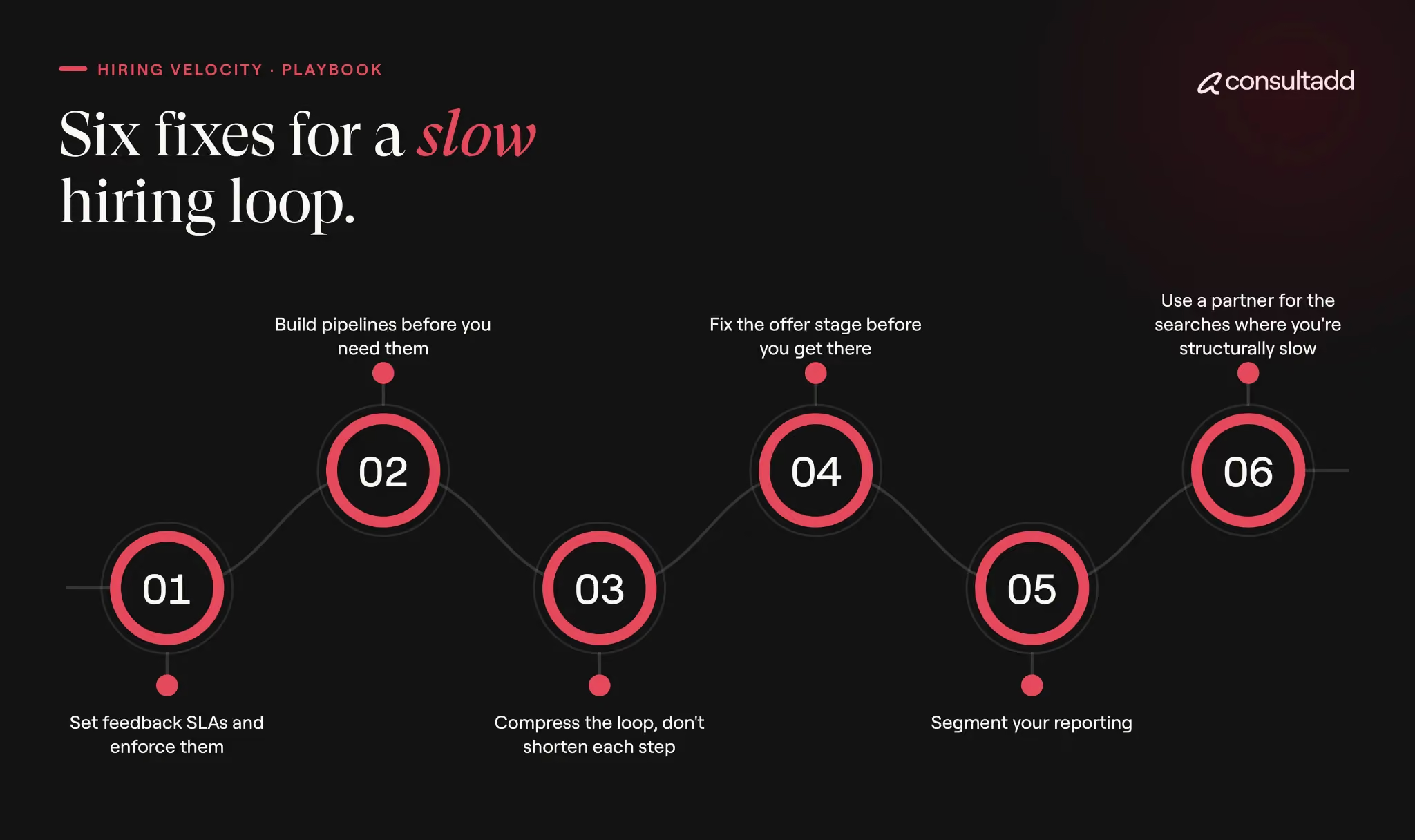
Set feedback SLAs and enforce them. Shortlists reviewed within two working days, interview feedback within 24 hours. Most hiring managers will hit this if someone actually tracks it.
Build pipelines before you need them. For roles you hire repeatedly, entering a search with three warm candidates already partially assessed removes the entire sourcing phase.
Compress the loop, don't shorten each step. Same-day or same-week interview blocks beat trimming a 45-minute interview to 30.
Fix the offer stage before you get there. Comp bands approved, references started in parallel, offer letter templated. This stage should never take a week.
Segment your reporting. Track time to hire by role family and by stage, quarterly. An aggregate number hides the one role type dragging your average up.
Use a partner for the searches where you're structurally slow. If a role type consistently takes you 60 days and you only hire two a year, building internal capability for it rarely pays off.
That last point is worth being honest about. Speed advantages in staffing usually come from a pipeline that already exists, not from working harder on the search.
Our step-by-step walkthrough of the IT staffing process breaks down where a specialized partner compresses timelines and where it doesn't help much. If you're weighing that decision, our buyer's guide to IT staffing firms covers what to ask before you sign anything.
When a longer hiring cycle is the right call
Only 20% of organizations measure quality of hire at all, according to SHRM's 2026 data. That's a problem, because a team optimizing purely for speed without a quality counterweight will eventually hire the wrong person quickly and call it a win.
Some situations justify a longer cycle. A first engineering leader who'll set technical direction for years. A role with security clearance requirements. A hire replacing someone who failed, where you need to understand what went wrong before you repeat it.
The test I'd apply is simple. Is the extra time buying you better information, or is it just waiting? Extra weeks spent on a structured work sample buy information. Extra weeks spent waiting for a fourth stakeholder's calendar buy nothing. Most teams with a bad average time to hire have plenty of the second kind and very little of the first.
Start strong with Consultadd
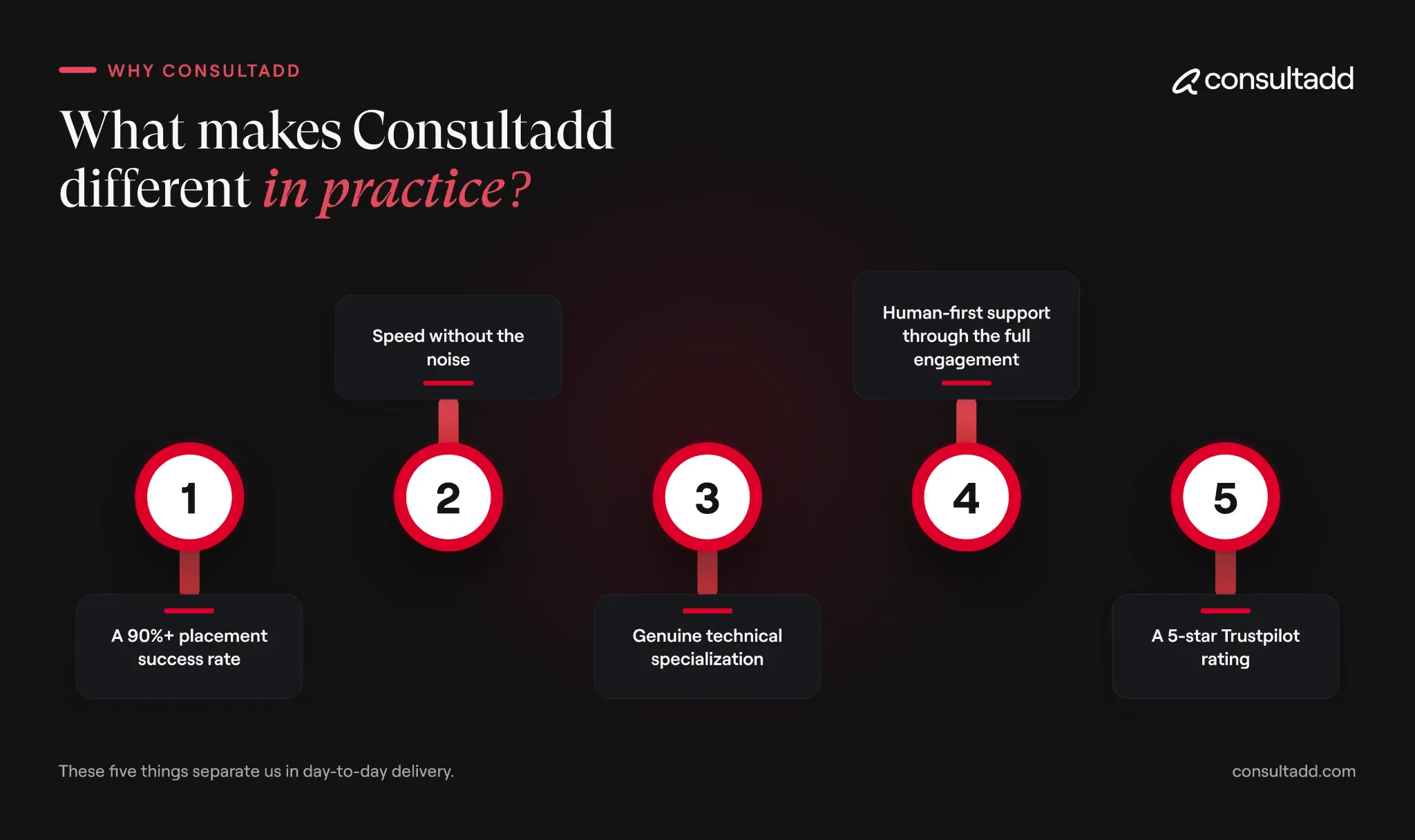
With 15 years in business and 5,000+ successful staffing engagements, we don't just fill roles, we build reliability into your process. We've supported 65 staffing companies in the past year alone and maintain MSAs with industry leaders like Robert Half and TEKsystems.
Here's what working with Consultadd looks like:
Talent sourced in under 24 hours
Ready-to-deploy candidates, vetted for experience and compliance
Lower turnover risk: we match long-term goals, not just short-term needs
Dedicated 1:1 account managers for responsive, personalized support
Top 100 candidate matches delivered in the past year
Strong partnerships with universities to tap into fresh, committed talent
Post-placement support so your investment grows beyond day one
For candidates, your next opportunity is more than just a job title, it's a chance to build skills, gain experience, and move your career forward. At Consultadd, we connect technology professionals with projects and employers that align with their goals, whether they're looking for contract, contract-to-hire, or long-term opportunities.
The tech job market moves fast, but the right guidance can make all the difference. Ready to take the next step in your career journey? Explore Opportunities >>
Key takeaways
The average time to hire in 2026 sits below the widely quoted 44-day figure, with SHRM reporting a 39-day median time to fill for non-executive roles.
Executive searches hold steady at a 45-day median, well below the 60 days recorded in 2022.
Screening and interviewing consume 8 to 9 days each, making them the highest-value stages to tighten.
Benchmark by role family and company size. A national median is context, not a target.
Track quality of hire alongside speed, or you'll optimize your way into faster bad decisions.
FAQs
What is a good average time to hire?
For most non-executive roles, anything at or under about 30 days from candidate entry to offer acceptance is solid. Compare against similar roles in your industry rather than a cross-industry median, since scarce technical skills routinely take twice as long as high-volume roles.
What's the difference between time to hire and time to fill?
Time to hire starts when a candidate enters your pipeline. Time to fill starts earlier, when the requisition is approved or posted. Both end at offer acceptance, so time to fill is always the equal or larger number, and the difference between them is your sourcing lag.
Why is my time to hire increasing?
The usual culprits are added interview rounds, more stakeholders in the decision, and slower feedback loops. Rising recruiter workload contributes too. SHRM's 2026 data shows the median recruiter now handles 25 open requisitions, up from 20 the year before.
How do you calculate the average time to hire?
Add the total days each candidate spent in the pipeline before accepting, then divide by the number of hires. Use calendar days rather than business days, and calculate separately for each role family so the average stays meaningful.
Does a faster hiring process lower quality of hire?
Not by itself. Speed gained by removing scheduling delays and redundant approvals has no effect on quality. Speed gained by skipping assessment steps does. The distinction is whether you're cutting waiting time or cutting evidence.
How much does a slow hiring process cost?
Beyond direct recruiting spend, an open role carries lost productivity and added workload on the remaining team. SHRM puts the 2026 median cost per hire at $1,300 for non-executive roles and $15,000 for executive roles, and vacancy costs typically exceed those figures for revenue-generating positions.



.webp)