.avif)

Introduction
Most companies plan their budgets three years out and their workforce three weeks out. A role opens, someone scrambles to fill it, and the hire is judged on how fast the seat gets filled rather than whether it was the right seat. That gap between long-term strategy and short-term hiring is exactly what strategic workforce planning closes.
So what is strategic workforce planning? It's the ongoing process of aligning your workforce, its size, skills, roles, and cost, with where the business is heading. The goal is simple to state and hard to do: the right people, with the right skills, in the right roles, at the right time and cost.
Think of it as a roadmap for your talent. You figure out where you are, where the business is going, and the best route to staff the journey. This guide covers what it means, why it matters more in 2026, the framework to follow, and how to close the gaps you find.
TL;DR
- Strategic workforce planning aligns your workforce with business strategy, so you have the right skills in the right roles at the right cost.
- It's proactive and long-term, unlike operational headcount planning, which reacts to immediate vacancies.
- The framework runs five steps: analyze your current workforce, forecast demand, spot the gaps, build a plan, then measure and adjust.
- Good planning focuses on critical roles, following the 80/20 rule, rather than trying to map every position equally.
- Closing gaps comes down to build, buy, or borrow: train existing staff, hire new talent, or bring in flexible contract workers.
What is strategic workforce planning?
Strategic workforce planning is the process of analyzing your current workforce and mapping the steps needed to meet future business goals. It ties talent decisions to strategy, so your people plan supports where the company is going rather than just where it stands today.
At its core, it answers four questions about your workforce.
- Do you have the right size, meaning the correct number of people without overstaffing or chronic vacancies?
- The right shape, meaning the right mix of skills and seniority?
- The right cost?
- And the right agility to adapt as things change?
Get these four aligned with your strategy, and hiring stops being a fire drill. It becomes a deliberate part of how the business grows.
Strategic vs operational workforce planning
People often confuse strategic workforce planning with everyday headcount planning. They're related, but they operate on different horizons.
Operational planning fills immediate seats. A role opens, you hire for it. It's reactive and short-term, and every company does it whether they mean to or not.
Strategic workforce planning is proactive and tied to the future. It looks years ahead, anticipates the skills the business will need, and plans for internal mobility, reskilling, restructuring, and sometimes reducing headcount where the business has moved on.
Both matter. But if you only ever do the operational kind, you're always one step behind your own strategy.
Why strategic workforce planning matters in 2026
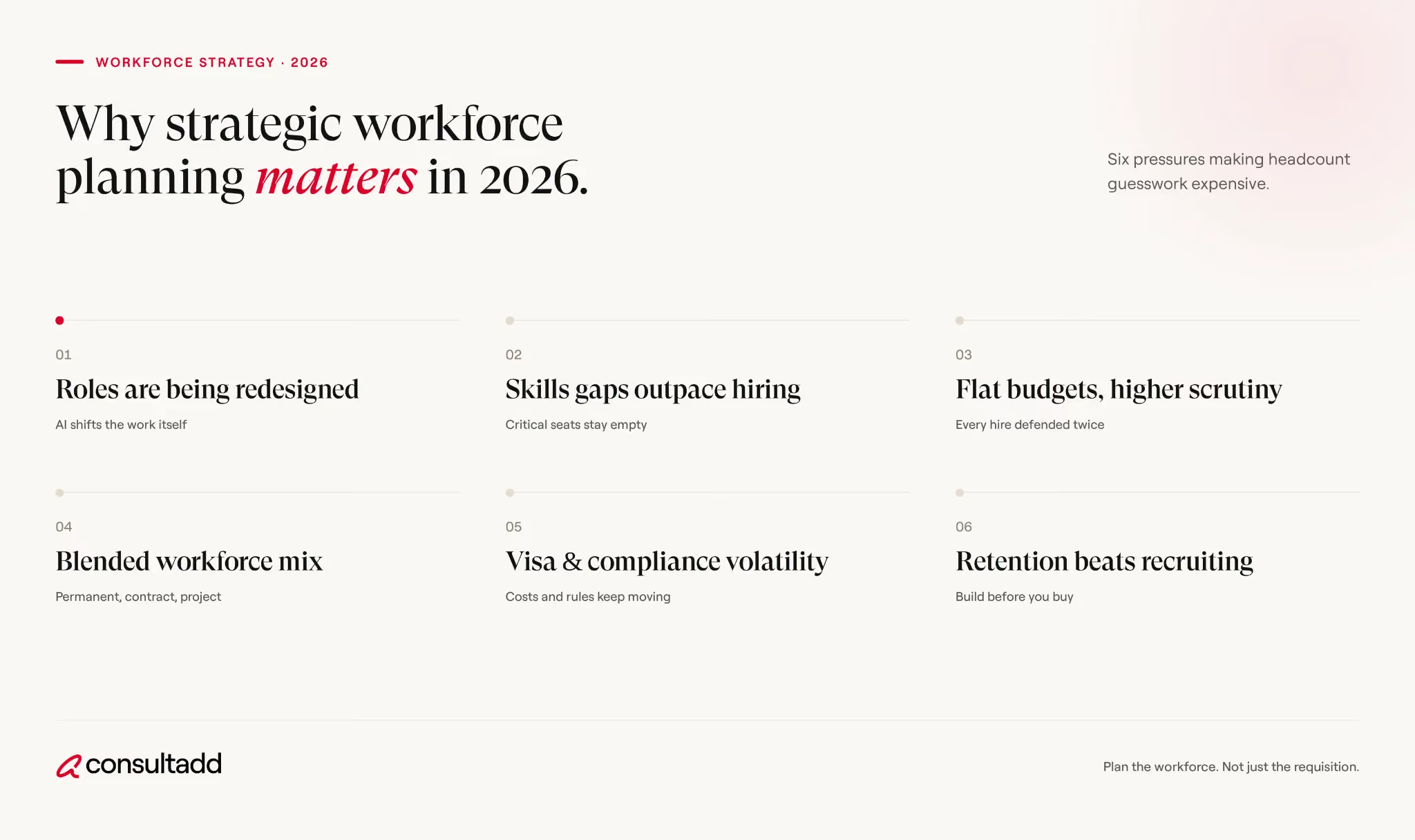
The case for planning ahead has never been stronger, and one force explains most of it: the pace of change in what work requires.
Skills are shifting fast, largely because of AI.
Gartner's 2026 research with chief HR officers, drawn from more than 400 CHROs across dozens of industries and multiple regions, named shaping work in the human-machine era as one of the top priorities for the year.
That's a planning problem before it's a hiring problem. You can't react your way through a change that reshapes entire roles.
Beyond that, good planning delivers concrete benefits.
It closes skills gaps before they stall projects. It reduces turnover risk by anticipating retirements and resignations.
It controls labor cost by preventing both overstaffing and expensive emergency hires. And it gives you the agility to scale up or down as conditions change.
Demand forecasting also leans on external signals, not just internal ones.
Public data such as the Bureau of Labor Statistics employment projections can inform how you think about future skill availability and labor market direction.
The through-line is that planning turns talent from a cost you manage into a lever you use.
The strategic workforce planning framework
While the details vary by organization, most workforce planning follows the same five-step arc. Work through them in order.
- Analyze your current workforce. Establish the baseline. Who's in your workforce, what skills do they bring, what does it cost, and how is the work organized? This is also where you spot where risk is already building.
- Forecast future demand. Translate business strategy into the workforce you'll need, in both scale and capability. Accurate business forecasts drive this, so involve leaders beyond HR.
- Identify the gaps. Compare what you have against what you'll need, factoring in expected turnover, retirements, and internal supply. The difference is your skills gap.
- Build the plan. Decide how to close each gap, whether through training, hiring, internal moves, or flexible talent. This is where insight becomes action.
- Implement, measure, and adjust. Put the plan into motion and track it with clear metrics. Workforce planning is ongoing, not a one-time exercise, so revisit it as the business shifts.
Skills data ties steps two and three together. Tracking capabilities, gaps, and development progress is how you close the distance between what you have and what you're building toward.
The principles behind good workforce planning
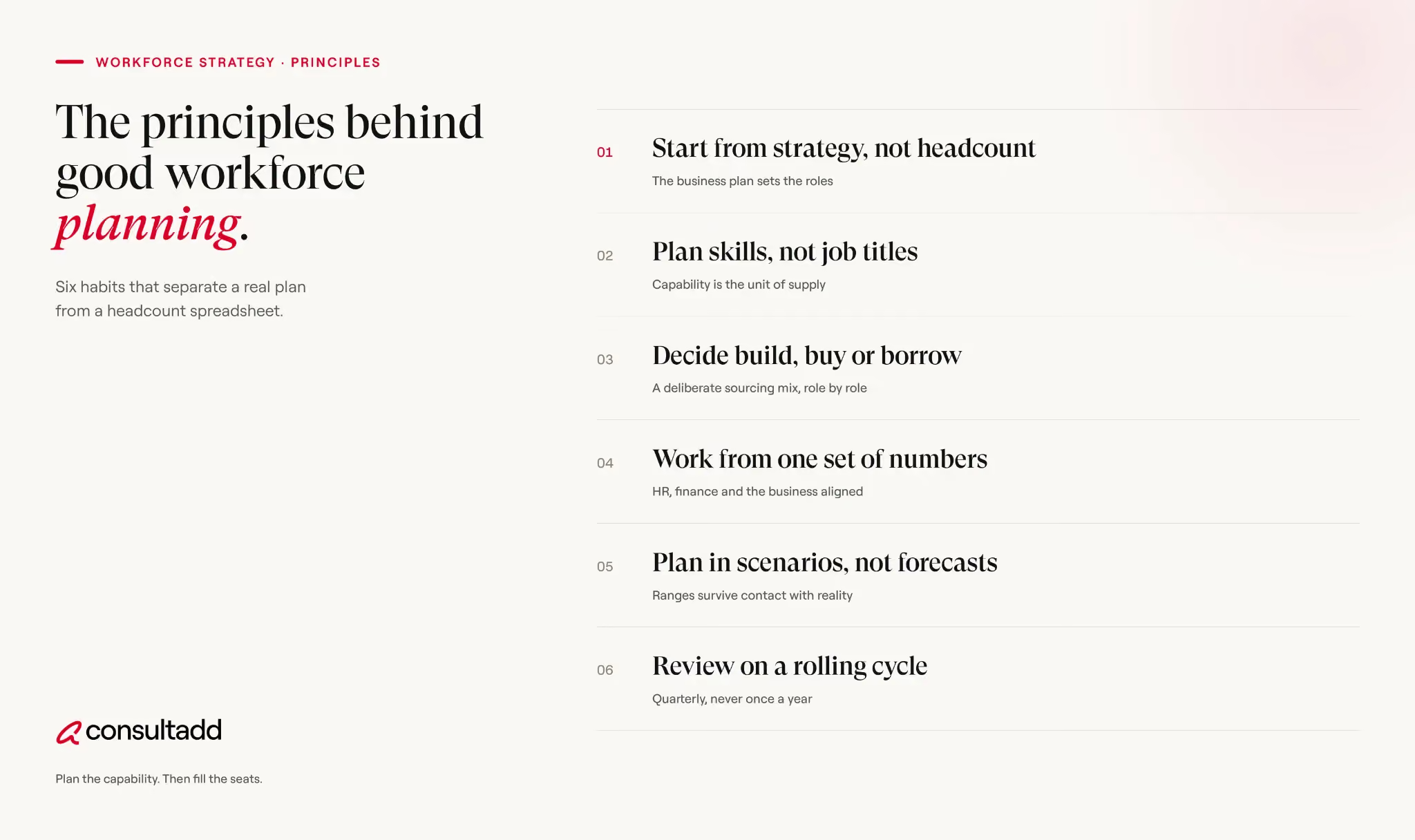
A framework tells you what to do. These three principles tell you how to do it well.
First, align to strategy.
Your organizational strategy is the long-term plan for what the company wants to achieve over the next several years, and it should be the guideline for your workforce plan. If the two aren't connected, you're planning in a vacuum.
Second, focus on critical roles.
Good planning follows the 80/20 rule: a small share of roles drives most of your results. Rather than mapping every position with equal effort, concentrate on the critical roles that contribute most to the outcomes you care about.
Third, keep a long-term view.
Workforce planning is about tactical and strategic decisions, so it takes a multi-year perspective rather than reacting to this week's staffing pressure. That long lens is what separates it from ordinary recruiting.
Build, buy, or borrow: closing the skills gap
Once you've found the gaps, you have three ways to close them. Smart plans use all three, matched to the situation.
Building works when you have time and want to grow people from within. Buying makes sense for core roles you'll rely on for years, and a strong hiring process matters here.
Consultadd's technical recruitment guide covers how to hire critical skills well, while its high-volume hiring strategies help when you're scaling a function quickly.
Borrowing is the leverage companies underuse. Contract and contingent talent lets you add specialized skills fast, cover a project, or scale flexibly without permanent overhead, which is exactly the agility strategic planning calls for.
Consultadd's breakdown of the contract-to-hire model shows how the borrow approach can also become a low-risk path to a permanent hire.
The best workforce plans don't pick one approach. They blend building, buying, and borrowing to hit the right size, shape, cost, and agility as the business evolves.
Start Strong With Consultadd
With 15 years in business and 5,000+ successful staffing engagements, we don't just fill roles, we build reliability into your process. We've supported 65 staffing companies in the past year alone and maintain MSAs with industry leaders like Robert Half and TEKsystems.
Here's what working with Consultadd looks like:
- Talent sourced in under 24 hours
- Ready-to-deploy candidates, vetted for experience and compliance
- Lower turnover risk: we match long-term goals, not just short-term needs
- Seamless compliance: visa, documentation, onboarding? Handled.
- Dedicated 1:1 account managers for responsive, personalized support
- Top 100 candidate matches delivered in the past year
- Strong partnerships with universities to tap into fresh, committed talent
- Post-placement support so your investment grows beyond day one
For candidates, your next opportunity is more than just a job title, it's a chance to build skills, gain experience, and move your career forward. At Consultadd, we connect technology professionals with projects and employers that align with their goals, whether they're looking for contract, contract-to-hire, or long-term opportunities.
The tech job market moves fast, but the right guidance can make all the difference. Ready to take the next step in your career journey? Explore Opportunities >>
Key takeaways
- Strategic workforce planning aligns your workforce with business strategy so you have the right skills, in the right roles, at the right cost.
- It's proactive and long-term, unlike operational planning, which reacts to immediate vacancies.
- The framework runs five steps: analyze the current workforce, forecast demand, identify gaps, build the plan, then measure and adjust.
- Strong planning aligns to strategy, focuses on critical roles using the 80/20 rule, and keeps a multi-year view.
- Close skills gaps by blending build, buy, and borrow, using contract talent for the flexibility that planning calls for.
FAQs
What is strategic workforce planning in simple terms?
It's the process of making sure your organization has the right people, with the right skills, in the right roles at the right time and cost. It connects your talent decisions to your business strategy, looking years ahead rather than just filling today's open jobs. Think of it as a roadmap for your workforce.
What is the difference between strategic and operational workforce planning?
Operational planning fills immediate vacancies and is reactive and short-term. Strategic workforce planning is proactive and long-term, anticipating the skills and roles the business will need in the future. Operational planning asks "who do we hire now," while strategic planning asks "what workforce will our strategy require."
What are the steps in the strategic workforce planning process?
Most frameworks follow five steps: analyze your current workforce, forecast future demand based on business strategy, identify the gaps between the two, build a plan to close them, and then implement, measure, and adjust. Because business needs change, the process is ongoing rather than a one-time project.
Why is strategic workforce planning important?
It closes skills gaps before they stall projects, reduces turnover risk, controls labor costs, and gives you the agility to adapt. In 2026, with AI rapidly reshaping what roles require, planning ahead matters more than ever. It turns talent from a cost you manage into a strategic advantage.
What is the build, buy, borrow framework?
It's a way to close workforce gaps using three options. Build means training and developing existing employees. Buy means hiring new permanent staff. Borrow means bringing in contract or contingent talent for specialized or short-term needs. Most effective plans blend all three depending on the role and timeline.
How often should you update a workforce plan?
Strategic workforce planning is continuous, not a set-and-forget document. Most organizations review it at least annually, aligned with business planning cycles, and revisit it whenever strategy shifts significantly. Tracking metrics throughout the year lets you adjust before small gaps become big problems.



.webp)