.avif)

Introduction
Most companies don't outsource recruitment because hiring is broken. They outsource it because hiring is expensive, slow, and getting harder to staff internally at the level modern roles demand.
The benefits of outsourcing recruitment and selection show up in three places that matter to a P&L: what you spend per hire, how long a seat sits empty, and how often you get the hire wrong.
None of that means outsourcing is automatically the right call for every company or every role. It's a tool.
Used on the right roles, at the right volume, it can cut cost-per-hire noticeably and shrink time-to-fill by weeks. Used as a blanket fix for a broken internal process, it just moves the problem to someone else's desk.
This piece breaks down what the actual benefits are, backed by current benchmarks, and where outsourcing tends to pay off versus where it doesn't.
TL;DR
- Cost-per-hire for U.S. companies runs in the thousands of dollars per role, and specialized or executive roles can run several times higher. RPO providers cut that through scale and reused pipelines.
- Median time-to-fill sits above 60 days industry-wide. Dedicated outsourced recruiters with prebuilt candidate pools routinely fill roles faster.
- A bad hire can cost 30% or more of that person's first-year salary, according to the U.S. Department of Labor. Better screening reduces how often that happens.
- Outsourcing gives you access to specialized sourcing expertise and recruitment technology most internal teams can't justify building for themselves.
- It works best for scaling, specialized, or high-volume hiring. It works worst as a substitute for fixing a genuinely broken hiring process.
What outsourcing recruitment and selection actually means
Recruitment process outsourcing, usually shortened to RPO, means handing all or part of the hiring function to an external partner.
That can mean the full lifecycle, sourcing, screening, interview coordination, offer management, and onboarding support, or just a piece of it, like initial candidate screening or interview scheduling.
It's a different model from a traditional staffing agency, which typically fills one role at a time for a placement fee.
An RPO or outsourced recruiting partner is closer to an extension of your internal HR team, working from your employer brand and often plugged directly into your applicant tracking system.
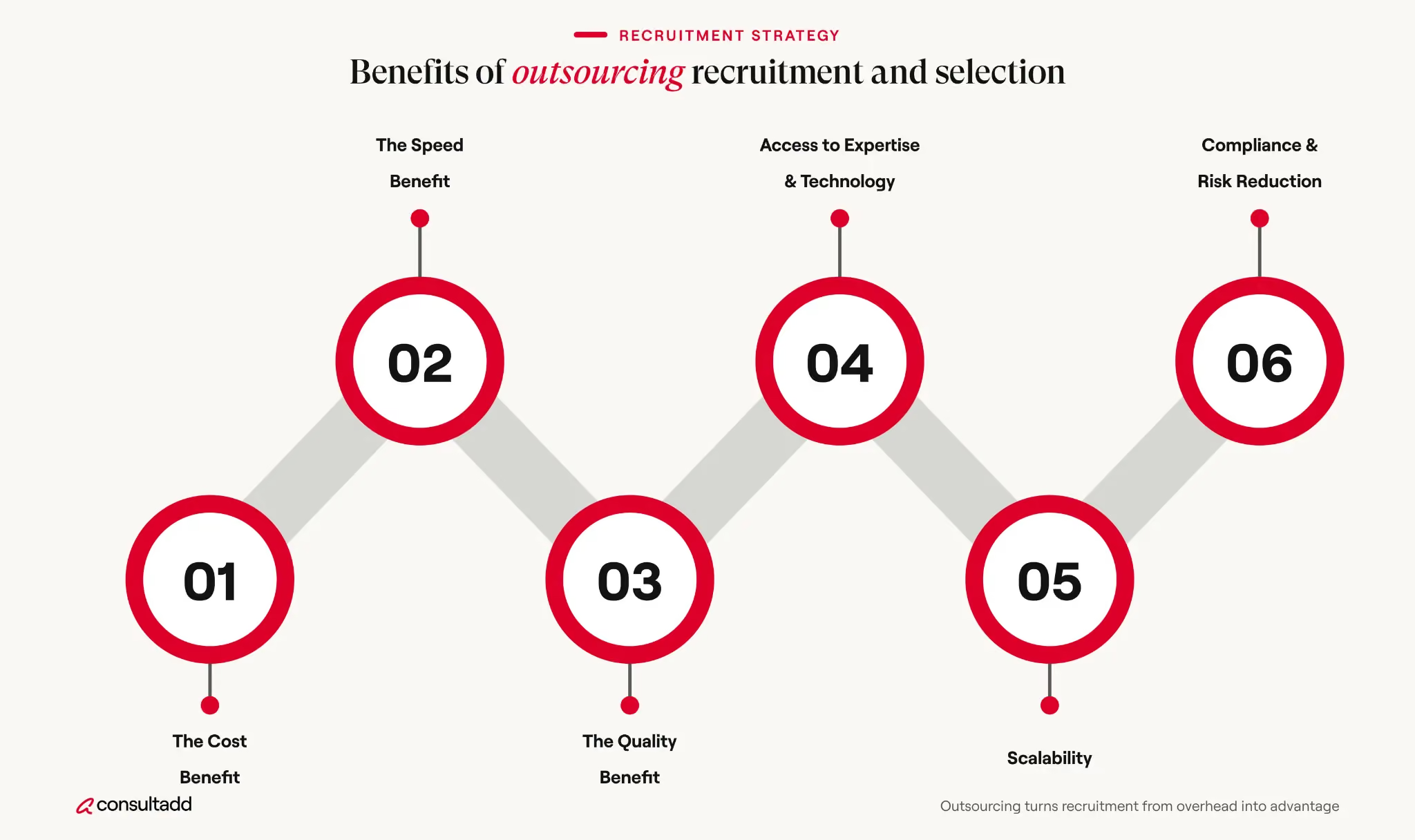
The cost benefit: lower spend per hire
Direct recruiting costs in the U.S. run in the range of several thousand dollars per non-executive hire, according to SHRM benchmarking data, with specialized technical and executive roles running considerably higher, sometimes by a factor of three or more.
Those numbers cover job board spend, recruiter time, agency fees, and screening tools. They don't include the cost of a role sitting vacant while you search.
Outsourced recruiting providers lower that number mainly through scale. A provider running dozens of similar searches at once has sourcing pipelines and screened candidate pools already built, instead of starting from zero for every new requisition.
That's the same logic behind why outsourcing work in general tends to reduce fixed overhead: you're not paying to build and maintain a capability you only need intermittently.
The speed benefit: shorter time-to-fill
Time-to-fill has been trending in the wrong direction for years. Industry benchmark reports put median time-to-fill in the 60-day range for U.S. companies, and every day a seat sits open carries a real cost in lost productivity, not just a delayed start date.
Outsourced recruiters move faster mainly because they're not starting cold. They already have relationships with passive candidates, existing screened pools for common role types, and dedicated bandwidth that an internal recruiter juggling ten open reqs doesn't have.
If you've ever had a niche role sit open for months while an internal team works through a backlog, that's the exact gap a staffing or recruiting partner is built to close.
The quality benefit: fewer bad hires
This is the benefit that gets the least attention and probably matters the most. The U.S. Department of Labor puts the cost of a bad hire at a minimum of 30% of that employee's first-year salary, and that's treated as a conservative floor across most industry sources.
For a $70,000 role, that's at least $21,000 in direct losses before counting the manager hours spent managing someone who isn't working out, or the disruption to the rest of the team.
Outsourced recruitment providers reduce bad-hire risk through more structured, repeatable screening.
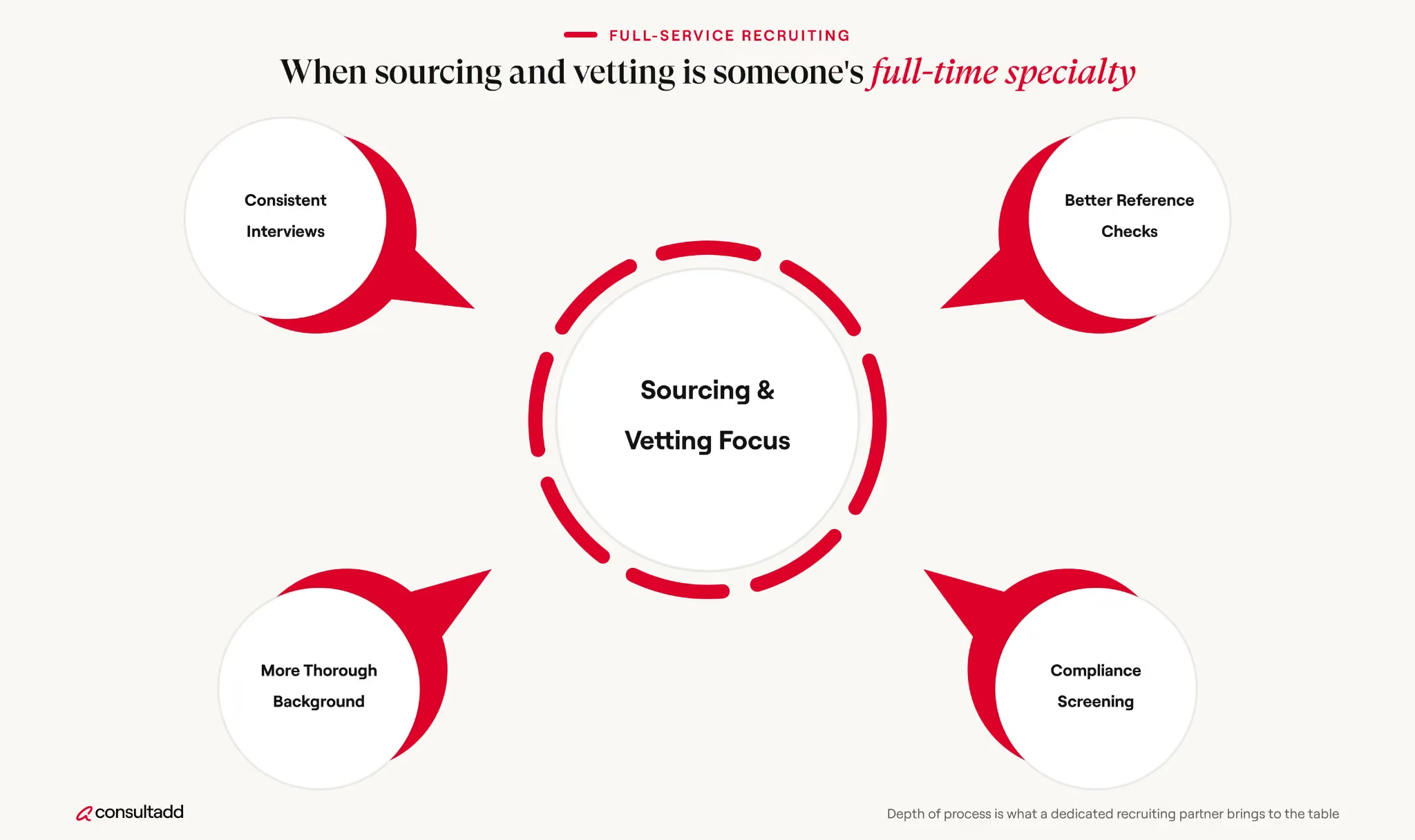
When sourcing and vetting is someone's full-time specialty rather than one of a dozen things an internal generalist handles, the assessment step tends to get more rigor:
- Consistent interview structures
- Better reference checks
- More thorough background
- Compliance screening before a candidate ever reaches a hiring manager.
Access to expertise and technology you wouldn't build alone
Most companies aren't going to build a dedicated sourcing team, invest in predictive hiring analytics, or maintain deep relationships across a niche talent market for a handful of roles a year. Outsourced providers can, because they're spreading that investment across many clients at once.
That shows up in practical ways:
- Recruiters who specialize in a given skill set or industry
- Established sourcing channels for hard-to-find talent
- AI-assisted tools that handle scheduling and first-pass screening so human recruiters spend their time on judgment calls rather than admin work.
If you're trying to build this kind of strategic sourcing capability internally, the tooling and process discipline alone can take longer to stand up than most hiring surges allow for.
Scalability without adding permanent headcount
Hiring volume rarely stays flat.
- A product launch, a new contract win, or a seasonal spike can mean you need to fill 20 roles in a quarter, then five the next.
- Building an internal recruiting team sized for peak demand means paying for idle capacity most of the year.
Outsourced recruitment flexes with that curve.
- You can scale a partnership up during a hiring surge and back down once the immediate need is met, without carrying a fixed recruiting headcount that outlives the reason you built it.
Compliance and risk reduction
Hiring compliance has more moving parts than most non-HR leaders realize: background check requirements, EEOC considerations, wage and hour classification, and increasingly, state-by-state variation for remote hires.
Getting any of it wrong creates legal exposure that's far more expensive than the hiring process itself.
Established outsourced recruiting partners run these checks as a standard part of their process, since it's the same compliance work repeated across every client they serve.
That consistency matters more than it sounds like on paper. A single missed background check or misclassified worker can turn into a legal problem long after the hire is made.
Where outsourcing works best, and where it doesn't
Outsourcing recruitment tends to pay off fastest in a few specific situations:
- High-volume hiring surges
- Specialized technical or niche roles where internal sourcing expertise is thin
- Companies without a mature in-house recruiting function to begin with
It tends to underdeliver when the underlying problem isn't sourcing capacity but something else, an unclear job description, an unrealistic salary band, or a hiring manager who takes six weeks to give interview feedback.
Handing that process to an outside partner doesn't fix those issues. It just means someone else is now trying to fill a role your own company hasn't set up to be filled quickly.
Before signing an RPO contract, it's worth being honest about which problem you're actually solving.
Start Strong With Consultadd
With 15 years in business and 5,000+ successful staffing engagements, we don't just fill roles, we build reliability into your process. We've supported 65 staffing companies in the past year alone and maintain MSAs with industry leaders like Robert Half and TEKsystems.
Here's what working with Consultadd looks like:
- Talent sourced in under 24 hours
- Ready-to-deploy candidates, vetted for experience and compliance
- Lower turnover risk: we match long-term goals, not just short-term needs
- Seamless compliance: visa, documentation, onboarding? Handled.
- Dedicated 1:1 account managers for responsive, personalized support
- Top 100 candidate matches delivered in the past year
- Strong partnerships with universities to tap into fresh, committed talent
- Post-placement support so your investment grows beyond day one
For candidates, your next opportunity is more than just a job title, it's a chance to build skills, gain experience, and move your career forward. At Consultadd, we connect technology professionals with projects and employers that align with their goals, whether they're looking for contract, contract-to-hire, or long-term opportunities.
The tech job market moves fast, but the right guidance can make all the difference. Ready to take the next step in your career journey? Explore Opportunities >>
Key takeaways
- Outsourcing recruitment lowers cost-per-hire mainly by spreading sourcing infrastructure across many clients instead of building it once per company.
- Dedicated outsourced recruiters shrink time-to-fill because they're working from pre-built pipelines instead of starting from zero.
- Better, more consistent screening reduces bad-hire rates, and the U.S. Department of Labor puts the cost of a bad hire at 30% or more of first-year salary.
- Outsourcing gives access to sourcing expertise, technology, and compliance processes most companies can't justify building for a handful of roles a year.
- It's most effective for scaling or specialized hiring, and least effective as a fix for a broken internal hiring process.
FAQs
What's the difference between recruitment process outsourcing and a staffing agency?
A staffing agency typically fills individual roles for a per-placement fee. An RPO partner takes ownership of the broader hiring process, sourcing, screening, interview coordination, and often onboarding, functioning more like an extension of the internal HR team.
How much does outsourcing recruitment actually save?
Savings vary by role and volume, but they come primarily from reduced job board and tooling spend, faster time-to-fill, and fewer costly bad hires, rather than a flat percentage discount on any single hire.
Is outsourcing recruitment only useful for large companies?
No. Smaller companies without a mature in-house recruiting function often see the biggest relative benefit, since they'd otherwise be building sourcing capability from scratch for a small number of roles.
Does outsourcing recruitment mean losing control over who gets hired?
No. Final hiring decisions typically stay with the client. The outsourced partner handles sourcing, screening, and process management, not the ultimate hire-or-pass call.
What kinds of roles benefit most from outsourced recruitment?
Specialized technical roles, high-volume seasonal hiring, and any hiring surge that would otherwise overwhelm an internal team's existing capacity tend to see the clearest benefit.
Can outsourcing recruitment fix a slow hiring process?
Only partially. It can add sourcing speed and capacity, but if the slowdown comes from internal issues like delayed interview feedback or unclear job requirements, those need to be fixed separately.



.webp)