

Introduction
Why do companies choose to outsource work? Mostly because building every function in-house is slower and more expensive than most leadership teams want to admit.
Outsourcing lets a company get specialized work done without carrying the full-time salary, training time, and management overhead that comes with hiring for it directly. That's the short answer. The longer answer depends on what's being outsourced, how urgent the need is, and whether the company can find that skill set internally at all.
This article walks through the real reasons behind outsourcing decisions, where it tends to work well, where it doesn't, and how to tell which one applies to your situation.
TL;DR
- Cost savings matter, but they're rarely the only reason or even the main one.
- Speed to hire is often the bigger driver, especially for specialized or short-term roles.
- Outsourcing gives access to skills a company doesn't have time to build internally.
- It works best for defined, scoped work, and worst for roles needing deep institutional knowledge.
- The decision usually comes down to a build versus buy trade-off, not a blanket policy.
The core reasons companies outsource
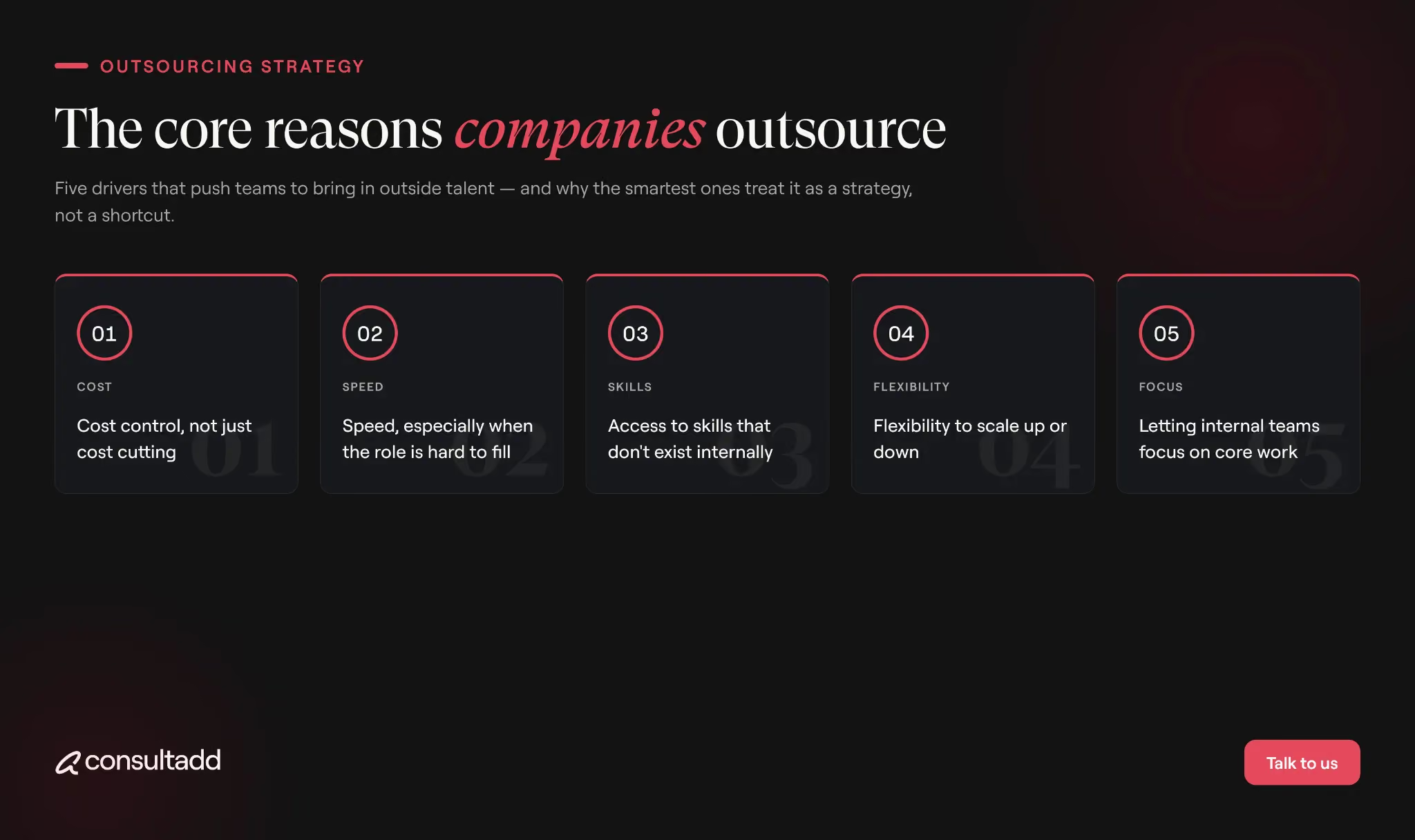
Ask five different companies why they outsource and you'll get five slightly different answers, but they tend to cluster around the same handful of drivers.
1. Cost control, not just cost cutting
- Outsourcing can lower costs, but the smarter framing is cost control.
- A full-time hire comes with salary, benefits, payroll tax, equipment, and management time, whether that person is fully utilized or not.
- Outsourced work is often scoped and priced to the task, which makes budgeting more predictable for project-based needs.
- This matters most for roles that don't need to exist year-round.
- A six-month system migration doesn't justify a permanent headcount line, but it does need real expertise while it's happening.
2. Speed, especially when the role is hard to fill
- Recruiting, screening, and onboarding a full-time employee takes weeks, sometimes months, for specialized technical roles.
- Outsourcing to a staffing partner or contractor can compress that timeline significantly because the vetting and sourcing work is already done.
- This is one of the more underrated reasons companies outsource: it's not that they can't hire, it's that they can't hire fast enough for the problem in front of them.
Companies dealing with a sudden spike in project work, similar to the situations covered in IT staff augmentation, often use outsourcing as a way to add capacity without waiting out a full hiring cycle.
3. Access to skills that don't exist internally
- Not every company needs a full-time cloud security architect or a niche compliance specialist.
- Outsourcing gives access to that expertise for the specific window it's needed, without the company trying to build a permanent team around a skill set it will only use occasionally.
- This is different from cost savings. Sometimes the internal skill genuinely doesn't exist yet, and building it from scratch would take longer than the project timeline allows.
4. Flexibility to scale up or down
- Workloads aren't flat. A retail company staffs differently in November than in February. A software company might need ten extra engineers for a six-month push and none of them afterward.
- Outsourcing lets headcount flex with the work instead of locking in a fixed team that's either overstaffed in slow periods or scrambling in busy ones.
5. Letting internal teams focus on core work
- Every hour a product team spends managing a side project, like a website redesign or a data migration, is an hour not spent on the product itself.
- Outsourcing peripheral work frees internal staff to stay focused on what actually differentiates the business.
This is a common reason for outsourcing functions like IT support, payroll, or recruiting itself, which is why staffing agency partnerships exist as a category in the first place.
Outsourcing versus hiring in-house
Neither approach is universally better. The right choice depends on the shape of the work.
A company migrating a legacy system to the cloud, for example, usually leans toward outsourcing because the work is bounded and specialized.
A company hiring its next VP of Engineering almost never outsources that role, because it requires deep, ongoing familiarity with the business.
Where outsourcing tends to go wrong
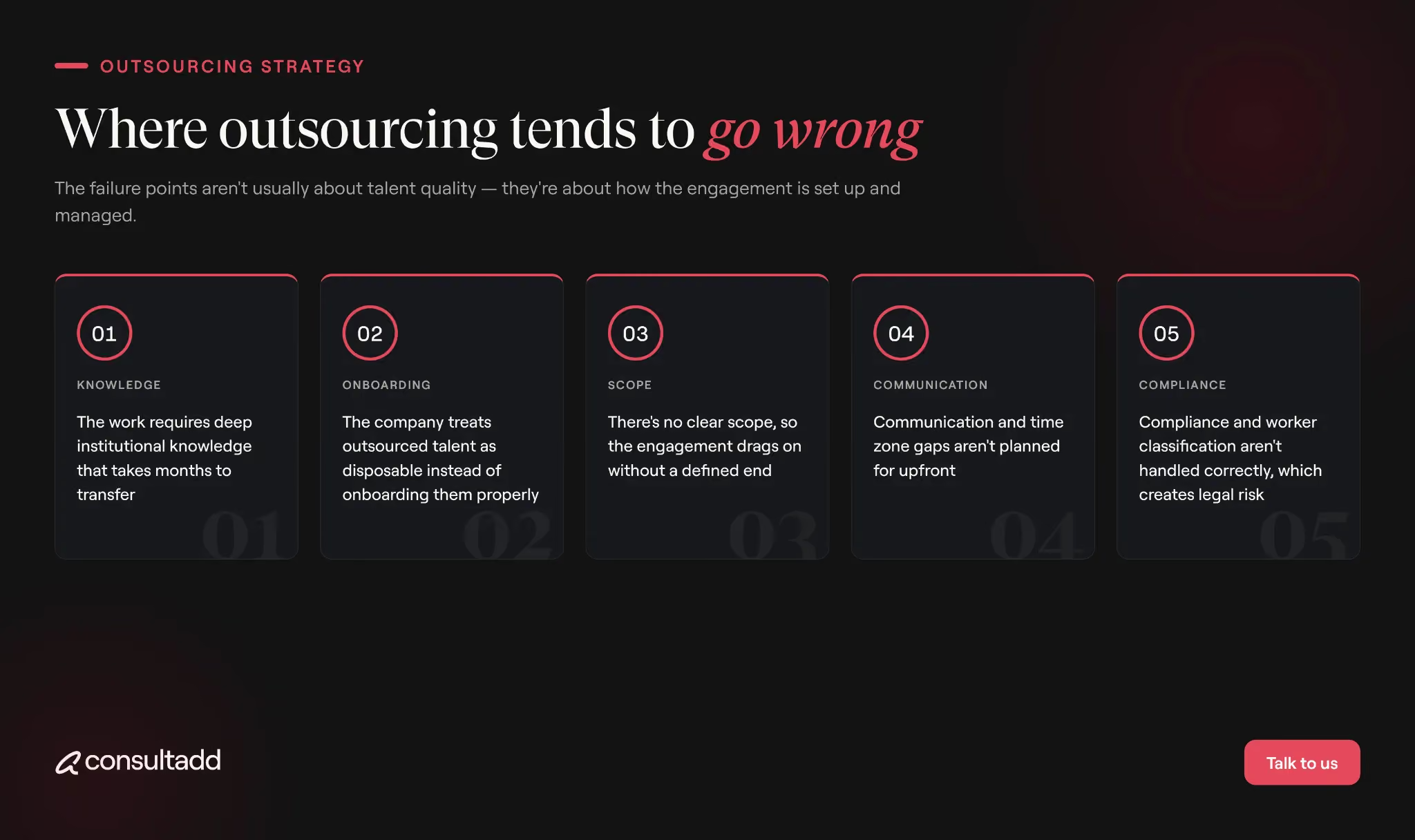
Outsourcing isn't automatically the right call, and it fails for predictable reasons.
- The work requires deep institutional knowledge that takes months to transfer
- The company treats outsourced talent as disposable instead of onboarding them properly
- There's no clear scope, so the engagement drags on without a defined end
- Communication and time zone gaps aren't planned for upfront
- Compliance and worker classification aren't handled correctly, which creates legal risk
That last point matters more than most companies expect.
Misclassifying a contractor as an employee, or vice versa, can trigger real penalties, which is part of why understanding the difference between contract-to-hire and full-time arrangements matters before signing anything.
How to decide if outsourcing makes sense
A simple gut check helps before committing either way.
They outsource the roles that match this pattern and hire directly for the ones that don't, which is why average time to hire varies so much by role type, as covered in average time to hire benchmarks.
Start Strong With Consultadd
With 15 years in business and 5,000+ successful staffing engagements, we don't just fill roles, we build reliability into your process. We've supported 65 staffing companies in the past year alone and maintain MSAs with industry leaders like Robert Half and TEKsystems.
Here's what working with Consultadd looks like:
- Talent sourced in under 24 hours
- Ready-to-deploy candidates, vetted for experience and compliance
- Lower turnover risk: we match long-term goals, not just short-term needs
- Seamless compliance: visa, documentation, onboarding? Handled.
- Dedicated 1:1 account managers for responsive, personalized support
- Top 100 candidate matches delivered in the past year
- Strong partnerships with universities to tap into fresh, committed talent
- Post-placement support so your investment grows beyond day one
For candidates, your next opportunity is more than just a job title, it's a chance to build skills, gain experience, and move your career forward. At Consultadd, we connect technology professionals with projects and employers that align with their goals, whether they're looking for contract, contract-to-hire, or long-term opportunities.
The tech job market moves fast, but the right guidance can make all the difference. Ready to take the next step in your career journey? Explore Opportunities >>
Key takeaways
- Outsourcing is usually a build versus buy decision, not a cost-cutting reflex.
- Speed to hire is often a bigger driver than the headline cost savings.
- Specialized, short-term, or hard-to-find skills are the strongest fit for outsourcing.
- Roles needing deep institutional knowledge are usually better hired in-house.
- Worker classification and compliance need attention before signing any outsourcing agreement.
FAQs
Is outsourcing always cheaper than hiring in-house?
Not always. It removes the fixed costs of a full-time hire, but specialized outsourced talent can carry a premium, especially for short engagements. The savings usually come from avoided overhead and faster time to productivity, not a lower hourly rate.
What kinds of work do companies outsource most often?
IT support, software development, payroll and HR administration, customer service, and recruiting are among the most commonly outsourced functions, based on guidance from the U.S. Small Business Administration.
Does outsourcing hurt company culture?
It can, if outsourced workers are treated as disconnected from the team. Companies that onboard contractors properly and include them in relevant communication tend to avoid this problem.
How is outsourcing different from staff augmentation?
Outsourcing typically hands off an entire function or project to an external provider. Staff augmentation adds individual contractors to an existing internal team, who work under your company's own processes and management.
What should a company check before signing an outsourcing contract?
Scope of work, data security terms, worker classification rules, and an exit plan if the engagement ends early.
Can outsourcing work for a small business, or is it mainly for large enterprises?
It works for both, though the use case differs. Small businesses often outsource to access skills they can't afford to hire full-time, while larger companies outsource to manage volume and scale flexibly.
.webp)