
Industry Insights
.webp)
H1-B New Rule: What Ending Deference Means for Extensions
Introduction
If your H-1B extension is coming up in the next year, the rules for how USCIS reviews it may be about to change.
The H1B new rule, a DHS proposal published on October 14, 2026, would remove the requirement that officers defer to a prior approval when the employer, worker, and facts haven't changed.
This is a proposed rule, not a final one. The existing deference requirement stays in effect while DHS finishes the rulemaking process.
But if it's finalized, a routine extension with the same employer in the same role could get the same scrutiny as a brand-new petition.
Here's what the proposal says, who it reaches, and what employers and workers can do now.
TL;DR
- The H1B new rule would delete 8 CFR 214.1(c)(5), the regulation that tells USCIS to defer to earlier approvals on Form I-129 petitions with the same parties and facts.
- It covers H-1B and most other I-129 categories, including L-1, O-1, TN, and E visas.
- DHS projects about 6,044 extra requests for evidence a year, though its own data shows no matching rise in denials.
- An RFE added an average of 64 days to a decision between FY 2022 and FY 2025, so delays are the main practical risk.
- Comments close November 13, 2026. Nothing changes until a final rule is published.
What is the H1B new rule?
USCIS has proposed removing the requirement that its officers defer to prior eligibility decisions when they review extensions of nonimmigrant worker petitions filed on Form I-129.
The proposal was scheduled for Federal Register publication on October 14, 2026, with a 30-day comment window.
You can read the full text in the DHS proposed rule on removing deference to prior USCIS determinations.
Where the deference rule came from
Deference isn't new. USCIS followed it as policy for years, and the 2024 H-1B modernization rule wrote it into federal regulations.
The current proposal would bring back an approach the first Trump administration used.
What the proposal would and would not do
Officers could still look at a prior approval. They just wouldn't be required to defer to it, and the employer would carry the burden of proving eligibility with the evidence in each new petition.
The proposal leaves the underlying eligibility requirements for H-1B and other classifications unchanged. What changes is how USCIS reviews a petition that follows an earlier approval.
It doesn't end H-1B extensions or revoke approvals already granted.
How the USCIS deference policy works today
Under 8 CFR 214.1(c)(5), USCIS generally defers to an earlier eligibility decision when the petition is on Form I-129, it involves the same parties and underlying facts, and there's no material error, material change, or new adverse information.
The current text is on eCFR at 8 CFR 214.1.
In plain terms, if USCIS approved a software engineer's H-1B three years ago and nothing about the job has changed, the officer reviewing the extension starts from the assumption that the original decision was right.
Current rule vs. proposed rule
Who the H-1B proposed rule 2026 would affect
The change would apply to Form I-129 filings for H-1B and H-1B1 workers, L-1 intracompany transferees, O-1 and O-2 workers, E-1, E-2, and E-3 classifications, TN professionals, H-2A, H-2B, and H-3 workers, and some P, Q, and R nonimmigrants.
Cases with the most exposure
The biggest effect would fall on extension cases where the employer, worker, position, and relevant facts are mostly unchanged, because those are the cases most likely to get deference now.
That's the irony. The cleanest, most stable extensions are the ones that lose the most.
Cases with little or no change
The proposal doesn't touch the rules for F-1 status, CPT, OPT, or STEM OPT, and it leaves H-1B cap registration and selection alone.
Most students moving from F-1 or OPT to H-1B for the first time wouldn't have a prior H-1B approval with the same employer and facts, so deference mostly matters after a worker already holds H-1B status.
If you're still on OPT and planning the switch, our guide to OPT and CPT covers the timing rules that feed into a first H-1B filing.
More RFEs, longer waits: what DHS expects
DHS ran the numbers itself, and they're worth reading closely.
The agency estimates roughly 208,429 petitions a year may currently qualify for deference.
Using historical data, it projects that removing the policy could push the request for evidence rate up by 2.9 percentage points, or about 6,044 additional RFEs each year.
DHS also said its historical analysis didn't show a matching change in denial rates, so its estimates point to more scrutiny and paperwork rather than thousands of extra denials.
Why an RFE still costs you
Even without a denial, an RFE slows things down. DHS reported that from FY 2022 through FY 2025, petitions with an RFE took an average of 64 more calendar days to reach an initial decision than petitions without one.
The agency acknowledged this could create uncertainty for staffing and project planning.
For a staffing firm, 64 days is the difference between a consultant starting a client renewal on time and a project lead asking why the paperwork is still open. That's where the real cost sits.
How this fits with other recent H-1B changes
The deference proposal lands in a crowded few months. Each action below is separate, and each sits at a different legal stage.
The Federal Register notice for the fee proposal sets a $103,265 charge on each cap-subject H-1B petition, on top of other required fees.
Extensions, amendments, and transfers wouldn't be subject to that fee. You can read the DHS fee proposal for certain H-1B petitions directly.
The October 8 PERM suspension covered Cognizant, Infosys, TCS, Wipro, HCL, Capgemini, Microsoft, and Adobe. H-1B visas weren't suspended, so workers at those companies can keep working on their current H-1B.
Our breakdown of new green card rules for 2026 covers the green card side in more depth.
For a full status tracker of the lottery, the $100,000 proclamation, and every other 2026 change, see H1-B 2026: every rule change and where it stands now.
H-1B compliance for employers: how to prepare
Nothing has to change in your filings today. But if this proposal is finalized, the extension you file in mid-2027 will need to stand on its own evidence.
Build every extension like an initial petition
Assume the officer hasn't seen the first approval. Depending on the classification, useful documents include updated job duties, employment terms, work locations, wage records, and proof the worker kept lawful status.
For staffing firms placing consultants at client sites, the weak spot is usually the third-party documentation. In our experience, end-client letters go stale fast.
A letter from 2023 describing a project that has since changed scope invites exactly the kind of question an RFE asks.
Employer extension checklist
File early
If the rule becomes final, employers may need to send more complete current evidence with extensions instead of relying on the prior approval to settle eligibility questions.
More evidence takes more time to gather, so start 6 months before expiration, which is the earliest an H-1B extension can be filed.
Comment if you have something useful to say
The comment period runs until November 13, 2026. Employers with real data on extension delays or RFE costs can put it on the record.
DHS has to consider the comments before it finalizes anything.
What H-1B workers should do now
Your current status isn't affected by a proposal. Still, a few habits will help if the rule goes final.
- Keep your own copies of every approval notice, LCA, pay stub, and I-94.
- Tell your employer early if your duties, title, or work location have shifted. A change that isn't reported now can surface during an extension review later.
- Know the 240-day rule. If your employer files the extension on time, you can generally keep working for the same employer for up to 240 days past your I-94 expiration while it's pending.
If you're thinking about changing jobs, our guide to H-1B sponsorship for tech professionals explains how transfers work and what to ask a new employer.
New to the program entirely? Start with what an H1 visa is and how it works.
For official guidance, check the USCIS page on H-1B specialty occupations.
Bottom line
The H1B new rule doesn't change who qualifies for an H-1B. It changes how much a past approval protects you.
If DHS finalizes it, stable extensions lose the shortcut they have today, and employers should expect more RFEs and longer waits rather than a wave of denials.
The practical answer is the same for employers and workers. Keep documentation current, file extensions as early as the rules allow, and treat every renewal as if USCIS is seeing the case for the first time.
Immigration rules are moving quickly this year, so confirm details with immigration counsel before any filing.
Start Strong With Consultadd
With 15 years in business and 5,000+ successful staffing engagements, we don't just fill roles, we build reliability into your process. We've supported 65 staffing companies in the past year alone and maintain MSAs with industry leaders like Robert Half and TEKsystems.
Here's what working with Consultadd looks like:
- Talent sourced in under 24 hours
- Ready-to-deploy candidates, vetted for experience and compliance
- Lower turnover risk: we match long-term goals, not just short-term needs
- Seamless compliance: visa, documentation, onboarding? Handled.
- Dedicated 1:1 account managers for responsive, personalized support
- Top 100 candidate matches delivered in the past year
- Strong partnerships with universities to tap into fresh, committed talent
- Post-placement support so your investment grows beyond day one
For candidates, your next opportunity is more than just a job title, it's a chance to build skills, gain experience, and move your career forward. At Consultadd, we connect technology professionals with projects and employers that align with their goals, whether they're looking for contract, contract-to-hire, or long-term opportunities.
The tech job market moves fast, but the right guidance can make all the difference. Ready to take the next step in your career journey? Explore Opportunities >>
Key takeaways
- The H1B new rule is a proposal to remove 8 CFR 214.1(c)(5), which requires USCIS to defer to prior Form I-129 approvals when facts haven't changed.
- Same-employer, same-role extensions face the most change. First-time petitions after OPT see little difference.
- DHS expects about 6,044 more RFEs a year and an average 64-day delay when one is issued, but no matching rise in denials.
- The proposal is not in effect. Comments close November 13, 2026, and current deference rules apply until a final rule is published.
- Employers should prepare extensions as if they were initial petitions, with current client letters, wage records, and status proof.
FAQs
What is the new rule for H-1B in October 2026?
DHS proposed ending the requirement that USCIS defer to earlier approvals when reviewing Form I-129 extensions with the same parties and facts. Officers could still consider a past approval, but they wouldn't be bound by it. The proposal was published on October 14, 2026.
Is the H1B new rule in effect yet?
No. It's a proposed rule with a public comment period ending November 13, 2026. DHS must review comments before it can issue a final rule, and the existing deference regulation stays in force until then.
Does the new rule affect H-1B extensions with the same employer?
Yes, those are the cases it affects most. Today, an unchanged extension usually benefits from deference to the prior approval. Under the proposal, the employer would need to prove eligibility again with current evidence.
What is the USCIS deference policy?
It's the rule that tells officers to give weight to a previous approval when a new petition involves the same parties and underlying facts. Exceptions apply for material errors, material changes, or new adverse information. The 2024 H-1B modernization rule made it a formal regulation.
Will the new H-1B rule cause more denials?
DHS's own analysis says probably not in large numbers. It projects about 6,044 more RFEs a year but found no corresponding change in denial rates in historical data. The bigger risk is delay, since an RFE added an average of 64 days to decisions.
Can I keep working while my H-1B extension is pending?
Generally yes. If your employer files the extension before your status expires, you can usually continue working for that same employer for up to 240 days past your I-94 date while USCIS decides. Check your specific facts with an immigration attorney.
.webp)
Cloud Account Manager Hiring Trends 2026: Aws, Azure, GCP
Introduction
Cloud account manager hiring trends 2026 point in two directions at once.
Cloud spending is growing faster than it has in years, with Synergy Research Group putting Q2 2026 cloud infrastructure revenue at $143.4 billion, up more than 40% from a year earlier.
Yet AWS, Microsoft, and Google are trimming traditional sales roles and hiring more technical, AI-focused sellers instead.
The result is fewer generalist account manager openings at the hyperscalers, more demand at partners, MSPs, and software companies selling on AWS, Azure, and Google Cloud, and a higher bar for technical fluency everywhere.
This guide covers what's changing, which skills employers now screen for, and what it means if you're hiring for these roles or applying to them.
TL;DR
- Cloud infrastructure spending hit $143.4 billion in Q2 2026, and Gartner expects public cloud services spending to grow 21.3% this year.
- Microsoft and Amazon both cut corporate roles in 2026, including sales and AWS teams, while shifting toward more technical customer-facing work.
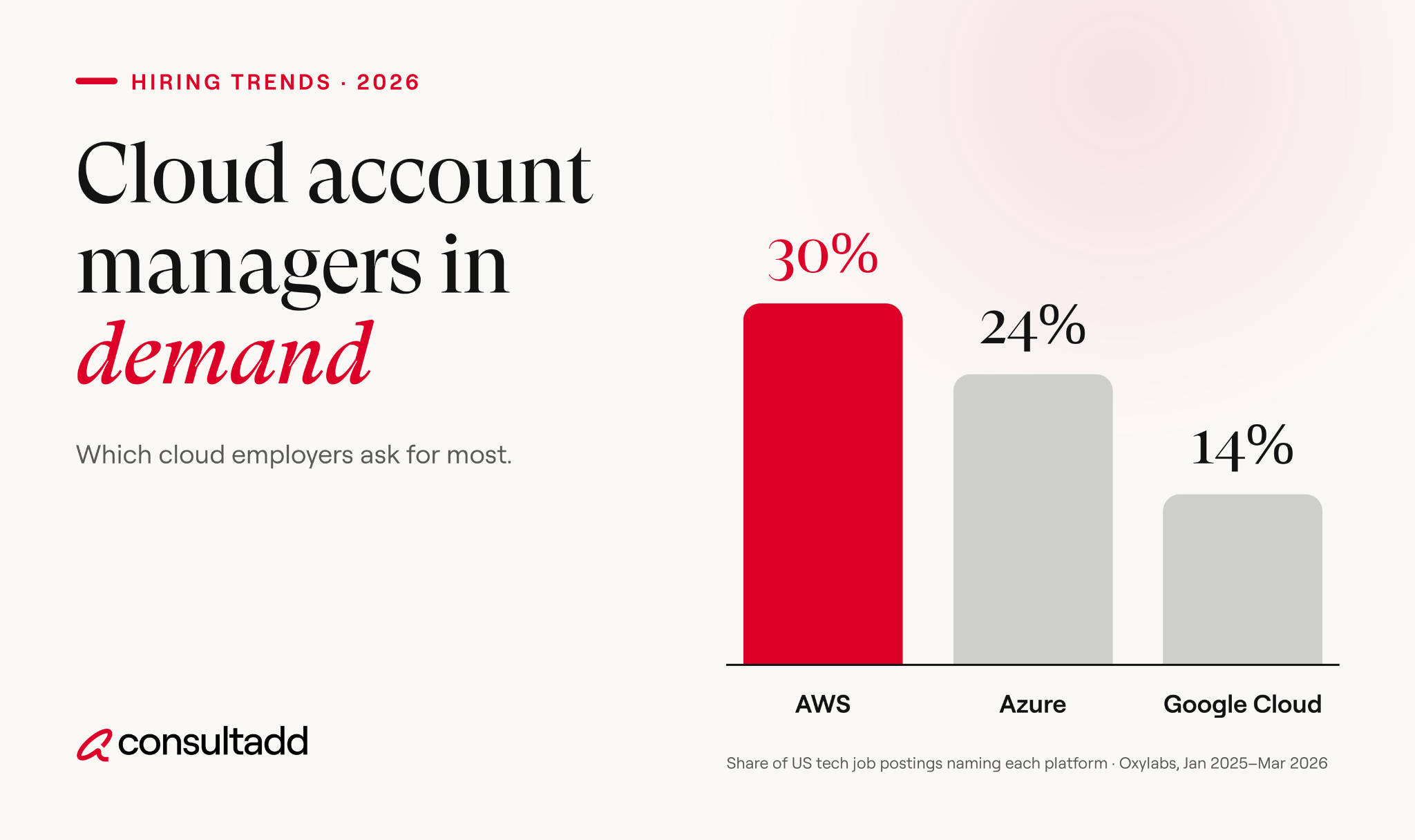
- Google Cloud reached a record 15% market share in Q2 2026, which makes Google Cloud selling experience more marketable than it was two years ago.
- Employers expect cloud account managers to talk credibly about AI workloads, consumption, and cost, not just licensing and renewals.
- Much of the hiring demand is moving to the partner ecosystem: consulting partners, MSPs, resellers, and ISVs.
What a cloud account manager does in 2026
A cloud account manager owns a set of customer accounts and is responsible for growing their spend on a cloud platform. The job blends relationship management, deal strategy, and enough technical knowledge to keep up with architects and engineers in the room.
There are two broad versions of the role:
- Hyperscaler account managers work for AWS, Microsoft, or Google and sell that provider's platform directly.
- Partner-side account managers work for consulting firms, managed service providers, resellers, or software vendors and sell services or products built on one or more of those platforms.
Titles differ by company, which trips up a lot of job searches and sourcing efforts.
If you're sourcing for these roles, search across all of these titles, not just "cloud account manager."
Our glossary of technology terms every recruiter should know covers the platform vocabulary that shows up in these job descriptions.
The cloud market behind 2026 hiring
The money is still moving into cloud. Synergy Research Group's Q2 2026 report put quarterly cloud infrastructure services revenue at $143.4 billion, with trailing twelve-month revenue around $500 billion.
Synergy called it the highest growth rate in eight years, driven largely by AI.
Market share shifted too.
Gartner's public cloud forecast pointed the same way, projecting 21.3% growth in public cloud services spending in 2026, fueled by AI integration and continued migration work.
Growth like that usually means more sales hiring. In 2026, it hasn't worked out that simply.
Seven cloud account manager hiring trends for 2026
1. Hyperscalers are cutting traditional sales roles
Microsoft cut about 4,800 jobs in July 2026, roughly 2% of its workforce, and said a large part of the change involved revamping its sales and consulting division, according to GeekWire.
Amazon confirmed 16,000 corporate job cuts in January, and Reuters reported that employees from multiple AWS units were among those affected.
None of this means cloud sales is shrinking. It means the big three want fewer people doing broad relationship coverage and more people doing specialized or technical work.
2. Technical, customer-facing roles are replacing some generalist sales seats
The clearest signal came from Microsoft. Alongside its July cuts, it launched the Microsoft Frontier Company, a $2.5 billion initiative to place 6,000 engineers inside customer organizations to deploy AI.
GeekWire reported that the shift is reducing some traditional sales and consulting roles while adding technical positions that work directly with customers.
For account managers, the gap between "seller" and "technical advisor" keeps narrowing. Candidates who can run a discovery call about data architecture or model deployment stand out.
3. AI specialist sellers are in demand
Google Cloud's 2026 job listings show the pattern: dedicated AI sales specialists, data analytics sales specialists, and security sales specialists sitting alongside territory field sales reps.
Microsoft and AWS run similar specialist overlays.These roles usually require years of quota-carrying experience plus real knowledge of a product area.
A Google Cloud Field Sales Representative III listing, for example, asks for 10 years of quota-carrying cloud or software sales or consultative account management.
4. Google Cloud experience is worth more than it used to be
Google Cloud's share rose from 13% to a record 15% in a year, per Synergy.
As its customer base grows, so does demand for people who have sold or managed Google Cloud accounts, both at Google and at its partners.
Two years ago, many hiring managers treated AWS or Azure experience as the default. That's less true now.
5. Hiring demand is moving to the partner ecosystem
When hyperscalers trim direct sales coverage, more selling shifts to partners.
Consulting firms, MSPs, resellers, and software companies selling through cloud marketplaces all need account managers who understand how co-selling with AWS, Microsoft, or Google works.
It also means experienced hyperscaler sellers are entering the job market. Partners hiring for mid-level and senior roles can expect stronger candidate pools than in a typical year.
6. Consumption and cost conversations are part of the job
AI workloads are usage-based and expensive. Customers want to know what they'll actually spend, and they push back when bills jump.
Account managers in 2026 are expected to understand consumption commitments, cost forecasting, and basic FinOps concepts, not just contract renewals.
The same pressure shows up across IT services. Our look at IT services industry challenges in 2026 covers how pricing models are changing.
7. Multicloud and neocloud knowledge helps
Synergy noted in its Q1 2026 report that neocloud providers, such as GPU-focused clouds, already accounted for about 5% of the cloud market.
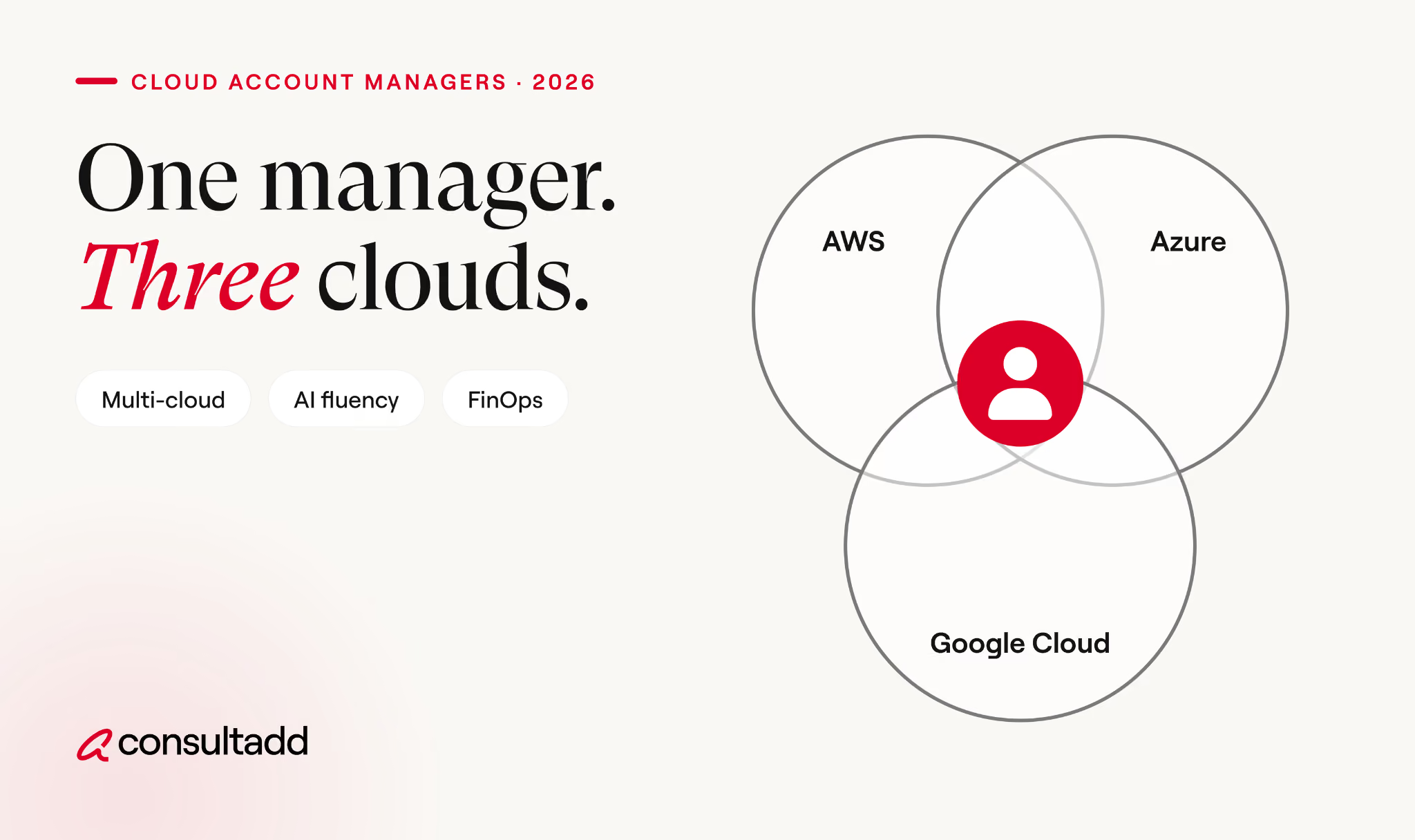
Many enterprise customers run workloads across more than one provider. Partner-side account managers who can speak to AWS, Azure, and Google Cloud, and to where specialized AI clouds fit, have an edge over single-platform sellers.
Skills employers screen for now
Here's what hiring managers ask about most in cloud account manager interviews this year, and how to check for each skill.
Certifications don't replace selling experience. For career changers or engineers moving into sales, though, they help show the product knowledge is real.
What these trends mean for employers
If you're a partner, MSP, or software company hiring cloud account managers, the market is more favorable than it was two years ago. A few ways to use that:
- Write job descriptions around outcomes, such as growing consumption across named accounts, rather than listing every product.
- Search across the hyperscaler titles in the table above, not only your own title.
- Include a technical interview step. Plenty of strong relationship sellers struggle with AI and data conversations, and you'll want to know early.
- Move fast. Experienced sellers coming out of large companies often weigh several offers at once.
- Consider contract or contract-to-hire for new territories or practice areas where revenue is still uncertain.
Our guide to contract to hire explains how the model works.
If you also need the engineers behind the deals, our guide to hiring AWS developers covers skills, costs, and screening.
What these trends mean for candidates
If you're an account manager at a hyperscaler or want to become one, a few practical points:
- Build technical depth. A foundational certification is a start, but being able to explain how a customer would run an AI workload on your platform matters more.
- Track your numbers. Attainment, growth in account consumption, and deal sizes are what interviewers ask about first.
- Look at partners seriously. Many partner roles offer broader scope, closer customer relationships, and exposure to more than one cloud.
- Learn Google Cloud if you haven't. Its growth makes multi-platform experience more valuable.
Cloud account manager hiring trends 2026: the bottom line
Cloud account manager hiring trends 2026 come down to a market that keeps growing while the work changes shape.
Fewer generalist seats sit inside AWS, Microsoft, and Google, and more demand sits with partners, specialists, and technically fluent sellers who can talk about AI, consumption, and cost.
Employers who adjust job descriptions and screening to match will hire better. Candidates who build technical depth and stay open to partner roles will have more options.
Start Strong With Consultadd
With 15 years in business and 5,000+ successful staffing engagements, we don't just fill roles, we build reliability into your process. We've supported 65 staffing companies in the past year alone and maintain MSAs with industry leaders like Robert Half and TEKsystems.
Here's what working with Consultadd looks like:
- Talent sourced in under 24 hours
- Ready-to-deploy candidates, vetted for experience and compliance
- Lower turnover risk: we match long-term goals, not just short-term needs
- Seamless compliance: visa, documentation, onboarding? Handled.
- Dedicated 1:1 account managers for responsive, personalized support
- Top 100 candidate matches delivered in the past year
- Strong partnerships with universities to tap into fresh, committed talent
- Post-placement support so your investment grows beyond day one
For candidates, your next opportunity is more than just a job title, it's a chance to build skills, gain experience, and move your career forward. At Consultadd, we connect technology professionals with projects and employers that align with their goals, whether they're looking for contract, contract-to-hire, or long-term opportunities.
The tech job market moves fast, but the right guidance can make all the difference. Ready to take the next step in your career journey? Explore Opportunities >>
Key takeaways
- Cloud spending is growing fast, with Q2 2026 infrastructure revenue at $143.4 billion, but that growth isn't turning into more generalist sales seats at the hyperscalers.
- Microsoft and Amazon cut roles in 2026 while shifting toward technical, customer-facing positions and AI specialists.
- Google Cloud's record 15% share makes Google Cloud selling experience more valuable to employers.
- Partners, MSPs, resellers, and ISVs are picking up much of the account manager hiring demand.
- Screen for technical fluency, AI deal experience, and consumption management alongside a proven quota record.
FAQs
What does a cloud account manager do?
A cloud account manager owns a group of customer accounts and is responsible for growing their spend on a cloud platform such as AWS, Azure, or Google Cloud. The role combines relationship management, deal strategy, and enough technical knowledge to work alongside architects and engineers.
Are AWS, Microsoft, and Google still hiring account managers in 2026?
Yes, but more selectively. Both Microsoft and Amazon cut corporate roles in 2026, while all three providers continue to post specialist and technical sales roles, especially around AI, data, and security.
What skills do cloud account managers need in 2026?
A proven quota record is still the starting point. Employers also look for technical fluency, experience with AI-related deals, an understanding of consumption-based pricing, and the ability to co-sell with hyperscalers and partners.
Which cloud certification is best for an account manager?
Foundational certifications are the usual starting point: AWS Certified Cloud Practitioner, Microsoft Azure Fundamentals (AZ-900), or Google Cloud Digital Leader. Pick the platform you sell most, and add a second one if you work in a multicloud partner role.
Is AWS, Azure, or Google Cloud experience more valuable?
AWS still has the largest market share, so AWS experience opens the most doors. Google Cloud is growing fastest, which makes its experience increasingly valuable, and Azure experience pairs well with enterprises already invested in Microsoft software.
How is AI changing cloud sales jobs?
AI is driving much of the new cloud spend, so sellers need to understand AI workloads and the costs that come with them. Providers are also adding technical, customer-embedded roles, such as Microsoft's 6,000-engineer Frontier Company initiative, while reducing some traditional sales positions.
.avif)
IT Services Industry Challenges 2026: 7 Real Pressures
Introduction
Enterprise technology budgets are growing faster than they have in years. For a lot of IT services firms, that hasn't made 2026 any easier.
Most of the new money is going to AI infrastructure and software. The share that still reaches services comes with harder questions about pricing, contract length, security and who actually does the work.
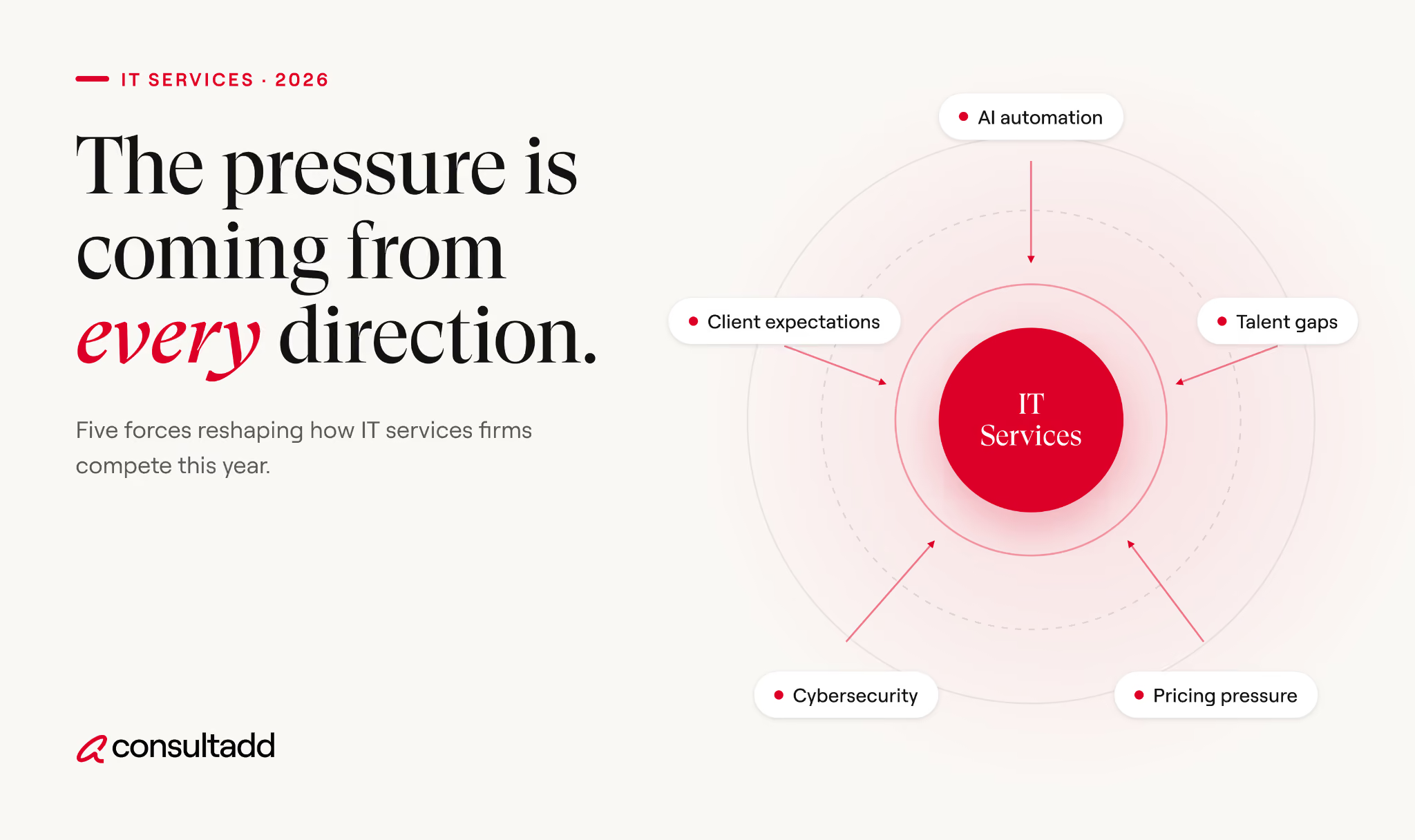
Those are the IT services industry challenges 2026 has put in front of consulting firms, managed service providers and systems integrators.
This guide covers seven of them, with the data behind each and a practical first move. It's written for people who run or buy IT services.
If you're after hiring trends, our IT staffing trends breakdown covers that side.
TL;DR
- IT services spending is still growing, but far more slowly than data center systems, software and cloud infrastructure, according to Gartner's July 2026 forecast.
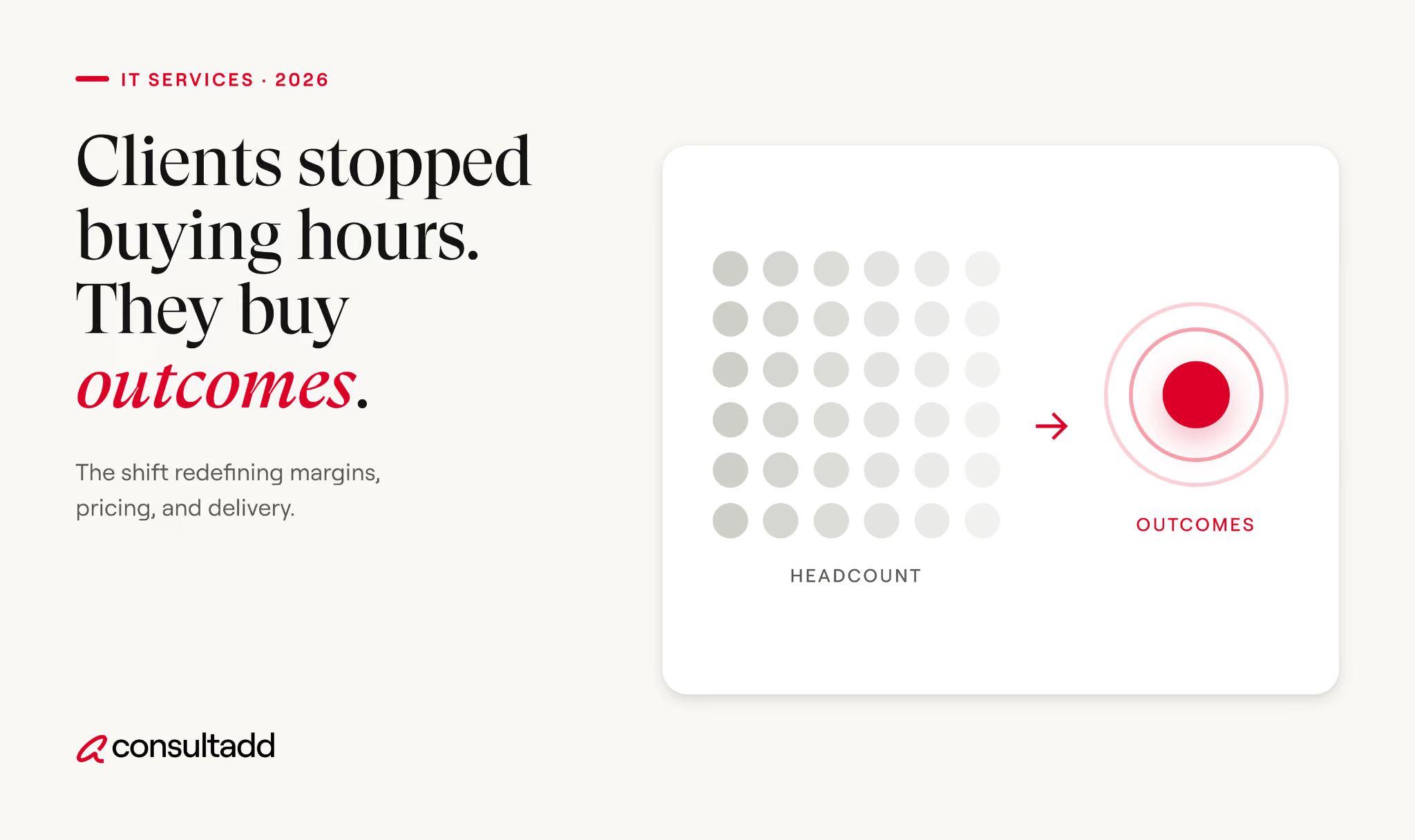
- AI is pushing clients away from time-and-materials billing and toward fixed-price and outcome-based contracts, which cuts revenue tied to hours.
- Clients are reopening long contracts early and signing shorter ones, so pipelines turn into revenue more slowly.
- H-1B fee rules are still moving through the courts, and nearly half of all breaches in Verizon's latest data involved a third party.
- Providers that price for outcomes, rethink their junior talent model and tighten security and AI governance will be in a better position than those waiting for 2027.
Where the IT services market stands in 2026
Start with the good news. Gartner expects worldwide IT spending to reach $6.37 trillion in 2026, up 14.2% from 2025.
The first challenge sits inside that number. Services is growing at roughly a third of the rate of software and a small fraction of the rate of data center systems.
Gartner analyst John-David Lovelock described it as "not a rising tide lifts all boats" market, and pointed to tech budgets under strain from inflation, supply shortages, higher hardware and memory prices, AI funding and changing priorities.
In practice, a CIO with a fixed budget funds GPU capacity, AI platforms and the cloud bill first. Services projects compete for what's left. When a client says "we liked the proposal, but the budget moved," this is usually where it went.
AI pricing deflation is breaking time-and-materials billing
For decades the model was simple. Sell hours, staff the hours, bill the hours. AI coding assistants, generated test suites and automated tier-1 support now let the same work get done with fewer hours, and clients know it.
Large providers have started calling this "AI deflation" on their earnings calls. HCLTech's leadership expects AI to deflate traditional services by 2 to 3% a year, and clients are cutting deal tenures by 15 to 30% because AI tools change every few months, as Business Standard reported.
The response from the biggest firms has been to change what they sell. Cognizant's fixed-price and outcome-based contracts went above half of its revenue for the first time this year, with the company taking on overrun risk to keep part of the productivity gains AI creates, according to Pzena Investment Management's Q2 2026 holdings note.
What changes when the client pays for results
Outcome-based pricing sounds clean on a slide. In practice it moves delivery risk onto the provider, and it only works when both sides agree on a baseline and how to measure it.
If a client can't tell you their current ticket resolution time, you can't price a 30% improvement. That's why most outcome deals start with a short measurement phase billed the old way.
Hourly billing isn't dead. It still makes sense when the client directs the work, because the client captures the AI productivity directly.
Our comparison of managed services vs staff augmentation covers where each model fits.
Clients are renegotiating IT outsourcing contracts early
Long annuity deals signed in 2021 and 2022 were priced for delivery without AI. Many clients now consider them overpriced and aren't waiting for renewal.
HFS Research reports companies reopening IT services contracts within 24 months of signing, with talks shifting away from FTE counts, rate cards and offshore ratios toward productivity commitments, outcome pricing and gain-sharing.
The same report notes that TCS, Infosys and Wipro announced healthy deal pipelines in FY26, but AI-led price deflation kept revenue conversion weak.
For a mid-size provider, this rarely arrives as a dramatic cancellation. It looks like a renewal that was supposed to roll over but now comes with a productivity clause. A five-year deal becomes three. A client asks for AI savings to be passed through every year.
Providers that bring a productivity offer to the table first tend to keep more control of the terms. Showing your own AI usage data on the account, and a phased savings schedule, is far easier than defending a rate card line by line.
The talent pyramid behind IT services no longer fits
The classic delivery model has a wide base. Lots of junior engineers bill at lower rates, a smaller layer of seniors reviews their work, and a few architects sit on top. Margin comes from that leverage.
1. Fewer junior hours to bill
AI tools now handle much of what juniors used to do: boilerplate code, test scripts, documentation and L1 tickets. On an outcome-priced contract there's no reason to staff twelve juniors when six people with good tools can do the job.
The demand data points the same way. Staffing Industry Analysts has reported weaker demand for QA testers, entry-level programmers and help desk support, as more of that work is automated or assisted by AI.
Our 2026 tech job market report goes deeper on that split.
That raises a harder question for providers. If juniors aren't getting hands-on project time, where do the seniors of 2032 come from? Firms that redesign junior roles around reviewing and testing AI-generated work will have a bench to draw on later. Firms that simply stop hiring juniors may not.
2. Bench time costs more when deals get shorter
Shorter contracts mean more transitions and more gaps between projects. For H-1B employees, those gaps aren't free. The U.S. Department of Labor's guidance on H-1B nonproductive time says the required wage generally has to be paid when the employer has no work assigned.
Our guide to bench sales in IT staffing explains how firms keep that waiting time short.
H-1B rules and immigration costs stay unsettled
Many IT services firms depend on H-1B talent, and the rules have changed several times in twelve months. Here is where things stood in early October 2026.
There's another cost that hits services firms specifically. Under a 2026 DHS rule, covered employers must pay the 9-11 Biometric Fee on all H-1B and L-1 petitions.
A covered employer has 50 or more U.S. employees, with more than half of them in H-1B or L-1 status. That description fits a lot of offshore-heavy IT services companies.
The practical move is to budget for more than one scenario and to keep job titles, duties and worksites consistent across every filing, since closer review is now policy. Check the USCIS H-1B specialty occupations page before each filing.
See our H-1B sponsorship guide for tech professionals for the consistency issues that come up most.
This is general information, not legal advice.
Third-party cyber risk now lands on service providers
From a client's point of view, an IT services firm is a third party with deep access. That's becoming a commercial problem as well as a security one.
According to the 2026 Verizon Data Breach Investigations Report, a third party was involved in 48% of breaches, up from 30% the year before. The same data shows that only 23% of third-party organizations fully fix missing or misconfigured MFA on their cloud accounts.
Clients have noticed. Security questionnaires are longer, audit rights are standard, cyber insurance minimums are going up and liability caps are harder to negotiate.
The weak spot for most providers is the access lifecycle. Consultants rotate between clients, and an account that should have been closed on Friday is still active on Monday. Same-day access removal, MFA on every client-facing account and per-client credentials are boring fixes that win deals.
AI adds a newer risk. The 2026 DBIR found that 45% of employees now use AI regularly on corporate devices, up from 15%. A consultant pasting client code into an unapproved AI tool can breach a contract even if no attacker is involved.
AI regulation and governance clauses in client contracts
Regulation is the slowest-moving of these challenges, but it's already showing up in contracts.
In the EU, the Digital Omnibus pushed high-risk obligations for stand-alone Annex III AI systems to December 2, 2027, and for AI embedded in regulated products to August 2, 2028.
That's a delay, not a pause. Article 50 transparency obligations for AI-generated content still applied from August 2, 2026, as Gibson Dunn's summary explains. Providers building chatbots or generative AI features for EU-facing clients are working under those rules now.
U.S. clients without EU exposure are also writing AI clauses of their own. Typical asks include disclosure of which AI tools touch their code or data, who owns AI-generated code, and proof that a person reviewed it before release.
Keeping an approved AI tool list per client, and a simple record of where AI was used in each deliverable, answers most of these questions before procurement asks them.
How IT services providers can respond
None of these challenges has a single fix, but each has a sensible first step. Here's a working checklist.
Flexible capacity helps with several of these at once. When deal lengths shrink, locking in fixed headcount for every skill is risky. Many providers now keep a permanent core and add contract or contract-to-hire specialists per project.
Our guides on IT contract staffing as a business strategy and IT staffing service models cover how that mix works.
Final thoughts on IT services industry challenges 2026
The IT services industry challenges 2026 has brought are not a demand collapse. Clients are still spending.
They're repricing what they buy, shortening how long they commit, and asking providers to carry more of the risk around security, compliance and results.
Providers that can show output per dollar, rather than hours per role, will have an easier time in renewals. Pick one item from the checklist this quarter.
Rewrite one contract, close one access gap, or model one H-1B scenario. Waiting for the market to settle is the riskiest option.
Start Strong With Consultadd
With 15 years in business and 5,000+ successful staffing engagements, we don’t just fill roles, we build reliability into your process. We’ve supported 65 staffing companies in the past year alone and maintain MSAs with industry leaders like Robert Half and TEKsystems.
Here’s what working with Consultadd looks like:
- Talent sourced in under 24 hours
- Ready-to-deploy candidates, vetted for experience and compliance
- Lower turnover risk: we match long-term goals, not just short-term needs
- Seamless compliance: visa, documentation, onboarding? Handled.
- Dedicated 1:1 account managers for responsive, personalized support
- Top 100 candidate matches delivered in the past year
- Strong partnerships with universities to tap into fresh, committed talent
- Post-placement support so your investment grows beyond day one
For candidates, your next opportunity is more than just a job title, it's a chance to build skills, gain experience, and move your career forward. At Consultadd, we connect technology professionals with projects and employers that align with their goals, whether they're looking for contract, contract-to-hire, or long-term opportunities.
The tech job market moves fast, but the right guidance can make all the difference. Ready to take the next step in your career journey? Explore Opportunities >>
Key takeaways
- IT services spending is growing in 2026, but much more slowly than AI infrastructure, cloud and software, so services projects compete harder for budget.
- AI deflation is pushing clients from time-and-materials billing toward fixed-price and outcome-based contracts with shorter terms.
- The junior-heavy delivery pyramid is losing its margin advantage, and providers need a new way to grow senior talent.
- H-1B costs remain uncertain, with the $100,000 fee blocked in court, a new proposed fee and closer review of filings.
- Third-party security and AI governance are now contract issues, so access control and AI usage records directly affect deal terms.
FAQs
What are the biggest challenges facing the IT services industry in 2026?
The main ones are slower services growth compared with AI and cloud spending, AI-driven price deflation, early contract renegotiations and a talent model built on junior hours. Providers also face unsettled H-1B costs, rising third-party security expectations and new AI governance clauses. Most of these affect how work is priced and delivered rather than whether clients need it.
How is AI affecting IT services companies?
AI lets the same work be done with fewer billable hours, so clients expect lower prices or measurable results. That's pushing contracts toward fixed-price and outcome-based models. It also reduces the routine work that junior engineers used to handle.
What is AI deflation in IT services?
AI deflation is the drop in contract values and service prices that happens when AI tools reduce the effort needed for a job. Clients ask for the productivity gains to be reflected in rates, shorter deals or outcome-based terms. Some large providers have publicly estimated it at a few percent a year on traditional services.
Is the IT services market still growing in 2026?
Yes. Gartner's July 2026 forecast shows services spending of about $1.57 trillion, up 5.3% from 2025. That growth is much slower than software, cloud infrastructure and data center systems, which is why many providers feel squeezed despite rising overall IT budgets.
Is the $100,000 H-1B fee in effect right now?
As of early October 2026, USCIS is not collecting it because a federal court vacated the policy and an appeals court declined to pause that ruling. A September 2026 proclamation extended the policy, and DHS has separately proposed a $103,265 fee for cap-subject petitions. Check the USCIS website before every filing, since the status can change quickly.
How can IT services firms protect their margins in 2026?
Start by piloting outcome-based pricing on accounts with clear baselines, and offer productivity commitments before clients demand them. Redesign delivery teams around smaller, more senior groups using AI tools. Use flexible contract talent for project peaks instead of carrying fixed headcount through shorter deal cycles.
.avif)
New green card rules 2026: What changed on Sept 18
Introduction
The new green card rules took effect last Friday, and they change the math for a lot of pending cases.
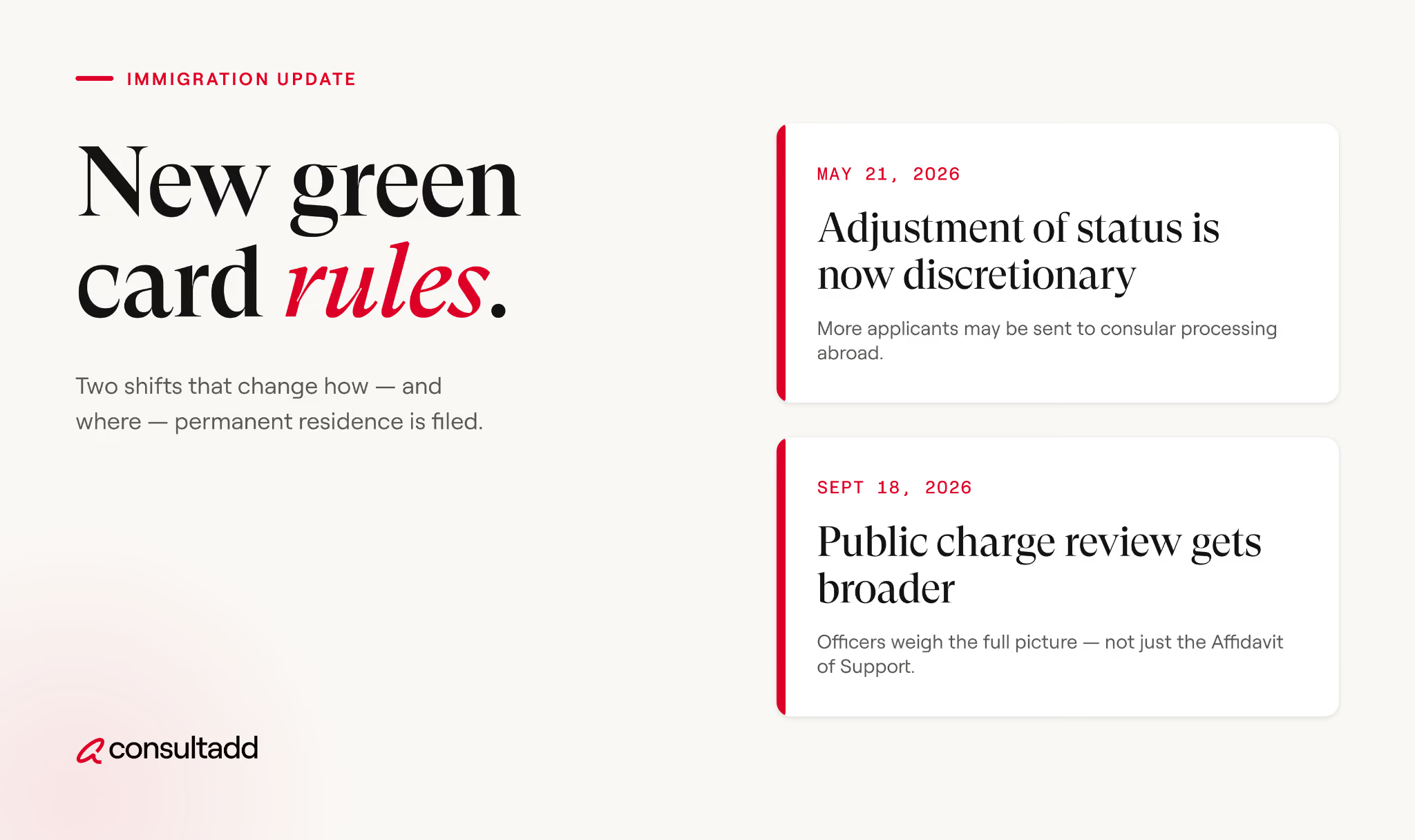
As of September 18, 2026, USCIS officers can weigh a much wider range of public benefits, including food stamps, Medicaid, and housing vouchers, when deciding whether to approve a green card application.
Before that date, officers were limited to cash welfare and long-term institutional care paid for by the government.
The date you file decides which standard your case gets judged under. That is the part catching people off guard.
TL;DR
- DHS rescinded the 2022 public charge regulations. The change took effect September 18, 2026, and applies only to Form I-485 applications postmarked or e-filed on or after that date.
- Officers can now consider almost any means-tested public benefit, including benefits received by family members the applicant is legally obligated to support.
- A new 09/18/26 edition of Form I-485 replaced the 01/20/25 edition with no grace period. Wrong edition, rejected package.
- Employment-based categories are covered, though DHS expects most employment-based applicants to see little practical change.
- More than 20 states and a coalition of cities sued to block the rule. It is in effect anyway while the cases proceed.
What actually changed on September 18
Public charge is not new. It has been in immigration law for over a century, and it asks one question: is this person likely to become dependent on the government for basic needs?
What changed is the evidence officers get to look at.
Until now, officers followed a 2022 rule that took a fairly narrow view, limited mostly to cash assistance for income maintenance and long-term institutionalization at government expense. Medicaid, SNAP, and housing assistance were generally left out.
That framework is gone. DHS announced the rescission on July 16, 2026, published it in the Federal Register on July 20, and set it to take effect September 18. USCIS issued matching Policy Manual guidance on August 18.
Here is the timeline, since the dates do real work in this rule:
The rule applies to applications for admission made on or after September 18, 2026, or applications for adjustment of status postmarked or electronically submitted on or after that date. Receipt of means-tested public benefits before September 18, 2026 will still be considered under the 2022 standard.
So the change is not retroactive. Anyone with a green card application already filed before September 18 will be decided under the prior, more favorable 2022 policy.
The benefits USCIS can now count
Under the guidance, officers weigh five statutory factors: age, health, family status, assets, resources and financial status, and education and skills.
Those five have always been in the statute. What is different is everything else officers can now stack on top.
The new USCIS guidance makes clear the agency will consider many more public benefits, including any means-tested benefit such as Medicaid, food stamps, and housing assistance.
It also allows adjudicators to consider means-tested benefits that certain family members receive, even where the applicant receives nothing themselves.
The timing split matters:
The affidavit of support is not the safety net it used to be
This one trips people up. A qualifying Form I-864, Affidavit of Support, alone does not establish that an adjustment applicant is admissible on public charge grounds.
It cuts one way only. No single factor generally decides the outcome, except that failing to submit a sufficient affidavit of support when one is required can independently result in a public charge finding. A strong I-864 helps. It does not close the question.
The new guidance leans harder on income, assets, job skills, employability, education, health, health insurance coverage, and age, and gives the affidavit of support less weight than it used to carry.
Who the new green card rules apply to
Not every green card applicant is subject to public charge. That has always been true and it stays true.
USCIS lists family-sponsored immigrants, several employment-based categories, and investors among those subject to public charge review.
Certain humanitarian categories remain exempt, including qualifying refugees, asylees, Special Immigrant Juveniles, T and U nonimmigrants, and certain VAWA applicants.
Two more limits worth knowing:
- Public charge never applies to U.S. citizens, and it does not apply to most people who already hold a green card.
- The rule's preamble states that public charge inadmissibility does not apply to change of status or extension of stay, so I-129 and I-539 filings are not directly affected.
If your H-1B extension is in progress, this rule does not touch it. If your I-485 goes in next month, it does.
Why the Form I-485 edition matters more than usual
USCIS released a revised Form I-485 on the same day. The 09/18/26 edition replaced the 01/20/25 edition immediately, with no grace period for the transition, and the old edition is rejected if postmarked or electronically submitted on or after September 18.
A rejected package loses its postmark. For anyone near a priority date window, that is a real cost, not a paperwork annoyance.
The form itself was reworked to match the new standard. The four public benefit questions tied to the 2022 definitions become two, keyed to means-tested benefits generally, and for each benefit disclosed the applicant must give the dates, the amount, and the reason for receipt.
Fewer questions, broader scope, and more detail required per answer.
What this means for employment-based applicants and employers
Most of the coverage has focused on family-based cases. Employment-based applicants are squarely covered too, and staffing firms with sponsored consultants on the bench should be paying attention.
The official expectation is mild. DHS anticipates that most employment-based adjustment applicants "would see little change." A software engineer earning a market salary with continuous employment and no benefit history is not the profile this rule was written for.
The practical risk is different, and it is about consistency. USCIS acknowledges that the guidance grants officers wide latitude, which may produce divergent outcomes from one adjudicator to the next, including inconsistent requests for evidence on similar facts.
Translate that into recruiting terms: more RFEs, longer adjudication tails, and less predictability in when a consultant's EAD or green card actually lands. For staffing firms managing bench costs against client start dates, timeline variance is the expensive part.
What account managers should be asking now
Gaps in employment history now carry more weight than they did in August. A consultant who spent four months on the bench in 2025, filed for nothing, and has clean tax returns is fine.
A consultant whose household enrolled in a state health program during that gap has a fact to document, not hide.
Health insurance coverage is also on the list of things officers weigh. Continuous employer-sponsored coverage is a positive factor that costs nothing extra to demonstrate.
The lawsuits, and what happens if a court blocks the rule
The rule is being challenged hard.
A coalition including the attorneys general of California, Connecticut, Illinois, Massachusetts, New York, Washington and roughly fifteen other states, plus the District of Columbia and the governor of Pennsylvania, asked a federal judge to declare the 2026 public charge rule unlawful and vacate it.
New York City filed a separate challenge in the Southern District of New York alongside Chicago, San Francisco, Santa Clara County, Seattle, King County, and the Public Rights Project.
Both were filed on September 14. The rule took effect on September 18 regardless.
There is precedent for this going either way. A federal appeals court upheld an injunction against portions of the 2019 version of the rule in New York, Connecticut and Vermont, and the rule was later abandoned and replaced with the narrower 2022 standard.
The rule is in effect now, but it may be paused or halted by the ongoing litigation. Nobody should plan around a court win that has not happened. Plan around the rule as written, and treat relief as upside.
One more wrinkle for anyone considering consular processing instead. The Department of State has already issued its own guidance likely to expand the number of people denied a visa on public charge grounds, and anyone leaving the United States for a consular interview should get advice before traveling.
Separately, a federal court struck down the State Department's visa pause affecting nationals of 75 countries on August 21, 2026, and the government appealed.
How to prepare an I-485 under the new green card rules
The guidance rewards documentation. A thin filing that met the 2022 bar may not clear this one.
One thing not to do: do not file Form I-945 unless USCIS invites you, because an unsolicited public charge bond will not be accepted.
And do not rush a weak filing to beat a deadline that has already passed. The September 18 cutoff is behind us. A complete, well-documented package under the new standard beats a fast, thin one.
Start Strong With Consultadd
With 15 years in business and 5,000+ successful staffing engagements, we don't just fill roles, we build reliability into your process. We've supported 65 staffing companies in the past year alone and maintain MSAs with industry leaders like Robert Half and TEKsystems.
Here's what working with Consultadd looks like:
- Talent sourced in under 24 hours
- Ready-to-deploy candidates, vetted for experience and compliance
- Lower turnover risk: we match long-term goals, not just short-term needs
- Seamless compliance: visa, documentation, onboarding? Handled.
- Dedicated 1:1 account managers for responsive, personalized support
- Top 100 candidate matches delivered in the past year
- Strong partnerships with universities to tap into fresh, committed talent
- Post-placement support so your investment grows beyond day one
For candidates, your next opportunity is more than just a job title, it's a chance to build skills, gain experience, and move your career forward. At Consultadd, we connect technology professionals with projects and employers that align with their goals, whether they're looking for contract, contract-to-hire, or long-term opportunities.
The tech job market moves fast, but the right guidance can make all the difference. Ready to take the next step in your career journey? Explore Opportunities >>
Key takeaways
- The new green card rules apply only to Form I-485 applications postmarked or e-filed on or after September 18, 2026. Earlier filings keep the 2022 standard.
- Almost any means-tested public benefit can now factor into a public charge decision, including some benefits received by family members.
- The 09/18/26 edition of Form I-485 is mandatory with no grace period, and the wrong edition means rejection.
- Employment-based applicants are covered, and the bigger operational risk is inconsistent adjudication rather than mass denials.
- Over 20 states and several major cities are suing, but the rule is in effect and should be planned around as written.
FAQs
Do the new green card rules affect my pending I-485?
No. If USCIS accepted your application before September 18, 2026, it will be decided under the 2022 criteria even if it is still pending. The filing date controls, not the decision date.
Does using Medicaid or SNAP automatically mean my green card gets denied?
No. Receiving a benefit is one factor among several, and there is no bright-line test. Officers weigh it against your income, assets, employment, education, health and household situation. Talk to an immigration attorney if you have a benefits history.
Do the new rules apply to green card renewals or naturalization?
No. Public charge is a ground of inadmissibility assessed when someone applies for permanent residence or admission. It does not apply to most people who already hold a green card, and it does not apply to U.S. citizens.
Are H-1B extensions or change of status filings affected?
Not directly. The rule's preamble states that public charge inadmissibility does not apply to change of status or extension of stay, so Form I-129 and Form I-539 filings sit outside this framework. Your I-485 is a different matter.
Which Form I-485 edition should I use?
Applications postmarked or submitted electronically on or after September 18, 2026 must use the 09/18/26 edition. The 01/20/25 edition is rejected. Check the official USCIS Form I-485 page immediately before filing, since editions can change again.
Could the courts stop the rule?
Possibly. More than 20 states, the District of Columbia, and a coalition of cities filed suit in September 2026 asking a federal judge to vacate the rule. It took effect anyway and remains in effect while the litigation proceeds, so prepare your filing under the current standard.
.png)
U.S. Tech Job Market 2026: Inside the Bifurcated Split
Introduction
Two things are true right now. A mid-level backend developer can send 200 applications and hear nothing back. A cloud security engineer with recent production experience can turn down three offers in a month.
Both of those people work in technology. Both are competent. They are living in completely different economies.
That gap is the whole story of the tech job market in 2026, and it is why the headlines keep contradicting each other. "Tech hiring is dead" and "tech hiring is booming" are both being written from real data. They are just measuring different halves of a market that has split down the middle.
Here is what the split actually looks like, what is driving it, and how hiring teams are adjusting.
Read the full report to get a data backed look at where the tech job market is headed and what it means for your hiring strategy
TL;DR
- Overall US tech job postings sit roughly 36% below their February 2020 baseline, while machine learning engineer postings are up 59% over the same period, according to Indeed Hiring Lab.
- The market is not shrinking so much as rotating. The jobs being cut are not the jobs being created.
- AI, machine learning, and data science postings hit 49,200 in 2025, up 163% year over year, per Robert Half. Security roles reached 66,800 postings, up 124%.
- Time to fill has split too: two to four weeks for specialized senior engineers, two to four months for generalist senior roles without a current specialty.
- Contract staffing is absorbing the volatility. Robert Half found 66% of technology leaders expect to bring in more contract professionals in the second half of 2026.
Two markets running in opposite directions
The cleanest way to see the bifurcation is to index job postings against a pre-pandemic baseline. Indeed Hiring Lab did exactly that, setting February 2020 at 100 and tracking where different role categories landed.
That is a 108-point spread between the top and the bottom of the same industry. No single average describes it honestly.
CompTIA's projection of 1.9% net tech employment growth in 2026, roughly 128,000 additional jobs, is accurate. So is the observation that a new computer science graduate cannot get a callback. Growth is happening in a narrow band of skills while a much wider band contracts underneath it.
Where the demand actually sits
Robert Half's research puts numbers on the growth side. AI, machine learning, and data science roles totaled 49,200 postings in 2025, up 163% from the prior year.
Security roles reached 66,800 postings, up 124% year over year, with cybersecurity engineers alone accounting for 20,000 new posts.
The federal projections point the same direction:
- The U.S. Bureau of Labor Statistics expects data scientist employment to grow 33.5% between 2024 and 2034.
- Information security analysts are projected to grow 28.5% over the same period, which makes it the fastest growing computer occupation and the fifth fastest growing occupation in the entire economy.
- Meanwhile, Staffing Industry Analysts reports that demand is lagging for QA testers, entry-level programmers, and help desk support, with those roles increasingly automated or augmented by AI.
Same industry. Opposite trajectories.
What the tech job market split means for recruitment in IT
For anyone doing recruitment in IT, the practical consequence is that you are now running two different sourcing motions at once and they need different playbooks.
One is a buyer's market with hundreds of applicants per req, where your problem is screening volume. The other is a seller's market with maybe a dozen qualified people in your metro, where your problem is speed and competitiveness.
KORE1's Q3 2026 outlook puts rough timelines on both sides:
If your hiring process was built for the first column but you are staffing the second, you will look slow and lose people.
If it was built for the second and you are chasing AI infrastructure talent, you will lose every competitive offer. Most internal teams are running one process for both.
The entry-level squeeze is the part nobody planned for
The contraction has hit hardest at the bottom of the ladder, which creates a problem that shows up later rather than now.
Junior developers were historically how companies built mid-level and senior engineers. When that intake stops for two or three years, the shortage at the senior end gets worse, not better.
Companies competing for scarce senior specialists in 2026 are, in many cases, the same companies that stopped hiring juniors in 2023.
There is no clean fix for this inside a single hiring cycle. University partnerships and structured contract-to-hire programs are the two mechanisms that keep some junior intake running without committing to a permanent headcount you cannot forecast.
Why contract staffing is absorbing the volatility
Here is the part of the picture that gets less coverage than the AI numbers, and matters more to how work actually gets staffed.
Companies are not confident enough to commit to a permanent headcount broadly, but they still have projects that need to ship. That gap is exactly where contract staffing solutions have expanded.
Robert Half found that among all sectors surveyed, technology leaders are hiring most aggressively in the second half of 2026.
More than three quarters, 78%, plan to increase permanent headcount, which is up sharply from 61% earlier in the year. And 66% expect to bring in more contract professionals.
The broader staffing numbers are less dramatic but tell a consistent story. Staffing Industry Analysts forecasts the US staffing market growing 1% in 2026 to $180.2 billion, with roughly 2% growth in 2027.
IT staffing contracted 3% in the prior year and is expected to return to modest growth across 2026 and 2027, with sales activity and customer conversations already picking up.
That is not a boom. It is a reset to a new baseline after a long correction, and the composition of the spend has changed more than the total.
Contract staffing, temporary staffing, and what the words mean
These terms get used interchangeably in the tech job market and they should not be. The distinction matters when you are scoping a req.
- Temporary staffing solves a capacity problem.
- Contract IT staffing services usually solve a capability problem, which is why the model has held up better in technology than in other sectors.
You are not renting hours. You are renting a skill you cannot justify keeping on payroll year round.
If you are weighing the models against each other, our guide to IT contract staffing services walks through cost structures and where each one breaks down.
Hiring trends worth planning around for the rest of 2026
A few patterns are consistent enough across the data to plan against.
1. Specialization beats seniority.
- A senior generalist is taking three to four times longer to place than a senior specialist.
- Years of experience alone no longer clears the bar.
2. Contract-to-hire is becoming the default for senior technical roles.
- Permanent hiring cycles are slow and the cost of a wrong senior hire is high.
- Companies are using the contract period as the evaluation.
3. Security is no longer a separate team.
- Cybersecurity demand is growing faster than almost any other technology occupation, and much of it shows up embedded in other roles rather than in dedicated security reqs.
4. Upskilling paths are short.
- Staffing Industry Analysts notes that software engineers can move into AI-adjacent application roles relatively easily.
- For technology staffing firms, training investment is now a sourcing strategy, not a benefit.
5. Composition is shifting faster than budget.
- Teams that hired ten generalists three years ago are hiring six specialists now and spending roughly the same.
- The headcount fell. The spend did not.
What this changes for technology staffing partners
If you run or buy information technology staffing services, the bifurcated market rewards a few specific things.
1. Speed matters more in the specialist lane than anywhere else.
- When the qualified pool in a metro is small and every candidate has multiple conversations open, a three-week internal approval loop is a loss.
- Pre-approved comp bands and a compressed interview process do more for fill rates than a wider search.
2. Screening depth matters more in the generalist lane.
- When a req draws 400 applications, the bottleneck moves from sourcing to evaluation, and volume is not a signal of quality.
3. Compliance handling has become a real differentiator rather than an administrative footnote, particularly for sponsored hiring where documentation and timelines can decide whether a placement happens at all.
4. Pipeline beats posting.
- The firms filling specialist roles in two weeks are not starting the search when the req opens.
- They are working relationships that existed beforehand.
Our step-by-step breakdown of the IT staffing process covers how that intake and screening sequence works in practice.
For a wider view of what is changing across skills, cloud adoption, and remote work, see our overview of current IT staffing trends.
Turn Hiring Insights Into Action With Consultadd
The technology hiring market is changing quickly. Whether you are building a technology team, looking for skilled contract talent, or planning your next career move, the right market insights can help you make better decisions.
Consultadd connects staffing firms with skilled technology professionals across Full Stack Development, Cloud, DevOps, Data, and AI roles.
If you are looking for qualified tech talent or exploring your next opportunity, our team can help you navigate the market with confidence.
Ready to put the 2026 hiring trends into action? Connect with Consultadd today.
Here's what working with Consultadd looks like:
- Talent sourced in under 24 hours
- Ready-to-deploy candidates, vetted for experience and compliance
- Lower turnover risk: we match long-term goals, not just short-term needs
- Seamless compliance: visa, documentation, onboarding? Handled.
- Dedicated 1:1 account managers for responsive, personalized support
- Top 100 candidate matches delivered in the past year
- Strong partnerships with universities to tap into fresh, committed talent
- Post-placement support so your investment grows beyond day one
For candidates, your next opportunity is more than just a job title, it's a chance to build skills, gain experience, and move your career forward. At Consultadd, we connect technology professionals with projects and employers that align with their goals, whether they're looking for contract, contract-to-hire, or long-term opportunities.
The tech job market moves fast, but the right guidance can make all the difference. Ready to take the next step in your career journey? Explore Opportunities >>
Key takeaways
- The tech job market in 2026 is not one market. Overall postings sit about 36% below their 2020 baseline while machine learning engineer postings run 59% above it.
- Demand is concentrated in AI, data, security, and cloud infrastructure. QA, help desk, and entry-level programming are the roles absorbing the losses.
- Time to fill now varies by a factor of four between specialized and generalist senior candidates, so a single hiring process cannot serve both.
- Contract staffing is where the flexibility is going, with 66% of technology leaders expecting more contract professionals in the second half of 2026.
- The frozen entry-level pipeline is a delayed problem. Companies that stopped hiring juniors are the ones now competing hardest for senior specialists.
FAQs
Is the tech job market getting better in 2026?
In parts, yes. CompTIA projects net tech employment growth of about 1.9% in 2026, and staffing sales declines have narrowed considerably from the prior year. But the recovery is concentrated in AI, security, and cloud roles. Generalist and entry-level hiring has not recovered.
Which IT jobs are most in demand right now?
AI and machine learning engineering, data engineering, cybersecurity, and cloud architecture. Robert Half recorded 66,800 security postings in 2025, up 124% year over year, and the Bureau of Labor Statistics projects information security analyst employment growing 28.5% through 2034.
Why are software engineers struggling to find jobs if tech is growing?
Because growth and contraction are happening in different roles. General software engineering postings sit roughly 49% below their February 2020 level, per Indeed Hiring Lab, while AI-adjacent roles are well above it. Aggregate tech employment can rise while individual generalist searches get harder.
Is contract staffing better than permanent hiring in this market?
It depends on whether you have a capability gap or a headcount gap. Contract works well for scoped projects, specialized skills you cannot justify keeping year round, and senior roles where you want to evaluate before committing. Core long-horizon roles are still better served by direct hire.
How long does it take to fill a technology role in 2026?
KORE1's Q3 2026 data suggests 14 to 30 days for senior engineers with current cloud or security specialization, and 60 to 120 days for senior generalists without a recent specialty. Entry-level and mid-level generalist searches often stall longer.
What should job seekers do if they are in the contracting half of the market?
Add a specialization rather than more years of the same experience. Staffing Industry Analysts notes that software engineers can move into AI-adjacent application roles relatively easily. Contract engagements are also worth considering, since they keep recent, relevant work on a resume while a longer search runs.
.avif)
PERM Labor Certification: Cognizant and Cloudera Pause
Introduction
If you work in staffing or corporate immigration, you probably saw the news this week. The Department of Labor suspended PERM labor certification filings for Cognizant and Cloudera, and the announcement didn't come through a quiet press release. It came from the Labor Department's inspector general, posted directly on X, alongside a warning that "handcuffs await."
That's not the usual tone for an agency that processes green card applications. It tells you something about where enforcement is headed.
PERM, short for Program Electronic Review Management, is already one of the most document-heavy processes in US employment-based immigration. Every recruitment step, every wage determination, every ad placement gets logged and can be audited years later. Cognizant is not a small player here.
It's a Nasdaq-listed IT services giant with a long track record of sponsoring employees for green cards, and its filings are now on hold while investigators look into alleged fraud tied to its H-1B and PERM programs.
This piece breaks down what actually happened, why the PERM process makes this kind of suspension so damaging, and what staffing firms and employers should be doing right now to keep their own filings clean.
TL;DR
- The DOL suspended PERM labor certification filings for Cognizant and Cloudera amid an investigation into alleged H-1B and PERM visa fraud.
- The probe is being run with the White House Fraud Task Force, and no criminal charges have been filed yet.
- PERM is already expensive and compliance-heavy, which is exactly why a suspension hits harder than it would in a simpler visa category.
- The suspension blocks new filings, not previously approved certifications or existing H-1B petitions.
- Employers should treat this as a signal to audit recruitment records, wage determinations, and job posting compliance now, not after an inspector shows up.
What actually happened with Cognizant and Cloudera
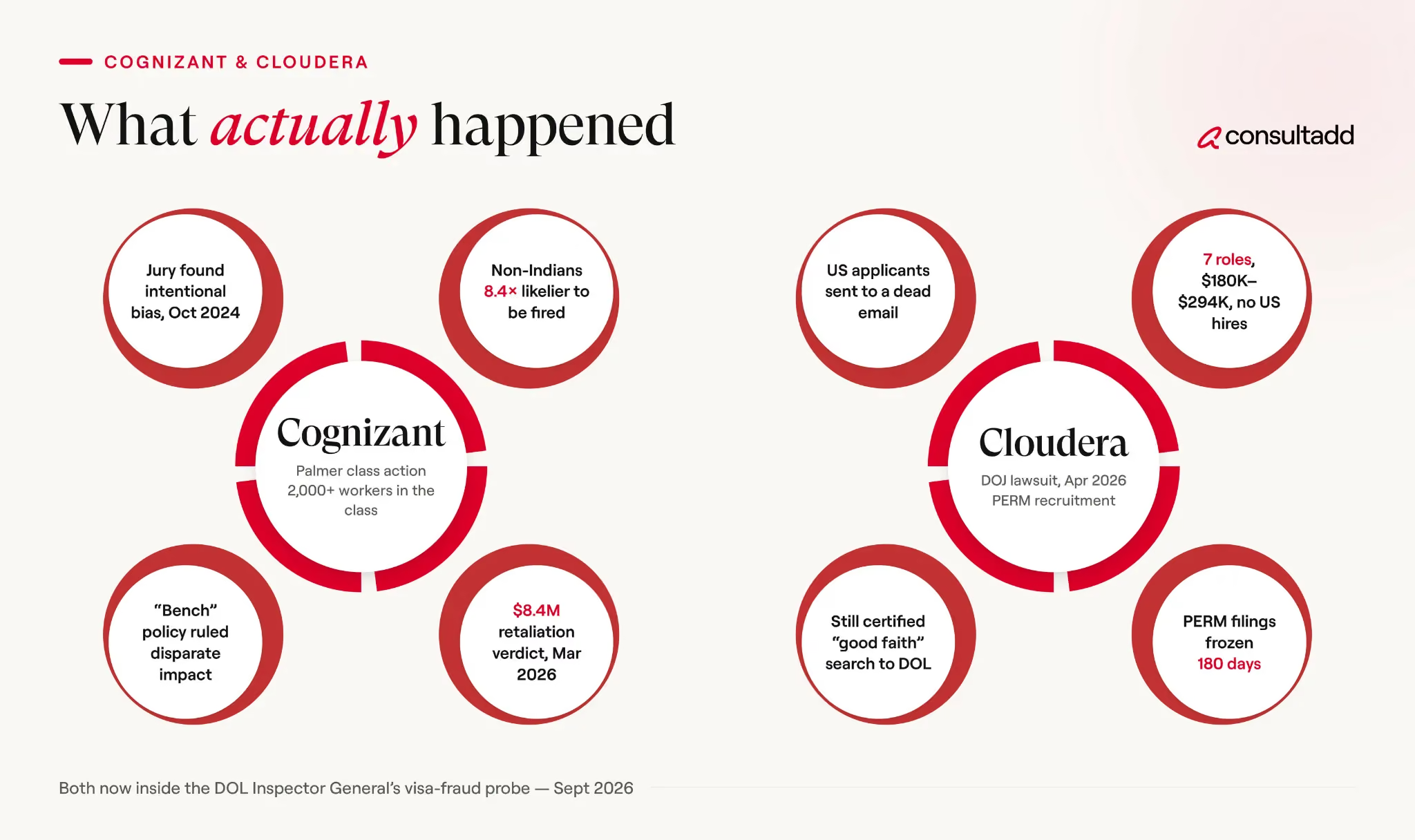
On September 8, 2026, Labor Department Inspector General Anthony D'Esposito announced on social media that Cognizant's PERM filings had been suspended. A follow-up post confirmed Cloudera was affected too.
The inspector general did not mention any criminal charges against either company, and officials did not disclose the specific allegations, the number of applications affected, or how long the suspension would remain in force.
The investigation traces back to a probe the Labor Department's inspector general launched in July, looking into alleged fraud in the company's H-1B and PERM visa programs following whistleblower complaints.
The Department is coordinating with the White House Fraud Task Force, which signals this isn't a routine compliance check. It's a formal, multi-agency inquiry.
Timing matters here too. The suspension came a day after Cognizant announced plans to expand its American workforce, including hiring 1,500 US college graduates.
Whether that's coincidence or not, it puts the company in an awkward spot: publicly pledging to hire more Americans while under investigation for how it handles foreign worker sponsorship.
Cognizant's reliance on H-1B visas has actually dropped over the years. The company filed 3,436 Labor Condition Applications in 2025, down from 10,189 in 2018.
That decline doesn't erase the current allegations, but it's worth noting for anyone assuming this is a company still leaning heavily on the visa system the way it did a decade ago.
What the suspension does and doesn't cover
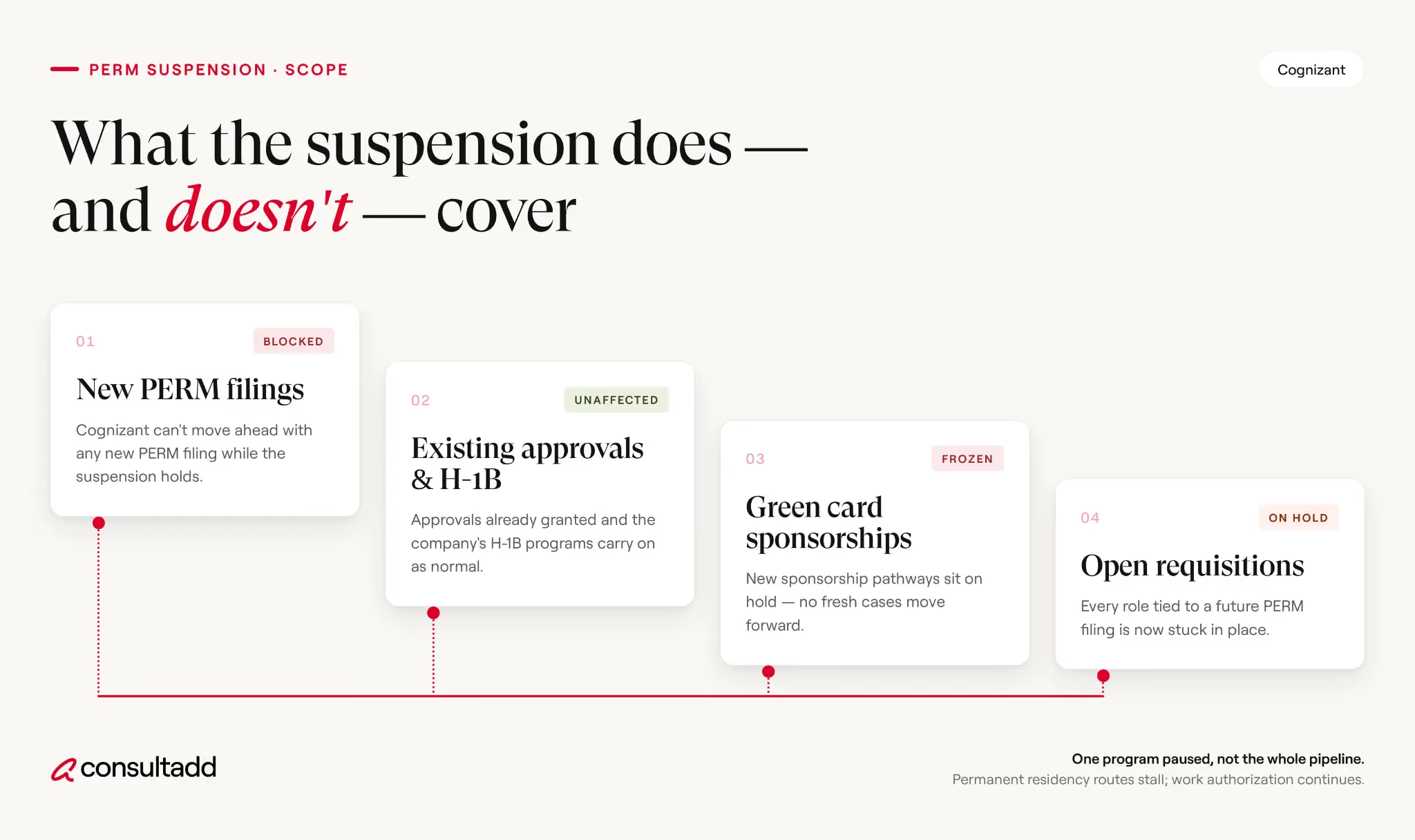
- The suspension prevents Cognizant from moving ahead with new PERM filings until the investigation is complete.
- It does not affect the company's existing approvals or its H-1B visa programs. So current green card sponsorships already in the pipeline aren't automatically dead.
- New ones, though, are frozen.
- For a company the size of Cognizant, that's still a significant operational problem. Every open requisition tied to a future PERM filing is now stuck.
Why PERM is different from other visa categories
A lot of people outside immigration law assume all visa sponsorship works roughly the same way. It doesn't.
PERM labor certification is arguably the most procedurally demanding step in the entire employment-based green card process, and that's exactly why this suspension is such a big story:
- Before an employer can even think about filing, they need a Prevailing Wage Determination from the DOL's National Prevailing Wage and Helpdesk Center. That alone can take months.
- Then comes recruitment: two Sunday newspaper ads, a 30-day job order with the State Workforce Agency, three additional recruitment steps for professional roles, and a mandatory internal job posting.
- Only after all of that, and only after a required waiting period, can the employer file Form ETA-9089.
- Every part of that recruitment has to be documented and kept on file, because the DOL can audit it.
This is the process's entire purpose: proving that no qualified, willing, and able US worker was available for the role, and that hiring a foreign worker won't hurt wages or working conditions for similarly employed Americans.
Compare that to a straightforward H-1B cap filing, which mostly comes down to a lottery and an LCA. PERM has no lottery. It has paperwork, deadlines, and audit exposure at nearly every stage.
The complexity is also the point. A process built to catch fraud is, by design, going to be the one where fraud allegations do the most damage once they surface.
For more on visa sponsorship strategy, compliance, and staffing best practices, explore H-1B visa sponsorship and compliance guidance.
Why this news matters beyond one company
Cognizant isn't a boutique staffing shop. It's one of the largest IT services providers in the country, with a workforce spread across major US markets and a long history of sponsoring employees through PERM and H-1B.
When a company of that size gets its filings suspended, other IT services firms pay attention, and so do the staffing agencies and consulting firms that compete with or supply talent alongside them.
Some outlets have noted there is currently no confirmed report that other major IT services companies such as TCS, Infosys, Wipro, or HCL have had their PERM filings suspended.
That's worth flagging, because it means this isn't (yet) an industry-wide freeze. It's targeted. But targeted enforcement actions have a way of expanding once investigators start pulling threads, especially when a task force with a name like "Fraud Task Force" is involved.
For staffing companies specifically, there's a second layer here:
- Many staffing firms place consultants with client companies that themselves sponsor green cards, or they sponsor candidates directly.
- If a major player like Cognizant is under this kind of scrutiny, it raises the bar for what "clean" documentation looks like across the whole industry.
- Recruiters and account managers should expect clients to start asking more pointed questions about compliance history before signing new staffing agreements.
What triggers a PERM audit or suspension, generally
DOL doesn't need a whistleblower every time. Audits can be triggered by:
- Wage levels that look inconsistent with the stated job requirements
- Recruitment ads that don't meet the required specificity or duration
- Patterns across multiple filings from the same employer that suggest the role was tailored to exclude US applicants
- Complaints from employees, former employees, or competitors
- Random selection, since DOL does run a percentage of filings through supervised recruitment
USCIS has separately flagged instances where H-1B petitions from a major IT consulting company classified skilled technology jobs at wage levels below what the positions' duties and requirements actually supported.
That kind of wage-level mismatch is a common thread in these investigations, and it's one of the easiest things for an employer to get wrong without realizing it.
What employers and staffing firms should do now
You don't need to be under investigation to feel the ripple effects of this. Enforcement attention tends to raise expectations across the board, including for companies that have never had a compliance issue.
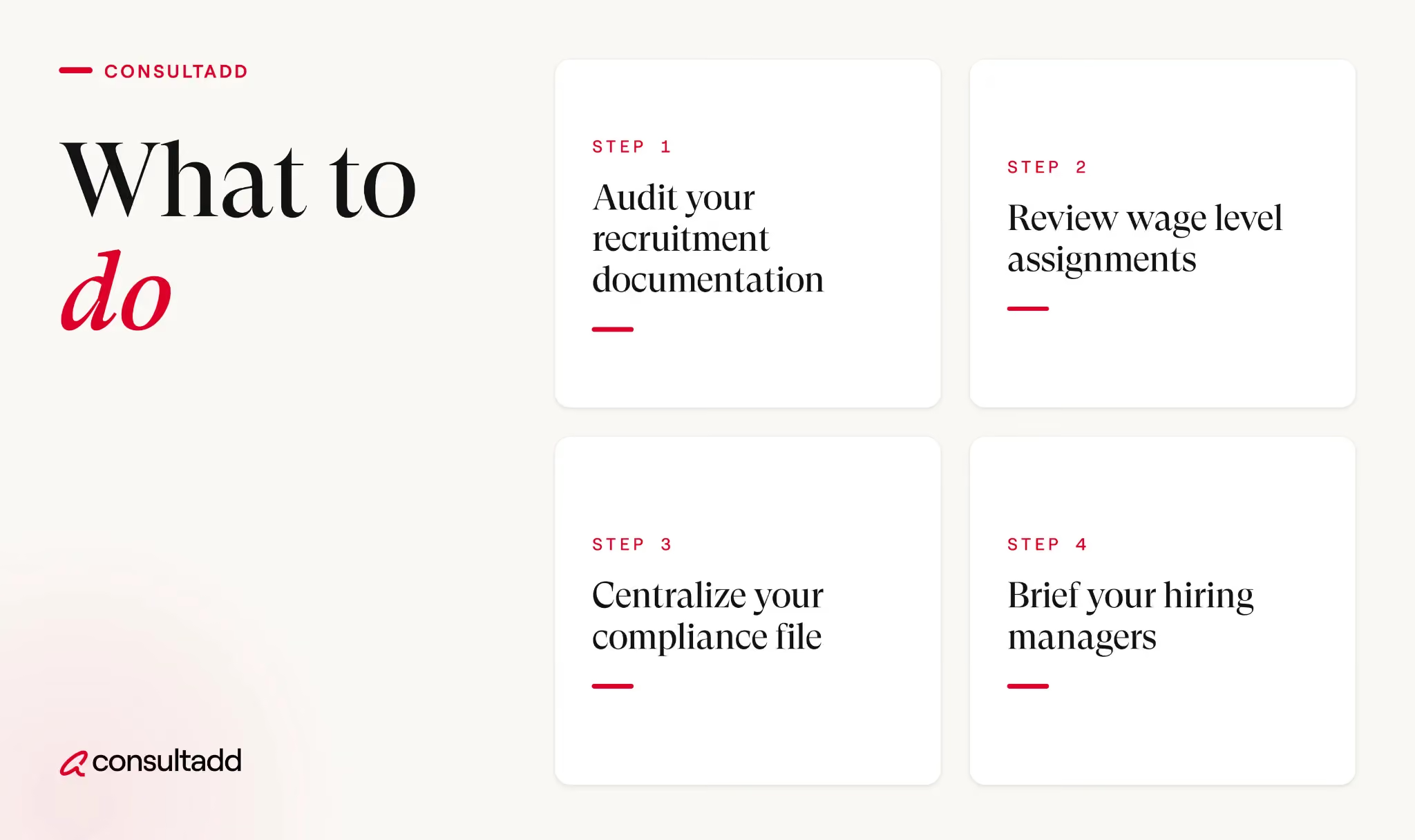
Step 1: Audit your recruitment documentation
- Pull the recruitment files for any PERM cases filed in the last two years.
- Check that ad placements match what the regulations require and that your internal posting dates line up with your recruitment report.
Step 2: Review wage level assignments
- Make sure job duties and minimum requirements actually match the wage level you assigned.
- This is one of the most common gaps investigators find, and it's usually not intentional fraud.
- It's often just a job description written by HR that doesn't match what recruiters and hiring managers put on the requisition.
Step 3: Centralize your compliance file
- If your PERM records are scattered across different recruiters, different offices, or different vendors, consolidate them.
- An audit request from DOL usually comes with a tight response window, and scrambling to find a 2023 newspaper tearsheet is not where you want to be.
Step 4: Brief your hiring managers
- Hiring managers who write job requirements without understanding PERM rules can accidentally create documentation gaps.
- A short training session on why job postings need to match actual minimum requirements goes a long way.
What this means for candidates waiting on green card sponsorship
If you're a candidate whose employer has a pending or planned PERM filing, this news is unsettling even if your employer has nothing to do with Cognizant or Cloudera.
A few honest points worth knowing:
POINT 1 - Existing, already-approved labor certifications aren't affected by this kind of suspension. If your PERM was already certified and your I-140 is filed or approved, this news doesn't change your status.
POINT 2 - If your employer hasn't filed yet, ask direct questions about their compliance history and how they document recruitment. You're allowed to ask. A well-run immigration or HR department should be able to explain their process without hesitation.
POINT 3 - Diversifying where you look for sponsorship, whether that's a different employer or working with a staffing firm that has a track record of clean filings, is a reasonable response to increased enforcement scrutiny in the industry.
A reliable staffing partner matters - Consultadd
The recent PERM developments are a reminder that employers and staffing firms need more than access to technology talent. They need a staffing partner that understands the importance of careful screening, accurate documentation, clear communication, and a dependable hiring process.
That is where Consultadd can help.
With 15 years in business and more than 5,000 successful staffing engagements, we work with staffing firms and employers to help them find qualified technology professionals for contract, contract-to-hire, and long-term opportunities.
Our focus is on making the staffing process easier from the start:
- We source candidates quickly, screen them for relevant technical experience, verify key candidate information, and provide the details staffing partners need to evaluate a consultant before making a submission.
- Once a candidate is selected, our team continues to support the process through onboarding and beyond.
We provide technology talent across areas such as Full Stack Development, Python, Java, Cloud, DevOps, Data, and other in-demand technical skills.
PERM and visa compliance require careful documentation, but staffing decisions still need to move quickly. Having a reliable technology staffing partner can make it easier to find qualified talent without adding unnecessary complexity to the hiring process.
For staffing firms, that means having a dependable source of technology talent when a client requirement comes in, without having to start the sourcing process from scratch every time.
For employers, it means gaining access to screened professionals who can be evaluated against the technical and project requirements of the role.
If your organization needs reliable technology talent for upcoming contract or long-term requirements, talk to Consultadd. We can help you build a more responsive and dependable staffing pipeline. Contact Consultadd to discuss your next requirement.
Key takeaways
- DOL suspended new PERM labor certification filings for Cognizant and Cloudera amid an active fraud investigation involving the H-1B and PERM programs.
- No criminal charges have been announced, and the specific allegations haven't been made public yet.
- The PERM process is uniquely vulnerable to this kind of scrutiny because it requires extensive, auditable documentation at every step.
- Wage level mismatches and recruitment documentation gaps are common, often unintentional, sources of PERM compliance risk.
- Employers should treat this moment as a prompt to audit their own recruitment files rather than assuming enforcement will stay limited to one or two companies.
FAQs
What is PERM labor certification?
PERM labor certification is the first step in most employment-based green card sponsorships. The employer must prove to the Department of Labor that no qualified, willing US worker is available for the position and that hiring a foreign worker won't harm US wages or working conditions.
Why were Cognizant's PERM filings suspended?
The Labor Department suspended Cognizant's PERM filings while investigating alleged fraud committed by the company in its H-1B and PERM visa programs, following whistleblower complaints. No criminal charges have been filed as of this writing.
Does the suspension affect Cognizant employees who already have approved green cards or PERM certifications?
No. The suspension prevents new PERM filings, but it does not affect existing approvals or the company's H-1B visa programs.
How long does the PERM process normally take?
Recruitment alone typically takes around three months, and DOL's review and adjudication adds another three to seven months depending on caseload at the processing centers. Total timelines commonly run close to a year.
Are other IT services companies under the same investigation?
As of the current reporting, there's no confirmed report that other large IT staffing companies have had their PERM filings suspended. The action so far appears specific to Cognizant and Cloudera.
What should employers do if they're worried about PERM compliance?
Start with an internal audit of recent recruitment files, confirm wage levels match actual job duties, and make sure job postings and advertisements meet DOL's specific format and timing requirements. Working with an experienced staffing partner can also reduce documentation risk.