


Introduction
If you have ever stared at a job post and wondered whether "full-time," "part-time," or "contract" changes anything beyond your hours, you are asking the right question.
It changes a lot!
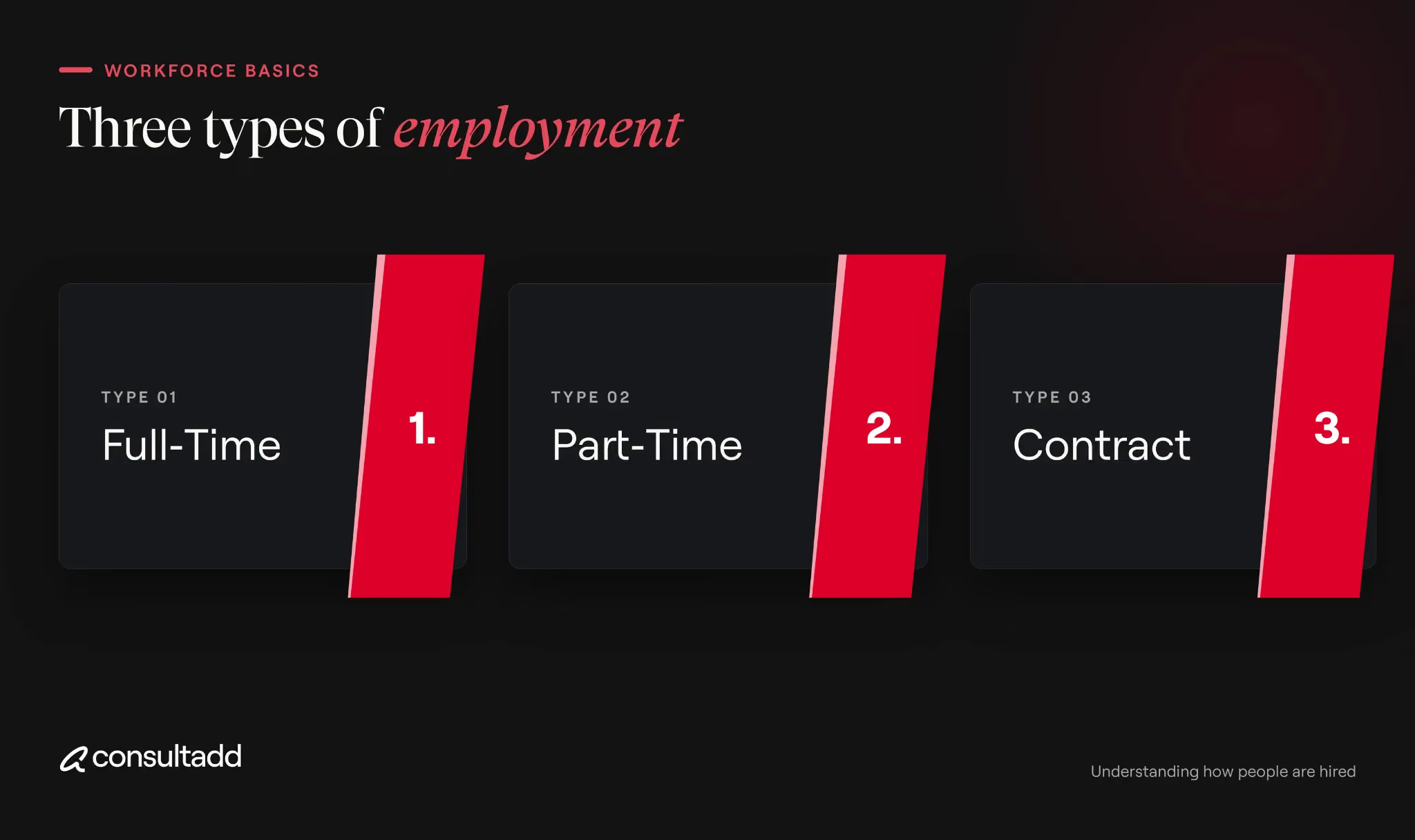
So when people ask what are 3 different types of employment, the short answer is full-time, part-time, and contract work. The longer answer, which is the part that actually affects your paycheck, your benefits, and your taxes, is what this guide is about.
Whether you run a staffing team trying to fill a role fast or you are a professional deciding which offer to take, the label on the arrangement tells you almost everything about how the job will really work. Let's break down each one.
TL;DR
- The three main types of employment are full-time, part-time, and contract (independent contractor) work.
- Full-time usually means a set weekly schedule with benefits, though no federal law actually defines the hour count.
- Part-time means fewer hours, often fewer or prorated benefits, and more schedule flexibility.
- Contract workers run their own show. They handle their own taxes, set their own methods, and rarely get company benefits.
- The classification you pick decides taxes, benefits, and legal protections, so getting it wrong can cost real money.
What a "type of employment" actually means
A type of employment is just the nature of the working relationship between a person and the business paying them. It sets who controls the work, who pays which taxes, and what benefits and protections apply.
Here is the part that trips people up. There is no single government list that says "these are the official categories." The U.S. Department of Labor notes that the Fair Labor Standards Act does not even define full-time or part-time employment. That call is left to each employer.
What the law does care about is a bigger question: are you an employee or an independent contractor?
That single distinction drives most of the tax and benefit differences you will read about below.
For a plainer walk-through of the contractor side, Consultadd has a helpful breakdown of what contract work actually means.
The 3 different types of employment at a glance
Before we get into each one, here is a side-by-side view of the 3 different types of employment so you can see where they split.
Notice the real dividing line is not hours. It is employee versus self-employed. Full-time and part-time workers are both employees. Contractors are not.
Type 1: Full-time employment
Full-time employment is the arrangement most people picture when they think of a "real job." You work a regular weekly schedule for one employer on an ongoing basis, and you are on the payroll as an employee.
What counts as full-time
Most employers treat 35 to 40 hours a week as full-time, but that number is a company policy, not a legal rule. Many organizations set the line at 30 hours a week, partly because of health coverage requirements. The point is that your employer decides, so it pays to read the offer.
Full-time employees get a W-2, have taxes withheld from every paycheck, and usually receive a benefits package. That often includes health insurance, paid time off, and retirement contributions.
Pros and cons of full-time roles
For businesses, full-time hires make sense when the work never really ends. Product development, account management, and anything that needs institutional memory usually belongs here.
If you are weighing a permanent hire against a shorter arrangement, this comparison of contract-to-hire versus full-time hiring for developers lays out the trade-offs well.
Type 2: Part-time employment
Part-time employment is the same employee relationship as full-time, just with fewer hours. The Department of Labor treats part-time and full-time workers the same way under the FLSA when it comes to core protections like minimum wage and overtime.
What counts as part-time
Part-time usually means working fewer hours than the company's full-time threshold, often somewhere under 30 hours a week. Schedules vary. Some part-timers work a few hours daily, others work full days a couple of times a week.
Benefits are where part-time and full-time really diverge. Part-time employees may get some benefits on a prorated basis, but many receive fewer than their full-time peers.
Even so, they still earn at least the federal minimum wage of $7.25 an hour and qualify for overtime the same way full-time staff do.
Where part-time works best
Part-time roles shine when demand rises and falls.
- Retail stores staff up for busy shopping hours.
- Restaurants and hotels lean on part-timers for weekends and holidays.
- Clinics and schools use them to cover specific shifts or seasons.
Type 3: Contract employment
Contract employment is the odd one out, and the most misunderstood. A contract worker, or independent contractor, is not an employee at all.
They are self-employed and brought in for a specific project, gap, or skill. When the work wraps, so does the arrangement.
Contractors control how they do the job, set much of their own schedule, and receive a 1099-NEC instead of a W-2. They pay their own self-employment tax and cover their own benefits.
Employee or contractor? The three-factor test
This is the classification that gets businesses in trouble, so it is worth getting right. The IRS says that whether someone is a contractor or an employee comes down to the relationship, and it weighs three categories of evidence:
Here is the catch: Calling someone a contractor does not make them one. If the working relationship looks like employment, the IRS can reclassify the worker no matter what the paperwork says. Misclassify on purpose and you can end up owing back taxes and penalties.
Pros and cons of contract work
If that is your situation, Consultadd's guide to project-based recruiting and staffing covers how to bring in consultants for a defined scope without the long-term overhead.
How to choose the right employment type
There is no single best option. The right pick depends on the work in front of you. A quick way to decide:
- Choose full-time when the role is ongoing and central to the business.
- Choose part-time when the workload is real but does not need 40 hours, or when demand swings.
- Choose a contract when you need a specific skill for a set window and want flexibility.
For workers, the same logic flips. Want stability and benefits? Full-time. Want flexibility and are fine handling your own taxes? Contract. Somewhere in between? Part-time might be the fit.
Start Strong With Consultadd
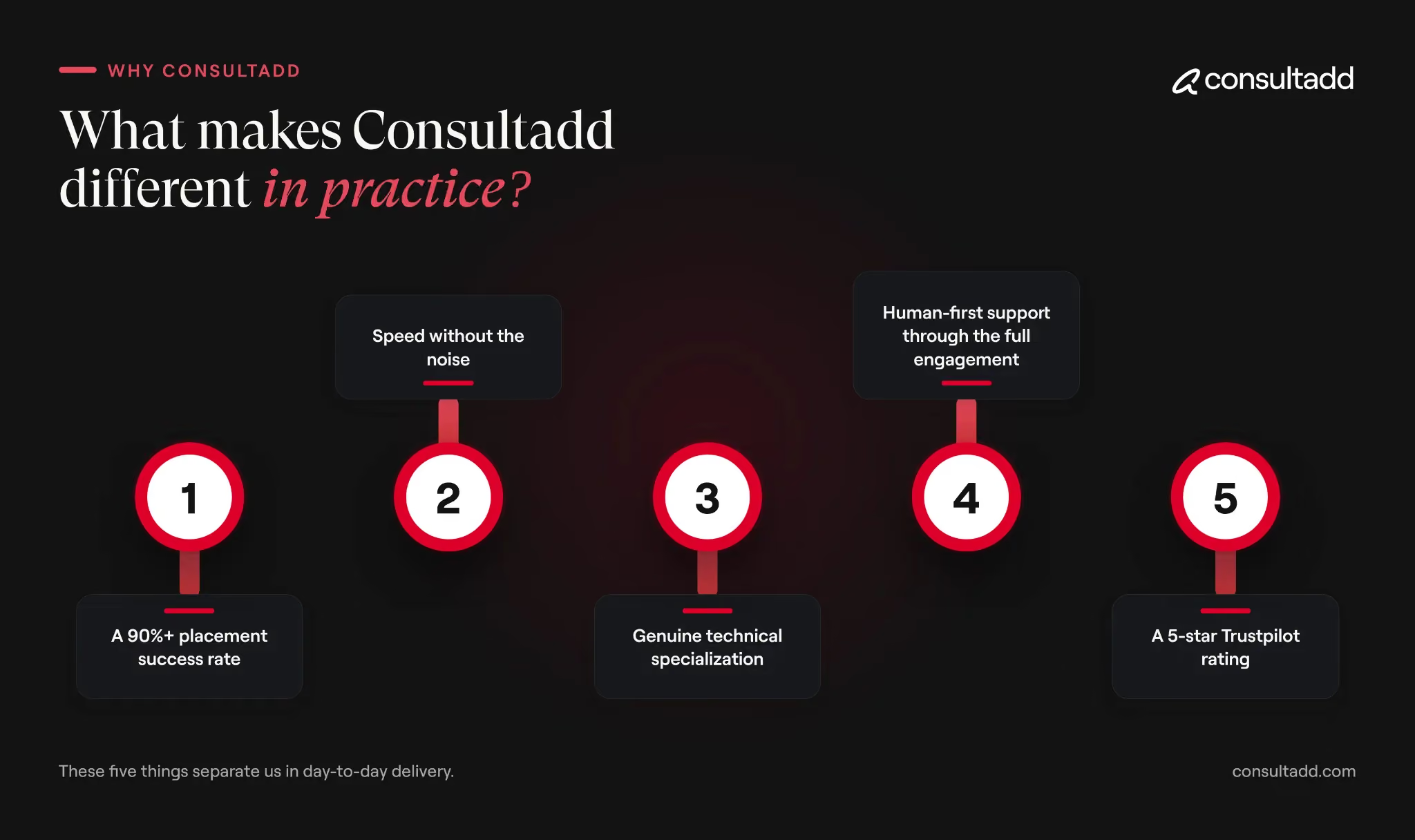
With 15 years in business and 5,000+ successful staffing engagements, we don't just fill roles, we build reliability into your process. We've supported 65 staffing companies in the past year alone and maintain MSAs with industry leaders like Robert Half and TEKsystems.
Here's what working with Consultadd looks like:
- Talent sourced in under 24 hours
- Ready-to-deploy candidates, vetted for experience and compliance
- Lower turnover risk: we match long-term goals, not just short-term needs
- Seamless compliance: visa, documentation, onboarding? Handled.
- Dedicated 1:1 account managers for responsive, personalized support
- Top 100 candidate matches delivered in the past year
- Strong partnerships with universities to tap into fresh, committed talent
- Post-placement support so your investment grows beyond day one
For candidates, your next opportunity is more than just a job title, it's a chance to build skills, gain experience, and move your career forward. At Consultadd, we connect technology professionals with projects and employers that align with their goals, whether they're looking for contract, contract-to-hire, or long-term opportunities.
The tech job market moves fast, but the right guidance can make all the difference. Ready to take the next step in your career journey? Explore Opportunities >>
Key takeaways
- The 3 different types of employment are full-time, part-time, and contract work.
- The real split is not hours, it is employee (full-time and part-time) versus self-employed (contract).
- Full-time offers stability and benefits, part-time offers flexible coverage, and contract offers speed and specialized skills.
- The IRS decides contractor status using behavioral control, financial control, and the relationship, not the job title.
- Match the arrangement to the work, and treat classification carefully to avoid tax and legal trouble.
FAQs
What are the 3 main types of employment?
The three main types are full-time, part-time, and contract (independent contractor) work. Full-time and part-time workers are employees on a company payroll. Contractors are self-employed and hired for specific projects.
How many hours is considered full-time?
Most employers treat 35 to 40 hours a week as full-time, but that is a company decision. The Fair Labor Standards Act does not define full-time or part-time, so the threshold can vary from one employer to the next.
What is the difference between an employee and an independent contractor?
An employee works under the company's direction and receives a W-2, with taxes withheld and usually benefits included. An independent contractor controls how the work gets done, receives a 1099-NEC, and pays their own self-employment tax.
Do part-time employees get benefits?
Sometimes. Part-time employees may receive prorated benefits, but many get fewer than full-time staff. They still earn at least minimum wage and qualify for overtime, since the FLSA protects part-time and full-time workers equally.
Is full-time or part-time better?
Neither is universally better. Full-time suits people who want steady income, benefits, and career growth. Part-time suits people who need flexibility or fewer hours. The right choice depends on your financial needs and your schedule.
Can an employer classify a worker as a contractor to avoid taxes?
No. If the working relationship functions like employment, the IRS can reclassify the worker regardless of the contract. Misclassifying an employee as a contractor can lead to back taxes, penalties, and audits, so businesses should classify carefully.
.webp)



.webp)
