


Introduction
Most lists of best practices for IT staffing talk about employer branding, skills-based hiring, and moving fast on offers. All of that matters, but it's not where staffing engagements actually go wrong.
They go wrong in the paperwork: a contractor misclassified as an independent contractor, a visa filing that doesn't match the actual work location, a rate card nobody wrote down clearly enough. Those problems don't show up in week one. They show up eight months into a placement, usually during an audit or a dispute nobody saw coming.
This piece skips the culture-and-branding advice you've probably already read and focuses on the part of IT staffing that protects the placement once it's live: classification, contracts, visa compliance, and keeping contract talent from walking off a project halfway through.
TL;DR
- Worker misclassification is the single most expensive mistake in IT staffing, and the rules for telling contractor from employee keep shifting at the federal level.
- W2, C2C, and 1099 arrangements carry different tax exposure and different audit risk. Picking the wrong one for a given engagement is a compliance problem waiting to happen.
- H-1B and visa-dependent placements face tighter USCIS scrutiny in 2026 than in prior years, including more site visits.
- Contract structure (MSAs, SOWs, rate cards) prevents the disputes that usually surface at contract renewal, not at kickoff.
- Retention isn't just a full-time-hire concern. Losing a contractor mid-project costs a staffing firm client trust, and SHRM's 2026 data shows retention pressure is already widespread across employers.
What best practices for IT staffing actually cover once you're past the basics
Ask ten hiring managers for IT staffing best practices and you'll get the same answers: define the role clearly, screen for skills, move fast. Fair enough. But staffing companies and IT recruiters live with a different set of risks than an internal hiring manager does.
When you're placing contract talent, especially across W2, C2C, and visa-sponsored arrangements, the practices that actually protect the business sit in classification, contracts, and compliance documentation, not job descriptions.
This is the layer most generic hiring advice skips entirely. It's also the layer that determines whether a staffing firm gets its contract renewed or gets a legal notice.
Get worker classification right before anything else
1. W2 vs C2C and why the difference matters
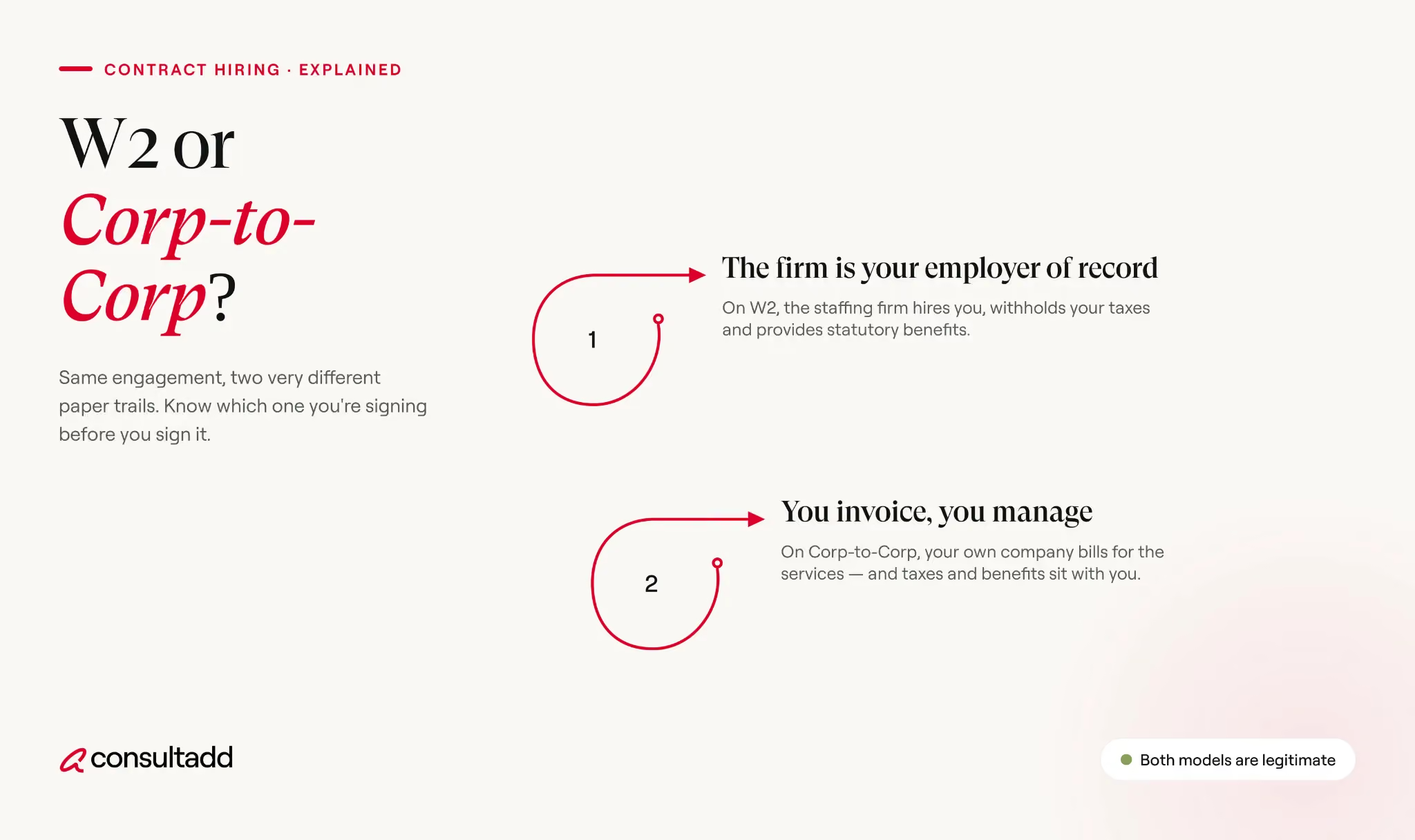
Under a W2 arrangement, the staffing firm is the employer of record, withholding taxes and providing statutory benefits.
Under Corp-to-Corp, the worker's own company invoices for services, and the worker typically handles their own taxes and benefits. Both models are legitimate.
The problem is using the wrong one for a given relationship, then treating it as a technicality instead of a legal distinction. If a "contractor" is functionally supervised like an employee, paid on a fixed schedule, and given company equipment, the label on the contract stops mattering to regulators.
We go deeper on how these two models differ in our post on W2 vs C2C classification, including where each one fits best depending on the length and nature of the engagement.
2. What the DOL's 2026 rulemaking changes for you
Worker classification rules don't stay still for long, and 2026 is no exception. The Department of Labor's proposed rule on employee versus independent contractor status would replace the prior six-factor test with a narrower analysis built around two core factors: how much control the hiring firm exercises, and how much opportunity the worker has for profit or loss. That's a meaningful shift from the broader totality-of-circumstances test used before it.
For IT staffing firms, the practical takeaway isn't to memorize the legal test. It's to document the actual working relationship for every contractor, consistently, so that whichever version of the rule applies during an audit, the paper trail already supports your classification.
Build compliance into every H-1B and visa-dependent placement
1. Tighter USCIS enforcement in 2026
If your placements include H-1B or other visa-sponsored talent, the compliance bar moved up this year. USCIS finalized a weighted selection process for H-1B cap petitions that favors higher wage levels, and site inspections from USCIS's Fraud Detection and National Security Directorate have expanded well beyond flagged cases.
Third-party placement models, which is exactly how most IT staffing works, draw extra scrutiny because the actual worksite often differs from the petitioning employer's address.
2. A site-visit readiness checklist
Keep these current at all times, not just when a petition is filed: the Labor Condition Application on file matches the actual work location, payroll records match the wage level attested to in the petition, and the contractor themselves can describe their role and worksite consistently with what's on paper.
FDNS officers do ask employees directly, and a contractor who's confused about their own petition details is a red flag regardless of intent.
Structure contracts so disputes don't happen at renewal
MSA and SOW basics
- A Master Services Agreement sets the ground rules for the whole relationship: payment terms, liability, termination clauses.
- A Statement of Work covers the specifics of a single engagement: role, rate, duration, deliverables.
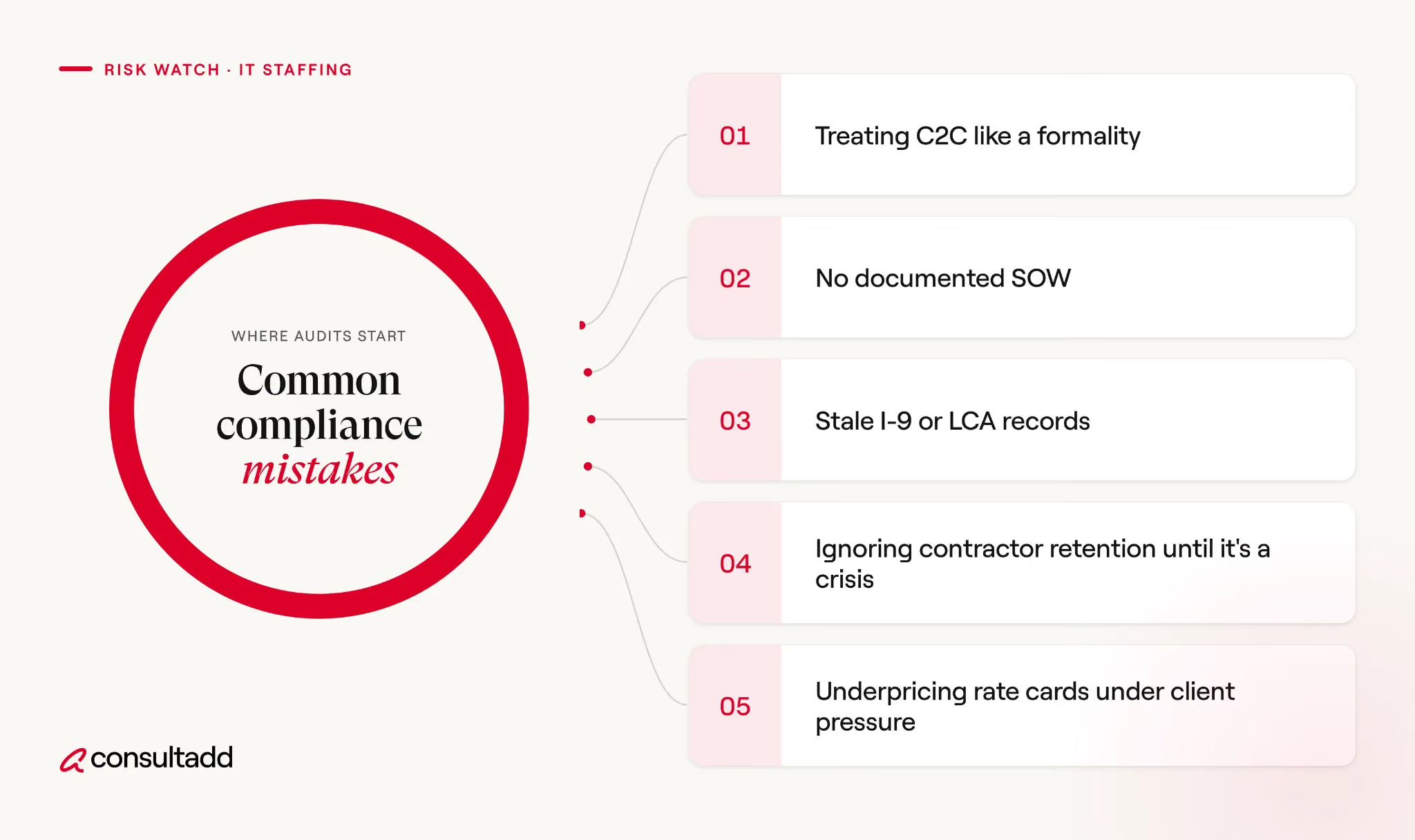
- Staffing firms that skip a proper SOW and run everything off email threads are the ones that end up arguing about scope six months in.
Rate cards and margin protection
- Write down your rate structure before you're mid-negotiation with a client.
- Margin compression is real in a competitive market, but agreeing to a rate under pressure without knowing your floor is how firms end up staffing roles at a loss.
Our breakdown of C2C contract hiring solutions covers how contract structure affects both cost and flexibility for the client.
Comparing worker classification models
Compliance checklist by engagement type
Retention practices for contract and contingent tech talent
Why retention matters even on short-term placements
Retention gets framed as a full-time-employee problem, but losing a contractor mid-engagement is arguably worse for a staffing firm. You've already burned sourcing time and client goodwill, and now you're re-staffing on a deadline that hasn't moved.
SHRM's 2026 Talent Trends Report found that roughly four in ten HR professionals reported difficulty retaining full-time employees over the past year. Contract retention faces the same pressure, often worse, since contractors have fewer reasons to stay if a better rate shows up elsewhere.
Practical retention levers
Pay on time, every time. It sounds obvious, but late or inconsistent payment is the fastest way to lose a good C2C contractor to a competitor.
Beyond that, clear project scope, responsive account management, and a real conversation about what happens after the current engagement ends all reduce the odds of a contractor disappearing at the worst possible moment.
Common compliance mistakes in IT staffing
Start Strong With Consultadd
With 15 years in business and 5,000+ successful staffing engagements, we don't just fill roles, we build reliability into your process. We've supported 65 staffing companies in the past year alone and maintain MSAs with industry leaders like Robert Half and TEKsystems.
Here's what working with Consultadd looks like:
- Talent sourced in under 24 hours
- Ready-to-deploy candidates, vetted for experience and compliance
- Lower turnover risk: we match long-term goals, not just short-term needs
- Seamless compliance: visa, documentation, onboarding? Handled.
- Dedicated 1:1 account managers for responsive, personalized support
- Top 100 candidate matches delivered in the past year
- Strong partnerships with universities to tap into fresh, committed talent
- Post-placement support so your investment grows beyond day one
For candidates, your next opportunity is more than just a job title, it's a chance to build skills, gain experience, and move your career forward. At Consultadd, we connect technology professionals with projects and employers that align with their goals, whether they're looking for contract, contract-to-hire, or long-term opportunities.
The tech job market moves fast, but the right guidance can make all the difference. Ready to take the next step in your career journey? Explore Opportunities >>
Key Takeaways
- Worker classification, not culture or branding, is where most costly IT staffing mistakes happen.
- The DOL's 2026 proposed rule changes how contractor versus employee status gets evaluated, so documentation of the actual working relationship matters more than the label on the contract.
- H-1B and visa-dependent placements face heavier USCIS scrutiny in 2026, including expanded site visits.
- A signed SOW and a documented rate card prevent the disputes that usually surface at contract renewal.
- Contractor retention deserves the same attention as full-time retention, since losing talent mid-project costs a staffing firm both time and client trust.
FAQs
What are the best practices for IT staffing compliance?
The core practices are correctly classifying every worker as W2, C2C, or 1099 based on the actual working relationship, keeping visa documentation current and consistent with real worksite conditions, and running compliance audits quarterly rather than only at onboarding.
What's the difference between W2 and C2C in IT staffing?
Under W2, the staffing firm is the employer of record and withholds taxes and provides benefits. Under C2C, the contractor's own business invoices for services and handles its own taxes, which shifts more independence and more compliance responsibility onto that business entity.
Why does worker misclassification matter so much in IT staffing?
Misclassifying a contractor as independent when they're functionally treated like an employee creates exposure to back taxes, penalties, and legal claims. The rules for making that distinction have changed multiple times at the federal level, so documentation of the real relationship matters more than the contract label.
How has H-1B compliance changed for staffing firms in 2026?
USCIS introduced a weighted selection process favoring higher wage levels for H-1B cap petitions, and site inspections from its Fraud Detection and National Security Directorate have expanded, with third-party placement arrangements facing extra scrutiny.
How do you retain contract IT talent through a full engagement?
Consistent, on-time payment is the biggest factor, followed by clear scope, responsive account management, and early conversations about what happens after the current contract ends. Contractors leave mid-project most often when they feel uncertain or under-communicated with.
Should a staffing firm use a Statement of Work for every placement?
Yes. A signed SOW documenting role, rate, duration, and deliverables prevents scope disputes that typically surface months into an engagement, not at the start of it.




.webp)
