
Introduction
You've prepared your answers, researched the company, and picked your outfit. Then, twenty minutes before the interview, you realize you don't know the interviewer's last name, your phone is at 12 percent, and the building needs a photo ID you left at home.
Knowing what to bring in an interview sounds basic, but small misses like these throw people off before the first question. The right items also depend on the format. A video call, a whiteboard round, and a client interview for a contract role each need something different.
This guide gives you a core checklist for any interview, the extras for each format, and a list of what to leave at home.
TL;DR
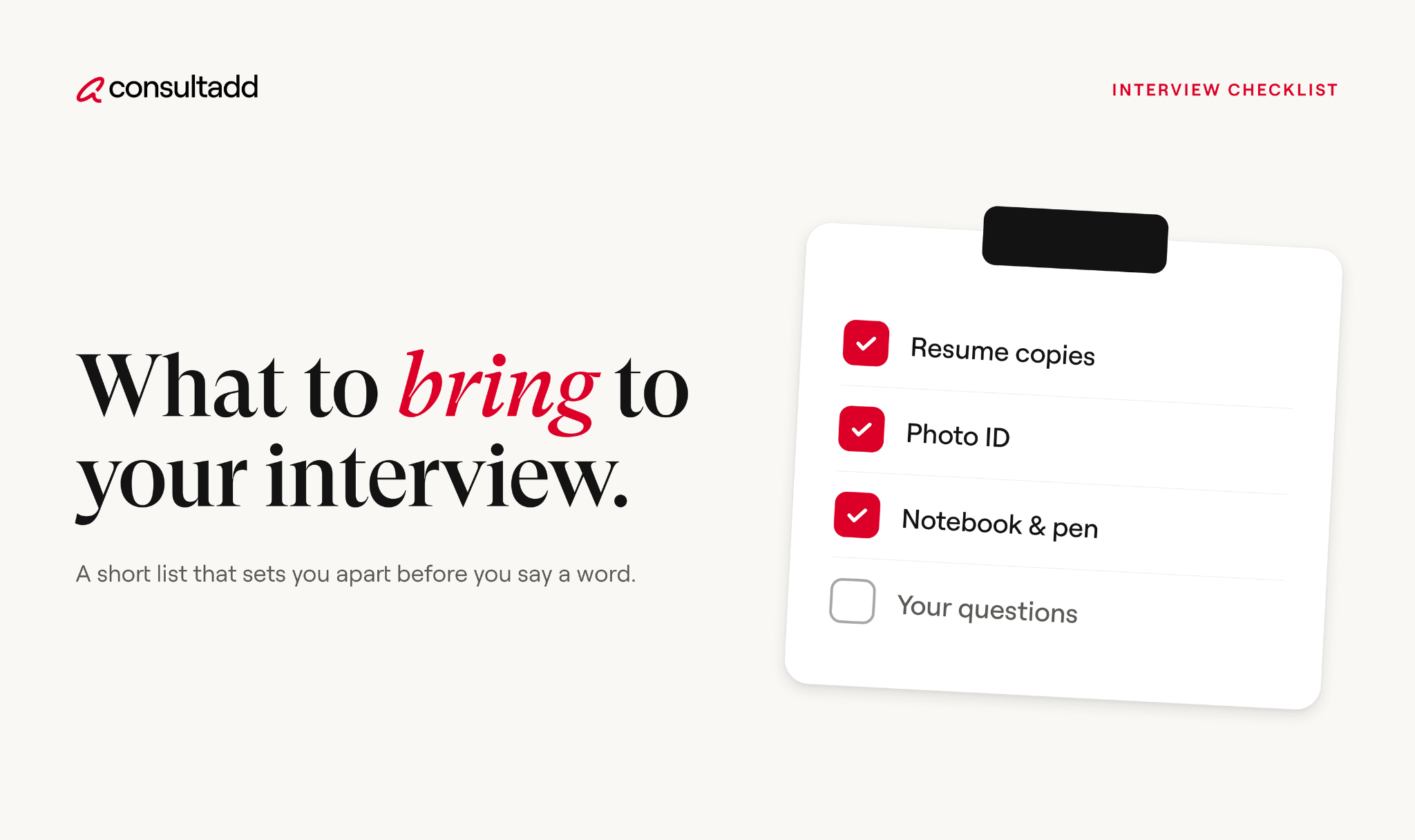
- For any interview, bring printed resumes, a photo ID, a notepad and pen, your questions for the interviewer, and the names and schedule of the people you're meeting.
- Video interviews need a tested setup: a charged laptop, a working link, a headset, and a backup phone number.
- For technical interviews, confirm in advance whether to bring a laptop, and never bring code or documents that belong to a past employer.
- Don't bring immigration or work authorization documents unless you're asked. Employers verify those after a job offer, not during the interview.
- Pack the night before, and keep everything in one folder or bag so you're not searching for anything in the lobby.
The core checklist for any interview
These items apply whether you're meeting one hiring manager or a panel of five.
The University of Cincinnati's interview essentials checklist adds a few small extras, such as breath mints (not gum), a water bottle kept in your bag, and a small emergency kit. They're easy to skip, and you'll be glad to have them the one time something goes wrong.
Why the written examples matter
Many employers now use structured interviews, where every candidate answers the same set of questions and gets scored on the same criteria. Google's re:Work guide to structured interviewing describes this approach.
That means you can predict a lot of what's coming. Expect questions about a time you handled a difficult problem, a project that didn't go as planned, or a disagreement with a teammate. A few bullet points on the projects you'll use keep your answers specific when nerves kick in.
What to bring in an interview, by format
The core list covers most of it. Each format adds a few things.
1. In-person interviews
Plan the route the day before, including where you'll park or which stop you'll get off at. Aim to arrive 10 to 15 minutes early. Any earlier and you're waiting in someone's lobby, which can feel awkward for both sides.
Carry your papers in a simple folder or padfolio so they don't get creased in a bag.
2. Video interviews
Treat the setup as part of the interview. Test the meeting link, camera, and microphone at least an hour before. Plug in your laptop rather than relying on the battery.
A wired or wireless headset usually sounds better than laptop speakers. Keep your phone nearby with the recruiter's or interviewer's number in case the call drops.
Notes can sit just off camera, but glance at them rather than reading from them. Interviewers can tell.
3. Technical interviews
Ask your recruiter or the hiring team what format to expect. It might be a shared coding editor, a whiteboard, a take-home review, or a system design discussion. If they want you to use your own laptop, have your development environment ready and set your editor to a readable font size.
Links to a GitHub profile or portfolio are useful if they show work you can explain. A simple diagram of a system you've built helps too, as long as you've sketched it yourself.
One firm rule: never bring code, documents, or screenshots that belong to a current or past employer. Sharing them can breach your confidentiality agreement, and it tells the interviewer you might do the same with their work.
4. Panel interviews
Bring enough resume copies for everyone plus a spare. When introductions happen, jot down each person's name and role in the order they're sitting. It helps you answer the right person and write accurate thank-you notes afterward.
5. Contract client interviews through a staffing firm
If a staffing firm submitted you for a contract role, the interview with the end client works a little differently. The client usually cares most about whether you can deliver the specific project, often on a near start date.
Bring the requirement your recruiter sent you, with the must-have skills highlighted. Know your earliest start date. Prepare two or three project stories that match the client's stack.
Rate is usually settled between you and your recruiter before the client interview. If the client raises it, it's reasonable to say your recruiter is handling the commercial details.
Our comparison of W-2, C2C, and 1099 contract types explains how those arrangements affect pay.
Our guide to C2C and contract-to-hire roles covers what clients look for.
We see one pattern often in client interviews. Candidates who can name the exact services, versions, and results from their last project reach the next round far more often than candidates who describe their experience in general terms.
Documents to bring, and what not to hand over
The right documents for an interview are simpler than many people think.
Bring: a photo ID for building access, your resume, and a reference list. If the job requires a specific license or certification, bring a copy of that too.
Usually don't bring: your passport, visa, EAD, green card, or Social Security card. Employers can ask whether you're authorized to work in the United States. They verify your documents later, through Form I-9, after you've accepted a job offer.
The USCIS Form I-9 instructions state that employees complete Section 1 no later than their first day of work, and not before accepting a job offer.
If an employer asks you to bring immigration documents to a first interview, it's fine to ask what they need them for.
For a broader explanation of how employers check eligibility, see our guide to what work authorization is and how it's verified.
There are a few exceptions. Some government and security-cleared roles have their own identity and paperwork steps. If that applies, the employer will tell you exactly what to bring.
What not to bring to an interview
The night-before checklist
Packing the night before removes most of the morning stress. Run through this list:
- Print your resumes and reference list, and put them in a folder.
- Put your photo ID in the bag you're taking.
- Write the interviewers' names, titles, and the schedule on the first page of your notepad.
- Add your questions for them and your bullet-point project examples.
- Charge your phone and laptop.
- Check the route and travel time, or test the video link and your equipment.
- Save the recruiter's or interviewer's phone number in case you're delayed.
- Lay out your clothes.
If you're working with a recruiter, send them a short message confirming the time and asking whether anything has changed. Schedules move more often than candidates expect, especially for panel interviews.
Final thoughts on what to bring in an interview
Most of what to bring in an interview fits in one folder: resumes, ID, a notepad, your questions, and notes on your best examples. The format adds a few items. A video call needs a tested setup. A technical round needs the right tools and nothing that belongs to a past employer.
Pack it the night before, and check the format with your recruiter or the hiring team. You'll walk in thinking about the conversation instead of what you forgot.
Start Strong With Consultadd
With 15 years in business and 5,000+ successful staffing engagements, we don't just fill roles, we build reliability into your process. We've supported 65 staffing companies in the past year alone and maintain MSAs with industry leaders like Robert Half and TEKsystems.
Here's what working with Consultadd looks like:
- Talent sourced in under 24 hours
- Ready-to-deploy candidates, vetted for experience and compliance
- Lower turnover risk: we match long-term goals, not just short-term needs
- Seamless compliance: visa, documentation, onboarding? Handled.
- Dedicated 1:1 account managers for responsive, personalized support
- Top 100 candidate matches delivered in the past year
- Strong partnerships with universities to tap into fresh, committed talent
- Post-placement support so your investment grows beyond day one
For candidates, your next opportunity is more than just a job title, it's a chance to build skills, gain experience, and move your career forward. At Consultadd, we connect technology professionals with projects and employers that align with their goals, whether they're looking for contract, contract-to-hire, or long-term opportunities.
The tech job market moves fast, but the right guidance can make all the difference. Ready to take the next step in your career journey? Explore Opportunities >>
Key takeaways
- The core kit for any interview is printed resumes, a photo ID, a notepad and pen, your questions, and the names of the people you're meeting.
- Each format adds something: a tested setup for video, the right tools for technical rounds, and extra copies for panels.
- Never bring code, documents, or screenshots that belong to a current or past employer.
- Immigration and work authorization documents are verified after a job offer, so don't bring them unless you're asked.
- Pack the night before and confirm the format with your recruiter or the hiring team.
FAQs
How many copies of my resume should I bring to an interview?
Bring one copy for each person you're scheduled to meet, plus two spares. If you don't know how many people will be there, five copies is a safe number. Keep them in a folder so they stay flat.
Should I bring a laptop to a job interview?
Only if the interviewer asks for one or the interview includes a technical exercise on your own machine. Confirm this with your recruiter or the hiring team in advance. For a video interview, use a charged laptop and keep the charger plugged in.
Do I need to bring ID to an interview?
It's a good idea, since many office buildings ask visitors for photo ID at reception. A driver's license or state ID is usually enough. You don't need to bring a passport or immigration documents unless the employer specifically asks.
What should I bring to a virtual interview?
Have a charged laptop, a tested meeting link, a headset, and a quiet space with decent lighting. Keep a notepad, your questions, and the interviewer's phone number nearby in case the connection drops. Test everything at least an hour before the start time.
Is it okay to bring notes into an interview?
Yes, short notes are fine and show you've prepared. Stick to bullet points on your examples and questions, and glance at them rather than reading word for word. Most interviewers are comfortable with a candidate checking a notepad.
What should I not bring to a job interview?
Leave gum, coffee, large bags, and anything confidential from your current or past employer at home. Turn off phone notifications before you walk in. Skip strong fragrance, and don't bring a printed salary demand.
.webp)


.webp)