


Introduction
You found the perfect candidate. Skills, culture fit, everything lines up. Then someone asks whether they can legally work here, and the hire grinds to a halt. If you have been there, you already know why this matters.
So what's work authorization? In plain terms, it is the legal permission a person needs to work in a country where they are not a citizen.
For employers, it is also a compliance line you cannot cross. Hire someone who is not authorized, and the fines land on you, not them. This guide breaks down what work authorization means, who needs it, the main types, and how you verify it without stepping into legal trouble.
TL;DR
- Work authorization is the legal permission to work in a country you are not a citizen of.
- U.S. citizens and green card holders are already authorized and need no extra document.
- Many non-citizens prove authorization with an Employment Authorization Document (EAD), also called a work permit.
- Every U.S. employer must confirm work authorization using Form I-9 for every new hire, citizens included.
- Getting classification or verification wrong can trigger fines, so process and paperwork matter.
What work authorization actually means
Work authorization is the legal right to hold a job in a country where you are not a citizen or permanent resident. In the United States, that right comes from your immigration status, your circumstances, or a document that proves both.
Some people carry their authorization automatically. A U.S. citizen does not think twice about it. A lawful permanent resident, or green card holder, is authorized to work without applying for anything extra, since the green card itself is the proof.
Everyone else usually needs to show something. That something is often a work permit, which brings us to the different types below.
If you want a staffing-focused primer on the topic, Consultadd has a clear rundown of what a work authorization is and why it matters in hiring.
Who needs work authorization
Citizens do not need to prove work authorization the way non-citizens do, though they still complete the paperwork every employer requires.
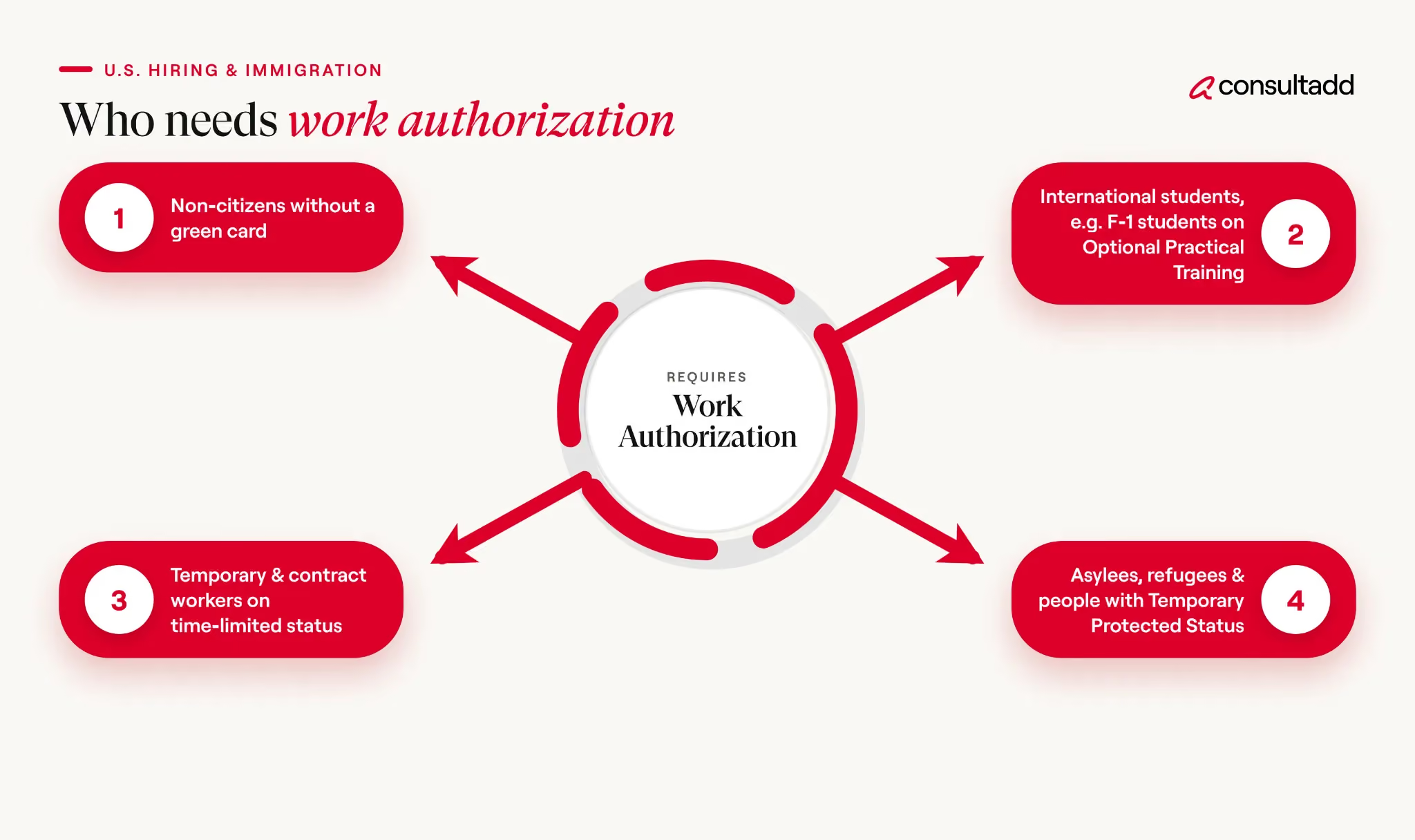
The people who actually need to establish work authorization tend to fall into a few groups:
- Non-citizens without a green card
- International students, such as F-1 students on Optional Practical Training
- Temporary and contract workers on time-limited status
- Asylees, refugees, and people with Temporary Protected Status
If a worker is not a citizen or a permanent resident, assume they need to show valid authorization before their first day. No card in hand usually means no legal start date, even for unpaid roles in some categories.
The main types of work authorization
Here is where people get lost, because "work authorization" is really an umbrella over several very different situations. Some workers are authorized because of who they are. Others are authorized only for a specific employer. And a large group has to apply for a card first.
Citizens and permanent residents
This group is the simplest. Citizens and green card holders can work for any employer, in any role, with no time limit tied to a permit. Their proof is built into documents they already hold.
Employment Authorization Document (EAD)
The EAD, officially Form I-766 and often called a work permit, is a card issued by U.S. Citizenship and Immigration Services. It proves a non-citizen can work legally for a set period. To get one, most applicants file Form I-765, and an approved EAD is usually valid for one or two years before it needs renewing.
The USAGov work permit guide is a good starting point for eligibility and how the card works. One planning note: rules on automatically extending an expiring EAD changed in late 2025, so always check current USCIS guidance before assuming a lapsed card still counts.
Employer-specific work visas
Some nonimmigrants are authorized to work "incident to status," meaning the status itself grants the right, but only for a specific sponsoring employer. H-1B and L-1B workers are common examples. They generally do not carry an EAD, since their approval notice and I-94 do the job. This is also where visa categories overlap and confuse people.
Consultadd's breakdown of the differences between H-1B and OPT visas untangle two of the most common ones.
How employers verify work authorization
Here is the part every employer has to get right. Federal law requires that every employer complete Form I-9 for each new hire, a rule in place since November 6, 1986. It applies to citizens and non-citizens alike.
Form I-9 does two jobs at once: it confirms identity and confirms work authorization. The employee attests to their status and presents documents, and the employer examines them to see that they reasonably appear genuine.
The catch that trips up new hiring managers: the employee picks which acceptable documents to show. You cannot demand a specific one. Doing so can count as discrimination. Workers choose either one document from List A, or one from List B paired with one from List C.
A List B document has to be paired with a List C document to cover both requirements. Keep the completed I-9 on file and make it available if federal officials ask to inspect it.
Work authorization vs a work visa
People use these terms as if they mean the same thing. They do not. A work visa is one route to work authorization, but authorization is the broader idea.
So a work visa can give you work authorization, but you can also have work authorization without a traditional work visa, for example through an EAD tied to asylum or a pending green card.
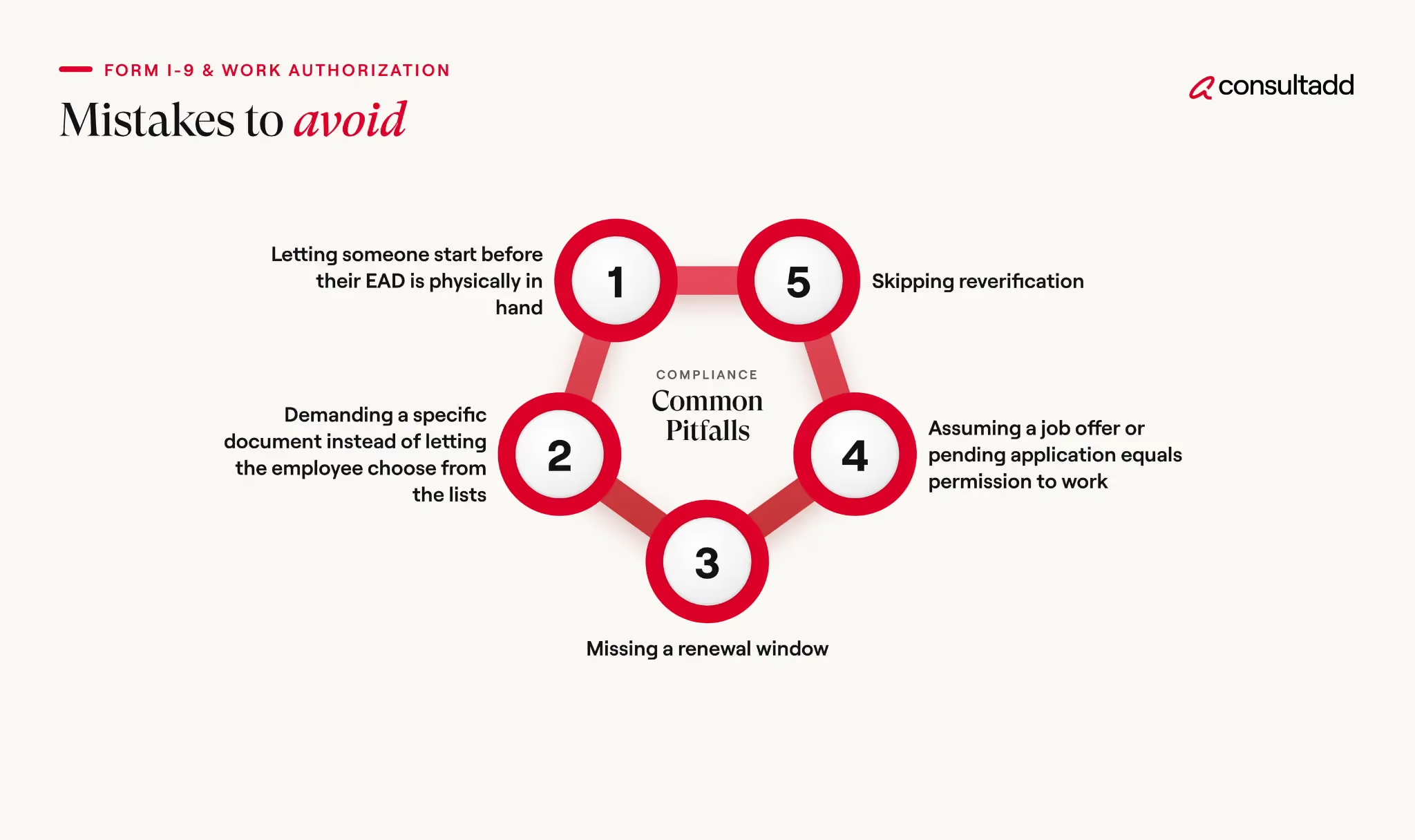
Common work authorization mistakes to avoid
A few errors show up again and again, and each one carries real cost:
- Letting someone start before their EAD is physically in hand.
- Demanding a specific document instead of letting the employee choose from the lists.
- Missing a renewal window and letting authorization lapse mid-employment.
- Assuming a job offer or pending application equals permission to work.
- Skipping reverification when a time-limited authorization expires.
For staffing teams juggling many placements at once, this is where a partner earns its keep. Handling compliance across contract and project roles is a core part of project-based recruiting and staffing, and getting it wrong slows every hire behind it.
The bottom line
So, what's work authorization? It is the legal green light that says a person can work, and the paperwork that proves it.
- For workers, it decides whether they can accept a role.
- For employers, it decides whether a hire is safe or a liability.
Get the status right, verify it properly, and track the expiration dates, and most of the risk takes care of itself.
Start strong with Consultadd
With 15 years in business and 5,000+ successful staffing engagements, we don't just fill roles, we build reliability into your process. We've supported 65 staffing companies in the past year alone and maintain MSAs with industry leaders like Robert Half and TEKsystems.
Here's what working with Consultadd looks like:
- Talent sourced in under 24 hours
- Ready-to-deploy candidates, vetted for experience and compliance
- Lower turnover risk: we match long-term goals, not just short-term needs
- Seamless compliance: visa, documentation, onboarding? Handled.
- Dedicated 1:1 account managers for responsive, personalized support
- Top 100 candidate matches delivered in the past year
- Strong partnerships with universities to tap into fresh, committed talent
- Post-placement support so your investment grows beyond day one
For candidates, your next opportunity is more than just a job title, it's a chance to build skills, gain experience, and move your career forward. At Consultadd, we connect technology professionals with projects and employers that align with their goals, whether they're looking for contract, contract-to-hire, or long-term opportunities.
The tech job market moves fast, but the right guidance can make all the difference. Ready to take the next step in your career journey? Explore Opportunities >>
Key takeaways
- Work authorization is the legal permission to work in a country where you are not a citizen.
- Citizens and green card holders are already authorized, while many non-citizens need an EAD.
- The EAD (Form I-766) is issued by USCIS and usually valid for one to two years.
- Every employer must verify work authorization with Form I-9 and let the employee choose which documents to show.
- Most compliance risk comes from timing and paperwork, so track statuses and renewal dates closely.
FAQs
What's work authorization in simple terms?
It is the legal right to work in a country where you are not a citizen or permanent resident. In the U.S., that right comes from your immigration status, your circumstances, or a document like an EAD that proves it. Employers must confirm it before you start.
What is the difference between work authorization and a work visa?
Work authorization is the broad legal right to work. A work visa is one specific way to get that right, usually tied to a sponsoring employer. You can have work authorization without a traditional work visa, for example through an EAD.
Who needs an Employment Authorization Document (EAD)?
Non-citizens who are not green card holders often need an EAD, including many students on OPT, asylees, TPS holders, and people with a pending green card. Citizens and permanent residents do not need one, since their existing documents already prove authorization.
How do employers verify work authorization?
Employers use Form I-9 for every new hire. The employee presents documents that prove identity and work authorization, and the employer reviews them. The employee chooses which acceptable documents to show, and the employer cannot demand a specific one.
Can someone start working before their EAD arrives?
Generally no. In most categories, a worker cannot legally begin until the EAD card is in hand and any required start date has passed. Starting early can violate their status, so it is worth waiting for the physical card.
How long is work authorization valid?
It depends on the basis for it. An EAD is usually valid for one or two years, then needs renewal. Status-based authorization lasts as long as the underlying status. Citizens and permanent residents have no expiration tied to a permit.
.webp)



.webp)
