
.avif)

Introduction
If you've scrolled through job boards lately, you've probably noticed the term "c2c job" popping up everywhere. But what exactly does it mean, and why should you care? The reality is that c2c jobs have become one of the smartest ways to land a permanent role while testing the fit on both sides.
C2C stands for "contract-to-hire," and it's exactly what it sounds like. You start as a contractor with no obligation beyond your agreed timeline, and if things work out, the company converts you to a permanent employee. It's a low-risk way for employers to evaluate talent without immediate commitment, and for job seekers, it's an actual opportunity to prove yourself before signing a multi-year contract.
More companies are turning to c2c job models than ever before. According to the U.S. Department of Labor's employment reports, contract work has grown steadily, with many roles eventually converting to permanent positions. The appeal is mutual: companies get to validate cultural fit and work ethic, and you get real-world experience and a potential path to stability.
TL;DR
- C2C jobs (contract-to-hire) let you start as a contractor and move to permanent employment if both parties agree
- The average contract period lasts 3 to 6 months before conversion decisions are made
- C2C roles offer flexibility, faster entry into roles, and a genuine way to prove your value to employers
- Conversion rates vary by industry, but tech and staffing sectors see higher success rates
- Success in c2c jobs depends on clear expectations, strong performance, and communication with hiring managers
Understanding what c2c jobs really mean
A c2c job isn't just a temporary contract. It's a structured pathway designed to turn contractors into employees.
You work through a staffing partner or directly for the company under a defined contract, usually ranging from 3 to 6 months.
During this period, both you and the employer evaluate whether the role, team dynamics, and compensation structure align for a permanent arrangement.
The key difference from standard temporary work is intent. With c2c positions, conversion to permanent status isn't just possible, it's the goal. Companies investing in c2c placements are actively looking to build their core teams, not just fill gaps.
The mechanics work like this:
- You accept a contract role with a clear start date and typically a 90-day or 6-month evaluation period.
- The company assesses your performance, team fit, and ability to contribute.
- You get firsthand experience with the company culture, workload, and team dynamics.
- If everything clicks, the employer makes an offer for permanent employment. If not, the contract ends cleanly with no hard feelings and both parties move on.
Why employers use c2c job structures
From an employer's perspective, c2c roles solve a real hiring problem.
- Permanent hiring involves risk.
- You can't fully know how someone works until they're actually working.
- Skills assessments and interviews only tell you so much. With c2c placements, companies get 90 to 180 days of real-world validation.
Companies also appreciate the flexibility.
- If business needs to shift or the role isn't quite right, they can part ways without the costs of termination, severance, or extended employment-related obligations.
- This is especially common in tech, where project-based work and shifting priorities mean the role you're hiring for might look different six months from now.
For staffing teams, c2c jobs reduce recruitment friction too.
- Rather than interviewing dozens of candidates and making a permanent hire based on limited information, they can bring someone in for a trial period.
- High-performing contractors often convert to permanent roles, and even those who don't gain valuable employment history and references.
How c2c jobs compare to other employment types
Understanding how c2c positions stack up against other roles helps you decide if this path makes sense for your career.
The table above shows that c2c jobs occupy a unique middle ground. You get more stability than straight contract work, faster entry than traditional permanent hiring, and genuine conversion potential if things go well.
The c2c job conversion timeline
Timing matters in c2c placements. Most companies structure their evaluation period around standard performance review cycles, which usually happen every 90 days or every 6 months.
Month 1-3: The evaluation phase
Your first three months are critical. You're getting onboarded, learning systems, and proving you can deliver. The company is observing your work quality, collaboration, and cultural fit.
Don't expect a conversion conversation yet. Your focus should be on exceeding performance expectations and building relationships with your team.
Month 4-5: The assessment period
By month four, managers have real data. They know if you can ship work, communicate clearly, and mesh with the team. Informal conversations might start happening.
Your manager may ask how you're enjoying the role or mention that things are going well. These aren't conversion offers yet, but they're signals.
Month 6: The conversion decision
Most c2c conversions happen around the 6-month mark, though some companies move faster. Formal conversations happen here.
If the company wants to convert you, you'll get an offer letter, compensation details, and benefits information. If they're not sure, they might extend the contract another 3 months to keep evaluating.
Why c2c jobs are worth considering
The practical advantages of c2c roles shouldn't be underestimated:
For one, you reduce hiring friction.
- A traditional permanent hire can take 2-4 months from application to start date.
- C2C roles often move faster because the commitment is lower upfront.
You also get to validate the role before accepting permanent status.
- Jobs often look different from the inside.
- The team dynamics, day-to-day responsibilities, or growth potential might not match the job description.
- A c2c period lets you discover this before you're locked into a permanent commitment.
From a career-building perspective, c2c roles show initiative and confidence.
- You're willing to start with a trial period, which signals maturity to employers. You're not just seeking job security, you're proving your value.
- Conversely, companies that invest in converting c2c contractors are signaling that they've vetted you thoroughly and see genuine growth potential.
There's also the matter of market responsiveness.
- If you're entering a new industry or skill area, c2c roles let you build relevant experience without requiring five years of background in the field.
- You learn on the job while the employer accepts the training investment upfront.
Challenges and realities of c2c job positions
C2C roles aren't without downsides:
The biggest challenge is uncertainty.
- During the contract period, you don't have the same job security as permanent employees. If the company runs into budget cuts or the role gets eliminated, you're out.
- There's no severance conversation; you simply reach the end of your contract term.
Compensation is another real concern.
- Contractors often make more per hour than permanent employees in the same role, but they sacrifice benefits, paid time off, and 401k matching.
- If you're a contractor making $45/hour with no benefits, you might earn around $93,600 annually gross.
- But after taxes, health insurance, and retirement contributions you're managing yourself, your take-home might be less than a permanent employee earning $75,000 with benefits included.
The benefits gap is significant.
- As a contractor, you're responsible for your own health insurance, dental, vision, life insurance, and retirement planning.
- This adds up quickly. Permanent employees get these often subsidized through their employer.
- When evaluating a c2c offer, factor in full annual costs for health coverage and retirement savings.
According to Bureau of Labor Statistics data on contingent work, contractors comprise a growing portion of the workforce, but their benefit coverage lags significantly behind permanent employees.
Understanding this gap before committing to a c2c role is critical for financial planning.
There's also social friction sometimes.
- Contract workers aren't always fully integrated into company culture.
- You might miss the email about the team lunch, skip the off-site meeting, or feel like an outsider during company-wide celebrations.
- Some teams are incredibly inclusive; others treat contractors as separate. This varies by company.
Getting hired into c2c job positions
Landing a c2c role starts the same way as any other job search. Apply through job boards, work with staffing recruiters, or network directly. But how you position yourself matters.
First, be explicit about openness to c2c roles.
Many job seekers hide from contract work, worried it looks unstable. But employers appreciate candidates who understand c2c models and see them as genuine opportunities.
In your cover letter or when speaking with recruiters, mention that you're actively interested in contract-to-hire positions and understand the evaluation period as a mutual fit assessment.
Second, work with experienced staffing partners.
Recruiters at firms like Consultadd understand c2c placements and can match you with companies that have actual conversion track records.
Some companies claim to offer c2c roles but never convert anyone. A good recruiter will steer you toward companies with genuine conversion histories.
Third, prepare for the contract details conversation. Before you accept, understand:
- What's the contract length? (3, 6, or 9 months?)
- Is there a conversion benchmark? (What do you need to achieve?)
- What's the hourly rate or annual contract value?
- Are there benefits during the contract period?
- Who manages the contract, the company or a staffing firm?
- What's the process for extending or converting?
Getting these details upfront prevents misunderstandings later. It also shows professionalism and seriousness about the role.
What employers look for in c2c candidates
Companies don't just hire anyone for contract-to-hire roles. They're looking for candidates who can hit the ground running because the evaluation period is compressed.
Here's what gets noticed:
Relevant technical skills. You need to actually do the job from day one. There's less room for an extended ramp-up period compared to permanent hires. If the role requires Python, you need Python experience. If it's a project management position, you need to manage projects immediately.
Clear communication. Contractors need to be self-directed because managers aren't always checking in. You communicate what you've completed, what you're working on, and what you need from others. This matters during evaluation periods.
Adaptability. Contract roles sometimes involve learning new systems, tools, or codebases. Candidates who learn quickly and ask smart questions get better conversions than those who struggle with new environments.
Reliability. This sounds basic, but consistency during a contract period is underrated. Showing up on time, meeting deadlines, and following through on commitments differentiates average contractors from those who convert.
Cultural awareness. You don't need to be best friends with your team, but understanding company dynamics and contributing positively to team morale matters. Companies that convert contractors are hiring people they want to work with long-term.
Conversion rates: What are your actual odds?
Conversion rates vary significantly by industry and company size. In the tech sector, c2c conversion rates hover around 60-75%, according to industry surveys.
Staffing firms report similar figures for roles they place. However, smaller companies or industries with higher turnover naturally see lower conversion rates.
The variable factors:
Company stability. Stable companies with predictable budgets convert more contractors than companies experiencing layoffs or restructuring.
Role clarity. Roles with clear success metrics and stable responsibilities convert more often than those where the scope keeps shifting.
Hiring manager investment. Managers who actively want to convert a contractor and advocate for conversion make it happen. Managers who are indifferent create friction.
Market conditions. In tight labor markets, companies are more likely to convert strong contractors because replacing them is harder. In soft markets, they might end contracts and rehire.
Contractor performance. This is obvious but worth stating: strong performers convert; underperformers don't. If you're meeting expectations and contributing value, conversion becomes likely.
How to maximize your odds of c2c conversion
If you land a c2c role, here's what actually improves your odds of conversion.
Set up the conversion conversation early. Ask your manager in week two or three what success looks like for the conversion decision. Get clarity on technical expectations, team dynamics, and any other factors they'll evaluate. This shows intent and removes ambiguity.
Over-communicate progress. Send brief weekly updates to your manager on what you've shipped, completed, and learned. This isn't annoying; it's professional. It keeps your contributions visible and shows momentum.
Build relationships beyond your direct manager. Network across teams. Grab coffee with colleagues. Help people with problems. Visibility beyond your direct team makes you harder to let go at contract end.
Ask for feedback often. Don't wait for formal reviews. Ask your manager monthly: "How am I doing? Anything I should adjust?" This creates touchpoints and shows you're actively seeking improvement.
Document your wins. Keep a running list of problems you've solved, projects you've shipped, and impact you've created. When conversion conversations happen, you've got concrete examples of your value.
Get to know the hiring manager personally. If your manager isn't the hiring manager, build a direct relationship with whoever will make the conversion decision. They need to know who you are and respect your work.
Deliver more than expected. Find something not in the original job description that would add value and do it. Solve a problem your manager mentioned. Clean up technical debt. The candidates who convert aren't just meeting expectations; they're exceeding them.
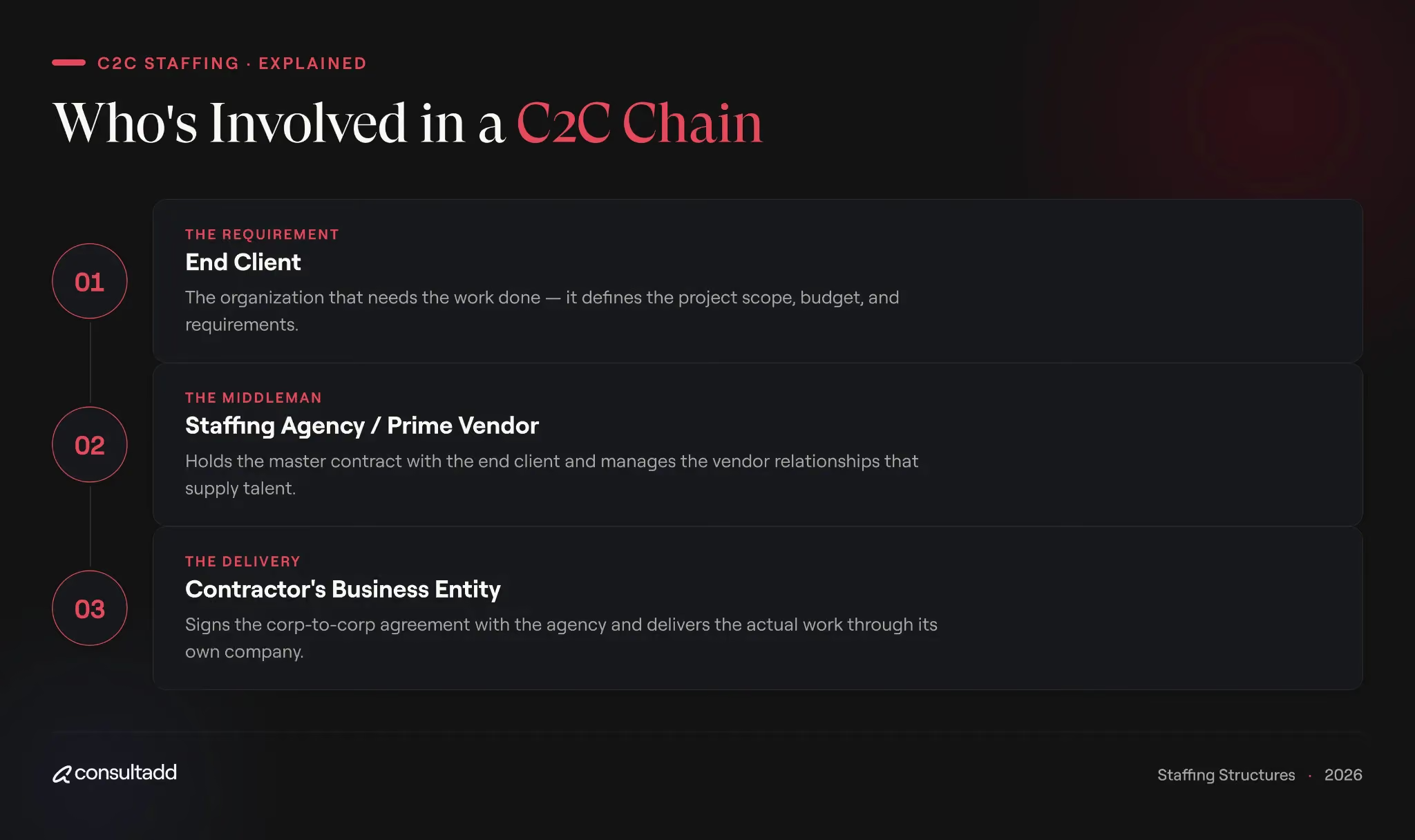
The role of staffing partners in c2c placements
Many c2c roles flow through staffing firms, and understanding this relationship matters.
When you work with a staffing partner, you're technically employed by the staffing firm while working at the client company. This has both advantages and disadvantages.
Advantages:
- Staffing firms handle payroll, taxes, and HR logistics.
- They also negotiate on your behalf, handle contract disputes, and often provide benefits like health insurance.
- If things don't work out with the client, they help find your next placement.
Disadvantages:
- Staffing firms take a cut of your rate, typically 20-30%.
- You'll make less than you would negotiating directly with the company.
- Also, staffing firms often move contractors between clients, so they might not be as invested in your conversion as you are.
When working with a staffing partner, choose experienced ones. Consultadd, for example, has relationships with companies that have legitimate conversion track records. Newer firms might place you in roles where no one actually converts.
Ask your staffing recruiter directly: "What's the conversion rate for this specific client?" and "How many contractors from this company have converted to permanent roles?" Good recruiters have this data and will share it. If they won't, that's a red flag.
Industries where c2c jobs are most common
C2C roles aren't equally distributed across industries. Some sectors rely heavily on contract-to-hire staffing models; others rarely use them.
Tech and software development: C2C is huge here. Companies hire contractors for specific projects or to evaluate engineers for permanent roles. Conversion rates are relatively high, especially for strong performers. Every type of engineering role has c2c variants.
Data science and analytics: Similar to tech, data roles often come through c2c models. Companies want to evaluate how analysts approach data problems and integrate with existing teams.
Finance and accounting: Contract roles in accounting are common, especially for specialized positions like tax accounting or financial analysis. Conversion varies by company.
Project management: Project managers are frequently hired on a contract basis to manage specific initiatives. Companies often convert strong PMs to permanent roles.
Sales and business development: Less common for c2c, but some companies use it to test sales team additions before making permanent hires.
Operations and supply chain: Operations roles sometimes follow c2c models, particularly for specialized experience like procurement or logistics optimization.
HR and recruiting: HR roles are occasionally c2c, though less frequently than technical positions.
Industries like retail, hospitality, and customer service rarely use c2c models. They tend to hire permanent employees directly or use traditional temporary staffing.
If you're considering a c2c role, check your industry norms. High-tech fields have strong conversion cultures; traditional industries are more skeptical.
Immigration and employment eligibility in c2c roles
For international candidates, understanding USCIS employment-based visa requirements is critical when considering c2c placements. Some visa categories allow contract work, while others require permanent employment from day one.
If you're on an H-1B or similar visa, verify that the c2c arrangement complies with your visa terms before accepting. Companies that regularly hire contractors through c2c models are usually familiar with visa requirements, but it's your responsibility to confirm.
Staffing partners like Consultadd handle visa compliance as part of their placement process, so working with experienced firms reduces legal risk.
Start Strong With Consultadd
With 15 years in business and 5,000+ successful staffing engagements, we don't just fill roles, we build reliability into your process. We've supported 65 staffing companies in the past year alone and maintain MSAs with industry leaders like Robert Half and TEKsystems.
Here's what working with Consultadd looks like:
- Talent sourced in under 24 hours
- Ready-to-deploy candidates, vetted for experience and compliance
- Lower turnover risk: we match long-term goals, not just short-term needs
- Seamless compliance: visa, documentation, onboarding? Handled.
- Dedicated 1:1 account managers for responsive, personalized support
- Top 100 candidate matches delivered in the past year
- Strong partnerships with universities to tap into fresh, committed talent
- Post-placement support so your investment grows beyond day one
For candidates, your next opportunity is more than just a job title, it's a chance to build skills, gain experience, and move your career forward. At Consultadd, we connect technology professionals with projects and employers that align with their goals, whether they're looking for contract, contract-to-hire, or long-term opportunities.
The tech job market moves fast, but the right guidance can make all the difference. Ready to take the next step in your career journey? Explore Opportunities >>
Key takeaways
- C2C jobs let you start as a contractor with a defined evaluation period and clear potential for permanent conversion
- The average contract lasts 3 to 6 months, with conversion decisions typically made around month 6
- Tech and staffing industries have the highest c2c conversion rates, ranging from 60-75%
- Factor in taxes and benefits when comparing contract rates to permanent salaries; contractors often earn less net despite higher hourly rates
- Success in c2c roles depends on clear expectations, strong performance, communication, and relationship-building with managers
FAQs
What does C2C stand for?
C2C stands for "contract-to-hire." It's an employment model where you start as a contractor for a defined period (typically 3-6 months) with the possibility of converting to a permanent employee if both parties agree. The contract period serves as a mutual evaluation phase, allowing the employer to assess your work quality and cultural fit before making a permanent commitment.
How long do c2c jobs typically last before conversion?
Most c2c positions have an initial contract period of 3 to 6 months, with conversion decisions usually made around the 6-month mark. Some companies offer 90-day contracts with the option to extend another 90 days before making a conversion decision. The timeline depends on the company's hiring process and role requirements, but 6 months is the most common conversion point.
Do c2c jobs include benefits during the contract period?
Benefits during the contract period vary by company and staffing arrangement. Some companies offer limited health insurance or 401k access to contractors. Others provide no benefits, requiring contractors to arrange their own health insurance and retirement savings. Always ask about benefits before accepting a c2c offer, as this significantly impacts your total compensation and financial planning.
What's the difference between c2c jobs and temporary work?
The key difference is intent and structure. Temporary work is designed to fill a short-term gap with no expectation of permanent employment. C2C roles are specifically structured as a pathway to permanent employment, with both the company and contractor actively evaluating whether permanent conversion makes sense. C2C roles also typically last longer and involve more comprehensive evaluation.
How do I know if a company actually converts c2c contractors?
Ask your staffing recruiter for conversion data: "What percentage of contractors from this company have converted to permanent roles in the past year?" Also ask for specific examples and timeframes. If a recruiter can't answer these questions, that's a warning sign. You can also research the company's hiring practices and ask during interviews whether they have a track record of converting contractors successfully.
Should I negotiate the contract terms before accepting a c2c role?
Absolutely. Before accepting, clarify the contract length, hourly rate or annual contract value, conversion benchmarks, and benefits. Get these details in writing. This prevents misunderstandings and shows professionalism. If you're working through a staffing firm, the firm typically handles some negotiation, but you can still request modifications.
.webp)


.png)

.webp)