

Introduction
Open twenty requisitions in a month and your usual hiring process will show its cracks fast. Interviews stack up, good candidates go cold waiting for a callback, and your recruiters end up doing data entry instead of actual recruiting.
That's the problem a high volume hiring strategy is meant to solve: filling a large number of roles quickly, without letting quality slide just because the volume went up.
This isn't just a staffing-agency problem anymore. Retailers gearing up for a holiday season, warehouses scaling for a new contract, and tech firms building out a product team all run into the same wall.
The fix isn't hiring more recruiters and hoping. It's rebuilding the process itself so it holds up under pressure.
TL;DR
- High volume hiring means filling many roles fast, and it needs its own process, not a scaled-up version of your regular one.
- Most high volume hiring strategies break down at screening and scheduling, not at sourcing.
- A working strategy leans on structured requisitions, automation for repetitive tasks, and clear metrics like time-to-fill and cost-per-hire.
- SHRM's 2026 benchmarking data shows nonexecutive time-to-fill dropped to a median of 39 days, largely because more teams automated the routine parts of hiring.
- Partnering with a staffing firm like Consultadd can absorb sourcing, compliance, and vetting so your internal team focuses on interviews and final decisions.
What high volume hiring actually means
High volume hiring is the practice of filling a large number of open positions within a compressed window, usually driven by seasonal demand, rapid growth, a new client contract, or high turnover in frontline roles. It shows up most in retail, logistics, healthcare, hospitality, and IT staffing, where dozens or even thousands of roles need to be filled on a rolling basis.
The job openings data backs up how real this pressure is. The Bureau of Labor Statistics reported job openings held around 7.6 million in May 2026, with hires holding steady near 5.2 million for the month. That's a lot of roles moving through pipelines at once, across every industry, at the same time.
The mistake most companies make is treating high volume hiring like their normal hiring process, just faster. It doesn't work that way.
Regular hiring can afford a slow, thoughtful funnel because there are only a handful of roles open.
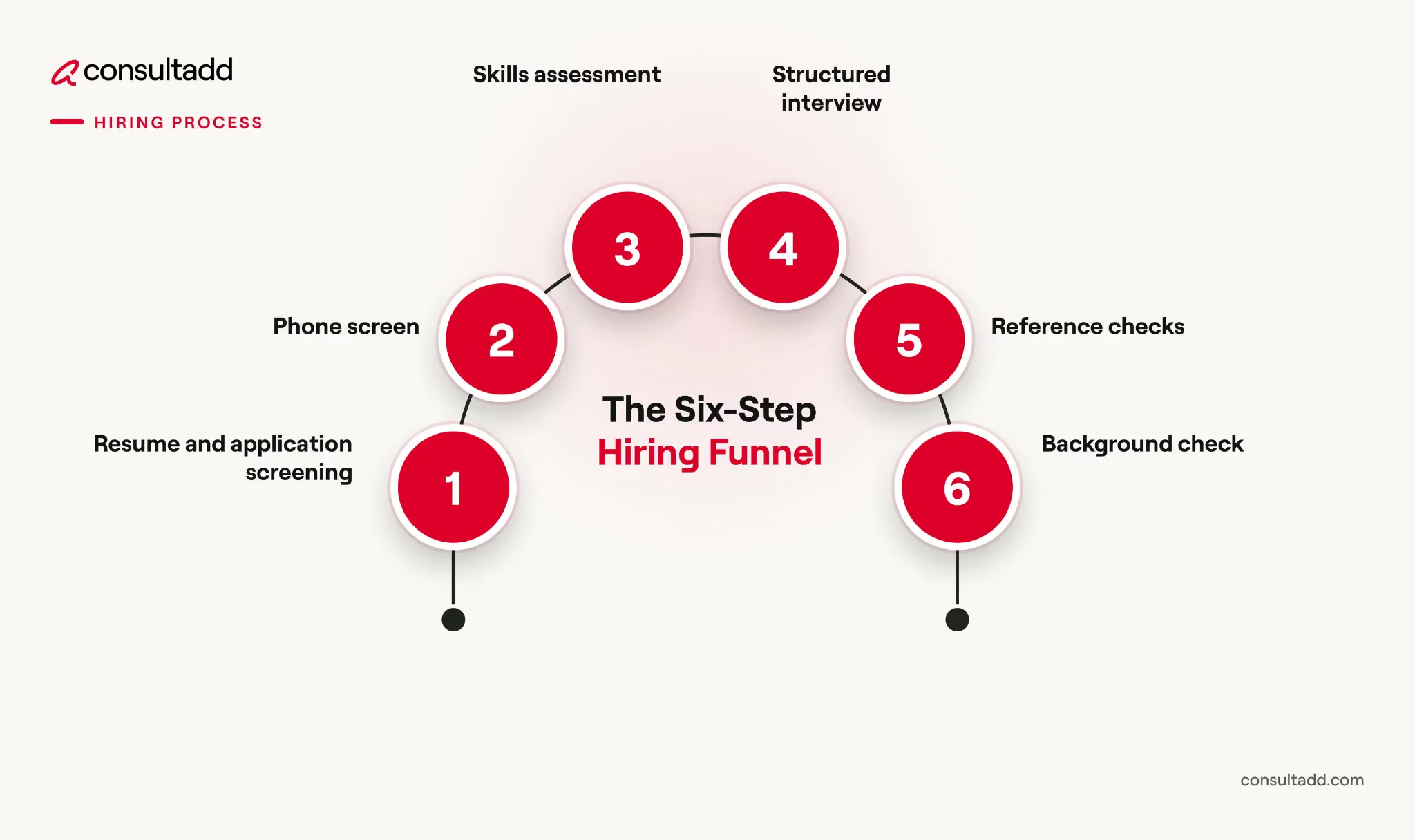
High volume hiring needs a funnel built for throughput from day one: standardized screening criteria, faster scheduling, and enough automation that your recruiters aren't buried before lunch.
Why high volume hiring strategies break down
1. The volume trap
Most teams assume the bottleneck is sourcing, so they throw more job boards and more ad spend at the problem. But candidates usually aren't the issue.
The real bottleneck is almost always screening and scheduling. A recruiter manually reviewing 400 resumes for a single requisition will always fall behind, no matter how good the sourcing was.
Gartner's research on 2026 talent acquisition trends points to the same thing: high-volume, low-complexity roles are the roles best suited for an AI-first approach, precisely because the work is repetitive and the risk of getting it slightly wrong is lower than it is for a senior hire.
2. The compliance blind spot
Speed without structure creates legal exposure. When you're moving fast on visa documentation, background checks, and onboarding paperwork, corners get cut, and that's where fines and bad hires come from.
Anyone who has handled work authorization at scale knows this is where a rushed process turns into a six-month cleanup job.
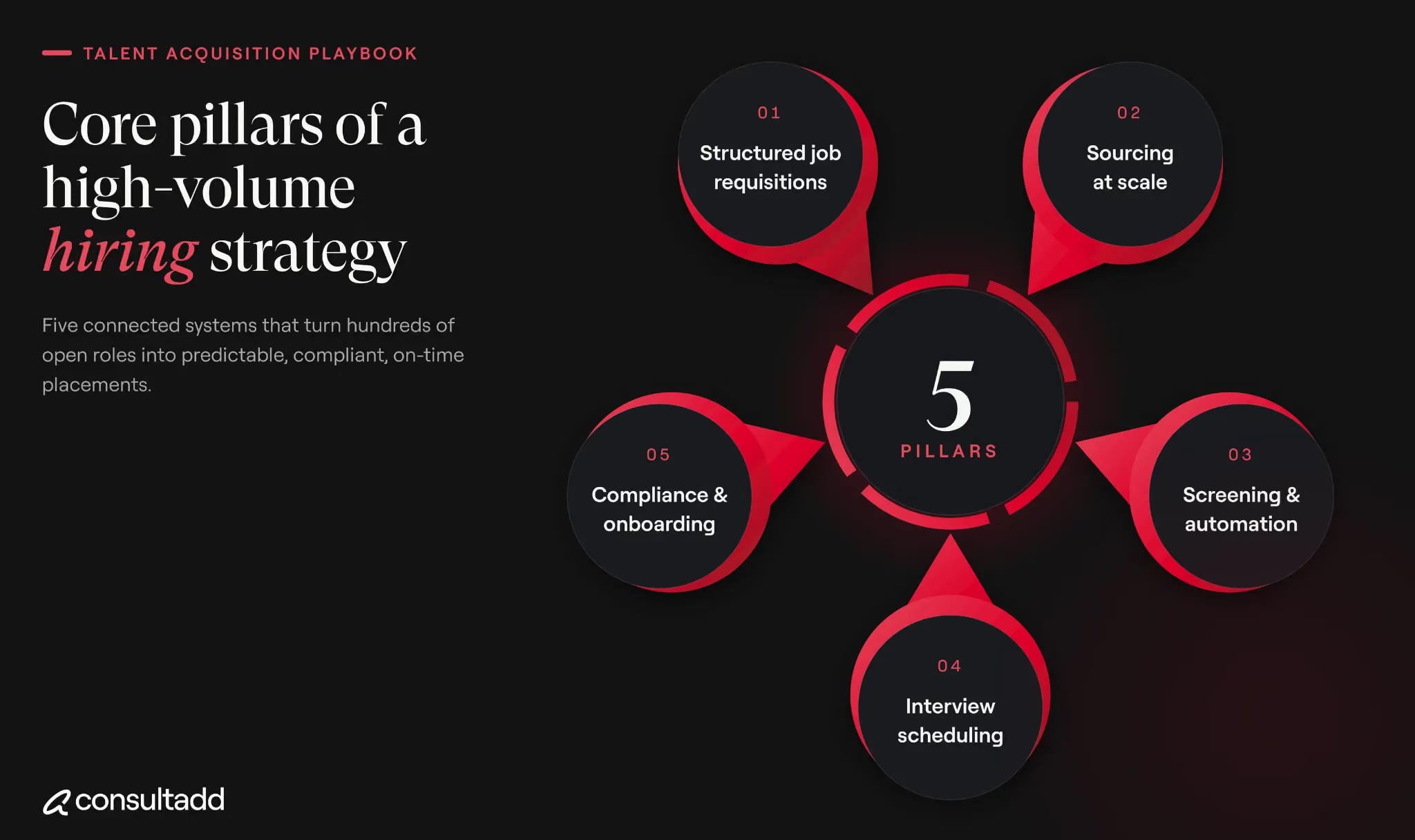
Core pillars of a high volume hiring strategy
1. Structured job requisitions
- Every role in a high volume batch should map to a template: same core screening questions, same must-have qualifications, same approval chain.
- Without this, every requisition becomes its own one-off project, and that's how timelines slip.
2. Sourcing at scale
- Job boards, referral programs, and university partnerships each play a different role.
- University partnerships in particular give you a steady stream of candidates for entry-level and technical roles instead of scrambling every time a contract lands.
3. Screening and automation
- This is where most of the time savings live.
- Resume parsing, skills-based filtering, and automated pre-screening questions cut the pile down to a manageable shortlist before a human ever looks at it.
For a deeper look at how work authorization fits into a fast hiring process, our blog on C2C contract hiring solutions walks through how staffing structures affect compliance and speed together.
4. Interview scheduling
- Coordinating interviews for high volume roles by email is a losing game.
- Self-scheduling tools and structured interview slots keep candidates moving instead of going cold waiting for a reply.
5. Compliance and onboarding
- Visa sponsorship, background checks, and documentation need a standard checklist, not case-by-case handling.
Building your high volume recruitment process step by step
Step 1: Forecast demand before you post a single role.
Look at historical turnover, seasonal patterns, and upcoming contracts. Guessing at volume is how teams end up under-resourced in week three of a hiring push.
Step 2: Standardize the funnel.
Same stages, same scorecards, same decision criteria across every requisition in the batch. This is what makes the process scalable instead of chaotic.
Step 3: Automate repetitive work.
Resume screening, scheduling, and status updates to candidates should run without a human touching every single one. Save your recruiters' time for interviews and final calls.
Step 4: Track the right metrics.
Time-to-fill, cost-per-hire, and offer-acceptance rate tell you if the process is actually working, not just moving.
We cover this in more depth in our post on reducing time-to-hire without sacrificing quality.
Step 5: Build in a feedback loop.
Ask hiring managers what's working after each batch. A high volume hiring strategy that doesn't improve batch over batch isn't really a strategy, it's just a rush.
High volume hiring vs. traditional hiring
Metrics worth tracking in a high volume hiring strategy
Common mistakes in high volume recruiting
The biggest one is skipping reference checks to save time. It feels reasonable when you're filling forty roles in two weeks, but a bad hire at volume costs just as much as a bad hire anywhere else, sometimes more, because it repeats across every location using the same flawed process.
Our guide on reference check questions hiring managers should ask covers how to keep this step fast without cutting it out entirely.
The second mistake is treating every role the same. A warehouse associate role and a help desk technician role don't need the same screening depth, and forcing them through one identical funnel slows down the simple roles and under-vets the complex ones.
Mistakes and fixes at a glance
Start Strong With Consultadd
With 15 years in business and 5,000+ successful staffing engagements, we don't just fill roles, we build reliability into your process. We've supported 65 staffing companies in the past year alone and maintain MSAs with industry leaders like Robert Half and TEKsystems.
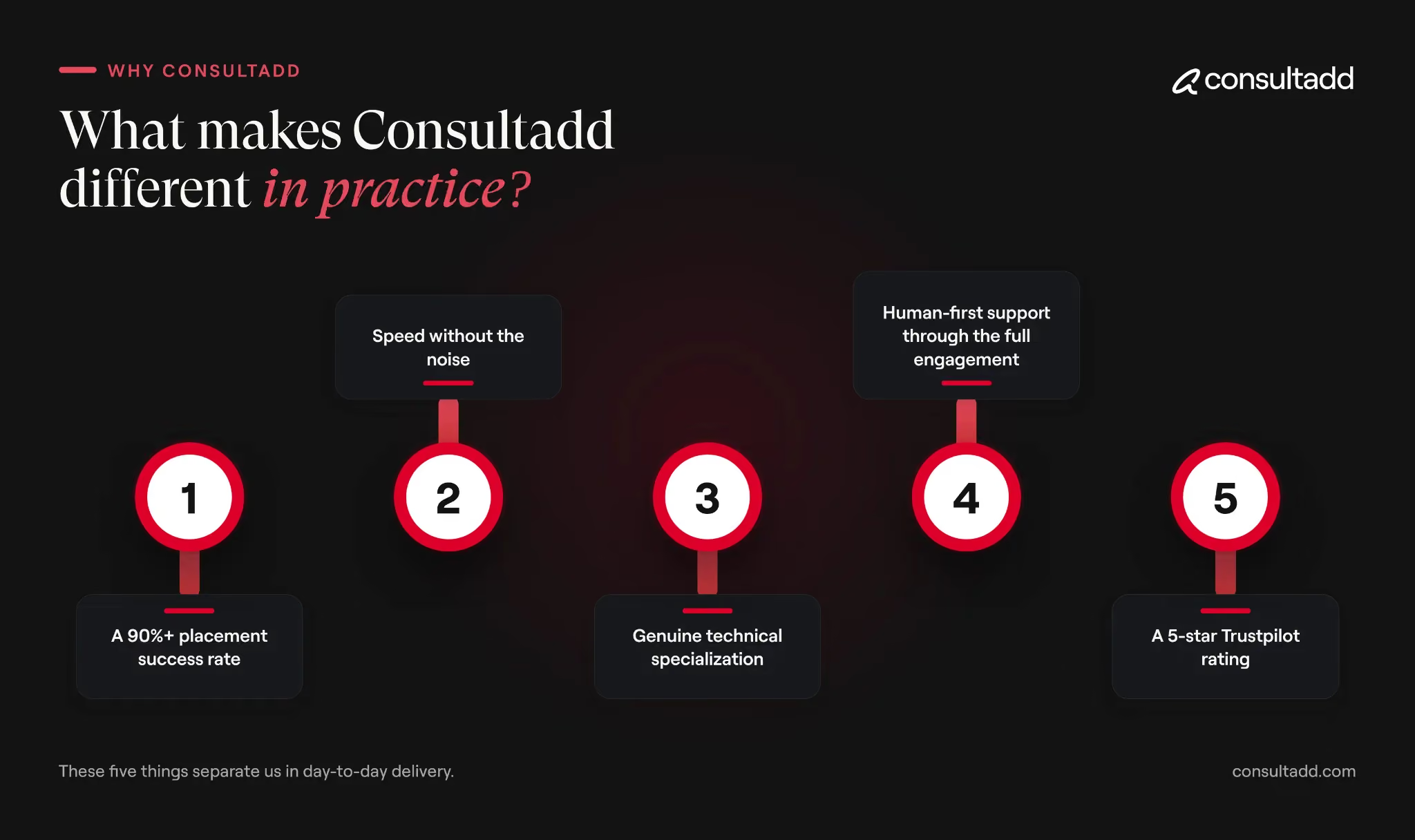
Here's what working with Consultadd looks like:
- Talent sourced in under 24 hours
- Ready-to-deploy candidates, vetted for experience and compliance
- Lower turnover risk: we match long-term goals, not just short-term needs
- Seamless compliance: visa, documentation, onboarding? Handled.
- Dedicated 1:1 account managers for responsive, personalized support
- Top 100 candidate matches delivered in the past year
- Strong partnerships with universities to tap into fresh, committed talent
- Post-placement support so your investment grows beyond day one
For candidates, your next opportunity is more than just a job title, it's a chance to build skills, gain experience, and move your career forward. At Consultadd, we connect technology professionals with projects and employers that align with their goals, whether they're looking for contract, contract-to-hire, or long-term opportunities.
The tech job market moves fast, but the right guidance can make all the difference. Ready to take the next step in your career journey? Explore Opportunities >>
Key Takeaways
- A high volume hiring strategy needs its own process, built for throughput, not a faster version of a normal hiring funnel.
- Screening and scheduling are usually the real bottleneck, not sourcing.
- Standardized requisitions and automation free up recruiters for the parts of the job that actually need a human.
- Tracking time-to-fill, cost-per-hire, and early turnover together shows whether speed is coming at the cost of quality.
- Working with an experienced staffing partner like Consultadd takes the sourcing, vetting, and compliance load off your internal team.
FAQs
What is a high volume hiring strategy?
It's a recruiting approach built specifically for filling many roles in a short window, usually through standardized screening, automation, and structured interview scheduling. It differs from regular hiring because it's designed for throughput rather than depth on any single candidate.
How is high volume hiring different from regular recruiting?
Regular recruiting can afford a slower, more individualized process because there are only a few open roles at a time. High volume hiring needs consistent templates and automated screening because dozens or hundreds of requisitions are moving at once.
What tools help most with high volume hiring?
Applicant tracking systems with automated resume screening, self-scheduling interview tools, and bulk candidate communication features make the biggest difference. The goal is removing repetitive manual work so recruiters can focus on interviews and decisions.
How do you measure success in high volume hiring?
Time-to-fill and cost-per-hire are the starting point, but they should always be paired with quality signals like offer-acceptance rate and 90-day retention. Speed without those checks just hides quality problems until later.
Which industries rely most on high volume hiring?
Retail, logistics, healthcare, hospitality, and IT staffing see the most high volume hiring activity, usually tied to seasonal demand, new contracts, or high turnover in frontline roles.
How can a staffing agency help with high volume hiring?
An experienced staffing partner brings pre-vetted candidate pipelines, handles visa and compliance documentation, and can flex capacity up or down as demand shifts. That takes the operational load off an internal team that's already stretched thin.



.webp)