
.avif)

Introduction
The fastest way to improve the recruitment process is to first find out which specific stage, sourcing, screening, interviewing, or offer and close, is actually causing the delay or losing candidates, and fix that stage directly instead of applying generic advice across the whole pipeline.
Most hiring teams skip this step. They add a job board, tweak a job description, or bring in more interviewers, without knowing whether any of that addresses where the process is actually breaking. That's why so many "improvement" efforts don't move the numbers.
This guide walks through a stage-by-stage way to diagnose your recruitment process, then match the fix to the actual problem rather than the generic one.
TL;DR
- Improving recruitment starts with diagnosis, not tactics. Find which stage is slow or leaky before changing anything.
- SHRM's 2025 benchmarking data shows screening and interviewing each average 8 to 9 days on their own, which is often where time quietly disappears.
- The average nonexecutive cost per hire is $5,475, and every extra day in the pipeline adds to that number, whether or not anyone's tracking it.
- Only 20% of organizations measure quality of hire, so most "improvements" are judged on speed alone, which can hide the cost of a bad hire.
- Fixing the wrong stage doesn't just fail to help. It can add processes for its own sake and slow things down further.
Diagnose before you fix
Recruitment breaks down in one of four places: sourcing, screening, interviewing, or offer and close.
Each stage has different symptoms and different fixes, and applying the wrong fix to the wrong stage is the most common reason improvement efforts stall out.
According to SHRM's 2025 Benchmarking Report, the process from job posting to offer acceptance is highly segmented, with screening and interviewing each averaging 8 to 9 days on their own.
That's useful, because it tells you where time typically piles up even in organizations that consider their process reasonably efficient.
If your screening or interview stage is taking noticeably longer than that, you've found your bottleneck without needing to guess.
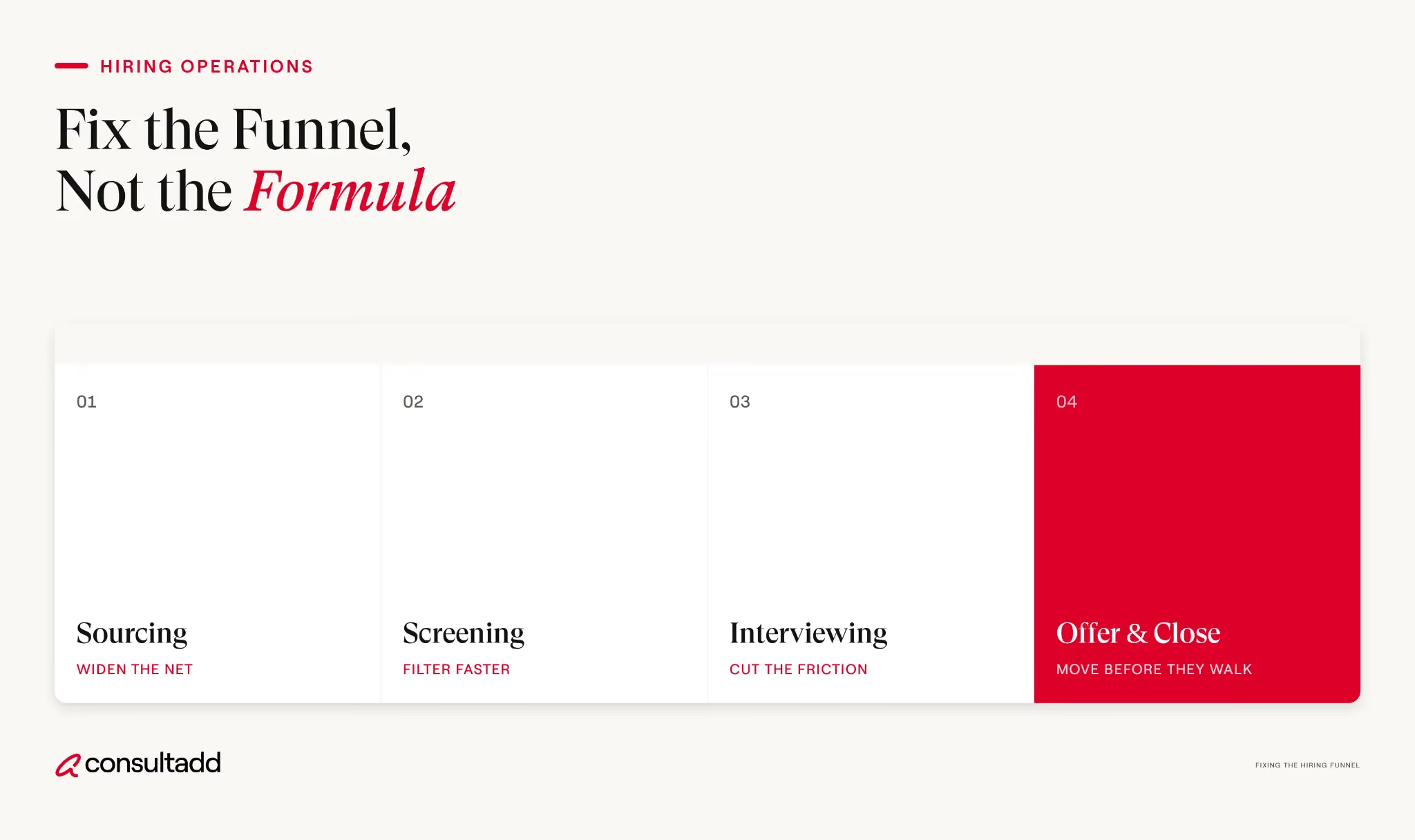
Fix the stage that's actually broken
If sourcing is the problem:
- Rewrite the job posting around what the person will actually do in the first 90 days, not a list of every skill you could imagine wanting.
- Vague postings pull in the wrong applicants and repel qualified ones who don't see themselves in the role.
- Then check whether you're posting in the channels where your target candidates actually look, rather than defaulting to the same job board for every role.
If screening is the problem:
- Set explicit pass/fail criteria before you open a single resume, not after.
- Ambiguous criteria are why resumes sit untouched: nobody wants to be the one who screens out a candidate on a judgment call.
- A simple scorecard with three or four must-haves removes that hesitation and speeds up every review after the first one.
If interviewing is the problem:
- Cut the number of rounds before you optimize any of them.
- Structured interviews, where every candidate answers the same questions scored against the same rubric, consistently predict job performance better than open-ended conversation, and they're also faster to run and compare.
- If scheduling itself is the delay, that's a coordination problem, not a candidate quality problem, and it's usually the easiest one to fix with a shared calendar process.
If offer and close is the problem:
- Map out exactly who needs to approve an offer and how long each approval typically takes.
- Slow internal sign-off is one of the most common reasons a strong candidate accepts somewhere else, and it's entirely within your control to fix, unlike a competitor's counteroffer.
Measure outcomes, not just speed
Here's where a lot of "improved" processes quietly get worse: they get faster without getting better.
SHRM's benchmarking data found that only 20% of organizations formally measure quality of hire, which means most hiring teams are optimizing for time-to-fill and cost-per-hire without any real check on whether the faster process is producing worse hires.
You don't need a dashboard to start. A shared spreadsheet that logs the date a candidate enters and exits each stage will surface the bottleneck faster than most paid tools, because it forces you to actually look at where time goes instead of assuming.
Common mistakes that make the process worse, not better
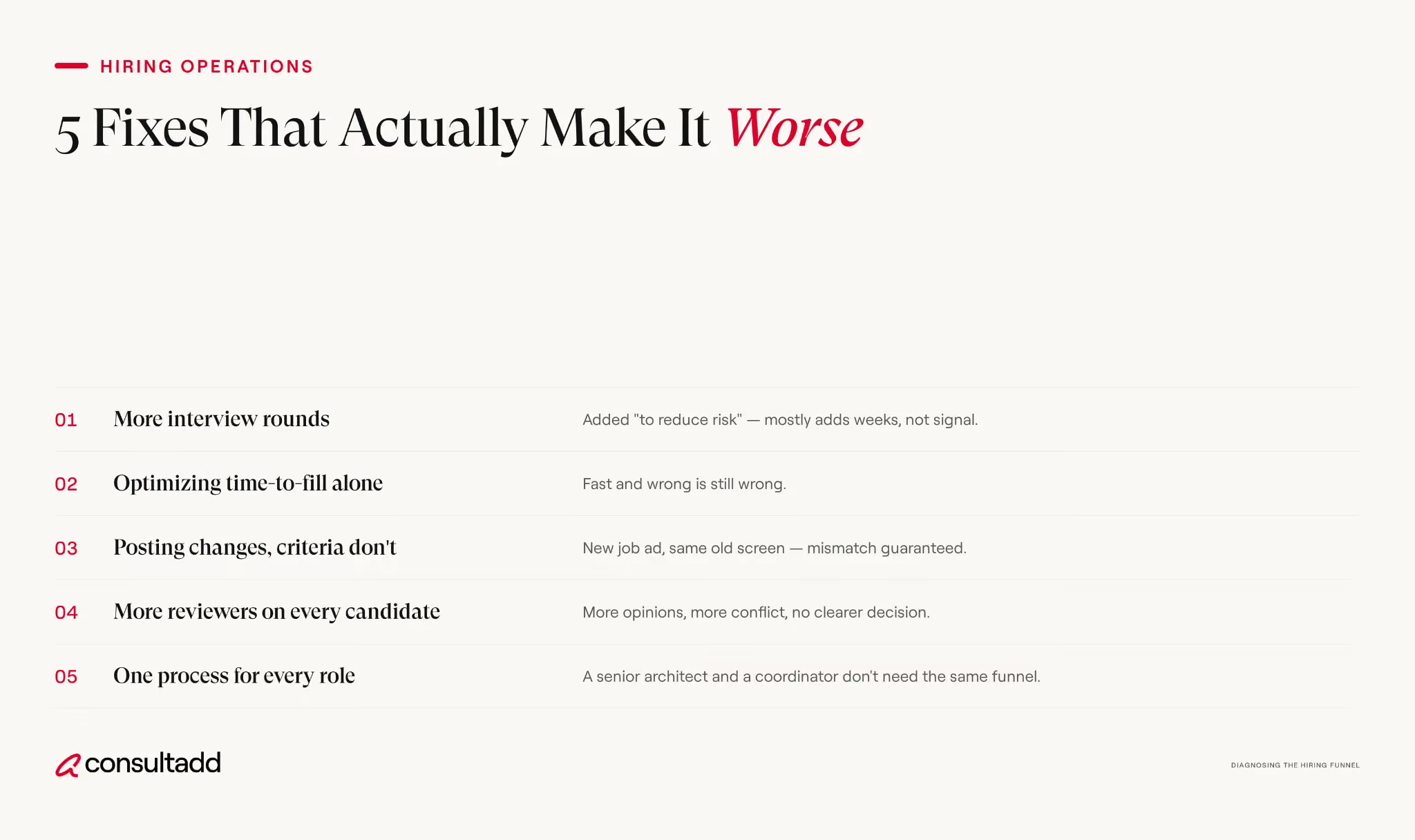
- Adding interview rounds to reduce risk. Every additional round adds days and increases the odds a strong candidate accepts elsewhere. If you don't trust the earlier rounds, fix those rather than stacking more on top.
- Optimizing for time-to-fill alone. A faster process that produces the same or worse quality of hire isn't an improvement; it's a different kind of expensive.
- Changing the job posting without changing the screening criteria. A better posting that still gets screened against vague criteria just produces a bigger pile of resumes nobody moves on.
- Bringing in more people to review candidates. More reviewers usually means more time spent reaching consensus, not faster decisions, unless each reviewer has a distinct, non-overlapping role.
- Treating every open role the same way. A niche technical hire and a high-volume entry-level role break down differently and need different fixes, not the same playbook.
If your process is struggling specifically because of limited internal recruiting capacity rather than a structural issue in the stages above, our overview of what a recruitment partner actually adds to your hiring process covers when outsourcing part of the pipeline makes sense versus when it just shifts the same bottleneck elsewhere.
Start Strong With Consultadd
With 15 years in business and 5,000+ successful staffing engagements, we don't just fill roles, we build reliability into your process. We've supported 65 staffing companies in the past year alone and maintain MSAs with industry leaders like Robert Half and TEKsystems.
Here's what working with Consultadd looks like:
- Talent sourced in under 24 hours
- Ready-to-deploy candidates, vetted for experience and compliance
- Lower turnover risk: we match long-term goals, not just short-term needs
- Seamless compliance: visa, documentation, onboarding? Handled.
- Dedicated 1:1 account managers for responsive, personalized support
- Top 100 candidate matches delivered in the past year
- Strong partnerships with universities to tap into fresh, committed talent
- Post-placement support so your investment grows beyond day one
For candidates, your next opportunity is more than just a job title, it's a chance to build skills, gain experience, and move your career forward. At Consultadd, we connect technology professionals with projects and employers that align with their goals, whether they're looking for contract, contract-to-hire, or long-term opportunities.
The tech job market moves fast, but the right guidance can make all the difference. Ready to take the next step in your career journey? Explore Opportunities >>
Key takeaways
- Diagnose which of the four stages, sourcing, screening, interviewing, or offer and close, is actually causing your delay before applying any fix.
- Screening and interviewing each average 8 to 9 days according to SHRM's 2025 data, which is a useful benchmark for spotting where your process runs long.
- The average cost per hire for non-executive roles is $5,475, and every added day in the pipeline compounds that cost even when nobody's tracking it directly.
- Only 20% of organizations measure quality of hire, so a faster process isn't automatically a better one unless you're checking outcomes too.
- Common fixes that backfire include adding interview rounds, adding reviewers, and optimizing speed without checking whether hire quality held up.
FAQs
What's the fastest way to improve a slow recruitment process?
Identify which stage, sourcing, screening, interviewing, or offer and close, is actually taking the longest before changing anything. Fixing the wrong stage adds effort without improving the timeline.
How long should recruitment stages typically take?
SHRM's 2025 benchmarking data shows screening and interviewing each averaging 8 to 9 days. If either stage in your process is running notably longer, that's likely your bottleneck.
Does a faster recruitment process mean a better one?
Not necessarily. Speed without a quality-of-hire check can hide the cost of rushed decisions. Only 20% of organizations formally track quality of hire, according to SHRM, which means most teams are optimizing on incomplete information.
Should I add more interview rounds to improve hiring decisions?
Generally no. Additional rounds add time and increase the risk of losing strong candidates to faster-moving employers. It's usually better to fix the structure of existing rounds than to add more of them.
What's a simple way to track where my recruitment process is breaking down?
Log the date each candidate enters and exits every stage in a basic spreadsheet. That alone usually reveals the bottleneck without needing dedicated software.
Is it worth using a staffing partner to improve the recruitment process?
It depends on whether the bottleneck is capacity, not enough recruiter time to run sourcing and screening well, or structural, like slow internal approvals. A staffing partner helps with the former but won't fix the latter on its own.
.png)


.png)

.webp)