%20(1).avif)

Introduction
Most companies think they know how candidates feel about their hiring process. Then they run their first survey and find out they were wrong. Knowing how to measure candidate experience is really about replacing that guesswork with numbers you can act on.
The problem is that "candidate experience" sounds soft, like something you sense rather than track. It isn't. There are specific metrics, specific survey points, and specific formulas that tell you exactly where candidates are getting frustrated and where they're staying engaged.
This guide walks through what to measure, when to ask, and what the numbers actually mean once you have them.
TL;DR
- Measuring candidate experience means combining perception metrics (surveys, NPS) with behavioral metrics (drop-off, time-to-hire, acceptance rate).
- Candidate Net Promoter Score and Candidate Satisfaction Score are the two most common survey-based metrics.
- Application drop-off rate and recruiter response time reveal friction points before candidates ever tell you about them.
- Survey timing matters: ask too early and you get incomplete impressions, ask too late and candidates won't respond.
- A hiring market where job openings still outpace hires makes this data more valuable, not less.
Start with the two types of metrics
Candidate experience data splits into two categories, and most companies only track one.
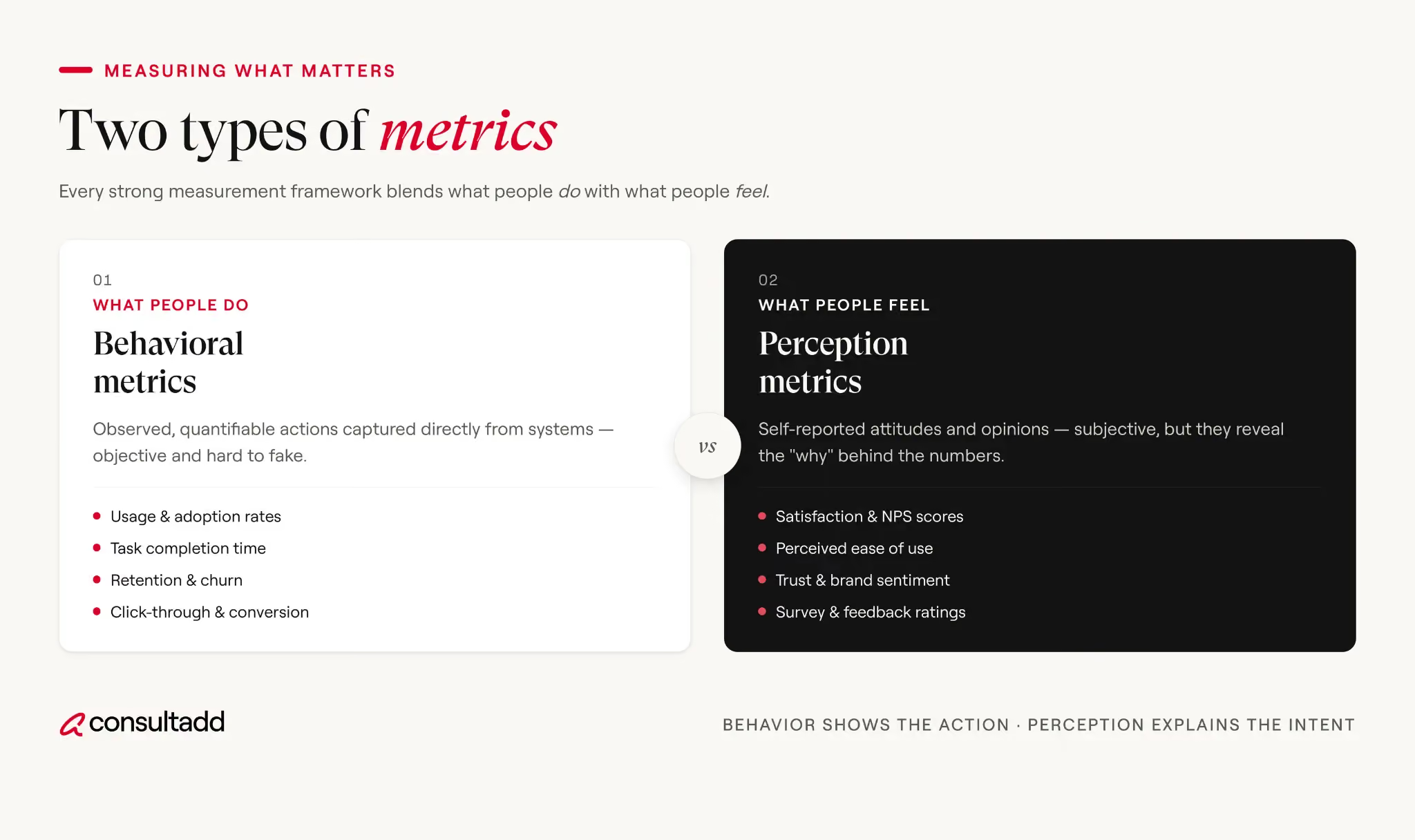
Perception metrics capture how candidates say they feel. This is survey data: satisfaction scores, NPS, open-ended feedback.
Behavioral metrics capture what candidates actually do. This is process data: how many drop off mid-application, how long it takes to get an offer out, how often that offer gets accepted.
You need both.
- A high satisfaction score paired with a falling offer acceptance rate usually points to a pay or timeline problem, not an experience problem.
- A low satisfaction score paired with strong acceptance rates might mean candidates are tolerating friction because they don't have other options right now.
Core candidate experience metrics to track
None of these numbers means much in isolation. A 42-day time to hire sounds slow until you check it against your industry average and your offer acceptance rate. If both are healthy, the number on its own isn't the problem.
When to survey candidates
Timing changes what kind of feedback you get. Ask right after an interview and candidates are still processing; ask weeks later and most won't respond at all.
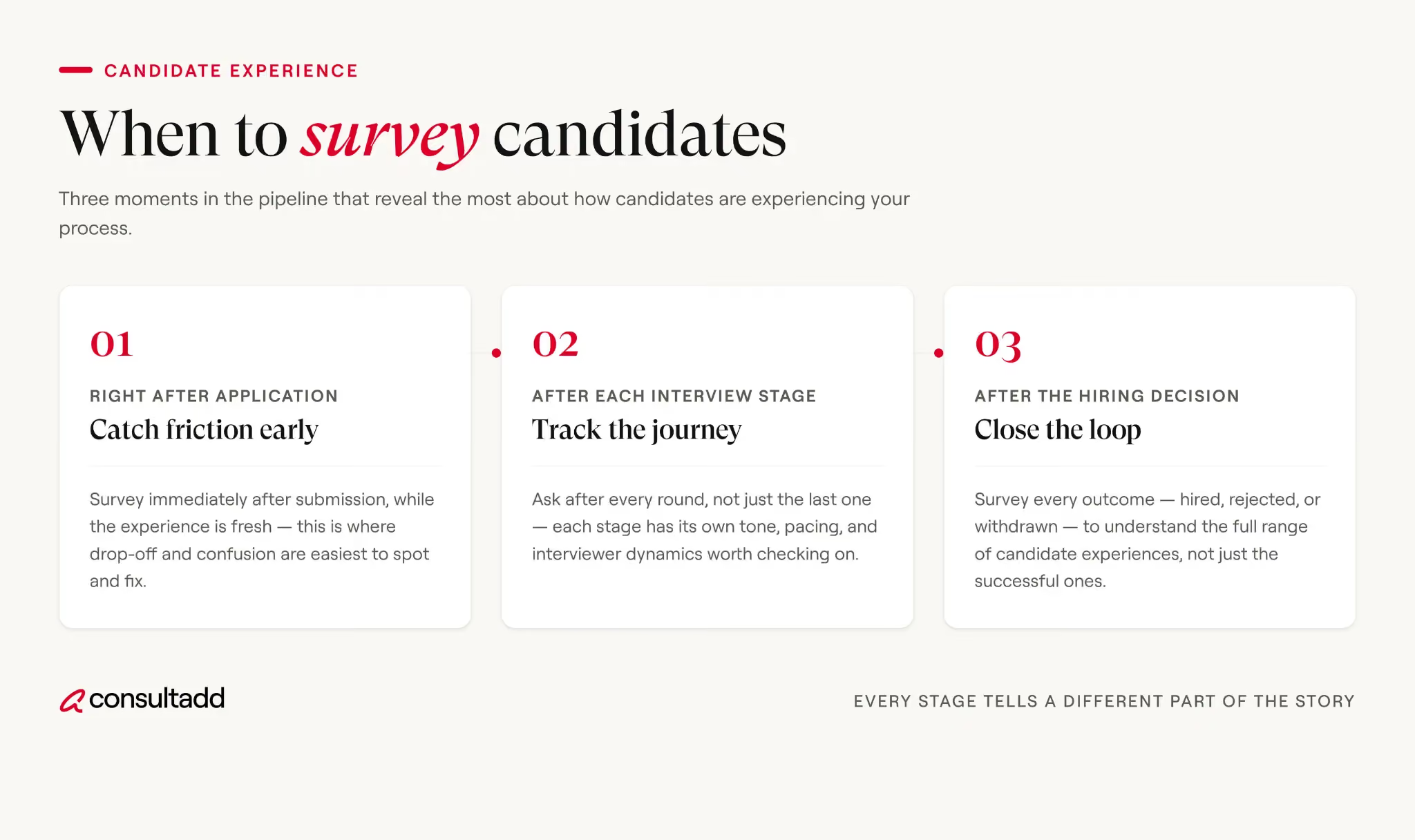
A reasonable cadence looks like this:
- Right after application submission, to catch friction in the application process itself.
- After each interview stage, the interaction is still fresh.
- After the hiring decision, whether the candidate was hired, rejected, or withdrew.
Rejected candidates are worth surveying too. They have no reason to soften their answers, and their feedback tends to be more direct than feedback from candidates you're about to hire.
Building a simple measurement checklist
What the numbers usually reveal
A few patterns show up often enough to be worth naming directly.
High application drop-off, low time to hire. Your process might be fast once someone applies, but the application form itself is the bottleneck. Long forms, redundant fields, and mandatory account creation all push this number up.
Good satisfaction scores, weak offer acceptance. This usually isn't an experience problem. Check compensation benchmarks and how long it takes between the final interview and the offer letter going out.
Slow recruiter response time across the board. This is the single easiest metric to fix, and it tends to move every other number when it improves.
Candidates consistently name unclear or delayed communication as one of the bigger frustrations in the hiring process, based on labor market research from the Society for Human Resource Management.
Why this matters more in a tight hiring market
The labor market context changes how much candidate experience actually costs you.
Recent Bureau of Labor Statistics data shows the hires rate sitting at 3.4% as of June 2026, with job openings still running ahead of actual hires in several months this year.
When employers are competing for a smaller pool of active, engaged candidates, a clunky process pushes good talent toward whichever competitor moves faster.
LinkedIn Talent Solutions research also points out that candidate experience starts before someone applies, shaped by employer reviews and reputation candidates encounter first.
That's worth remembering when the data only looks at what happens after someone hits submit.
Turning data into action
Measuring candidate experience is only useful if it changes something. A few practical moves:
- If drop-off spikes at a specific application field, remove or simplify that field first.
- If recruiter response time is inconsistent, set a standard response window and track adherence to it, not just the average.
- If cNPS is strong among hired candidates but weak among rejected ones, look at how rejection is communicated, not just how interviews are run.
Companies building out a full recruiting process from scratch often benefit from pairing this measurement work with a broader look at how to hire dedicated developers efficiently, since technical hiring tends to have its own drop-off points around assessments and take-home tests.
Start Strong With Consultadd
With 15 years in business and 5,000+ successful staffing engagements, we don't just fill roles, we build reliability into your process. We've supported 65 staffing companies in the past year alone and maintain MSAs with industry leaders like Robert Half and TEKsystems.
Here's what working with Consultadd looks like:
- Talent sourced in under 24 hours
- Ready-to-deploy candidates, vetted for experience and compliance
- Lower turnover risk: we match long-term goals, not just short-term needs
- Seamless compliance: visa, documentation, onboarding? Handled.
- Dedicated 1:1 account managers for responsive, personalized support
- Top 100 candidate matches delivered in the past year
- Strong partnerships with universities to tap into fresh, committed talent
- Post-placement support so your investment grows beyond day one
For candidates, your next opportunity is more than just a job title, it's a chance to build skills, gain experience, and move your career forward. At Consultadd, we connect technology professionals with projects and employers that align with their goals, whether they're looking for contract, contract-to-hire, or long-term opportunities.
The tech job market moves fast, but the right guidance can make all the difference. Ready to take the next step in your career journey? Explore Opportunities >>
Key takeaways
- Measuring candidate experience means tracking both perception metrics like cNPS and behavioral metrics like drop-off rate.
- Survey timing shapes response quality; ask soon after each touchpoint, not weeks later.
- Rejected candidates give the most honest feedback since they have nothing to gain by being diplomatic.
- Recruiter response time is often the fastest metric to improve and tends to move other numbers with it.
- A tighter labor market raises the cost of a poor process, since strong candidates have less patience for friction.
FAQs
What is the best metric for measuring candidate experience?
There isn't a single best metric. Candidate Net Promoter Score gives you a perception snapshot, while application drop-off rate shows you where the process itself is failing. Most recruiting teams need at least one metric from each category.
How often should we survey candidates?
Short surveys at each key touchpoint, application, interview, and decision, work better than one long survey at the end. This catches issues while they're still fresh instead of relying on memory weeks later.
Should we survey candidates we didn't hire?
Yes. Rejected candidates tend to give more direct feedback since they aren't trying to stay in your good graces. Skipping this group means missing some of your most useful data.
What's a good response rate for candidate experience surveys?
Response rates vary by industry, but short surveys sent immediately after a touchpoint typically outperform longer ones sent later. If your response rate is consistently low, the survey length or timing is usually the issue, not candidate apathy.
How does candidate experience affect offer acceptance?
Poor experience during interviews or slow communication can push candidates toward other offers before yours arrives. Tracking both metrics together shows whether a weak acceptance rate is an experience problem or a compensation problem.
Can small companies measure candidate experience without expensive tools?
Yes. A short survey tool and a shared spreadsheet can track the core metrics. What matters more than the tooling is consistency: asking the same questions at the same stages every time.



.webp)