
.avif)

Introduction
Your team needs a cloud engineer for a six-month migration. Hiring a permanent one takes months, costs a full salary plus benefits, and leaves you overstaffed once the project ends.
That mismatch, between how fast tech work moves and how slowly permanent hiring works, is exactly the gap IT contract staffing fills. IT contract staffing services connect companies with technology professionals on a temporary or project basis.
Instead of hiring a developer or data scientist as a permanent employee, you engage them through a staffing agency for a defined period. You get the skills and the output. The agency handles the employment.
For a lot of companies in 2026, this has stopped being a backup plan and become the default way to hire for specialized or time-bound work.
This guide covers how the model works, what it costs, the benefits and trade-offs, and how to choose a partner worth your money.
TL;DR
- IT contract staffing services place tech professionals with your company on a temporary or project basis through a staffing agency.
- The agency is the legal employer, handling payroll, benefits, taxes, and compliance, while you direct the work.
- The model is fast and flexible: roles fill in weeks, and you scale the team up or down without permanent overhead.
- You pay the agency a bill rate that covers the contractor's pay plus employment costs and margin. Contractors never pay to be placed.
- The winning approach in 2026 is a hybrid workforce: a core full-time team supplemented by contract specialists for project needs.
What are IT contract staffing services?
IT contract staffing services are a way to bring technology talent onto a project without making a permanent hire. A staffing agency sources, screens, and places a professional with your company for a set period, usually somewhere between three months and two years.
The roles cover the full range of modern tech work: software developers, cloud engineers, cybersecurity specialists, data scientists, DevOps engineers, and increasingly AI professionals. If it's a skill your team needs for a defined stretch, contract staffing can supply it.
This sits within the broader category of contingent workforce management, and it's a big and growing market.
According to Staffing Industry Analysts, US IT staffing is worth roughly $37 billion and ranks among the fastest-growing staffing segments, driven by a widening gap between available tech talent and open roles.
The reason it keeps growing is simple. Technology needs shift faster than permanent hiring cycles can keep up with, and companies want to move at the speed of the work.
How IT contract staffing works
The mechanics are more straightforward than people expect. The key thing to understand is who employs whom.
When you engage IT contract staffing services, the agency becomes the contractor's legal employer. The agency handles payroll, benefits, tax withholding, and the compliance obligations that come with employment. You direct the contractor's work and get their output. Neither side has made a permanent commitment.
In exchange, you pay the agency a bill rate. That rate covers the contractor's pay, the employment costs the agency carries, and the agency's margin. You're not managing W-2s or benefits enrollment for a short-term worker. That's the agency's job.
Here's the typical flow from need to productive contractor:
- You define the role, skills, and timeline with the agency.
- The agency sources and screens candidates from its talent pool.
- You interview a short list of pre-vetted professionals.
- The agency handles the offer, onboarding, and paperwork.
- The contractor starts, often within weeks, and you manage the day-to-day work.
Because the agency already has vetted talent on hand, the slowest parts of hiring get compressed. A good partner can source and place talent in a fraction of the time an internal team spends starting from scratch.
Types of IT staffing arrangements
"Contract staffing" is really a family of models. Picking the right one depends on how certain you are about the role and how long you'll need it.
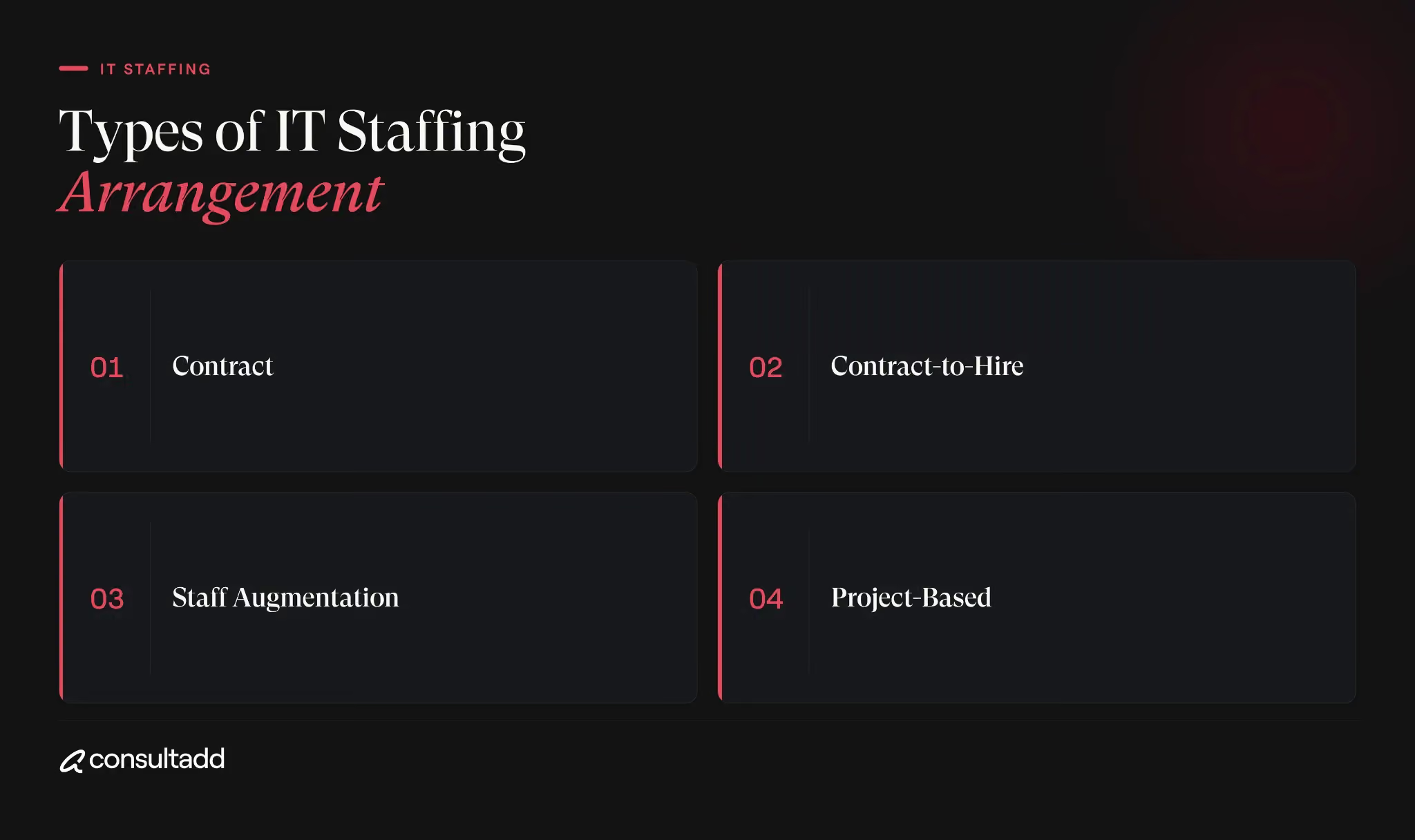
Contract-to-hire deserves a special mention, because it solves a common worry. It lets you evaluate someone on real work before offering a permanent role, which lowers the risk of a bad hire on both sides.
Consultadd's breakdown of the contract-to-hire model covers when that "try before you buy" approach makes sense.
The benefits of IT contract staffing services
The appeal comes down to speed, flexibility, and access to talent you couldn't easily hire on your own.
Speed is the headline.
- Contract roles fill in weeks rather than the months a permanent search can take, because the agency is working from a pre-screened pool instead of starting cold.
- When a project can't wait, that difference is the whole point.
Flexibility is close behind.
- You scale your team up for a launch and back down when it ships, without carrying salaries and benefits you no longer need.
- This is why the strongest 2026 workforce models are hybrid: a stable core team of full-time employees, supported by contract specialists for project or specialized work.
There's also access.
- A good staffing partner sources nationally, not just locally, so you reach talent regardless of geography.
- Given that most contract IT placements are now remote or hybrid, that widens your candidate pool considerably.
- And because demand for tech skills keeps outpacing supply, per the Bureau of Labor Statistics, that reach matters more each year.
One honest trade-off worth naming: contractors move on when the contract ends, so institutional knowledge can walk out the door. That's a reason to keep core, long-term work with full-time staff and use contractors for what they do best.
What IT contract staffing costs
Cost is where the model is often misunderstood, so it helps to separate the two ways staffing agencies charge.
For contract placements, you pay a bill rate: an hourly rate that bundles the contractor's pay, employment costs like taxes and benefits, and the agency's margin. You're paying for time and output, with the employer burden handled for you.
For permanent placements, agencies usually charge a contingency fee, typically 15 to 25% of the hired candidate's first-year salary, paid only when a hire is made. Contract staffing works differently because there's no permanent hire to place.
One point that should be non-negotiable: legitimate staffing agencies are paid by the employer, never the candidate. If a service asks a job seeker to pay a fee to be placed, treat that as a red flag.
The value calculation isn't just the rate. Factor in the months of internal recruiting time you save, the overhead you avoid, and the cost of leaving a project understaffed while you search. Seen that way, the bill rate often looks reasonable.
Compliance and worker classification
This is the part companies underestimate, and it's where a good partner earns its keep.
Contract staffing carries real compliance weight. Worker classification, whether someone is properly treated as an employee or an independent contractor, is governed by IRS rules, and getting it wrong can mean back taxes and penalties. When the agency is the W-2 employer of record, that burden sits with them rather than you.
Work authorization adds another layer, especially in tech, where many contractors are visa holders. The engagement structure, often W2 versus corp-to-corp, depends on the contractor's authorization and shapes the agency's compliance duties.
Consultadd's look at W2 vs C2C for visa holders explains how those models differ and who carries responsibility in each.
The practical upside of using a reputable partner is that they absorb this complexity. Verification, documentation, and classification become their problem to manage, not yours to untangle after the fact.
How to choose an IT contract staffing partner
Not all staffing agencies are equal, and the wrong one costs you time and quality. Here's what actually separates a strong partner from a résumé factory.
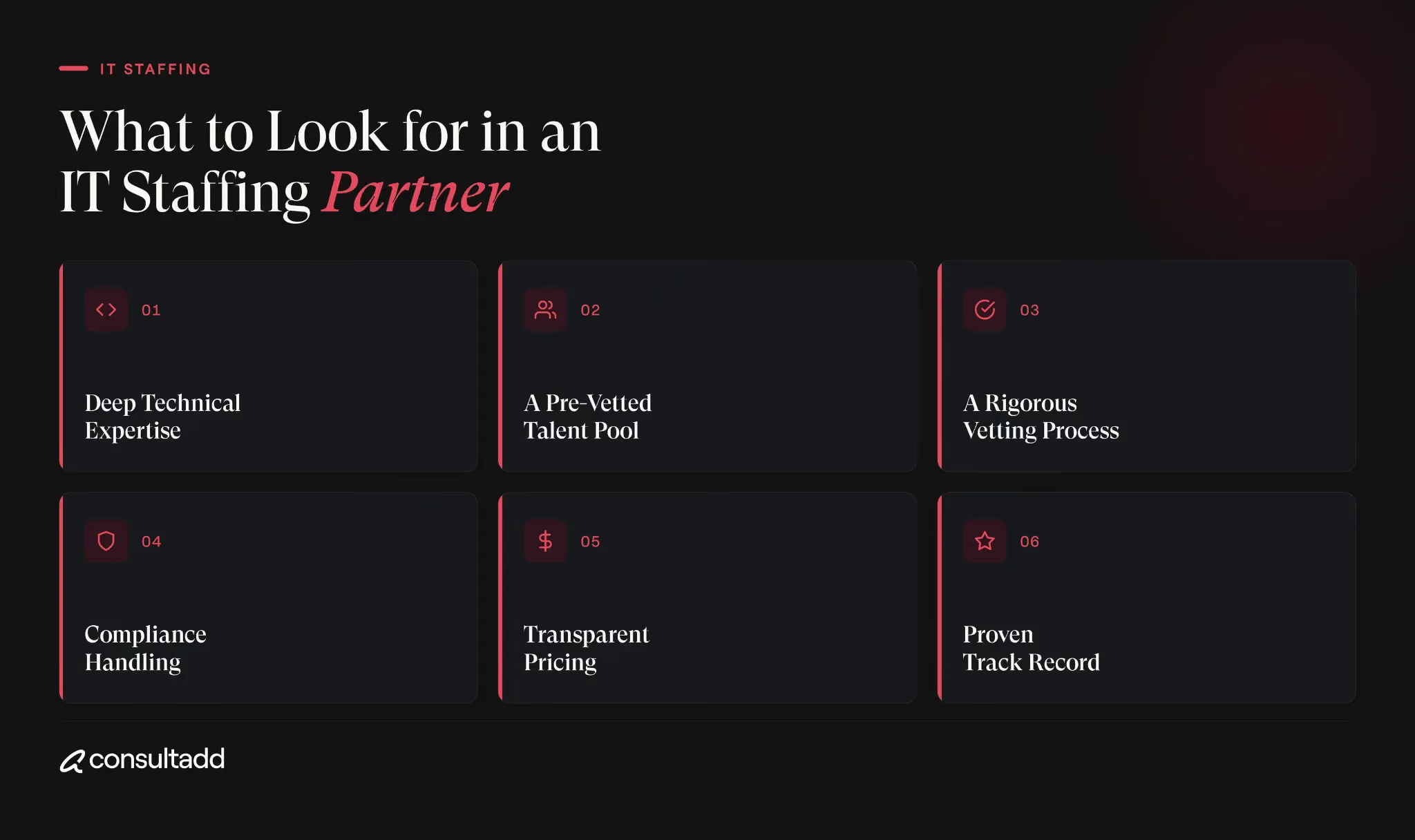
The vetting process is worth probing hardest. Ask how candidates are screened for skills, not just availability.
A structured candidate vetting process is what keeps quality high, and Consultadd's guide to technical recruitment goes deeper on what good technical screening looks like.
The right partner does more than fill a seat. They understand your stack, hand you people who are ready on day one, and take the compliance and paperwork off your plate so you can focus on the work.
Start Strong With Consultadd
With 15 years in business and 5,000+ successful staffing engagements, we don't just fill roles, we build reliability into your process. We've supported 65 staffing companies in the past year alone and maintain MSAs with industry leaders like Robert Half and TEKsystems.
Here's what working with Consultadd looks like:
- Talent sourced in under 24 hours
- Ready-to-deploy candidates, vetted for experience and compliance
- Lower turnover risk: we match long-term goals, not just short-term needs
- Seamless compliance: visa, documentation, onboarding? Handled.
- Dedicated 1:1 account managers for responsive, personalized support
- Top 100 candidate matches delivered in the past year
- Strong partnerships with universities to tap into fresh, committed talent
- Post-placement support so your investment grows beyond day one
For candidates, your next opportunity is more than just a job title, it's a chance to build skills, gain experience, and move your career forward. At Consultadd, we connect technology professionals with projects and employers that align with their goals, whether they're looking for contract, contract-to-hire, or long-term opportunities.
The tech job market moves fast, but the right guidance can make all the difference. Ready to take the next step in your career journey? Explore Opportunities >>
Key takeaways
- IT contract staffing services place tech professionals with your company on a temporary or project basis through a staffing agency.
- The agency is the legal employer and handles payroll, benefits, taxes, and compliance, while you direct the work.
- The model fills roles in weeks and lets you scale up or down without permanent overhead.
- You pay a bill rate for contract work, and legitimate agencies charge the employer, never the candidate.
- A strong partner combines technical expertise, rigorous vetting, and compliance handling, so screen for all three.
FAQs
What are IT contract staffing services?
IT contract staffing services connect companies with technology professionals on a temporary or project basis through a staffing agency. Instead of making a permanent hire, you engage a developer, engineer, or specialist for a defined period. The agency employs the worker and handles payroll and compliance, while you direct the work.
How much do IT contract staffing services cost?
For contract placements, you pay the agency an hourly bill rate that covers the contractor's pay, employment costs, and the agency's margin. There's usually no separate placement fee for contract work, unlike permanent hiring, where agencies often charge 15 to 25% of first-year salary. The exact bill rate depends on the role, skills, and seniority.
What's the difference between contract staffing and contract-to-hire?
Contract staffing places a worker for a defined period with no expectation of a permanent role. Contract-to-hire starts as a contract with the understanding that the client may convert the worker to a permanent employee after a trial, often three to six months. Contract-to-hire is useful when you want to test fit before committing.
Do I pay the staffing agency or the contractor?
You pay the staffing agency a bill rate, and the agency pays the contractor. The agency handles payroll, taxes, and benefits as the worker's employer of record. Legitimate agencies are always paid by the employer, so a genuine service will never ask the contractor to pay a placement fee.
Who is the legal employer of a contract worker?
In a standard contract staffing arrangement, the staffing agency is the legal employer, or employer of record. That means the agency is responsible for payroll, tax withholding, benefits, and worker classification compliance. You direct the contractor's daily work but don't carry the employment obligations.
Are IT contract staffing services good for remote roles?
Yes. Most contract IT placements in 2026 are remote or hybrid, and staffing agencies source nationally rather than just locally. That lets you access strong talent regardless of location, and sometimes reach skilled professionals in lower-cost markets. It's one of the reasons contract staffing has become the default for many tech roles.


.webp)

.png)
