.avif)

Introduction
If you work in staffing or recruiting, fill rate is one of the numbers that keeps you up at night. It's the difference between a thriving recruitment operation and one that's constantly scrambling to meet demand.
Fill rate measures the percentage of open positions your team successfully fills within a specified timeframe. If you have 10 open positions and hire for 8 of them within 30 days, your fill rate is 80%. That sounds straightforward, but the reality is messier. What gets counted as "filled"? How long is the timeframe? Does it matter whether the hire stayed past 90 days?
Understanding what fill rate actually is, how to measure it, and why it matters will help you identify gaps in your recruitment process and fix them before they damage your business.
TL;DR
- Fill rate measures the percentage of open positions filled within a defined period, calculated by dividing positions filled by total open positions.
- Industry benchmark for fill rate varies by role and region, but 75-85% is considered healthy for most staffing operations.
- Low fill rates indicate problems with job descriptions, compensation, sourcing strategy, or candidate screening processes.
- Tracking fill rate alone isn't enough; you also need time-to-fill, offer acceptance rate, and retention metrics for a complete picture.
- Improving fill rate requires speed in screening and hiring, clarity in job descriptions, and realistic expectations about candidate availability.
Understanding fill rate fundamentals
Fill rate is simple in theory but requires careful definition in practice. You're measuring how effectively your recruitment team converts open positions into placements.
The basic formula is straightforward:
Positions Filled ÷ Total Open Positions × 100 = Fill Rate (%)
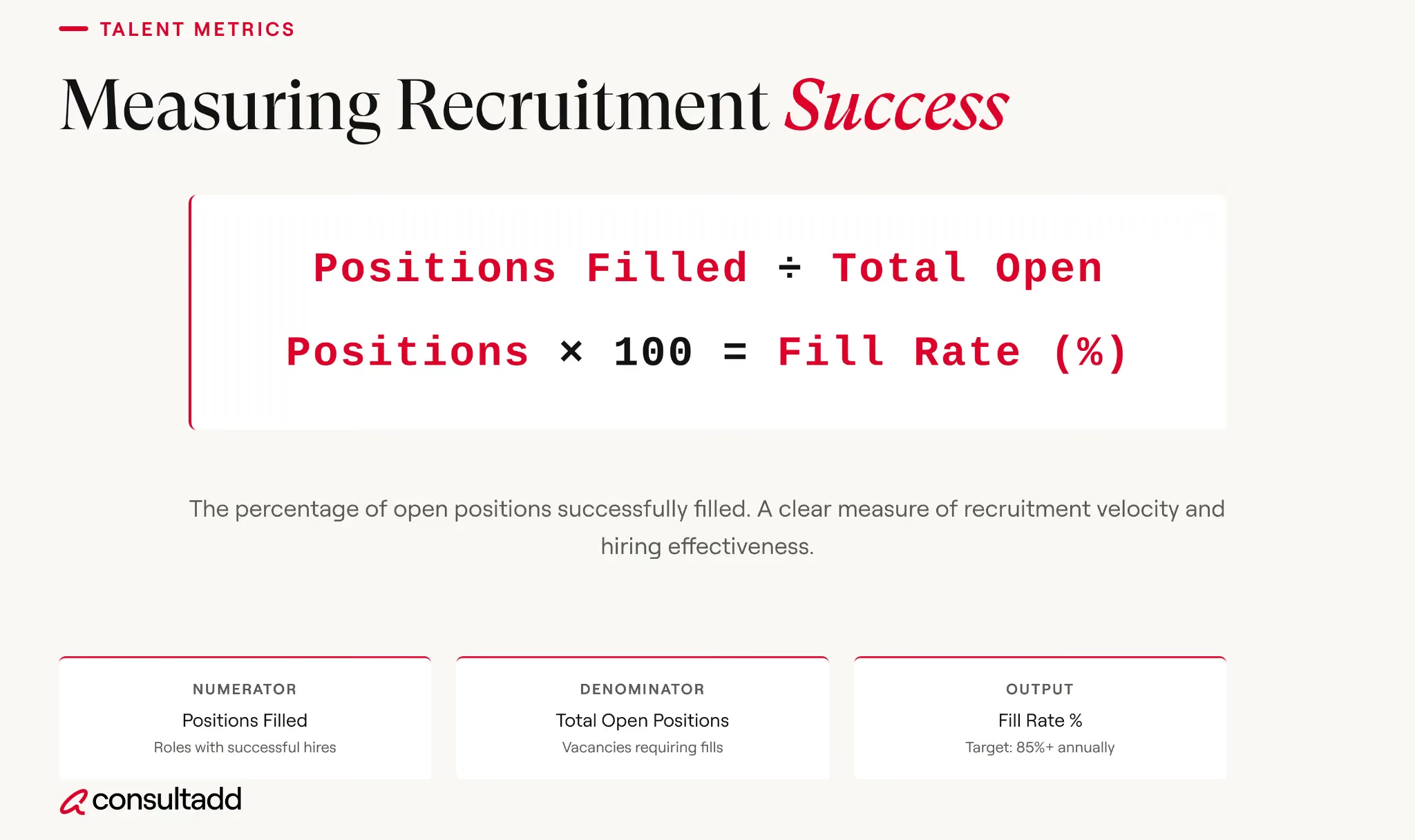
But "positions filled" needs clarification. Are you counting positions that have an accepted offer? Positions where the candidate started? Positions where the candidate is still employed after 90 days?
Most staffing companies define it as positions where a candidate has accepted an offer and begun work. Some track it further and only count placements that lasted 90+ days, which is more honest about whether the hire actually worked out.
The timeframe matters too. Monthly fill rates fluctuate wildly. A bad month where multiple senior roles go unfilled tanks your numbers, but it's often temporary. Quarterly or annual fill rates smooth out these variations and give a clearer picture of your actual performance.
How fill rate differs across industries
Fill rate isn't one-size-fits-all. A technology staffing company's fill rate expectations differ significantly from healthcare staffing or executive recruitment.
Technology roles are consistently harder to fill than administrative roles because supply doesn't match demand. Executive searches have lower fill rates because there are fewer candidates who meet the criteria and they're typically not actively looking. Healthcare has higher requirements because of licensing, but strong demand means placements happen.
Your internal benchmarks matter more than industry averages. If your tech staffing division has historically filled 78% of roles, dropping to 70% is a red flag even if 70% is within the industry range.
Why fill rate matters to your business
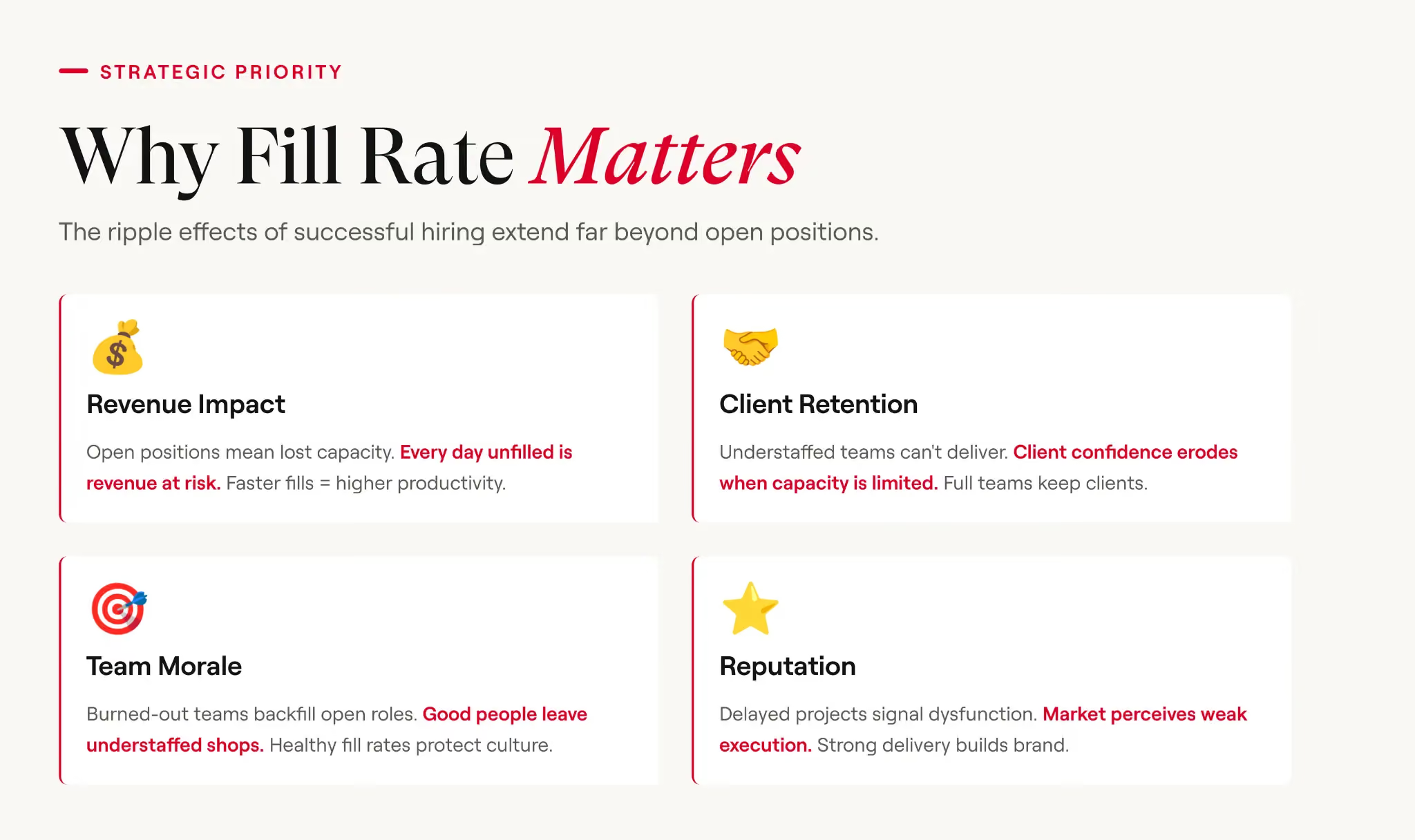
A low fill rate doesn't just mean you're missing placements. It directly impacts revenue, client satisfaction, and team morale.
Revenue impact
If you work on commission or revenue-sharing models, every unfilled position is money left on the table. An unfilled software engineer role might represent $15,000-30,000 in lost revenue. Ten unfilled positions over a quarter means significant business impact.
Client retention
Clients hire staffing companies to solve problems, not create them. If your team consistently can't fill their roles, they'll find another vendor. One client that fires you because of poor fill rates might have generated $100,000+ annually.
Team morale
Recruiters and staffing professionals get demoralized chasing unfillable positions. They spend weeks sourcing and screening candidates, prepare packages and proposals, negotiate with clients, and still can't close the deal. That's a recipe for high turnover in your own recruitment team.
Reputation
In tight labor markets, your reputation is currency. If candidates know your company struggles to place people, they'll be hesitant to engage. If clients know you consistently miss targets, they won't refer you.
What causes low fill rates
Low fill rates always trace back to specific, fixable problems. Finding which one is causing your issue is the key to improvement.
Unrealistic job requirements
The most common culprit is job descriptions that don't match the market. You're asking for five years of experience with a technology that's been around for three years. You're specifying a location in an expensive market but offering below-market compensation. You're listing "required" skills that only 5% of candidates actually have.
Review your unfilled positions. Can you find candidates who match your exact requirements? If the answer is no, your requirements are the problem. Consider which skills are genuinely required versus nice-to-have. Consider whether remote work opens your candidate pool. Consider whether you're asking for seniority levels that are scarcer than you realize.
Weak sourcing
Posting a job on a board and hoping candidates apply is a sourcing strategy that rarely works for competitive roles. You get applicants, yes, but they're often unqualified because job boards attract everyone.
Proactive sourcing changes everything. LinkedIn recruiting, direct outreach to candidates at competing companies, referral programs, university partnerships, and recruiting agencies all bypass the job board problem. They take more effort upfront but deliver better candidates faster.
Poor candidate screening
Some teams screen too conservatively and reject candidates who could do the job. Others screen carelessly and present unqualified candidates to clients. Both hurt fill rate.
Screening should focus on whether candidates can learn and perform, not whether they check every box. Someone with 4.5 years of experience when you asked for five isn't automatically disqualified. Someone who's switching from a related field isn't automatically unsuitable. But someone who lacks fundamental domain knowledge probably is.
Slow hiring processes
If your hiring takes six weeks from application to offer, top candidates will have other jobs by then. Candidates get frustrated. Clients get impatient. Momentum dies.
Compare your hiring speed to competitors. Can you do initial screening within 24 hours? Can you move from screening to interview within two days? Can you make an offer within a week of the final interview? If not, you're losing candidates who have multiple options.
Offer acceptance problems
Sometimes you find qualified candidates and they reject your offers. This usually means compensation is below market, the job description oversold the role, or the candidate interview process revealed problems.
Track your offer acceptance rate separately from fill rate. If you're presenting five candidates for every placement, that's a symptom. It usually means job descriptions aren't accurate, compensation is low, or screening is missing key details.
Measuring fill rate correctly
To track fill rate accurately, you need clear definitions and consistent measurement.
Define your periods. Will you measure monthly, quarterly, or annually? Monthly gives you early warning of problems but fluctuates wildly. Quarterly or annual is more stable but delays problem discovery.
Define what "filled" means. Does it require the candidate to start, to pass probation, or to complete 90 days? Staffing companies usually count it from start date, but some add retention requirements.
Track multiple metrics alongside fill rate:
Fill rate alone doesn't tell the full story. A 90% fill rate with a 60% offer acceptance rate means you're finding candidates but losing them in the process. A 70% fill rate with a 95% offer acceptance rate means you're being selective but very accurate.
Improving your fill rate
Once you know what's causing your problems, improvements follow naturally.
Expand your sourcing channels
Don't rely only on job boards. LinkedIn recruiting, direct outreach, recruitment agencies, referral programs, and universities all bring different candidates. Diversified sourcing is faster and higher-quality than single-channel dependence.
Streamline your hiring process
Candidates talk to multiple companies. Move fast or lose them. Parallel processes (screening while setting up interviews, interview scheduling while preparing offers) save weeks.
Refine your job descriptions
Write descriptions that attract the candidates you can actually find and hire. Be honest about what's required versus preferred. Highlight what makes the role interesting. If remote work is possible, say it. If flexibility exists on experience level, communicate that.
Invest in employer branding
Candidates choose based on reputation. If your company has a strong reputation for supporting employees, offering growth, and treating contractors fairly, you'll attract better candidates faster. If you have the opposite reputation, you'll struggle regardless of compensation.
Use data to predict problems
If you've historically filled 80% of technology roles but 60% of finance roles, invest more sourcing effort in finance positions earlier. If you know it takes 60 days to fill senior positions, start recruiting them earlier than junior roles.
Start Strong With Consultadd
With 15 years in business and 5,000+ successful staffing engagements, we don't just fill roles, we build reliability into your process. We've supported 65 staffing companies in the past year alone and maintain MSAs with industry leaders like Robert Half and TEKsystems.
Here's what working with Consultadd looks like:
- Talent sourced in under 24 hours
- Ready-to-deploy candidates, vetted for experience and compliance
- Lower turnover risk: we match long-term goals, not just short-term needs
- Seamless compliance: visa, documentation, onboarding? Handled.
- Dedicated 1:1 account managers for responsive, personalized support
- Top 100 candidate matches delivered in the past year
- Strong partnerships with universities to tap into fresh, committed talent
- Post-placement support so your investment grows beyond day one
For candidates, your next opportunity is more than just a job title, it's a chance to build skills, gain experience, and move your career forward. At Consultadd, we connect technology professionals with projects and employers that align with their goals, whether they're looking for contract, contract-to-hire, or long-term opportunities.
The tech job market moves fast, but the right guidance can make all the difference. Ready to take the next step in your career journey? Explore Opportunities >>
Key takeaways
- Fill rate measures what percentage of open positions you successfully filled within a timeframe, calculated by dividing positions filled by total open positions.
- Low fill rates result from unrealistic requirements, weak sourcing, poor screening, slow hiring, or offer rejection problems. Find which one applies to you.
- Track fill rate alongside time-to-fill, offer acceptance rate, and 90-day retention to understand your full recruitment performance.
- Improving fill rate requires faster hiring, better sourcing, more accurate job descriptions, and realistic expectations about available candidates.
- Staffing companies with 75-85% fill rates are usually performing well, but your internal benchmarks matter more than industry averages.
FAQs
What's a good fill rate for a staffing company?
A healthy fill rate is typically 75-85% depending on your industry. Technology and specialized roles tend to be lower (70-80%) because candidates are scarce and selective. General administrative or entry-level roles tend to be higher (80-90%). If you're consistently above 85%, you might be screening too loosely and hiring people who don't succeed. If you're consistently below 70%, your sourcing, requirements, or offer acceptance needs improvement.
How do we calculate fill rate when we have ongoing open positions?
For positions open throughout a period, count positions filled divided by the average number of open positions during that period. Example: If you had an average of 10 open positions in March and filled 7 of them, your March fill rate is 70%. This is more accurate than counting only positions that were open at the start of the month because it accounts for positions closed and reopened mid-month.
Should we count placements that don't last 90 days toward our fill rate?
Most staffing companies count placements from start date, but some only count placements lasting 90+ days. Counting from start date gives you recruitment performance metrics. Counting after 90 days gives you hiring accuracy metrics. Track both separately. A placement that ends at day 30 counts as filled (recruitment won) but indicates a hiring or fit problem that needs investigation.
What's the relationship between fill rate and time-to-fill?
Low fill rates often correlate with long time-to-fill, but not always. You might fill positions quickly (short time-to-fill) but have low fill rate because you're losing candidates to competitors. Or you might have high fill rate with longer time-to-fill because you're being selective. The ideal is high fill rate with short time-to-fill, which means fast and accurate hiring.
How does recruitment outsourcing affect fill rate?
Using a staffing agency or recruiting partner typically improves your fill rate in the short term because they bring candidates and handle sourcing. Your internal fill rate might appear lower (because fewer of your open roles close internally), but your overall business fill rate improves because total placements increase. This makes outsourcing effective if you're consistently missing targets.
Can fill rate be higher than 100%?
Yes, if you're counting candidates hired for multiple positions or fill more positions than you had open during the period. Example: If you had 8 open positions and hired 10 people (maybe for positions that opened mid-period or had multiple openings), your fill rate would be 125%. This usually indicates good momentum, but track it carefully because openings can get lost in the calculation.
.webp)

.webp)