


Introduction
You've got two offers on the table for the same role, and the recruiter mentions one is 1099 and the other is C2C. The rate on the C2C offer looks better on paper.
Does that actually mean more money in your pocket? Not necessarily, and that gap between the number on the offer and what you actually keep is exactly where most contractors get this decision wrong.
This isn't another explainer on what C2C means or how it compares to W2. It's a decision guide from the contractor's side of the table: what each structure actually costs you in taxes, what it protects you from, and how to tell which one makes sense for your specific situation.
TL;DR
- 1099 and C2C are both non-employee arrangements, but the difference in who gets paid, you or your business entity, changes your tax math and liability.
- Both are subject to the same 15.3% self-employment tax by default, but C2C opens the door to an S-corp election that can cut that tax on part of your income.
- C2C requires a registered business entity, more paperwork, and ongoing compliance that 1099 doesn't.
- A registered entity under C2C gives you a layer of liability protection that a straight 1099 arrangement doesn't.
- The right choice depends less on the rate on the offer letter and more on your income level, your appetite for admin work, and how long the engagement is expected to last.
What 1099 and C2C actually mean for you
1099: paid directly, taxed as an individual
- Under a 1099 arrangement, the client pays you directly as an individual.
- At year-end, you receive a Form 1099-NEC reporting what you were paid, and you're responsible for reporting that income and paying self-employment tax on it yourself.
- No withholding happens along the way, which is why contractors who don't set aside money for taxes often get an unpleasant surprise in April.
C2C: paid through your own registered entity
- Under Corp-to-Corp, the client contracts with your business entity, an LLC, S-corp, or similar, rather than with you as an individual.
- Your entity invoices the client, receives payment, and then pays you according to whatever structure you've set up internally.
- The paperwork looks different, but the person doing the work and the work itself usually don't change at all.
For a full breakdown of how this structure compares to W2 employment, our guide on W2 vs C2C covers that side in depth.
Take-home pay: where the real difference lives
Self-employment tax under 1099
As a 1099 contractor operating as a sole proprietor, all of your net income is subject to self-employment tax, 15.3%, covering Social Security and Medicare.
On $120,000 in net income, that's roughly $16,900 in self-employment tax alone, on top of regular income tax. There's no way around this under a straight 1099 setup: every dollar of profit gets taxed the same way.
How an S-corp election changes the math under C2C
This is the part most rate comparisons skip.
If your C2C entity elects S-corp tax treatment, you split your income into a salary (subject to payroll tax) and a distribution (not subject to self-employment tax).
The IRS requires that salary be "reasonable" for the work performed, S-corp shareholders who provide more than minor services must be paid wages for that work, so you can't just pay yourself $10,000 and call the rest a distribution.
But structured correctly, this can save a meaningful chunk of the 15.3% on the distribution portion. On that same $120,000 in net income, a reasonable split might save several thousand dollars a year, though the exact number depends on your salary level and state.
A plain 1099 arrangement doesn't give you access to this at all. That's the actual financial argument for C2C, not the higher headline rate recruiters often quote.
Liability protection
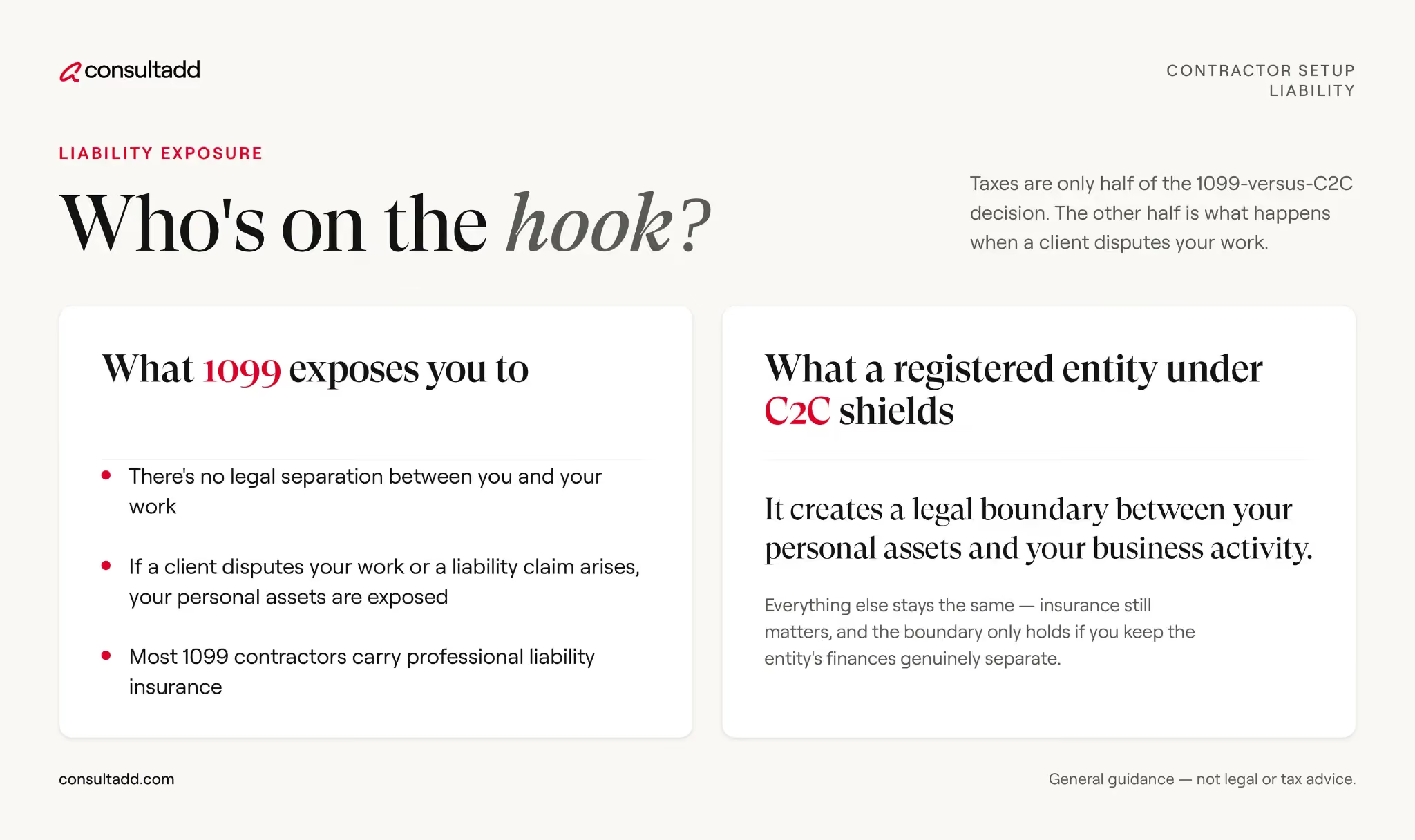
What 1099 exposes you to
- As a sole proprietor under 1099, there's no legal separation between you and your work.
- If a client disputes your work or a liability claim arises, your personal assets are exposed.
- Most 1099 contractors carry professional liability insurance for exactly this reason.
What a registered entity under C2C shields
- Operating through an LLC or corporation under C2C creates a legal boundary between your personal assets and your business activity, provided the entity is run properly and not treated as a shell.
- This is one of the underappreciated reasons clients often prefer C2C too, since a real business entity reduces the client's own misclassification exposure.
Our deeper guide on what C2C employment actually means covers how clients evaluate that entity legitimacy before signing.
Administrative overhead: what each one actually requires
Setting up as 1099
- Minimal. You need a business name (or your own name), possibly a simple invoicing process, and quarterly estimated tax payments once your income crosses IRS thresholds.
- Many freelancers and short-term contractors operate this way for years without incorporating anything.
Setting up as C2C
- More involved. You'll need to register a business entity with your state, get an EIN, potentially run payroll if you elect S-corp status, and file a separate business tax return each year.
- That's real time and often a few thousand dollars a year in accounting costs.
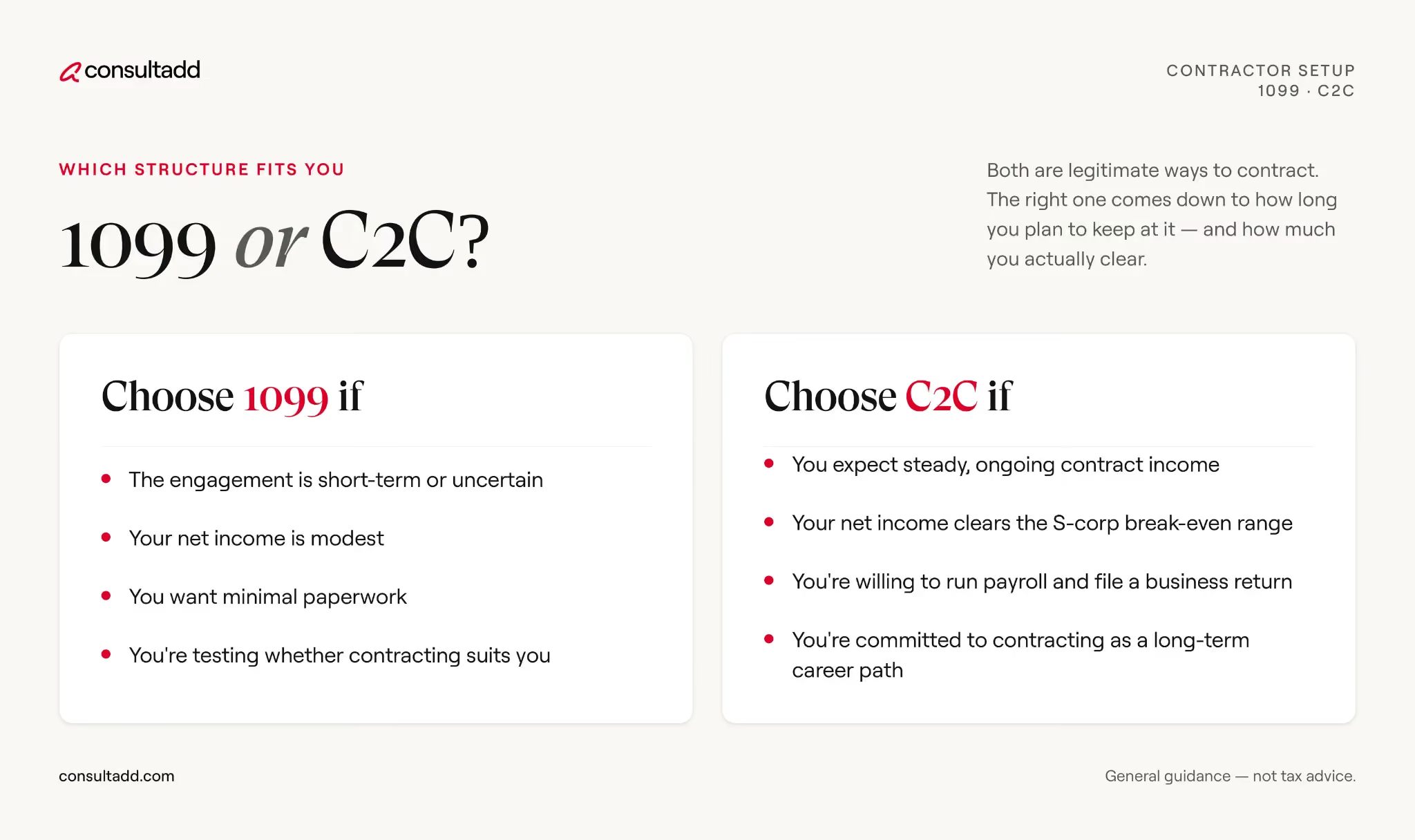
- It only pays for itself once your income is high enough that the tax savings outweigh the overhead, which is typically somewhere in the $75,000 to $80,000 net income range, though your actual break-even depends on your state and salary structure.
Choosing between them at a glance
Which clients prefer which, and why it affects your options
Some clients only do W2 or C2C and won't touch straight 1099 arrangements at all, largely because a properly structured C2C relationship with a registered entity gives them a stronger defense if a worker classification question ever comes up. Others are comfortable with 1099 for shorter, clearly scoped engagements.
This isn't about which structure is objectively better, it's about what the client's risk tolerance allows, and it's worth asking upfront rather than assuming your preferred structure is on the table.
Our detailed look at corp-to-corp staffing walks through why staffing firms and clients lean toward C2C for longer technical engagements specifically.
Common mistakes contractors make in this decision
Start Strong With Consultadd
With 15 years in business and 5,000+ successful staffing engagements, we don't just fill roles, we build reliability into your process. We've supported 65 staffing companies in the past year alone and maintain MSAs with industry leaders like Robert Half and TEKsystems.
Here's what working with Consultadd looks like:
- Talent sourced in under 24 hours
- Ready-to-deploy candidates, vetted for experience and compliance
- Lower turnover risk: we match long-term goals, not just short-term needs
- Seamless compliance: visa, documentation, onboarding? Handled.
- Dedicated 1:1 account managers for responsive, personalized support
- Top 100 candidate matches delivered in the past year
- Strong partnerships with universities to tap into fresh, committed talent
- Post-placement support so your investment grows beyond day one
For candidates, your next opportunity is more than just a job title, it's a chance to build skills, gain experience, and move your career forward. At Consultadd, we connect technology professionals with projects and employers that align with their goals, whether they're looking for contract, contract-to-hire, or long-term opportunities.
The tech job market moves fast, but the right guidance can make all the difference. Ready to take the next step in your career journey? Explore Opportunities >>
Key Takeaways
- 1099 and C2C are both non-employee structures, but who gets paid, you directly or your business entity, changes your tax exposure and liability.
- Both face the same 15.3% self-employment tax by default, but a C2C entity with an S-corp election can reduce that tax on part of your income.
- C2C requires more setup and ongoing compliance, and it only makes financial sense once your income clears a reasonable break-even point.
- A registered entity under C2C offers liability protection that straight 1099 work doesn't provide.
- Some clients only accept C2C or W2, so it's worth confirming what's actually negotiable before comparing rates.
FAQs
Is C2C better than 1099 for tax purposes?
It can be, but only once your income is high enough to benefit from an S-corp election, which lets part of your income avoid self-employment tax. Below a certain income level, the extra administrative cost of running a C2C entity can outweigh the tax savings.
Do I need an LLC for C2C work?
Yes, C2C by definition requires a registered business entity, typically an LLC, S-corp, or corporation, since the client contracts with that entity rather than with you as an individual.
How much does self-employment tax cost under 1099?
The self-employment tax rate is 15.3% of your net self-employment income, covering Social Security and Medicare, and it applies in full under a straight 1099 sole-proprietor arrangement with no way to reduce it through entity structuring.
Can I switch from 1099 to C2C mid-contract?
Usually not without the client's agreement, since it changes who they're contracting with. It's better to decide on a structure before signing and negotiate any changes as a new agreement rather than a mid-contract switch.
Which one do staffing clients prefer?
It varies. Some clients accept 1099 for shorter, clearly scoped work but require C2C or W2 for longer engagements, largely because a legitimate business entity under C2C reduces their own misclassification risk.
Is C2C riskier than 1099 from a compliance standpoint?
Not inherently, but a C2C arrangement only holds up if the entity is genuinely operating as an independent business. Treating a C2C worker like a direct employee in practice creates the same misclassification risk regardless of the label on the contract.
.webp)




.webp)