
.avif)

Introduction
If a recruiter tells you they have three bench candidates ready for your requirement, they're saying something specific. The bench candidate meaning in US IT staffing is simple: a consultant who is already employed by a staffing firm, already vetted, already cleared for work authorization, and currently not billing on a client project.
They're on payroll. They're just not on an assignment.
That gap is the whole point. For a client with an urgent opening, a bench candidate can start in days instead of weeks. For the staffing firm, every day that person sits idle is money going out with nothing coming in. Both things are true at once, which is why bench management gets so much attention in this industry and so little clear explanation.
Here's what the term covers, why consultants end up there, and what actually gets someone off the bench.
TL;DR
- A bench candidate is a consultant on a staffing firm's payroll who isn't currently assigned to a billable client project.
- Bench time usually happens between contracts, after a project ends early, or right after onboarding a new hire.
- Clients like bench candidates because they're pre-vetted and can start almost immediately.
- For H-1B workers, employer-caused bench time is not legally unpaid. The US Department of Labor requires the LCA wage during nonproductive time.
- Short bench periods are normal. Long ones usually point to a resume problem, a rate problem, or a skills problem, and all three are fixable.
What does bench candidate mean?
A bench candidate is a technology professional employed by a staffing or consulting company who is available for assignment but isn't working on one right now.
The word comes from sports. Players on the bench are part of the team, in uniform, ready to go in. They just aren't on the field at this moment.
In staffing, that translates to a few concrete things:
- The person has signed an employment agreement with the staffing firm
- Their background, references, and technical skills have already been checked
- Their work authorization is verified and documented
- Their resume is formatted and ready to submit
- They can usually start within a week, sometimes within 48 hours
Compare that to a candidate the recruiter found on a job board yesterday. That person still needs screening, reference checks, a background check, negotiation, and a notice period at their current job. Two very different timelines.
Bench candidate vs other candidate types
The word "bench" gets used two ways
You'll run into a second usage, especially with larger IT services firms. There, the bench means a deliberately maintained pool of unallocated consultants held in reserve so the company can staff new deals quickly. That's a planned capacity buffer, not an accident.
Both meanings point to the same underlying state: talent on payroll, not on a project. The difference is whether it was intentional.
Why consultants end up on the bench
Being on the bench isn't a performance rating. Most bench time has nothing to do with how good someone is at their job.
The first three are routine. A consultant who finishes a two-year engagement and spends three weeks on the bench before starting the next one is having a completely normal career.
The bottom three are the ones worth paying attention to, because they don't resolve on their own.
The part nobody enjoys
Bench time is uncomfortable for everyone involved:
- The consultant is anxious about income and, for visa holders, about status.
- The recruiter is under pressure to place.
- The firm is paying salary against zero revenue.
That pressure sometimes produces bad behavior across the industry: inflated resumes, consultants pushed into roles they aren't ready for, or firms that stop paying during bench periods. The last one isn't a gray area. It's a violation.
Bench candidates and H-1B rules
This part matters and gets misunderstood constantly.
If an H-1B worker is in nonproductive status because of an employer decision, including simple lack of assigned work, the employer still has to pay. The US Department of Labor's guidance on nonproductive time states that H-1B workers must be paid the required wage rate for all nonproductive time caused by employment-related conditions, such as lack of assigned work.
The obligation is written into 20 CFR 655.731, which requires the employer to pay a salaried H-1B employee the full pro-rata amount due, or an hourly employee for a full-time week, at the wage listed on the Labor Condition Application.
Unpaid time is only permitted in narrow situations that aren't work-related, such as a voluntary personal absence. And even those have conditions attached. The Department of Labor's LCA requirements page lays out the statutory language directly.
Practical version for consultants: if you're on the bench because your employer doesn't have a project for you, you should be getting paid. If you're not, that's worth a conversation, and possibly a call to an immigration attorney.
Practical version for clients: when you engage a staffing partner, their bench payroll discipline tells you something about how they run the rest of their compliance. Firms that cut corners on bench pay tend to cut corners elsewhere too.
If you're evaluating partners on visa-sponsored placements, our guide to corp to corp visa sponsorship for H-1B jobs covers the documentation side in detail.
How bench candidates get placed
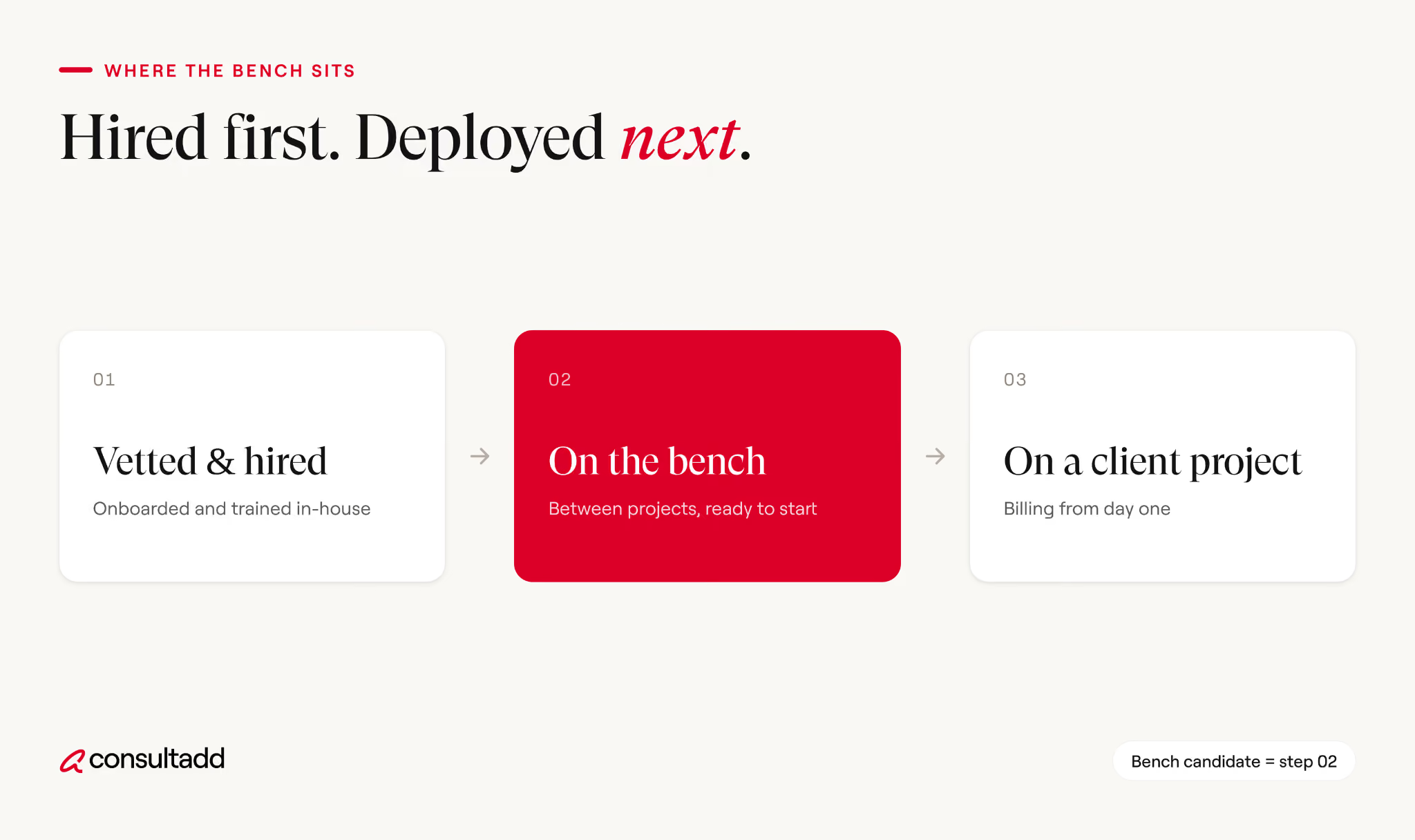
The process runs backwards compared to normal recruiting. In standard hiring, you have a job and you look for a person. In bench sales, you have the person and you look for the job.
That reversal shapes everything. A bench sales recruiter spends their day scanning requirements from prime vendors, implementation partners, and direct clients, then matching them against the consultants sitting on their bench.
If you want the full picture of how that function works day to day, our breakdown of bench sales meaning and recruiter roles goes deeper.
The typical sequence:
- Profile prep. The recruiter updates the resume against current market demand, not against what the consultant did three years ago.
- Requirement sourcing. Vendor lists, job portals, and existing client relationships get worked simultaneously.
- Submission. The profile goes out, often with contact details masked so the vendor has to route through the firm.
- Rate confirmation. Both sides agree on a bill rate and pay rate before interviews happen, not after.
- Client interview. Usually one or two rounds, sometimes with a short technical screen.
- Paperwork and start. Contract, onboarding, background check refresh if needed, then start date.
For contracts placed on a corp-to-corp basis, the paperwork layer adds a step or two.
Our complete guide to corp to corp staffing explains how the entity structure changes who signs what.
What actually shortens bench time
From what recruiters see repeatedly, the consultants who get off the bench fastest do a few things differently.
- They keep one resume version per target role instead of one generic resume for everything. They answer their phone.
- They're honest about what they've actually built versus what they've read about.
- They give the recruiter a realistic rate floor on day one rather than renegotiating after a client interview.
- They use bench weeks to close a specific skills gap, not to browse job boards passively.
That last one is underrated. Four weeks is enough time to earn a cloud certification from AWS or Microsoft, which changes what a recruiter can submit you for.
A realistic bench-week plan
If you're weighing whether a contract role is even the right structure for you, W2 vs C2C vs 1099 walks through the tradeoffs before you commit to one.
Why clients ask for bench candidates
From the client side, the appeal is speed with less risk attached.
A bench candidate has already cleared the staffing firm's screening. The firm has a financial incentive to place people who'll succeed, because a failed placement means the consultant comes right back to the bench and the firm eats the cost again. That incentive alignment is quietly one of the better features of the model.
The tradeoff is selection. A bench is finite. If your requirement is unusual, the firm may not have anyone matching it, and they'll need to source externally like anyone else. Bench candidates solve for speed on common stacks, not for rare specializations.
Worth asking any staffing partner: how large is your active bench right now, and how many of those consultants have you placed in the last quarter? The answer tells you whether you're getting a real ready-to-deploy pool or a list of names.
Some clients also use bench placements as a trial period before making a permanent offer.
That structure has its own mechanics, covered in our guide to C2C and contract-to-hire opportunities.
Start Strong With Consultadd
With 15 years in business and 5,000+ successful staffing engagements, we don't just fill roles, we build reliability into your process. We've supported 65 staffing companies in the past year alone and maintain MSAs with industry leaders like Robert Half and TEKsystems.
Here's what working with Consultadd looks like:
- Talent sourced in under 24 hours
- Ready-to-deploy candidates, vetted for experience and compliance
- Lower turnover risk: we match long-term goals, not just short-term needs
- Seamless compliance: visa, documentation, onboarding? Handled.
- Dedicated 1:1 account managers for responsive, personalized support
- Top 100 candidate matches delivered in the past year
- Strong partnerships with universities to tap into fresh, committed talent
- Post-placement support so your investment grows beyond day one
For candidates, your next opportunity is more than just a job title, it's a chance to build skills, gain experience, and move your career forward. At Consultadd, we connect technology professionals with projects and employers that align with their goals, whether they're looking for contract, contract-to-hire, or long-term opportunities.
The tech job market moves fast, but the right guidance can make all the difference. Ready to take the next step in your career journey? Explore Opportunities >>
Key takeaways
- The bench candidate meaning comes down to one thing: a vetted consultant on a staffing firm's payroll without a current billable assignment.
- Most bench time is structural, not a reflection of the consultant's ability.
- Employer-caused bench time for H-1B workers must be paid at the LCA wage rate under federal regulations.
- Clients get speed and pre-verified compliance from bench candidates, but a smaller selection pool.
- Bench periods stretching past six weeks usually signal a fixable issue with positioning, rate, or skills.
FAQs
What does it mean when a candidate is on the bench?
It means the person is employed by a staffing or consulting firm but isn't currently assigned to a client project. They're drawing salary from the firm while waiting for their next placement. The firm markets their profile to clients and vendors during this period.
Is being on the bench a bad thing for a consultant?
Short bench periods between contracts are normal and happen to most contract professionals. It becomes a concern when it stretches past a month or two, which usually points to a resume, rate, or skill-demand mismatch rather than anything personal. The time is also useful for certifications if you use it deliberately.
Do bench candidates get paid?
It depends on the employment arrangement, but for H-1B workers the answer is defined by federal rules. When nonproductive status results from an employer decision such as lack of assigned work, the employer must pay the required wage listed on the Labor Condition Application. Unpaid bench time in that situation is a violation, not standard practice.
What's the difference between a bench candidate and a bench sales recruiter?
The bench candidate is the consultant waiting for an assignment. The bench sales recruiter is the person whose job is to find that assignment, by sourcing requirements from vendors and clients and submitting the consultant's profile. One is the talent, the other is the marketer.
How long do candidates usually stay on the bench?
For in-demand skills, often one to four weeks. For roles where market demand has softened, it can run six weeks or more. The length depends more on skill relevance and rate expectations than on how hard the consultant is searching.
Why do clients hire bench candidates instead of sourcing fresh?
Speed, mostly. A bench candidate has already been screened, background checked, and cleared for work authorization, so they can often start within days instead of the four to eight weeks a fresh hire takes. The tradeoff is that the available pool is limited to whoever the firm currently has on the bench.



.webp)

.png)