


Introduction
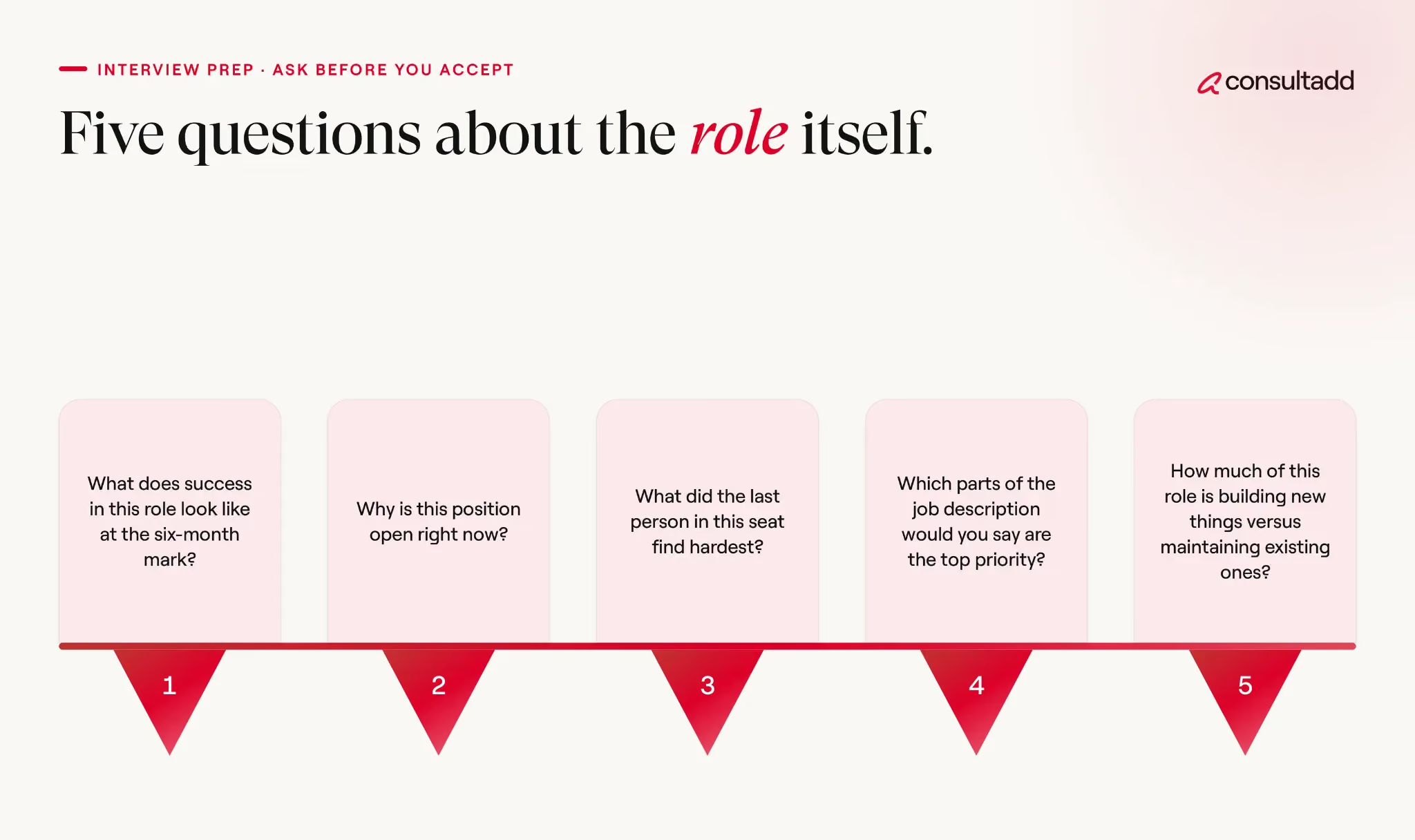
The best questions to ask during an interview are the ones that pull out information the job description left out.
- How success in this role gets measured?
- Why is the seat open?
- What did the last person in it find hardest?
Those answers tell you whether the job is worth taking, and asking them tells the interviewer you're evaluating the opportunity rather than just hoping to be picked.
Most candidates get this backwards. They treat the final five minutes as a formality, ask something safe about company culture, and leave with nothing they didn't already know from the careers page.
We'd argue this is the highest-leverage part of the whole conversation, and it's the part almost nobody prepares for.
TL;DR
- Bring five prepared questions, plan to ask two or three, and pick based on how the conversation actually went.
- The strongest questions ask about specifics: measurement, priorities in the first 90 days, and why the role exists.
- Ask about compensation and time off after you have an offer, not in a first-round screen.
- Different interviewers deserve different questions. Ask the manager about expectations and a peer about what the work actually feels like.
- Always close by asking about next steps and timeline, since it gives you a concrete reason to follow up.
Why the questions you ask carry real weight
Interviewers are trained to leave room for your questions. SHRM's guidance on interviewing tells hiring teams to allow time for candidate questions and be transparent about the process. That block of time exists for you. Using it badly is a wasted opportunity.
There's a second reason to take it seriously. SHRM's 2026 benchmarking data puts the median time to fill at 39 calendar days for non-executive roles and 45 days for executive roles. Accept a role that turns out to be nothing like what you were told, and you're facing that same cycle again, this time while employed and short on hours to search.
Good questions are due diligence. That's the whole argument.
The best questions to ask during an interview, by category
Below are the questions I'd actually put on a list. The value sits in the second column, so read it before you pick your five.
Questions about the role itself
Questions about the team and the manager
Ask the hiring manager these, and ask a slightly different version of any peer you meet. Columbia's career center draws the same distinction in its guidance on interview questions.
- How would you describe your management style, and how do you like to give feedback?
- How is this team structured, and who would I work with most closely?
- What's a recent decision the team disagreed on, and how did it get resolved?
- How often does this team meet, and what happens in those meetings?
- What does someone need to understand about working here that isn't obvious from outside?
That last one is our favorite question in any interview. It's open enough that people answer it honestly, and the answer is almost never something you could have found online.
Questions about how you'll be evaluated
- How is performance reviewed here, and how often?
- What separates someone who's doing fine in this role from someone who's doing exceptionally well?
- What would need to be true for me to be promoted out of this role in two years?
- Are there metrics attached to this position, and who owns them?
If nobody can answer how your work gets judged, that's worth knowing before you sign. Vague criteria usually mean performance reviews run on impressions rather than evidence.
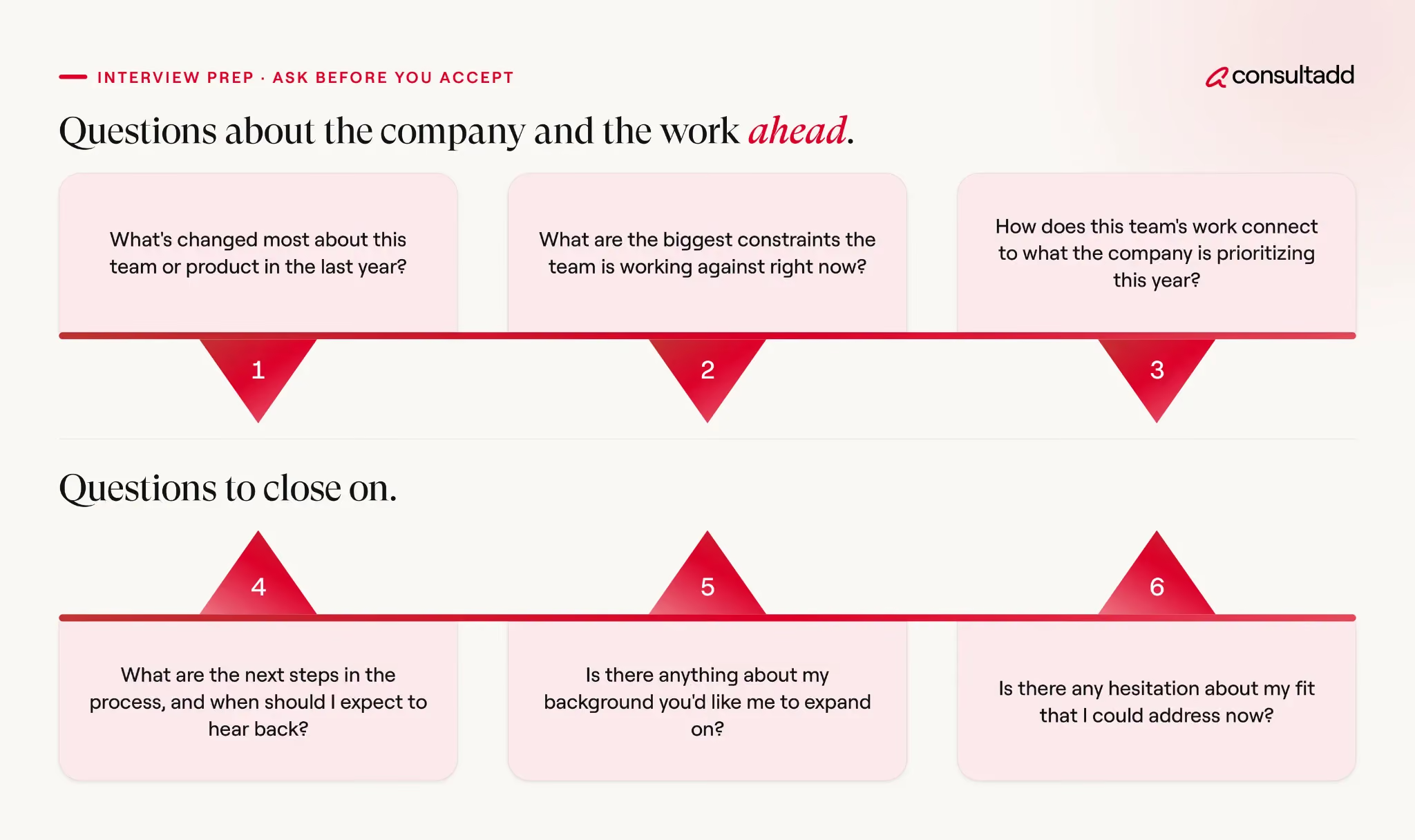
Questions about the company and the work ahead
- What's changed most about this team or product in the last year?
- What are the biggest constraints the team is working against right now?
- How does this team's work connect to what the company is prioritizing this year?
Keep these grounded. Asking about a five-year vision gets you a rehearsed answer. Asking what's constrained right now gets you something real.
Questions to close on
- What are the next steps in the process, and when should I expect to hear back?
- Is there anything about my background you'd like me to expand on?
- Is there any hesitation about my fit that I could address now?
The middle one is the sleeper. It invites the interviewer to name a gap while you're still in the room to answer it. It takes nerve. It's worth it.
Questions worth asking about contract and contract-to-hire roles
Contract work has unknowns the standard question list doesn't cover. If you're interviewing for a contract, contract-to-hire, or project-based role, add these.
The conversion question deserves particular attention. Contract-to-hire works well when both sides treat it as a trial period with defined criteria, and it works badly when "we'll see how it goes" is the entire plan.
Our breakdown of contract-to-hire benefits and tradeoffs covers what a well-run version of this model looks like from both sides. If you're wondering why you're on round three with a fourth still to come, our walkthrough of the IT staffing process maps the stages most tech hiring runs through.
Weak questions and stronger versions of them
Some questions cost you goodwill. Michigan State's career guidance flags a familiar set of questions not to ask at the end of an interview, including asking what the company does.
Here's how I'd rewrite the common offenders rather than just avoiding them.
How many questions to ask, and when
Prepare five. Ask two or three. Keep the rest in reserve.
Interviews cover ground unpredictably. Half your list often gets answered before you're invited to speak, and reading out a question addressed twenty minutes earlier signals you weren't listening.
A few practical notes on timing:
- Ask throughout, not only at the end. If a natural opening appears mid-conversation, take it. It makes the exchange feel like a discussion instead of an interrogation with an appendix.
- Match the question to the person. Recruiters can answer process and compensation bands. Hiring managers can answer expectations. Peers can answer what the work actually feels like.
- Write the answers down. By your fourth interview, teams blur together, and you'll want notes when you compare offers.
- Follow up in writing. If you run out of time, add a question to your thank-you note. It gives the message a purpose beyond being polite.
In technical loops, the questions you ask between coding rounds tell the panel how you think about engineering work.
Our guide on standing out in a developer interview covers how those conversations tend to run.
If you're the one running the interview
Everything above inverts cleanly when you're on the hiring side.
Structured interviews, where every candidate gets the same questions scored against the same rubric, predict job performance considerably better than open-ended conversations. That's the consistent finding across decades of selection research, and it's the basis for SHRM's recommendation that interviewers work from standardized questions and rating criteria.
Two habits worth adopting.
- Ask for a specific past example rather than a hypothetical, since "tell me about a time you disagreed with a technical decision" produces evidence while "how do you handle conflict" produces a rehearsed answer.
- Score each interview within half an hour of finishing it, because memory of the conversation degrades faster than most interviewers believe.
Remember too that candidates are assessing you throughout. A disorganized loop with no clear timeline is a signal, and strong candidates read it correctly.
That's part of why we track time to hire against time to fill as separate metrics rather than one blended number.
Start strong with Consultadd
With 15 years in business and 5,000+ successful staffing engagements, we don't just fill roles, we build reliability into your process. We've supported 65 staffing companies in the past year alone and maintain MSAs with industry leaders like Robert Half and TEKsystems.
Here's what working with Consultadd looks like:
- Talent sourced in under 24 hours
- Ready-to-deploy candidates, vetted for experience and compliance
- Lower turnover risk: we match long-term goals, not just short-term needs
- Seamless compliance: visa, documentation, onboarding? Handled.
- Dedicated 1:1 account managers for responsive, personalized support
- Top 100 candidate matches delivered in the past year
- Strong partnerships with universities to tap into fresh, committed talent
- Post-placement support so your investment grows beyond day one
For candidates, your next opportunity is more than just a job title, it's a chance to build skills, gain experience, and move your career forward. At Consultadd, we connect technology professionals with projects and employers that align with their goals, whether they're looking for contract, contract-to-hire, or long-term opportunities.
The tech job market moves fast, but the right guidance can make all the difference. Ready to take the next step in your career journey? Explore Opportunities >>
Key takeaways
- The best questions to ask during an interview target specifics: how success is measured, why the role is open, and what the previous person found hard.
- Prepare five questions and ask two or three, choosing based on what the conversation left unanswered.
- Tailor questions to the interviewer. Recruiters, managers, and peers each know different things.
- Contract and contract-to-hire roles need extra questions about length, conversion criteria, and employer of record.
- Close every interview by asking about next steps, and use your thank-you note for anything you didn't get to.
FAQs
What are the best questions to ask at the end of an interview?
Ask about next steps and timeline, then ask whether there's anything about your background the interviewer would like you to expand on. The first gives you a legitimate reason to follow up. The second lets you address doubts while you're still in the conversation.
How many questions should I ask in an interview?
Two or three at the end is the right range for most interviews. Prepare about five so you have options, since interviewers often answer part of your list before inviting questions. Asking more than four can start to feel like you're running the meeting.
Is it OK to ask about salary during an interview?
Asking for the posted range is reasonable, particularly in a recruiter screen where compensation is part of the qualifying conversation. Asking what your specific offer would be is premature before anyone has decided to hire you. Hold that for the offer stage.
What questions should I avoid asking in an interview?
Skip anything answerable from the company website, anything about time off or remote flexibility before you have an offer, and anything that puts the interviewer on the spot, like asking whether you got the job. Each one signals either weak preparation or divided attention.
What if all my questions get answered during the interview?
Say so, then ask a follow-up on something they raised. Something like "you mentioned the team recently restructured, how has that changed priorities for this role" works well. Ending with nothing reads as disinterest, even when it isn't.
Should I ask different questions in a technical interview?
Yes. Technical rounds are a good place to ask about code review practices, how technical decisions get made, what the testing and deployment setup looks like, and how much of the codebase is legacy. Save culture and career-growth questions for the recruiter or hiring manager rounds.





.png)