

Introduction
Diversity hire gets thrown around online as an insult more often than it gets used accurately. It's not a job category, a legal classification, or a box that gets checked on an offer letter.
But the term has real weight behind it, especially now, because the rules governing diversity hires have shifted substantially since early 2025.
This guide explains what the term actually means, what changed at the federal level, and how employers can still build inclusive teams without stepping into legal risk.
TL;DR
- Diversity hire isn't a formal hiring category. It's an informal, often inaccurate label applied to a candidate.
- Since March 2025, the EEOC and DOJ have treated employment decisions based on race, sex, or other protected traits as unlawful, even when the goal is diversity.
- In June 2026, the EEOC rescinded decades-old guidance that supported voluntary affirmative action plans, narrowing what's considered safe.
- Broadening where you recruit is still legal. Making the final hiring decision based on a protected trait is not.
- Consultadd helps clients widen their candidate pools through sourcing, not selection criteria, keeping placements both inclusive and compliant.
What Does "Diversity Hire" Actually Mean?
There's no legal definition for the term. It's typically used, sometimes fairly and often not, to describe a candidate someone assumes was hired partly because of their race, gender, or another protected characteristic rather than purely on qualifications.
That assumption usually says more about the person making it than the candidate in question. A wider candidate pool doesn't lower the bar. It just means more qualified people got a fair look before a decision was made.
Legally, the distinction that matters isn't who applied or who got noticed. It's what actually drove the final hiring decision. Title VII of the Civil Rights Act has long prohibited using race, sex, or other protected traits as a factor in that decision, for any candidate, regardless of intent.
How the Legal Landscape Changed in 2025 and 2026
This is the part that's moved fastest, and it's worth understanding regardless of where you land on the underlying policy debate.
The EEOC has been direct about where it now stands. Its own guidance states that Title VII protects every individual equally, regardless of whether they belong to a minority or majority group, and that intent to promote diversity doesn't exempt an employment decision from that standard.
For a broader look at how this is playing out across HR functions, SHRM's tracking of DEI-related executive actions is a useful ongoing reference, since enforcement priorities are still shifting month to month.
What's Still Legal: Broadening Your Candidate Pool
Here's the distinction that gets lost in a lot of the noise.
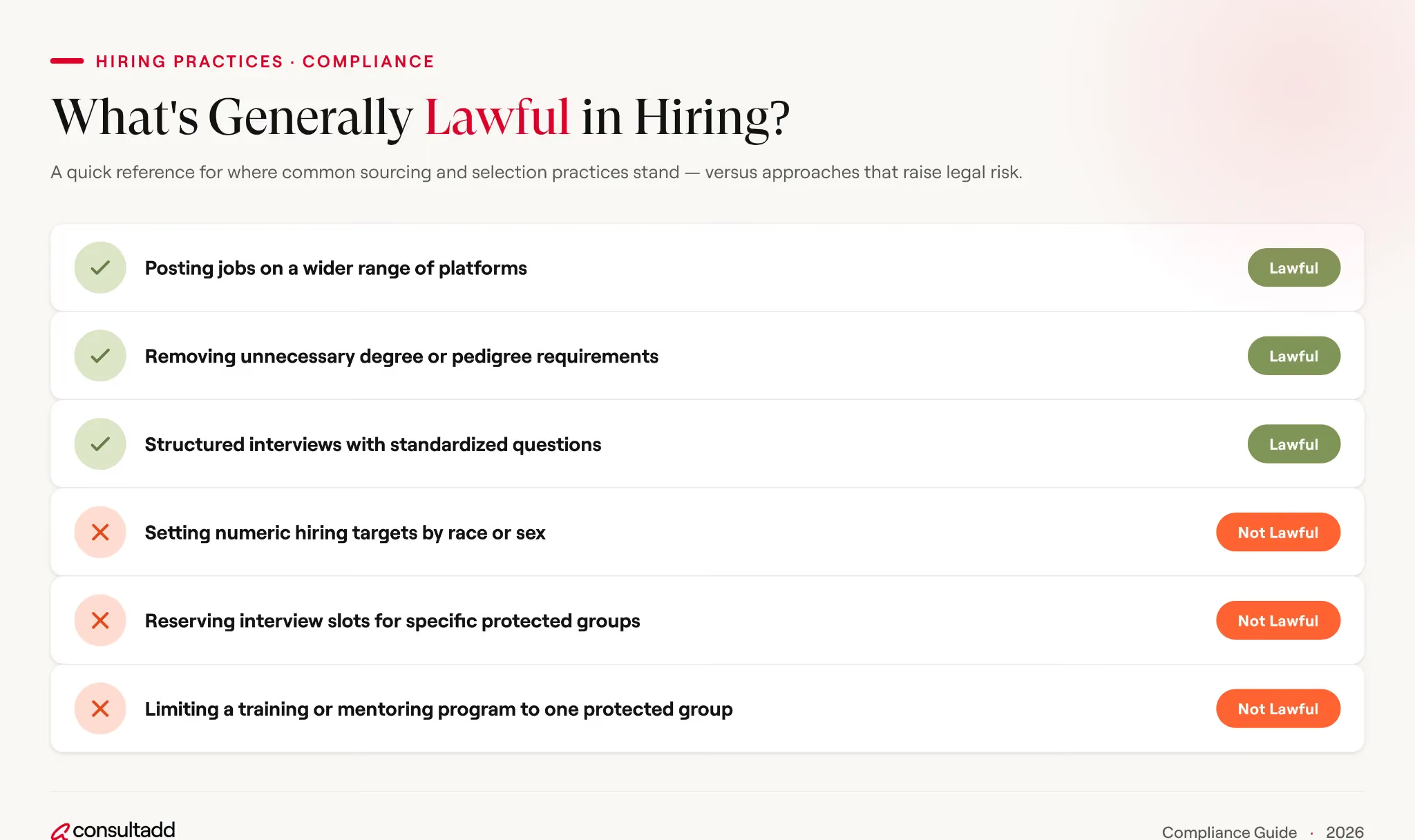
Sourcing and selection are two different stages, and the law treats them differently.
Casting a wider net, posting jobs in more places, removing unnecessary degree requirements, rewriting job ads to be less exclusionary, is about who gets seen.
Nobody's rejected because of it.
Making a final hire based on a candidate's race, sex, or other protected trait, even as one factor among several, is a different matter entirely, and that's where the legal risk actually sits.
Building a Compliant, Merit-Based Hiring Process
None of this means employers have to stop caring about reaching a broad range of candidates. It means the "how" matters more than it used to.
- Widen sourcing channels instead of relying on the same referral networks every time.
- Standardize interview questions and scoring so every candidate is measured against the same criteria.
- Reduce identifying details during early resume screening to limit unconscious bias.
- Base evaluations on skills and job-relevant experience rather than pedigree or where someone previously worked.
- Train hiring managers on where the line between broad sourcing and biased selection actually sits.
If You've Been Called a "Diversity Hire"
If this term has been aimed at you, it's worth remembering it's an assumption, not a fact. Being sourced through a wider outreach effort has nothing to do with whether you were the right candidate for the role.
Employers still have to evaluate every hire against the actual requirements of the job.
Our earlier post on effective strategies for building a diverse talent pool covers sourcing tactics in more depth, and our guide to workplace diversity types breaks down the different dimensions of diversity worth considering beyond the obvious ones.
It's a frustrating label to carry, and it says nothing about your actual qualifications. If it's affecting how you show up at work, that's worth talking through with someone you trust, whether that's a manager, a mentor, or an outside professional.
What This Means for Staffing Partners and Employers
For staffing firms and hiring teams, the practical shift is this: build the widest, most qualified pool you can, then let standardized, job-relevant criteria decide who moves forward.
That combination gets you both a diverse slate and a defensible process, which matters a lot more now than it did two years ago.
Start Strong With Consultadd
With 15 years in business and 5,000+ successful staffing engagements, we don't just fill roles, we build reliability into your process. We've supported 65 staffing companies in the past year alone and maintain MSAs with industry leaders like Robert Half and TEKsystems.
Here's what working with Consultadd looks like:
- Talent sourced in under 24 hours
- Ready-to-deploy candidates, vetted for experience and compliance
- Lower turnover risk: we match long-term goals, not just short-term needs
- Seamless compliance: visa, documentation, onboarding? Handled.
- Dedicated 1:1 account managers for responsive, personalized support
- Top 100 candidate matches delivered in the past year
- Strong partnerships with universities to tap into fresh, committed talent
- Post-placement support so your investment grows beyond day one
For candidates, your next opportunity is more than just a job title, it's a chance to build skills, gain experience, and move your career forward. At Consultadd, we connect technology professionals with projects and employers that align with their goals, whether they're looking for contract, contract-to-hire, or long-term opportunities.
The tech job market moves fast, but the right guidance can make all the difference. Ready to take the next step in your career journey? Explore Opportunities >>
Key Takeaways
- "Diversity hire" is an informal label, not a legal or organizational hiring category.
- Federal guidance since 2025 treats hiring decisions based on protected traits as unlawful, regardless of intent.
- The 2026 EEOC guidance rescission narrowed the safe harbor employers previously relied on for affirmative action plans.
- Broadening where and how you source candidates remains legal. Deciding based on a protected trait does not.
- A standardized, skills-based evaluation process protects both candidates and employers.
FAQs
What does "diversity hire" actually mean?
It's an informal term, not a legal or HR classification, generally used to describe a candidate someone assumes was hired partly because of a protected characteristic rather than qualifications alone.
Is diversity hiring illegal in 2026?
Hiring decisions based on race, sex, or other protected traits are unlawful under Title VII, and recent EEOC guidance has reinforced that standard. Broadening recruitment outreach to reach more candidates is not illegal on its own.
Can a company still recruit for diversity?
Yes, as long as the effort focuses on sourcing and outreach rather than using a protected trait as a factor in the final hiring decision. Widening where you post jobs and who sees them is different from deciding who gets hired based on demographics.
What's the difference between diversity recruiting and diversity quotas?
Diversity recruiting means casting a wider net so more qualified candidates from different backgrounds get considered. Quotas or numeric targets tied to race or sex in the final hiring decision are what current EEOC guidance treats as unlawful.
Are federal contractors affected differently than private employers?
Yes. Federal contractors face additional certification requirements and False Claims Act exposure under the March 2026 executive order, on top of the Title VII standards that apply to all employers.
How can I tell if a hiring process is compliant?
Look for standardized interview questions, evaluation criteria tied to the job itself, and documentation showing every candidate was measured the same way. If protected characteristics factor into the actual decision at any stage, that's the point where risk enters.
.webp)