

Introduction
If you're trying to hire Scala developers right now, you've probably already noticed the pool is small and the resumes that do land in your inbox rarely match the job description. That's normal.
Scala sits in a strange spot: it's not a beginner language, it's not the most popular one, and most companies only need it for a handful of high-stakes systems like data pipelines, streaming platforms, or fintech backends.
Below, we'll walk through why hiring for this skill is tougher than hiring for, say, Python or JavaScript, what to actually test for in an interview, where to source candidates, and when it makes sense to bring in a staffing partner instead of running the search yourself.
TL;DR
- Scala developers are scarce because only a small slice of engineers use the language as their primary tool, even though it commands some of the highest pay in the industry.
- Most Scala hiring needs trace back to a handful of use cases: big data pipelines, streaming systems, and fintech backends where type safety and JVM performance matter.
- Test for functional programming fluency, not just Scala syntax. Plenty of candidates write Scala like it's Java with extra symbols.
- Contract and contract-to-hire arrangements work well for Scala hiring because they let you validate a scarce, expensive skill set before committing to a full-time salary.
- A specialized IT staffing partner like Consultadd can cut sourcing time significantly, since general recruiters rarely maintain a warm Scala pipeline.
Why hiring Scala developers is harder than most backend roles
Scala has always been a specialist's language. It runs on the JVM, blends functional and object-oriented programming, and shows up almost exclusively in systems where either performance or correctness carries real financial weight.
That combination creates a strange hiring paradox: demand is steady, but the supply of developers who reach for Scala as their primary language is tiny.
JetBrains' 2025 State of Developer Ecosystem survey put a number on this. Scala leads among the top-paid developers, with 38% falling into the top-paid bracket, despite being used by only 2% of developers as a primary language.
That's not a coincidence. When a skill is both hard to find and tied to systems that can't afford to go down, employers pay a premium for it.
What Scala actually gets used for
Understanding where Scala shows up in production makes it a lot easier to write a job description that attracts the right candidates instead of a pile of generalist resumes.
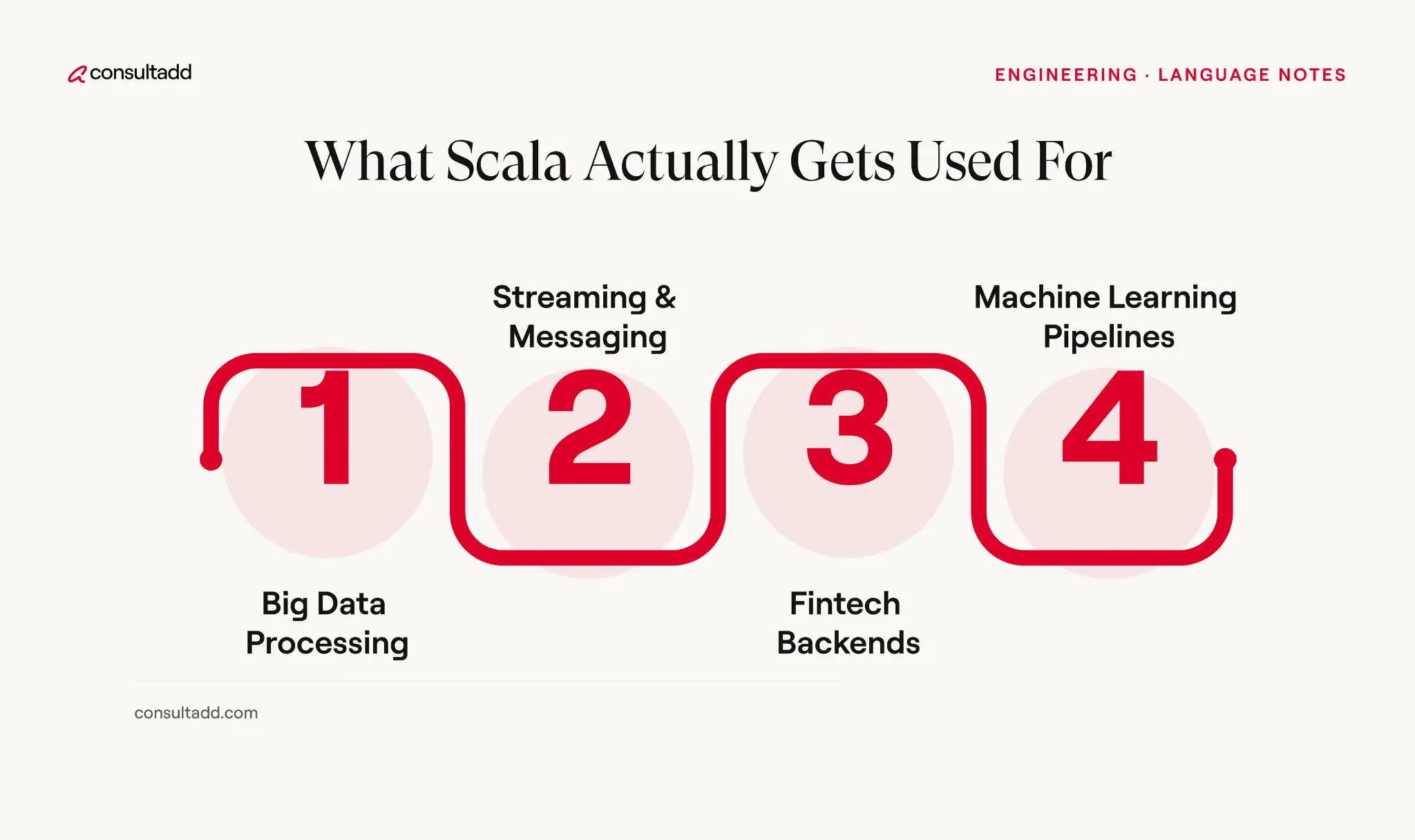
Spark's official documentation notes that it provides high-level APIs in Java, Scala, Python, and R, backed by an optimized engine for general execution graphs, but because Spark's core is written in Scala and both run on the JVM, Scala code tends to execute with less overhead than the Python equivalent.
If your company runs Spark jobs at any real scale, you're probably going to need at least one engineer who's comfortable in Scala, even if the rest of the team works in Python.
Skills to actually test when you hire Scala developers
A Scala resume tells you almost nothing on its own. I've seen plenty of candidates who list Scala as a skill but write it exactly like Java, ignoring the functional features that make the language worth using in the first place.
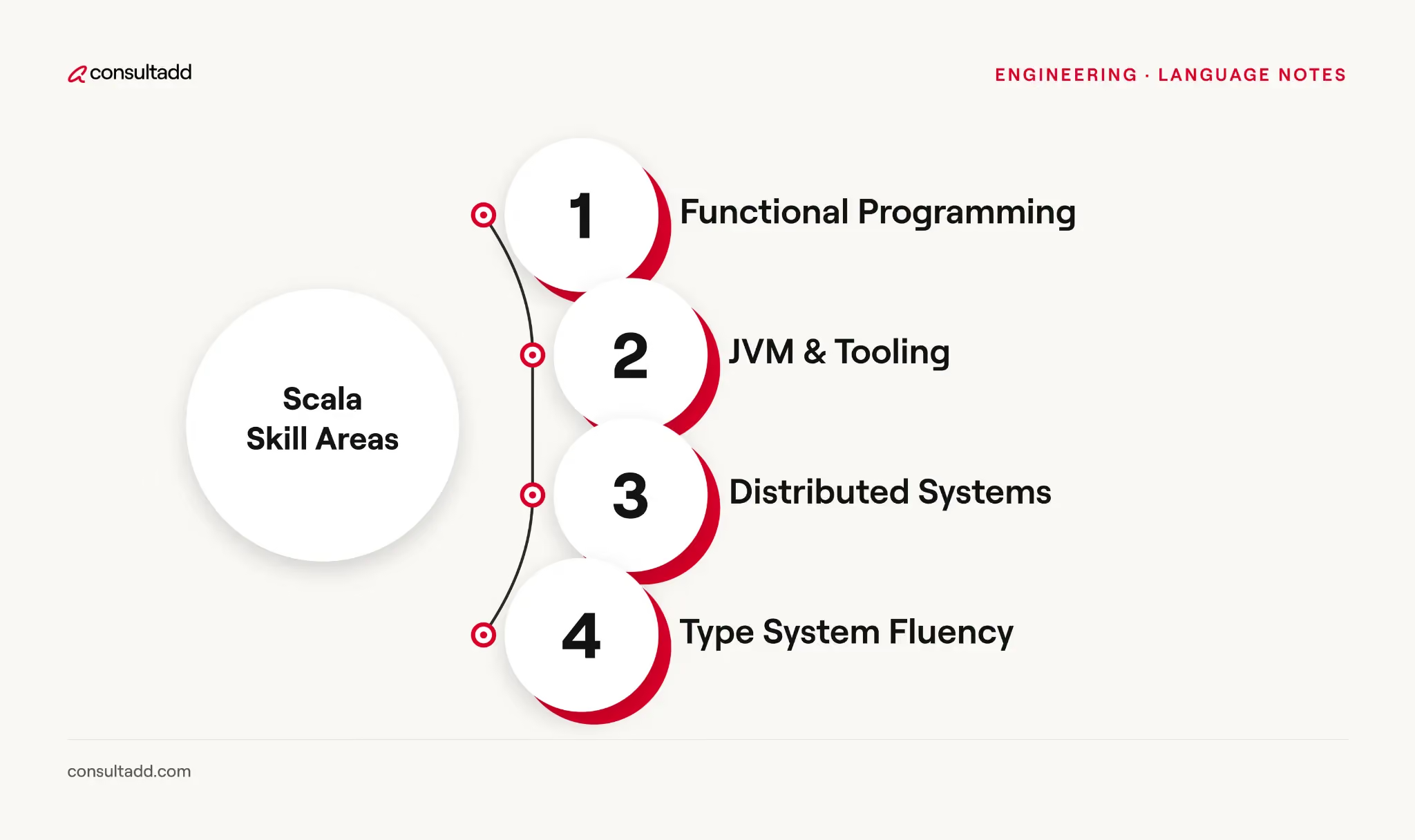
The interview needs to dig past syntax:
If you want a broader framework for evaluating backend candidates, our guide on what to look for when hiring software developers covers the core competencies and interview structure.
Where to source Scala developers
General job boards tend to disappoint here. The candidates who actually write production Scala congregate in a smaller set of places, and it helps to go looking for them there instead of waiting for applications to arrive.
- Scala-specific communities and conferences, like Scala Days and local Scala user groups, are a reliable source since attendees are self-selecting for depth over breadth.
- GitHub and Scaladex (the Scala library index) can surface developers who maintain or contribute to Spark, Akka, or other Scala-heavy projects, which tells you a lot more than a resume bullet point.
- Data engineering and fintech meetups also tend to attract Scala talent, since that's where the language actually gets used day to day.
Our broader guide on how to hire the best software engineers covers sourcing tactics like headhunting on developer platforms and tapping niche, invite-only communities, most of which apply directly to a Scala search.
Contract, contract-to-hire, or full time: picking the right model
Scala hiring is one of the clearer cases where the employment model matters as much as the candidate. Because the skill is scarce and often tied to a specific project, forcing every hire into a full-time offer can slow you down or lock you into a role you don't need permanently.
We've broken down the tradeoffs between these models in more depth in contract to hire vs full time for developers, including how the calculation shifts for specialized roles like Scala where the candidate pool is thin to begin with.
Should you use a staffing agency to hire Scala developers?
Here's the honest tradeoff. Running the search yourself gives you full control over the process, but it also means building a Scala pipeline from scratch, something most internal recruiters have never had to do since the role doesn't come up often.
A specialized staffing partner already has that pipeline warm. There's also a cost angle worth keeping in mind.
The Bureau of Labor Statistics puts the median annual wage for software developers at $133,080, and Scala roles routinely land above that baseline given the scarcity premium the language commands.
A bad hire at that pay level is expensive to unwind, which is exactly the kind of risk a contract-to-hire arrangement through a staffing partner is built to reduce.
Start Strong With Consultadd
With 15 years in business and 5,000+ successful staffing engagements, we don't just fill roles, we build reliability into your process. We've supported 65 staffing companies in the past year alone and maintain MSAs with industry leaders like Robert Half and TEKsystems.
Here's what working with Consultadd looks like:
- Talent sourced in under 24 hours
- Ready-to-deploy candidates, vetted for experience and compliance
- Lower turnover risk: we match long-term goals, not just short-term needs
- Seamless compliance: visa, documentation, onboarding? Handled.
- Dedicated 1:1 account managers for responsive, personalized support
- Top 100 candidate matches delivered in the past year
- Strong partnerships with universities to tap into fresh, committed talent
- Post-placement support so your investment grows beyond day one
For candidates, your next opportunity is more than just a job title, it's a chance to build skills, gain experience, and move your career forward. At Consultadd, we connect technology professionals with projects and employers that align with their goals, whether they're looking for contract, contract-to-hire, or long-term opportunities.
The tech job market moves fast, but the right guidance can make all the difference. Ready to take the next step in your career journey? Explore Opportunities >>
Key takeaways
- Scala talent is scarce because so few developers use it as a primary language, which pushes pay and hiring difficulty higher than most backend roles.
- The language shows up almost exclusively in big data, streaming, and fintech systems, so tailor your job description to those use cases.
- Test for functional programming fluency and distributed systems thinking, not just familiarity with Scala syntax.
- Contract and contract-to-hire arrangements reduce the risk of committing to a full-time salary for a skill set this specialized.
- A staffing partner with an existing Scala pipeline can shorten your time to hire significantly compared to starting a search from scratch.
FAQs
What makes Scala developers harder to hire than other backend engineers?
Only a small share of developers use Scala as their primary language, even though the systems it powers, like Spark pipelines and fintech backends, tend to be high-stakes. That combination of low supply and high responsibility is what drives both the scarcity and the pay premium.
Do I need a Java background to hire a good Scala developer?
Not necessarily, but it helps. Scala runs on the JVM and interoperates closely with Java, so candidates with Java experience often ramp up faster on existing codebases, especially in mixed Scala-Java environments.
How much does it cost to hire Scala developers in the US?
Pay varies widely by seniority and location, but Scala roles typically land above the general software developer median, which the Bureau of Labor Statistics puts at $133,080 a year. Specialized, senior-level Scala roles in finance or data engineering often run well above that baseline.
Should I hire a contract or full-time Scala developer?
Contract works well for a defined project like a Spark migration, while full time makes sense for ongoing platform work. If you're unsure, contract-to-hire lets you evaluate fit before committing to a permanent salary.
What industries use Scala the most?
Financial services, e-commerce infrastructure, and data engineering teams make up most of the demand, largely because of how heavily those industries rely on Apache Spark and Kafka for processing and streaming data.
How can a staffing agency help me hire Scala developers faster?
A specialized agency already maintains relationships with Scala engineers through niche communities and past placements, which cuts out the months an internal team might spend building that pipeline from zero.
.webp)