
.avif)

Introduction
If you're an F-1 student staring at your calendar and wondering when you're allowed to start your OPT paperwork, you're asking the right question at the right time. Timing is the part students get wrong most often, and it's the part that can cost you weeks of work eligibility.
So how long before graduation can you apply for OPT?
For post-completion OPT, you can file your application as early as 90 days before your program end date, and as late as 60 days after it. That 90-day mark is a hard line. File even one day early and USCIS will reject the application.
The catch is that "graduation" and "program end date" aren't always the same thing, and there's a second deadline tied to your school that can sneak up on you.
This guide lays out the full timeline, explains why applying early is your best protection, and walks through what happens after you hit submit.
TL;DR
- You can apply for post-completion OPT up to 90 days before your I-20 program end date and up to 60 days after it.
- Your program end date is on your I-20. It's often close to graduation but is not the ceremony date.
- There's a second deadline: USCIS must receive your application within 30 days of your school issuing your OPT recommendation I-20.
- Apply as early in the 90-day window as you can, because 2026 processing times run long and you can't work until your EAD arrives.
- Always confirm your exact dates with your DSO and check current rules on uscis.gov, since fees and timelines change.
The short answer: 90 days before your program end date
Here's the rule in one line. For post-completion OPT, the earliest you can file Form I-765 is 90 days before your program end date.
The window then stays open until 60 days after that program end date. So you have a stretch of roughly five months during which USCIS will accept your application. Miss the front edge and it's rejected for being early. Miss the back edge and you lose your chance entirely.
Most advisors, including at schools like Yale, Georgetown, and USC, give the same advice: file as early in that 90-day window as you reasonably can. There's almost no upside to waiting and a real downside if processing drags.
One thing to keep straight. The 90 days counts back from your program end date, not from the day you want to start working and not from your graduation ceremony. That distinction matters enough to get its own section.
Your program end date is not your graduation ceremony
This trips up a lot of students, so it's worth slowing down on.
Your program end date is the date printed on your Form I-20. It reflects when your school expects you to finish your degree requirements, which is usually the last day of exams or the end of your final term. Your graduation ceremony might be days or even weeks later, and it doesn't drive your OPT timeline.
Count your 90 days back from the I-20 program end date, not the commencement date on the invitation. If you're not sure which date applies to you, that's exactly the kind of thing your Designated School Official, or DSO, exists to confirm.
For students finishing a thesis or dissertation, the completion date can be more flexible, and PhD students often have room to file before they officially finish. Again, your DSO is the person who sets that date in your record, so talk to them early.
Pre-completion vs post-completion OPT
Most people asking this question mean post-completion OPT, the work authorization you use after you finish your degree. But there's a second type, and the timing rules differ.
Pre-completion OPT lets you work while you're still enrolled, part-time when classes are in session and full-time during breaks.
You can apply for it as early as 90 days before your requested employment start date. Any time you use on pre-completion OPT gets deducted from your post-completion total, so most students skip it.
Post-completion OPT is the 12 months of work authorization most graduates use. It's the one tied to the 90-days-before-program-end rule.
OPT students weighing job offers often run into questions about W2 versus corp-to-corp arrangements, which Consultadd unpacks in its guide to W2 vs C2C for visa holders.
The full OPT application timeline
The 90-day window is the headline, but there's a second deadline that catches students off guard. Your application must reach USCIS within 30 days of the date your DSO issues your OPT recommendation I-20.
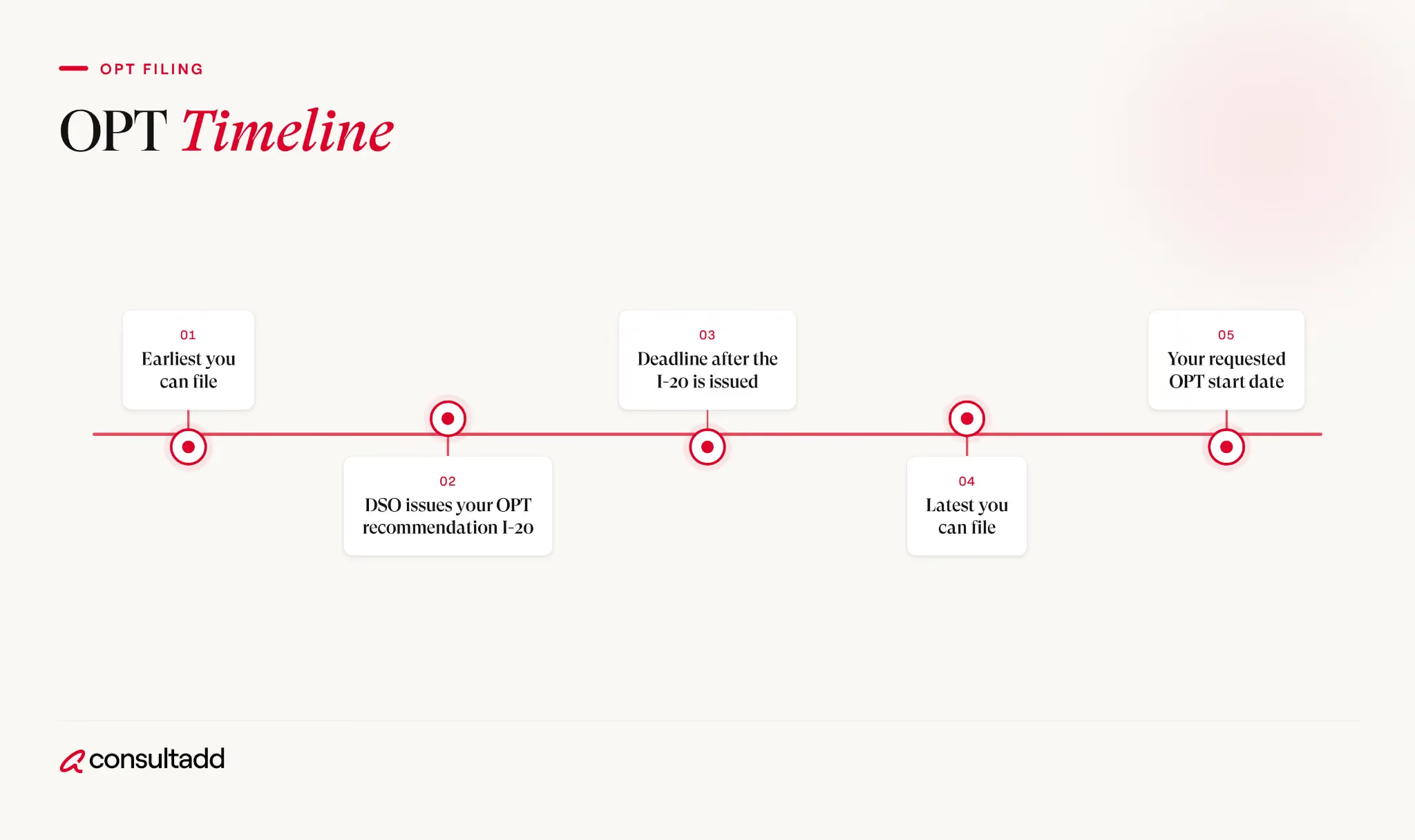
If your DSO signs the I-20 and you sit on it too long, USCIS can deny the application even though you're still inside the 90-day window.
So two clocks run at once, and you have to satisfy both. Here's the full picture.
The practical read: request the OPT recommendation I-20 from your school, then file with USCIS promptly once you have it. Don't let the 30-day clock run out while you gather documents.
Why you should apply as early as possible
Filing early isn't just cautious advice. It's the difference between working the day after graduation and sitting idle for months.
The reason is processing time. In 2026, standard OPT processing has been running long, often three to five months, with a backlog that has left many students waiting past published estimates.
You cannot legally begin work until you have the physical EAD card in hand and your start date has arrived. An unopened approval doesn't count.
There's also a lesser-known trap:
- Post-completion OPT can't be authorized beyond 14 months after your program end date.
- So if delays push your start date back, you don't get that time back at the end.
- Late filing plus slow processing can quietly shrink your 12 months to ten or eleven.
If you're in a genuine time crunch, premium processing is an option. For an extra fee, USCIS commits to taking action within 30 business days.
Here are the current numbers to plan around:
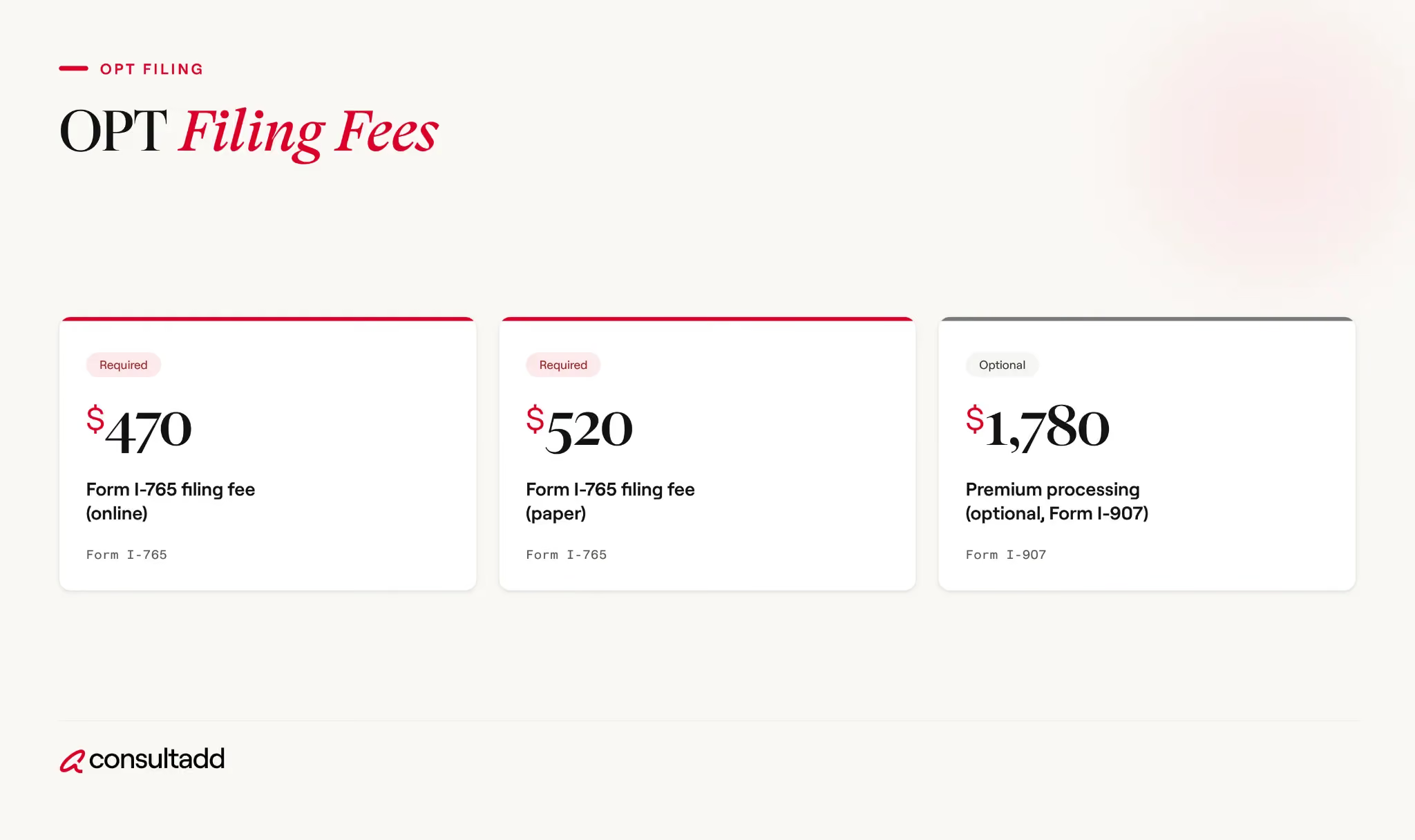
For most students who file early and on time, premium processing isn't necessary. It earns its cost mainly when you have a rigid job start date, urgent travel, or a case that's stuck. Fees change, so confirm the current amounts on uscis.gov before you pay.
What happens after you apply
Once USCIS receives your application, a few things unfold, and knowing the order helps you plan.
You'll get a receipt notice confirming your case is in the system. You can track its status online with the receipt number. When it's approved, USCIS mails your EAD card to the address on file, so keep your address current. A returned card causes serious delays.
Your OPT start date is the date printed on the EAD, and you can only begin working on or after that date, card in hand. If your requested start date arrives before the card does, you still have to wait.
Two rules to hold onto once OPT begins.
- You can accumulate no more than 90 days of unemployment during your 12 months.
- And when your OPT period ends, you get a 60-day grace period to remain in the U.S. and prepare your next step.
One caution worth flagging: if you leave the country during the post-graduation grace period before you've applied, you can forfeit your OPT eligibility, so plan travel carefully and check with your DSO first.
Life after OPT: STEM extension and H-1B
OPT is often the bridge to something longer, so it helps to think a step ahead while you're planning.
If your degree is on the DHS STEM list, you can apply once for a 24-month STEM extension, bringing your total to 36 months of work authorization.
You file for it up to 90 days before your current OPT EAD expires, and it must be received before that expiration. Your employer has to be enrolled in E-Verify for you to qualify.
Beyond OPT, many students aim for H-1B sponsorship. That path has its own timeline and rules, and the employment model you choose matters.
If you're thinking about the jump to H-1B, Consultadd's breakdown of corp-to-corp visa sponsorship for H-1B jobs is a useful next read.
A closing reminder, because this is immigration and the details matter. Rules, fees, and processing times shift, sometimes mid-year.
Treat this guide as a map, confirm your specific dates with your DSO, and check the official USCIS OPT page before you file. Get the timing right, and OPT becomes the smooth start to your career that it's meant to be.
Start Strong With Consultadd
With 15 years in business and 5,000+ successful staffing engagements, we don't just fill roles, we build reliability into your process. We've supported 65 staffing companies in the past year alone and maintain MSAs with industry leaders like Robert Half and TEKsystems.
Here's what working with Consultadd looks like:
- Talent sourced in under 24 hours
- Ready-to-deploy candidates, vetted for experience and compliance
- Lower turnover risk: we match long-term goals, not just short-term needs
- Seamless compliance: visa, documentation, onboarding? Handled.
- Dedicated 1:1 account managers for responsive, personalized support
- Top 100 candidate matches delivered in the past year
- Strong partnerships with universities to tap into fresh, committed talent
- Post-placement support so your investment grows beyond day one
For candidates, your next opportunity is more than just a job title, it's a chance to build skills, gain experience, and move your career forward. At Consultadd, we connect technology professionals with projects and employers that align with their goals, whether they're looking for contract, contract-to-hire, or long-term opportunities.
The tech job market moves fast, but the right guidance can make all the difference. Ready to take the next step in your career journey? Explore Opportunities >>
Key takeaways
- You can apply for post-completion OPT as early as 90 days before your I-20 program end date and as late as 60 days after it.
- Your program end date is on your I-20 and is usually not the same as your graduation ceremony date.
- A second deadline applies: USCIS must receive your application within 30 days of your DSO issuing the OPT recommendation I-20.
- File early in the 90-day window, since 2026 processing runs long and you can't work until your EAD arrives and its start date passes.
- Confirm your exact dates with your DSO and check uscis.gov, because fees and timelines change.
FAQs
What is the earliest I can apply for OPT?
For post-completion OPT, the earliest you can file is 90 days before your program end date, which is the date on your I-20. The window is a hard rule, so an application received even a day early is rejected. Most advisors recommend filing as close to that 90-day mark as you can.
Is the OPT deadline based on my graduation date or my program end date?
It's based on your program end date, not your graduation ceremony. The program end date is printed on your Form I-20 and usually reflects when you finish your degree requirements. If you're unsure which date applies, ask your DSO to confirm it before you count your 90 days.
Can I apply for OPT after I graduate?
Yes. You can file up to 60 days after your program end date. That said, waiting is risky because processing takes months and you can't work until your EAD arrives. Applying before you finish gives you the best shot at starting work without a gap.
How long does OPT take to process?
In 2026, standard processing has commonly run three to five months, and some students have waited longer due to backlogs. You can pay for premium processing, which commits USCIS to act within 30 business days. Always check the current processing times on uscis.gov before you file.
Can I work while my OPT application is pending?
No. You can only begin working once you have the physical EAD card in hand and your OPT start date has arrived. A pending application or even an approval notice without the card does not authorize you to work.
What happens if I miss the OPT application deadline?
If USCIS doesn't receive your application within the window, meaning within 60 days of your program end date and within 30 days of your OPT recommendation I-20, your application will be denied. If that happens, speak with your DSO right away about your remaining options and your status.
.webp)



.webp)
