


Introduction
There's no single website, app, or agency that reliably keeps a contractor's pipeline full. Anyone who's actually done this work for a few years will tell you the same thing: consistent contract work comes from running several channels at once, staffing agencies, direct networking, job boards, and referrals, so that when one goes quiet, the others keep the pipeline moving.
Relying on a single source is the most common reason contractors experience painful gaps between assignments.
The channels themselves have also shifted. Job boards still matter, but they no longer dominate the way they once did; recruiters increasingly approach candidates directly through LinkedIn rather than waiting for applications.
Freelance marketplaces have matured into a real, if crowded, income source for some skill sets. And vetting an opportunity before you invest time in it has become its own skill, since not every posting represents a real, funded, ready-to-fill role.
This guide covers where contract work actually comes from in 2026, how to work each channel effectively, how to tell a real opportunity from a dead-end posting, and how to keep your pipeline full between assignments.
TL;DR
- No single channel is reliable on its own. Combine staffing agencies, direct networking, job boards, and referrals; each covers gaps the others leave.
- Staffing and recruiting agencies remain the highest-leverage channel for IT contract work specifically, since they carry existing client relationships you can't replicate cold.
- LinkedIn has overtaken job boards as the primary channel recruiters use to find contractors directly; an optimized profile with the right keywords gets found before you even apply anywhere.
- Freelance marketplaces (Upwork, Toptal, and similar) work well for project-based and creative work, less consistently for enterprise IT placements, which still run mostly through agencies and direct relationships.
- Vet every opportunity before investing real time: confirm the budget is actually approved, ask how long the role has been open, and treat vague, urgent-sounding postings with appropriate skepticism.
Why one channel is never enough
Contract work moves in bursts. A recruiter goes quiet for three weeks, then three opportunities land on the same day. A job board delivers nothing relevant for a month, then a perfect listing appears. Because the timing is unpredictable and largely outside your control, the only reliable strategy is running multiple channels simultaneously rather than betting on whichever one worked last time.
The practical version of this: treat your own pipeline the way a staffing agency treats its bench, always have applications in motion, relationships warm, and a profile visible, so you're never starting entirely from zero when a contract ends. The rest of this guide breaks down each channel and how to actually work it, rather than just having a presence on it.
Staffing agencies and recruiters
For IT and technical contract work specifically, this is usually the highest-leverage channel, and it's the one solo job-board searching can't replicate. Agencies carry existing client relationships, often with a direct line to hiring managers or a Tier 1 vendor position with the end client, that took years to build.
- A recruiter working an active requirement can move a submission in days; the same opportunity, discovered cold on a job board, might take weeks to even reach a decision-maker.
- Working this channel well means treating it as a relationship, not a transaction.
- Respond quickly when a recruiter reaches out, even to say the role isn't a fit, since recruiters remember who's reliable and who goes silent.
- Keep your resume and availability current with a handful of recruiters you trust rather than mass-blasting your details to dozens of agencies, which dilutes urgency and often results in the same role being submitted twice through different channels, a genuine problem for everyone involved.
- Understand the vendor chain you're operating inside, since your rate and how quickly you move often depend on how many layers sit between you and the end client.
Our detailed look at what is C2C employment and what is a C2C recruiter covers how that structure actually works from both sides.
LinkedIn and direct networking
LinkedIn has become the primary channel recruiters use to find contractors directly, ahead of job boards in many technical fields. This changes the strategy: instead of only applying to postings, the goal is being findable and credible enough that recruiters approach you first.
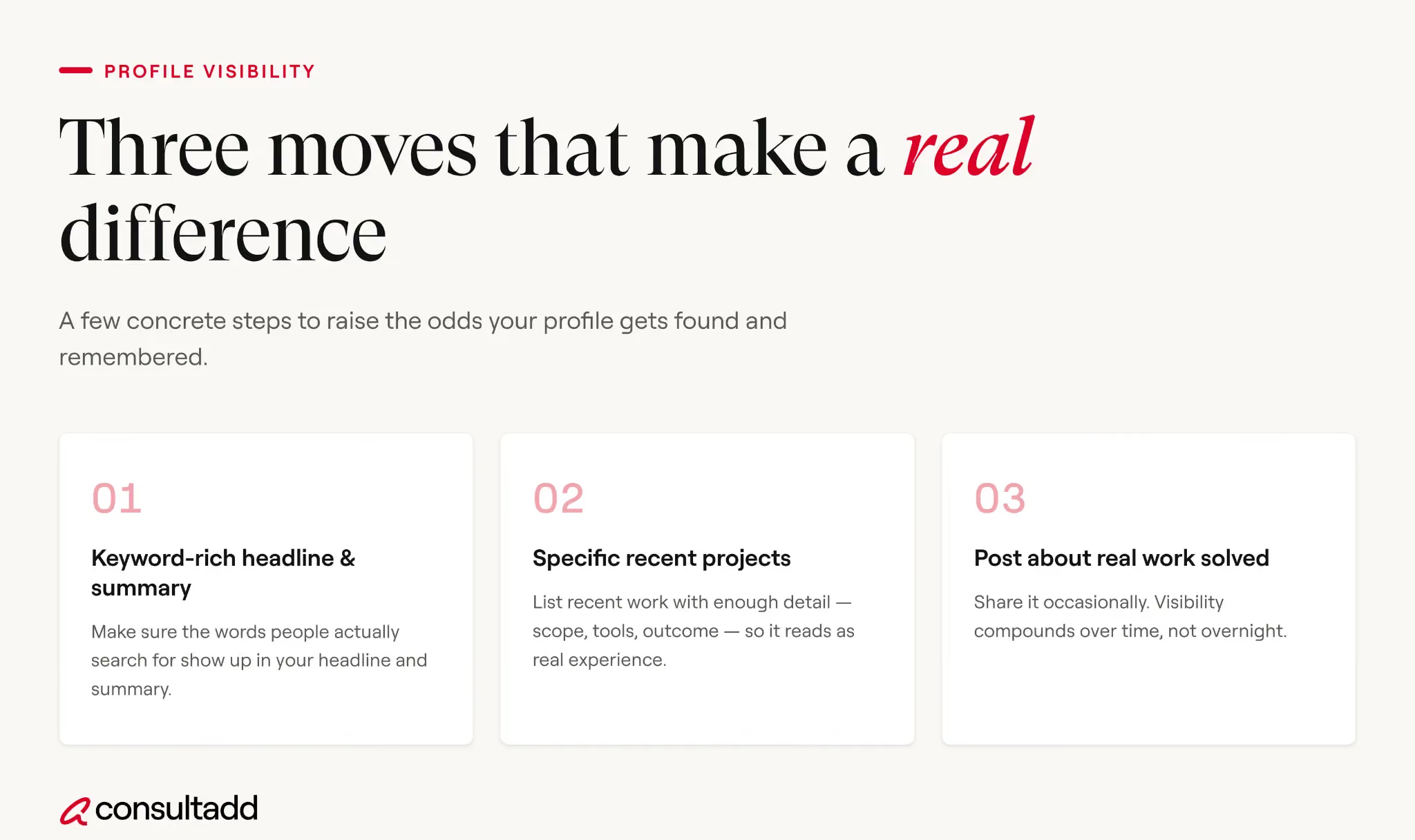
A few concrete moves make a real difference.
- Keep your headline and summary keyword-rich with the specific technologies and role titles you're targeting, since recruiter searches are largely keyword-driven.
- List recent projects with enough specificity that a recruiter can match you to a live requirement at a glance, not just a job title.
- Post occasionally about real work, a project completed, a technical problem solved, since visibility compounds over time and recruiters do notice active profiles over dormant ones.
And don't overlook direct outreach in the other direction: reaching out to recruiters and hiring managers at companies you'd genuinely like to work with, referencing a specific project or role, outperforms cold-applying into a stack of hundreds of resumes.
Job boards and freelance marketplaces
Job boards remain worth monitoring even though they no longer dominate the way they once did, and different platforms serve genuinely different kinds of contract work:
A workable strategy for most contractors: pick one general aggregator, one tech-specific or vetted board, and one marketplace if your skill set fits project-based work well, then set alerts rather than manually re-searching daily.
Be cautious of postings that read as CV-harvesting rather than a genuine open requirement, generic descriptions, no client name, unusually broad skill requirements designed to catch as many resumes as possible.
Referrals and past clients
This is the most underused channel relative to how well it works. Former clients and colleagues already know your work quality, which eliminates the biggest uncertainty a new client faces when hiring a contractor sight unseen.
A short, direct message to a past manager or client, "wrapping up a project soon, would love to help again if anything's opening up", regularly produces work faster than any job board search.
The practical habit: stay in light touch with every client and colleague after a contract ends, not just when you need work. A quarterly check-in costs almost nothing and keeps you top of mind when a role does open.
Contractors who treat every engagement as the start of a long-term relationship, rather than a closed transaction, consistently report shorter gaps between assignments than those who don't.
Vetting a contract opportunity before you commit time
Not every posting or recruiter outreach represents a real, ready-to-fill opportunity, and chasing dead-end requirements wastes time you could spend on ones that will actually close.
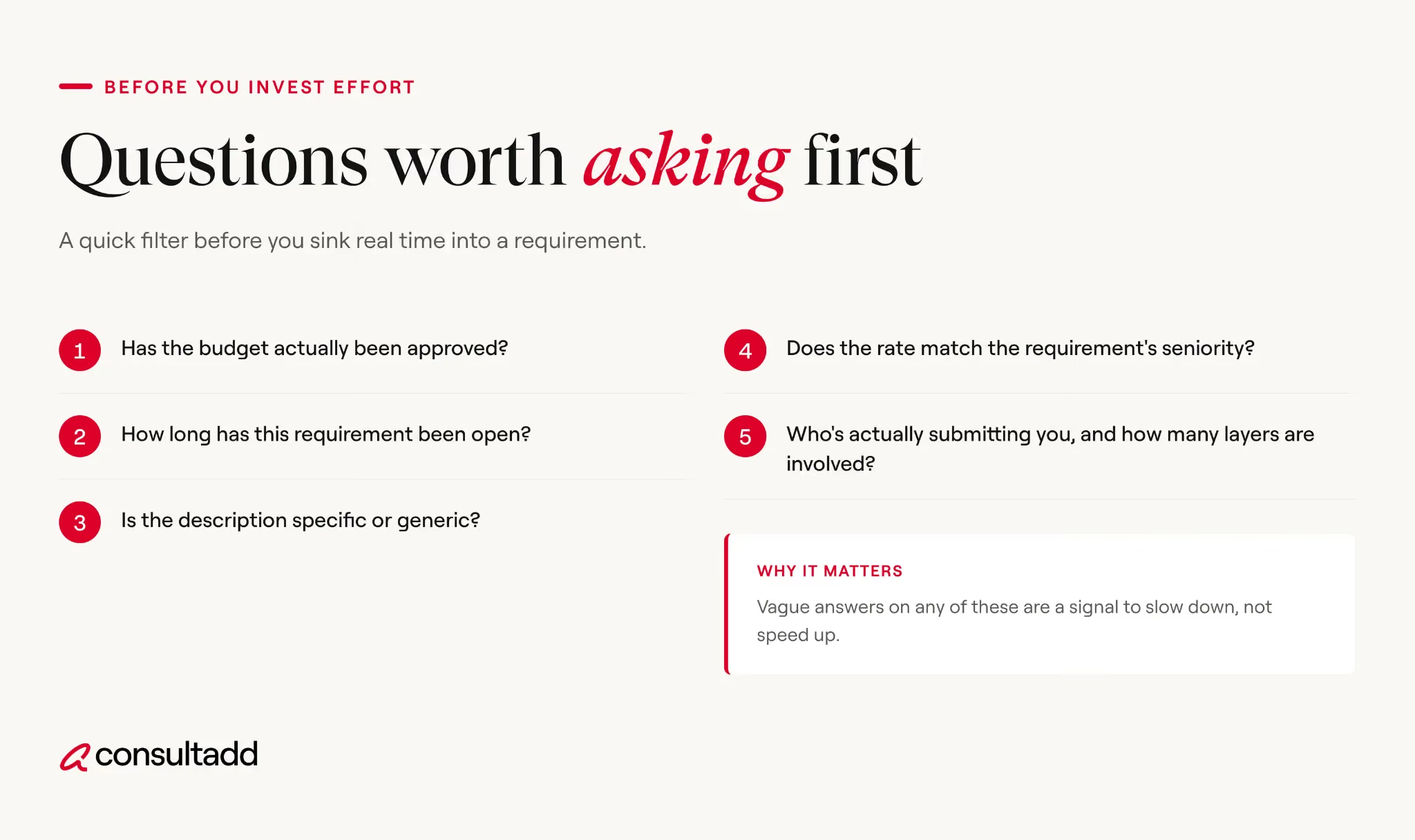
A few questions worth asking before investing serious effort:
- Has the budget actually been approved?
A role a client is "considering" and a role with signed-off funding are very different opportunities, and a good recruiter can usually tell you which one you're looking at.
- How long has this requirement been open?
A role open for two days behaves very differently than one open for two months; the latter often signals an unrealistic requirement, budget mismatch, or an internal candidate quietly being favored.
- Is the description specific or generic?
Vague postings with no client name, broad "any technology" requirements, or copy-paste language across multiple listings are common signs of resume harvesting rather than a genuine opening.
- Does the rate match the requirement's seniority?
A senior-level requirement paired with a junior-level rate is a signal worth questioning upfront rather than discovering after several interview rounds.
- Who's actually submitting you, and how many layers are involved?
The closer you are to the end client or a genuine Tier 1 vendor, the faster decisions typically move and the more transparent the rate structure tends to be.
Asking these questions upfront, politely and directly, is standard practice among experienced contractors and a reasonable expectation to set with any recruiter or client early in the conversation.
Keeping your pipeline full between contracts
The contractors who avoid long gaps treat sourcing as a continuous, low-level activity rather than something that starts only when a contract ends.
That means keeping your resume and LinkedIn profile current at all times, staying warm with two or three trusted recruiters even mid-contract, and starting outreach for the next opportunity a few weeks before the current one wraps rather than waiting for the last day.
It's also worth being genuinely interview-ready at all times, since strong opportunities move fast and a rusty interview performance costs more contracts than most people realize.
Our full stack developer interview questions guide and broader coding interview playbook are worth a refresh even between active searches, since technical interview expectations shift meaningfully year to year.
Finally, understand the structure you're stepping into before you accept a contract, since W2, 1099, and C2C arrangements carry genuinely different tax, benefits, and compliance implications that affect your real take-home pay.
Our comparisons of contract worker vs employee and what is C2C employment cover exactly what to expect from each structure before you sign anything.
Start Strong With Consultadd
With 15 years in business and 5,000+ successful staffing engagements, we don't just fill roles, we build reliability into your process. We've supported 65 staffing companies in the past year alone and maintain MSAs with industry leaders like Robert Half and TEKsystems.
Here's what working with Consultadd looks like:
- Talent sourced in under 24 hours
- Ready-to-deploy candidates, vetted for experience and compliance
- Lower turnover risk: we match long-term goals, not just short-term needs
- Seamless compliance: visa, documentation, onboarding? Handled.
- Dedicated 1:1 account managers for responsive, personalized support
- Top 100 candidate matches delivered in the past year
- Strong partnerships with universities to tap into fresh, committed talent
- Post-placement support so your investment grows beyond day one
For candidates, your next opportunity is more than just a job title, it's a chance to build skills, gain experience, and move your career forward. At Consultadd, we connect technology professionals with projects and employers that align with their goals, whether they're looking for contract, contract-to-hire, or long-term opportunities.
The tech job market moves fast, but the right guidance can make all the difference. Ready to take the next step in your career journey? Explore Opportunities >>
Key takeaways
- Consistent contract work comes from running multiple channels simultaneously, staffing agencies, LinkedIn, job boards, and referrals, since timing is unpredictable and no single source is reliable alone.
- For IT and technical contract work, staffing agencies and recruiters remain the highest-leverage channel, thanks to existing client relationships you can't replicate through cold applications.
- LinkedIn now outweighs job boards as the primary channel recruiters use to source contractors directly; an optimized, keyword-rich, active profile gets you found rather than only found through applying.
- Vet every opportunity before investing real time: confirm approved budget, ask how long the role has been open, and treat vague or generic postings as likely resume-harvesting rather than genuine openings.
- Treat sourcing as continuous, not reactive: stay warm with recruiters and past clients between contracts, and start outreach for your next opportunity weeks before the current one ends.
FAQs
What is the best way to find contract work in 2026?
No single method works reliably alone. The strongest approach combines staffing agency relationships, an optimized and active LinkedIn presence, targeted job board alerts, and referrals from past clients and colleagues. For IT and technical roles specifically, agency relationships and direct networking typically outperform job boards.
Are staffing agencies worth using to find contract work?
Yes, especially for IT and enterprise contract roles. Agencies carry existing client relationships and Tier 1 vendor positions that are difficult to replicate through cold job applications, and a good recruiter can move a strong candidate's submission far faster than an application into an open job posting.
How do I know if a contract job posting is legitimate?
Ask whether the budget for the role has actually been approved, how long the requirement has been open, and whether the description is specific (client name, clear tech stack) rather than generic and broad. Vague postings designed to collect resumes across many candidates, rather than fill one real role, are common and worth treating skeptically.
Is LinkedIn better than job boards for finding contract work?
For many technical fields, yes. Recruiters increasingly search and approach candidates directly on LinkedIn rather than relying solely on job board applications. An optimized profile with clear, specific, keyword-rich project descriptions gets you found by recruiters searching for exactly your skill set, often before you apply anywhere at all.
Should I use freelance marketplaces like Upwork for IT contract work?
They can work well for project-based or shorter-cycle technical work, but enterprise IT placements, especially longer-term contract or C2C roles, still run mostly through staffing agencies and direct client relationships rather than open marketplaces. Many experienced contractors use marketplaces as a supplementary channel rather than a primary one.
How do I avoid long gaps between contracts?
Treat sourcing as continuous rather than reactive: keep your resume and LinkedIn current at all times, stay in light touch with a few trusted recruiters and past clients even while under contract, and start outreach for your next opportunity a few weeks before your current one ends rather than waiting until it's already over.
.webp)



.webp)
