
.avif)

Introduction
If you're prepping for a Java full stack developer interview, the questions usually fall into five buckets: Core Java, Spring or Spring Boot, REST APIs, frontend basics, and databases, with a system design or behavioral round layered on top for mid-to-senior roles.
This guide walks through what actually gets asked in each bucket, along with what separates a surface-level answer from one that shows real experience.
Most lists online just throw fifty questions at you with a one-line answer underneath. That's fine for memorizing terms. It doesn't help much when an interviewer asks for a follow-up, which they usually will.
TL;DR
- Core Java questions test whether you actually understand memory, concurrency, and OOP, not just definitions you can recite.
- Spring and Spring Boot questions focus on dependency injection, the difference between the two frameworks, and how you'd structure a real application.
- REST API questions check whether you understand HTTP semantics, not just whether you've used @GetMapping before.
- Frontend questions for a full stack Java role are usually lighter than for a dedicated frontend role, but you still need to speak to component structure and API integration.
- The strongest candidates connect their answers to a real project, not a textbook definition.
Core Java interview questions
These come first because everything else sits on top of Java. An interviewer wants to know you understand the language, not just that you've written a lot of code in it.
Q1) What's the difference between == and .equals()?
== compares references for objects, meaning it checks whether two variables point to the same memory location.
.equals() compares actual content, assuming the class has overridden it. A strong answer mentions that String pools complicate this, since two String literals with the same value can share a reference even without .equals().
Q2) Explain the difference between an abstract class and an interface.
An abstract class can hold state and partial implementation, and a class can only extend one. An interface (since Java 8) can include default methods but historically held no state, and a class can implement several of them. The real answer an interviewer wants is judgment: when would you reach for one over the other in an actual design.
Q3) How does the JVM manage memory, and what's a memory leak in Java look like if the language has garbage collection?
The heap holds objects, the stack holds method calls and local variables, and the garbage collector reclaims heap objects with no live references. Leaks still happen when something holds a reference longer than it should, like a static collection that keeps growing, or listeners that never get unregistered.
Q4) What's the difference between String, StringBuilder, and StringBuffer?
String is immutable, so every concatenation creates a new object. StringBuilder is mutable and not thread-safe, which makes it faster for single-threaded string building. StringBuffer is mutable and synchronized, so it's thread-safe but slower.
Q5) Walk through how you'd handle a race condition in Java.
This is where interviewers separate people who've read about concurrency from people who've debugged it. A solid answer covers synchronized blocks, java.util.concurrent classes like ConcurrentHashMap or AtomicInteger, and when you'd reach for each.
The official Java documentation is worth reviewing if any of the concurrency utilities feel shaky, since this topic trips up more candidates than it should.
Spring and Spring Boot interview questions
Nearly every Java full stack role today runs on Spring Boot somewhere in the stack, so expect several questions here regardless of seniority.
Q1) What's the difference between Spring and Spring Boot?
Spring is the broader framework built around dependency injection and inversion of control. Spring Boot sits on top of it and removes most of the manual configuration, with auto-configuration, embedded servers, and starter dependencies. You can build a Spring app without Boot, but almost nobody does that for new projects anymore.
Q2) Explain dependency injection and why it matters.
Instead of a class creating its own dependencies with new, the framework injects them, usually through constructor injection. This makes classes easier to test, since you can swap in a mock dependency without touching the class itself. Constructor injection over field injection is a small detail that signals someone who's actually built testable code.
Q3) What does @Autowired do, and what happens if there are multiple beans of the same type?
@Autowired tells Spring to inject a matching bean. With multiple matching beans, you'll get an ambiguity error unless you use @Qualifier to specify which one, or mark one as @Primary.
Q4) How would you design a REST controller for a resource with basic CRUD operations?
Look for someone who separates the controller (handling HTTP concerns), the service layer (business logic), and the repository (data access). Someone who jams all of that into one controller method hasn't worked on anything beyond a tutorial.
Q5) What's the role of Spring Data JPA, and when would you write a native query instead?
Spring Data JPA generates repository implementations from method names and annotations, cutting down boilerplate for standard CRUD. Native queries or @Query annotations come in when you need something the generated queries can't express, like a complex join or a database-specific function.
The Spring Framework reference documentation covers this in more depth than most interview prep guides bother to.
REST API interview questions
Q1) What makes an API RESTful?
Statelessness, a resource-based URL structure, and using HTTP methods the way they're meant to be used: GET for reads, POST for creates, PUT or PATCH for updates, DELETE for removals. A lot of candidates can recite this and then immediately design an endpoint that breaks half of it.
Q2) What's the difference between PUT and PATCH?
PUT replaces the entire resource. PATCH applies a partial update. Mixing these up in a live design exercise is one of the more common small mistakes that costs candidates points.
Q3) How do you handle versioning in a REST API?
Common approaches include putting the version in the URL path, in a custom header, or in the Accept header via content negotiation. There's no single right answer here, but a candidate should be able to explain the trade-offs of whichever one they pick.
Q4) How would you secure a REST endpoint?
Expect this to lead into a conversation about Spring Security, JWTs, OAuth2, or API keys depending on the context. The goal isn't a perfect answer, it's showing you understand that authentication and authorization are two different problems.
Frontend and full stack integration questions
For a full stack role, frontend depth expectations vary a lot by company. Some want deep React or Angular experience, others just want to confirm you can wire a frontend to a backend without someone else holding your hand.
Q1) How does the frontend typically communicate with a Spring Boot backend?
Usually through REST calls using fetch or Axios from a React or Angular app, with JSON as the exchange format. CORS configuration comes up a lot here, since it's a common early stumbling block for anyone who hasn't set up a full stack project from scratch.
Q2) What's your approach to state management on the frontend?
For React, this might mean local component state, Context API, or a library like Redux depending on app complexity. There's no universally correct answer, but a candidate should be able to explain when they'd reach for something heavier than local state.
Q3) How do you handle error responses from the backend on the frontend side?
Look for someone who talks about consistent error response shapes from the API, HTTP status codes, and user-facing error handling, not just a generic try/catch that swallows the problem.
Database interview questions
Q1) What's the difference between SQL and NoSQL, and when would you pick one over the other?
SQL databases enforce a fixed schema and strong consistency, which fits well for relational data with clear structure. NoSQL databases like MongoDB trade some of that structure for flexibility and horizontal scaling. The honest answer is that most full stack Java roles lean SQL by default, with NoSQL showing up for specific use cases.
Q2) Explain database normalization and when you'd denormalize.
Normalization reduces data redundancy by splitting data into related tables. Denormalization reintroduces some redundancy deliberately, usually to speed up read-heavy queries where joins become a bottleneck.
Q3) How do you handle a slow query?
A real answer covers checking the execution plan, adding indexes where they're missing, and reconsidering the query structure itself before reaching for hardware as a fix.
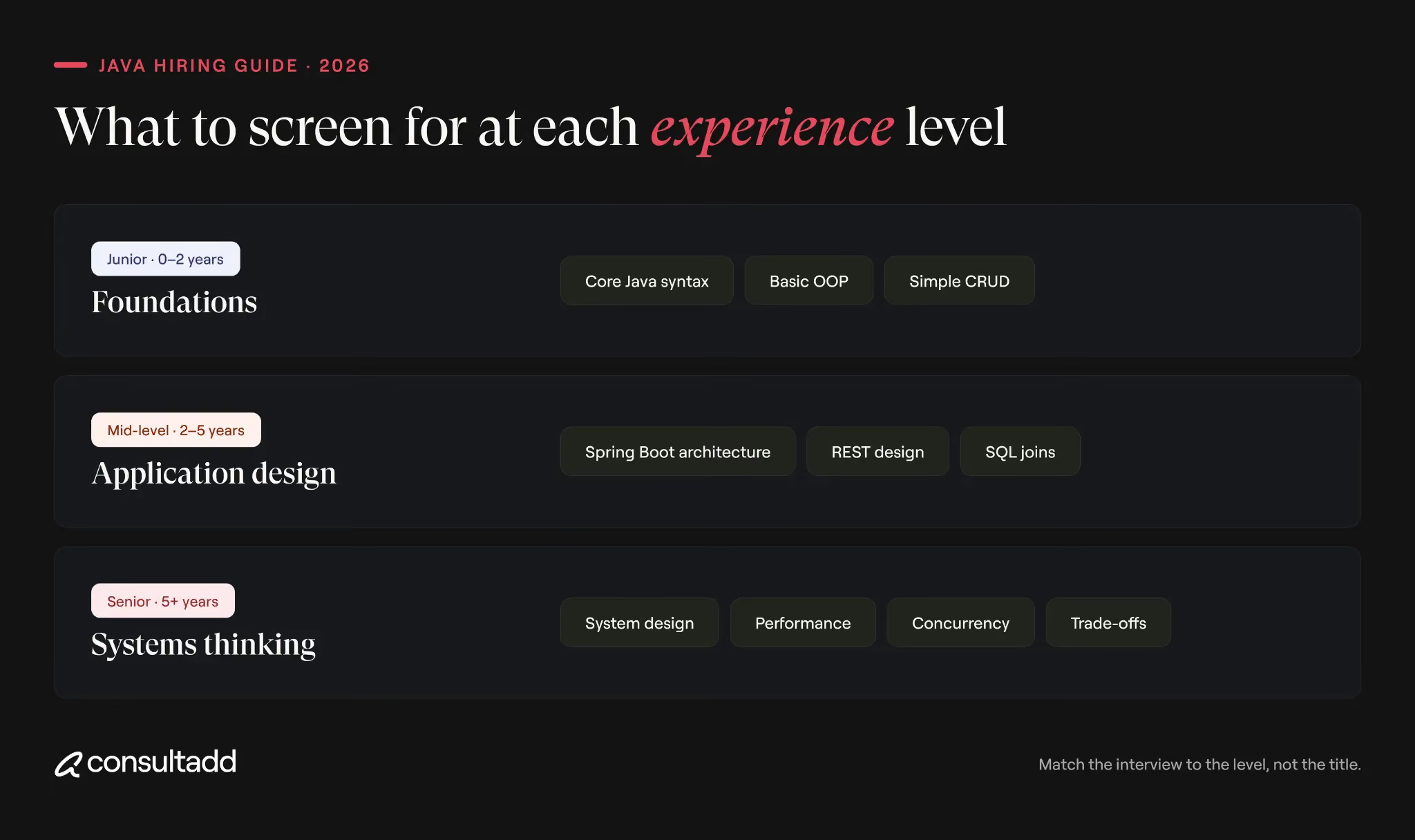
Sample interview question breakdown by role level
How to prepare beyond memorizing answers
Reading a list of questions gets you halfway there. The other half is being able to talk through your reasoning out loud, which is a different skill than knowing the answer silently in your head.
Our guide on standing out in a full-stack developer interview covers the non-technical signals interviewers pick up on, things like how you structure an answer and how you handle a question you don't immediately know.
If the interview loop also includes a coding round separate from the conversational questions above, our coding interview prep guide walks through pattern recognition for the algorithmic side.
A good chunk of Java full stack roles today are contract or contract-to-hire rather than direct full-time hires.
If you're weighing an offer structured that way, it's worth understanding how contract-to-hire compares to a full-time offer before you accept, since the interview process and the expectations afterward can look a little different.
Start Strong With Consultadd
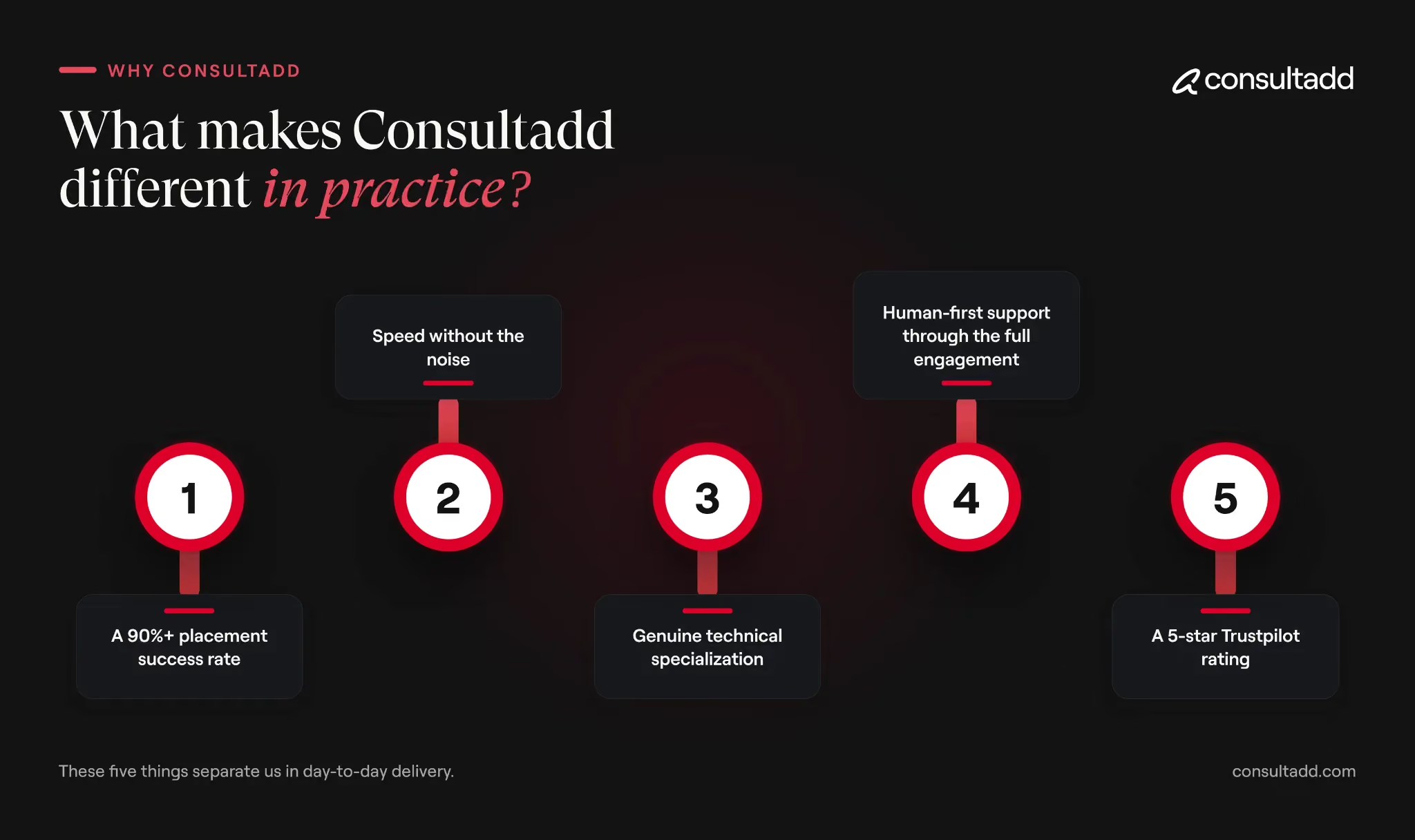
With 15 years in business and 5,000+ successful staffing engagements, we don't just fill roles, we build reliability into your process. We've supported 65 staffing companies in the past year alone and maintain MSAs with industry leaders like Robert Half and TEKsystems.
Here's what working with Consultadd looks like:
- Talent sourced in under 24 hours
- Ready-to-deploy candidates, vetted for experience and compliance
- Lower turnover risk: we match long-term goals, not just short-term needs
- Seamless compliance: visa, documentation, onboarding? Handled.
- Dedicated 1:1 account managers for responsive, personalized support
- Top 100 candidate matches delivered in the past year
- Strong partnerships with universities to tap into fresh, committed talent
- Post-placement support so your investment grows beyond day one
For candidates, your next opportunity is more than just a job title, it's a chance to build skills, gain experience, and move your career forward. At Consultadd, we connect technology professionals with projects and employers that align with their goals, whether they're looking for contract, contract-to-hire, or long-term opportunities.
The tech job market moves fast, but the right guidance can make all the difference. Ready to take the next step in your career journey? Explore Opportunities >>
Key takeaways
- Java full stack interviews cover five core areas: Core Java, Spring/Spring Boot, REST APIs, frontend integration, and databases.
- Interviewers care more about your reasoning than a memorized definition, especially once follow-up questions start.
- Constructor injection, proper layering (controller, service, repository), and understanding HTTP semantics are recurring signals of real experience.
- Question difficulty and focus shift with seniority, from basic syntax at junior level to system design and scaling at senior level.
- Practicing out loud closes the gap between knowing an answer and being able to explain it clearly under pressure.
FAQs
What are the most commonly asked Java full stack developer interview questions?
Expect questions on Core Java fundamentals (OOP, memory management, collections), Spring Boot architecture, REST API design, and basic SQL. Frontend depth expectations vary by company.
Do Java full stack developers need deep frontend expertise?
Not always. Many roles expect enough frontend competency to wire a UI to an API and handle basic state management, without needing the depth a dedicated frontend specialist would have.
How technical is a Java full stack developer interview compared to a backend-only role? It's usually broader rather than deeper in any single area. A backend-only interview might go further into JVM internals or database optimization, while a full stack interview spreads across more topics.
What's a good way to practice for these interviews?
Build a small end-to-end project, a Spring Boot backend with a React or Angular frontend and a real database, rather than only working through isolated questions. Explaining your own project out loud is closer to the actual interview experience than reciting answers.
Is Spring Boot knowledge required for every Java full stack role?
Nearly always. It's the default framework for Java backend development today, and most job postings list it explicitly even when the rest of the stack varies.
How should I answer a question I genuinely don't know?
Say so directly, then reason through what you'd check or how you'd approach finding the answer. Interviewers generally trust an honest "I'm not sure, but here's how I'd figure it out" more than a guess dressed up as confidence.
.webp)


.png)
