

Introduction
Your best engineer just gave two weeks' notice. Again. If you're reading this, retaining top talent probably keeps you up at night more than sourcing new hires does.
Recruiting is a known, budgeted cost. Losing someone you already trained, someone your team already relies on, costs more than most hiring managers want to admit.
This guide breaks down why skilled employees actually leave, what it costs when they do, and which retention strategies hold up once you test them against a real team instead of a slide deck.
TL;DR
- Replacing an employee costs between 50% and 200% of their annual salary, and the U.S. quits rate has stayed near 1.9% through mid-2026.
- Most resignations trace back to management and growth, not just pay. Compensation still matters, but it rarely stands alone.
- Career paths, manager training, and pay audits do more for retention than perks or one-time bonuses.
- Tracking flight risk early, through workload, engagement, and manager check-ins, catches problems before someone starts interviewing elsewhere.
- A staffing partner can absorb hiring pressure so your team has room to fix retention instead of just reacting to it.
Why retaining top talent matters right now
The labor market has cooled since the mass resignations of 2021 and 2022, but people are still leaving jobs at a meaningful rate. The quits rate stood at 1.9% in May 2026, according to the Bureau of Labor Statistics. That works out to millions of voluntary departures every month, spread across every industry, including yours.
A lower quit rate compared to a few years ago doesn't mean retention got easier. It means the people who leave now are more selective about it.
When your top performer walks, it's rarely impulsive. They've usually thought about it for months, and by the time they hand in their notice, a counteroffer won't fix it.
This matters more in tech and specialized roles, where a single departure can stall a project for weeks.
We've watched this play out inside the ongoing tech talent shortage, where open roles already outnumber qualified candidates.
Losing a skilled employee in that environment doesn't just create a vacancy. It creates a bidding war for their replacement.
What losing a top performer really costs
Most leadership teams underestimate turnover cost because they only count the obvious line items: job ads, recruiter fees, a new laptop. The real number runs much higher.
Costs you can put a number on
- SHRM estimates that replacing an employee costs between 50% and 200% of their annual salary, depending on the role and seniority.
- For a mid-level specialist earning $90,000, that's anywhere from $45,000 to $180,000 per departure.
- For a senior architect or team lead, the upper end of that range is closer to the norm than the exception.
Costs that don't show up on a spreadsheet
The harder costs to quantify are often the ones that hurt more:
- A departure resets institutional knowledge. Whoever takes over inherits half-documented systems and client relationships built over years, not weeks.
- Remaining team members pick up the slack during the vacancy, which is exactly the kind of overload that pushes the next person toward the exit.
- There's also a trust cost. When a strong performer leaves, their teammates start asking why. If the answer points to leadership, that question spreads fast.
Why skilled employees actually quit
Pay matters, but it's rarely the whole story. Most exits come down to a handful of recurring patterns.
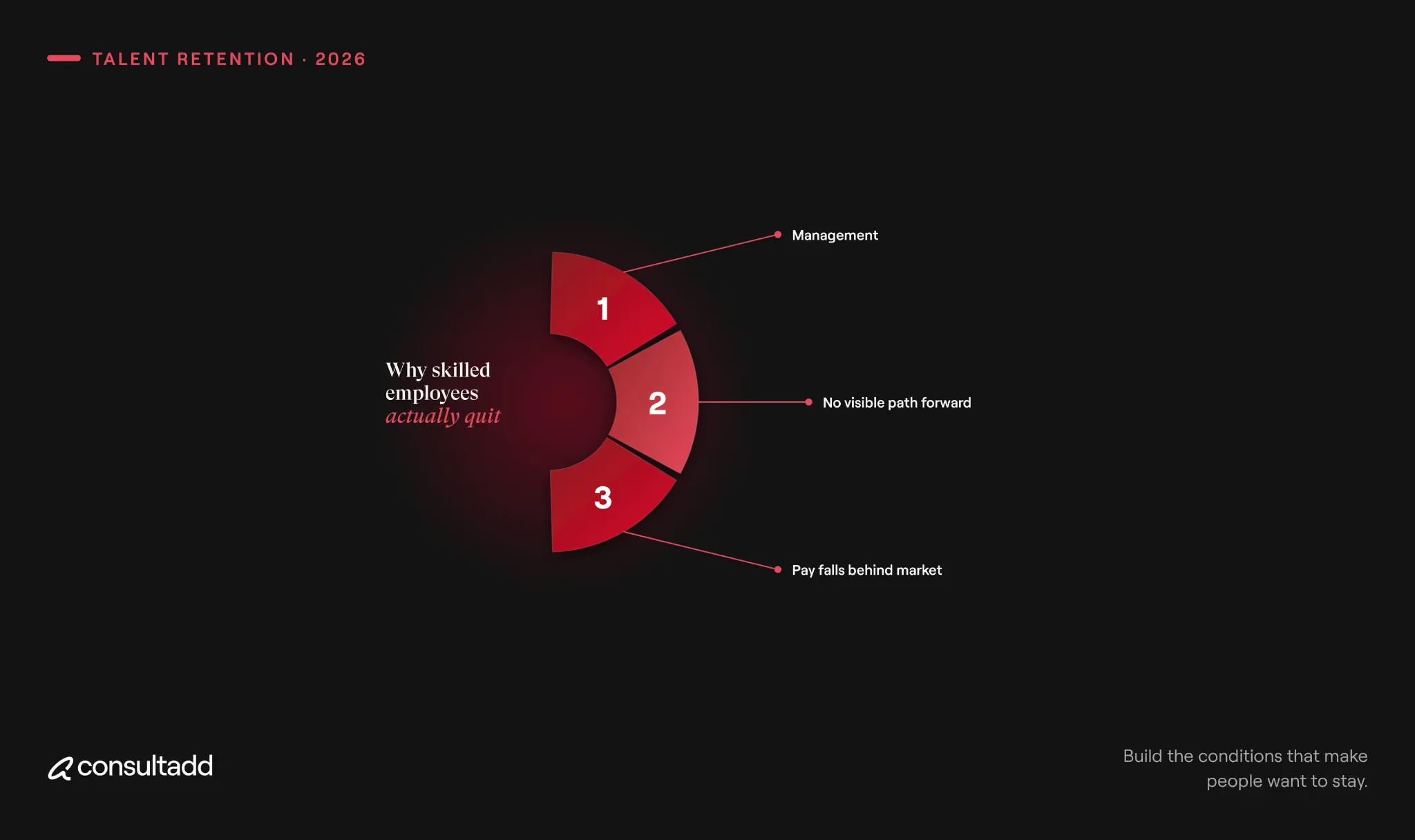
1. Management, not money, is usually the trigger
- People often leave managers before they leave companies.
- A manager who never checks in beyond deadlines, who takes credit quietly and assigns blame loudly, wears people down long before a competing offer shows up.
- This shows up constantly in the recruiter challenges we see across staffing teams: candidates cite their current manager as the reason they're job hunting far more often than they cite salary.
2. No visible path forward
- Skilled employees want to know what's next.
- If the only way up is waiting for someone above them to leave, ambitious people will look elsewhere for that path instead of waiting around for it.
- A role with no growth story attached becomes a layover, not a destination.
3. Pay that falls behind the market
- Compensation reviews that happen once a year can't keep pace with a market where a competitor is actively recruiting your team.
- Gartner's research on 2026 talent trends points to compensation and career pathways as the top attrition drivers organizations need to address directly.
- If someone finds out a new hire on their team is earning more than they are, that gap becomes the story they tell themselves about their entire tenure.
Retention strategies that hold up in practice
None of this requires a reinvented HR department. It requires consistency on the basics that actually move the needle.
1. Build career paths people can see
- Write down what the next role actually looks like, what skills it requires, and roughly how long it takes to get there.
- Review it with each person at least twice a year.
- Vague promises about "growth opportunities" don't retain anyone. A documented path does.
2. Fix pay gaps before your competitor does
- Run a compensation review against current market data at least once a year, not just at hiring time.
- If the budget doesn't allow a raise across the board, prioritize your highest-impact people first.
- Losing them costs more than the raise would have.
3. Train managers like it's a real skill
- Most managers get promoted for technical skill, not people skill, and then get no training on how to lead.
- A short, recurring program on feedback, delegation, and recognition changes how their teams experience the job day to day.
4. Track flight risk before people quit
- Watch for the early signals: declining engagement in one-on-ones, missed optional meetings, a sudden drop in Slack or GitHub activity.
- None of these guarantee someone is leaving, but together they're worth a direct, honest conversation before it's too late to have one.
For teams that want a structured starting point, a 90-day retention audit is a practical way to move from noticing a problem to acting on it.
How a staffing partner supports retention
Retention and hiring aren't separate problems.
Teams stretched thin from constant vacancies rarely have the bandwidth to fix the culture issues driving people out in the first place. That's often where a specialized staffing partner earns its keep, by absorbing the hiring pressure so your internal team can focus on the people already on staff.
This is also where the contract-to-hire hiring model becomes relevant. It gives both sides a real trial period to confirm fit before committing long-term, which naturally screens out the mismatches that turn into six-month resignations.
Combined with proven best practices for IT staffing, it becomes far easier to bring in people who are more likely to stay in the first place.
Start Strong With Consultadd
With 15 years in business and 5,000+ successful staffing engagements, we don't just fill roles, we build reliability into your process. We've supported 65 staffing companies in the past year alone and maintain MSAs with industry leaders like Robert Half and TEKsystems.
Here's what working with Consultadd looks like:
- Talent sourced in under 24 hours
- Ready-to-deploy candidates, vetted for experience and compliance
- Lower turnover risk: we match long-term goals, not just short-term needs
- Seamless compliance: visa, documentation, onboarding? Handled.
- Dedicated 1:1 account managers for responsive, personalized support
- Top 100 candidate matches delivered in the past year
- Strong partnerships with universities to tap into fresh, committed talent
- Post-placement support so your investment grows beyond day one
For candidates, your next opportunity is more than just a job title, it's a chance to build skills, gain experience, and move your career forward. At Consultadd, we connect technology professionals with projects and employers that align with their goals, whether they're looking for contract, contract-to-hire, or long-term opportunities.
The tech job market moves fast, but the right guidance can make all the difference. Ready to take the next step in your career journey? Explore Opportunities >>
Key takeaways
- Turnover is expensive in ways that go beyond the recruiting bill, from lost knowledge to team burnout during the vacancy.
- Management quality and visible career growth drive more exits than compensation alone, though pay gaps still matter.
- A documented career path and an annual pay benchmark are two of the highest-return retention moves available.
- Manager training takes longer to pay off but changes retention at the root instead of patching symptoms.
- Retaining top talent works best as an ongoing practice, not a reaction to someone already halfway out the door.
FAQs
What is the best way to retain top talent?
There's no single fix. The combination that works most consistently is a visible career path, compensation that stays current with the market, and managers trained to give real feedback. Skip any one of these and the others carry more weight than they should.
Why do top performers leave good companies?
Even strong companies lose people when growth stalls or a manager mismanages day-to-day work. Skilled employees have options, so they leave the moment the current role stops teaching them something or stops feeling fair.
How much does it cost to replace an employee?
Replacement costs typically run from 50% to 200% of the departing employee's annual salary, according to SHRM, with the higher end applying to senior or highly specialized roles. That figure includes recruiting, onboarding, and lost productivity during ramp-up.
What is a good employee retention rate?
It depends heavily on industry and role type, so there's no universal benchmark. A more useful approach is tracking your own trend over time and comparing regretted departures, the ones you actually wanted to keep, against total exits.
How can small businesses retain top talent without big budgets?
Budget helps, but consistency matters more. Clear growth conversations, honest feedback, and flexibility on schedule or location cost little and address the same drivers that push people toward larger competitors.
Does a staffing partner help with employee retention?
Yes, indirectly but meaningfully. A partner that sources vetted, well-matched candidates reduces early-stage turnover, and by handling hiring volume, it frees your internal team to focus on developing the people already there.



.webp)