.avif)

Introduction
The STAR interview technique is a way of answering behavioral interview questions by breaking your response into four parts: Situation, Task, Action, and Result.
It's the difference between rambling through a story an interviewer loses track of and giving them a clear, concrete example they can actually evaluate. If you've ever frozen up on a question like "tell me about a time you dealt with conflict," this is the framework that fixes that.
Below is how each part works, a full example, and where most candidates trip up.
TL;DR
- The STAR interview technique breaks your answer into Situation, Task, Action, and Result so interviewers can follow a clear story instead of a vague summary.
- It's built for behavioral questions, the ones that start with "tell me about a time when" or "describe a situation where."
- The Action and Result sections carry the most weight. Don't rush past them to get back to describing the situation.
- Prepare four or five STAR stories ahead of time that can flex across different question types rather than memorizing answers word for word.
- Quantify the result whenever you can. Numbers make an answer memorable in a way general statements don't.
What the STAR interview technique actually is
Employers ask behavioral questions because they've found that how someone handled something in the past is a decent predictor of how they'll handle something similar in the future.
The Society for Human Resource Management describes behavioral interviewing as a technique that asks candidates for specific examples of how they responded to real situations, rather than hypothetical or general answers.
STAR is the structure that makes those examples land clearly.
Without a framework, most people either ramble through too much backstory or jump straight to "and it worked out great" without explaining how.
STAR forces you to hit both the setup and the payoff.
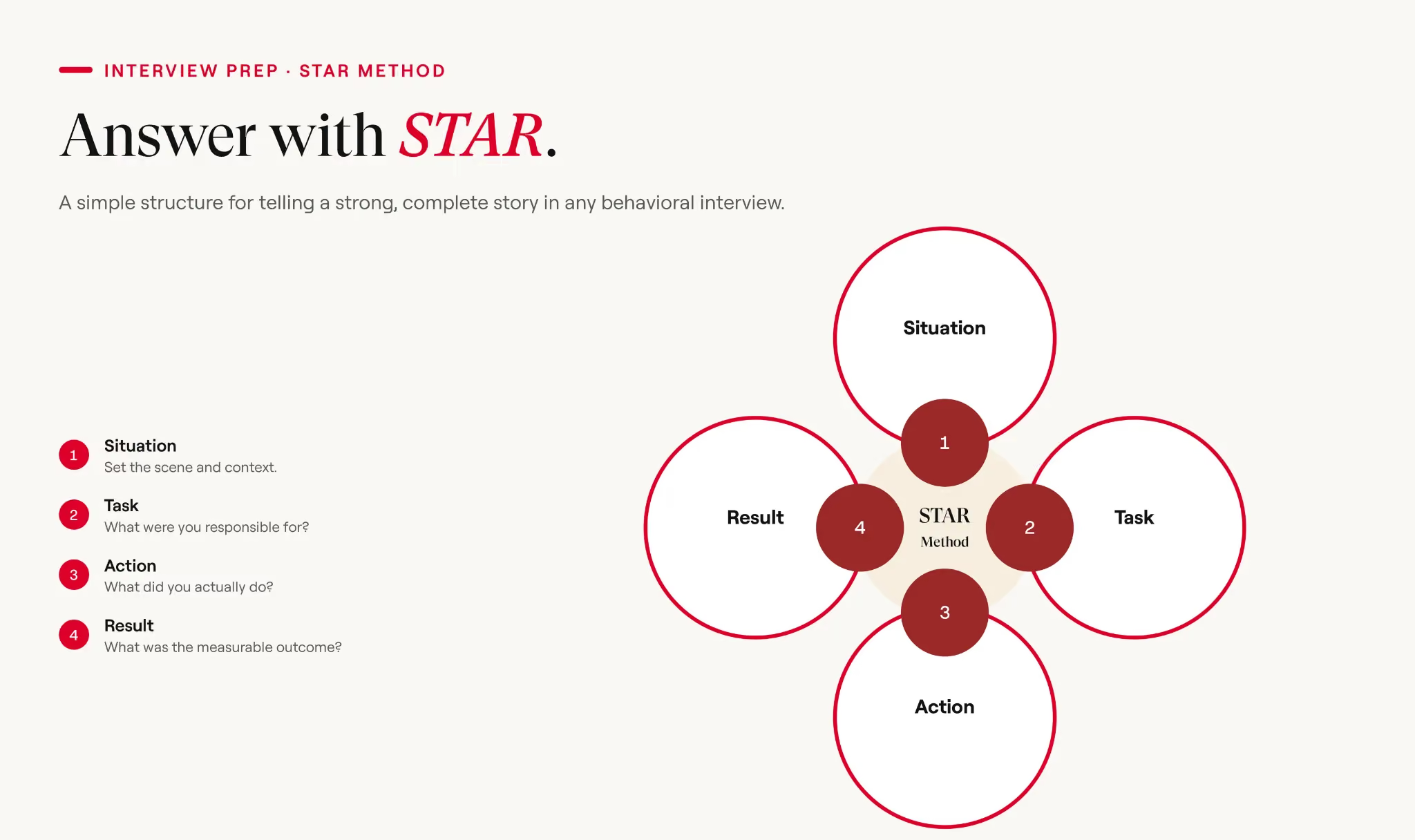
Breaking down each part of STAR
A common mistake is spending 80 percent of the answer on the situation and rushing the action and result.
Interviewers care most about what you actually did and what came of it. The setup just needs enough detail to make sense.
Common questions that call for a STAR answer
Behavioral questions tend to follow a recognizable pattern. A few examples:
- Tell me about a time you disagreed with a coworker or manager.
- Describe a situation where you had to meet a tight deadline.
- Give an example of a time you made a mistake and how you handled it.
- Tell me about a time you had to learn something quickly.
- Describe a project where you had to work with limited resources.
Each of these is really asking the same underlying question: how do you behave under a specific kind of pressure?
Preparing STAR stories around common themes, conflict, deadlines, mistakes, leadership, covers most of what comes up.
A full STAR interview technique example
Question: Tell me about a time you had to manage a project under a tight deadline.
Situation: Our team was three weeks into a six-week content project when the client moved the launch date up by two weeks.
Task: I needed to figure out how to deliver the same scope of work in roughly half the remaining time without sacrificing quality.
Action: I re-prioritized the content list based on what mattered most for launch, brought in two freelance writers to cover a few of the lower-priority pieces, and set up short daily check-ins to catch any blockers early instead of waiting for a weekly status meeting.
Result: We delivered all fifteen pieces two days ahead of the compressed deadline, and the campaign generated more leads than the client's previous launch. I also wrote up the prioritization approach so the team could reuse it for future rush projects.
Notice the action section is the longest part. That's intentional. It's where the interviewer learns how you actually think and operate.
Mistakes candidates make with the STAR interview technique
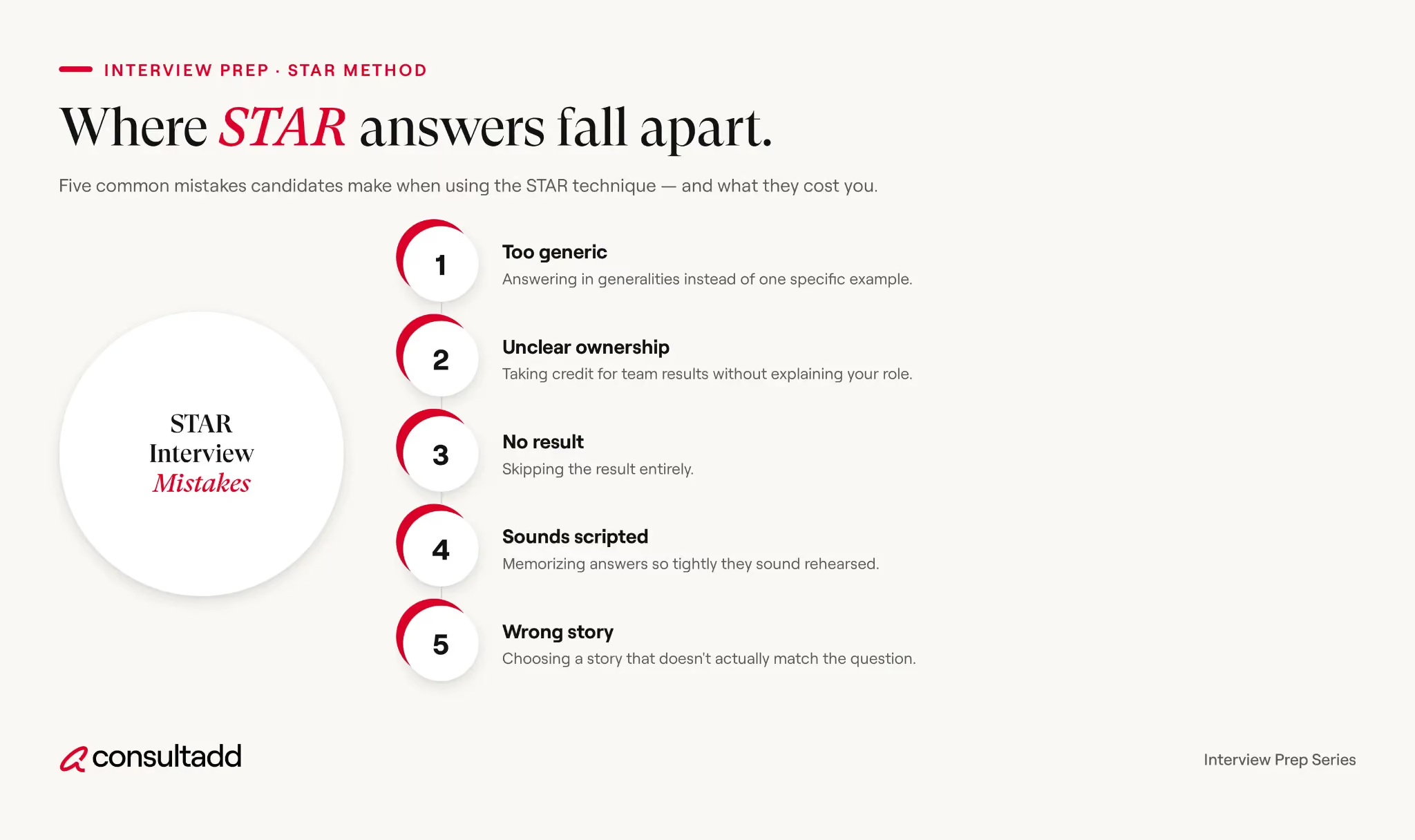
- Answering in generalities instead of one specific example
"I'm usually good under pressure" isn't a STAR answer. Pick one real instance.
- Taking credit for team results without explaining your role
Interviewers want to know what you specifically did, not just what the group accomplished.
- Skipping the result entirely
An answer that ends at "and then we fixed it" leaves the interviewer without the payoff.
- Memorizing answers so tightly they sound scripted
Know your stories well enough to adapt them, not recite them.
- Choosing a story that doesn't actually match the question
If they ask about conflict and you answer with a deadline story, it reads as avoidance.
If you're also preparing for the technical side of an interview process, our guide on standing out in a technical interview covers how to approach problem-solving and communication once the behavioral round is behind you.
How to prepare STAR stories before an interview
- The best approach is building a small bank of stories rather than trying to guess every question in advance.
- Think through four or five situations from recent roles or projects that cover different themes: a conflict you resolved, a deadline you hit, a mistake you corrected, a time you led something without formal authority.
- Write each one out briefly using the STAR structure, then practice saying it out loud rather than just reading it.
- A strong portfolio or project history also gives you more raw material to pull from. If you're still building that out, this guide on building a developer portfolio has practical tips on documenting projects in a way that doubles as interview prep.
- MIT's Career Advising and Professional Development office also offers a useful worksheet for mapping out STAR stories before an interview if you want a structured template to work from.
Start Strong With Consultadd
With 15 years in business and 5,000+ successful staffing engagements, we don't just fill roles, we build reliability into your process. We've supported 65 staffing companies in the past year alone and maintain MSAs with industry leaders like Robert Half and TEKsystems.
Here's what working with Consultadd looks like:
- Talent sourced in under 24 hours
- Ready-to-deploy candidates, vetted for experience and compliance
- Lower turnover risk: we match long-term goals, not just short-term needs
- Seamless compliance: visa, documentation, onboarding? Handled.
- Dedicated 1:1 account managers for responsive, personalized support
- Top 100 candidate matches delivered in the past year
- Strong partnerships with universities to tap into fresh, committed talent
- Post-placement support so your investment grows beyond day one
For candidates, your next opportunity is more than just a job title, it's a chance to build skills, gain experience, and move your career forward. At Consultadd, we connect technology professionals with projects and employers that align with their goals, whether they're looking for contract, contract-to-hire, or long-term opportunities.
The tech job market moves fast, but the right guidance can make all the difference. Ready to take the next step in your career journey? Explore Opportunities >>
Key takeaways
- The STAR interview technique structures answers into Situation, Task, Action, and Result so interviewers get a clear, complete story.
- It's designed for behavioral questions that ask about how you've handled real past situations.
- Action and Result deserve the most detail. Don't let the setup eat all your time.
- Build four or five flexible stories ahead of time instead of trying to script an answer for every possible question.
- A specific number or measurable outcome in the result makes an answer far more memorable than a vague "it went well."
FAQs
What does STAR stand for in an interview?
STAR stands for Situation, Task, Action, and Result. It's a structure for answering behavioral interview questions using a real example from your past experience.
When should I use the STAR method?
Use it whenever you're asked a behavioral question, typically ones that start with "tell me about a time" or "describe a situation where." It's less useful for straightforward technical or factual questions.
How long should a STAR answer be?
Most STAR answers run one to two minutes. Long enough to cover all four parts clearly, short enough that the interviewer doesn't lose the thread.
Can I use the same STAR story for different questions?
Yes, many stories can be adapted to fit different behavioral questions depending on which part of the story you emphasize. Just make sure the story genuinely answers what's being asked.
What if I don't have a perfect example for a question?
Pick the closest real example you have rather than inventing one. Interviewers can usually tell when a story feels manufactured, and an honest, imperfect example is more convincing than a polished fake one.
Do I need to memorize my STAR answers word for word?
No. Memorizing the key points of each story works better than scripting exact sentences, since over-rehearsed answers tend to sound stiff and can fall apart if the question is phrased differently than expected.



.webp)